

Research into products, production processes and businesses
KMUTT links university research with economic use through intellectual property management, research based businesses, joint development with industry, and platforms that help entrepreneurs test and commercialise technology. The cases in this portfolio show different stages of that process: products already manufactured and sold, technologies tested in factories, pilot processes ready for transfer, and prototypes whose commercial applications remain under development.
This portfolio brings together eleven selected economic and innovation cases from KMUTT Case Studies collection, two university policy instruments, two signed cooperation agreements, two corporate accelerator programmes, and additional publication, patent and exhibition records. Each account identifies the university contribution, the reported date, the application and the demonstrated stage of progress. The economic discussion distinguishes realised commercial activity from research potential and future deployment.
- Research based businesses
- Superior Products Innovation and OsseoLabs translate university knowledge into food and medical products.
- Industrial productivity
- CARVER factory trials and food drying technology connect engineering development with manufacturing needs.
- Domestic material value
- Cassava packaging, biosilica, lignin and aluminium research develop uses for Thai raw materials and manufacturing capabilities.
- Innovation ecosystem
- IP rules, RISE and Daikin agreements, and TECHBITE programmes support knowledge transfer and business development.
Scope: activities and institutional reports dated 2025–2026, with earlier policies identified by their real dates. A 2026 report describing an established technology is not treated as evidence that its invention or first commercial sale occurred in 2026. Historical research origins are contextual, rather than new annual outputs.
KX connects learning research and enterprise
The Knowledge Xchange building gives KMUTT a physical setting where students, researchers, technology businesses and industry partners can meet. Its distinction is the combination of working space with incubation, industrial expertise and business networks. KX describes its role as connecting university knowledge with demand from startups and SMEs, while enabling students and academics to work on real business problems.
Dated activities show that role in practice. KX hosted an SME technology event with SCB in October 2025 and student startup pitching in August 2026. Its Green TECHBITE programme connected Thai enterprises with European expertise and investors. Its 2026 iCube account illustrates a longer pathway from engineering study and industrial experience to incubation, funding access and an office in the KX building.
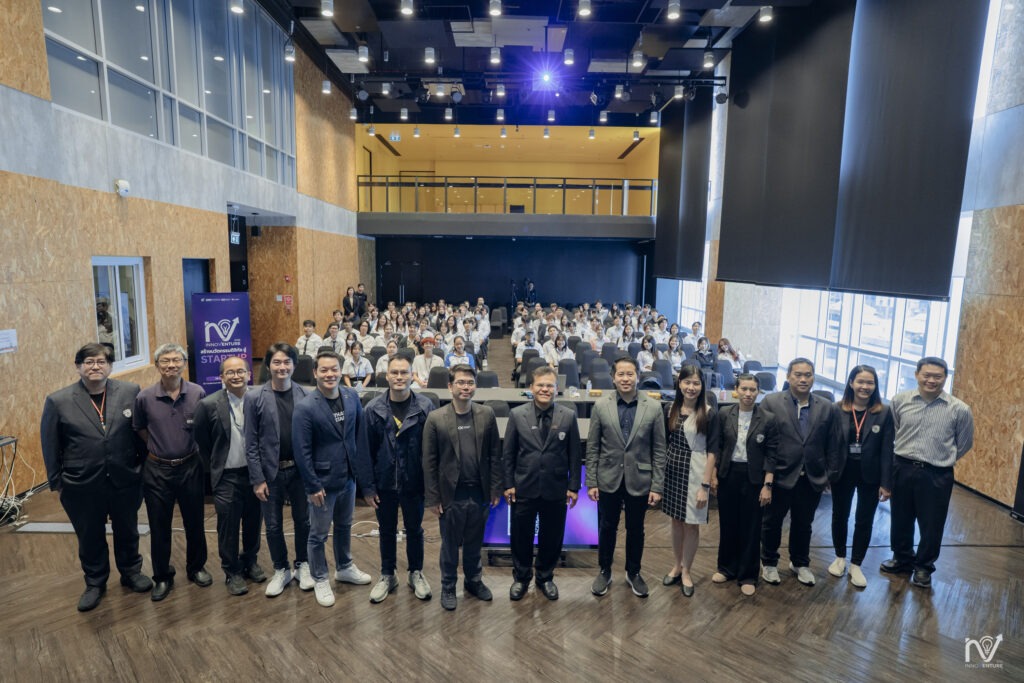
- A place for student enterprise
- SIT Innoventure and the February 2026 Intelligent Systems Engineering visit.
- A bridge to industrial users
- SCB collaboration, corporate accelerators and factory data services.
- Facilities for making and learning
- FabLab fabrication services and Design Week programmes at KX.
- Access to business networks
- European market preparation, investor learning and startup mentoring.
- Continuity after incubation
- iCube office support and the development of Modgut from KMUTT research.
The expanded portfolio also develops student projects, entrepreneurship activities, AI training, educational technology and digital university services. Sections 6 to 8 connect these capabilities with the research and commercialisation evidence already presented.
Research based businesses and eligible spin offs
The methodology distinguishes a university IP spin off from an ordinary company founded by alumni or staff. University ownership is not mandatory, but the registered entity must exploit IP originating in the university, remain active and meet the age requirement; the stated establishment window begins on 1 January 2000. The company examples in this portfolio demonstrate research commercialisation. They are not presented as a certified institution wide spin off count.
Industry research income and economic value
For 9.4.1, industry or commerce must directly fund university research. THE separates STEM, Medicine, and Arts and Humanities or Social Sciences, with corresponding academic FTE and PPP adjustment. Product turnover, startup investment, awards, licensing and consultancy fees, government or charity support, infrastructure funds, and incubation programme funding are different measures. Monetary examples later in this document retain their actual meaning and are not added together as university industry research income.
Policies supporting research commercialisation
Intellectual property research and innovation regulation of 2022
KMUTT regulation on management of intellectual property, research outputs and innovation was issued on 11 May 2022 and takes effect the following day. It establishes a university level committee and assigns operational responsibilities to the Research Innovation and Partnerships Office. Its scope connects protection of research results with transfer, licensing, joint investment and other forms of use. The instrument remains publicly listed in RIPO’s policy register. No new 2025 or 2026 issue date is assigned.
Clauses 8 and 9 describe governance, IP protection, advice, valuation and support for research development, prototypes and market testing. Clauses 17 and 18 recognise that ownership in external collaborations depends on the relevant agreements. Clauses 19 and 20 require disclosure and appropriate permission when university IP is used in external work. Clauses 27 to 29 address expenditure and allocation of benefits.
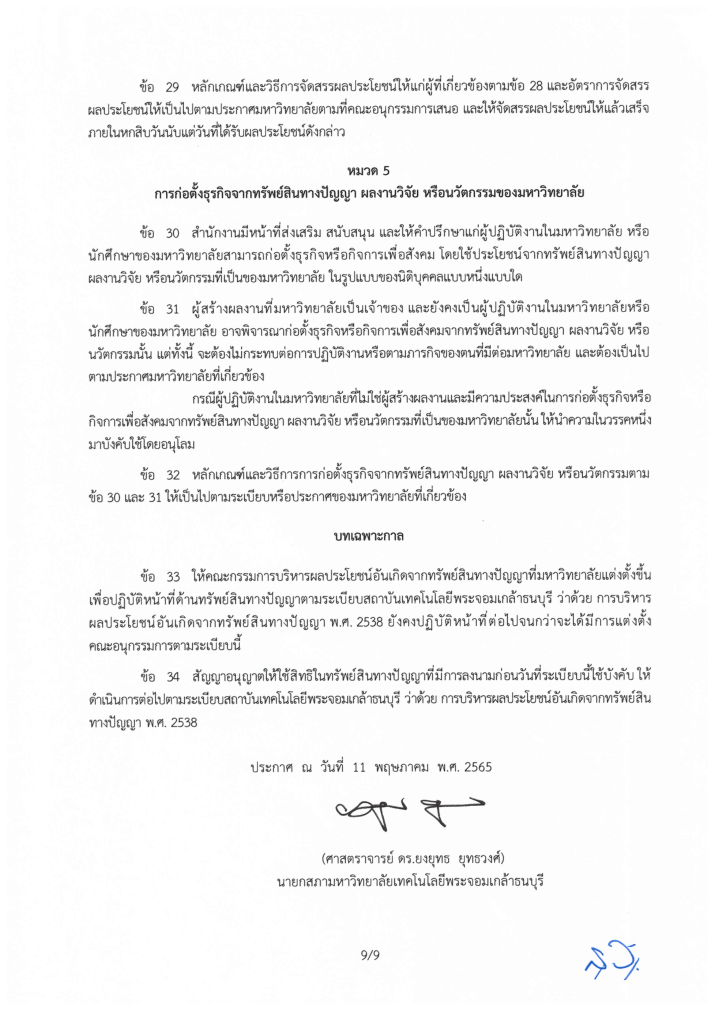
Chapter 5, clauses 30 to 32, explicitly addresses forming businesses or social ventures from university IP, research and innovation. It provides a formal basis for support and advice to students and personnel while maintaining university responsibilities and relevant conditions. This connects institutional governance with the research based ventures and industrial transfer examples in the portfolio.
Entrepreneurship IP benefits announcement of 2016
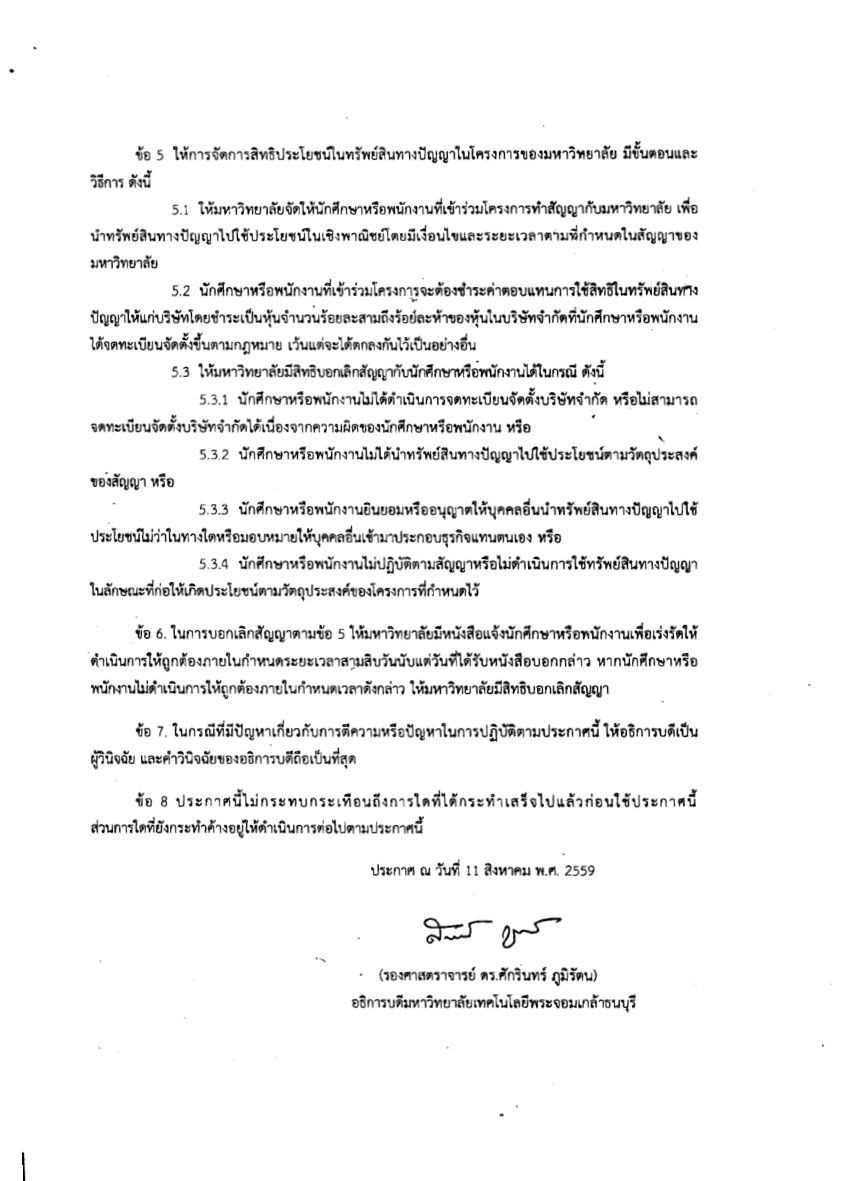
The university’s announcement dated 11 August 2016 defines a mechanism for students or employees in the KMUTT Entrepreneurship project to use university IP commercially through a contract. Clause 5.2 specifies remuneration through a three to five percent equity stake in the participant’s registered company, unless otherwise agreed. The announcement also provides contract termination conditions and a correction period following notification. These historical policy terms establish a route for licensing linked to company formation, while the terms of an individual venture remain governed by its agreement.
Together, the two instruments establish the institutional route from research ownership and permission to commercial use and company development. They complement, rather than replace, project agreements, company records and financial transactions.
Industry partnerships and entrepreneurship programmes
RISE cooperation agreement on 11 March 2026
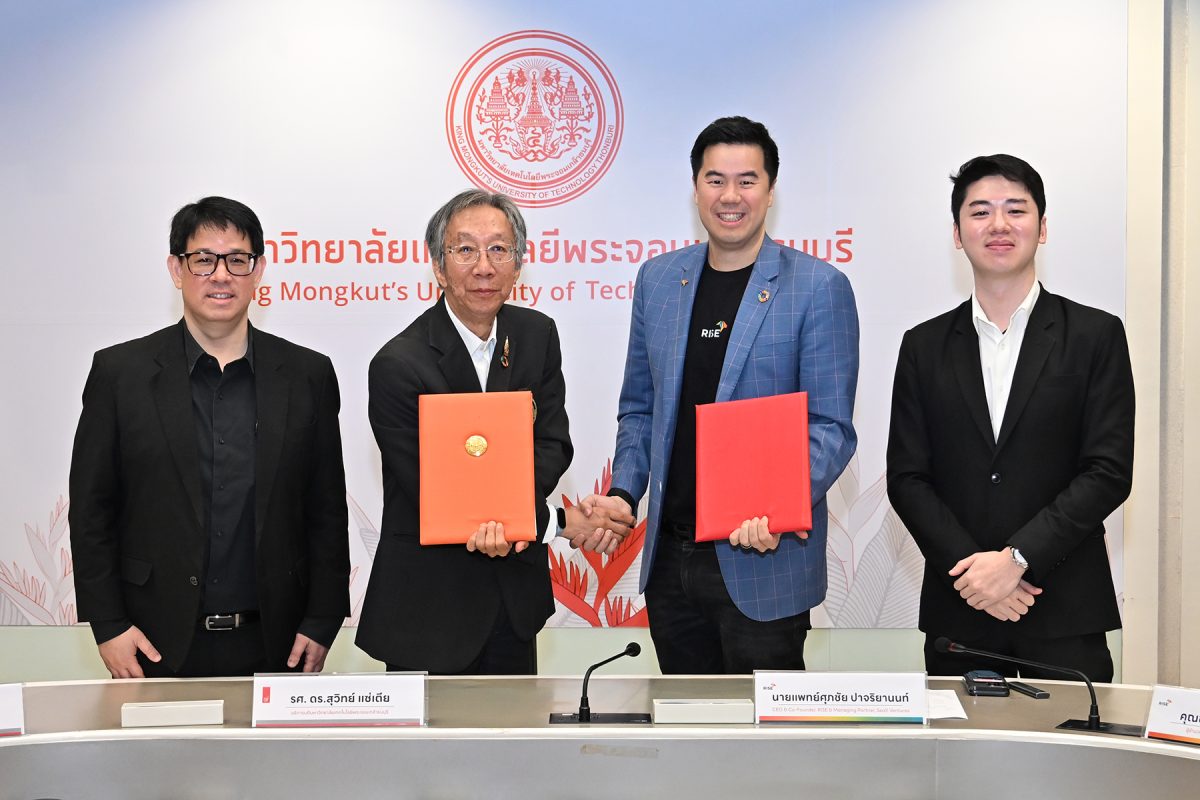
KMUTT and RISE Accel signed a cooperation agreement at Bangmod on 11 March 2026 to support technology startups and spin offs, develop innovation and entrepreneurial capabilities, and translate technology into commercial and social use. The university’s RIPO organised the signing. An additional agreement set an operational cooperation framework for the Southeast Asia Health Innovation Hub, intended as a platform for accelerating health and medical technologies.
The agreement links university knowledge with entrepreneurial and industry expertise. Its documented output is a signed cooperation framework covering development mechanisms, knowledge exchange and support for an innovation ecosystem. The practical relevance is a structured route for subsequent technology development and commercialisation, with health innovation identified as a specific area for joint implementation.
Siam Daikin Sales research agreement on 20 January 2026
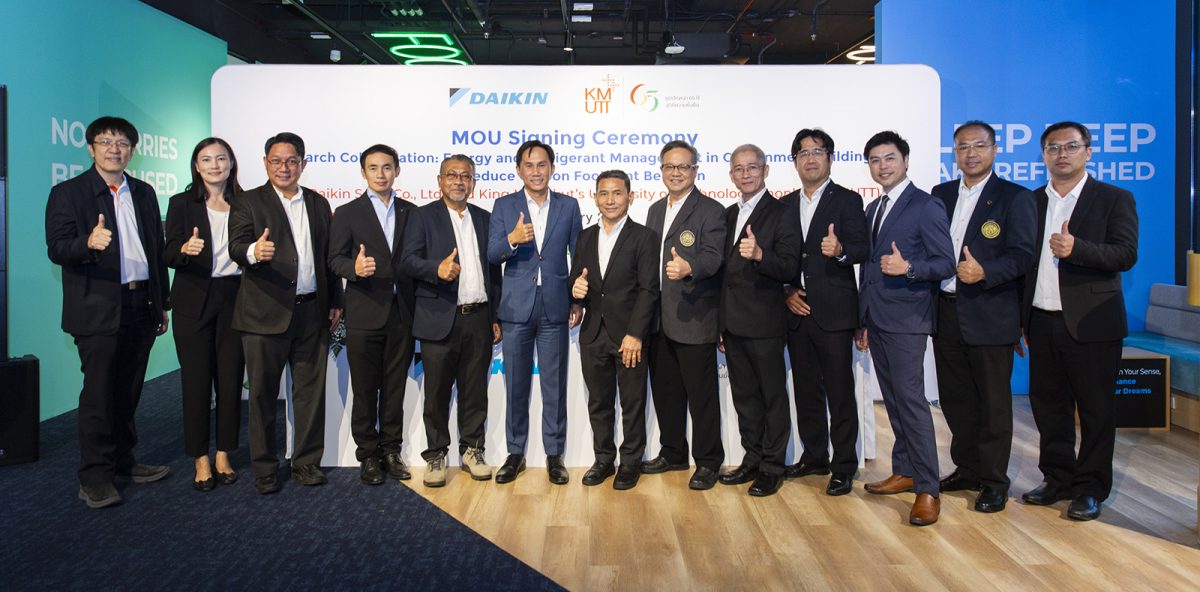
The School of Energy Environment and Materials signed a research MOU with Siam Daikin Sales on 20 January 2026 at Daikin Solution Fuha SIAM, Bangkok. The university report, published the following day, identifies indoor air quality, efficient energy management, pollution control and lower environmental impact as research objectives. It also records a visit to the company’s technology demonstration centre.
Daikin’s partner account describes energy and refrigerant management in public buildings, including work towards refrigerant life cycle management tools and software. The proposed research connects building air quality, energy use and equipment management. These topics have applications in building operations and energy services, while the agreement provides the framework for further research and personnel development.
TECHBITE Food and Biotech with Ajinomoto in 2025
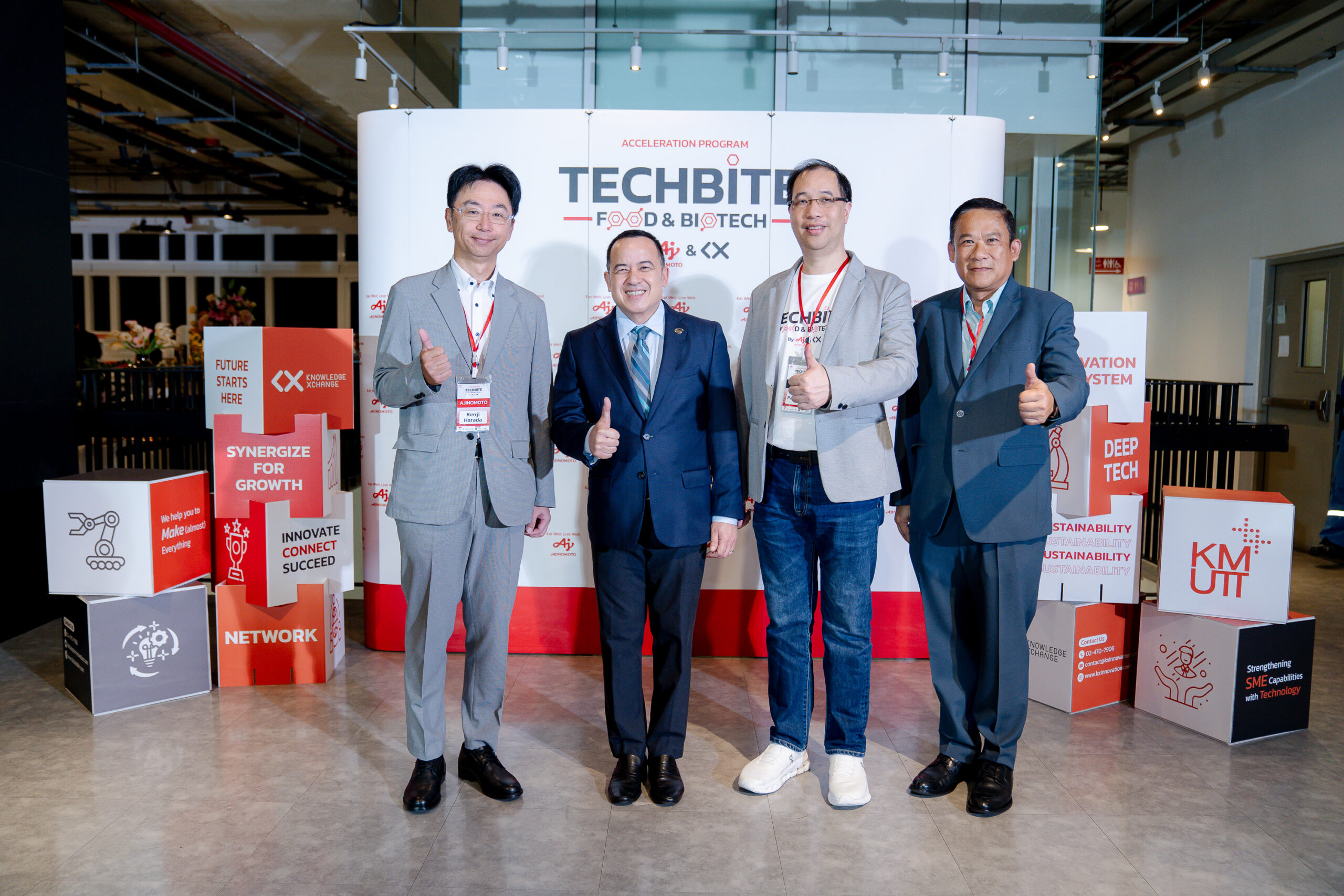
Ajinomoto Thailand and KX delivered a food and biotechnology accelerator running from December 2024 to June 2025. Ajinomoto’s report, published on 1 October 2025 and datelined 24 June 2025, records ten startups from six countries presenting at Demo Day. The programme combined workshops, expert networking and visits to factories and laboratories. Its focus included personalised nutrition, alternative proteins and fermentation technology.
The economic mechanism is access to industrial requirements, mentoring, business development and potential partners. The mixed period programme is identified explicitly; its completion and Demo Day form the 2025 activity. The cohort comprised Aleph Farms, Prefer, Algal Bio, BiomeMega, Advanced GreenFarm, Aquivio, Another Food, Fattastic, Modgut and Allium Bio. The programme connected these ventures with a corporate food manufacturer, research organisations and investors.
TECHBITE Energy with Bangchak in July 2025
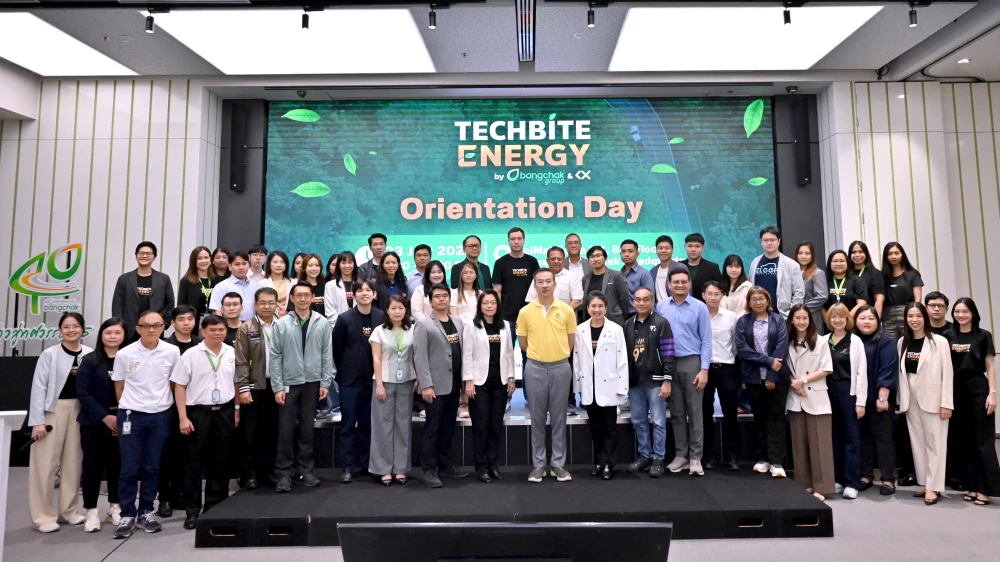
Bangchak and KX launched TECHBITE Energy with ten energy and sustainability startup teams at M Tower, as reported on 24 July 2025. The programme was designed to support expert guided development, field pilots and scaling of applications. Its five focus areas were renewable energy and storage, carbon capture and utilisation, green mobility and e fuels, sustainable materials and circular economy, and digital transformation for sustainability.
The launch demonstrates a corporate university platform for developing commercially relevant solutions and connecting deep technology with business opportunities. Expert advice, intended field pilots and development towards scale are the programme’s routes to application. The documented 2025 output is initiation of the programme and its cohort; the economic mechanism is industrial problem definition, testing and market development.
Economic and innovation case studies
The following eleven cases were selected from the university Case Studies collection for their connection to production, new products, research based enterprise, industrial capabilities or creative economic activity. Each case states the reported development stage. Commercial potential is discussed as potential unless the source documents actual manufacture, distribution or deployment.
| Case | Reported stage | Economic application |
|---|---|---|
| Sante Sauce | Commercial manufacture and distribution | Research based food business |
| OsseoLabs | Active venture and 2025 recognition | Personalised medical devices |
| Pure D food drying | Commercial product application | Value added Thai fruit products |
| Cassava packaging | Reported TRL 9 and transfer readiness | Domestic packaging materials |
| CARVER robot | Factory tested prototype | Seafood intralogistics |
| Biosilica | Pilot process and transfer readiness | Agricultural residue valorisation |
| Lignin | Research and product development | Industrial materials from biomass |
| Heat resistant aluminium | Laboratory development and reported patent | Advanced manufacturing materials |
| EV Guard | Joint product research and development | EV charging maintenance |
| Augmented Craft | Demonstrated pavilion in 2026 | Digital craft and creative production |
| Microchannel cooling | Experimental prototype and award | Future data centre thermal management |
Sante Sauce and university research based food enterprise
- Reported stage
- Commercial manufacture and distribution
- Economic application
- Research based food business
Reported 14 February 2025
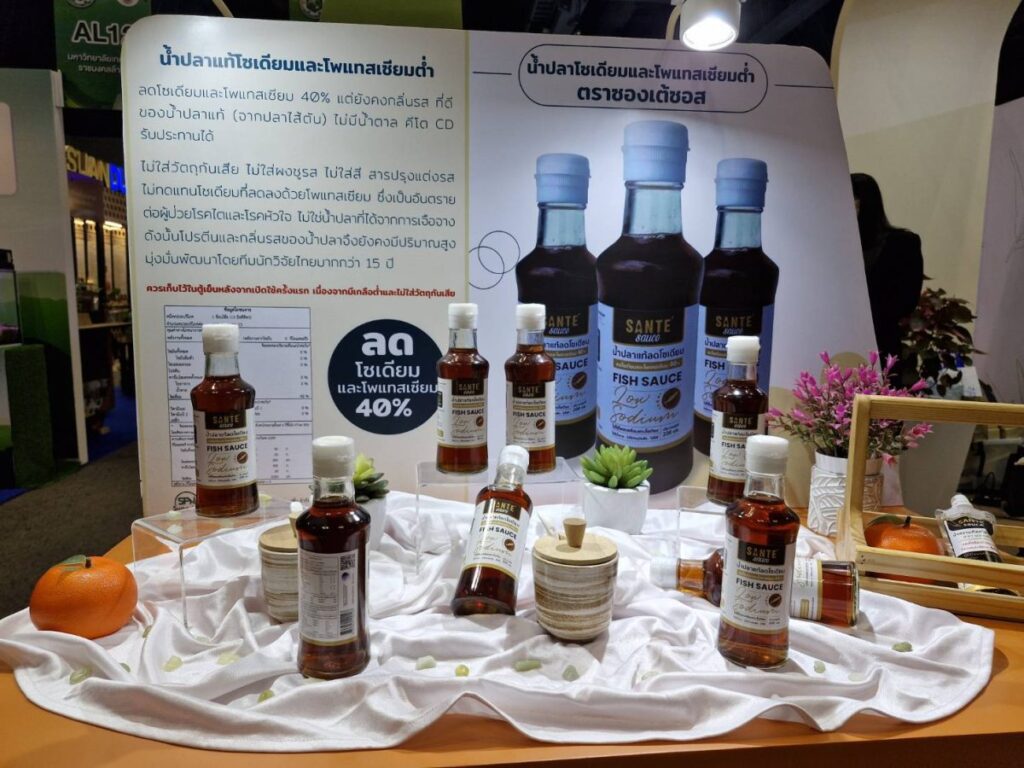
KMUTT Food Engineering research adapted electrodialysis to reduce sodium and potassium in fish sauce without substituting potassium for sodium. The university report describes reductions of up to 40 percent relative to regular fish sauce. Its commercialisation account identifies Superior Products Innovation Co Ltd as a KMUTT spin off manufacturing and distributing the Sante Sauce product.
The process separates ions from concentrated fish sauce while retaining the product’s characteristic flavour, aroma and protein content. It applies membrane and electrical separation knowledge to a familiar Thai food product. The economic application is product differentiation through university process knowledge and the development of a domestic food enterprise. Manufacture and distribution through a named spin off demonstrate a completed commercialisation route. The reduction figure describes formulation performance against the reported comparator.
OsseoLabs and personalised medical manufacturing
- Reported stage
- Active venture and 2025 recognition
- Economic application
- Personalised medical devices
Institutional evidence and programme outcomes in 2025
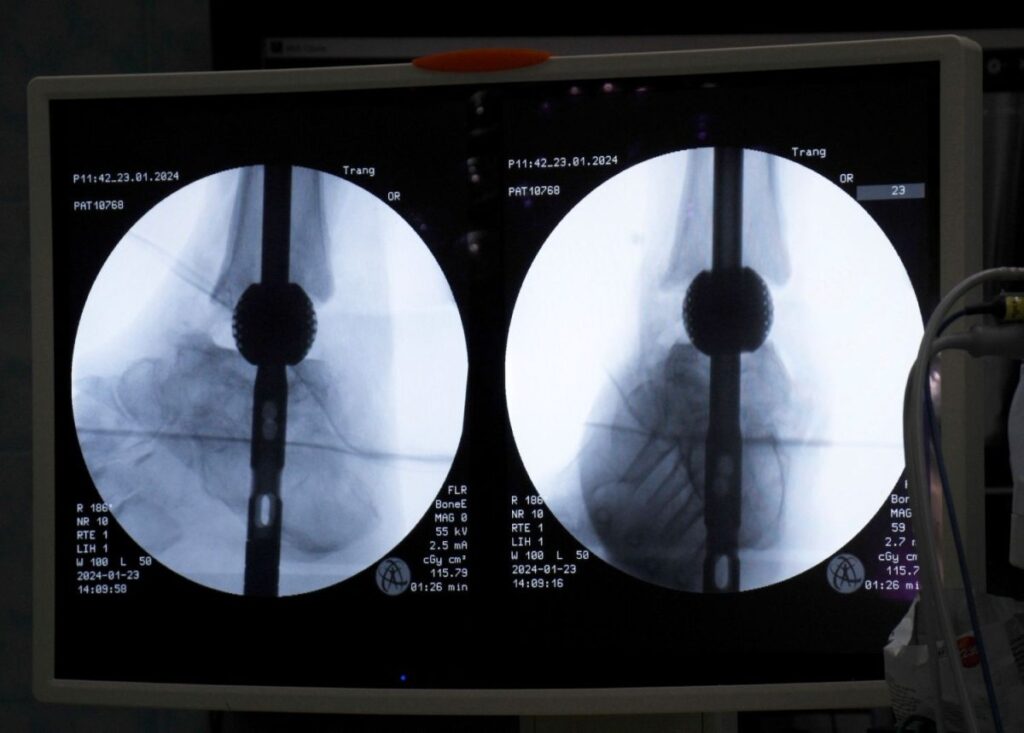
The university’s 10 October 2025 case report identifies OsseoLabs as a KMUTT spin off connecting Mechanical Engineering research with personalised porous implants, digital planning and 3D printing. It describes clinical collaboration and continuing development of AI supported design. These activities link design knowledge and manufacturing capability to a specialist medical device business.
A separate KMUTT report records OsseoLabs winning the MIDAS Medical Innovation Hackathon, held on 15–16 February 2025, with a THB 500,000 award for personalised porous 3D printed medical devices. KX’s August 2025 account describes TECHBITE business mentoring and international development opportunities. The MedTech Innovator organiser subsequently lists OsseoLabs as a runner up at its Singapore finals on 28 October 2025. These establish continuing innovation and venture activity, rather than a university revenue figure.
Economic relevance lies in a research based company producing specialist designs and devices, building market connections and developing skilled personnel. The sources connect technical research, entrepreneurship support and active market development. The two 2025 competitions provide dated evidence of continuing venture activity.
Low pressure steam drying and Pure D fruit products
- Reported stage
- Commercial product application
- Economic application
- Value added Thai fruit products
Commercial application reported 23 February 2026
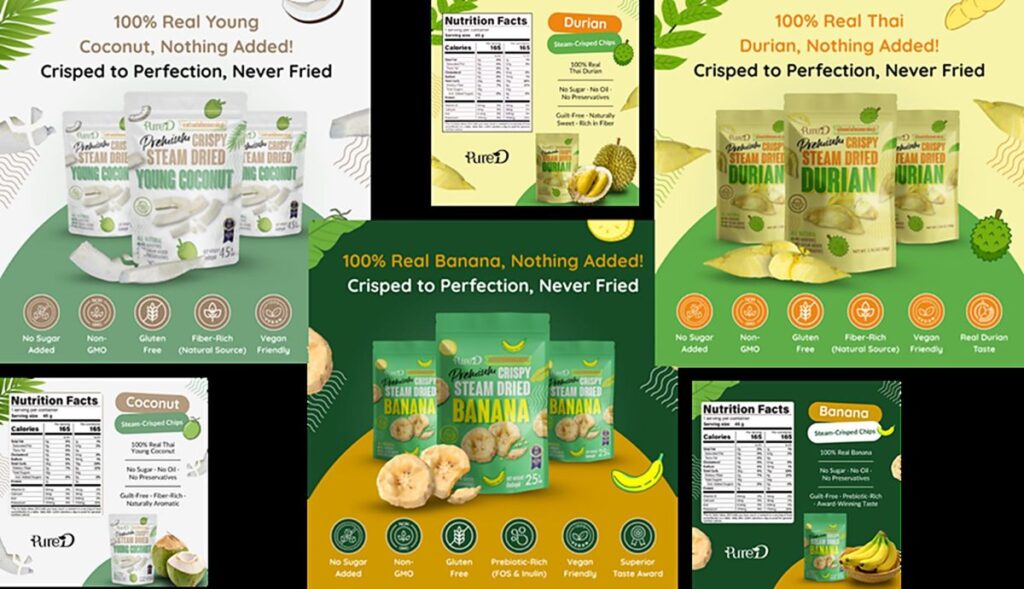
KMUTT Food Engineering developed low pressure superheated steam drying to produce crisp fruit and vegetable products without frying oil. The 2026 case account reports commercial use in the Pure D brand, using Thai raw materials and products made without added sugar or preservatives. It describes an oxygen limited process and rapid internal moisture evaporation that creates a porous crisp texture.
The economic link is transfer of process knowledge into manufacturing and differentiated food products. Agricultural ingredients gain an additional route into higher value packaged goods. The report describes the technical work needed to move from laboratory equipment to factory operation, including heat transfer, steam flow and control adjustments. This illustrates how sustained engineering research can become a usable industrial process. The 2026 account documents an established commercial application.
Cassava based packaging and industrial processing
- Reported stage
- Reported TRL 9 and transfer readiness
- Economic application
- Domestic packaging materials
Reported 6 January 2025
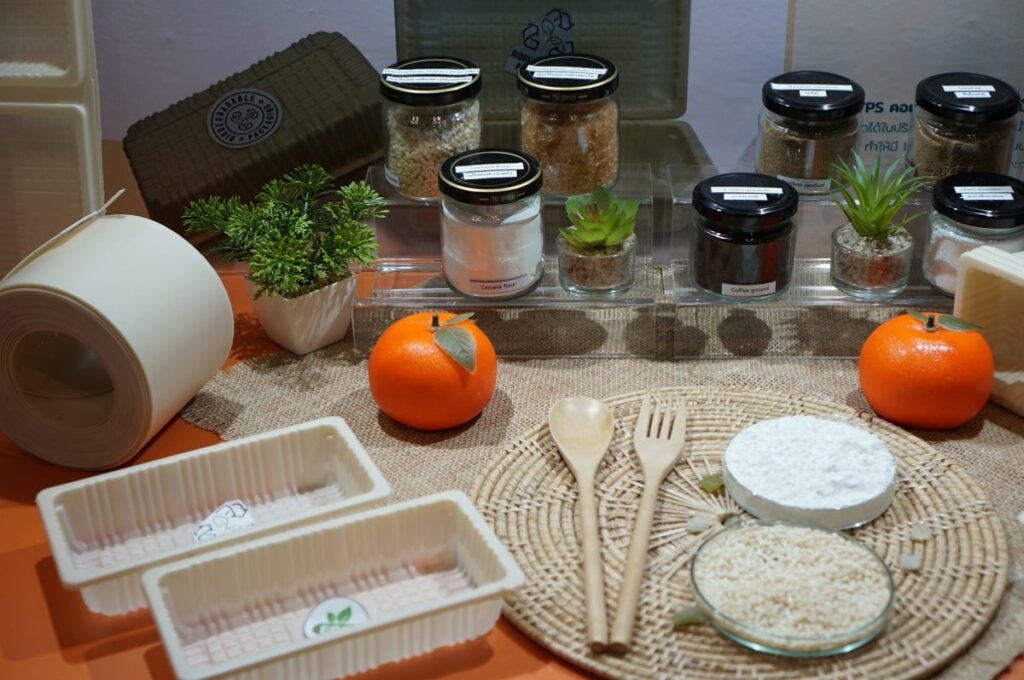
KMUTT Chemistry researchers and Thai Progress Packaging Co Ltd developed thermoplastic starch composites for biodegradable packaging. The account reports technology readiness level 9 and preparation of a petty patent application. The process converts cassava starch into mouldable material and addresses moisture sensitivity, mechanical strength and industrial forming constraints.
The reported production cost range is THB 100–130 per kilogram, compared with an imported material benchmark of THB 150 per kilogram cited in the same account. These are process cost comparisons. The material can be made into sheets for thermoforming and other moulding processes, with potential applications in trays, boxes and utensils. The economic relevance is domestic feedstock use, controllable material formulations and compatibility with industrial processing. The reported stage is commercial production readiness.
Reported material costs · THB per kilogram
- Developed process
- THB 100–130/kg
- Imported material benchmark
- THB 150/kg
The range and imported-material benchmark come from the same account. These are process cost comparisons, not sales prices or a university revenue total.
CARVER and frozen seafood factory logistics
- Reported stage
- Factory tested prototype
- Economic application
- Seafood intralogistics
Factory trials reported 23 February 2026
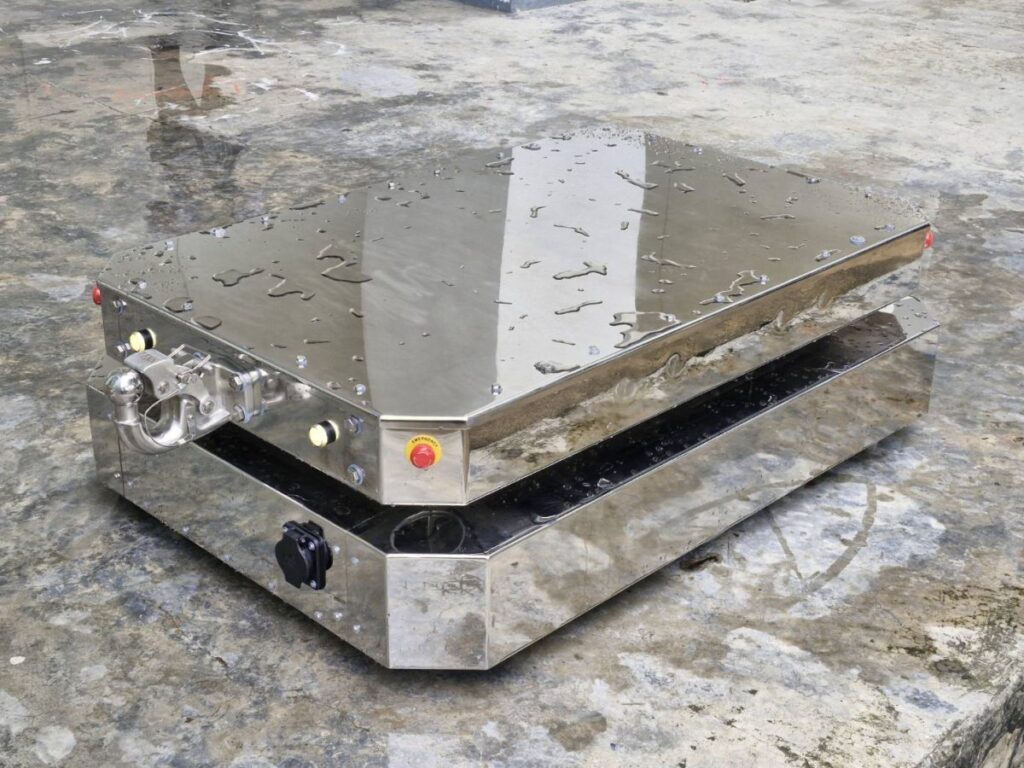
FIBO developed CARVER with BRAINWORKS IMAGINEERING and PMUC support to address movement of heavy materials in seafood processing plants. The reported prototype carries up to 500 kg, uses LIDAR based navigation and has a stainless steel body designed for food processing environments. KMUTT original report records trials alongside workers and actual production lines in Chumphon and Samut Sakhon.
The design includes food grade stainless steel, rounded surfaces and a sloped top to support cleaning in wet processing environments. Factory testing gives a direct link between university robotics and industrial requirements. Potential benefits include flexible internal transport and reduced heavy manual handling. The original report identifies wheel traction and factory control integration as continuing development tasks, with commercial product expansion a next stage. The documented achievement is a prototype tested in operating factories.
Biosilica from rice husk and domestic material production
- Reported stage
- Pilot process and transfer readiness
- Economic application
- Agricultural residue valorisation
Pilot process reported 10 April 2025
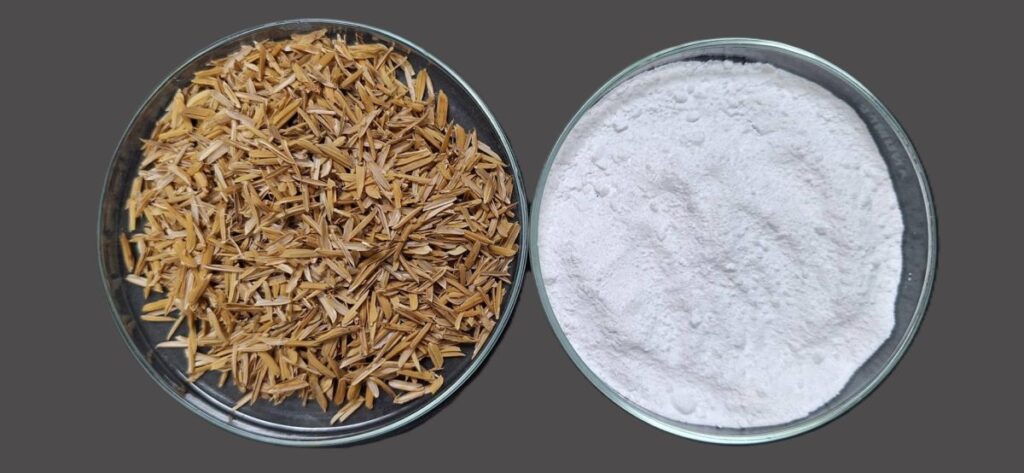
KMUTT researchers developed a biological pretreatment process for rice husk followed by washing and controlled incineration to produce biosilica. The original university report describes a purity of 96–97 percent and a pilot production cost of approximately THB 100 per kilogram. It identifies cosmetics, pharmaceuticals and rubber among potential industrial applications and reports a pilot model ready for technology transfer.
The process uses a microbial activator in pretreatment and equipment such as fermentation tanks and an incinerator, offering an adaptation route for existing production facilities. The economic opportunity is to turn an agricultural residue into a higher value industrial input and develop domestic supply capabilities. The unit cost is a pilot process estimate. Commercial scale production and import substitution are prospective outcomes of transferring and scaling this demonstrated process.
Lignin fractionation and biomass based products
- Reported stage
- Research and product development
- Economic application
- Industrial materials from biomass
Research development reported 3 March 2025
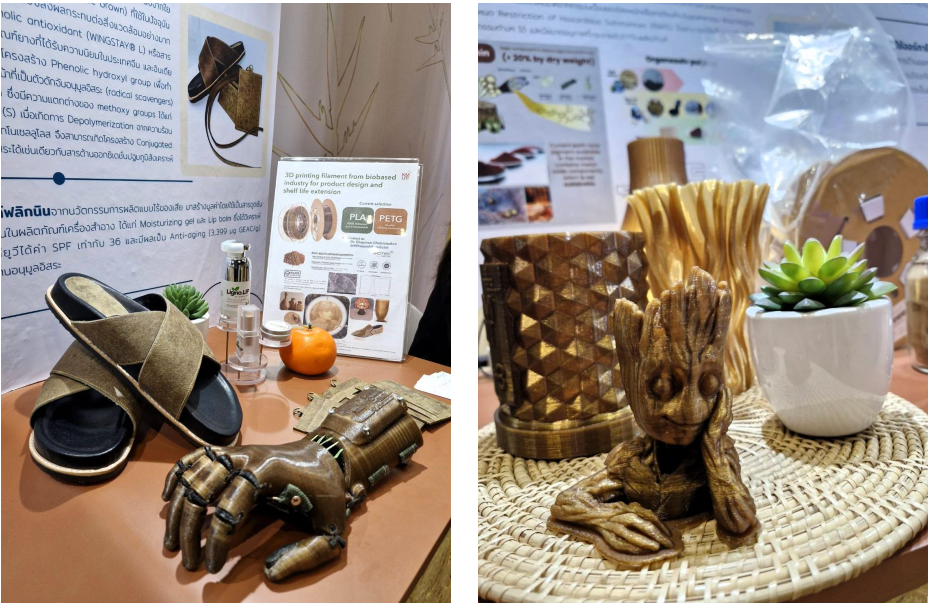
JGSEE at KMUTT and BIOTEC researchers developed biomass treatment and lignin separation processes using recoverable organic solvents. Their work explores retaining useful lignin properties for packaging, rubber and other material applications. The case describes an integrated biorefinery research collaboration and product development routes for agricultural residues.
The case explores lignin blends for UV resistant packaging and rubber formulations, using the material’s antioxidant and light absorbing properties. Economic relevance comes from developing uses beyond combustion or low value disposal, creating options for processors to use biomass components more fully. The reported stage is research and application development. Separate 2025 exhibition and peer reviewed publication records later in this portfolio document related knowledge development and industrial dissemination.
Heat resistant aluminium for advanced manufacturing
- Reported stage
- Laboratory development and reported patent
- Economic application
- Advanced manufacturing materials
Research progress reported 6 June 2025
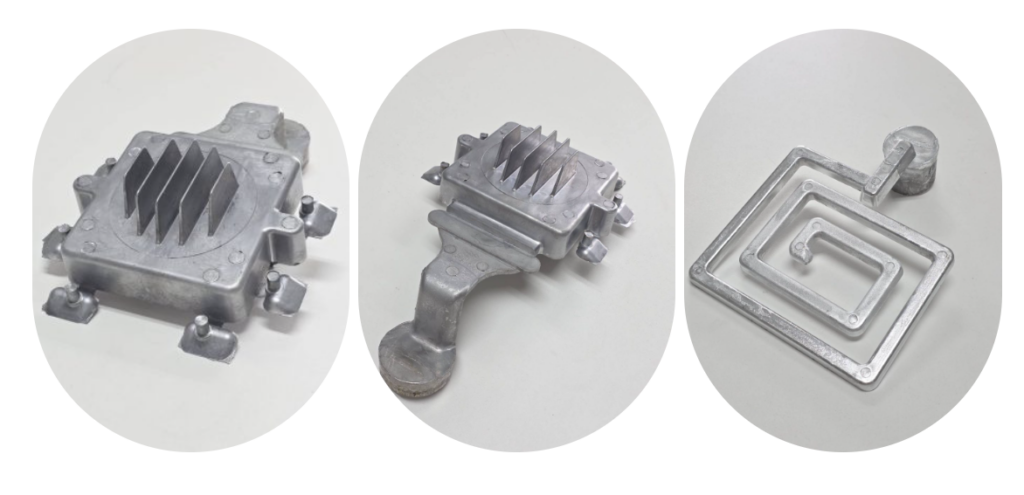
KMUTT Production Engineering researchers, with an MTEC collaborator, developed aluminium alloy designs using nickel and scandium to improve strength retention at elevated temperatures. The university case describes reinforcing phases and nanoscale particles intended to address limitations of conventional aluminium alloys. It reports laboratory success, scholarly publication and patent protection.
The alloy combines aluminium nickel reinforcing phases with aluminium scandium nanoscale particles. The applications discussed include lightweight automotive structures and high temperature engineering components, with large component casting among the prospective manufacturing contexts. The economic mechanism is higher capability in domestic material design and development of proprietary technology. The source identifies long term property testing and larger scale industrial collaboration as further work following laboratory development.
EV Guard and charging infrastructure maintenance
- Reported stage
- Joint product research and development
- Economic application
- EV charging maintenance
Joint research reported 25 February 2026
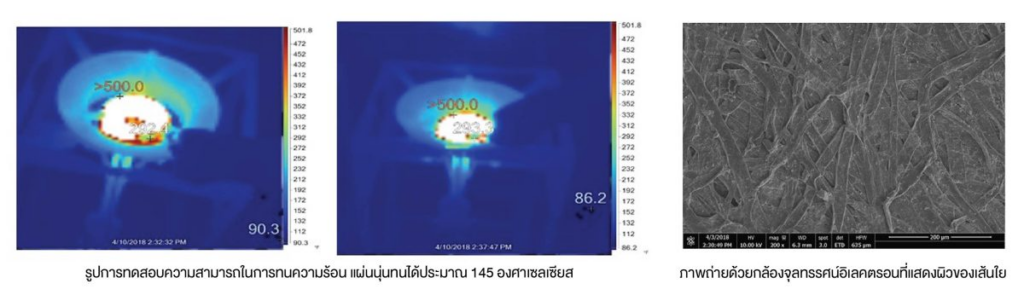
KMUTT Smart Biomaterials and Technology research group worked with South Korea’s EV ALL on EV Guard, a multilayer kapok based sheet for cleaning EV charging connectors. The original report describes moisture absorption, antistatic functions and a biopolymer binder. The company contributes knowledge across the EV supply chain and the collaboration also examines users and market requirements.
The sheet combines kapok and bamboo fibres for strength, a kapok moisture absorbing layer and an antistatic layer, bonded into one product. The collaboration connects material research with maintenance requirements and user behaviour in the EV sector. Its economic application is development of a maintenance product for charging infrastructure. The reported stage is joint research and product development, with charging station applications and further safety functions identified for future extension.
Augmented Craft and digitally assisted rattan production
- Reported stage
- Demonstrated pavilion in 2026
- Economic application
- Digital craft and creative production
Demonstration reported 19 February 2026
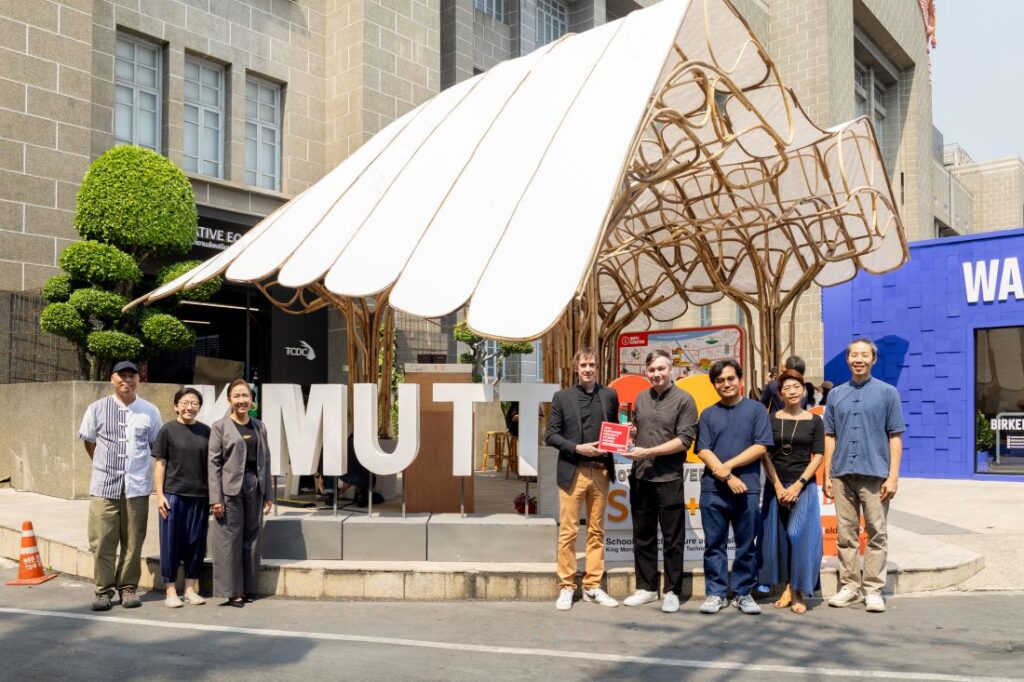
Augmented Craft combined work by Studio Igor Pantic, SoA+D, Engineering and FIBO at KMUTT in a steam bent rattan pavilion shown at Bangkok Design Week 2026. The project used digital modelling and HoloLens mixed reality guidance to connect complex design geometry with physical craft production. The university case reports recognition in the Best of Bangkok Design Week 2026 selection by the European Product Design Award.
Steam treatment makes rattan pliable while the mixed reality display gives craftspeople a visual reference from the digital model. This connects architectural geometry with skilled manual fabrication. The economic relevance is the application of digital tools to traditional material knowledge and new forms of creative production. The pavilion is a demonstrated output connecting designers, engineers and craftspeople, showing that university innovation can serve creative industries alongside industrial production.
Microchannel cooling for future computing infrastructure
- Reported stage
- Experimental prototype and award
- Economic application
- Future data centre thermal management
2025 award and development reported 25 March 2026
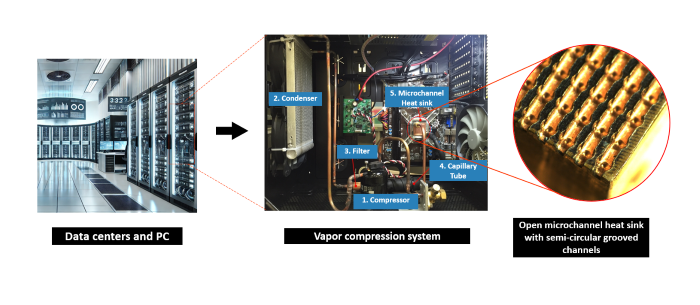
KMUTT Mechanical Engineering students and faculty developed an open microchannel heat sink with modified channel surfaces to improve heat transfer. The case published on 25 March 2026 records a gold medal at a 2025 invention and innovation competition and describes tests using R 513A refrigerant. It reports a cooling improvement of up to 120 percent against the design comparison used by the researchers.
The reported improvement is an experimental comparison between heat sink designs. Curved groove surfaces increase contact area and support refrigerant phase change, the heat transfer mechanism investigated by the team. The economic application is potential thermal management improvement for high performance computing and AI hardware. The source describes patent preparation and industry testing under conditions closer to operation as further steps following the research prototype.
Publications, patents and industrial dissemination
A peer reviewed materials research example from 2025
The Journal of Metals Materials and Minerals published a study on bagasse lignin for food packaging on 26 August 2025, volume 35 issue 3, article e2354, DOI 10.55713/jmmm.v35i3.2354. The author list identifies Weerawan Laosiripojana with KMUTT Department of Tool and Materials Engineering alongside MTEC and KMUTNB collaborators. The paper examines lignin containing PLA films fabricated by blown film extrusion, including UV shielding, antioxidant performance and migration behaviour. This provides a specific scholarly output relevant to industrial material development; it is not a substitute for THE’s complete bibliometric search and publication count.
Industrial dissemination at ASEW in July 2025
KMUTT presented energy and circular material research at ASEAN Sustainable Energy Week 2025, held on 2–4 July 2025. Its report records industry facing exhibits including customised lignin applications, biochar from discarded mushroom growing material, heat pump technology and biogas related work. The exhibition connected university research capabilities with an industrial audience. It demonstrates dissemination and opportunities for collaboration, rather than a record of contracts signed or income received.
Economic links across research disciplines
These examples show how materials science, food engineering, robotics, digital design and biotechnology contribute different capabilities to industrial development. Their common pathway is problem definition, research, protection or documentation of know how, testing with users, and translation into a product, process or venture. The cases distinguish each stage so that a successful demonstration does not become an unsupported claim of completed commercial adoption.
A published patent application in 2025
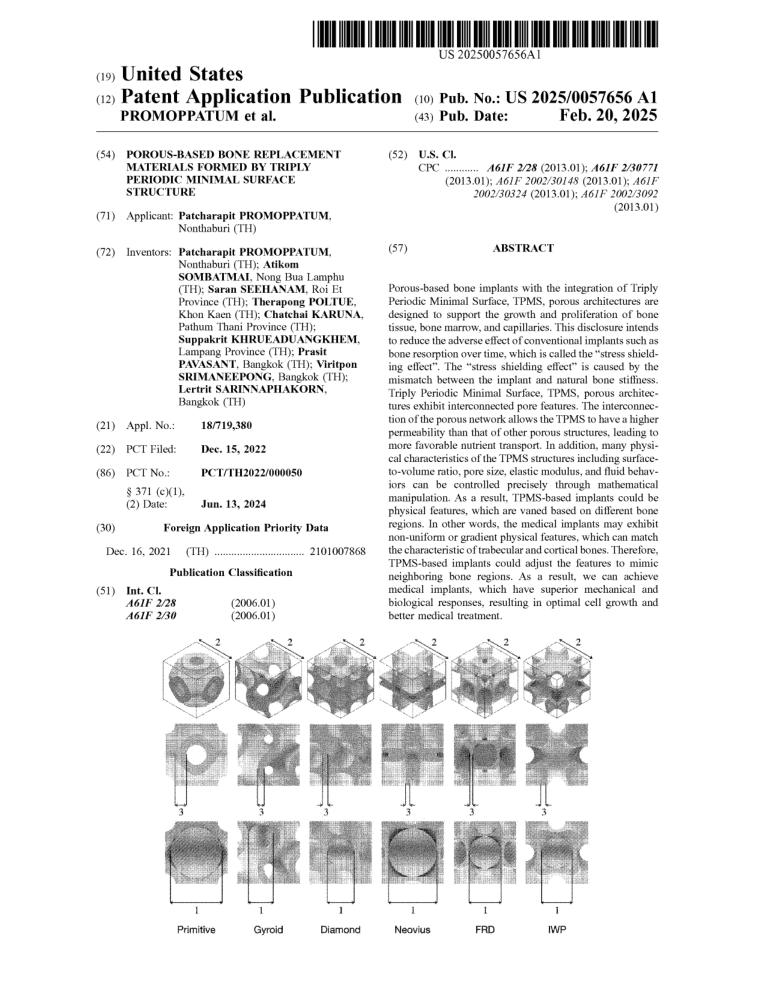
US patent application publication US20250057656A1 was published on 20 February 2025 for porous bone replacement materials using triply periodic minimal surface structures. The official publication names Patcharapit Promoppatum and collaborators as inventors and identifies the applicant as Patcharapit Promoppatum. It is an application publication, not presented here as an issued patent or proof that the university is the registered owner.
This is a traceable IP output relevant to the medical manufacturing research described above. Indicator 9.2.1 instead measures patents citing university research; application ownership, inventor affiliation and citation based impact are separate attributes. No local patent count or single application is substituted for that metric.
KX as an innovation and enterprise platform
KX combines a university innovation function with a building used for working, meeting, pitching and professional exchange. The evidence below identifies three different roles: KX as an organiser or programme partner, the KX building as a venue, and KX as a continuing source of venture support. Activities held elsewhere retain their actual venues.
How the building supports an innovation pathway
| Stage | KX contribution | Dated illustration |
|---|---|---|
| Explore a business problem | Bring students and entrepreneurs into contact with users and experienced founders. | ISE students visited KX on 27 February 2026. |
| Develop and test an idea | Connect technical work with mentoring and a business proposition. | SIT student teams presented tested MVPs at KX on 24 August 2026. |
| Meet industrial and financial partners | Provide opportunities for business clinics, expert exchange and matching. | SCB KX event at the building on 30 October 2025. |
| Prepare for market expansion | Support international workshops, introductions and pitches. | Green TECHBITE sessions in September 2025 and June 2026. |
| Continue as an operating business | Provide access to networks, funding pathways and office space. | iCube experience reported by KX in August 2026. |
The university also uses KX for academic exchange. On 9 April 2025, Chiang Mai University’s Faculty of Architecture visited SoA+D at the KX building for discussions on international graduate programmes, institutional management and facilities. This was an institutional visit; the report does not identify it as a KMUTT student competition.
Space and institutional support
KX’s office service combines private offices and coworking with meeting facilities and community activities. Its institutional description places university researchers, SMEs and startups in the same knowledge exchange model. These service descriptions explain the operating setting; the dated activities and venture accounts establish the 2025–2026 evidence.
SCB collaboration for SME technology adoption
30 October 2025 at the KX building and a 2026 programme continuation
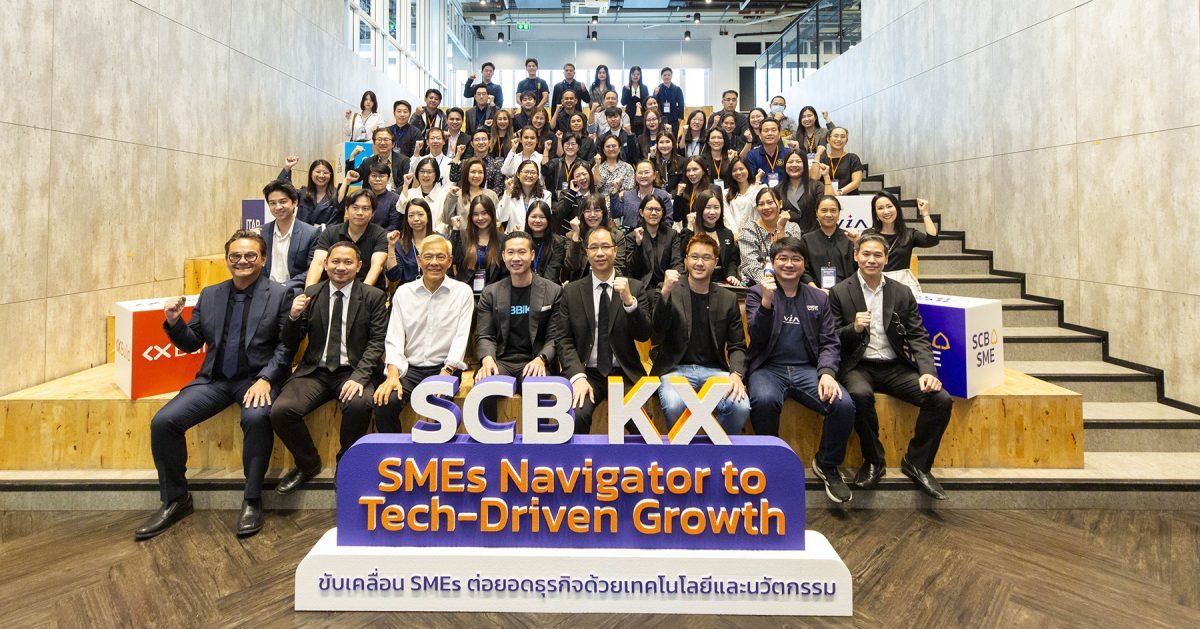
KX and Siam Commercial Bank jointly held SCB KX SMEs Navigator to Tech Driven Growth in the seventh floor Auditorium on 30 October 2025. KMUTT reported more than 300 participants from academia, industry and SMEs. The event combined knowledge sharing, business clinics, practical cases and a funding matching hub intended to help entrepreneurs begin research and development projects.
KX’s 10 August 2026 account describes the subsequent SME Navigator for Smart Factory collaboration. The KX Build team used design thinking to identify production problems and develop technology roadmaps, with attention to business strategy, investment choices and relevant standards. This links manufacturing needs with university expertise and the banking network.
The economic contribution is a route for SMEs to select and apply suitable technology. Business clinics and roadmaps connect an enterprise’s production problem with appropriate technical expertise, while the banking partnership adds access to financial and business networks.
Green TECHBITE builds Thai and European connections
16 September 2025 and 26 June 2026
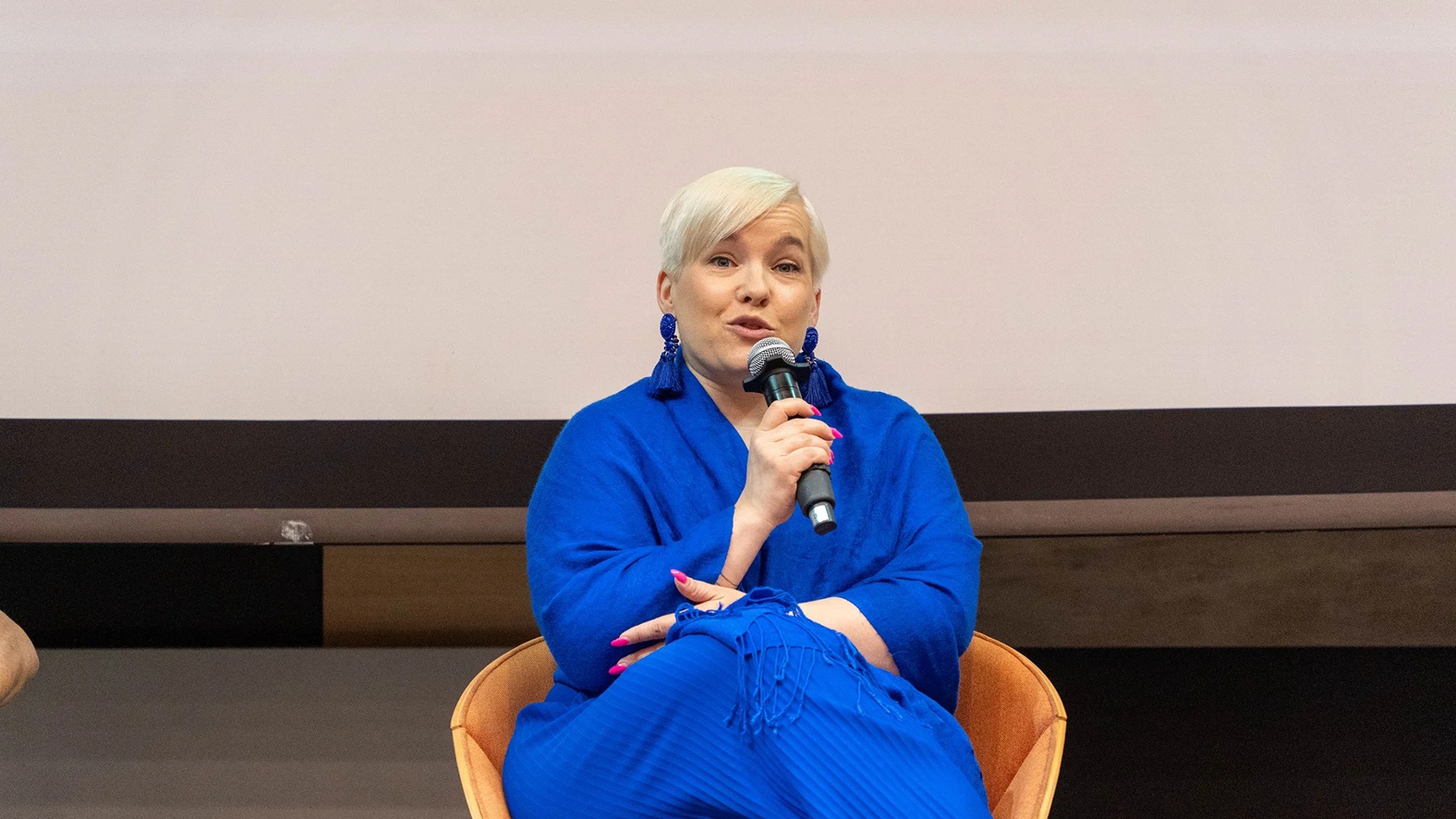
Green TECHBITE Towards EU Market brought Thai and European expertise together on 16 September 2025. A BCG sector panel involved Greenrime, Start2 Group, TU Braunschweig and Bangkok Solar Power. Discussion addressed research connections, sustainability expectations and using established European networks to enter new markets.
Season 2 continued the exchange on 26 June 2026. Speakers from Maria 01, 3T Invest AB and Start2 Group discussed business relationships, investor introductions and cross border innovation. The programme was organised by KX with Thailand’s Ministry of Foreign Affairs. Workshops and networking connected technological development with the practical requirements of international business.
This is a specific internationalisation mechanism within the university innovation ecosystem: founders can test their market assumptions against people who understand customers, investment and regulations abroad. Programme participation and business relationships are the documented outputs.
Green TECHBITE venture outcomes
KX reports dated 12 and 18 July 2026
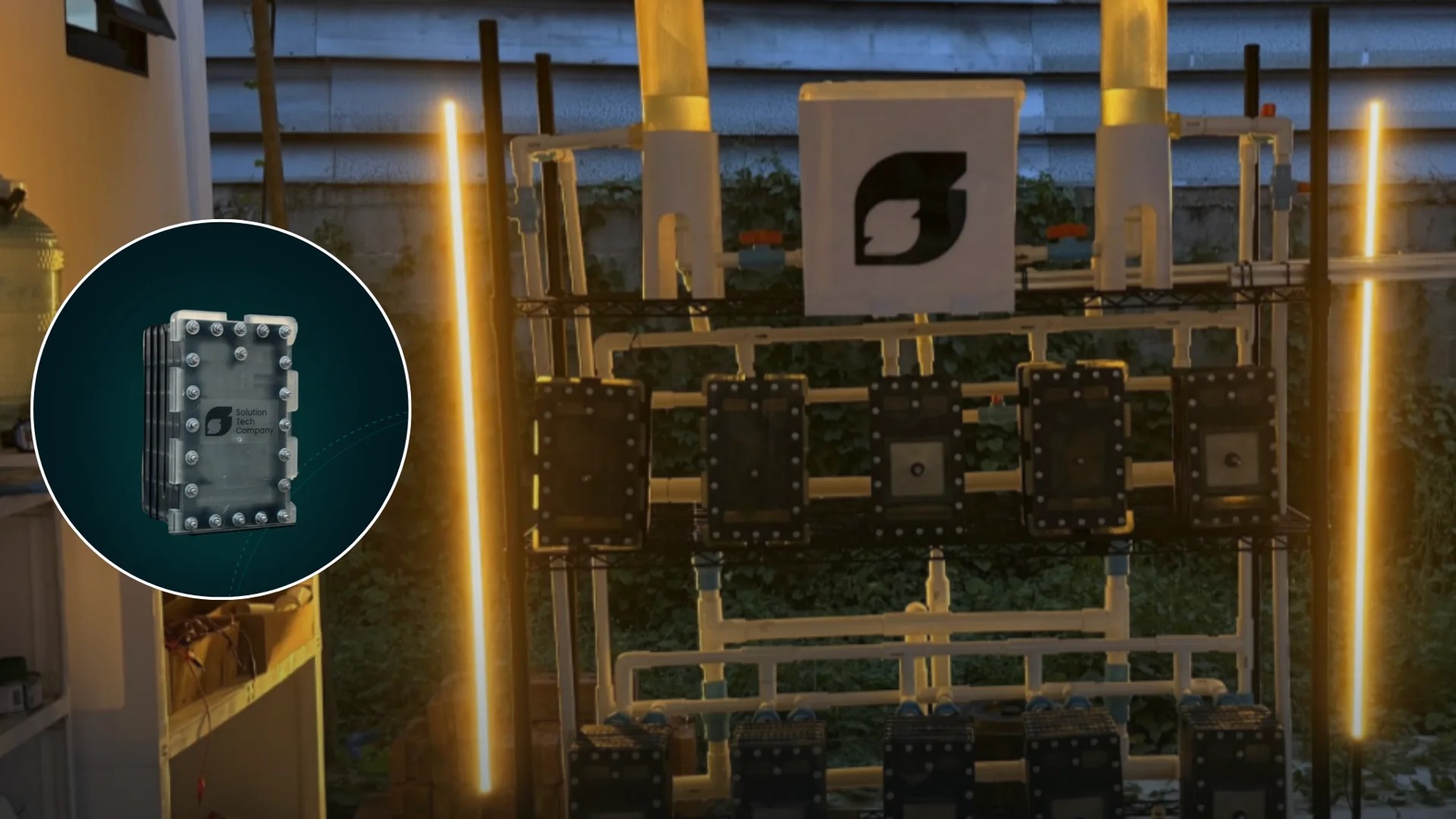
KX’s 18 July 2026 report records a THB 1 million investment announcement by 3T Invest AB’s founder during Solution Tech Company’s Green TECHBITE Season 2 pitch. The company develops membraneless electrolyser technology for lower cost hydrogen production. The documented financial milestone is an investor announcement at the session; the article does not provide evidence of a completed fund transfer.
The 12 July account of T AL Holding describes continued mentoring after Season 1 and connections with GreenRime, TU Braunschweig and the Association of Thai Professionals in Europe Region. Its energy management and carbon footprint platforms show the industrial application around which those relationships developed. The company returned for Season 2 workshops and pitching.
Together these cases make KX’s economic role concrete: introductions can support investment opportunities, technology partnerships and continuing market preparation. The reported investment is venture finance and is kept separate from university research income.
TECHBITE Energy moves from cohort to demonstration
31 October 2025 at True Digital Park
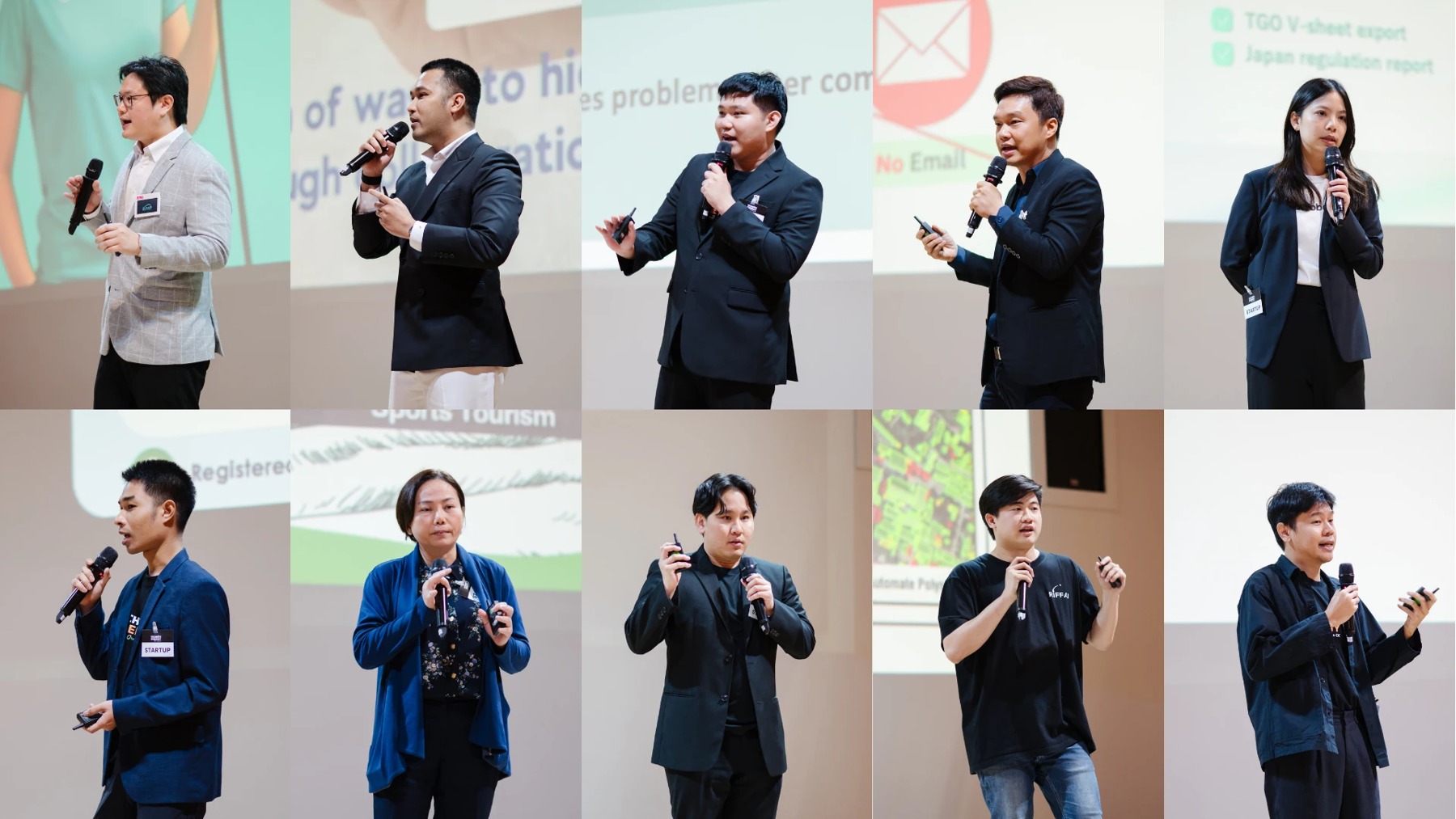
Bangchak Group and KX jointly hosted the TECHBITE Energy Demo Day on 31 October 2025 at True Digital Park. The programme progressed beyond its July launch to a documented exhibition, expert discussion and ten team pitching session. This event was co organised by KX and took place outside the KX building.
The ten presenters were AIRIONIX, ECOCREW, EMERALD PLAST, MAC Oxidizing, NORVIQUE, REWASTEC, RIFFAI, THE TRUCKERS, ZEROBOARD Thailand and ZLEEPCHARGE. Their applications included combustion, reusable packaging, circular materials, route planning, satellite data, freight, carbon reporting and EV charging. The investor panel brought together KX, Bangchak, Beacon VC, Banpu and Innopower.
The event supplied a setting in which technology developers could explain products and business models to industrial and investment audiences. Its exhibition, expert panel and ten team pitch programme demonstrate an executed accelerator milestone connecting technology with sector demand.
Food and biotech development connects science with market requirements
TECHBITE Food and Biotech in June 2025
KX’s account of the TECHBITE Food and Biotech event on 11 June 2025 records an NSTDA Industrial Bioprocess Innovation Group keynote on food regulation and product launch. It connected scientific development with approval pathways, research facilities and business support. The practical message for founders was that a promising laboratory result also requires a route to a usable product and an accessible market.
Ajinomoto’s programme account documents ten startups from six countries, workshops, factory and laboratory visits, expert networks and a June 2025 conclusion. Together the two accounts show complementary parts of the accelerator: technical and commercial preparation, corporate exposure and presentation of venture propositions. The actual cohort and its mixed December 2024 to June 2025 period remain identified in Section 3.
The programme strengthens the links between university expertise, food industry demand and entrepreneurial capabilities. Regulatory learning, corporate exposure and specialist mentoring address practical steps needed to develop a research result into a viable food or biotechnology proposition.
Investor learning and recognised incubation capacity
KX records from August and October 2025
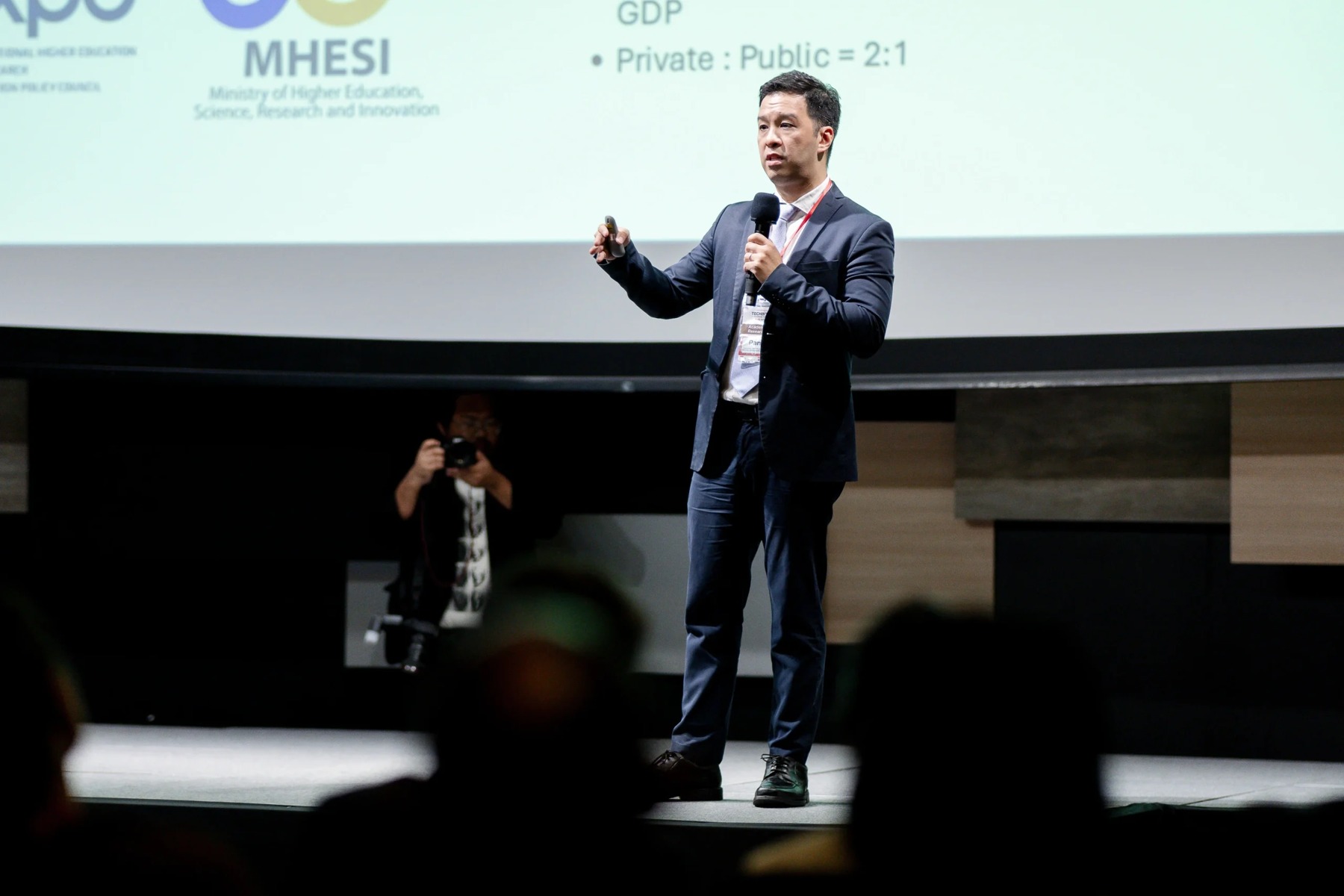
KX’s 1 October 2025 retrospective reports that Thailand Business Angel Network held its first Angel Investor Training Program at KX Space. Participants practised analysing business deals and formed investor connections. The article identifies the building as a venue for professional learning and networking, although it does not give the event’s exact date or participant count.
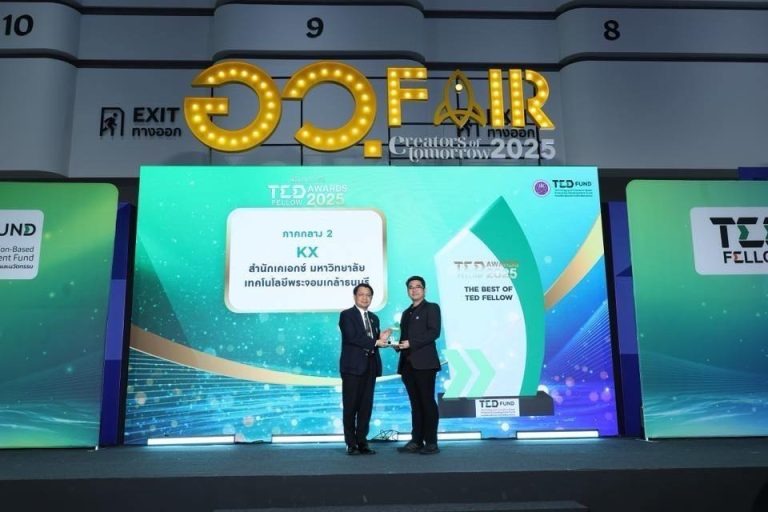
A separate dated achievement supports KX’s incubation role. On 14 August 2025, KX received the TED Fellow Awards 2025 recognition The Best of TED Fellow Central Region 2 at Queen Sirikit National Convention Center. KX’s report states that assessment considered development of entrepreneurs towards TED Youth Startup support and service user satisfaction.
These records cover two sides of a venture ecosystem: improving the knowledge of potential investors and supporting technology entrepreneurs through incubation. KX supplies a shared setting for these complementary groups and received recognition for its entrepreneur development work.
iCube links engineering experience with industrial data services
Continuing venture activity reported 5 August 2026
KX’s 2026 iCube profile describes a company founded by a KMUTT Engineering alumnus whose experience with industrial work during study helped reveal problems in factory data. The account traces subsequent support through KX incubation, connections towards TED Fund support and office space within the KX building. These are stages in an established company’s development, not a claim that it was founded in 2026.
The company’s Manufacturing Data Management Platform connects heterogeneous factory data and supports analysis and management. KX describes services spanning machine data connections, data management and decision support. This gives the university ecosystem a concrete industrial application and shows why proximity to mentors, researchers and other ventures can matter after a programme ends.
iCube illustrates continuity from student experience to alumni entrepreneurship. The KX building provides a setting in which a venture can continue working while drawing on relationships formed during incubation. Its factory data services make the connection between university trained talent and industrial needs visible.
Modgut carries KMUTT research into a health technology service
Research commercialisation account published 4 August 2026
The KX account describes Modgut developing from KMUTT gut microbiome research into personalised health technology. It links microbiome knowledge, bioinformatics and data analysis with the development of services for users. KX’s support included incubation and connections within an innovation ecosystem rather than a university course alone.
The report describes a home sampling service and the translation of scientific information into individual guidance. It also identifies continuing intellectual property development through a published US patent application, which remains an application publication. The economic relevance is a research based service business supported by product development and partnerships.
Modgut complements the established OsseoLabs case: the two illustrate different routes for applying specialist university research, one in medical manufacturing and the other in microbiome related services. The 2026 account connects continuing service and IP development with the venture’s earlier incubation history.
KX hosts solutions development for graduate employment
28 to 30 August 2026
Generation Thailand’s three day hackathon focused on solutions to graduate employment challenges. KX was a Supporting Partner and provided activity space. Its 17 September 2026 retrospective records the event dates as 28–30 August 2026 and describes young participants working with specialists and partners from different sectors.
The activity connects the building with collaborative problem solving and the transition from education to work. Its format gave participants time to develop ideas together, obtain perspectives from others and frame possible solutions. KX’s contribution was both partnership and a place for that exchange.
The programme served young people and recent graduates across the wider ecosystem. The SIT Innoventure final and ISE visit in Section 7 complement this broader engagement with activities involving current KMUTT students specifically.
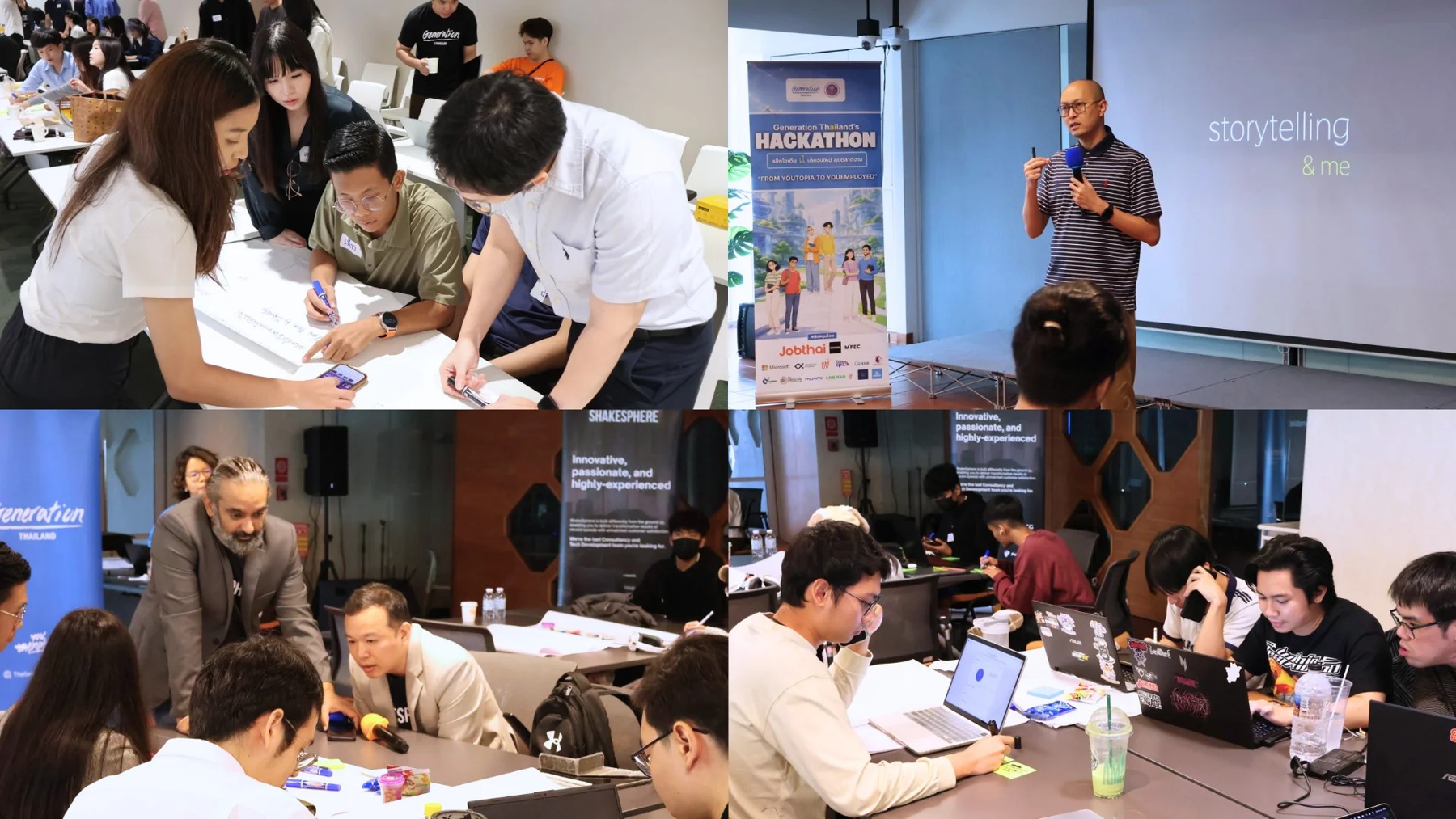
Additional professional learning opportunity supported by KX
KX’s 7 August 2025 announcement offered support for HEALTHI Lab, a 12 week healthcare innovation programme scheduled for 9 September to 28 November 2025 by Siriraj, MIT nextMED and Degree Plus. Its action learning model combined medical, technology and business knowledge. A limited 25 percent fee support offer covered selected KMUTT personnel, students, alumni and KX network applicants. This record demonstrates an offered development pathway; it is not a completion or attendance claim.
FabLab connects digital fabrication design and business
Bangkok Design Week activity in 2025 and 2026
FabLab Bangkok supplies a prototyping and technology learning function within the KX ecosystem. KX’s service description identifies CNC, laser cutting, 3D printing, electronics and PCB services, together with education and professional development. This connects the building’s enterprise networks with facilities for making and testing physical ideas.
The official Bangkok Design Week 2025 programme listed Design Make and Assembly with Digital Fabrication at FabLab in the KX building. Participants were offered product design and making with 3D printers and laser cutters. This is a record of the workshop offer and scheduled access, with no attendance total assigned.
FabLab’s retrospective published on 16 February 2026 documents the Design Driven Innovation panel at KX during Bangkok Design Week 2026. Speakers connected coding education, detailed prototyping, robotic product acceptance and circular materials with user needs and business value. KX leadership opened the discussion and the FabLab manager moderated it.
This gives KX a further distinctive role: bringing the design and manufacture of a prototype into the same ecosystem as technical learning, entrepreneurs and market knowledge.
- 3D printing and laser cutting
- Make and examine a physical design through iterative work.
- CNC and electronics services
- Connect product ideas with practical fabrication and circuit development.
- Design and business discussion
- Relate a technical prototype to usability, production choices and a market proposition.
Student innovation and industrial learning
Student participation gives the innovation ecosystem a continuing source of ideas, technical prototypes and entrepreneurial talent. The following eleven examples cover startup development, enterprise exposure, industry assessed capstones, cooperative education, robotics and product innovation. Actual dates and development stages identify what students achieved. Projects at LX, FIBO, Ratchaburi or external venues are not attributed to the KX building.
- Business and startup development
- SIT Innoventure at KX; KMUTT ACTS with research, founder and investor exchange.
- Direct contact with enterprise
- ISE students visiting KX and its entrepreneur network.
- Applied engineering and digital work
- Project Day, CS Project D Day and cooperative education presentations.
- Testing and competition
- EGAT prototype selection and the national robotics competition.
- Products for practical needs
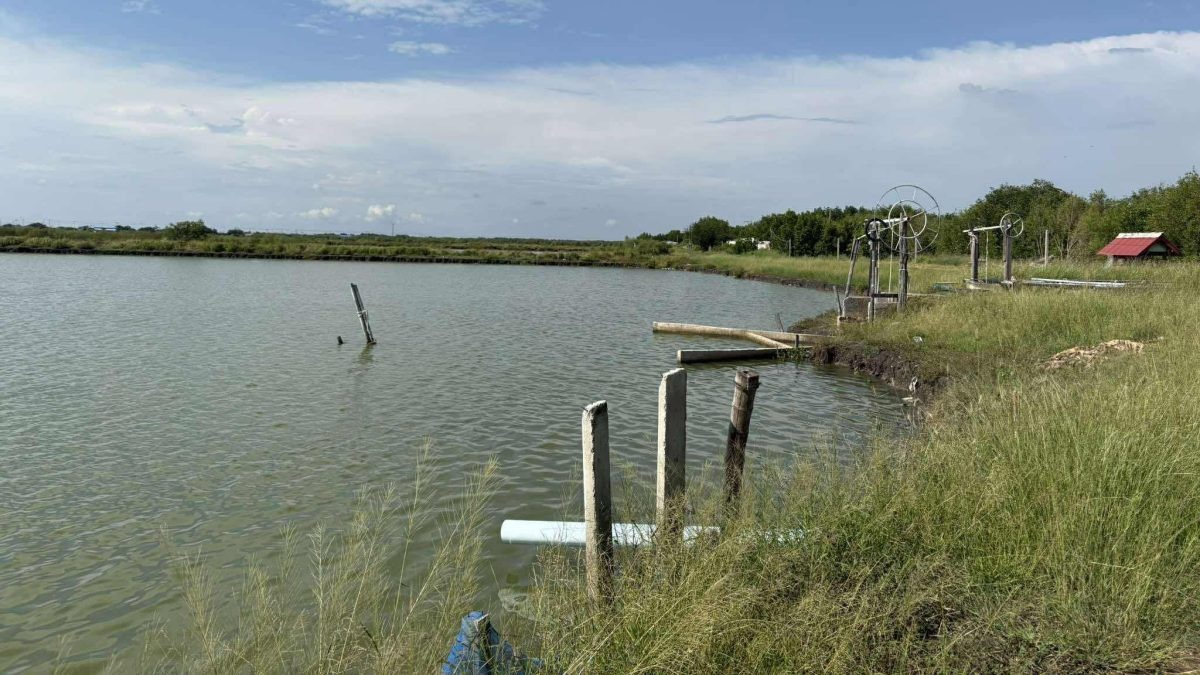
- IoT aquaculture, Spirulux Caviar and Ping Ping robotics.
These activities build capabilities across a sequence of tasks: identifying a user need, making and testing a solution, explaining its value, and learning from technical or business feedback.
SIT Innoventure develops student digital ventures at KX
Selection in May 2026 and final pitching on 24 August 2026
SIT selected fourteen teams for the May to July development programme before seven finalists presented MVPs and market tested digital business models in the KX seventh floor Auditorium on 24 August 2026. The selection and final counts refer to stages of one programme. Finalists represented Information Technology, Computer Science and Digital Service Innovation.
- Selected for development
- 14 teams
- May–July 2026 programme
- Final pitching stage
- 7 finalists
- 24 August 2026 · KX Auditorium
These are two stages of one programme; the selected and finalist counts are not added together.
Back Office won with Brew Ledger, financial infrastructure for coffee shops. Unicorn was first runner up with MomLink, an integrated pregnancy tracking system. Clickdee was second runner up with CLICKDEE, an AI tool for marketing campaign planning and execution. These examples connect students’ computing skills with recognisable business and user needs.
KX, KBTG, MU Holding, the Thai Startup Trade Association and depa contributed ecosystem perspectives during the event. Students gained a forum for product demonstration and expert feedback while learning how technology, market validation and a business proposition fit together. The documented outputs are developed student solutions and competition results.
Intelligent Systems Engineering students meet the KX ecosystem
27 February 2026 at the KX building
Third year Intelligent Systems Engineering students from KMUTT Ratchaburi visited KX on 27 February 2026. The visit connected their technical studies with perspectives from university alumni, entrepreneurs working with KX and KX management.
Alumni discussed development during university and routes towards work and business. Entrepreneurs explained applying innovation and adapting SME operations. KX introduced its working spaces, networks and services for people seeking to develop ideas into ventures. Students therefore encountered both the physical building and the support relationships that operate through it.
This is direct evidence that KX’s university enterprise connection reaches current students. The practical contribution is exposure to how an engineering idea becomes an organisational or commercial proposition, supported by conversations with people who have taken that route.
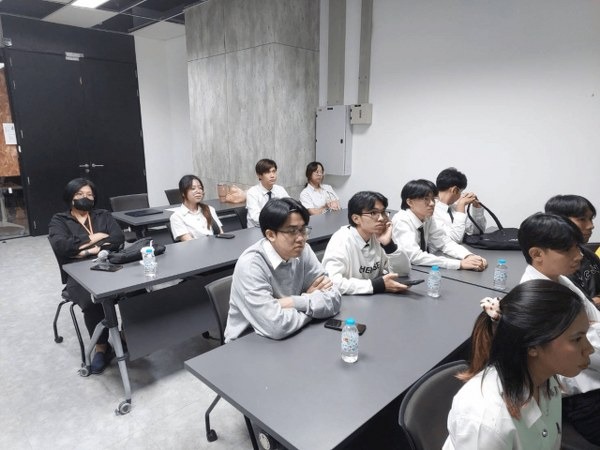
KMUTT ACTS connects students and personnel with business development
14 September 2026 at the LX building
KMUTT Entrepreneurship Hatch and RIPO organised KMUTT ACTS 2026 Turning Ideas into Action on 14 September 2026 at LX. Students, academic staff and partners explored how research and innovation can develop into useful products and business opportunities.
Sessions addressed moving beyond the laboratory, what makes research investable and lessons from operating businesses. Speakers included research entrepreneurs, RISE and company founders, with representation from KX Accelerators. An innovation exhibition, research funding advice and Business Matching and Networking complemented the discussions.
The event linked technical ideas with customer needs, investment perspectives and potential collaborators. Its contribution is an executed university wide entrepreneurship learning and networking activity for students and personnel. LX was the event venue; KX’s involvement was through its accelerator network.
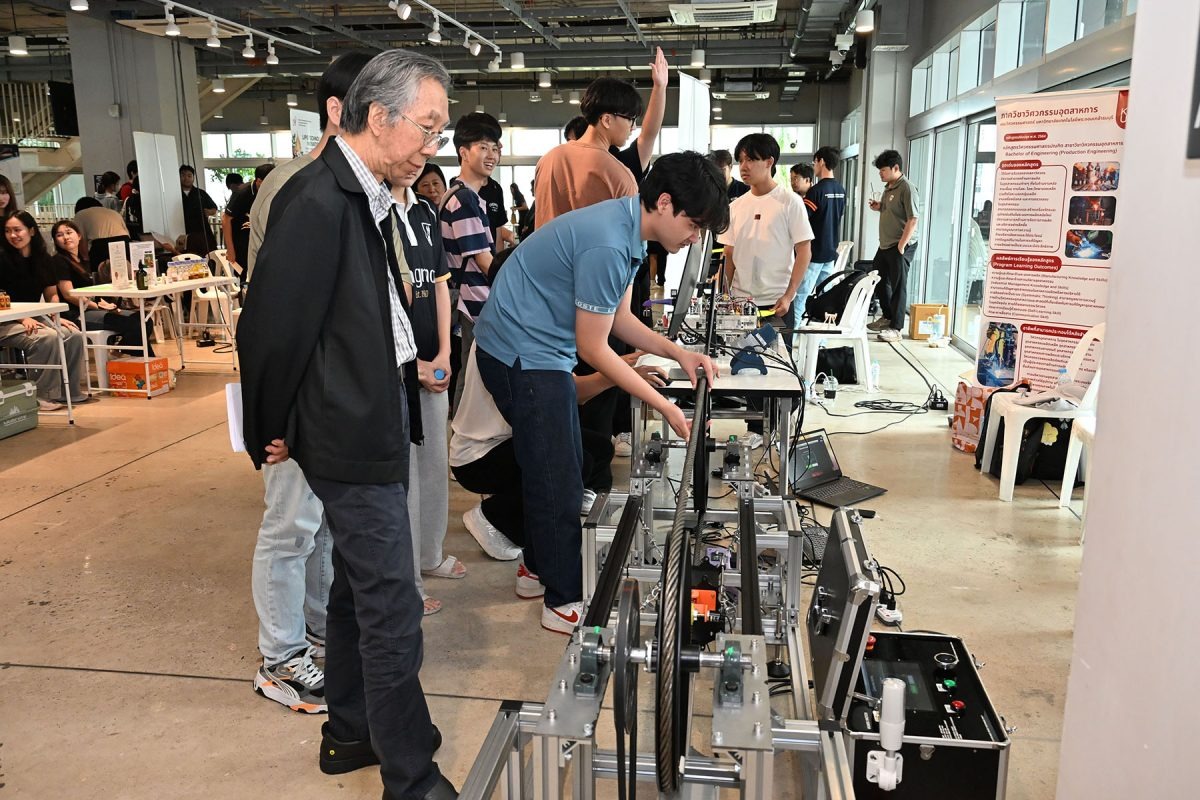
Project Day brings industry into student engineering assessment
11 May 2026 at the LX building
The sixth Engineering Project Day brought together fourth year work from ten undergraduate departments on 11 May 2026. KMUTT reported more than 300 displayed projects, including engineering capstones and mini projects. Industrial representatives participated in assessment and awards. Partners named in the account included Western Digital Thailand, Thai Oil, TMT Steel, Thai Murata, Syntec, Major Cineplex, I P One and Ampol Food.
Winning examples included a robot for installing and verifying acoustic emission sensors on vertical structures and hard carbon from malt beer residue for sodium ion battery anodes. Other work addressed music data, rainwater collection, elderly health applications and touch free interfaces.
The format applies classroom knowledge to a technical problem, a physical or digital solution and public presentation. Industry feedback exposes students to practical requirements and gives companies an opportunity to see emerging capabilities across the engineering disciplines.
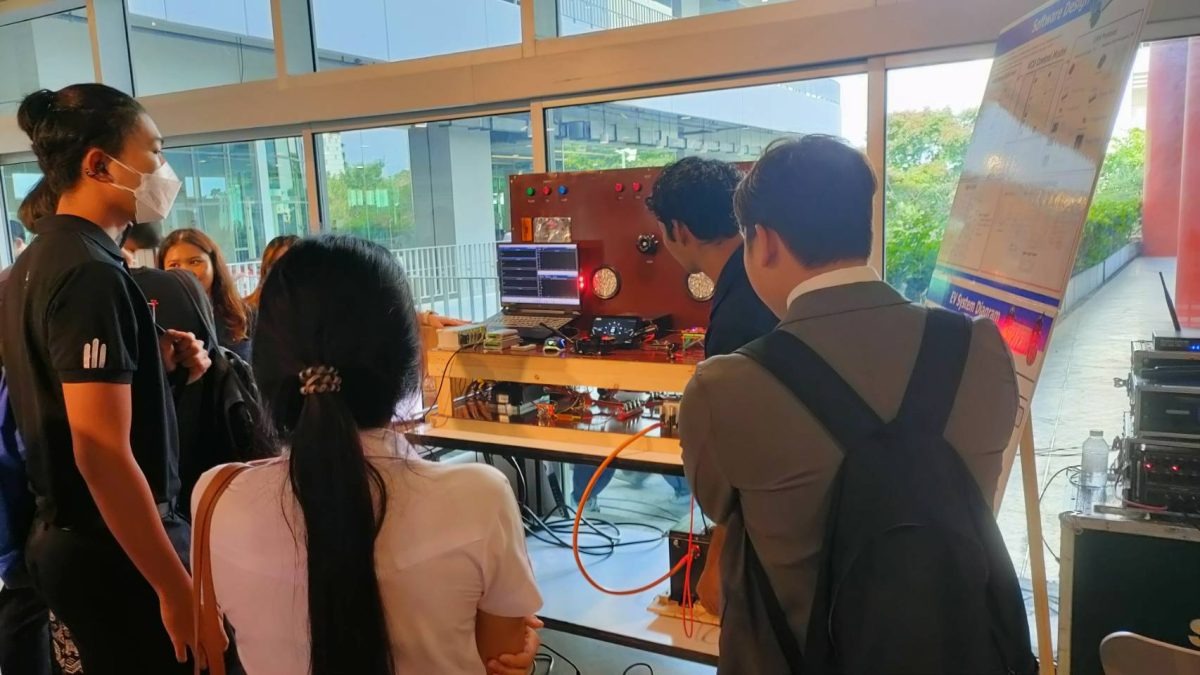
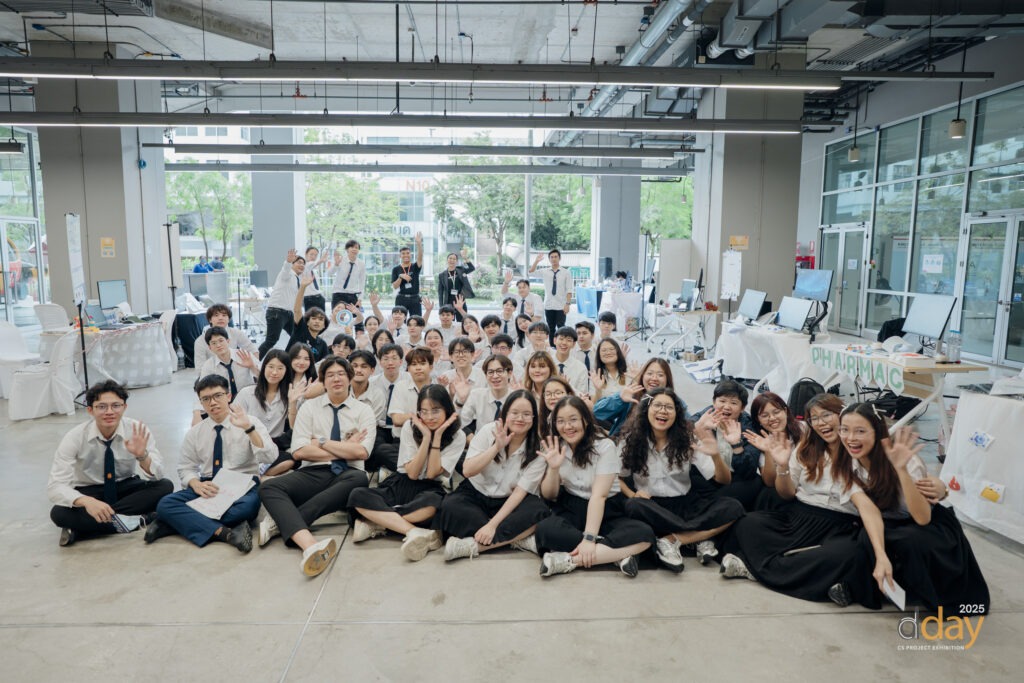
CS Project D Day develops digital solutions and presentation skills
7 November 2025 at the LX building
SIT held CS Project D Day Exhibition 2025 on 7 November 2025. Fourth year Computer Science students and three Digital Service Innovation groups displayed more than twenty projects in total. The three DSI groups form part of the event rather than an additional count outside it.
The work covered AI, IoT and data analytics. Student teams demonstrated their solutions, answered questions and received responses from judges and visitors. The exhibition made computing projects visible beyond the individual course and provided practice in explaining technical decisions to others.
This learning mechanism connects technical production with teamwork, communication and feedback. These capabilities support later innovation work in software, data services and technology businesses. The completed exhibition gives student work an audience and creates a practical setting for improving how solutions are presented.
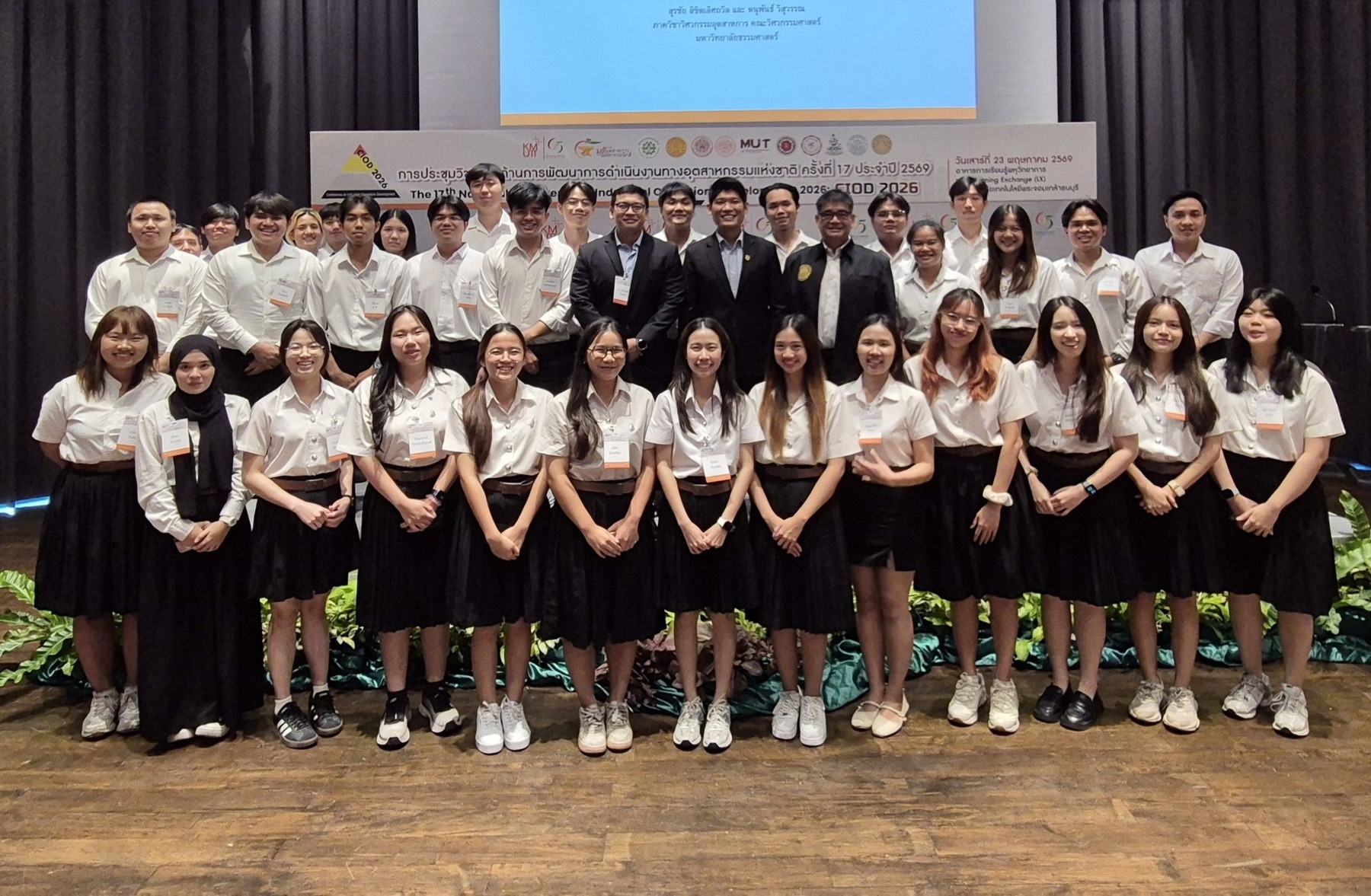
Cooperative education converts factory problems into research
25 May 2026 at CIOD 2026
Students in Industrial Engineering and Mechatronics cooperative education courses presented research at the seventeenth National Conference on Industrial Operations Development on 25 May 2026. The department reported thirty four accepted student papers and one Best Paper Award.
The winning study applied machine vision and a collaborative robot to reduce ergonomic risk in an automotive assembly process. It illustrates how work integrated learning can turn a practical manufacturing problem into a supervised engineering investigation and a presented technical result.
The economic connection is the development of engineering capability around actual industrial operations, including automation and safer production work. Thirty four accepted presentations show a structured route for students to document and communicate what they learned from industrial problems.
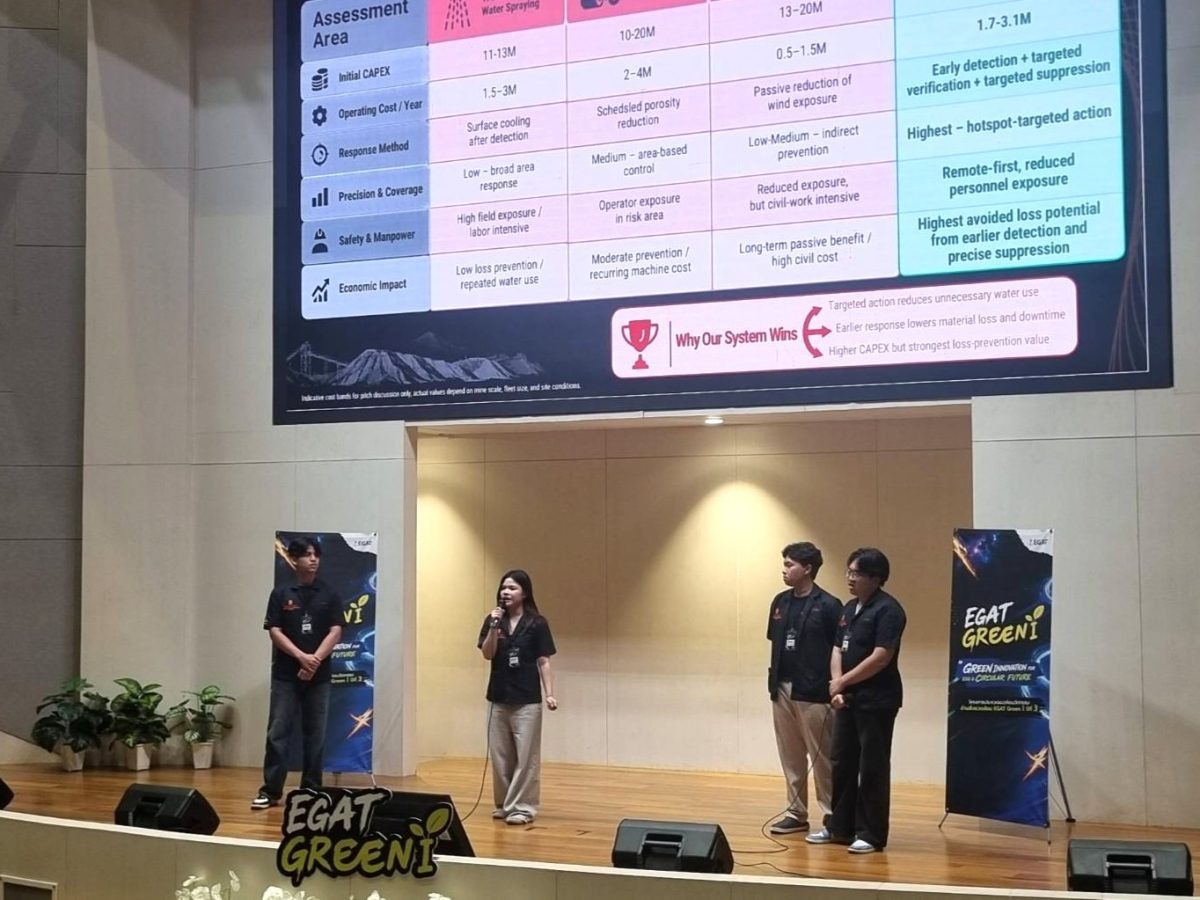
AURA develops an energy sector safety prototype
Pitching selection on 12 October 2026
KMUTT Engineering’s AURA team reached the final three in the EGAT Green I Circular Innovation Challenge after pitching on 12 October 2026. The team received THB 20,000 for prototype development. Four undergraduate students in Control System and Instrumentation Engineering worked with a master’s student in Electrical Engineering and a faculty adviser.
The concept combines drones with unmanned ground vehicles to manage safety risks from spontaneous combustion in coal stockpiles. It brings sensing, controls and robotics into an industrial energy problem. The documented achievement is selection and prototype support, with further development required.
The reported Demo Day was scheduled for 16 December 2026. As of 10 November 2026 it remained a future competition stage. This case therefore demonstrates an industry defined problem and supported student prototype pathway, without attributing a final award or operational deployment to the team.
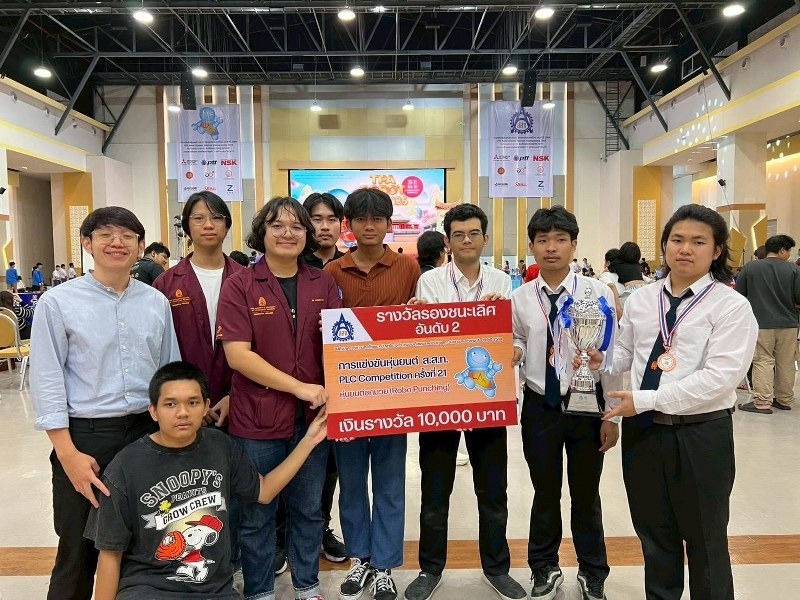
National robotics competition builds automation capability
30 and 31 May 2026 at Zeer Rangsit
Two KMUTT Ratchaburi teams participated in the national TPA robotics competitions on 30–31 May 2026. RC AutoBrain1 received second runner up in the twenty first PLC Competition Robo Punching category. RC Modracle participated in the thirty third TPA Robot competition under the Kung Fu Quest task.
The tasks required students to integrate mechanisms, control logic, precision and practical problem solving under competition conditions. The result is a concrete example of engineering learning through design, construction and testing beyond a written assignment.
Automation competence is relevant to manufacturing and technology services. The category award and participation of both teams show opportunities for students to test control and mechanical design skills against defined external tasks.
FIBO students apply IoT to aquaculture needs
Student innovation reported 11 December 2025
Four FIBO students in team Teletubbies developed an IoT system to assist older fish farmers. KMUTT December 2025 account records the JUMP Thailand Hackathon 2025 royal trophy and Popular Vote recognition. Their system connected water temperature, pH and oxygen sensing with automated feeding and aeration using an AIS 4G IoT board and the AI Farm platform.
Field use revealed that a complex dashboard could be difficult for older users, leading the team to add voice commands. The business approach included trials through fisheries community enterprises and proposed rental or purchase options. These show students considering usability, customers and farmers’ investment constraints alongside engineering.
The economic application is accessible automation for aquaculture. The demonstrated stage is a tested student innovation with a proposed business route, with further investment and development being sought to expand commercial use.
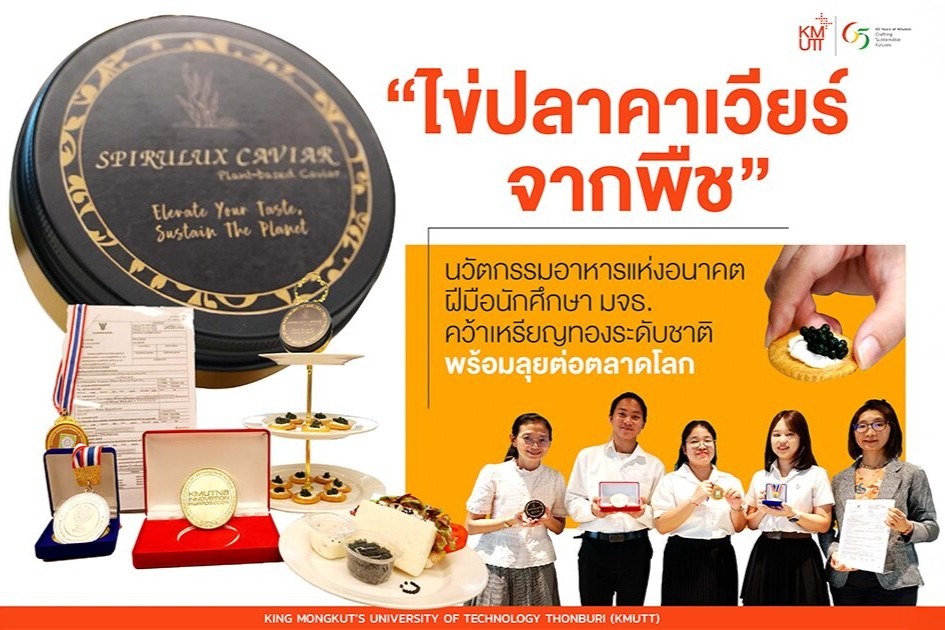
Spirulux Caviar develops a food product from a byproduct
2025 invention award and a 25 March 2026 case report
Three KMUTT students from Food Engineering and Food Science and Technology developed Spirulux Caviar using protein from spirulina extraction residue. The university case records a gold medal at the Thailand New Gen Inventors Award 2025, held during Inventors’ Day.
The project combined ultrasound assisted alkaline extraction with reverse spherification to form caviar like beads. Students repeatedly adjusted flavour and texture under faculty supervision. Their work links food science, process development and product design with the possibility of higher value use for an industrial byproduct.
The March 2026 account describes feasibility work on industrial scale production and the search for private sector collaboration. Commercial expansion remained the next stage for a student product prototype with national recognition.
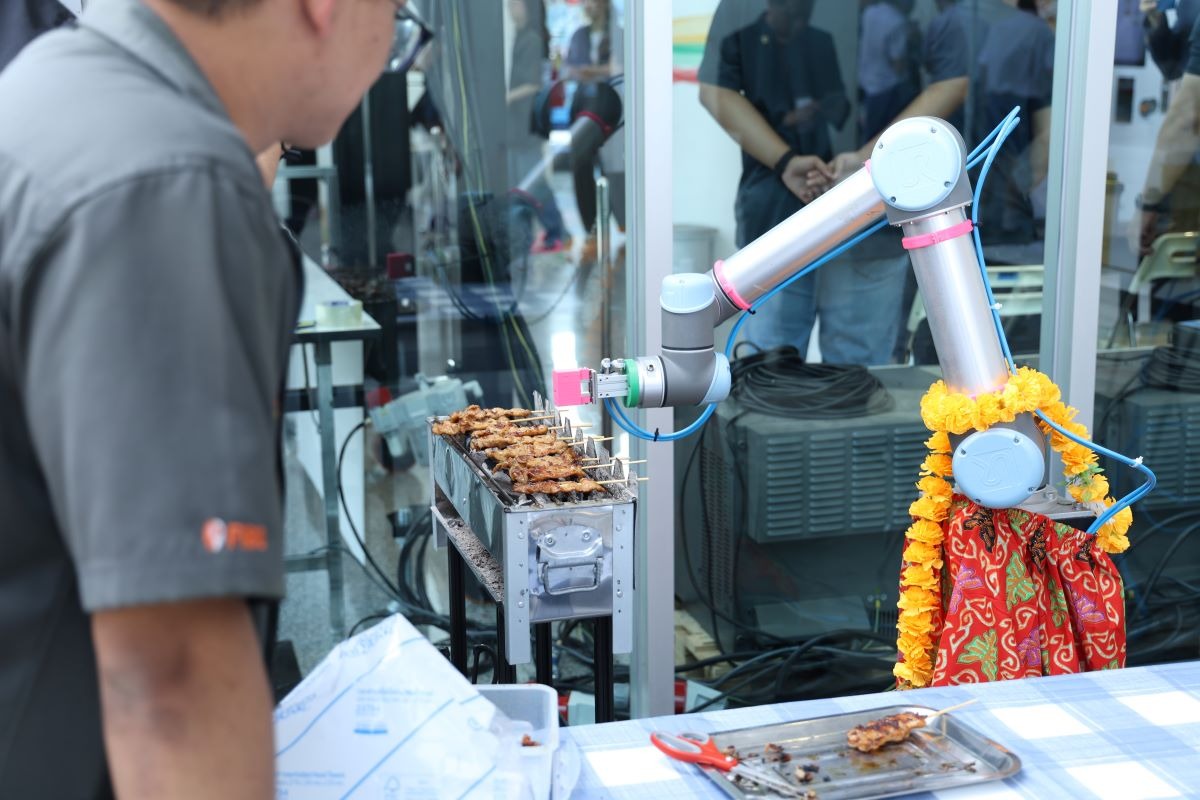
Ping Ping turns a familiar food task into robotics learning
FIBO demonstration on 6 to 8 February 2025
Two third year FIBO students developed Ping Ping, a pork grilling robot shown at the institute’s thirtieth anniversary event on 6–8 February 2025. They analysed the manual task, selected robotics hardware and designed the gripper, grill structure and control functions.
The Demo 1 prototype used a collaborative robot to turn skewers while a person judged doneness and removed cooked food. It handled eight skewers in the reported prototype arrangement. Automatic identification of doneness and loading or unloading were described as later development goals.
The project demonstrates technology applied directly to learning: students used laboratory equipment, estimated costs, tested mechanisms and solved practical problems with faculty support. Its possible application is food service automation. The university explicitly described the prototype as a learning and development step before general commercial use.
Technology-enabled learning and university systems
KMUTT develops innovation capability through both practical learning and the digital services that support teaching and work. The 2025–2026 records below cover staff experimentation with AI, training for educational users, research practice, learning platforms, student administration and shared software. They complement the student engineering and enterprise examples in Section 7.
| Capability | Dated evidence | Users |
|---|---|---|
| AI for university work | Generative AI Competition in August 2025 and administration workshop in July 2025. | KMUTT personnel |
| Digital HR practice | Three AI Driven HR Transformation modules in February, March and June 2026. | HR practitioners |
| AI for teaching | Constructive alignment workshops in 2025 and School Consortium training in August 2026. | Partner school teachers |
| AI for research | Generative AI for Research workshop in January 2026. | Research learning participants |
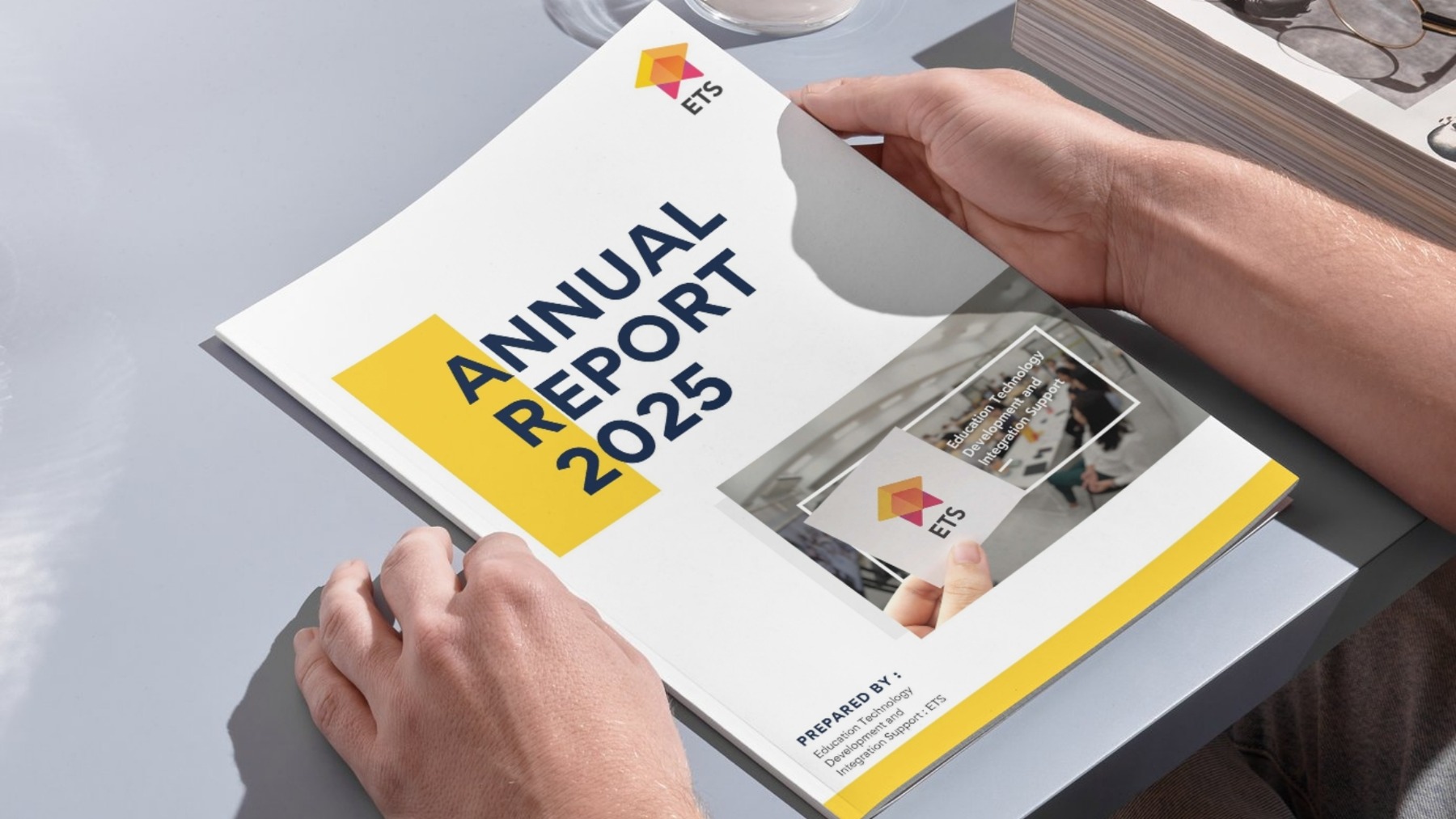
| Learning and administration | ETS 2025 learning platform development and July 2025 online registration. | Students teachers and staff |
| Managed digital tools | Teams and Zoom guidance in October 2026, MFA in December 2025, Canva in October 2025 and Gemini guidance in September 2026. | Eligible students and personnel |
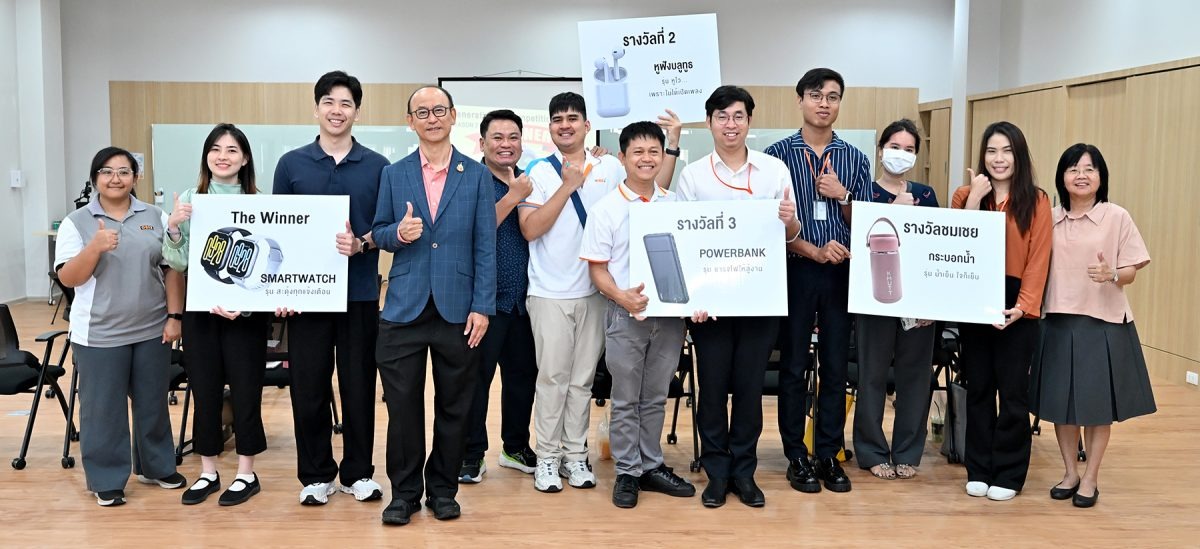
University staff demonstrate AI in their own work
14 August 2025 at the GMI building
HRD’s KMUTT Generative AI Competition Season 2 asked personnel to form teams of three and create a video introducing a generative AI tool used as a thinking partner at work. Awards were presented on 14 August 2025. The winning teams included KAMU Lovers in first place and INC Automation in third place.
The task made staff explain an application grounded in their own work, rather than only attending a general awareness lecture. HRD framed the competition as experiential digital literacy development and an effort to build a culture of practical AI use.
This supplies completed institutional evidence of technology learning for personnel. Its contribution is experimentation, communication of practice and peer learning across university functions, with staff sharing concrete examples of AI as a workplace tool.
AI learning reaches administrative leaders and HR teams
9 July 2025 and February to June 2026
HRD held a workshop on technology and AI in administration on 9 July 2025. Secretaries from all faculties and offices attended at the President’s Office building. A FIBO faculty member introduced generative AI and cases relevant to secretarial and office management work. This connects technology training with the people supporting university operations.
The HRD 2026 activity record shows a continuing three module AI Driven HR Transformation programme: Generative AI for routine HRD and HRM work on 9 February; Note Taking and Brainstorming with AI on 31 March; and AI Driven Web and Document Automation on 12 June. The official register links to ETS’s activity records.
Together these examples show progression from awareness and management applications towards specific knowledge work processes. The sequence addresses practical administrative tasks, including organising ideas, preparing documents and exploring automation.
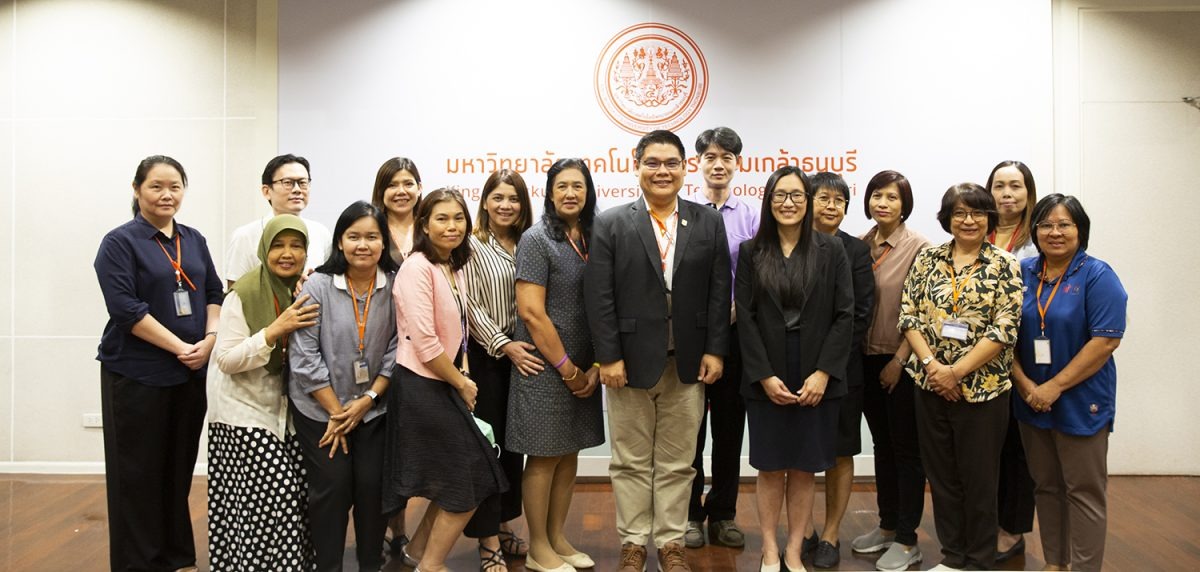
Generative AI supports the design of teaching and assessment
9 and 16 July and 1 August 2025
GenEd and ETS organised three workshop days on constructive alignment using generative AI. Forty partner school teachers from Wat Phutthabucha School and Ratprachasamasai School participated at the School of Liberal Arts. The workshops formed part of the first certificate cohort running from 23 June to 10 September 2025.
The programme linked learning outcomes, activities and assessment with AI use. Its stated competencies covered AI literacy, ethics, selecting educational applications, teaching with AI and managing its use in an educational setting. The approach kept educational objectives central while training participants to choose and evaluate digital tools.
This is a dated example of KMUTT educational expertise and technology integration being translated into professional development. It supports a broader innovation skills ecosystem, alongside the internal staff activities and applied student projects.
SIT provides practical AI teaching development
15 August 2026 at the LX building
SIT and university partners delivered Generative AI for Teaching and Learning through KMUTT School Consortium on 15 August 2026. Fifty upper secondary teachers in mathematics, science, technology and computing participated.
The workshop addressed prompt engineering, responsible AI, tool selection and classroom applications using ChatGPT, Gemini, NotebookLM and Canva AI. Mixed subject groups developed lesson plans, worksheets and examination materials while practising checks on AI generated information. Pre and post tests and assessment of participant work were used in the activity.
The documented contribution is practical teacher development and the production of teaching materials within a completed workshop. The activity shows how the university connects digital expertise with teaching practice, feedback and its educational network.
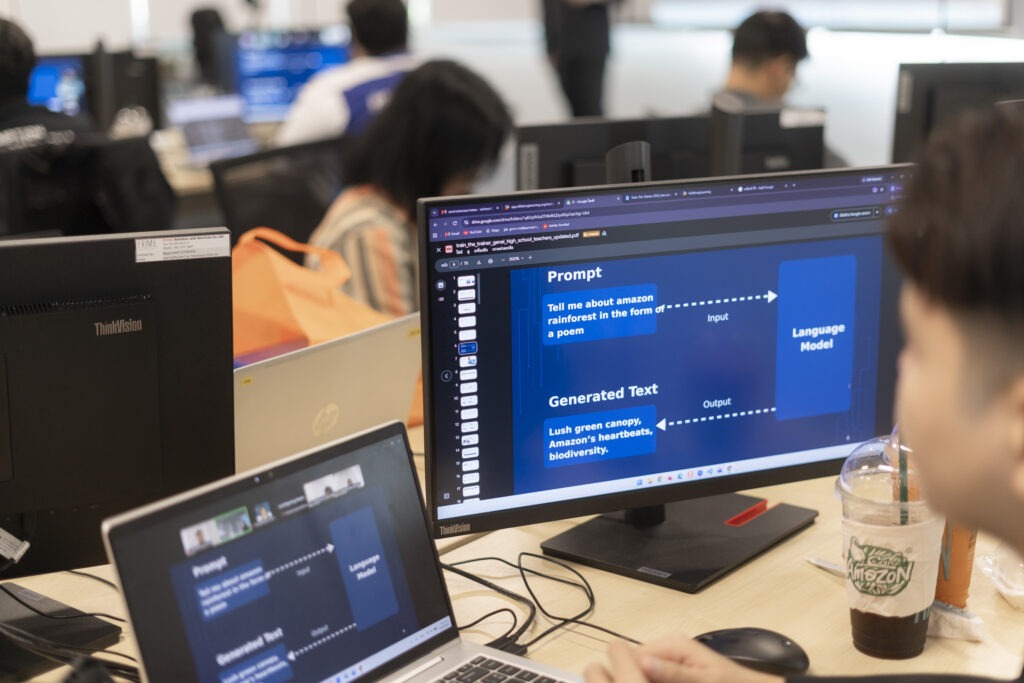
AI tools are taught with research judgement and ethics
17 and 18 January 2026
The Learning Innovation and Technology programme in the Faculty of Industrial Education and Technology organised a two day Generative AI for Research workshop on 17–18 January 2026. The event took place at the eighth floor Hall of Fame.
The university report describes creative and effective AI use alongside transparency, academic reliability and human analytical judgement. This positions AI as a tool within research practice and learning, with users retaining responsibility for evaluating the result.
The workshop complements the prototype work described earlier: innovation capability includes the ability to frame a research task, assess information and communicate reliable findings as well as operate a tool. Its focus connects responsible tool use with the quality of academic work.
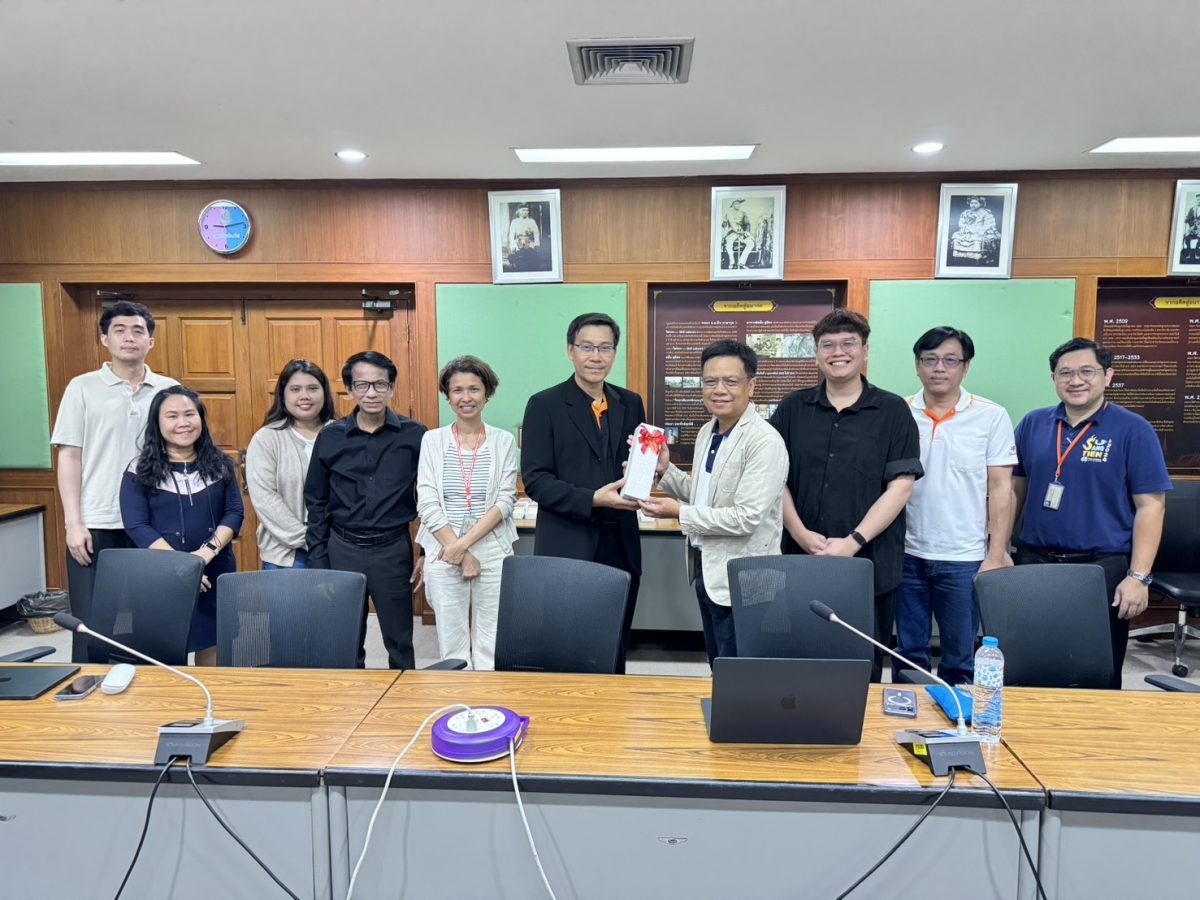
Learning platforms and digital student administration
Institutional development and service records for 2025
ETS’s 2025 annual report landing page identifies continuing development of the learning technology ecosystem, Outcome Based Education, LEB2, 4LifelongLearning and micro credentials. This is evidence of active platform development in 2025, without assigning that year as the original launch date of every service.
The university’s Tech Integration resource catalogue links teaching guides, LEB2 tutorials and micro credential design resources. It also lists the 2025 EdTech Idol teaching collection and the 2025 student selected educational tools feature. These materials provide routes for educators to learn about digital teaching practice alongside the platforms themselves.
A separate Registrar record gives an operational example for students: new undergraduate and postgraduate students registered online on 24–25 July 2025, with the final fee payment date of 30 July. Completing student records and document uploads was a prerequisite for registration access. The record connects university administration with a real academic service window.
| System or service | Role evidenced in the records | 2025 evidence |
|---|---|---|
| LEB2 | University learning environment within ETS development and teacher support. | ETS annual report and learning resources. |
| 4LifelongLearning | Platform development for continuing learning. | ETS annual report. |
| Micro credentials | Digital learning and credential design support. | ETS annual report and resource catalogue. |
| Online registration | Records, document upload prerequisites, course enrolment and payment timetable. | Registrar notice for Semester 1/2025. |
Shared collaboration systems and software governance
Policies and service changes in 2025 and 2026
From 4 October 2026, KMUTT designated Microsoft Teams as its main online teaching and meeting platform and set a shared pool of one hundred Zoom licences for cases requiring that service. The Computer Center explains the change as improving software use and reducing duplicate provision. The associated borrowing system was described as under development and testing; its complete rollout is not assumed here.
Multi factor authentication for university Microsoft 365 accounts was announced to begin on 15 December 2025. The official guidance supplied phone and Authenticator setup instructions for students and personnel. This is an institutional identity and access control measure supporting use of digital services.
The records show how digital university management brings together shared resource allocation, account protection and operational guidance. These measures support the continued use of online learning, collaboration and university work tools.
Licensed creative tools and access to AI learning resources
Canva service in October 2025 and Gemini guidance in September 2026
The Computer Center’s October 2025 service announcement provides Canva access for eligible KMUTT students and personnel through their university accounts. It identifies uses including presentations, posters, infographics, video and communications materials, with entitlement shown under the relevant student or staff team. This gives learners and educators a managed route to creative software.
The Gemini guidance updated in September 2026 explains Google’s conditional twelve month AI Plus student offer and options for people who previously used a free AI Pro entitlement. It distinguishes eligible students, previous users and subscription choices. This is guidance on an external provider’s offer, rather than a claim that the university pays for unrestricted premium AI access for everyone.
These services complement skills development: access to tools makes it possible to practise digital design and AI assisted work, while eligibility and renewal guidance help users understand the actual terms.
Economic contribution and reported outcomes
The records support several distinct forms of economic contribution. Commercialised products show a route from research to business activity. Factory tests demonstrate the adaptation of technology to production conditions. Pilot processes provide cost and performance information for transfer decisions. Agreements and accelerators connect research organisations with market knowledge and development partners. These categories are kept separate in the summary below.
| Application | Documented output | Economic mechanism |
|---|---|---|
| Food process enterprise | Sante Sauce manufacture and distribution reported in 2025. | Differentiated products based on university process knowledge. |
| Medical manufacturing | OsseoLabs research origin, continuing 2025 activity and recognition. | Specialist device designs and research based enterprise development. |
| Agricultural processing | Pure D commercial use described in a 2026 case report. | Higher value product route for Thai fruit ingredients. |
| Packaging materials | Reported TRL 9 and THB 100–130/kg process cost range. | Domestic material development and industrial forming options. |
| Factory logistics | CARVER prototype tested in seafood plants. | Potential flexibility and lower heavy manual handling demands. |
| Residue valorisation | Biosilica pilot purity and approximate unit cost. | Higher value industrial use of rice husk. |
| Biorefinery materials | Lignin separation and application research. | New material options from biomass components. |
| Advanced alloys | Laboratory alloy development and reported patent protection. | Domestic design capability for demanding components. |
| EV infrastructure | Joint EV Guard product research. | Maintenance product development informed by industry needs. |
| Creative production | Rattan pavilion and mixed reality fabrication demonstration. | Digital tools applied to craft skills and new designs. |
| Computing infrastructure | Experimental microchannel cooling prototype. | Potential thermal management capability for computing hardware. |
Reported THB amounts refer to different objects: a venture award, pilot production costs and material cost comparisons. They are not additive measures of economic impact. This portfolio does not derive a national economic benefit total, a certified spin off count or an industry research income subtotal from these heterogeneous examples.
Original policy, patent and service documents
Original IP policy pages
Published patent application · original front page
ETS report and service announcements


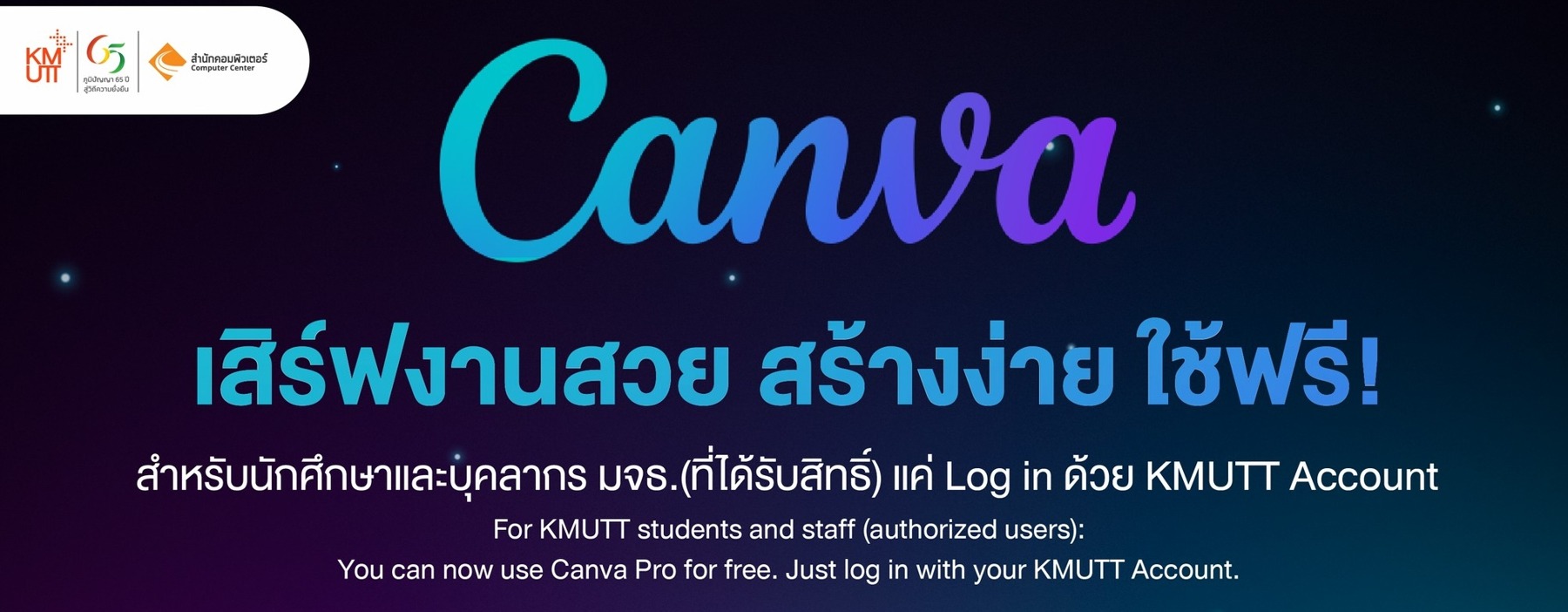

Sources and evidence links
Primary university unit partner and publication records are linked below. Case photographs are credited in their captions. Article dates identify the source report unless an event date is explicitly stated. The eleven case narratives were selected from the Case Studies collection supplied for this document.
- THE Sustainability Impact Ratings Methodology 2027 v1.2, supplied institutional copy: physical PDF pages 84–88 for SDG 9; general bibliometric period and reporting definitions in the methodology. This portfolio’s activity scope is 2025–2026; annual numerical returns follow the methodology’s specified reporting basis.
- KMUTT Case Studies collection and catalogue
- KMUTT IP research and innovation management regulation 2022, clauses 8–9, 17–20, 27–32 and signature page
- KMUTT Entrepreneurship IP benefits announcement dated 11 August 2016
- KMUTT RISE cooperation agreement and SEA Health Innovation Hub framework, 11 March 2026
- KMUTT Siam Daikin Sales research signing, 20 January 2026; report 21 January 2026
- Siam Daikin Sales partner account of research and refrigerant management cooperation
- Ajinomoto TECHBITE Food and Biotech programme completed June 2025; report 1 October 2025
- Bangchak TECHBITE Energy launch account published 24 July 2025
- KMUTT Sante Sauce case report, 14 February 2025
- KMUTT original Sante Sauce commercialisation report, 14 February 2025
- KMUTT personalised porous bone implant case report, 10 October 2025
- KMUTT OsseoLabs MIDAS award on 15–16 February 2025; report 28 February 2025
- KX OsseoLabs research origin mentoring and international opportunities, 20 August 2025
- MedTech Innovator Asia Pacific official finals record, Singapore 28 October 2025
- KMUTT low pressure superheated steam drying and Pure D case, 23 February 2026
- KMUTT cassava starch packaging case, 6 January 2025
- KMUTT CARVER case report, 23 February 2026
- KMUTT original CARVER factory trial report, 23 February 2026
- KMUTT biosilica case report, 10 April 2025
- KMUTT original biosilica report, 10 April 2025
- KMUTT lignin fractionation and applications case, 3 March 2025
- KMUTT heat resistant aluminium case, 6 June 2025
- KMUTT EV Guard case, 25 February 2026
- KMUTT original EV Guard and EV ALL collaboration report, 25 February 2026
- KMUTT Augmented Craft case, 19 February 2026
- KMUTT microchannel cooling case, published 25 March 2026 with a 2025 award
- Journal of Metals Materials and Minerals 35(3) e2354, published 26 August 2025; DOI 10.55713/jmmm.v35i3.2354
- Published US patent application US20250057656A1, 20 February 2025, front page
- KMUTT research exhibits at ASEW 2–4 July 2025; report 5 July 2025
- KX institutional role in knowledge exchange and entrepreneurship, background description
- KX office and coworking service description, institutional background
- KMUTT SCB KX event at the KX Auditorium, 30 October 2025; report 31 October
- KX SCB SME Navigator for Smart Factory account, 10 August 2026
- KX Thai EU BCG collaboration panel on 16 September 2025; report 24 September
- KX Green TECHBITE Season 2 panel on 26 June 2026; report 1 July
- KX Solution Tech Company investor announcement, 18 July 2026
- KX T AL Holding Green TECHBITE continuity and European partnerships, 12 July 2026
- KX retrospective on TBAN Angel Investor Training at KX Space, 1 October 2025
- KX TECHBITE Energy Demo Day at True Digital Park on 31 October 2025; report 4 November
- KX food regulatory keynote on 11 June 2025; report 17 June
- KX TED Fellow Award received 14 August 2025; report 19 August
- KX iCube industrial data services incubation and office support, 5 August 2026
- KX Modgut research commercialisation and ecosystem support, 4 August 2026
- KX support for Generation Thailand hackathon on 28–30 August 2026; report 17 September
- SIT Innoventure final at KX on 24 August 2026; report 28 August
- SIT Innoventure fourteen selected teams and development pathway, May 2026
- KX SIT Innoventure student startup ecosystem account, 2 September 2026
- KMUTT Engineering Project Day on 11 May 2026; report 5 June
- SIT CS Project D Day Exhibition, 7 November 2025
- KMUTT cooperative education student papers and Best Paper at CIOD, 25 May 2026; report 27 May
- KMUTT AURA EGAT selection on 12 October 2026; report 19 October
- KMUTT Ratchaburi TPA robotics competition on 30–31 May 2026; report 2 June
- KMUTT FIBO Teletubbies aquaculture IoT student project, 11 December 2025
- KMUTT Spirulux Caviar case report, 25 March 2026, describing a 2025 award
- KMUTT Ping Ping robot case, 14 February 2025, with demonstration 6–8 February
- KMUTT Ratchaburi ISE student visit to KX, 27 February 2026
- KMUTT ACTS research and entrepreneurship event, 14 September 2026; report 15 September
- SoA D account of Chiang Mai University institutional visit to KX, 9 April 2025
- KX supported HEALTHI Lab programme announcement, 7 August 2025
- KMUTT Generative AI Competition Season 2 awards, 14 August 2025; report 15 August
- KMUTT AI in administration workshop for faculty and office secretaries, 9 July 2025; report 14 July
- KMUTT HRD official activity register, three AI Driven HR Transformation modules in 2026
- GenEd and ETS constructive alignment with generative AI workshops in July and August 2025
- SIT School Consortium Generative AI teaching workshop, 15 August 2026
- KMUTT Learning Innovation and Technology Generative AI research workshop, 17–18 January 2026
- ETS Annual Report 2025 institutional summary and linked report record
- KMUTT Registrar online registration and payment schedule for Semester 1/2025
- Computer Center online teaching and meeting policy effective 4 October 2026
- Computer Center Microsoft 365 MFA introduction from 15 December 2025
- Computer Center Canva service for eligible university users, October 2025
- Computer Center Gemini entitlement guide updated September 2026
- ETS Tech Integration resource catalogue including 2025 EdTech teaching and student tools collections
- KX FabLab Bangkok prototyping services and fabrication learning, institutional service description
- Bangkok Design Week 2025 official FabLab workshop programme at the KX building
- FabLab Bangkok Design Driven Innovation retrospective on its 2026 event at KX, published 16 February 2026


