

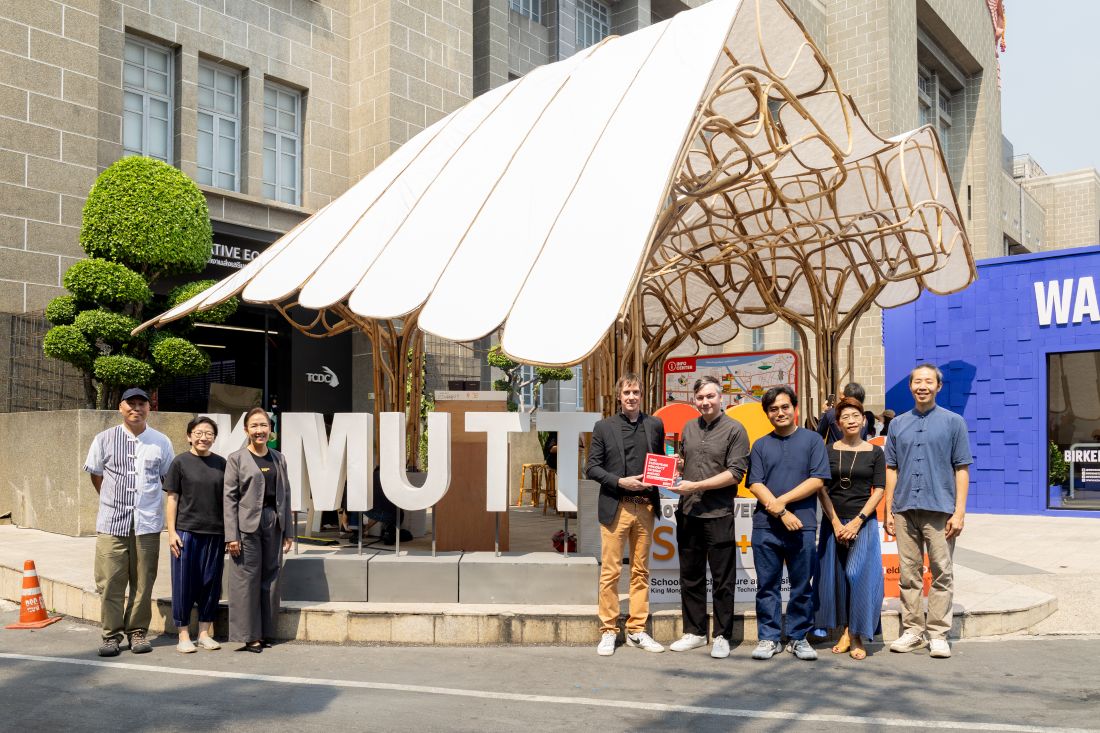
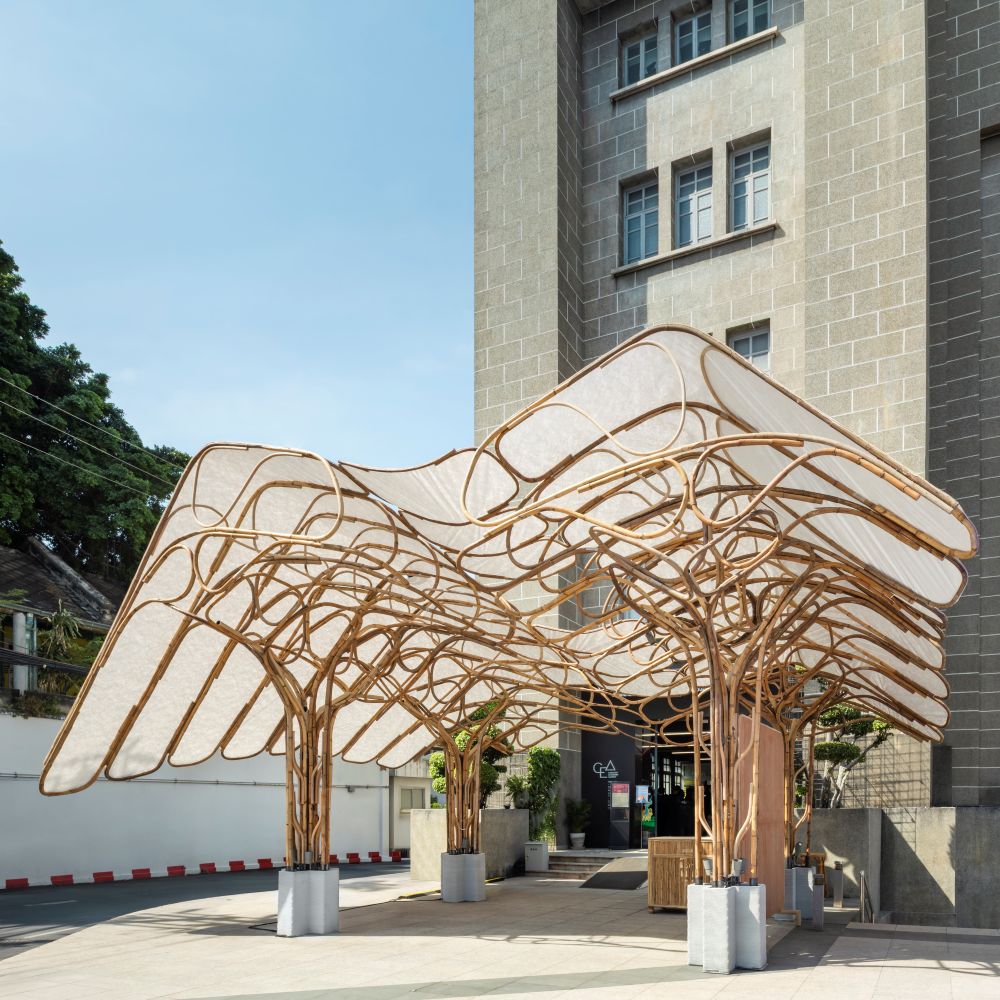
Rattan is often associated with traditional rocking chairs or grandma’s baskets—materials rarely seen in large-scale structural designs due to their perceived limitations. However, the “Augmented Craft” project, a steam-bent rattan pavilion showcased at Bangkok Design Week 2026, has shattered these boundaries.
Located in front of the Creative Economy Agency (CEA) at the Grand Postal Building, Bang Rak, this masterpiece is a collaborative effort between Studio Igor Pantic, the School of Architecture and Design (SoA+D), the Faculty of Engineering, and FIBO at King Mongkut’s University of Technology Thonburi (KMUTT). Led by principal designer Igor Pantic, the project underscores KMUTT’s leadership in integrating cutting-edge technology into the creative design process.
The Intersection of Heritage and Holograms
The project was honored with “The Best of Bangkok Design Week 2026” award by the European Product Design Award (EPDA). The judges recognized its exceptional value in blending traditional craftsmanship with modern digital technology, resulting in an elegant, flowing structure that reveals new possibilities for rattan on a global stage.
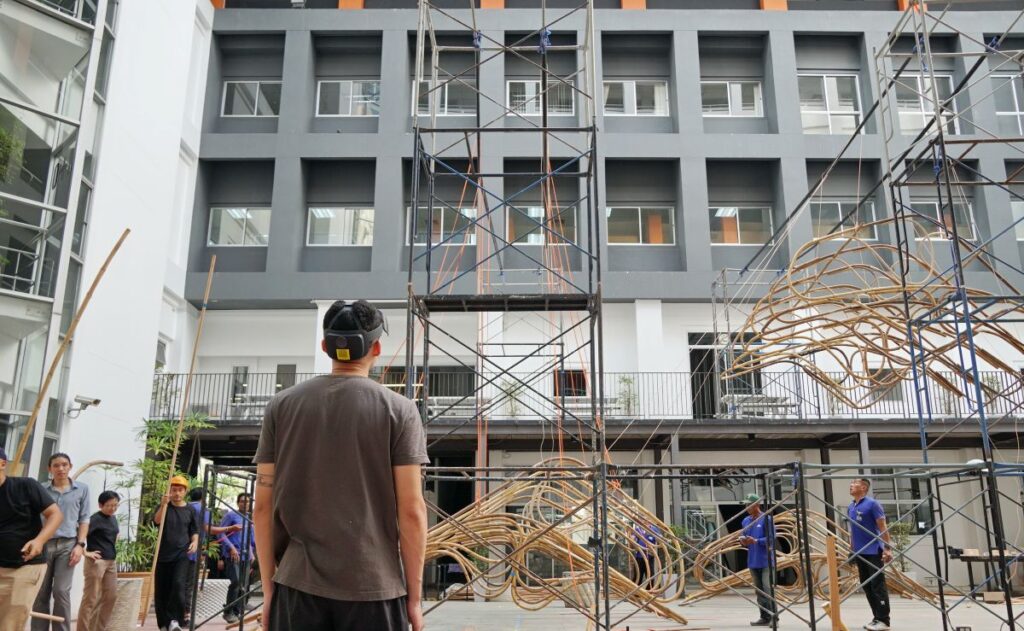
Asst. Prof. Waraluk Pansuwan, Dean of SoA+D and Project Leader, explained that “Augmented Craft” is an experimental structure designed using Rhino 3D software. The production process utilized Augmented Reality (AR) through HoloLens smart glasses.
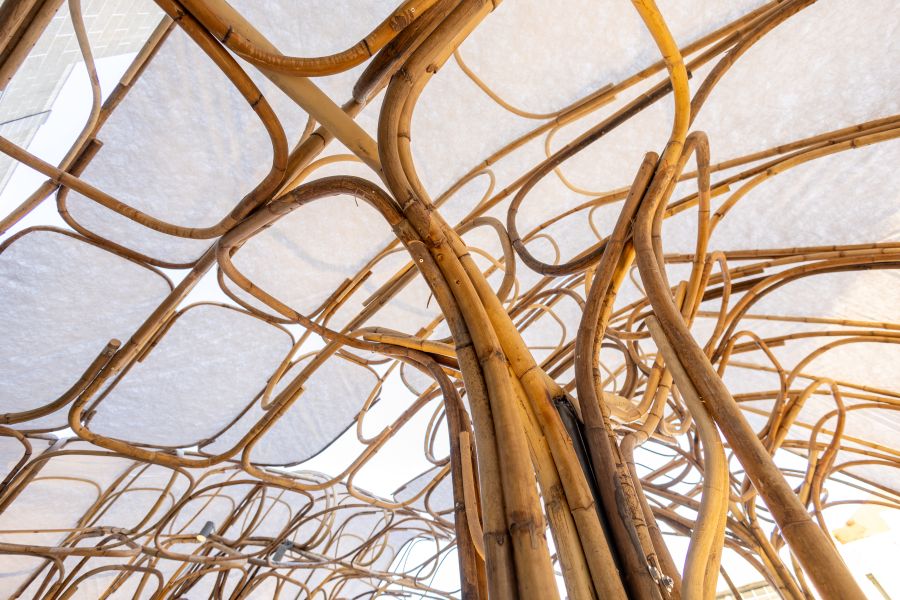
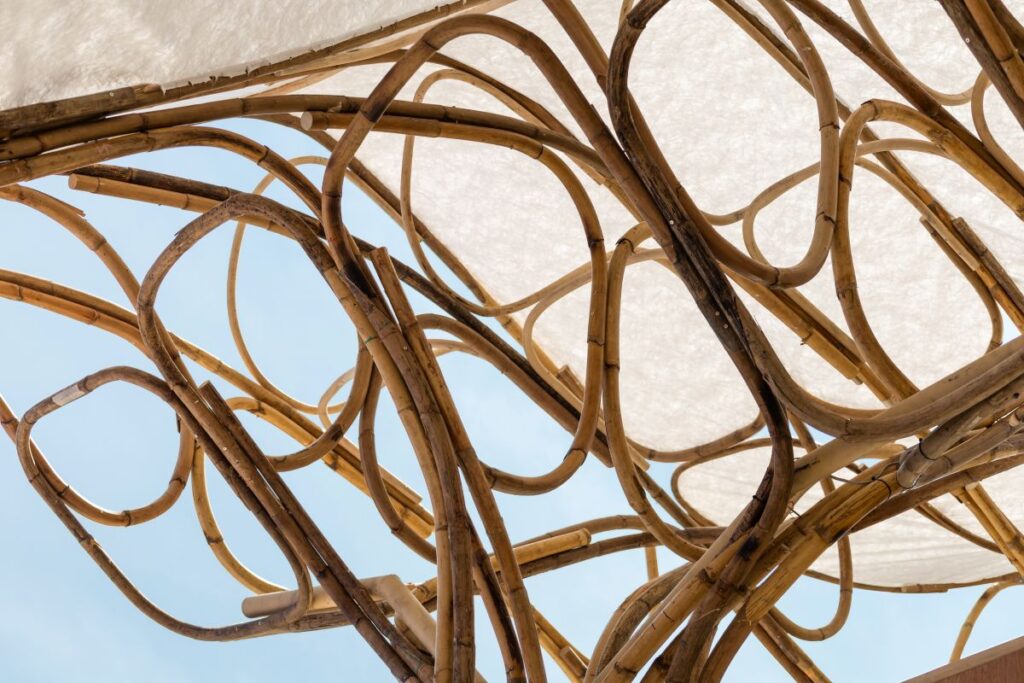
- The Process: Rattan is treated with steam to become pliable.
- The Tech: Craftspeople wear HoloLens glasses to see a “holographic line” projected from the 3D digital model onto their physical workspace.
- The Result: This allows them to bend the rattan precisely along the digital curves, ensuring the final physical structure matches the architect’s complex design with millimetric accuracy.
Empowering, Not Replacing, the Artisan
“This technology doesn’t replace the craftsman; it empowers them,” says Asst. Prof. Waraluck. By using AR as a communication tool, architects can now design highly complex 3D forms that were previously impossible to build using traditional methods. It preserves the essential skill of the artisan while removing the limitations of conventional production.

Related News

‘Plant-Based Caviar’: KMUTT Students’ Food Innovation Clinches National Gold, Ready for Global Market Expansion

KMUTT Mechanical Engineering Students and Faculty Clinch Gold Medal from NRCT with Microchannel Heat Sink Innovation for Future Data Centers



