

Wastewater Monitoring
Program
Preventing waterway pollution and ensuring clean wastewater discharge that safeguards campus health and the surrounding environment.
100%
2025 Wastewater Quality
120
Sampling Locations
Monthly
Monitoring
All Campuses
Coverage
Wastewater Monitoring at KMUTT
King Mongkut’s University of Technology Thonburi is deeply committed to environmental protection and sustainable campus operations, as reflected in its Water Conservation Policy. A key component is the prevention of waterway pollution and the assurance of clean wastewater discharge that safeguards both campus health and the surrounding environment.
To achieve the target of clean wastewater by 2020, KMUTT established dedicated wastewater treatment systems in every major building across its campuses. Each treatment plant is designed to manage effluent from laboratories, canteens, and residential facilities, ensuring wastewater is effectively treated before release into the environment.
Monthly monitoring and analysis verify compliance with the Industrial Wastewater Standards of Thailand. The Central Laboratory Services, under the Department of Environmental Engineering, performs comprehensive testing and quality assurance.
Through rigorous monitoring and continuous system maintenance, KMUTT ensures that its wastewater management aligns fully with national environmental standards, reinforcing its role as a responsible and sustainable institution.
Acidity / alkalinity
Biochemical oxygen demand
Chemical oxygen demand
Total dissolved solids
Heavy metal concentrations
Key Outcomes
Target
100% of wastewater from all KMUTT buildings to meet Industrial Wastewater Standards by 2020.
Status (2025)
Target sustained — wastewater quality from all buildings and natural water bodies within KMUTT remains 100% compliant with Industrial Wastewater Standards.
KMUTT’s comprehensive wastewater management framework exemplifies a proactive approach to environmental stewardship, ensuring that the university’s operations contribute to a cleaner, healthier, and more sustainable campus ecosystem.
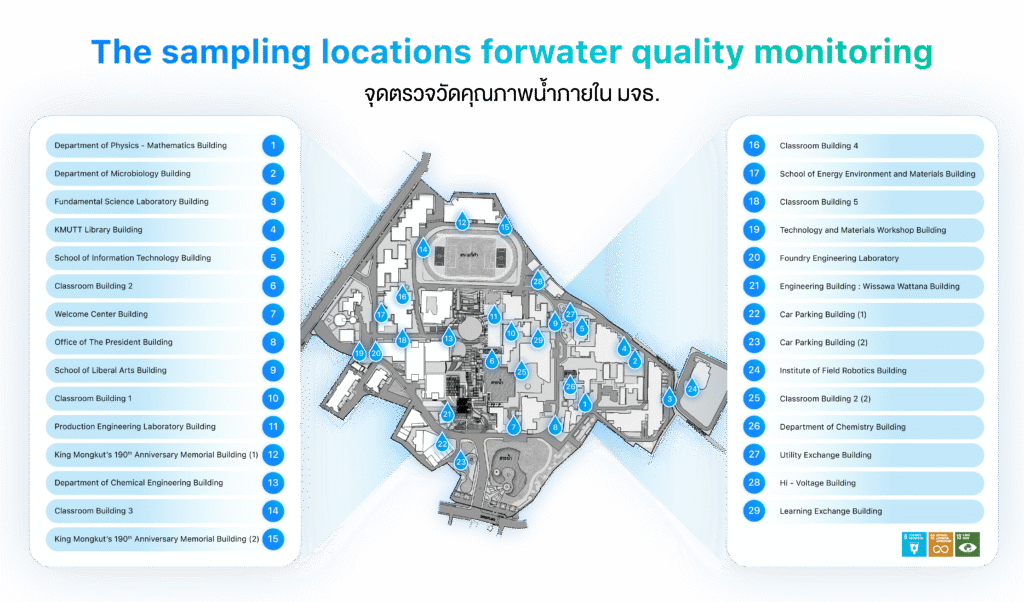
The Sampling Locations for Water Quality Monitoring
120 locations across all campuses — Bangmod campus map (29 points shown)
Water Quality : Testing and Results 2025
ผลการตรวจวัดคุณภาพน้ำภายใน มจธ.
Step 1
Take sample at more than 13 locations in KMUTT’s Bangmod Campus
Step 2
Deliver to Central Laboratory Services, Dept. of Environmental Engineering
Step 3
Test pH, SS, BOD, TKN, Total Phosphorus, As, Hg, Cd and Cr
Step 4
Lab supervisor reviews accuracy and quality control before certification
Step 5
Published to students and the public via KMUTT sustainability website
Step 6
Ongoing monthly monitoring
| Month | pH | SS | BOD | TKN | Fat Oil & Grease |
|---|---|---|---|---|---|
| JAN | 7.42 | 27 | 19 | 16 | ND |
| FEB | 7.1 | 19 | 20 | 18 | 1.5 |
| MAR | 7.32 | 23 | 16 | 9 | ND |
| APR | 7.48 | 29 | 14 | 9 | ND |
| MAY | 7.68 | 24 | 12 | 10 | ND |
| JUN | 7.62 | 22 | 14 | 12 | ND |
| JUL | 7.55 | 17 | 13 | 11 | ND |
| AUG | 7.62 | 18 | 15 | 11 | ND |
| SEP | 7.24 | 24 | 13 | 9 | ND |
| OCT | 7.1 | 5 | 6 | 5.8 | 2.3 |
| NOV | 7.1 | 9 | 12 | 1.4 | 1.1 |
| DEC | 7.2 | 12 | 17 | 12.8 | 1.2 |
Effluent Water Quality Standards for the Sewage System
| Parameter | Definition | Standard |
|---|---|---|
| pH | A measure of how acidic/basic water is. The range goes from 0 to 14. | 5–9 |
| SS (Suspended Solids) | Small solid particles which remain in suspension in water as a colloid. | 30 mg/L |
| TKN (Total Kjeldahl Nitrogen) | Used to measure organic nitrogen and ammonia from urease and manure. | 35 mg/L |
| BOD (Biochemical Oxygen Demand) | The amount of dissolved oxygen needed by aerobic biological organisms to break down organic material present in a given water sample at certain temperature over a specific time period. | 20 mg/L |
| Fat Oil & Grease | The amount of oil and fat in various forms contaminated in wastewater. | 20 mg/L |
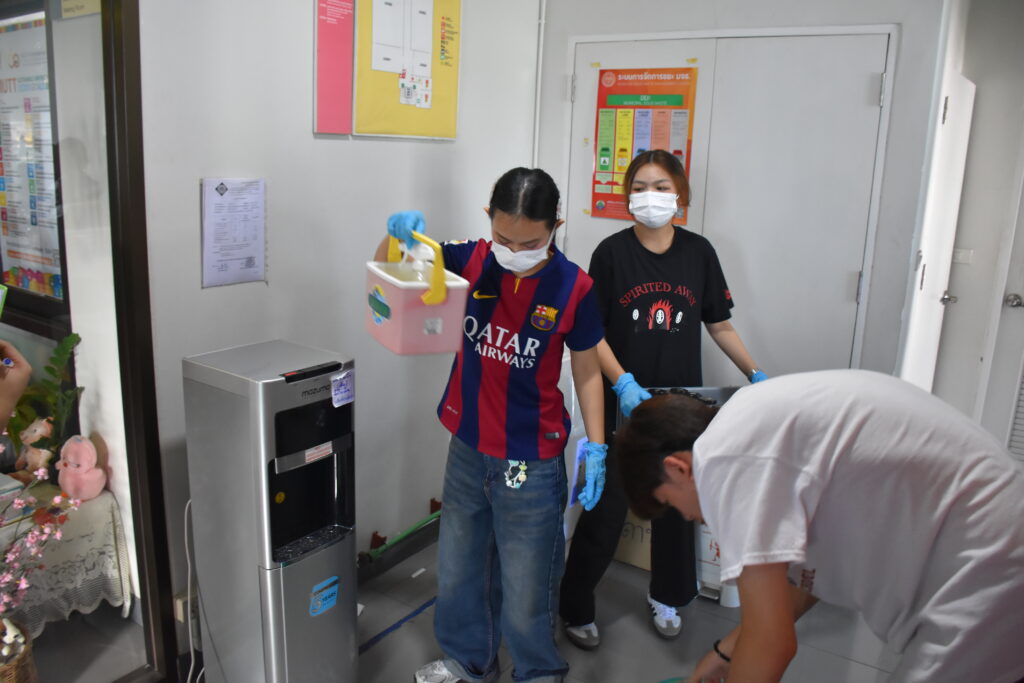
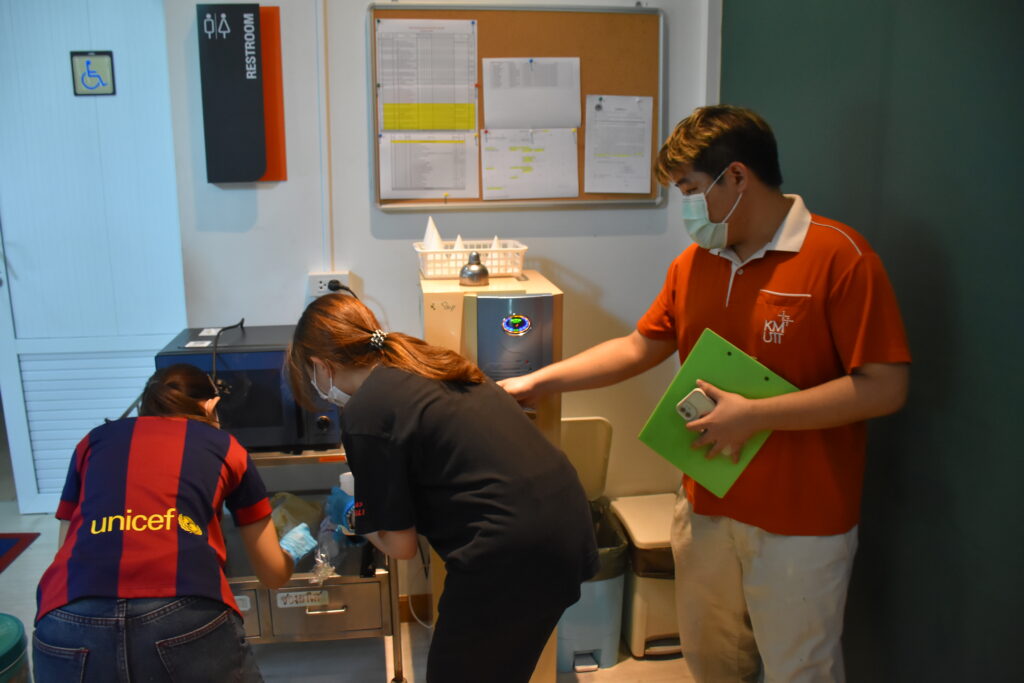
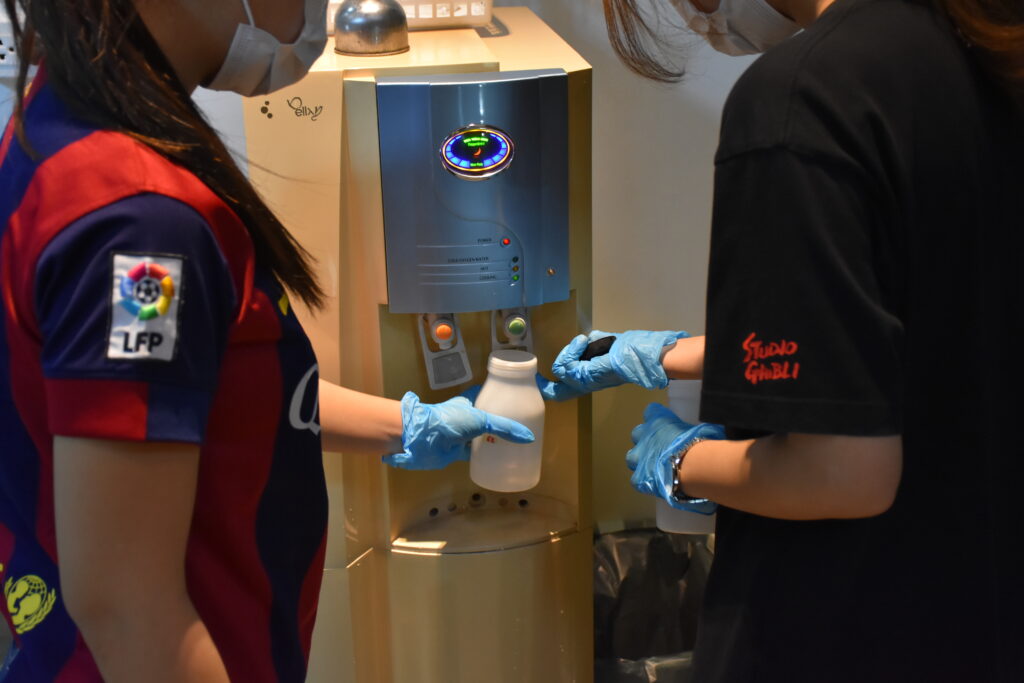
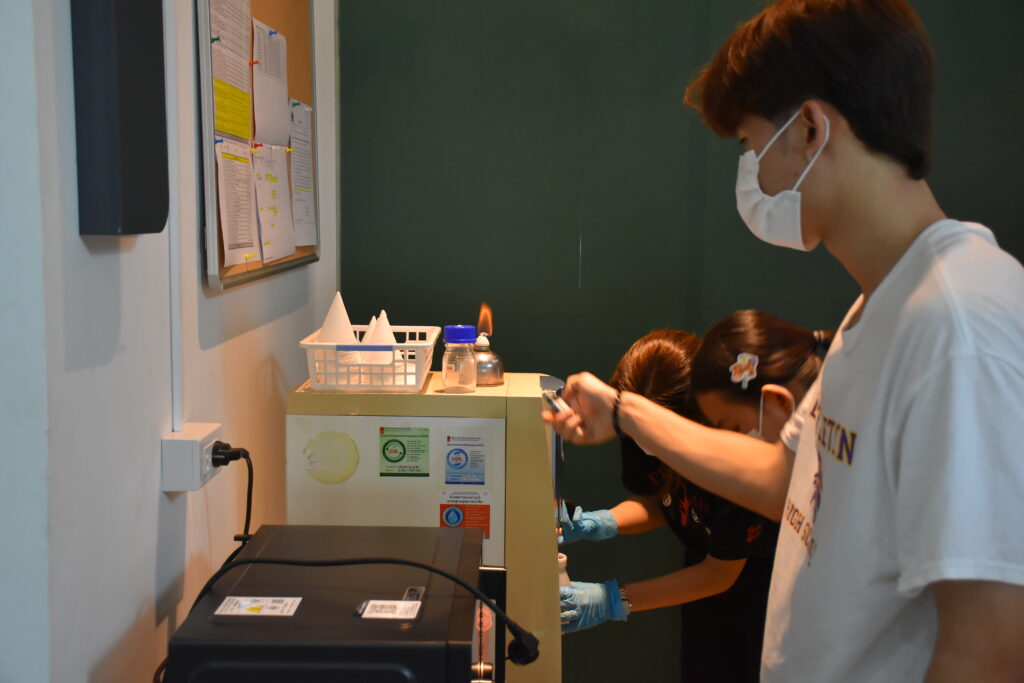
Wastewater Treatment in Action
Treatment systems and monitoring activities across KMUTT campuses.