
Bicycle Innovation
Under the Walk and Bike Society policy, KMUTT encourages students to share ideas and take part in campus sustainability activities. This year, innovation focuses on bicycle-related projects.
Charger Bicycle
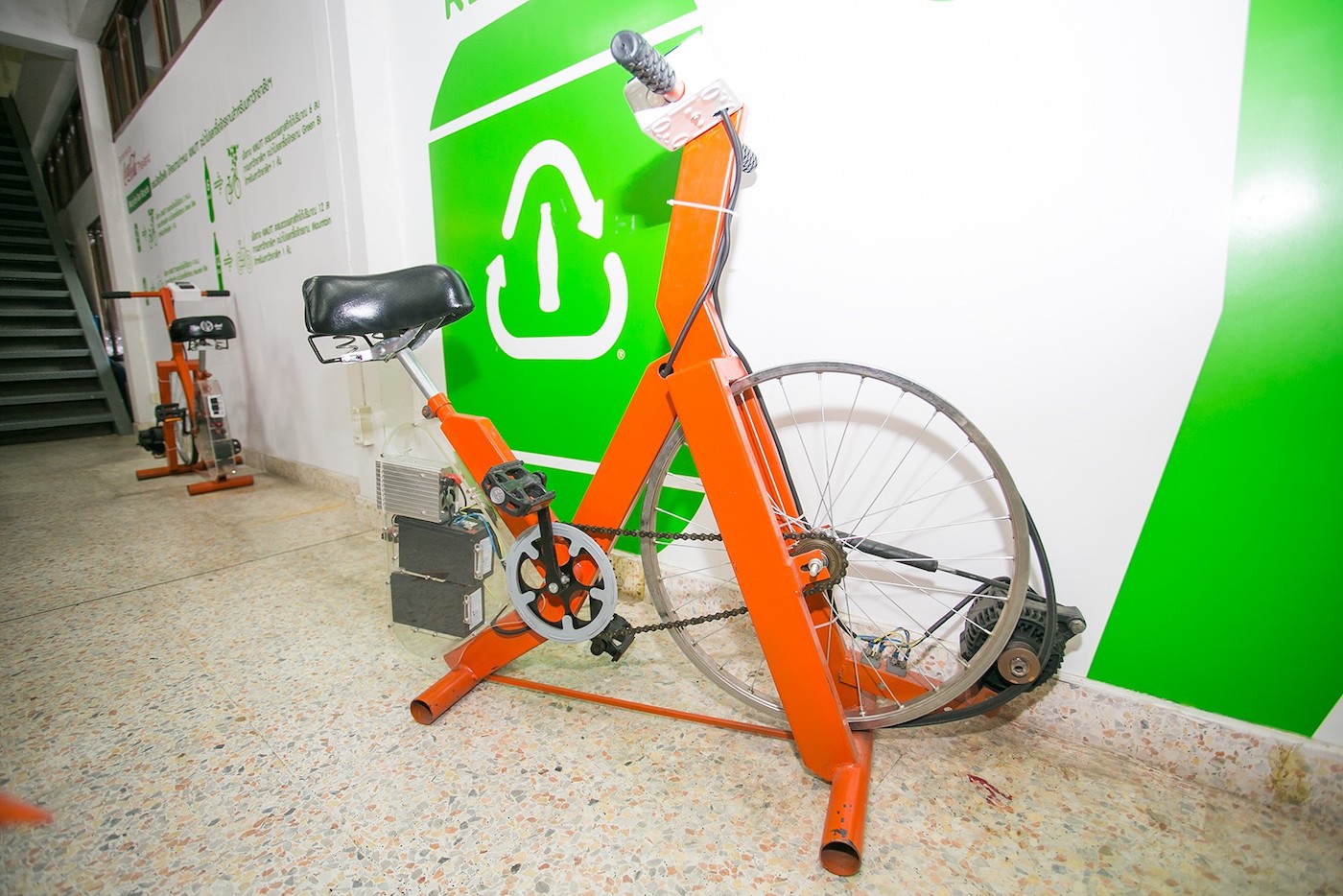
Charger Bicycle is a student innovation that turns everyday cycling into something more useful. Electricity generated while riding is stored in a power bank and can charge phones or tablets. KMUTT supports this work through its transportation policy promoting a walk and bike society and participation in sustainable campaigns and community projects. The electricity-generated bicycle is one way the campus generates power through everyday biking, with the goal of storing energy for charging phones and tablets.
The charger bicycles were tested deliberately. Results showed that cycling at 10–20 km/h over 7–12 km produced roughly 6 watt-hours using a 6,000 mAh power bank. That is enough to charge an iPhone (1 A load) up to six times, or a tablet (2.1 A load) up to three times. By converting mechanical energy from student and staff cycling into electricity for on-campus use, the walk and bike society vision can be put into practice by the university community itself.
Bike Tracking
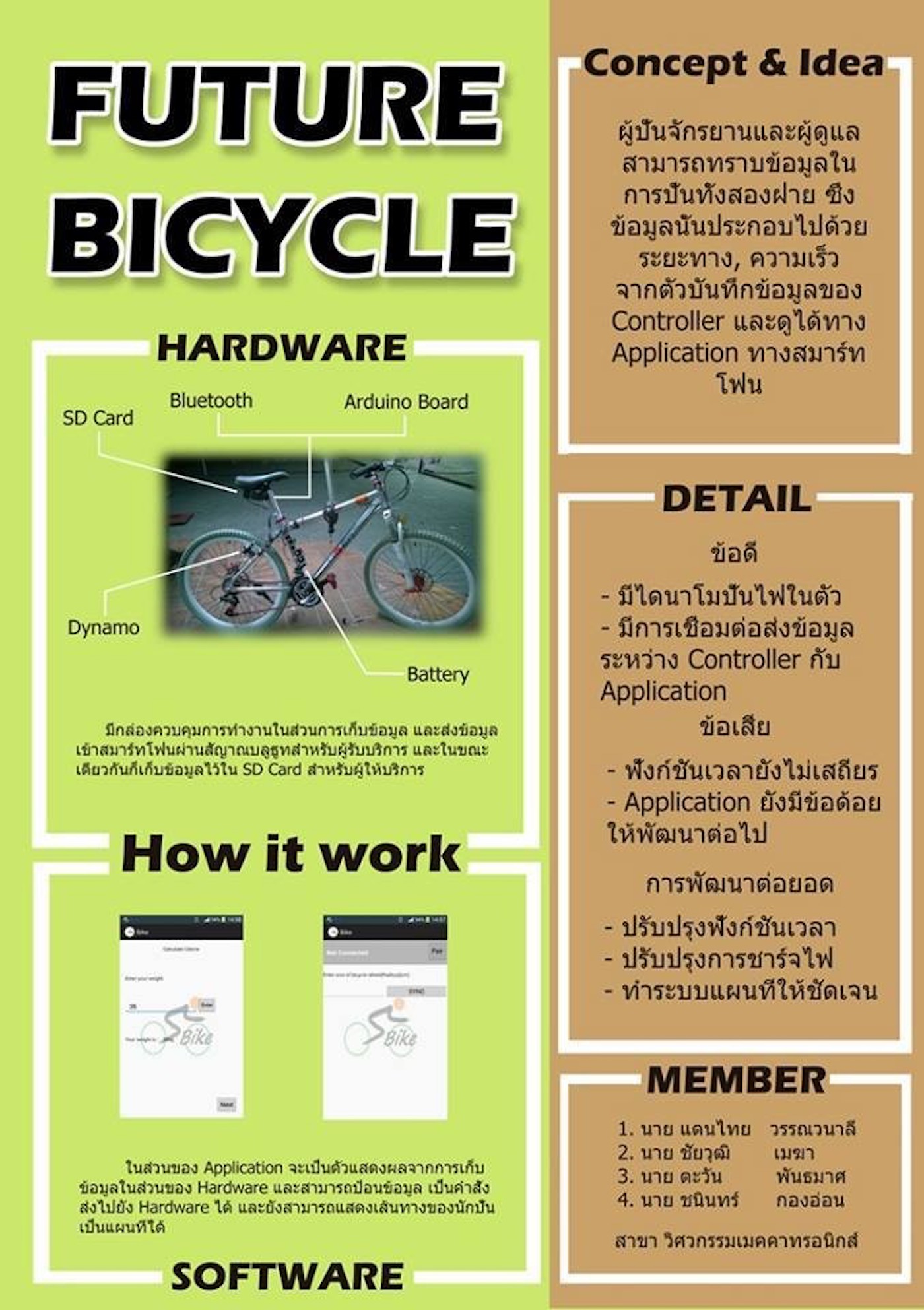
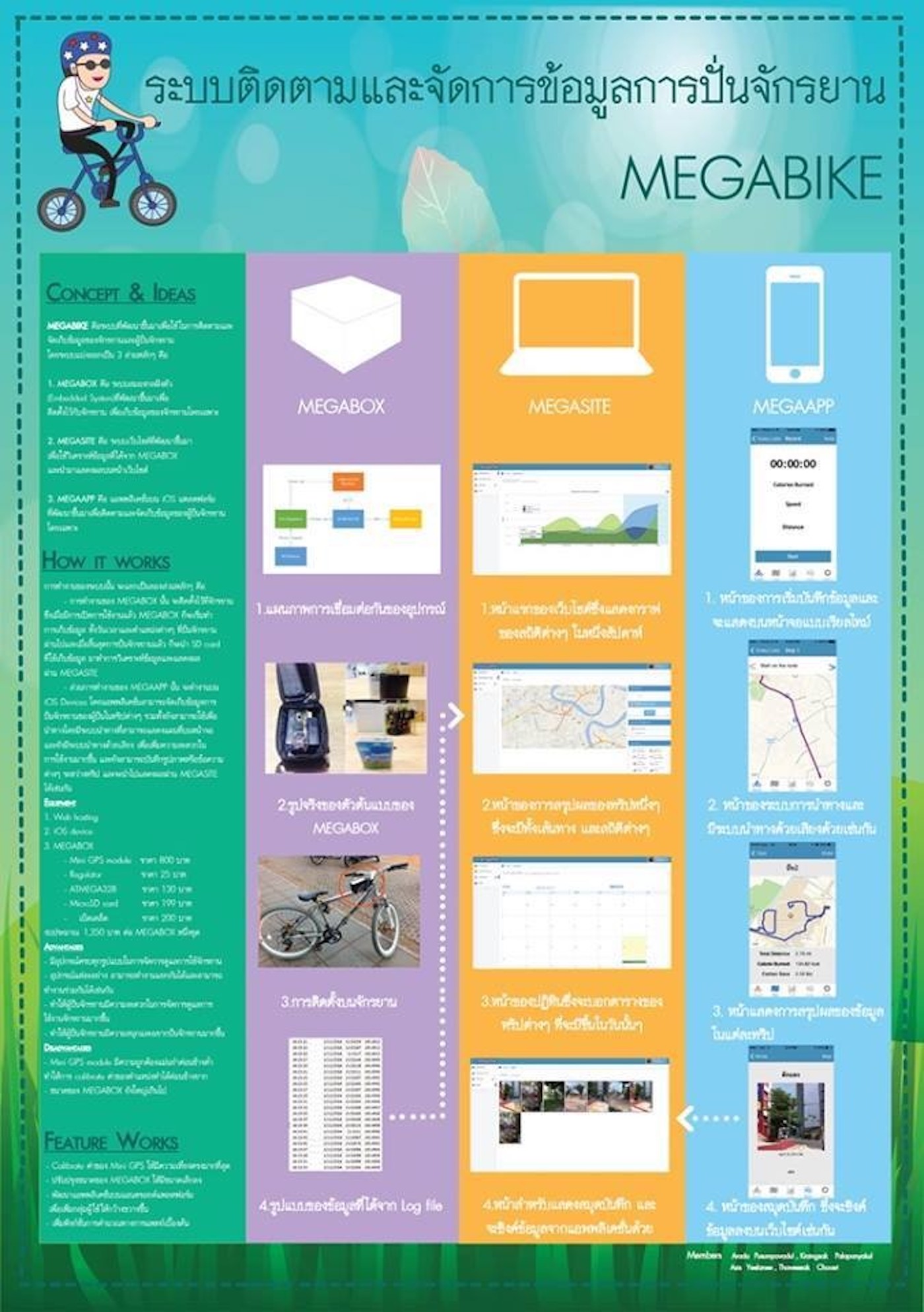
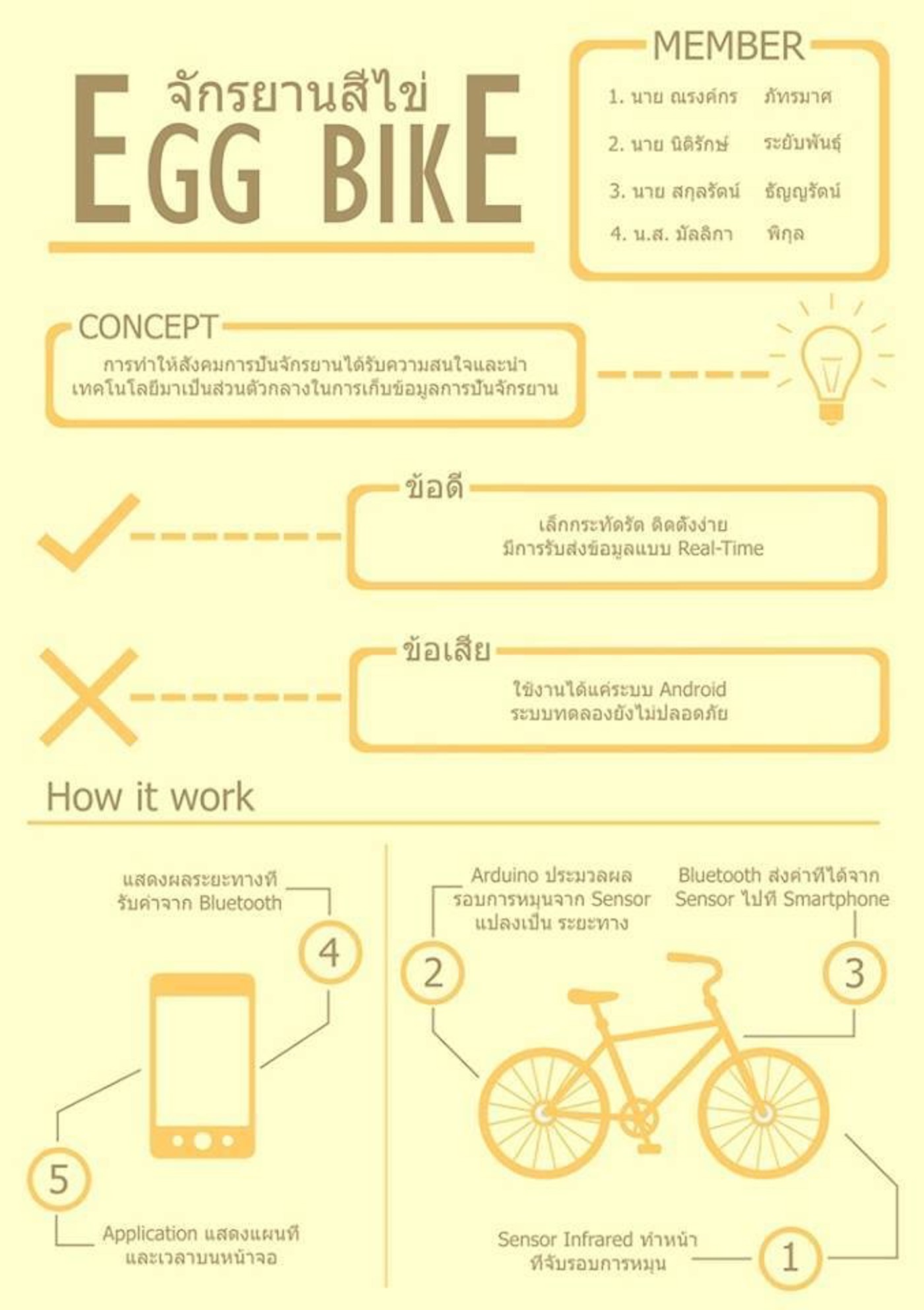
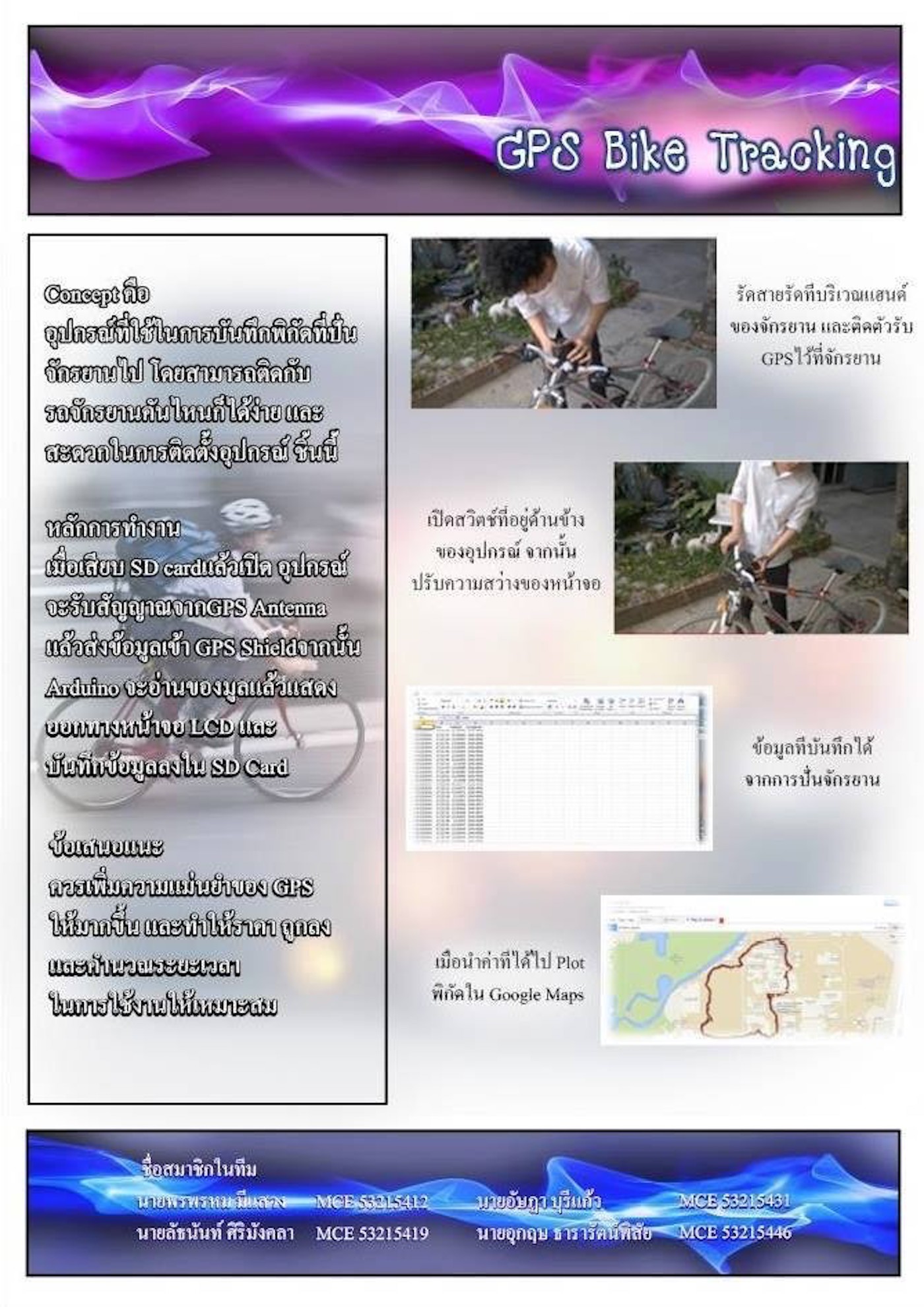
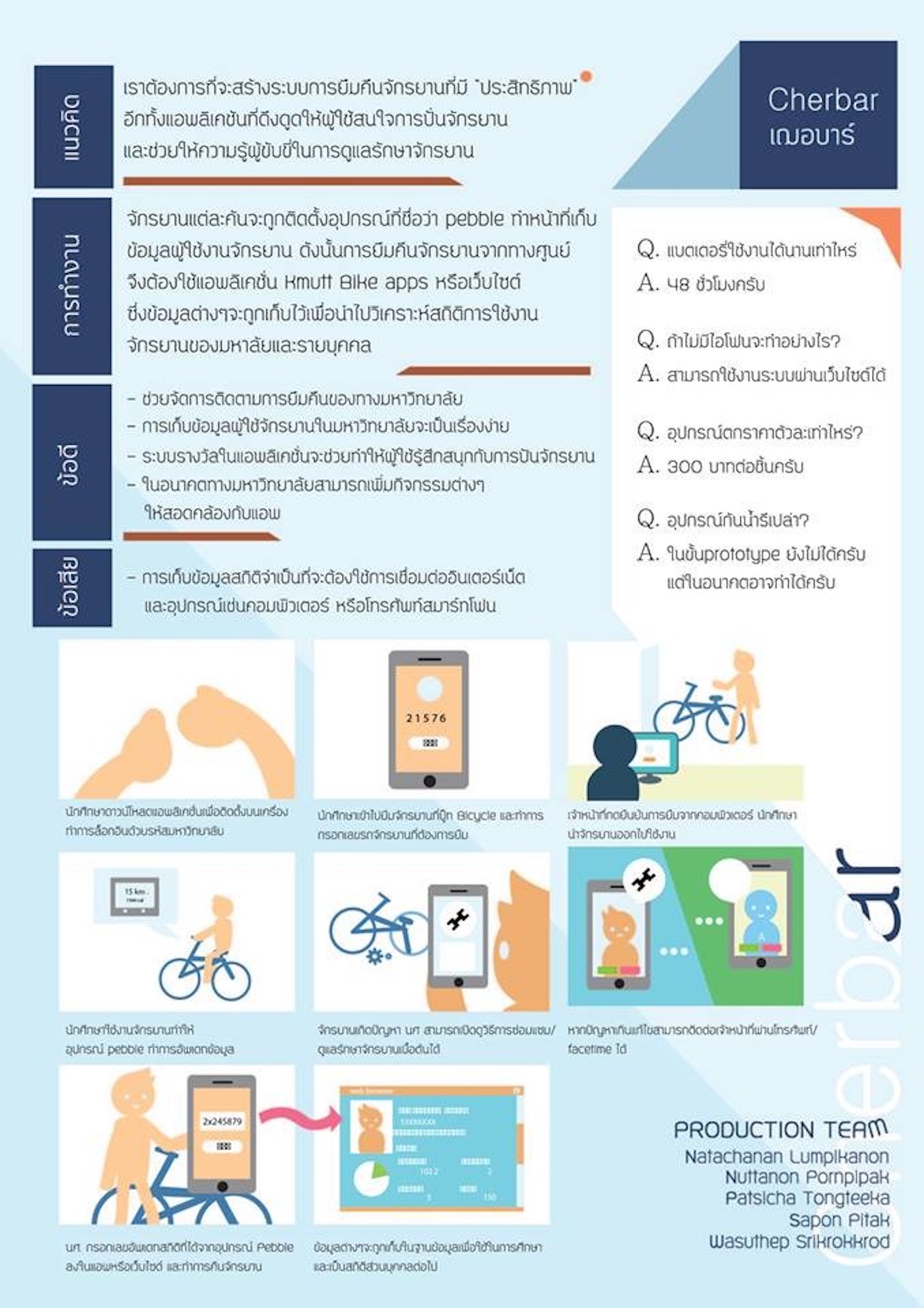
Bike Tracking is a KMUTT innovation that records riding data for each bicycle in the bike sharing system. The system connects to the KMUTT Riding database and converts activity into estimates of energy and carbon dioxide savings. It is user-friendly, easy to install, simple to use, and inexpensive to produce. Tracking hardware is installed on 130 bicycles in the bike sharing fleet for data collection, with plans to expand to all campus bicycles. KMUTT has seven applications for the Bike Tracking innovation.
Biker App
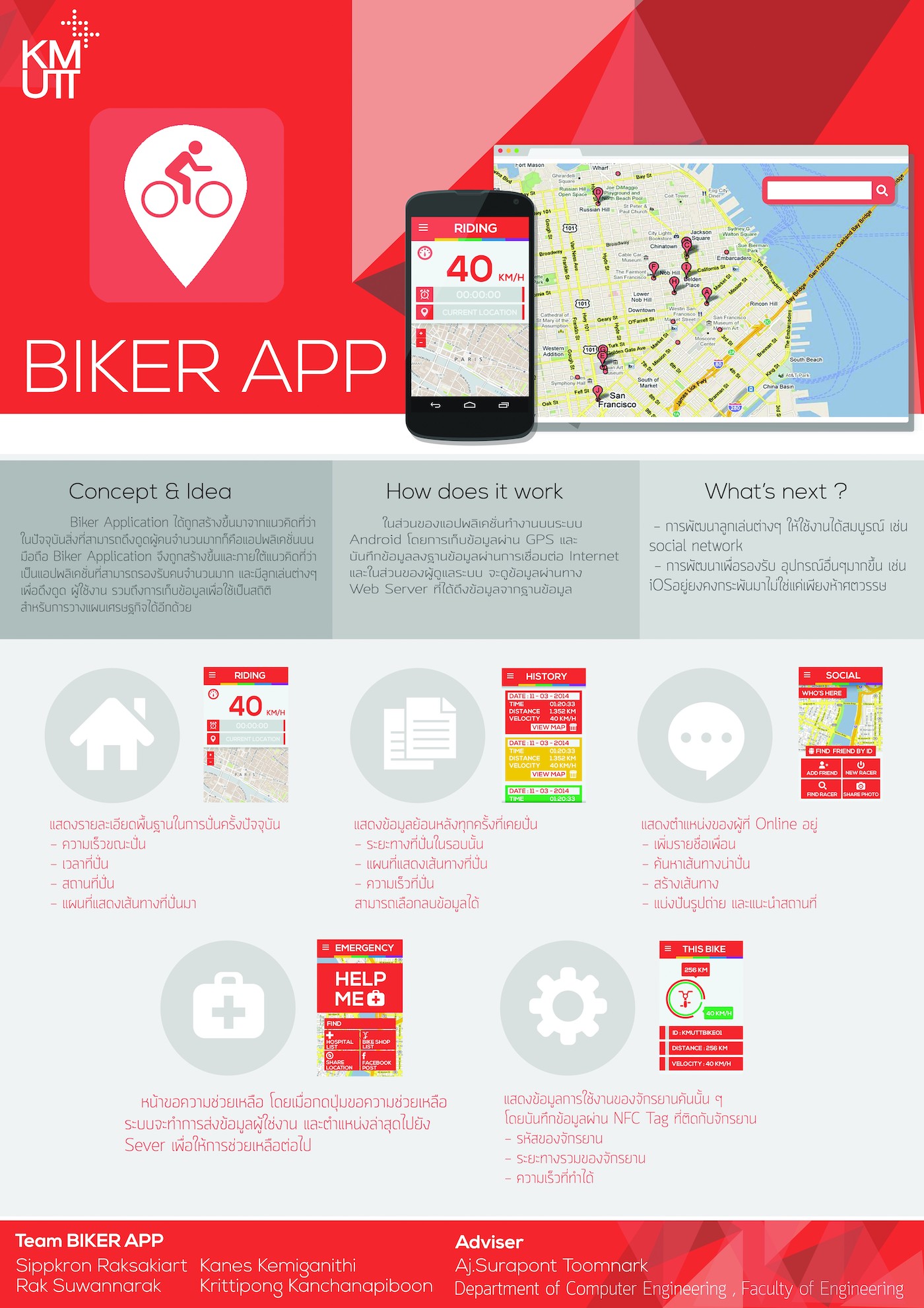
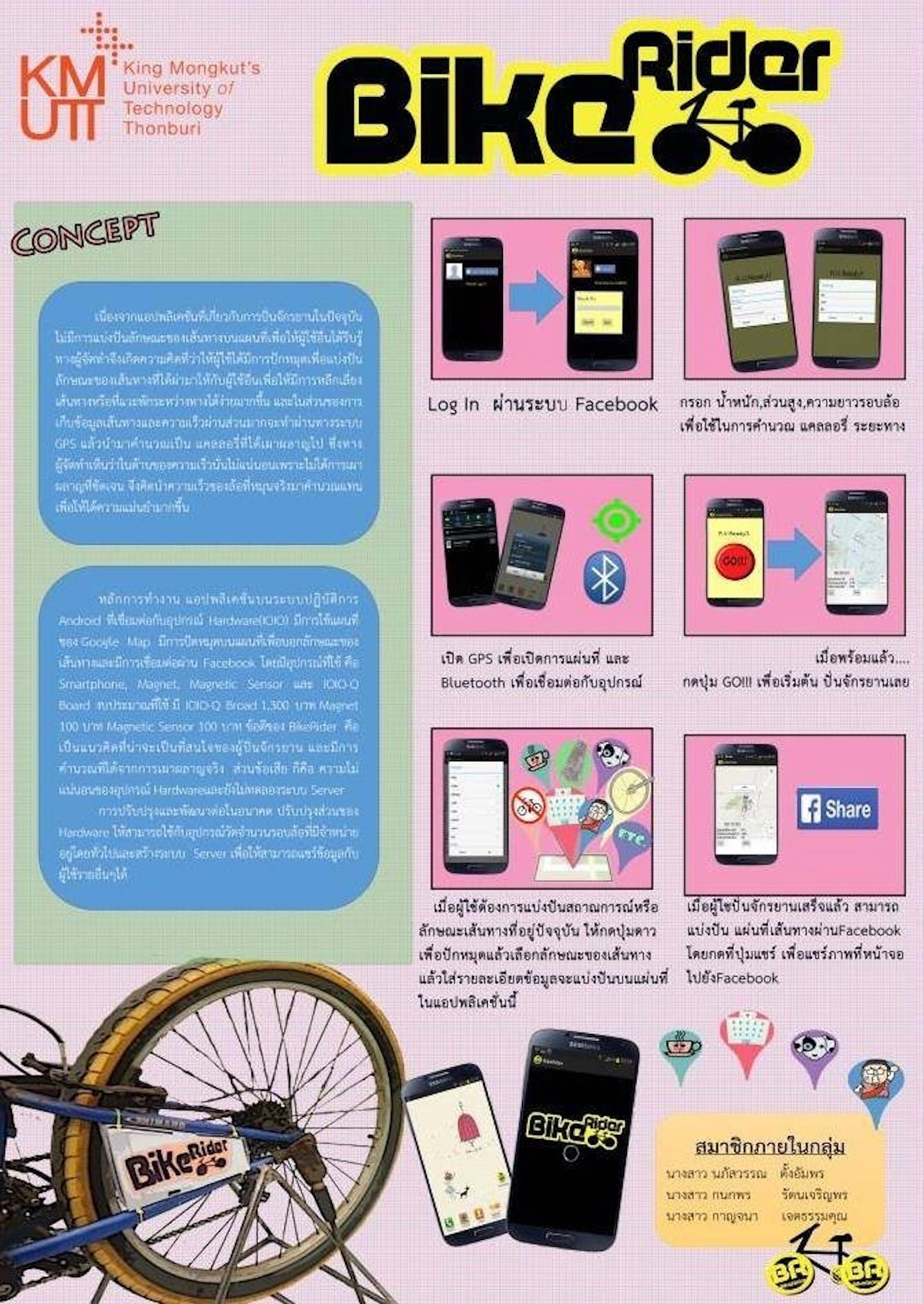
The Biker App records ride data using Near Field Communication (NFC) tags on Android devices combined with GPS. Data is sent to a database over an internet connection. The app shows speed, trip time, location, maps, and directions. Users can search routes, share locations and photos on social media, and use an emergency button on the NFC tag when help is needed.