

Hazardous Waste
Safe segregation, collection, reuse, treatment, and disposal of toxic waste from education and research activities
Treatment Target
100%
Of toxic waste generated in KMUTT treated in standard practice.
2025 Status: 100% achieved
Reduction Target (2030)
70%
Hazardous waste reduction compared to 2007 baseline.
2025 Status: 46.58% reduced
Chemical & Hazardous Waste at KMUTT
KMUTT is committed to the proper management of the environment, especially chemical substances and hazardous waste from education and research activities. More than 2,000 chemical substances are handled in education and research laboratories, and nearly 12 tons of hazardous waste is generated each year.
The chemical management system and hazardous waste management system have been developed since 2005, ensuring that toxic waste is handled safely and in compliance with national and international standards.
Hazardous Waste Generated Rate from 2007 – 2025
(kg / capita – year)
Hazardous Waste Management
At KMUTT, hazardous waste management is a multi-step process involving waste segregation, collection, reuse/recycling, treatment, and disposal to ensure the safe and compliant handling of toxic waste on campus. In 2025, hazardous waste generation was reduced by 46.58% compared to the 2007 baseline (target 70% by 2030), with 54.29% reused and recycled and 54.56% prepared for onsite waste treatment compared to the 2015 baseline (targets 40% and 20% by 2030, respectively).
Segregated Waste Handling
Hazardous waste management distinguishes between toxic waste from municipal solid waste (MSW) and waste from educational and research activities. Toxic MSW is safely managed and outsourced to the Bangkok Metropolitan Administration (BMA) with thorough documentation.
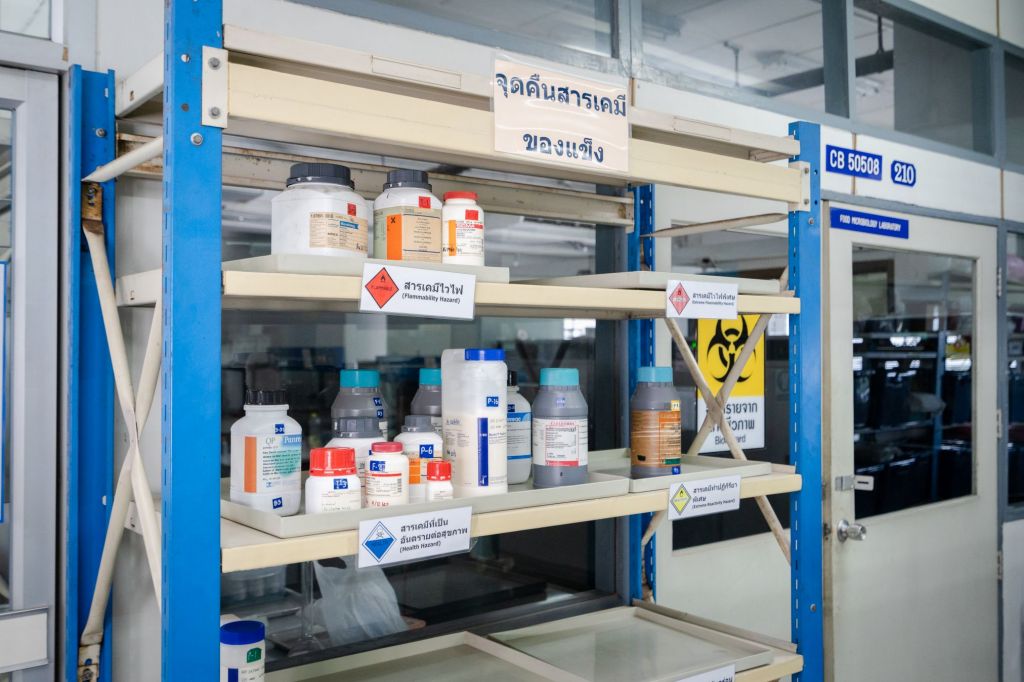
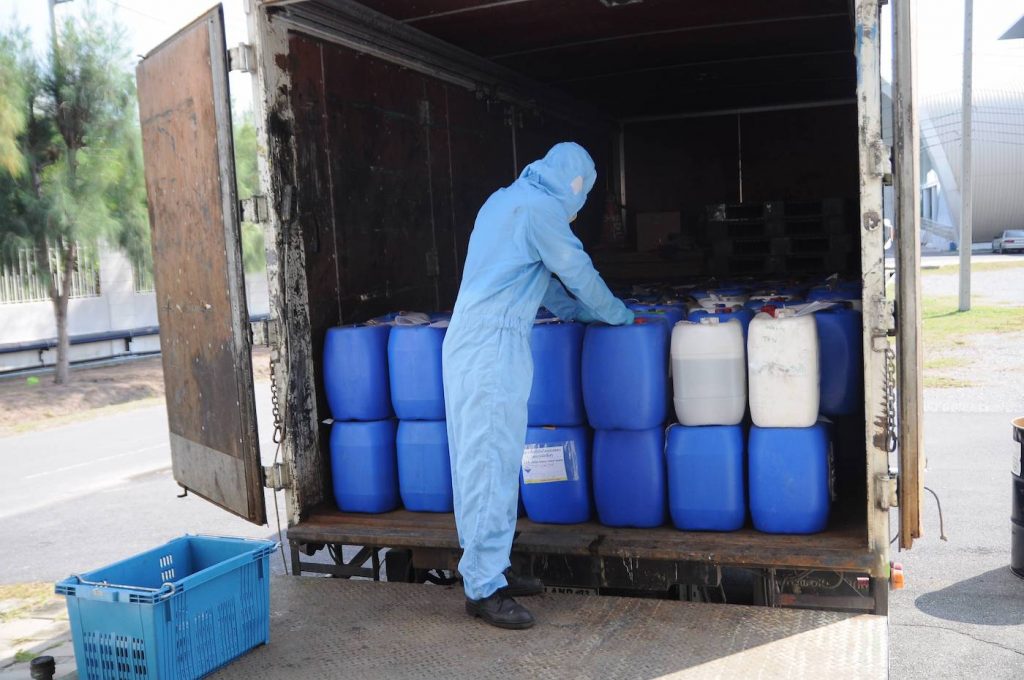
Secure Collection & Storage
All hazardous waste is stored at the Hazardous Waste Storage Building on KMUTT’s Bangkhuntein campus. The facility adheres to WHO standards, with containers kept off the ground and under cover to prevent leakage.
Monitoring & Record-Keeping
KMUTT meticulously records the daily volume of hazardous waste generated. This data is tracked and reported to identify trends, optimize processes, and maintain safety standards with full transparency.
Through these proactive measures, KMUTT safeguards both the campus and surrounding environment, setting a standard in responsible hazardous waste management and reinforcing the university’s dedication to sustainability and public health.
Wastes Generation from Laboratory
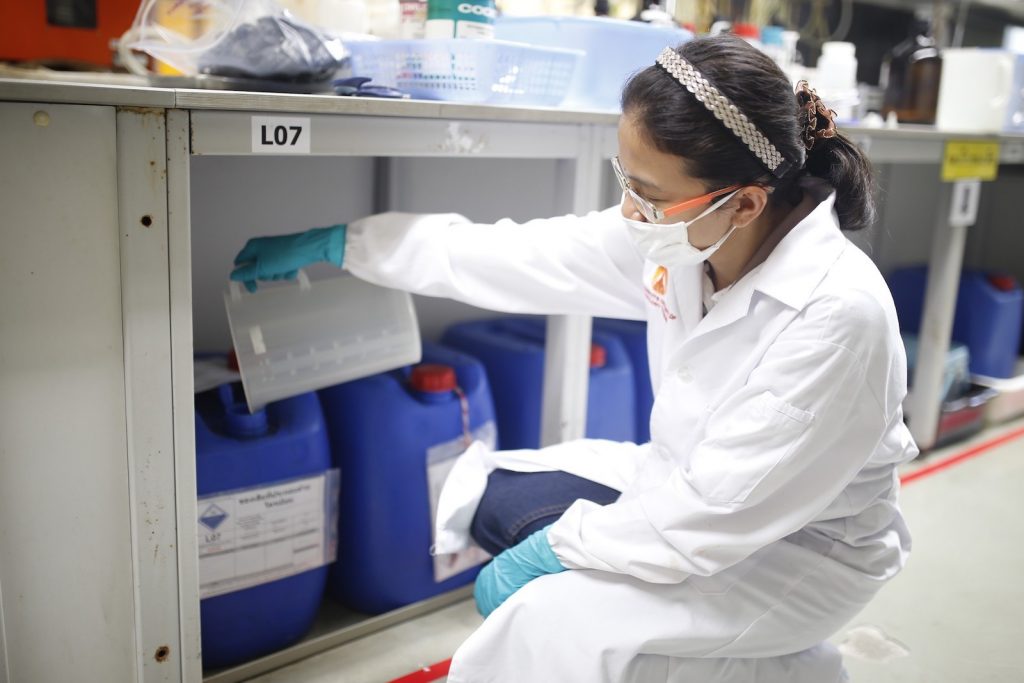
The main concept of the system is chemical substance collection (Ignitability, Corrosivity, Reactivity and Toxicity), storage and disposal of waste. In recent years, the system continues improving under the standard of Enhancement of Safety Practice of Research Laboratory in Thailand (ESPReL). The system consists of three steps: waste segregation, waste storage and collection, and waste treatment.
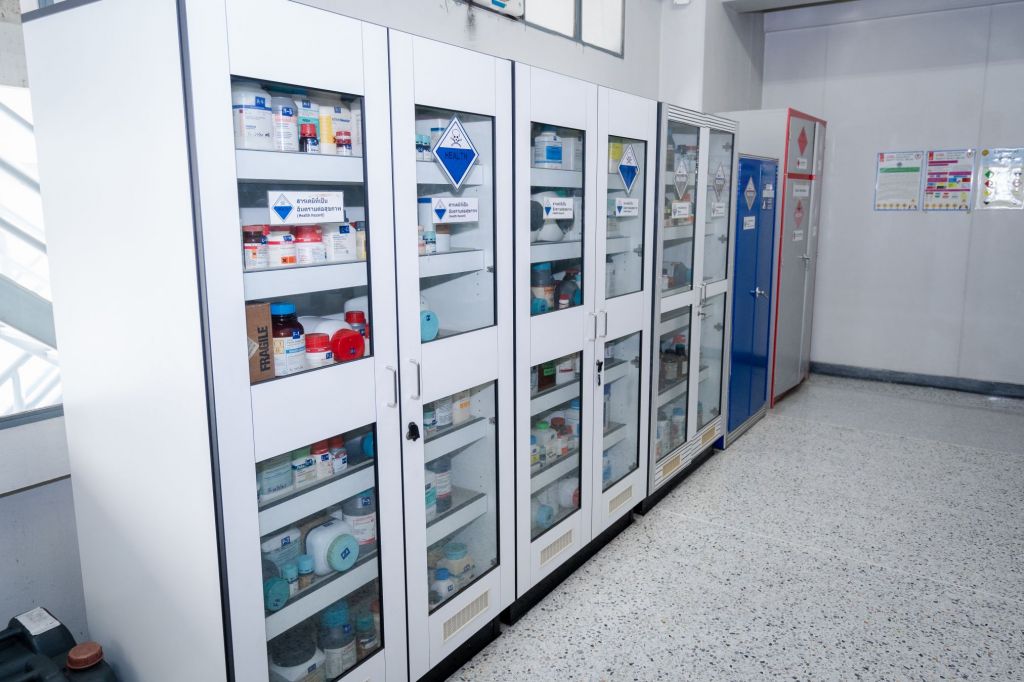
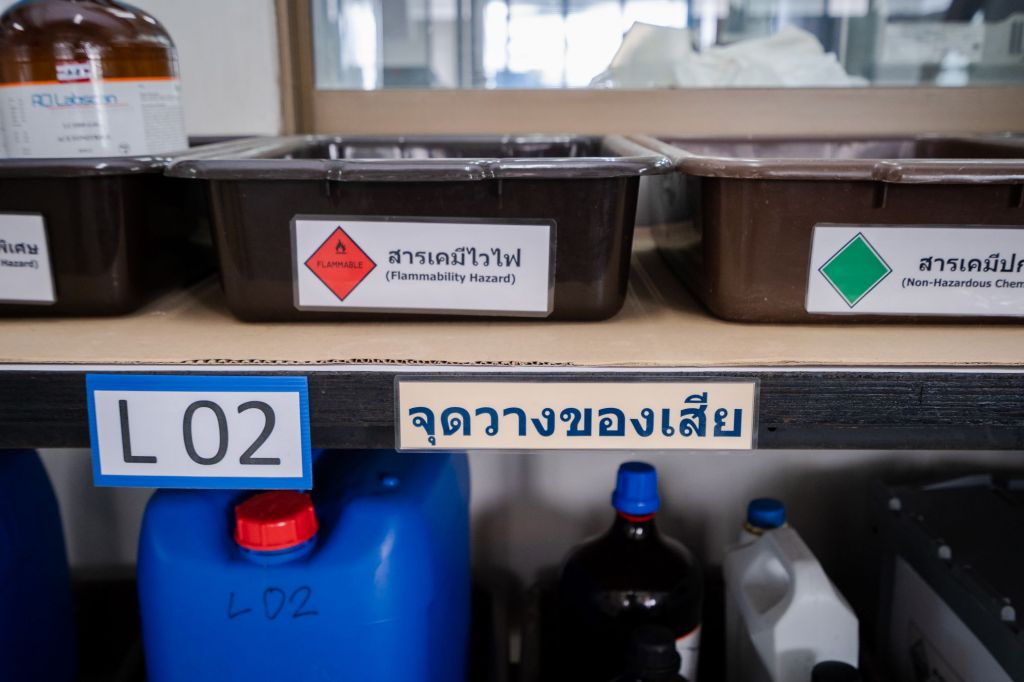

To ensure hazardous waste is handled properly, hazardous waste containers have been provided to all laboratories according to the laboratory request form — one category in the Hazardous Waste Segregation Manual.
Targets (by 2030)
- 40% of hazardous waste are reused / recycled
- 20% of hazardous waste are prepared for onsite waste treatment
Current Status (2025)
- 54.29% of hazardous waste are reused and recycled compared to 2015 baseline
- 54.56% of hazardous waste are prepared for onsite waste treatment compared to 2015 baseline
Hazardous Wastes Reuse and Recycle
Recovery pathways that divert laboratory hazardous waste from disposal.
Hazardous Waste for Reuse – Recycle (kg)
2007 – 2025
Hazardous Waste Reuse – Recycle
352 kg
Chemical Bottles Waste
17.26%
802 kg
Organic Solvent Waste
39.33%
885 kg
Acid–Base Waste
43.40%
Hazardous Waste Onsite Treatment
On-campus treatment processes that reduce off-site disposal costs and environmental risk.
Hazardous Waste for Onsite Treatment (kg)
2007 – 2025
Hazardous Waste
Base
26.26%
233 kg
Acid
27.28%
242 kg
TKN
12.40%
110 kg
BOD
34.04%
302 kg
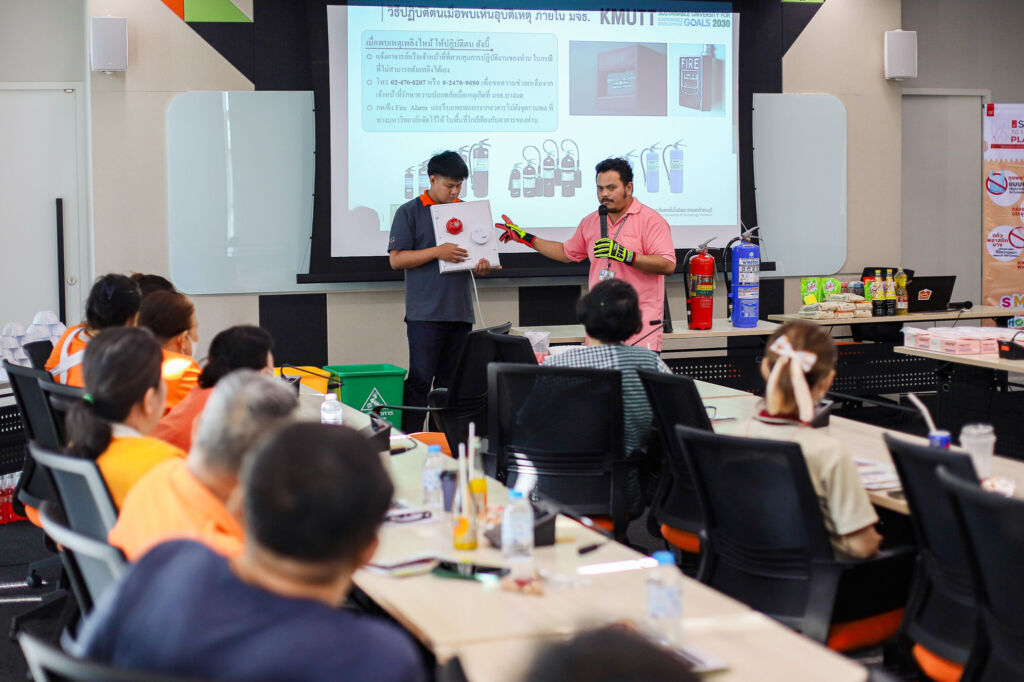
Hazardous Waste Management Training
Hazardous Waste Management Training at KMUTT: Strengthening Competence and Safety in Laboratory Practices
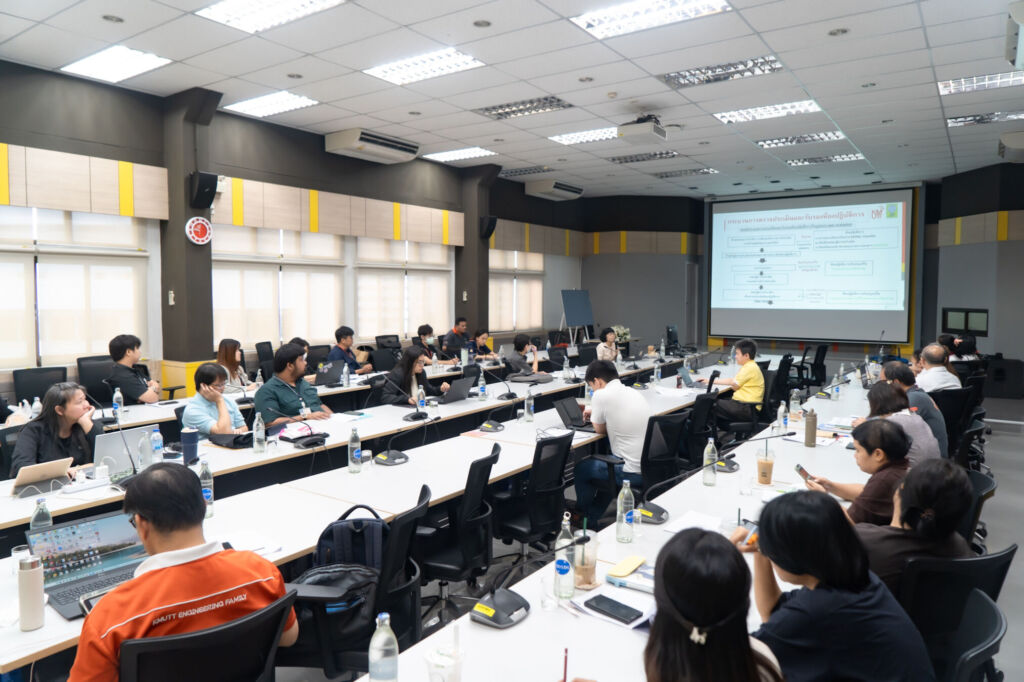
Recognizing the importance of safe and responsible hazardous waste management in academic and research environments, King Mongkut's University of Technology Thonburi has developed a systematic training framework to ensure that all personnel — students, researchers, and staff — understand and adhere to proper waste management practices in accordance with national regulations and university standards.
The program integrates both theoretical and practical components, emphasizing risk awareness, waste segregation techniques, labeling, temporary storage, and proper disposal procedures — cultivating a culture of safety and environmental responsibility across all operational levels.
As a result, the Hazardous Waste Management System has been successfully implemented across all laboratories and research units at KMUTT, strengthening compliance with environmental and safety regulations and enhancing institutional capacity in managing chemical and biological hazards responsibly.
The Following Table Presents Course Topics Related to Responsible Person
| List | Manager | Research Group Leader | Students / Researchers | Maid |
|---|---|---|---|---|
| Law and regulation | ||||
| Safety management system | ||||
| Chemical substances management | ||||
| Waste management | ||||
| Chemical substances and waste database | ||||
| Risk Assessment | ||||
| Physical safety in laboratory | ||||
| Emergency planning | ||||
| Personal Protective Equipment | ||||
| Safety data sheet | ||||
| Safety Sign |
Remark: Number of persons in each column of the table represent difficulty levels of contents from the training program.