

Pedestrian Paths
Progress Toward Goals
50%
Target 2024
→
57%
Achieved 2025
Status (2025): Achieved 57% of pedestrian pathways are now designed as green covered walkways, supporting KMUTT’s walking campus vision.
Target: 50% of all pedestrian pathways to be green-covered walkways by 2024.
At King Mongkut’s University of Technology Thonburi (KMUTT), the Walk and Bike Society is a flagship initiative designed to promote sustainable and active mobility through the enhancement of pedestrian and bicycle infrastructure across campus. The initiative supports KMUTT’s vision of creating a safe, healthy, and eco-friendly walking environment that connects people and places efficiently.
A key feature of this initiative is the development of covered walkways that interconnect buildings, enabling students and staff to move comfortably between facilities regardless of weather conditions. These green walkways are lined with flowering and ornamental plants, contributing to both aesthetic appeal and increased campus vegetation, while providing a refreshing and pleasant walking experience.
Pedestrian design at KMUTT prioritizes comfort, safety, and accessibility. Each pathway is designed to be physically and functionally comfortable, sheltered from wind and rain, and shaded from sunlight. The layout of campus walkways follows a well-organized network that integrates safety signage, traffic control measures, and universal design principles, ensuring accessibility for all users, including persons with disabilities.
By encouraging walking and cycling as preferred modes of transportation, KMUTT enhances the quality of campus life, reduces carbon emissions, and supports the university’s broader Sustainable Urban Mobility Plan.
Covered walkway
Under the Walk and Bike Society, covered walkways link buildings across the KMUTT campus so students and staff can walk between classes without getting caught in sun or rain. Flowering and ornamental plants are planted along the paths to add shade and greenery. As of 2025, 57% of pedestrian pathways on campus are green covered walkways, above the 50% target set for 2024.


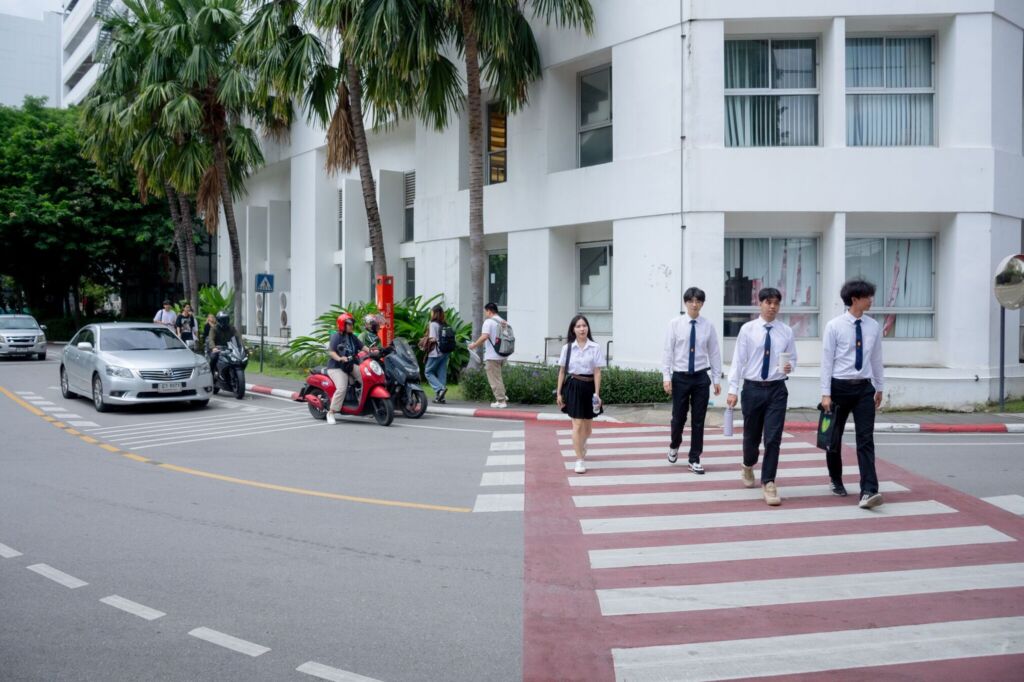
Pedestrian crossing
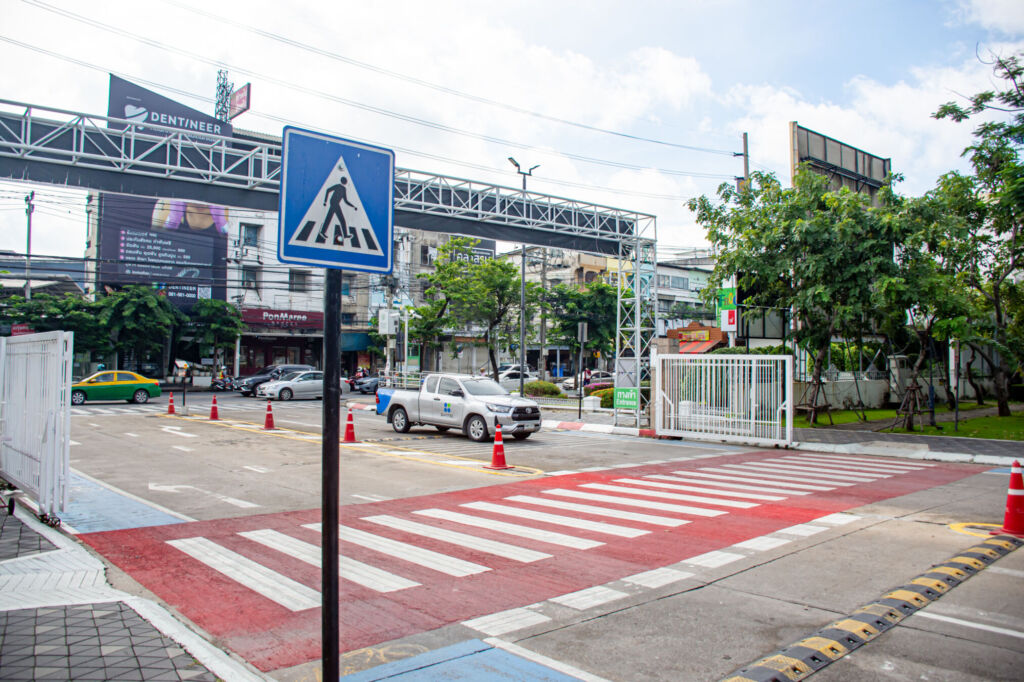
Marked crossings are installed where walkways meet campus roads and internal traffic lanes. They give pedestrians a clear point to cross when moving between faculties, especially in areas shared with bicycles and campus shuttles. The crossings are part of the walkway network developed under the Walk and Bike initiative.
Street lamp
Street lamps are placed along main walking routes so paths stay lit after dark. Evening classes and lab work are common at KMUTT, so adequate lighting helps students and staff feel safe when walking between buildings at night. The lamps work together with covered walkways and crossings as basic pedestrian facilities on campus.


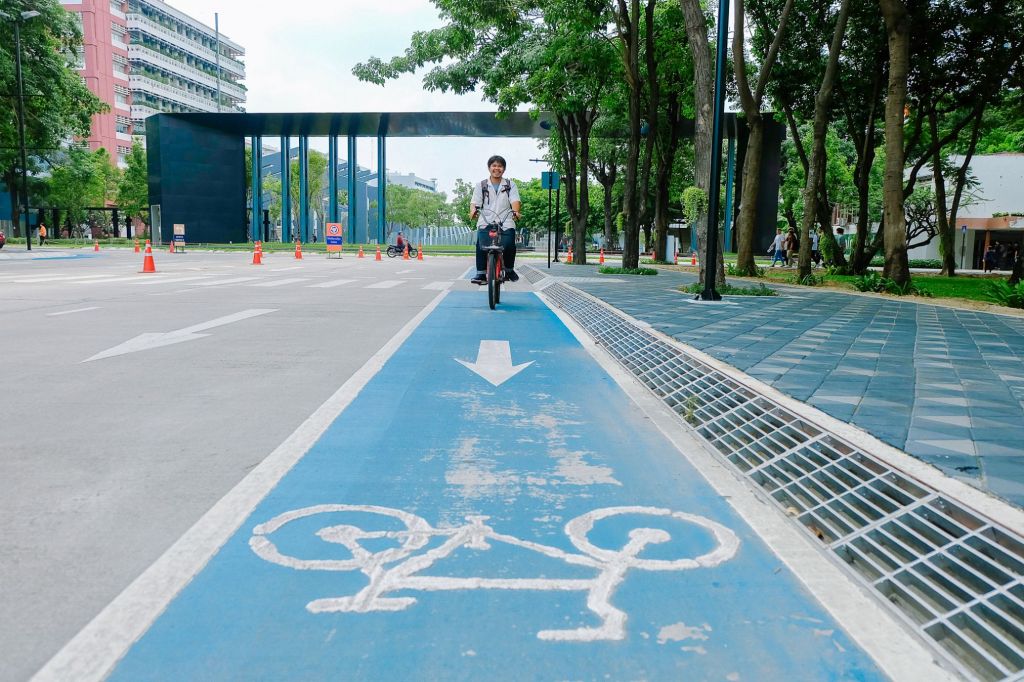
Bicycle lane
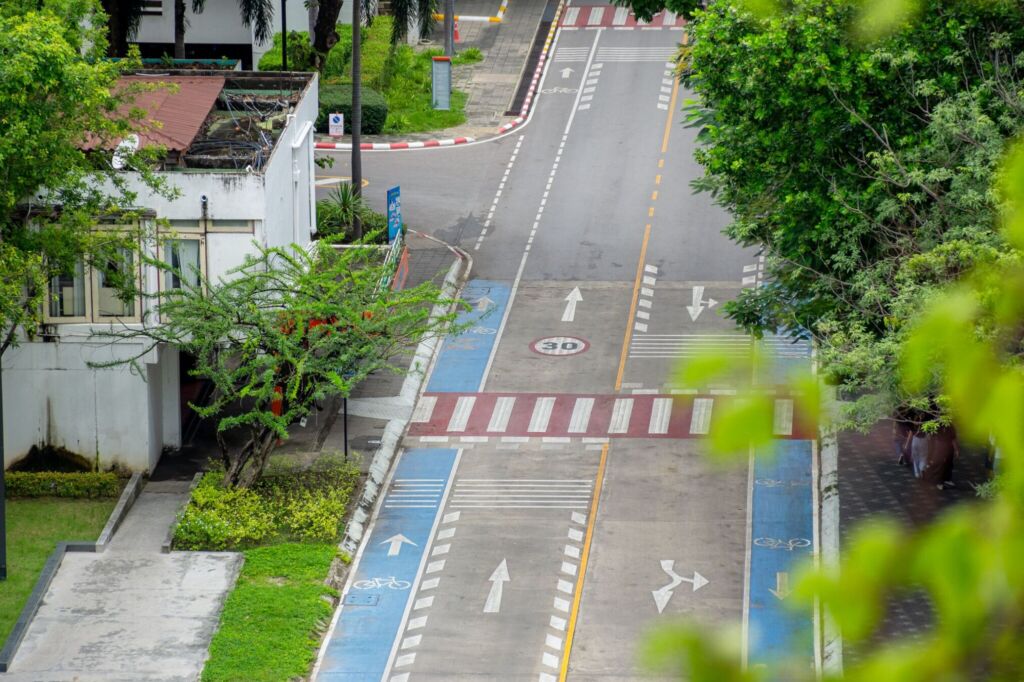
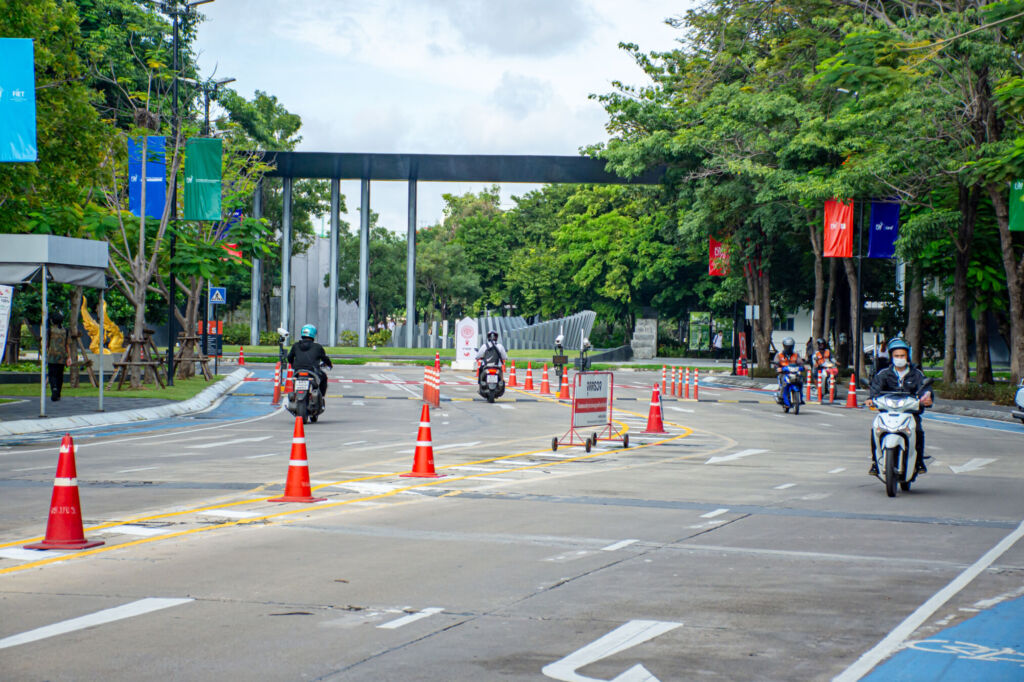
Bicycle lanes run beside walkways on major routes under the Walk and Bike Master Plan. They keep cyclists separate from pedestrians and make it easier to ride between buildings without using a car. The lanes support daily commuting on campus and fit with the university Sustainable Urban Mobility Plan to cut vehicle use and emissions.


Safety sign
Signs along walkways and bicycle lanes show directions, speed limits, and warnings at junctions. They help new students and visitors find their way and remind everyone to watch for cyclists and vehicles at busy points. The signage is one part of the traffic control measures applied across the campus walkway network.
Disabled Pedestrians
Walkways at KMUTT follow universal design so people with disabilities can use the same routes as everyone else. Ramps, tactile paving, and level surfaces connect accessible building entrances to the walkway network. The aim is to let wheelchair users and people with visual or mobility limitations move around campus on their own.


