
Recycling Programs
From the Recycle Waste Bank to Repair Cafés and community roadshows — KMUTT turns campus waste into resources through the 3Rs.
Target 2030
70%
Of municipal solid waste are reused / recycled.
Campus-wide recycling and reuse programs.
Current Status (2025)
19.05%
Of municipal solid waste are reused and recycled.
112,370 kg of 588,580 kg total municipal solid waste.
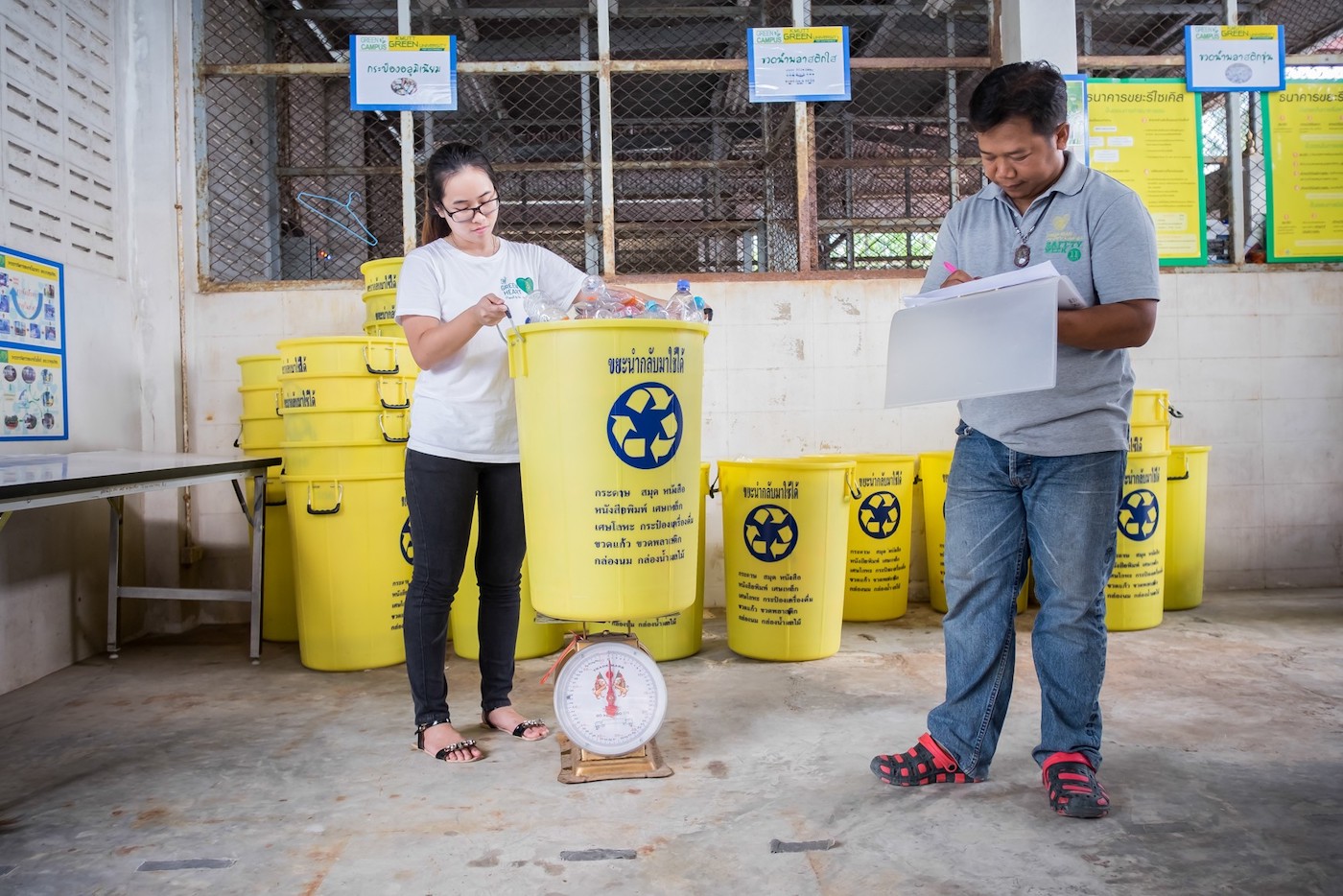
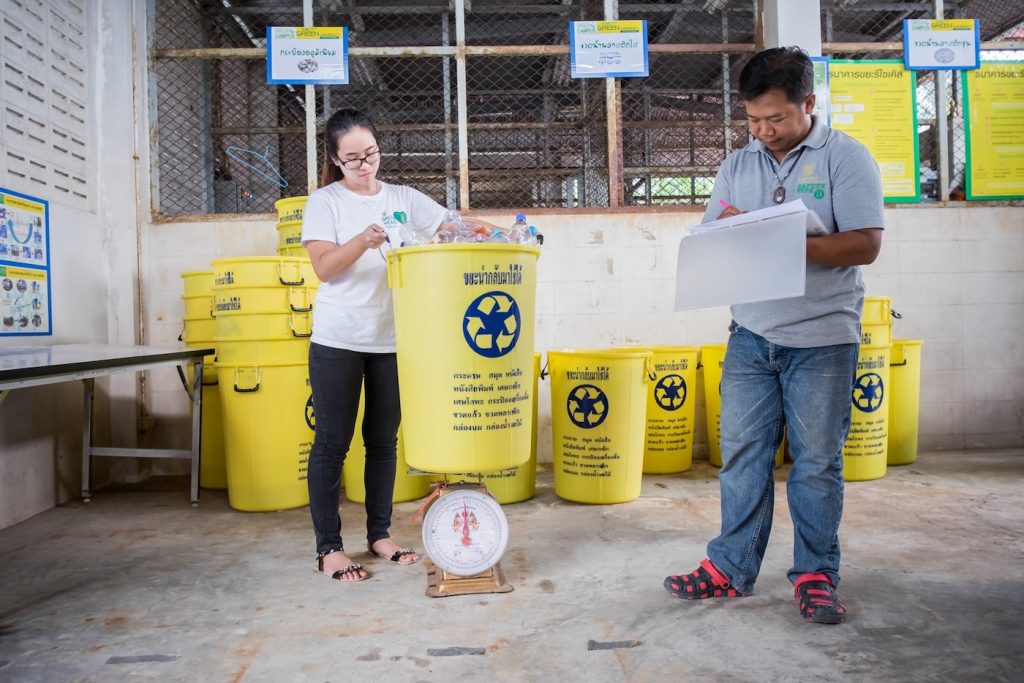
Recycle Waste Bank at KMUTT Bangmod Campus
KMUTT Recycle Waste Bank: Leading Sustainable Change through Recycling
Established in 2007 through collaboration between KMUTT students and the Energy, Environment, Safety, and Health (EESH) organization, the KMUTT Recycle Waste Bank serves as a leading model for waste management and recycling within Thai universities. In line with KMUTT’s Green University Policy, the initiative aims to minimize waste generation and foster a sustainable campus environment. In 2025, 19.05% of municipal solid waste was reused and recycled, working toward the 70% target by 2030.
Through effective waste segregation and recycling practices, KMUTT saves over 10,000 baht per month in waste management costs while significantly reducing the volume of waste sent to landfills — benefiting both the university and surrounding communities.
The Recycled Wastes Deposit at Recycle Waste Bank
Paper
54.61%
61,243 kg
Glass
5.32%
5,970 kg
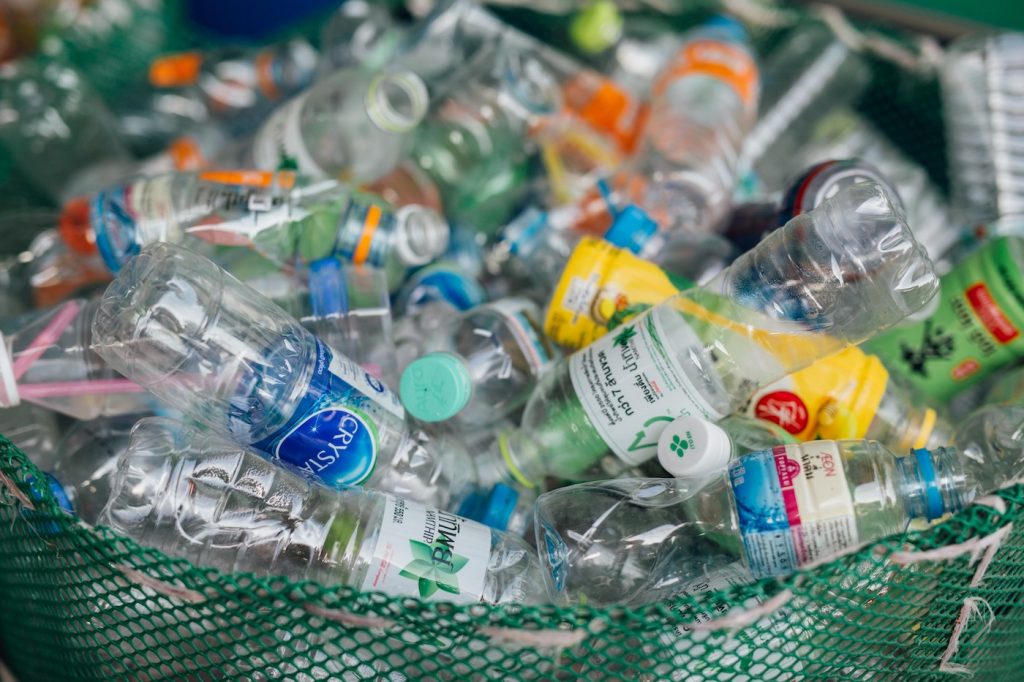
Plastic
17.13%
19,211 kg
The Recycle Waste Bank operates in five key steps:
Waste Collection
Collecting recyclable materials from across campus.
Identification & Separation
Sorting into paper, glass, metal, and plastic categories.
Waste Selling
Selling sorted materials to recycling partners.
Accounting Record
Maintaining transparent records of income from waste sales.
Evaluation & Development
Assessing performance and identifying opportunities for improvement.
Income generated supports sustainability projects within the campus, funding environmental awareness campaigns and innovation for waste reduction. In 2025, recycled waste deposited at the bank consists of 54.61% paper (61,243 kg), 22.94% metal (25,728 kg), 17.13% plastic (19,211 kg), and 5.32% glass (5,970 kg) — demonstrating KMUTT’s commitment to resource recovery, waste reduction, and circular economy practices.
Type of Waste Recycling
Scrap Left from Product Manufacturing and Consumption
Operation: Scrap is recycled into either instructional media for Engineering students or bicycle stands.
Beverage Carton
Operation: Green Roof Project — root sheet from recyclable aluminum foil.
Drinking Straw
Operation: Turning used straws into pillows or beds for patients.
Corrugated Paper Box / Cardboard
Operation: Sending to companies who are able to recycle.
Vinyl Banner
Operation: Tote bags.
Inkjet and Laser Cartridges
Operation: Sending to companies who are able to recycle.
Plastic Bottles
Operation: Sending to companies who are able to recycle.
Repair Café @ KMUTT’s Project
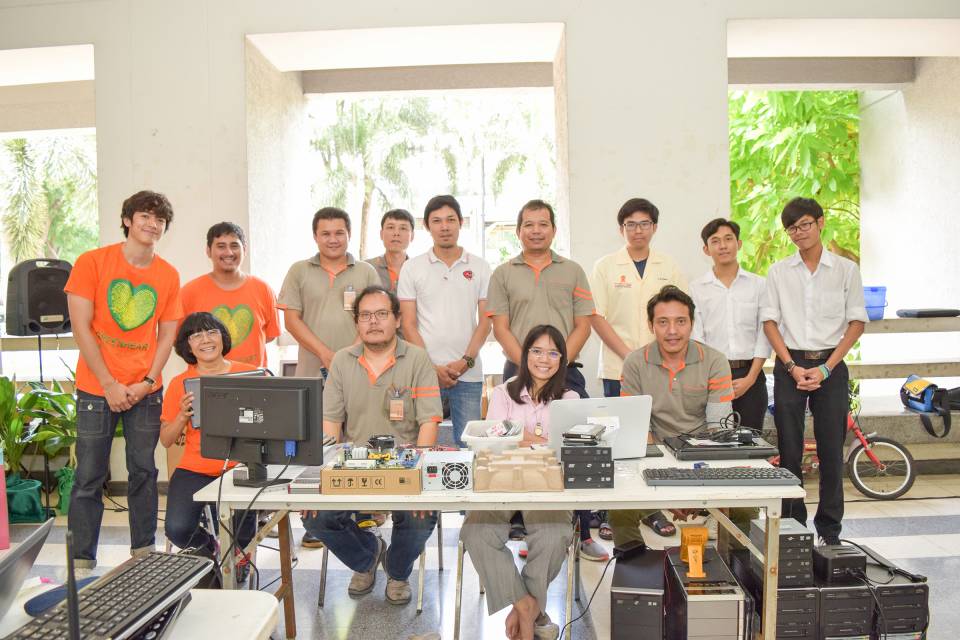
Repair Cafés are pop-up events at Bangmod campus where students and staff can get broken electrical household items, computers, and bicycles repaired for free. Held once a month through collaboration between students, staff, and technician volunteers — including Suanthon GoldCity Cycling Club, Green Cycling Club, KMUTT Cycling Club, Department of Electrical Technology Education, and Innovation Engineering Co., Ltd.
Participants collect and share knowledge about reuse and repair — saving costs, recovering valuable materials, reducing pollution, and lowering greenhouse gas emissions.
500+
Bicycle Stands Built
75
Bicycles Donated
121
Bikes Repaired
265
Chairs & Desks Saved
More than 500 bicycle stands built from remaining metal pipes. 75 bicycles donated and reused in the Bike Repairing Center; 121 repaired for the Bike Sharing Campaign. 145 broken chairs and desks repaired instead of buying new ones; 120 more recycled into student workshop parts by Building and Ground and EESH.


Engaging KMUTT Students in Sustainable Action
Inspiring the 3Rs Movement
KMUTT fosters a sustainability-minded community through hands-on activities designed to inspire students to embrace Reduce, Reuse, and Recycle — encouraging active participation, innovation, and responsibility.
Campus Roadshows
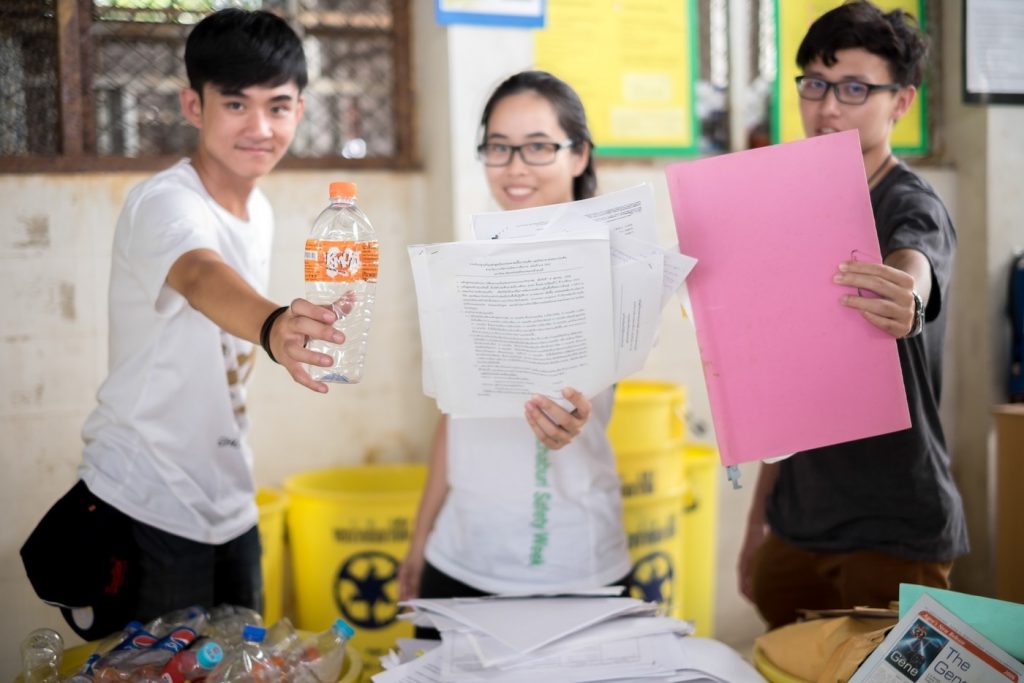
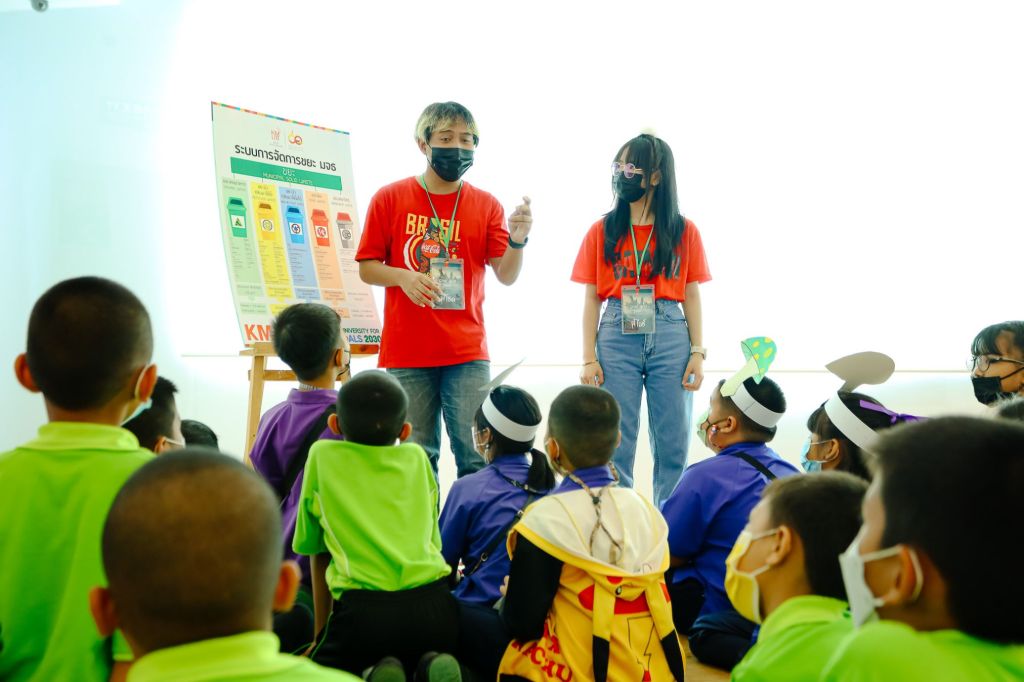
Interactive sessions across departments and faculties provide practical knowledge on waste reduction, recycling tips, and sustainable daily practices.
Green Heart Camp
Workshops, team-building, and outdoor activities develop eco-conscious leaders who initiate change on campus and in communities.
Recycle to Cycle
Students and staff trade plastic bottles for campus bicycle time — promoting recycling and low-impact transportation.
Invention Competition
Students transform recycling waste — plastic and beverage cartons — into useful, innovative products through creative upcycling.
Academic Integration
Waste management topics embedded in General Education courses and research — including bio-plastic bags and roads from recycled plastic.
Community Engagement
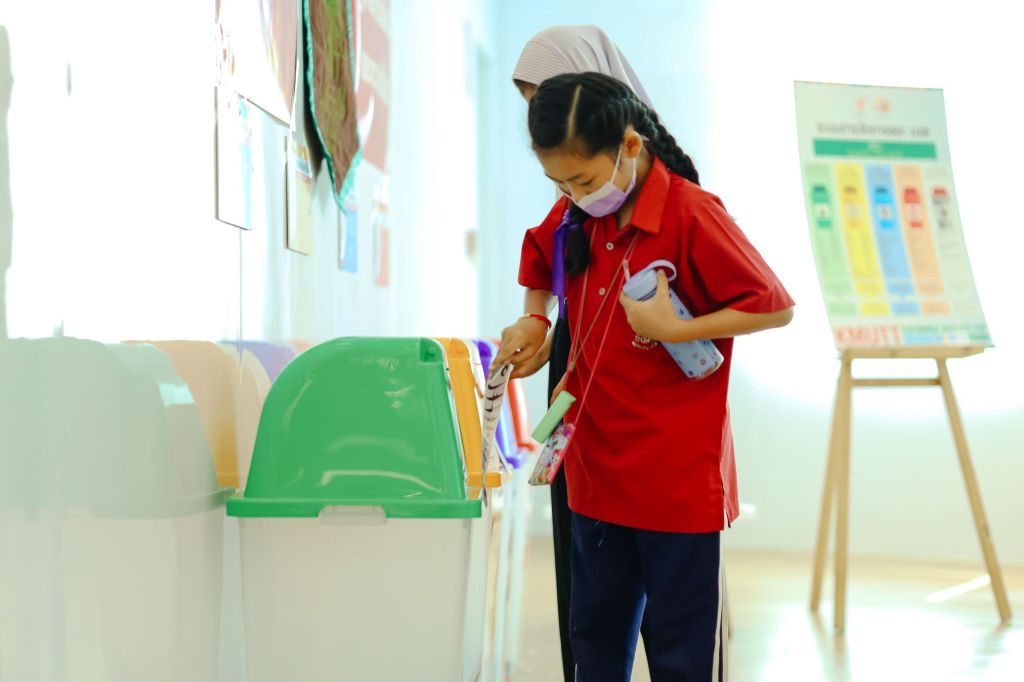
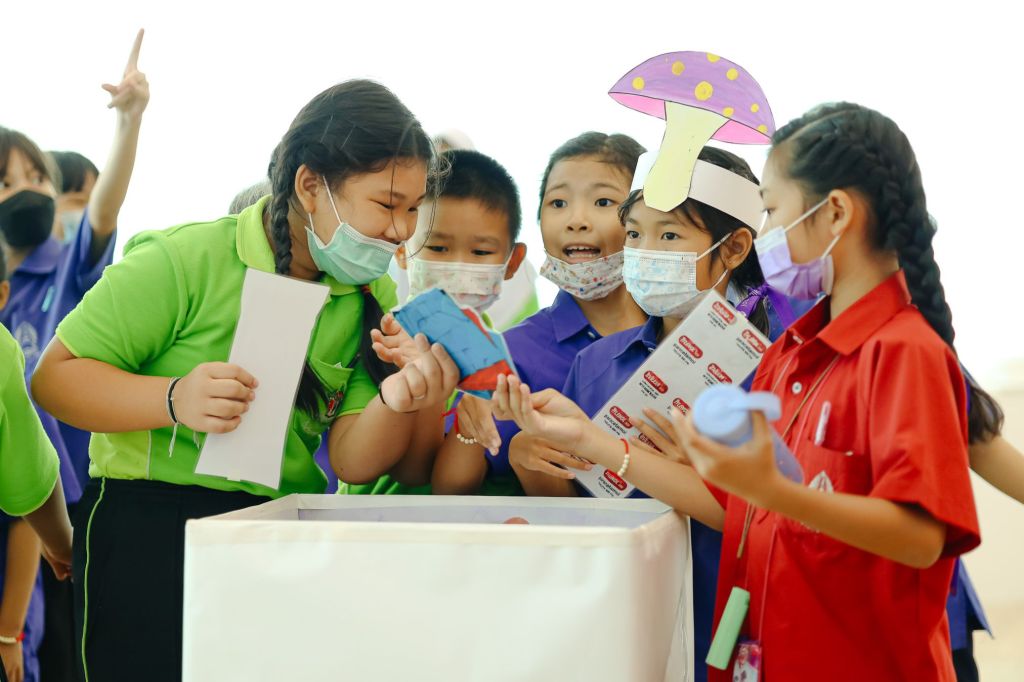
KMUTT shares waste management knowledge with surrounding schools and communities through workshops and collaborative projects.
Second Hand Market
Each year, KMUTT hosts a monthly second-hand market where students and staff exchange gadgets, clothes, electronic appliances in good condition, books, accessories, bicycles, furniture, and housewares. The event reduces more than 1,500 kg of MSW annually while strengthening cooperation among more than 6,000 participants.
"One Trash is One Treasure" Activity
Electrical Technology Education Department training program
Students from the Electrical Technology Education Department train disadvantaged communities on how to fix electrical appliances and engines. After the program, participants can repair fans, kettles, irons, rice cookers, and motorbikes — increasing the value of appliances and improving quality of life through use or resale.
87
Families Trained
1,650
kg Electrical Trash Repaired
New
Careers & Income Created
87 families in disadvantaged areas gained repair skills and new career opportunities. More than 1,650 kg of electrical waste entered the repair process, with participants benefiting from buying-selling activities.


