
Water Conservation
Program
Advancing sustainable resource management through efficiency measures, awareness campaigns, and long-term reduction targets across all KMUTT campuses.
23.04
2003 Baseline
cu.m/capita/yr
13.38
2014 Lowest
cu.m/capita/yr
19.18
2025 Rate
cu.m/capita/yr
19.55%
Reduction vs 2003
pipe water usage (2025)
Water Conservation Initiatives at KMUTT
Advancing Sustainable Resource Management — In response to Thailand’s severe drought warnings issued in 2017 by the Meteorological Department, King Mongkut’s University of Technology Thonburi (KMUTT) has continuously enhanced its water conservation and efficiency measures to reduce overall water consumption across all campuses.
Over the past two decades, the water consumption rate per capita has shown a clear downward trend. Starting at 23.04 cubic meters per capita per year in 2003, the rate gradually declined through consistent conservation efforts, reaching its lowest level at 13.38 cubic meters in 2014.
In 2025, the university’s water consumption rate recorded 19.18 cubic meters per capita per year, reflecting a 19.55% reduction in pipe water usage compared with the 2003 baseline — attributed to eco-sensor water-saving appliances, leak detection programs, rainwater harvesting systems, and university-wide awareness campaigns.
Water Consumption Rate from 2003–2025 (cu.m/capita-year)
cu.m / capita – year
Key Water-Saving Practices
Systematic measures that reduce KMUTT’s water footprint and cultivate environmental responsibility among students, faculty, and staff.
Ensuring all taps and fixtures are properly closed to prevent dripping.
Avoiding unnecessary water use by turning off taps when not in use.
Conducting routine inspections to detect leaks in pipes, flushing systems, and faucets.
Promptly repairing defective equipment to prevent water loss.
Installing water-efficient devices in university buildings and laboratories.
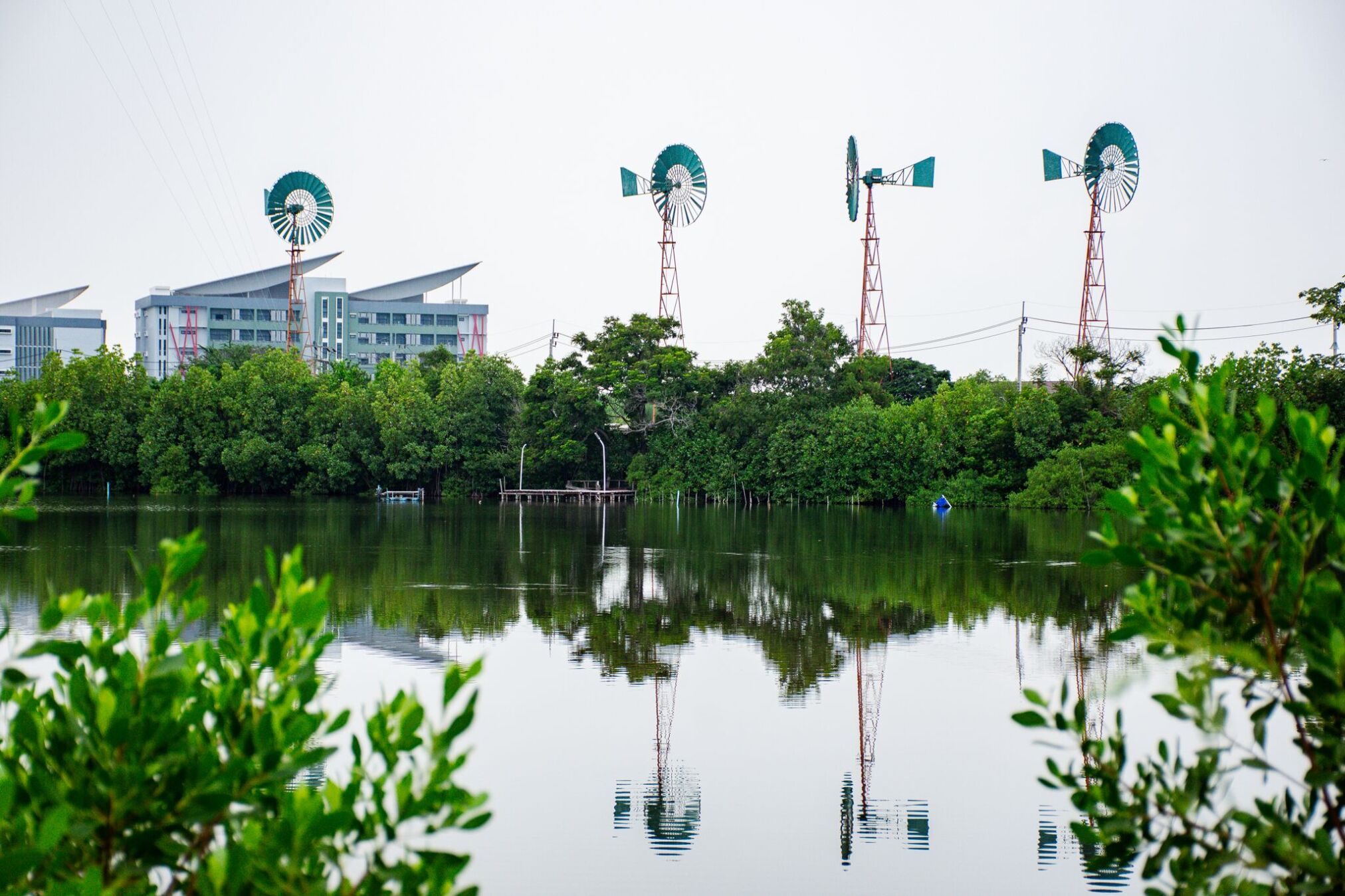
Implementing rainwater harvesting for landscape irrigation.
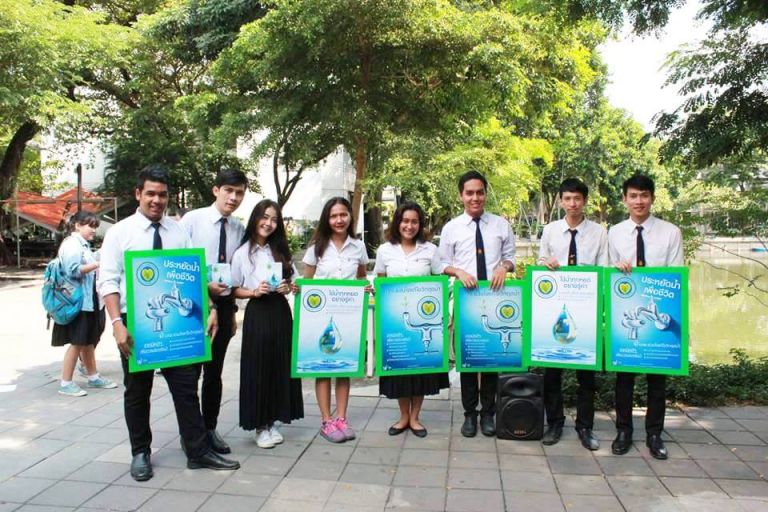
Promoting water conservation through student and staff campaigns.
Encouraging the use of water containers instead of direct tap flow in cleaning activities.
Water Saving Campaign
Since 2007, King Mongkut’s University of Technology Thonburi has been committed to fostering sustainable water management through comprehensive Water Saving Campaigns — grounded in the principle that long-term sustainability requires not only technological solutions but also behavioral transformation within the university community.
1. Principles and Objectives
KMUTT’s water-saving initiatives aim to:
- Promote awareness and behavioral change among students and staff toward responsible water consumption.
- Strengthen the university’s role as a living laboratory for sustainability.
- Support the national water conservation strategy and the 50% pipe water reduction target by 2030 relative to the 2003 baseline.
2. Strategic Implementation
The campaigns employ diverse, participatory approaches to embed conservation values into daily routines:
Awareness Media
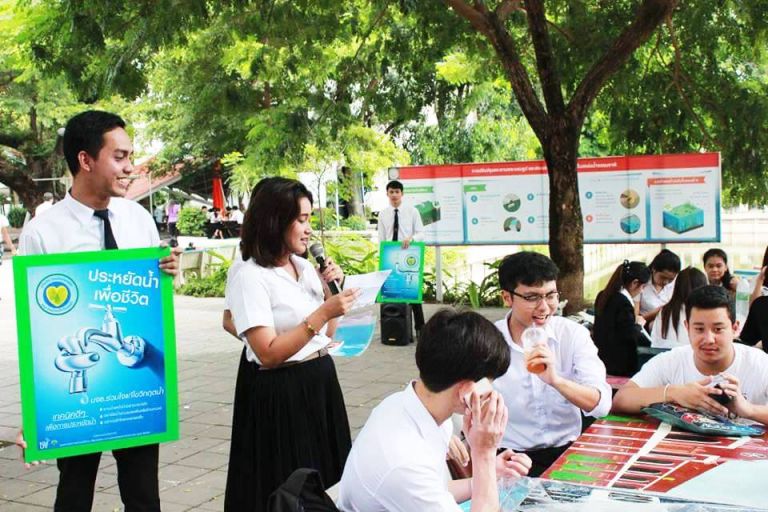
Posters, pocket guides, leaflets, and stickers displayed throughout campus with practical water-saving guidelines.
Capacity-Building Workshops
Hands-on skills: DIY leak detection, greywater reuse, and installation of water-efficient fixtures.
Water Conservation Challenges
Monthly competitions honoring outstanding participants as “KMUTT Water Champions”.
Digital Engagement
Social media tips, interactive quizzes, and conservation stories for an inclusive online network.
Annual Water Conservation Fair
Showcases rainwater harvesting, efficient irrigation, and eco-friendly water-saving technologies.
Personal Water Footprint
Self-evaluation tools enabling data-driven behavior change and continuous improvement.
3. Outcomes and Impact
Through these multifaceted campaigns, KMUTT has successfully established a culture of environmental stewardship, where water conservation is integrated into operational practices and daily life — resulting in measurable reductions in water consumption per capita and increased engagement among campus stakeholders.
By combining education, participation, and innovation, KMUTT continues to advance its vision of becoming a model sustainable university, ensuring that water conservation evolves from an individual action into a collective culture of responsibility and resilience. Bringing everyone to contribute to sustainable water management, KMUTT is building a future where conservation is second nature.
Water Conservation in Action
EESH activities and campus water-saving initiatives.