Bangmod Campus
Ponds
2
Volume
9,000
m³


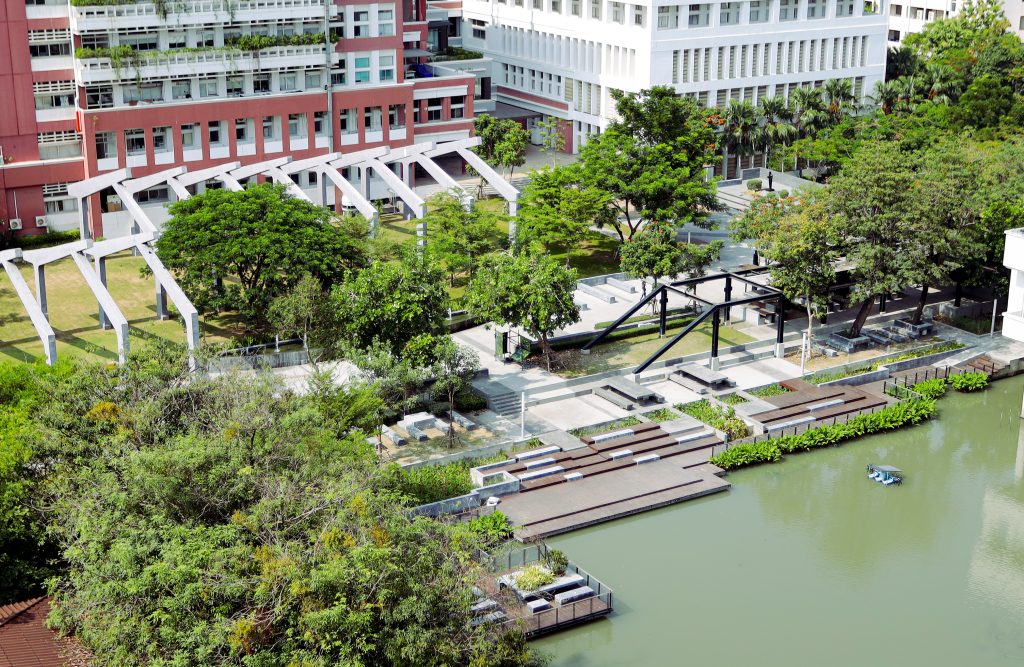
Collecting, filtering, and storing rainwater across KMUTT campuses to reduce tap water use and strengthen drought resilience.
37.78%
2025 Rainwater Share
35%
Target 2025
14+
Harvesting Systems
136,600+
m³ Saved / Year
At King Mongkut’s University of Technology Thonburi, rainwater harvesting plays a central role in sustainable water resource management. The university has installed over fourteen rainwater harvesting systems across its campuses to collect, filter, and store rainwater for reuse — preventing runoff and maximizing natural water resources.
This system significantly reduces reliance on tap water for irrigation and campus greenery maintenance, resulting in an annual water saving of more than 136,600 cubic meters. By utilizing rainwater for non-potable purposes, KMUTT minimizes operational costs while promoting environmental responsibility and resilience against drought conditions.
Monthly monitoring is conducted at all rainwater collection points. Parameters such as BOD, COD, and pH are regularly analyzed by the Central Laboratory Services. Phosphorus management is practiced to prevent algal blooms and maintain dissolved oxygen levels essential for ecosystem health.
Water acidity / alkalinity
Biochemical oxygen demand
Chemical oxygen demand
Phosphorus management
Rainwater Harvesting by Campus
Number of ponds and total storage volume (m³)
3
Campuses
17
Harvesting Ponds
568,086
Total Volume (m³)
Bangmod Campus
Ponds
2
Volume
9,000
m³
Bangkhuntien Campus
Ponds
8
Volume
179,850.8
m³
Ratchaburi Campus
Ponds
7
Volume
379,235
m³


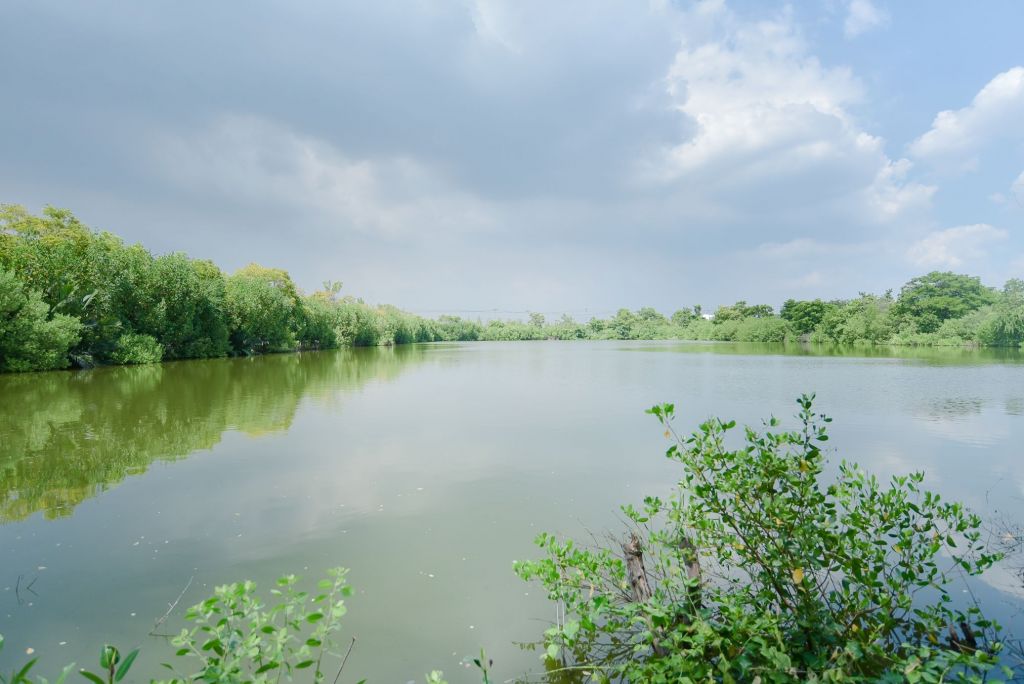

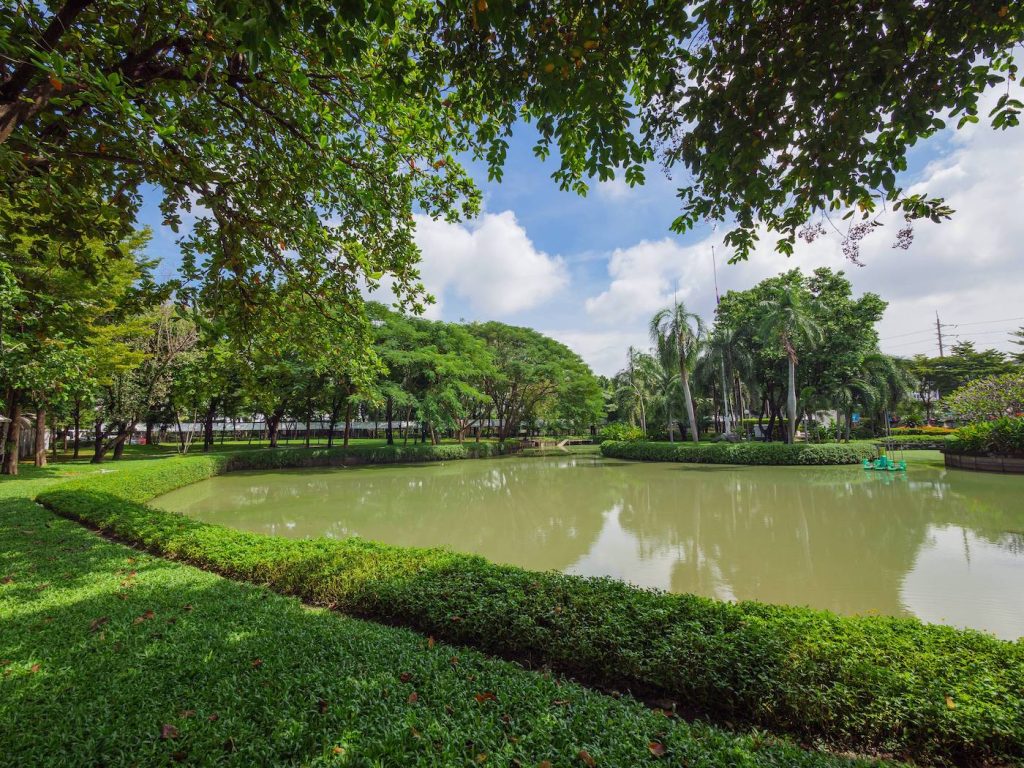
At KMUTT Ratchaburi Campus, a self-sustaining potable water production system ensures that 100% of campus water is produced locally, with a production capacity of 5 cubic meters per hour.
The process begins with raw water collection from natural and rainwater reservoirs, pumped using a 5 m³, 15-meter pressure pump. Water passes through rapid filtration with coagulants such as PAC (Polyaluminum Chloride) and Polymer, followed by chlorination for disinfection and compliance with drinking water standards.
Treated water is stored in three clear water tanks and distributed across campus through an automated sedimentation and filtration system — significantly reducing dependency on the Metropolitan Waterworks Authority while maintaining consistent potable water standards.
Potable Water Treatment Process
Ratchaburi Campus — 5 m³ / hour production capacity
Raw Water Intake
Collected from natural and rainwater reservoirs via a 5 m³ pump (15 m head).
Rapid Mixing
Coagulant dosing removes suspended solids before filtration.
Sedimentation & Filtration
Automated sedimentation and filtration to drinking water standards.
Clear Water Storage
Treated water stored in three tanks and distributed across campus.
Find news, projects, and content across the website.
Small files that help websites remember your preferences. You can review or change how your browser handles them at any time.
Open Chrome on your computer.
Select the three-dot menu, then choose Settings.
Open Privacy and security.
Select Third-party cookies.
Choose the option that matches your preference.
Open Microsoft Edge on your computer.
Select the three-dot menu, then choose Settings.
Open Cookies and site permissions.
Select Manage and delete cookies and site data.
Turn your preferred cookie options on or off.
Open Firefox on your computer.
Select the menu button, then choose Settings.
Open Privacy & Security.
Go to Cookies and Site Data.
Clear data, manage data, or change permissions as needed.
Open Safari and select Settings.
Select the Privacy tab.
Choose your website tracking and cookie preferences.


