
Accessible Disabilitites
King Mongkut’s University of Technology Thonburi (KMUTT) has developed an inclusive on-campus system that gives equal access to everyone, especially people with disabilities. The work covers academic buildings, walkways between buildings, parking, restrooms, student accommodation, and other facilities. The aim is to let everyone at KMUTT live, study, and move around campus with comfort and dignity.
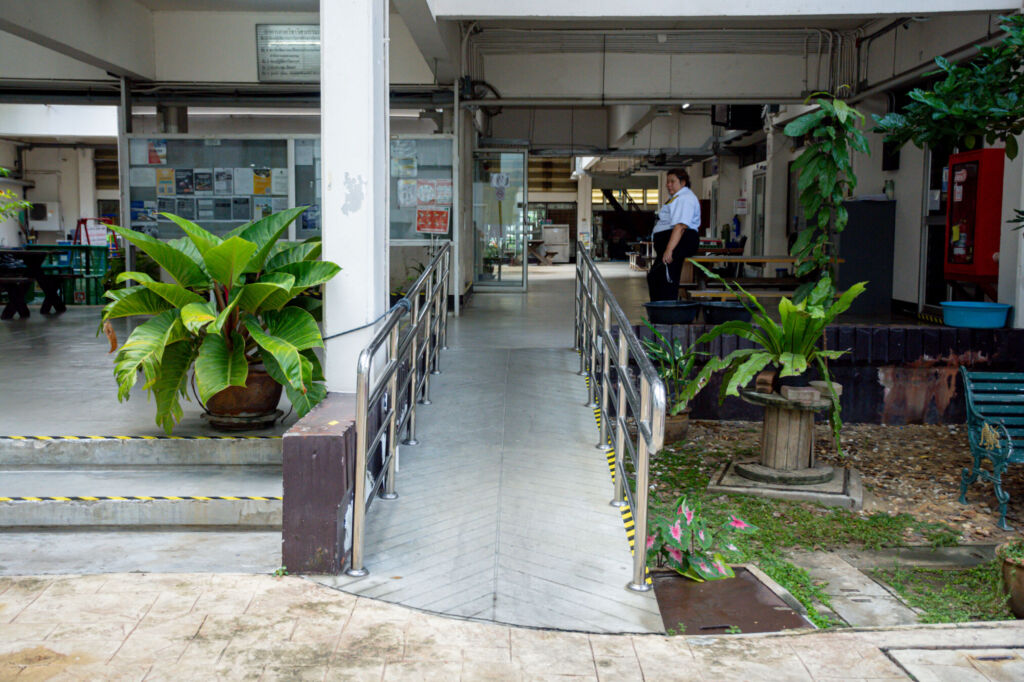
Ramp for wheelchairs
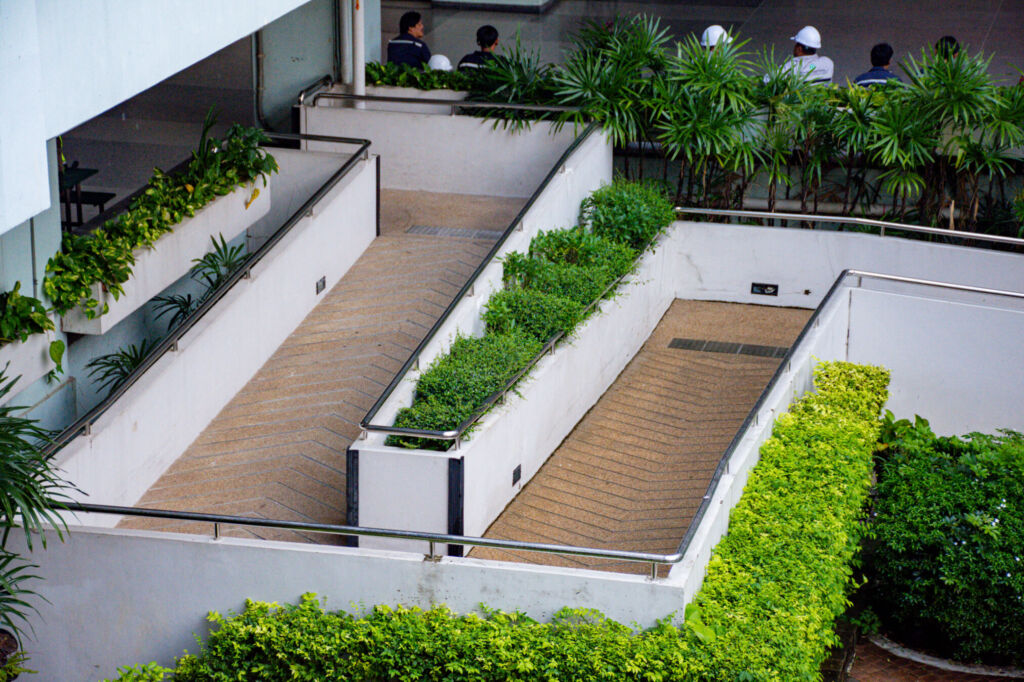
Ramps are installed at building entrances and along walkways so wheelchair users can reach classrooms, offices, and common areas without steps. Slopes and handrails are set to support safe movement across campus, including routes that link covered walkways to main faculty buildings.

Walkways
Walkways between buildings use level surfaces, tactile paving, and enough width for wheelchairs and mobility aids. They form part of the daily routes that students and staff rely on, connecting faculties, libraries, and service areas across the KMUTT campus.


Accommodation
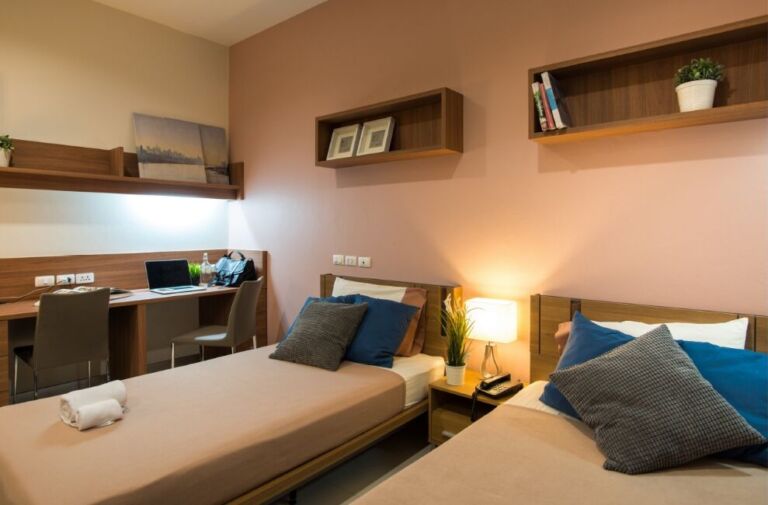
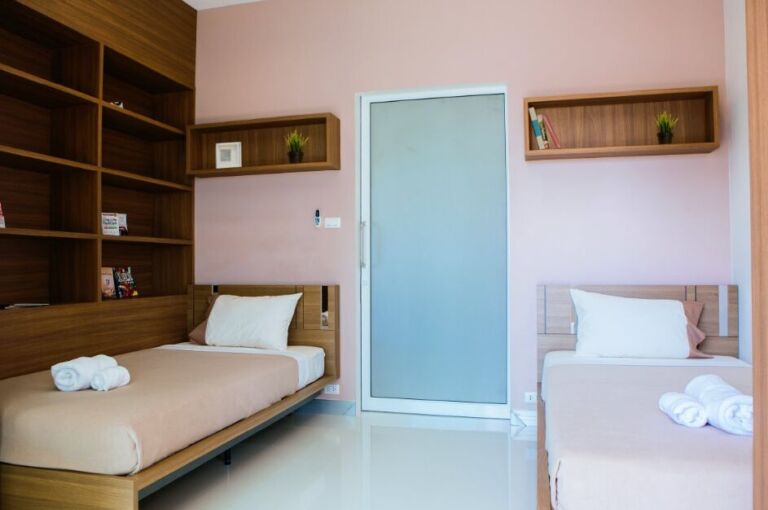
Student dormitories and guest rooms include accessible units with adjusted room layouts, wider doorways, and fittings suited to residents with disabilities. This allows students who need accessible housing to stay on campus close to their classes and daily activities.
Disabled parking
Reserved parking bays are placed near building entrances so drivers or passengers with disabilities can park close to where they need to go. Spaces are clearly marked and kept available for eligible staff, students, and visitors using the campus each day.


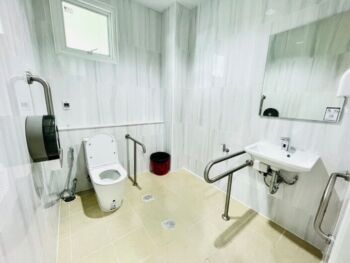
Disabled-access toilets
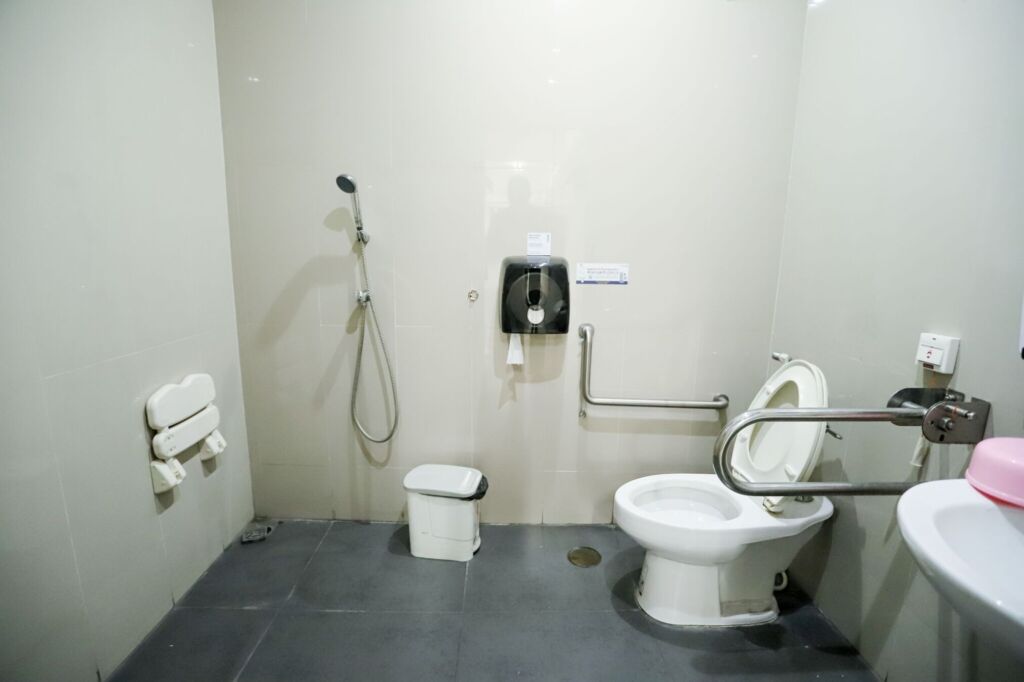
Accessible restrooms are provided in academic buildings and public areas across campus. Each unit has enough space for a wheelchair to turn, with grab bars and fixtures arranged to meet standard accessibility requirements for daily use by students, staff, and visitors.
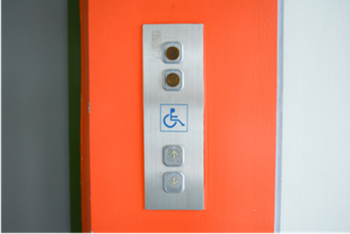
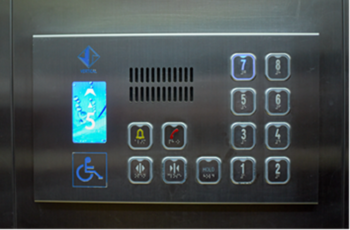
Handicapped elevator
Elevators in key buildings are sized and equipped for wheelchair access, with controls at reachable height and clear signage at each floor. They allow users who cannot use stairs to move between levels in faculties, libraries, and other multi-storey facilities on campus.