

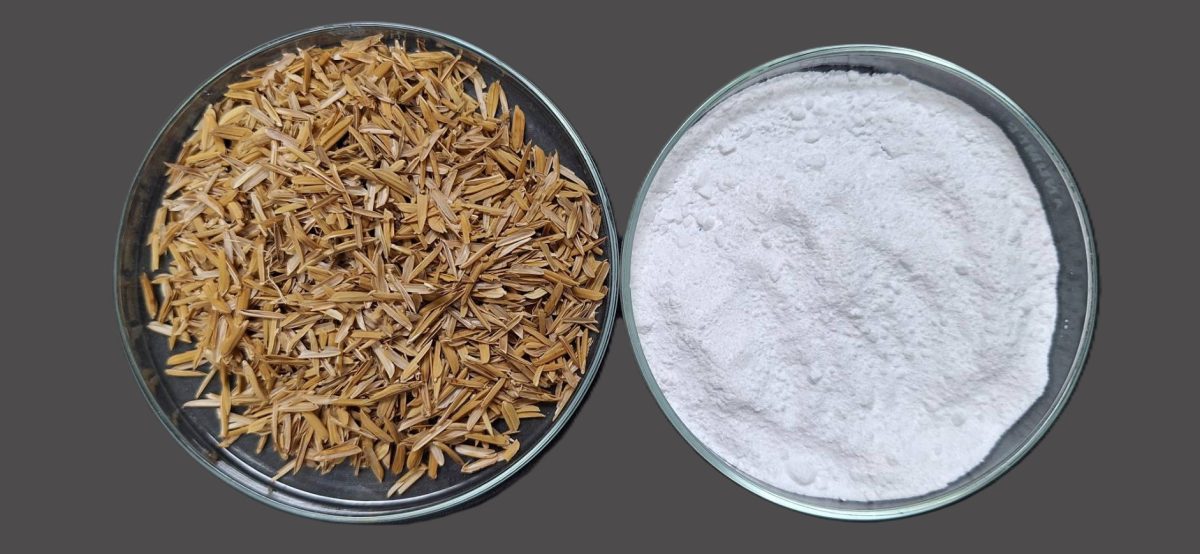
Researchers at King Mongkut’s University of Technology Thonburi (KMUTT) have developed a biotechnological process to produce Biosilica from rice husk. This eco-friendly method is chemical-free and ready for technology transfer to various sectors, including cosmetics, cosmeceuticals, pharmaceuticals, and rubber. This marks a significant step toward reducing Thailand’s dependency on imported silica and promoting the national circular economy.
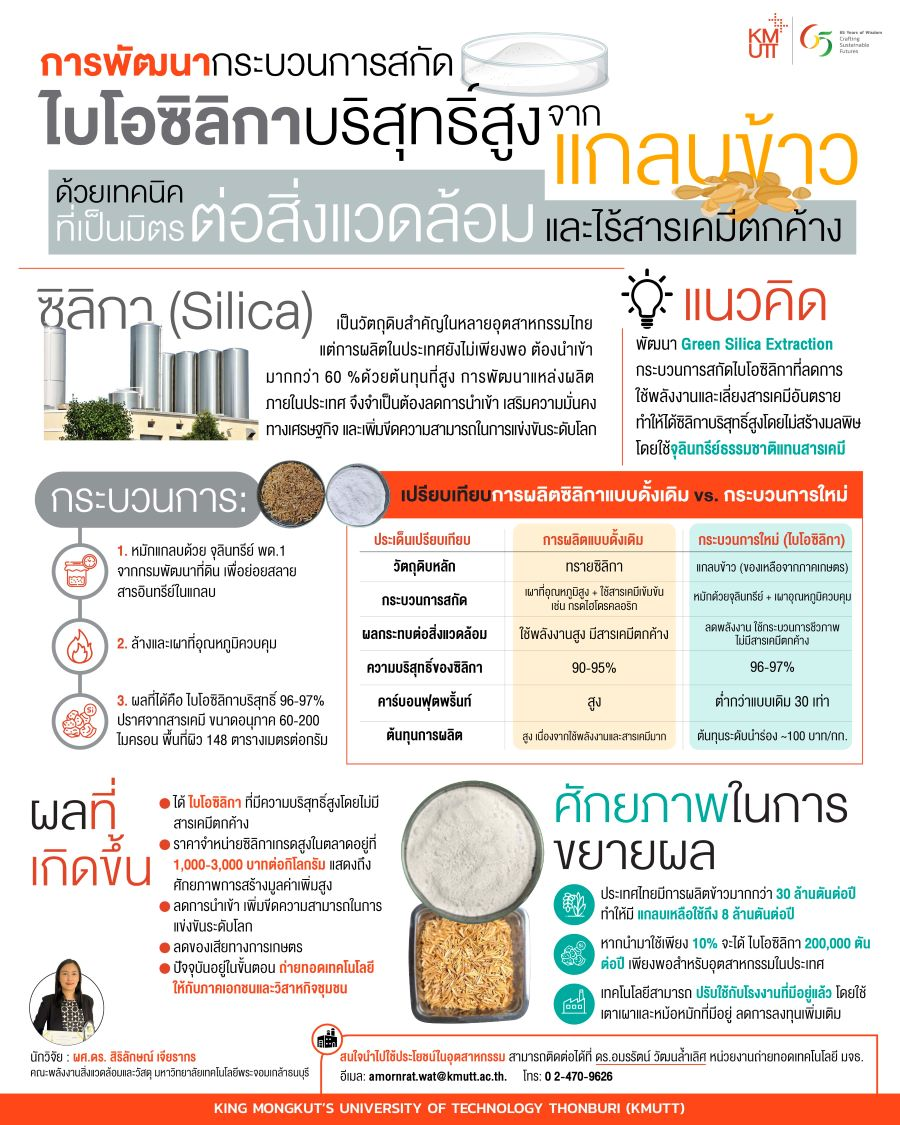
Silica (SiO2) is a vital raw material in numerous Thai industries, ranging from tires and cosmetics to pharmaceuticals, electronics, and construction. This has led to extremely high demand; however, Thailand currently produces only 40% of its requirement, with the remaining 60% being imported at high costs, further affected by energy prices and global economic fluctuations. Developing domestic silica production sources is therefore key to reducing import dependency, creating economic security, and enhancing the global competitiveness of Thai industries.
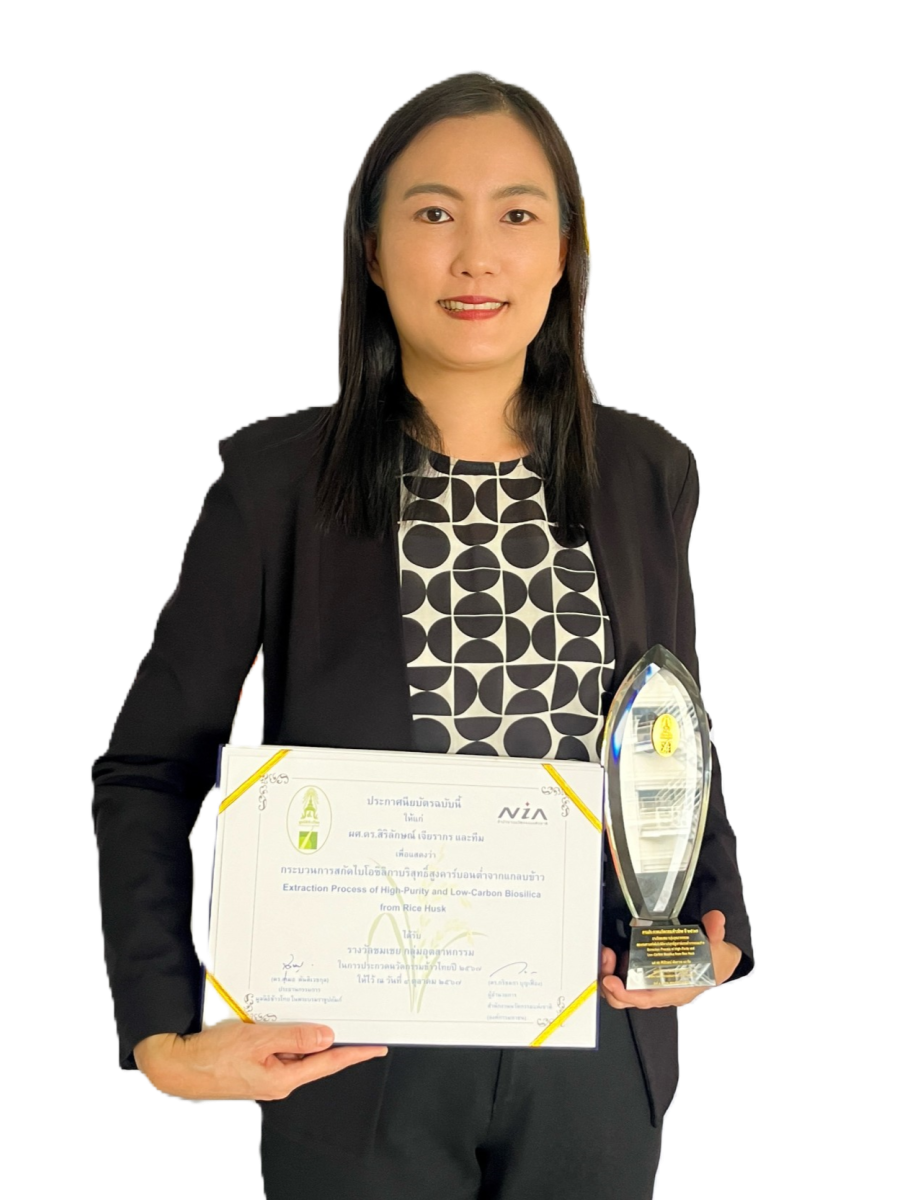
This challenge inspired Asst. Prof. Dr. Siriluk Chiarakorn, a faculty member of the School of Energy, Environment and Materials (SEEM) at KMUTT, to develop a technique for extracting high-purity Biosilica from rice husk. Using an eco-friendly process with no chemical residues, the project aims to add value to agricultural waste. Rice husk contains as much as 20-25% silica, which has long made it an industrial interest. However, traditional extraction methods typically involve high-temperature incineration combined with concentrated chemicals such as hydrochloric acid (HCl), sulfuric acid (H2SO4), and nitric acid (HNO3). While these methods yield high-purity silica, they suffer from high energy consumption, chemical residues, and environmental impacts.
Asst. Prof. Dr. Siriluk shared that the primary goal was to develop “Green Silica Extraction,” a process that reduces energy consumption and avoids hazardous chemicals. By utilizing a biological process instead of chemical agents specifically, fermenting rice husk with natural microbes the team achieved a silica purity level of 96-97% without chemical residues. The process begins by fermenting rice husk with “LDD 1” (พด.1), a biological microbial activator distributed by the Department of Land Development (LDD) to farmers for decomposing organic matter. Once properly fermented, the husk is washed and incinerated at a controlled temperature. The resulting Biosilica is a fine powder with a particle size of 60-200 microns and a specific surface area of approximately 148 m2/g, meeting industrial standards, particularly for the cosmetics and cosmeceuticals sectors that require high safety standards.
Furthermore, Asst. Prof. Dr. Siriluk added that this innovation effectively reduces production costs and environmental impacts. The extracted Biosilica has a carbon footprint of only 0.17 kgCO2e (kilograms of carbon dioxide equivalent), which is 30 times lower than traditional silica production processes. Additionally, production costs are significantly lower, averaging approximately 100 THB per kilogram at the pilot scale. In contrast, high-grade silica for cosmetics and cosmeceuticals currently sells for 1,000-3,000 THB per kilogram in the market. This demonstrates the immense potential of the process in creating value from agricultural waste. If Thailand can scale this technology to an industrial level, it will reduce imports, support the circular economy, and enhance national competitiveness.
Currently, the research is in the technology transfer phase to the private sector and community enterprises. A Pilot Scale production model has been developed, which is ready for immediate industrial expansion. Interested factories can adapt this technology into their existing processes using available machinery, such as incinerators and fermentation tanks, requiring minimal additional investment. This represents a major opportunity for industries seeking sustainable and eco-friendly silica sources.
Thailand is one of the world’s largest rice producers, with an annual yield exceeding 30 million tons, resulting in up to 8 million tons of surplus rice husk per year. If only 10% of this husk were utilized, Thailand could produce up to 200,000 tons of Biosilica annually, sufficient to replace imports and support growing industries such as cosmetics, pharmaceuticals, and rubber.
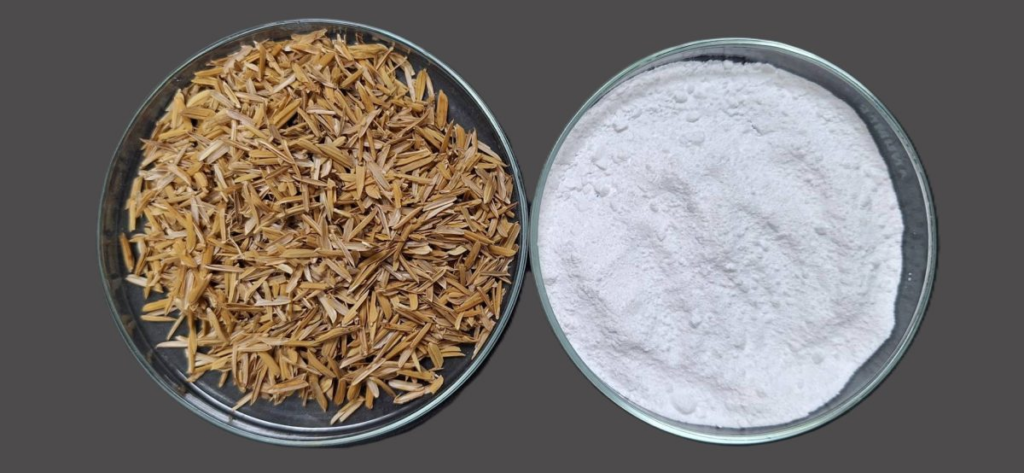
The highlights of this Biosilica extraction technology are its environmental friendliness, low production costs, and a carbon footprint reduction of 30 times. This opens an opportunity for Thailand to become a regional Biosilica production hub in Asia, enhancing domestic industrial competitiveness, reducing reliance on imported raw materials, and creating economic value in line with the BCG (Bio-Circular-Green) Economy model.
“Waste… may not always be worthless. Rice husk, which has long been overlooked, is today a raw material of the future that could transform Thailand into a global leader in Green Silica.”
— Asst. Prof. Dr. Siriluk Chiarakorn
Related News

‘Plant-Based Caviar’: KMUTT Students’ Food Innovation Clinches National Gold, Ready for Global Market Expansion

KMUTT Mechanical Engineering Students and Faculty Clinch Gold Medal from NRCT with Microchannel Heat Sink Innovation for Future Data Centers



