Goal 14: Life below water

Conserve and sustainably use the oceans, seas and marine resources for sustainable development.

;;;

14.2 SUPPORTING AQUATIC ECOSYSTEMS THROUGH EDUCATION

1. Related information on our university offering educational programmes on fresh-water ecosystems (water irrigation practices, water management/conservation) for local or national communities.

KMUTT shares water-management knowledge with local authorities, community researchers and external young learners. Its Nakhon Pathom research programme combines local knowledge with mapping and decision support for shared freshwater resources. Public Engineering Open House activities in October 2025 introduced water-quality assessment and treatment. The university’s original accounts of aquaculture training, community water systems and groundwater banks are retained in full below with their original dates and figures.

Local knowledge and water decisions · 2025–2026

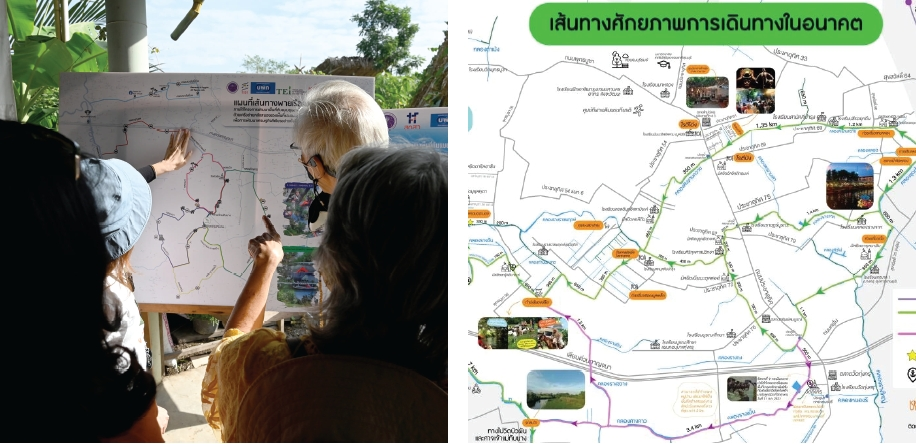
Nakhon Pathom was selected in 2025 as one of five pilot provinces in a joint ONWR and PMU-A programme. Interviews published by Thai PBS on 16 March 2026 describe KMUTT researcher Pariwet Wannakowit’s engagement with 117 local administrative organisations and 20 community researchers. Geo-social mapping and a decision-support system helped local participants examine flood and drought scenarios and prepare projects for the Thai Water Plan system. These exchanges connect technical water knowledge with community decisions across the province.

117 local administrative organisations
Local authorities engaged in shared learning and decision support.
20 community researchers
Community knowledge contributing to geo-social mapping and water planning.

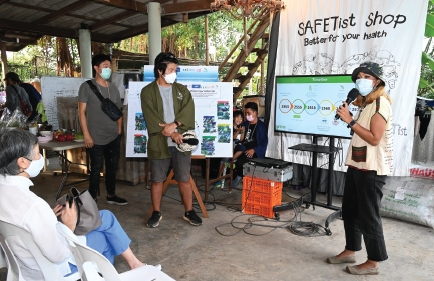
On 12 March 2026, KMUTT Faculty of Science research team presented 2025 flood scenarios and development of the provincial decision-support system at Nakhon Pathom Rajabhat University. The governor and Provincial Administrative Organisation received research information and recommendations. The team also presented a draft wastewater master plan for 2028–2038; this is a planning output presented in 2026, rather than evidence of a completed treatment installation.
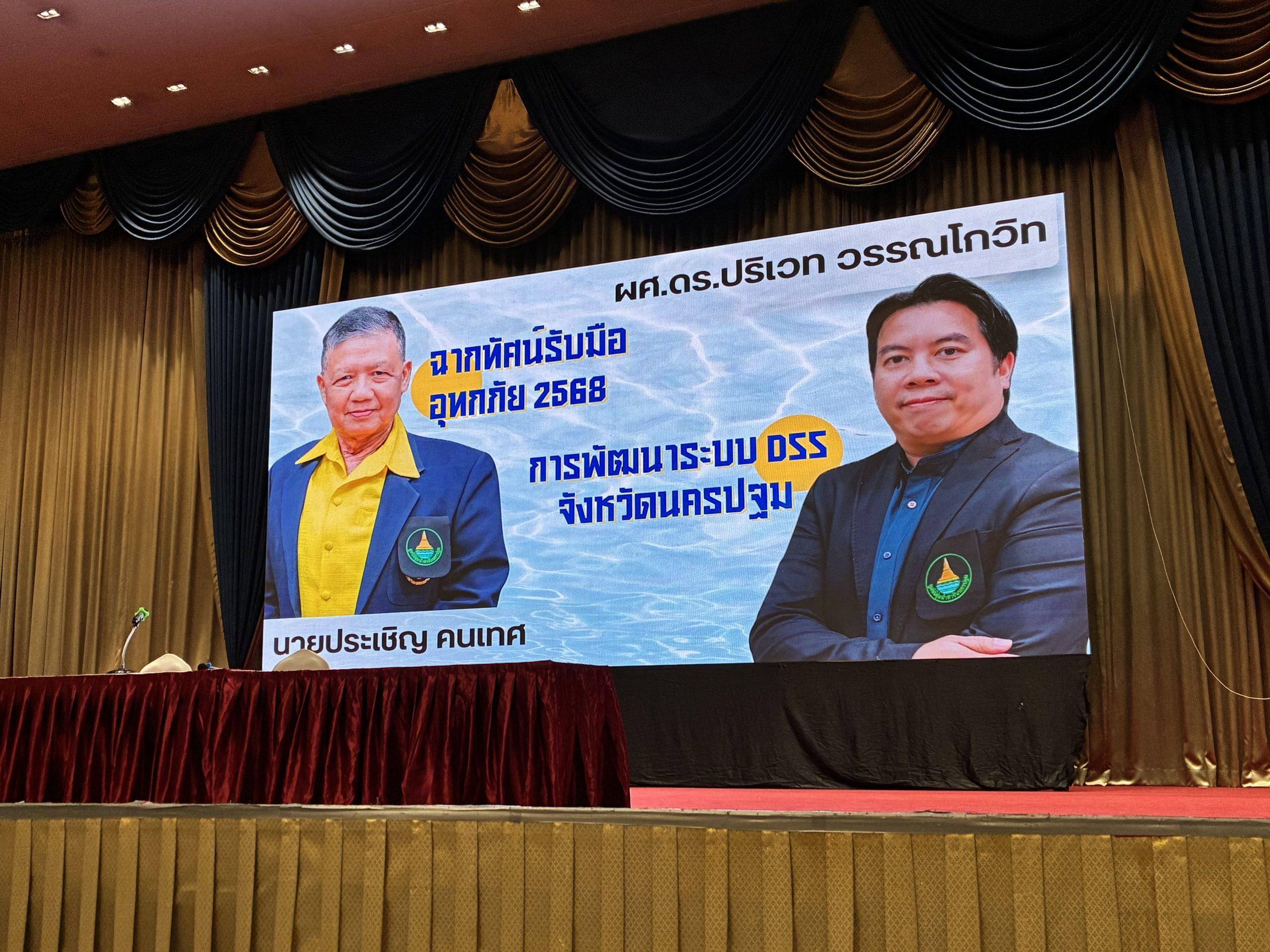
Faculty of Science photograph accompanying the research and knowledge handover at Nakhon Pathom Rajabhat University, 12 March 2026. The projected slide concerns 2025 flood scenarios and the provincial DSS.

Free water-quality learning for young people

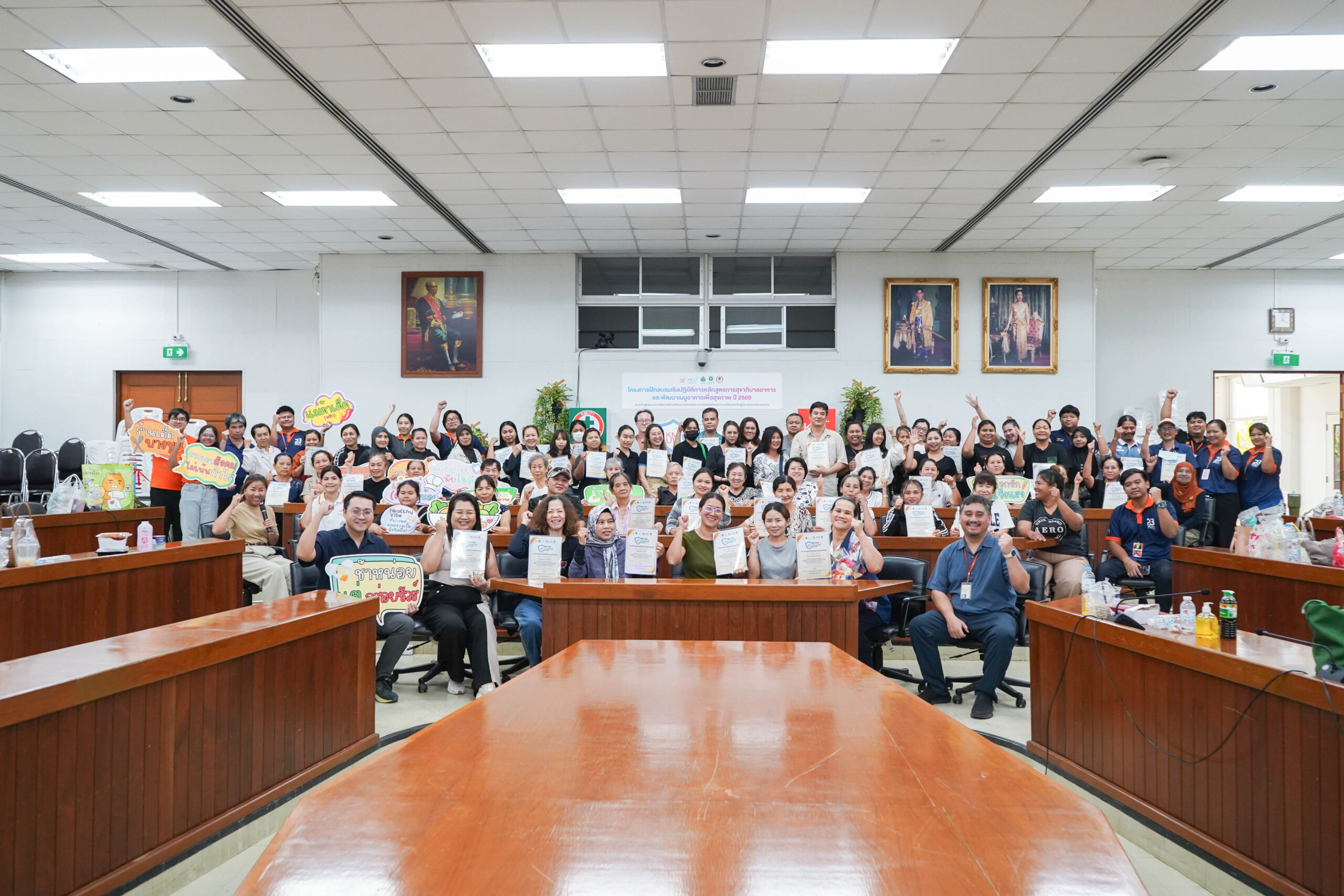
The Environmental Engineering Open House at Bangmod on 10–12 October 2025 invited secondary and vocational learners to participate free of charge. Its Aqua Melody laboratory activity introduced measurement of water quality with practical instruments and demonstrated basic water-treatment models. The public programme also included microscopic observation of environmental organisms. These activities provide accessible introductory knowledge relevant to understanding freshwater quality and ecosystem protection.

Measure water quality
Practical instruments introduce water-quality assessment.
Explore water treatment
Basic treatment models demonstrate how water can be cleaned.
Observe environmental organisms
Microscopic observation introduces environmental organisms and ecosystems.

Hands-on recirculating aquaculture training

40 participants · BOI-STEM++ UPSKILL/RESKILL programme · activity date not specified in the supplied account

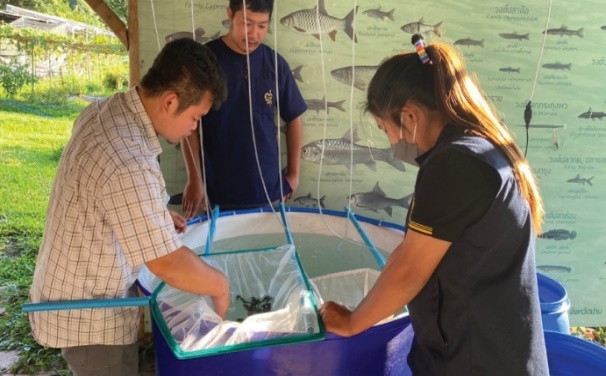
King Mongkut's University of Technology Thonburi (KMUTT) organized a training session under its UPSKILL/RESKILL program, titled "Design and Cost Assessment of Recirculating Aquaculture Systems (RAS) for Sustainable Aquaculture Development."

The session, held as part of the BOI-STEM++ project, saw the participation of 40 individuals. The event was held at the Pathum Thani Aquatic Animal Genetics Research and Development Center in Pathum Thani Province.

Its objective was to provide participants with the opportunity to learn through hands-on experience and to gain an understanding of modern aquaculture practices approaches that prioritize efficiency, economic viability, and the sustainability of production systems.
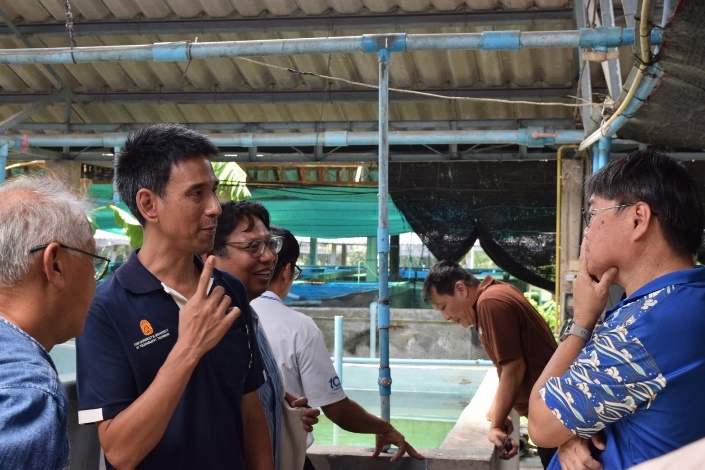
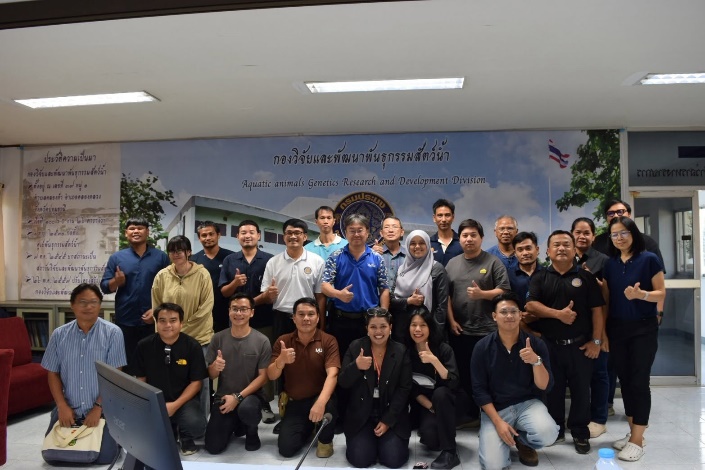
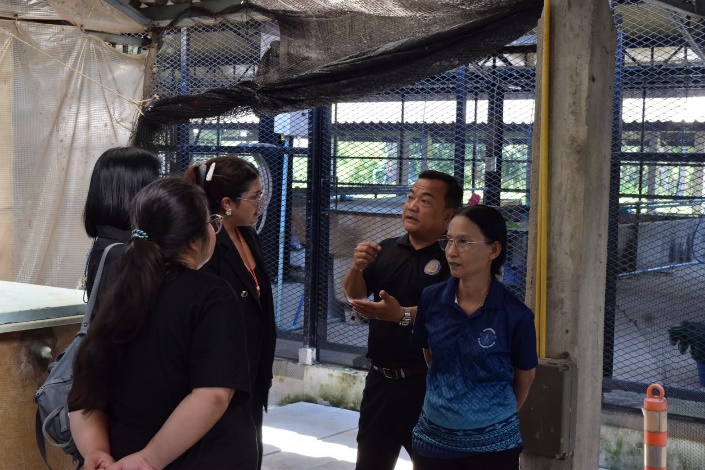
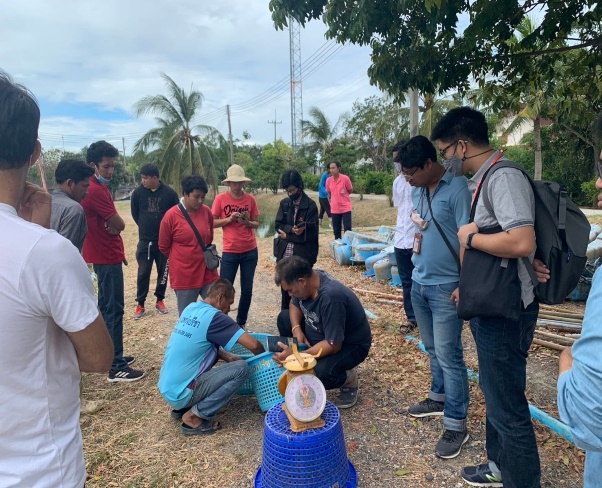
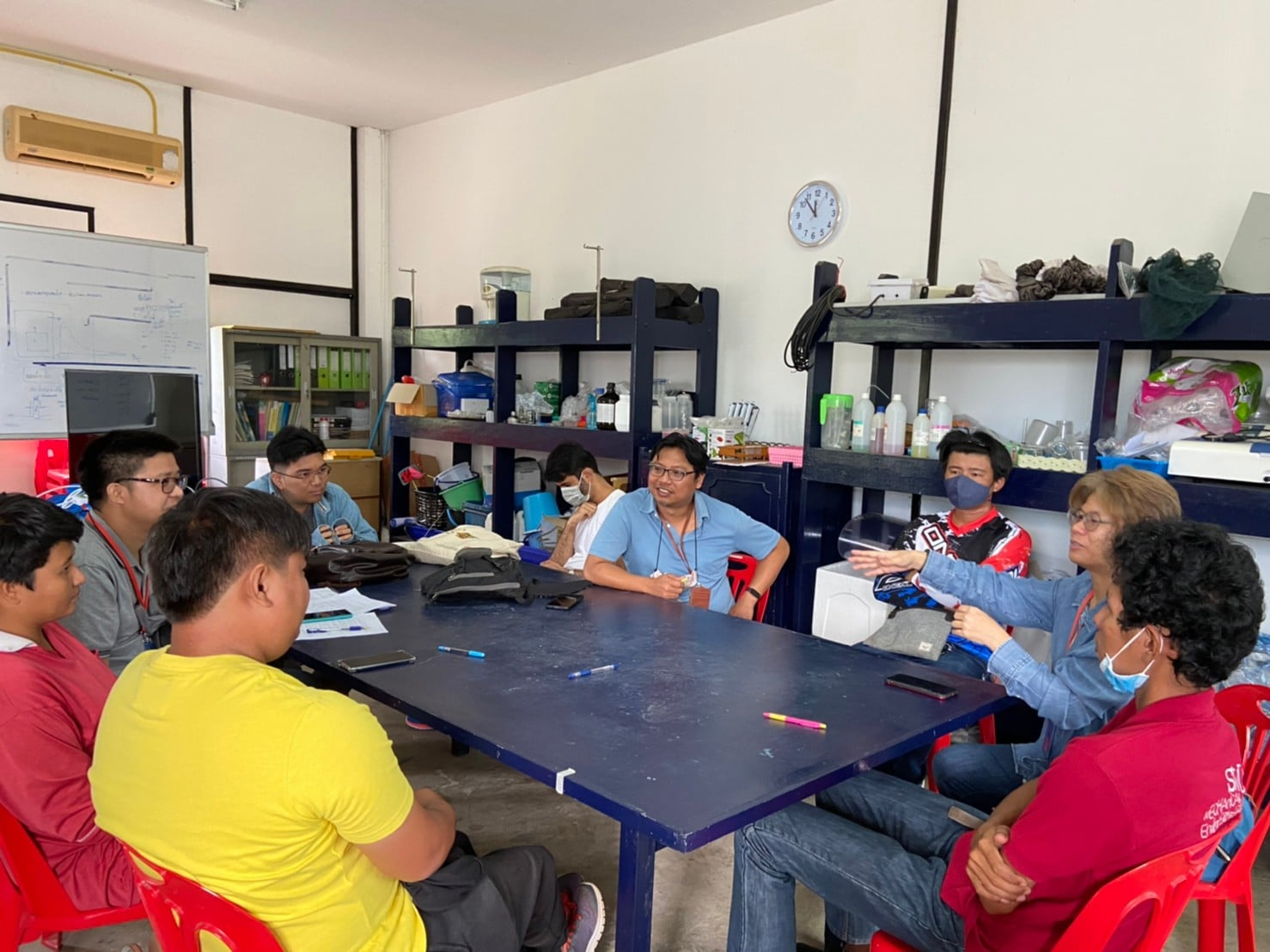
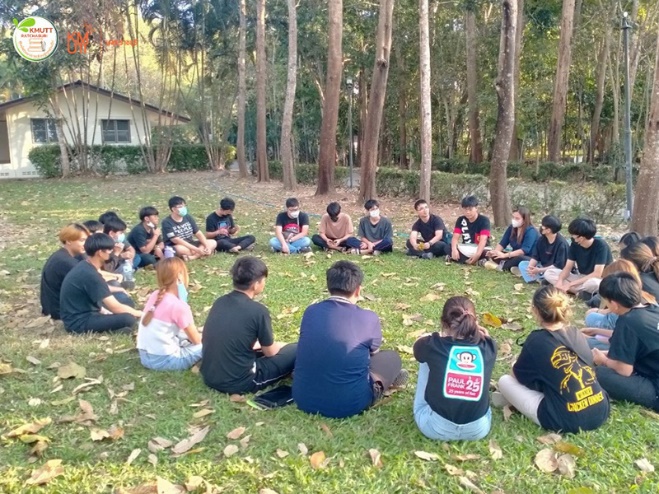
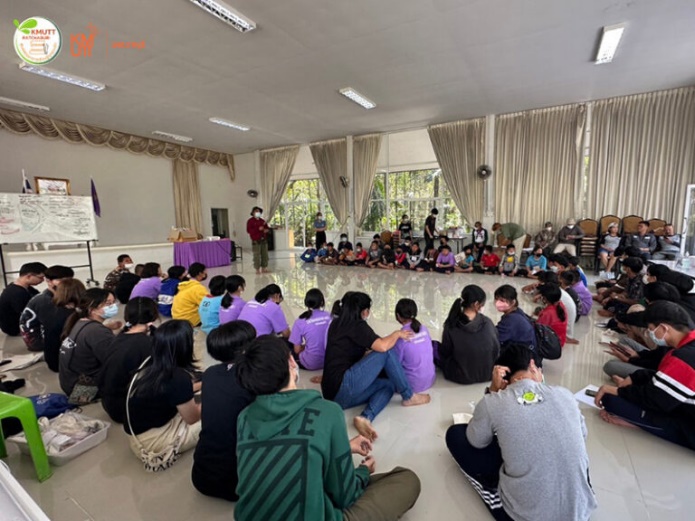
Original training discussion and participant-group photographs from the RAS record. The source does not specify an activity date.

Rang Bua: a community water-learning centre

KMUTT established a learning center on solar energy and water management in Rang Bua Subdistrict, Ratchaburi Province. The center provides opportunities for farmers, local communities, and relevant agencies to learn and exchange knowledge on water management, water conservation, and efficient use of water resources. The initiative supports the application of sustainable water management practices in local communities.

Historical opening: 27 April 2022; university report published 29 April 2022. The centre provides a setting for shared learning; it is not presented as a new 2025 or 2026 installation.
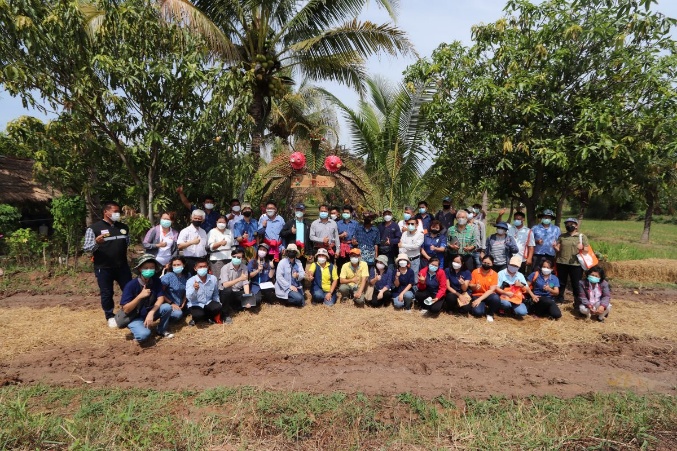
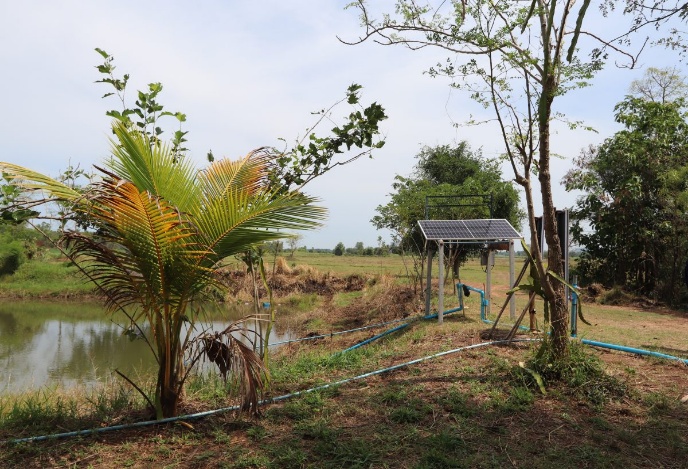
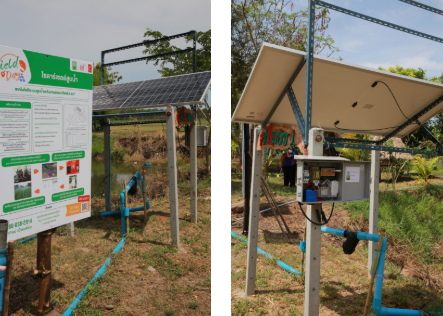
Original learning-centre group and solar-water installation photographs accompanying the Rang Bua account.

Khiriwong: community-led water and energy planning

KMUTT leads an initiative to support communities in Khiriwong and surrounding areas in developing a master plan for small water turbines for water management. This effort, involving community input, aims to expand small turbine use for electricity generation and effective water resource management.

The master plan addresses seasonal and year-round needs, as some villagers rely on turbines during fruit harvests while others use them consistently due to their remote locations. The project, led with collaboration from local officials and technical students, brings together stakeholders such as government and private entities. the Khiriwong Water Turbine Community Enterprise Group highlights how the turbines alleviate drought issues, especially during the dry season. Phatthalung's provincial energy officer, Mr. Arun Inthasara, underscores the importance of integrating provincial resources to support water turbine and solar energy initiatives.

KMUTT has already installed over 140 small water turbines in Khiriwong, generating more than 91 kilowatts of power. The master plan also seeks to foster local expertise in hydroelectric technology, encouraging sustainable energy practices and enabling community-led water management for a sustainable future

More than 140 small water turbines
Installed in Khiriwong, as reported in the original institutional account.
More than 91 kilowatts
Power generation reported in the same account; not an annual energy figure.

These figures retain the original account’s scope. No new installation date, annual electricity total or average output per turbine is inferred.
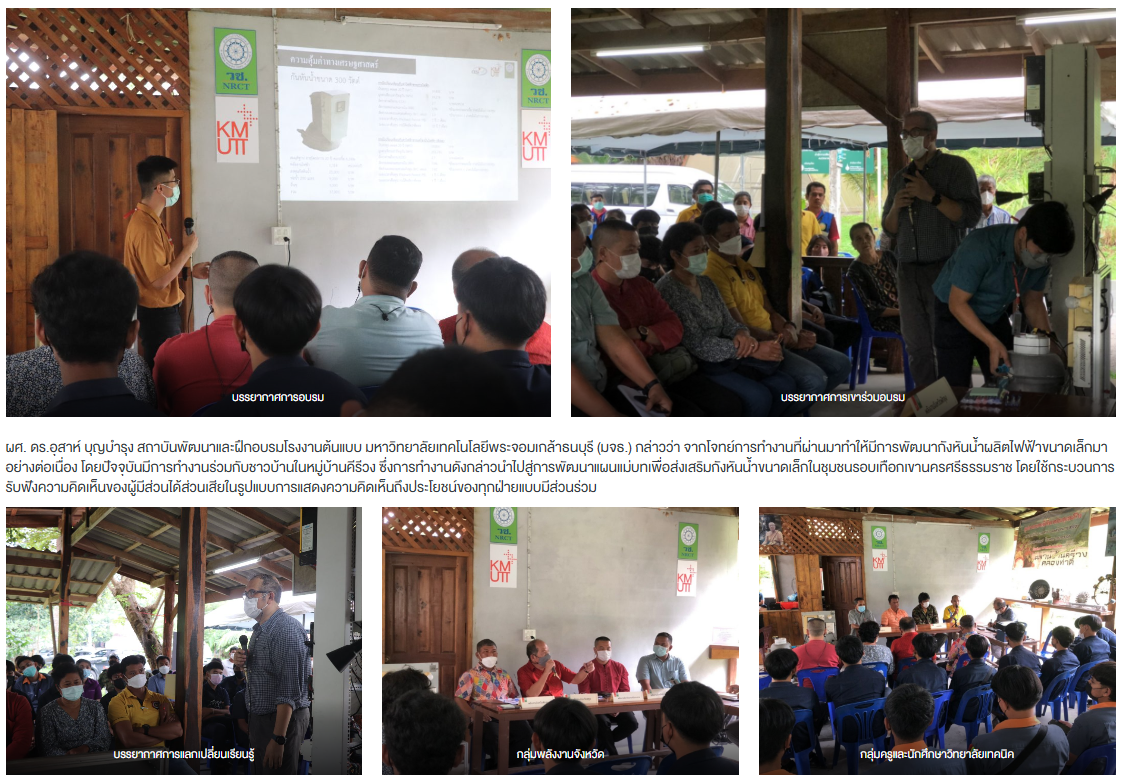
Original community-meeting photographic composite accompanying the Khiriwong water-turbine planning account. The complete collage and embedded captions are retained.

Groundwater banks: assess the site before acting

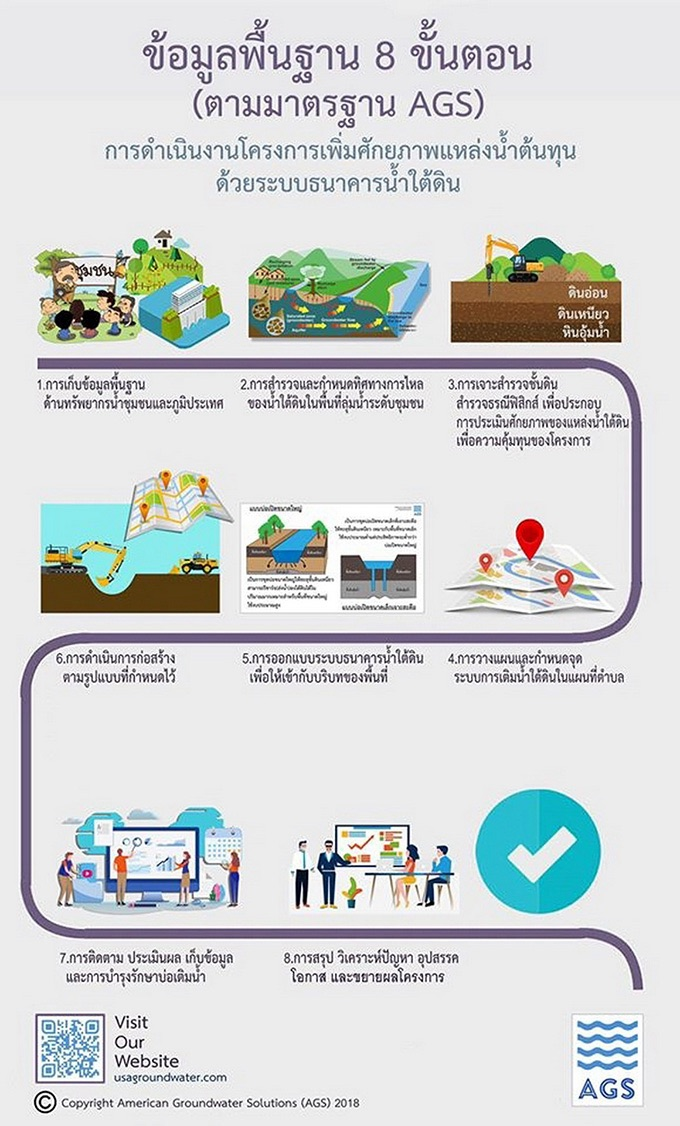
KMUTT academics recommend analyzing and examining the potential of underground water sources according to AGS standards before establishing an underground water bank for maximum benefit

The principle of underground banks is to add water to store underground and then retrieve it when needed. King Mongkut's University of Technology Thonburi (KMUTT) has participated in using knowledge in geographic information systems (GIS) by participating in the project until now, which is the third year.

Dr. Pariwet Wannakowit, Head of the Center for Geo-Informatics and Innovation Engineering (KGEO) and Lecturer in the Department of Mathematics, Faculty of Science, King Mongkut's University of Technology Thonburi (KMUTT). KMUTT responsibility is to utilize academic knowledge in geographic information systems (GIS) and satellite image interpretation to gather data to identify areas for the establishment of underground water banks because each area has different soil and aquifer characteristics.

The project began operations in 2017. Prototype areas already participating include Ban Phueng Subdistrict, Nakhon Phanom Province; Wang Ham Hae Subdistrict, Kamphaeng Phet Province; Nong Mamong Subdistrict, Chainat Province; and Chiang Khruea Subdistrict, Sakon Nakhon Province.

Ban Phueng Subdistrict, in particular, is considered a model for sustainable groundwater management to address local drought issues. Villagers have access to drinking water throughout the year.

Ban Phueng Subdistrict
Nakhon Phanom Province
Wang Ham Hae Subdistrict
Kamphaeng Phet Province
Nong Mamong Subdistrict
Chainat Province
Chiang Khruea Subdistrict
Sakon Nakhon Province

Historical context: operations began in 2017. The original “third year” wording belongs to that earlier account; the linked groundwater report was published on 21 May 2020. It is not a new 2025–2026 activity count.
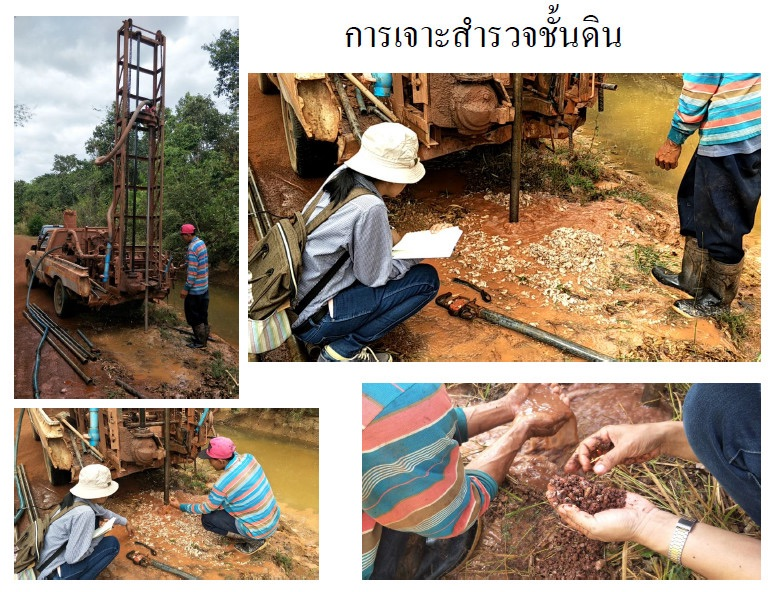
Original soil-layer drilling survey composite. The photographs and Thai heading are preserved whole.

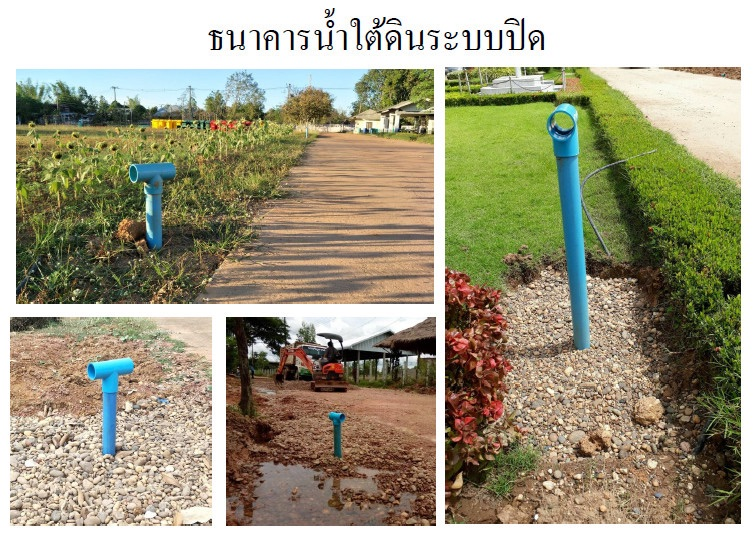
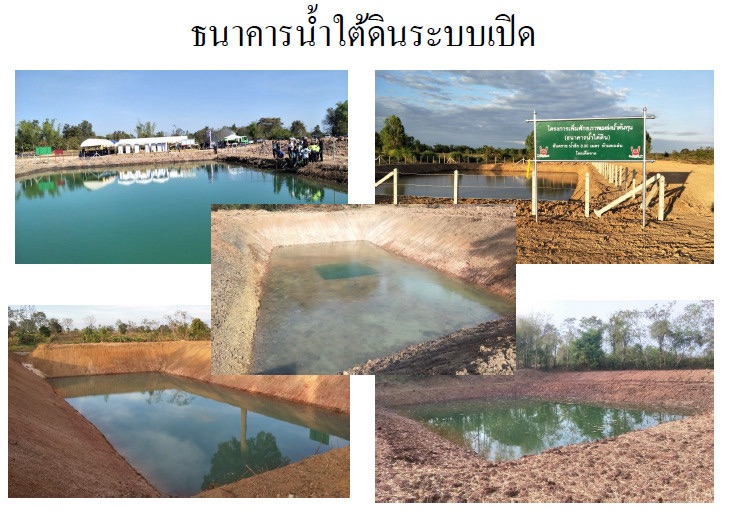
Original photographic composites of open-system and closed-system groundwater banks, respectively. These are technical illustrations, not newly dated installations.

Original groundwater-learning materials
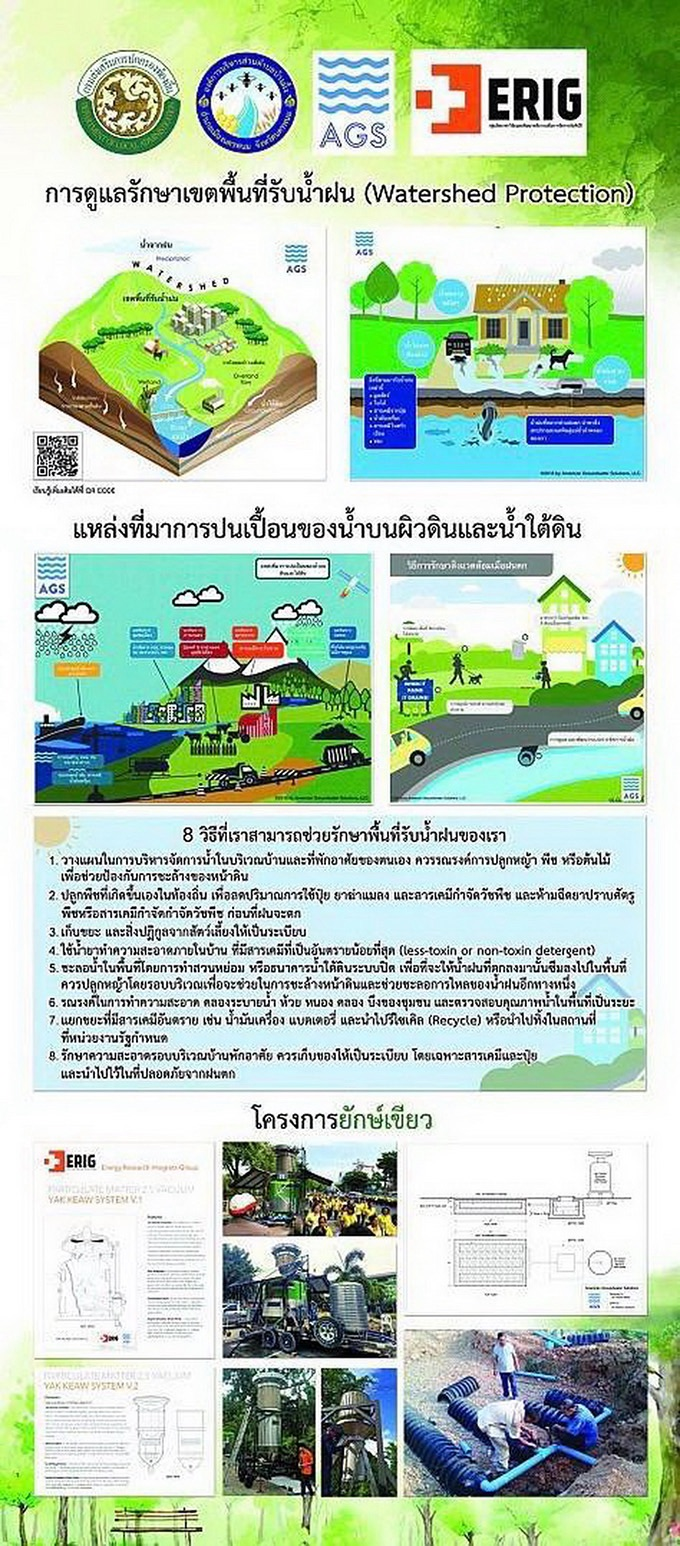
Original watershed-protection and groundwater-bank learning poster. Maps, diagrams, labels and original colours are retained without guessing small text.
Original AGS eight-step site-assessment and groundwater-bank project guidance. This is preserved as a complete technical infographic, rather than rewritten as a numerical chart or a universal construction instruction.

Academic expertise supporting community outreach

KMUTT offers more than six educational programmes in irrigation, water conservation and water management. The original account gives the following six examples, among others:

Water Resources Engineering
Department of Civil Engineering, Faculty of Engineering
Environmental Engineering
Department of Environmental Engineering, Faculty of Engineering
Environmental Technology
School of Energy, Environment and Materials, Environment
Climate Change and Sustainability
Joint Graduate School of Energy and Environment
Environmental Technology & Management
Joint Graduate School of Energy and Environment
Natural Resource Management
School of Bioresources and Technology

Moreover, the university has been actively integrating its expertise in irrigation, water conservation, and water management to address the growing challenges of water scarcity and ensure long-term sustainability in surrounding communities. Through research, innovation, and collaboration with local stakeholders, the university has developed and implemented various strategies aimed at optimizing water use and improving agricultural productivity in water-scarce regions

Additional institutional photographs

Additional aquaculture-learning photographs
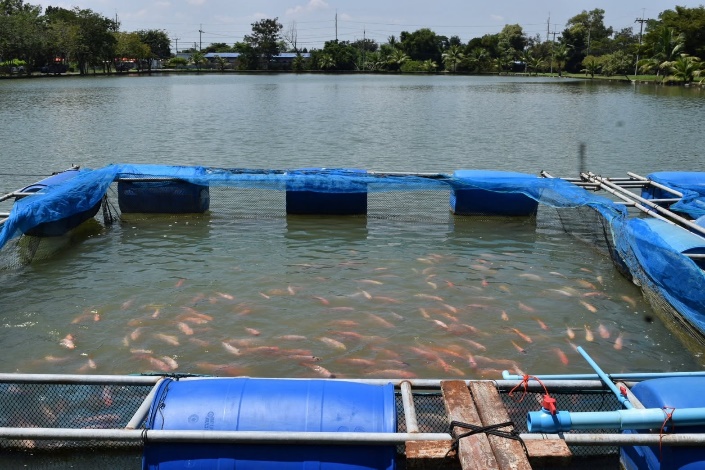
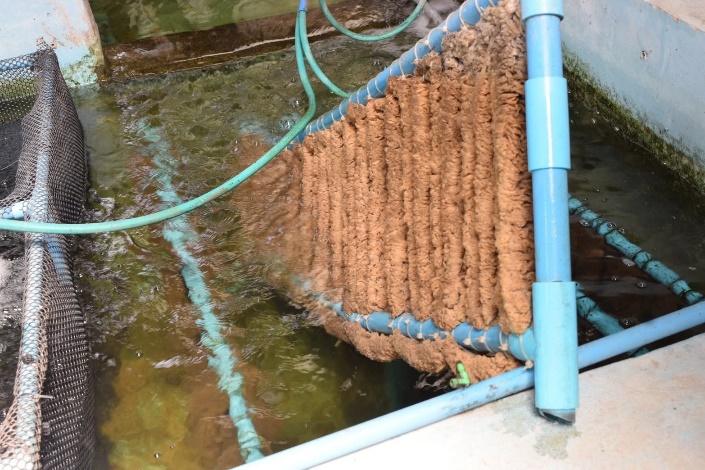
Original aquaculture pond and treatment-media photographs from the same RAS account.
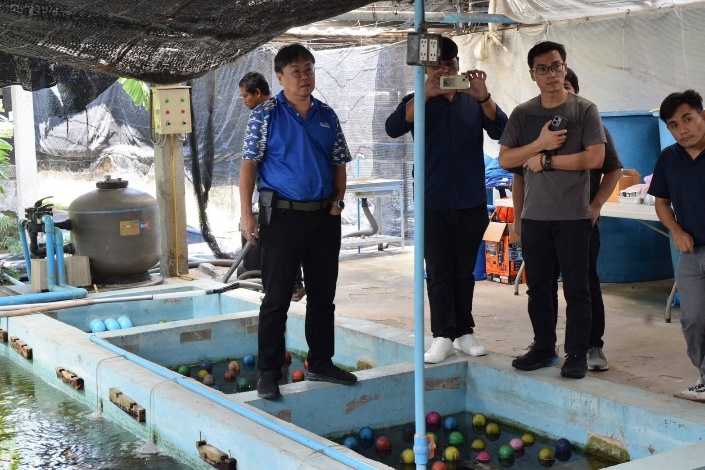
Original guided learning and equipment discussions from the RAS record.

Additional Rang Bua learning-site photographs
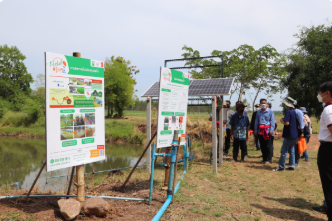
Original solar-water learning-site visits and installation photographs.
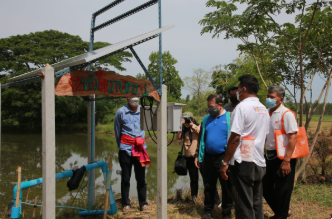
Original learning-site discussion and solar-water photographic composite. Signage remains whole.

Additional photograph in the groundwater record
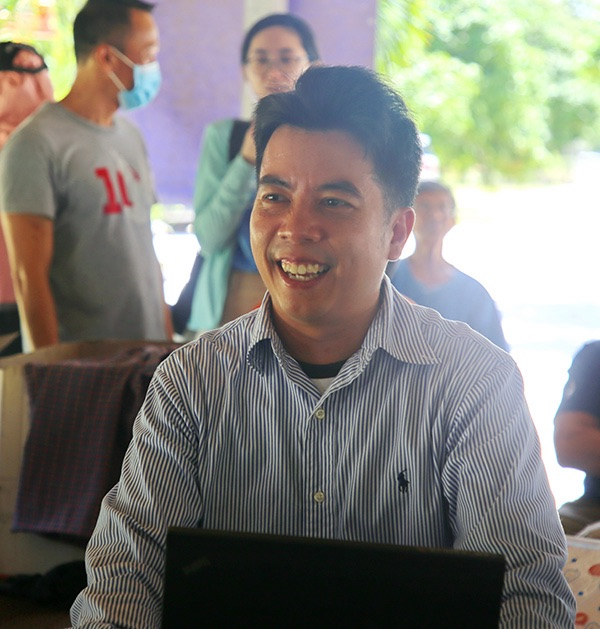
Original portrait photograph accompanying the groundwater-bank institutional record. No new capture date or unverified identity is assigned.
Sources and evidence links

2. Related information on our university offering educational programme / outreach for local or national communities on sustainable management of fisheries, aquaculture and tourism.

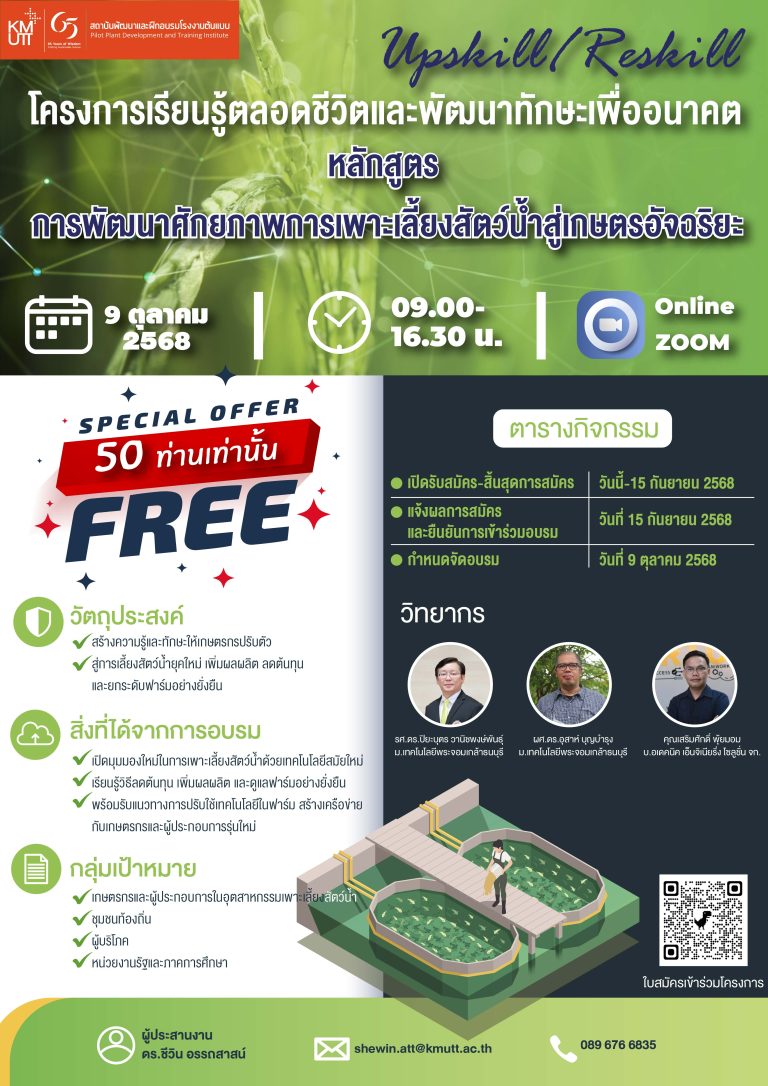
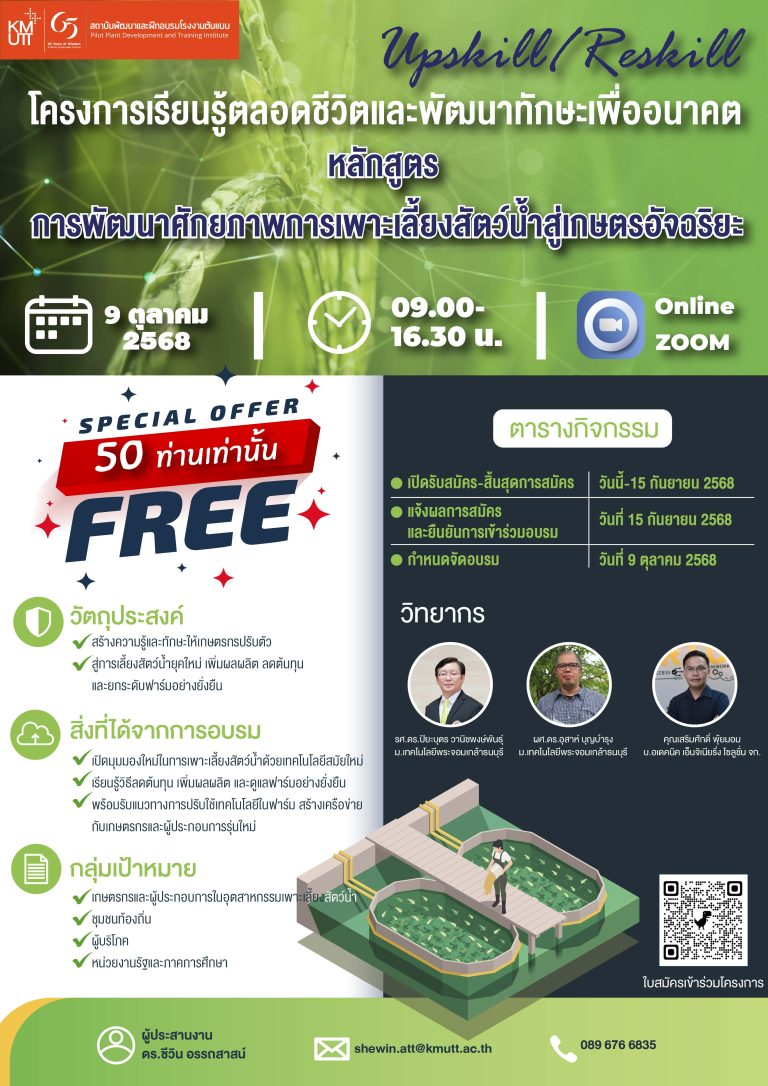
KMUTT Pilot Plant Development and Training Institute advertised an online Upskill and Reskill course on developing aquaculture potential for smart agriculture for 9 October 2025. Registration was free, with 50 places offered. This figure describes the advertised capacity and is not a verified attendance total.

Free smart-aquaculture learning · October 2025

9 October 2025
Scheduled online course date
Free registration
Advertised educational offer
50 places
Advertised capacity; not verified attendance

The course targeted aquaculture farmers and entrepreneurs, with local communities, consumers, government and education identified among its wider beneficiaries. Its learning objectives covered applying modern technologies, reducing production costs, improving productivity and managing farms sustainably. Participants were offered practical guidance on adopting technology and opportunities to develop networks with other farmers and entrepreneurs. The dated notice corroborates the smart aquaculture course described in KMUTT original evidence.

Course: Developing Aquaculture Potential for Smart Agriculture Objective: To develop knowledge and skills for farmers to adapt to modern aquaculture, increase productivity, reduce costs, and sustainably improve farms.

The training offers new perspectives on aquaculture using modern technology, ways to reduce costs, increase productivity and manage farms sustainably, guidance for applying technology on farms, and opportunities to build networks with a new generation of farmers and entrepreneurs. Registration is free, with a limit of 50 places.

Aquaculture farmers and entrepreneurs
Knowledge, skills and technologies to increase productivity, reduce costs and add value to products.
Local communities
Growth in community economies through increased farmer incomes, employment and stronger communities.
Consumers
Aquatic products of quality and safety at reasonable prices.
Government and education
Government agencies and the education sector develop sustainable agriculture and aquaculture industries, supporting food security and the national economy.

The four groups above are the stated target groups and wider intended beneficiaries. Their listed benefits are not a measured evaluation of farm or community outcomes.

Official PDTI poster for the free online course on 9 October 2025. The 50-place limit is advertised capacity, rather than an attendance total.

What the wider evidence covers

The original material below is preserved in full. It describes sustainable aquaculture research and knowledge exchange, fish biodiversity learning, support for small scale fishers and recirculating aquaculture systems training. Dates and original participant figures remain those of the supplied records. The October 2025 course notice documents an educational offer; it does not establish completion or measured farm outcomes.

KMUTT actively contributes to the dissemination of knowledge to local communities, focusing on sustainable fisheries management, aquaculture practices, and the promotion of water tourism. Sustainable management of fisheries and aquaculture is crucial to address water scarcity and ensure long-term food security, especially in water-scarce regions. King Mongkut’s University of Technology Thonburi (KMUTT) ongoing efforts to conserve and manage water through research, innovation, and collaboration with local stakeholders are in line with its goal of promoting sustainability in aquaculture systems. KMUTT has applied its expertise in biotechnology and water management to develop water-efficient strategies to increase aquaculture productivity.

Sustainable aquaculture: field-based knowledge exchange

The Environmental and Energy Management for Communities and Circular Economy (EEC&C) Research Group conducted fieldwork with researchers on the project A framework for sustainable aquaculture within peri-urban green infrastructures protecting the Gulf of Thailand from eutrophication, which received research funding from the Biotechnology and Biological Sciences Research Council, UK, at the Song Nam Chaipattana Farm in Chachoengsao.

Original fieldwork and research-discussion photographs accompanying the EEC&C aquaculture account. Activity dates remain unspecified.

Original pond-side fieldwork photograph, retained whole without assigning a new date.

Water-quality science and shared research

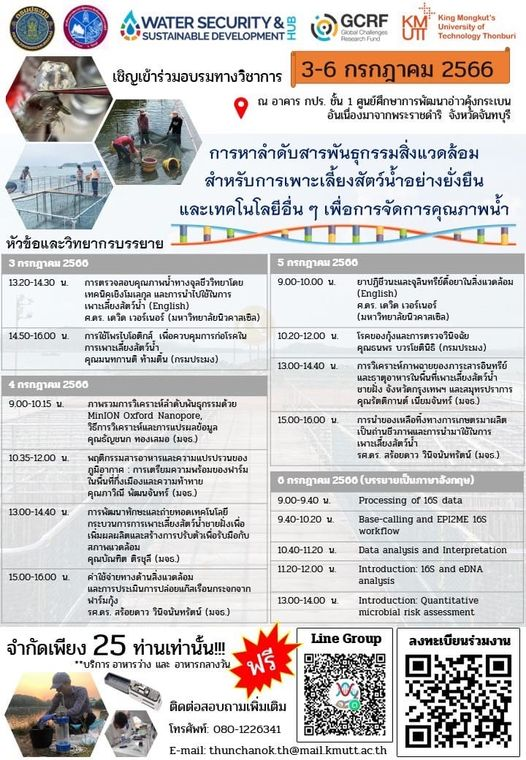
KMUTT, in collaboration with several organizations, hosted a training session on environmental genetic sequencing for sustainable aquaculture and water quality management technologies.

The event, held at the KPR Building on the first floor of the Klong Khuean Development Center, was conducted under the Royal Initiative. The session aimed to deepen participants' understanding of how scientific technologies and methods can be applied to improve and sustainably manage water quality in aquaculture systems.

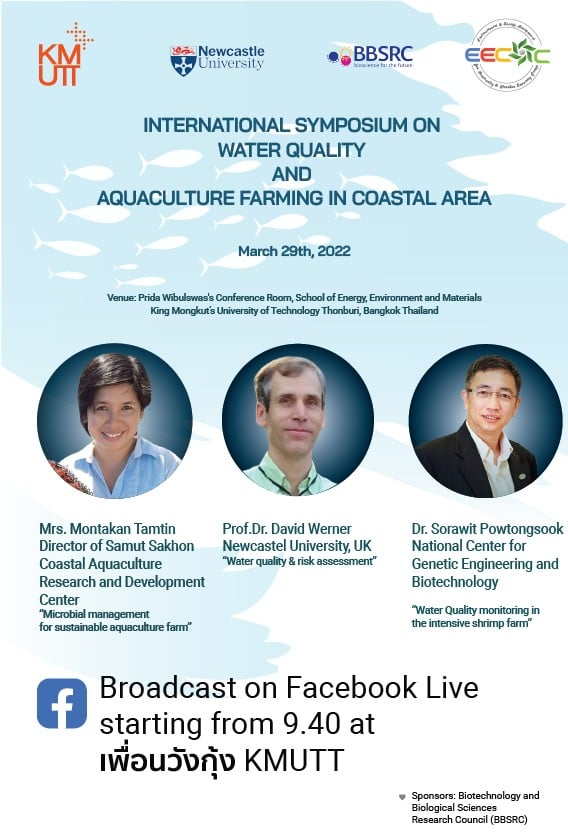
Additionally, the Thailand-UK Joint Research Project, EEC&C Research Group, Newcastle University, and BBSRC took part in an important conference where they shared their research findings. The session was officially opened by Associate Professor Dr. Soidaw Winitchanantarat, Head of the EEC&C Research Group, during The International Symposium on Water Quality and Aquaculture Farming Research in Coastal Areas.

The original materials document separate historical activities: the international symposium poster is dated 29 March 2022; the environmental genetic-sequencing workshop notice is dated 3–6 July 2023. These notices do not establish a new 2025 or 2026 event.

Left: original international symposium poster, 29 March 2022. Right: original environmental genetic-sequencing and water-quality training notice, 3–6 July 2023. Full schedules, labels and colours are preserved.

Research into efficient aquaculture systems

Basic and applied research to address the need to develop aquaculture systems that are efficient, pathogen-free, and environmentally friendly.

Including studying and simulating the environment, such as water quality, how it affects the functioning of the body systems of aquatic animals, especially economic aquatic animals.

Good management of the system has the opportunity to increase the production of aquatic animals which are a source of food and income for the community and farmers who raise aquatic animals.

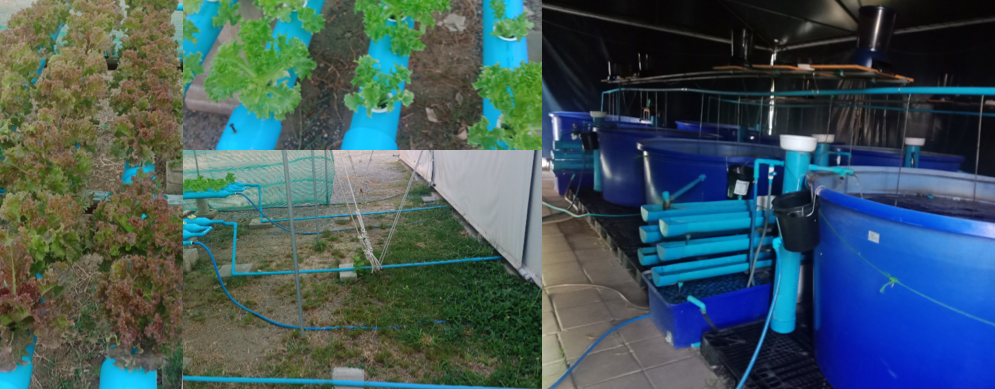
An example of current research is the study of bacterial communities from water in tilapia farming using a closed recirculating water system combined with vegetable cultivation.

Efficiency, pathogen-free systems and environmental performance describe the research aims. The supplied account does not present a completed certification or quantified farm-level evaluation.

Original closed recirculating aquaculture and cultivation-system photographic composite. The complete image is retained.

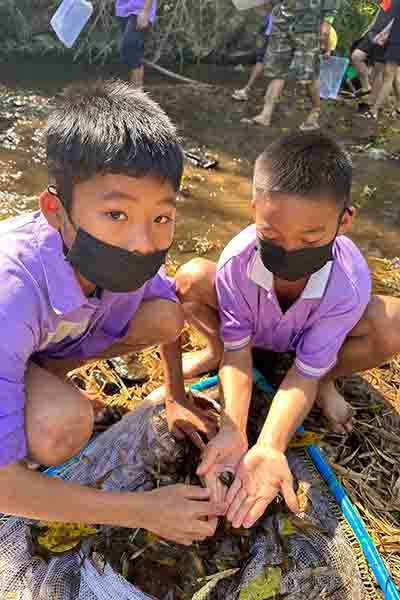
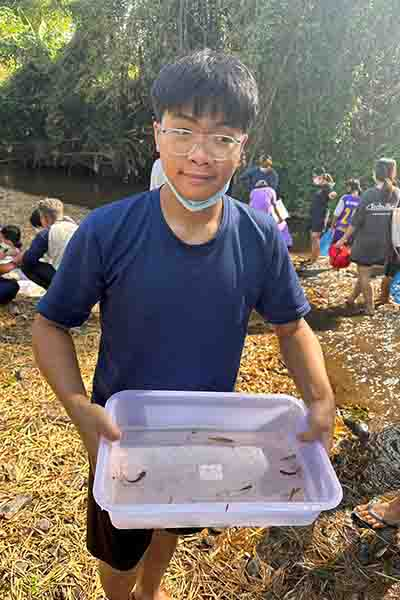
Fish biodiversity learning in the Ban Huai Phak basin

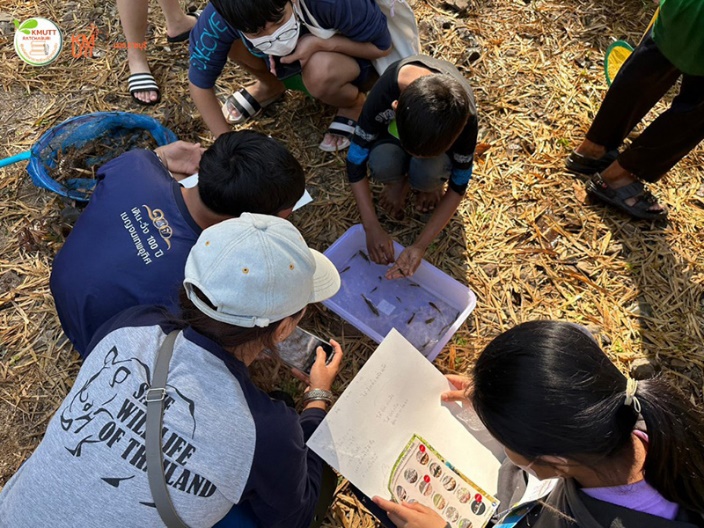
The Learning Development Center for All Ages, KMUTT Ratchaburi Campus, in collaboration with professors and fish researchers from Silpakorn University, Phetchaburi Campus, Rajamangala University of Technology Tawan-ok, Chanthaburi Campus, Save Wildlife Thailand Association, and the Natural History Park, etc.

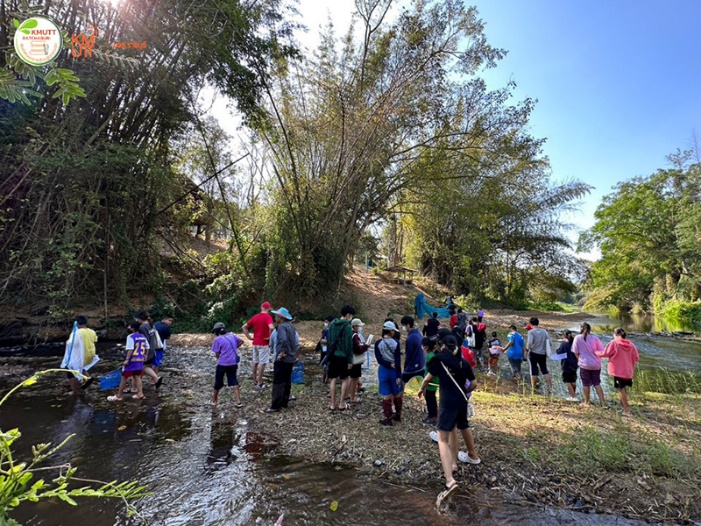
Organized a fish survey activity in the Ban Huai Phak River Basin for students from the Girls' Journalist Group School 2 (Ban Bo Wee) and Ban Huai Phak School, totaling 50 people.

There were 24 students from the RC Forest Ant Club, Faculty of Engineering students from KMUTT, Ratchaburi, and 3 officers from the Natural History Park who joined as group mentors.

To study the diversity of fish species in the area, practice skills in natural resource exploration, and instill awareness in students about the conservation of local resources. This activity is part of the research project “Study of fish resources in the area of ​​the Royal Initiative Natural History Park Project”to conserve and create natural resource capital for learning and local development based on biodiversity.”

50 school learners
Students from the two named local schools
24 KMUTT students
RC Forest Ant Club, Faculty of Engineering, Ratchaburi
3 park officers
Natural History Park staff joining as group mentors

These figures describe different roles within this activity. They are not the 50-place October 2025 course capacity or the 40-person RAS session; no activity date is supplied here.

Original fish-identification learning and river-basin fieldwork photographs. Capture dates are not specified.

SIRINAPHA: knowledge tools for small-scale fishers

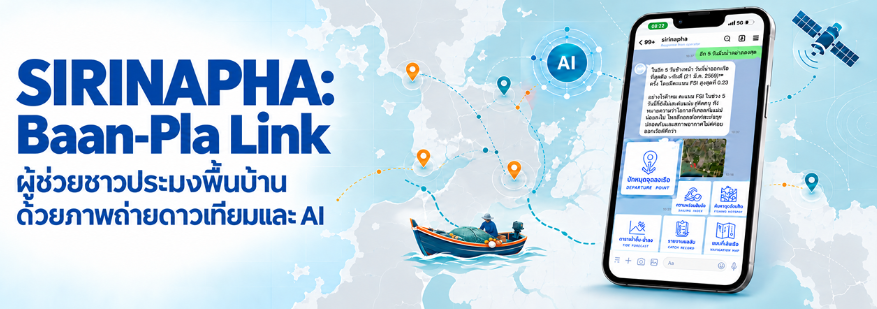
KMUTT developed the SIRINAPHA: Baan-Pla Link initiative to support local small-scale fishers through satellite data and AI technology. The project works with local fishing communities to understand their needs and challenges and provides information to support fishing planning and cost management. The initiative promotes the application of technology and knowledge to support more efficient and sustainable fisheries practices.

The linked university account was published on 6 October 2026. This initiative is presented separately from the 2025 course notice.

Original SIRINAPHA: Baan-Pla Link introduction graphic, retaining the full layout and original blue colours.
Community needs
Work with local fishing communities to understand their needs and challenges.
Satellite data and AI
Provide information to support fishing planning and cost management.
Sustainable practice
Apply technology and knowledge towards more efficient and sustainable fisheries.

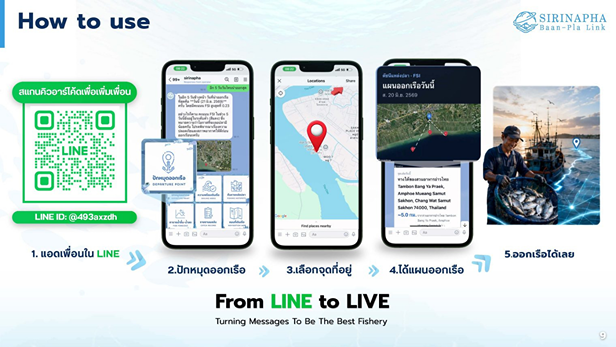
Original SIRINAPHA usage and AI-chatbot guides. Interfaces, diagrams and labels remain whole; small text is not guessed or converted into invented usage statistics.

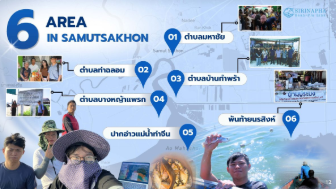
Original SIRINAPHA graphic identifying six areas in Samut Sakhon. It is preserved as an original project illustration, not a six-course or six-event count.

Hands-on RAS design and cost assessment

40 participants · BOI-STEM++ UPSKILL/RESKILL programme · activity date unspecified in the supplied account

King Mongkut's University of Technology Thonburi (KMUTT) organized a training session under its UPSKILL/RESKILL program, titled "Design and Cost Assessment of Recirculating Aquaculture Systems (RAS) for Sustainable Aquaculture Development."

The session, held as part of the BOI-STEM++ project, saw the participation of 40 individuals. The event was held at the Pathum Thani Aquatic Animal Genetics Research and Development Center in Pathum Thani Province.

Its objective was to provide participants with the opportunity to learn through hands-on experience and to gain an understanding of modern aquaculture practices approaches that prioritize efficiency, economic viability, and the sustainability of production systems.

Original RAS guided-learning and participant-group photographs from the institutional account, with no new event date assigned.

Additional original photographs and course material

Additional original course poster

Original PNG version of the October 2025 smart-aquaculture course notice. Its 50-place capacity is the same educational offer, not an additional group of participants.

Additional fish-survey learning photographs

Original group learning and discussion photographs from the Ban Huai Phak fish-survey account.

Original school learners observing fish during the same basin activity.

Original SIRINAPHA presentation material

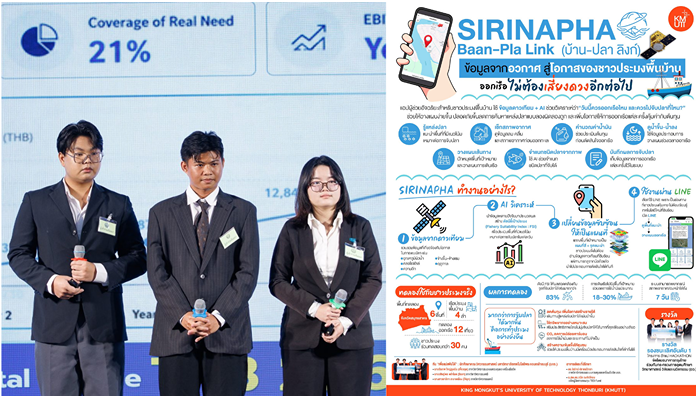
Original student-team and SIRINAPHA presentation composite, kept whole with its original infographic. Displayed presentation numbers are not transcribed as verified outcome data.

Additional RAS learning photographs

Original aquaculture pond and treatment-media photographs accompanying the RAS account.

Original RAS practical-learning discussions and equipment photographs.

Sources and evidence links

KMUTT supplied institutional evidence for 14.2.2, including its photographs, project accounts and source links reproduced below.

The supplied historical application address is incomplete and is retained as text: https://docs.google.com/…/1OK534CKBxRf08zxX…/viewform. No working application URL has been reconstructed; the dated official course notice above is the complete source link.

3. Overfishing (community outreach)

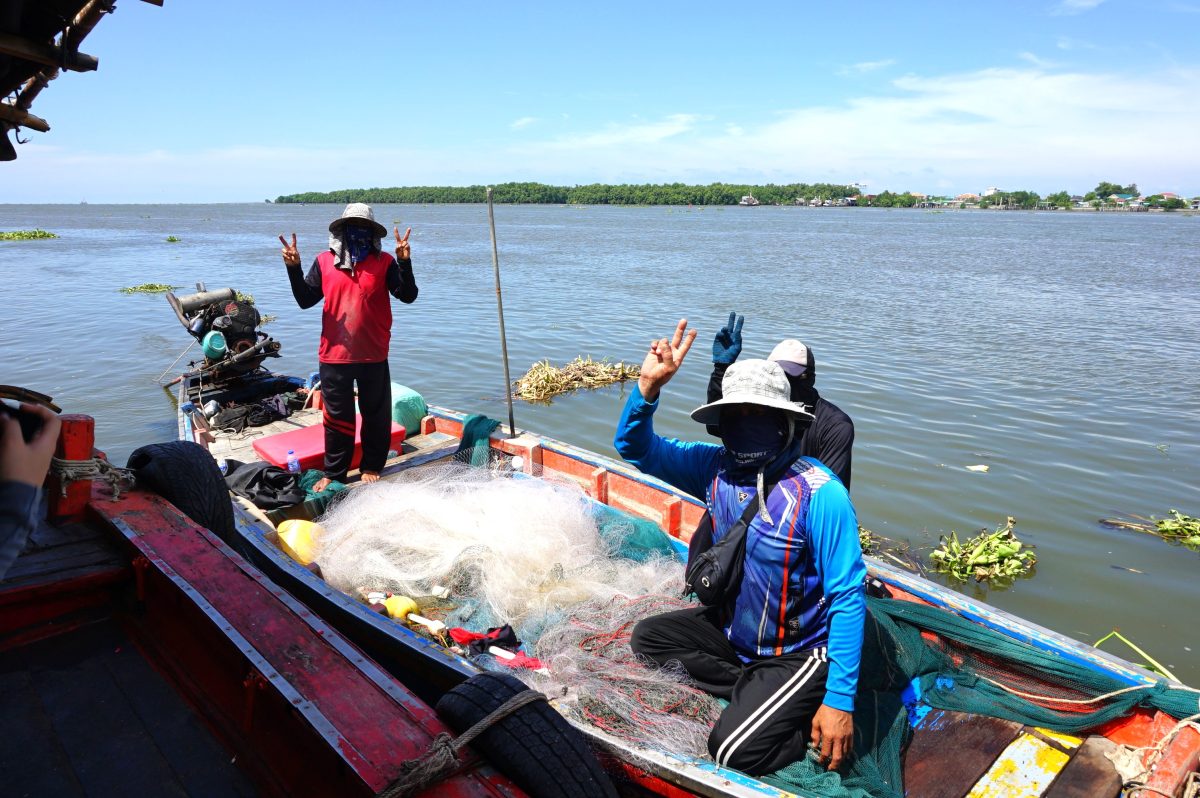
KMUTT report of 6 October 2026 documents field engagement with small scale fishers through SIRINAPHA Baan Pla Link. The student team combined satellite and AI information with fishers’ experience and developed accessible maps and a LINE interface. Its community engagement aimed to make the information understandable and usable for fishing decisions. The team explicitly connected stable livelihoods with reducing unnecessary navigation and avoiding excessive use of marine resources.

Practical learning with fishing communities · 2026

30 fishers
People involved in the reported pilot
12 boats
Boats in the same reported pilot
Six areas
Samut Sakhon, including the Tha Chin estuary

The reported pilot involved 30 fishers and 12 boats in six Samut Sakhon areas, including the Tha Chin estuary. This is evidence of dialogue and practical learning with fishing communities about resource use and trip planning. It is not a measured reduction in overfishing or a documented course on IUU law or destructive fishing gear.

Original KMUTT photograph of engagement with local fishers accompanying the report published on 6 October 2026. The publication date is not assigned as the photograph’s capture date.

Coastal conservation: “Show & Share” · June 2025

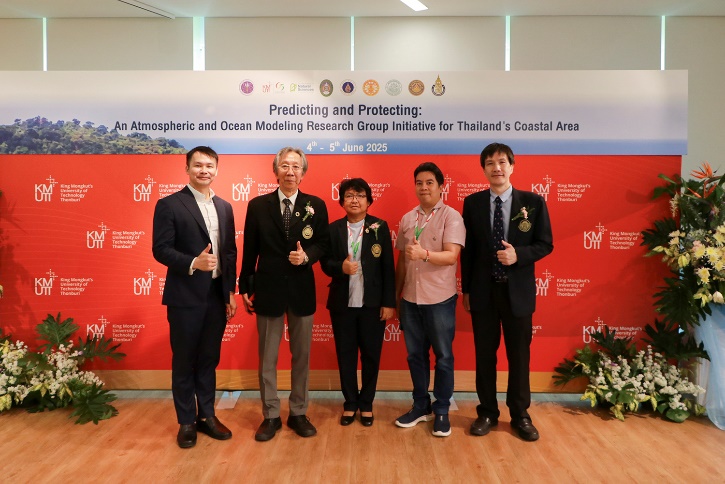
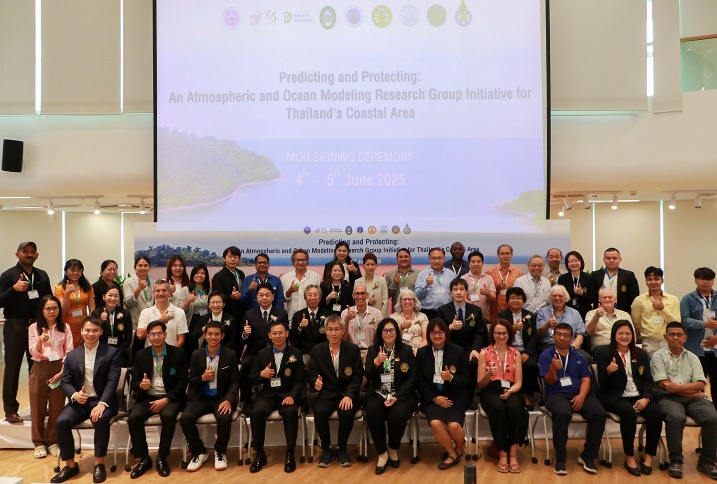
The university’s report confirms the workshop on atmospheric and ocean models held on 4–5 June 2025 at KMUTT. Its programme included coastal ecology, integrated coastal management and coastal engineering, alongside knowledge exchange among researchers. This provides dated conservation education context for the original account, whose full text and photographs follow.

4–5 June 2025
Workshop dates
V Space Meeting Room
14th Floor, Learning Exchange Building, KMUTT
Fiscal year 2025
MHESI support under the Reinventing University project

The Department of Mathematics, Faculty of Science, King Mongkut’s University of Technology Thonburi (KMUTT), with funding support from the Office of the Permanent Secretary, Ministry of Higher Education, Science, Research and Innovation (MHESI), under the “Reinventing University” project for institutional excellence and advanced workforce development for the fiscal year 2025, organized a hands-on workshop titled “Show & Share Atmospheric and Ocean Models to Drive Conservation of Thailand’s Coastal.”

The event was held on June 4–5, 2025, at the V Space Meeting Room, 14th Floor, Learning Exchange Building, KMUTT.

Assoc.Prof.Dr. Suvit Saetia, President of King Mongkut’s University of Technology Thonburi (KMUTT), graciously presided over the opening ceremony. In his remarks, he emphasized the university’s pivotal role as a hub for generating knowledge and innovation that addresses national environmental challenges, particularly the conservation of coastal areas, which are considered vital natural resources.

On this occasion, Assoc.Prof.Dr. Usa Humphries, Head of the Research Development Project on Atmospheric and Ocean Modeling to Drive Coastal Conservation in Thailand, presented the progress of the project. She also advocated for enhanced collaboration among researchers and academics from various disciplines to foster integrated knowledge development.

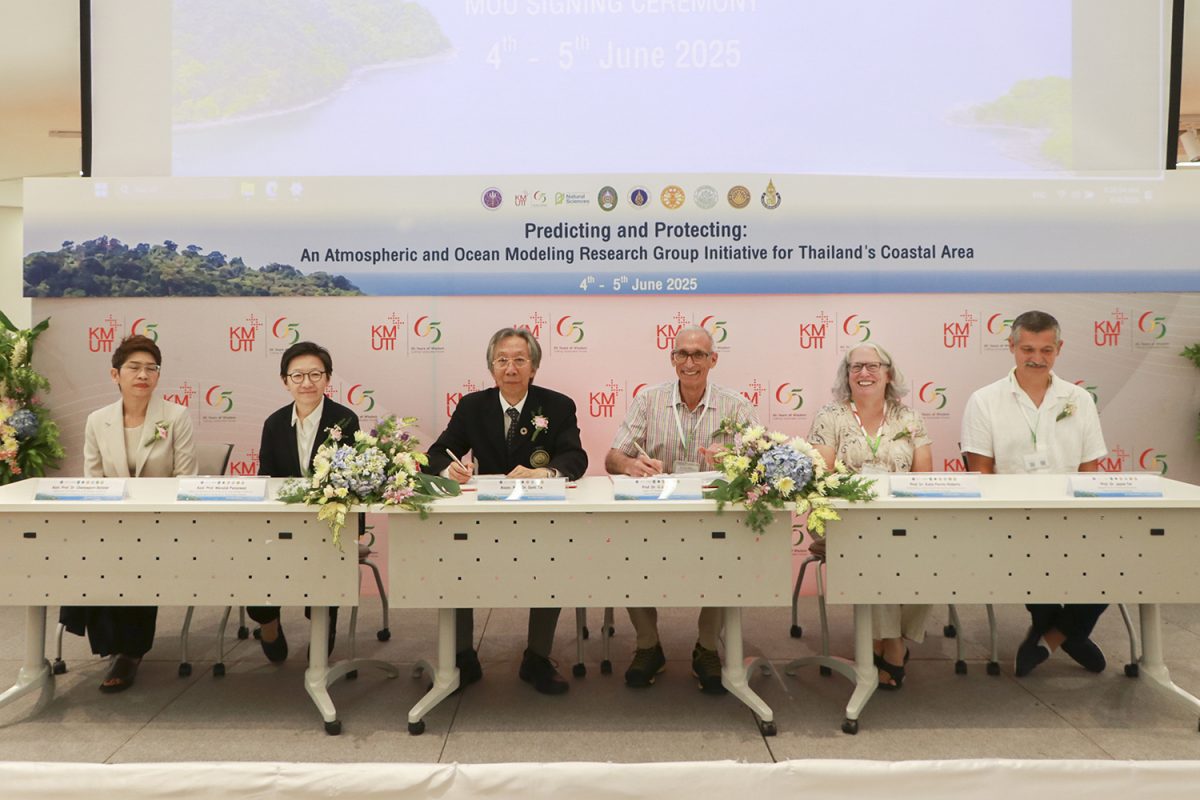
Original workshop photographs accompanying the 4–5 June 2025 account: guests and the wider participant group. The images are not used to infer an attendance count.

Academic collaboration and shared coastal knowledge

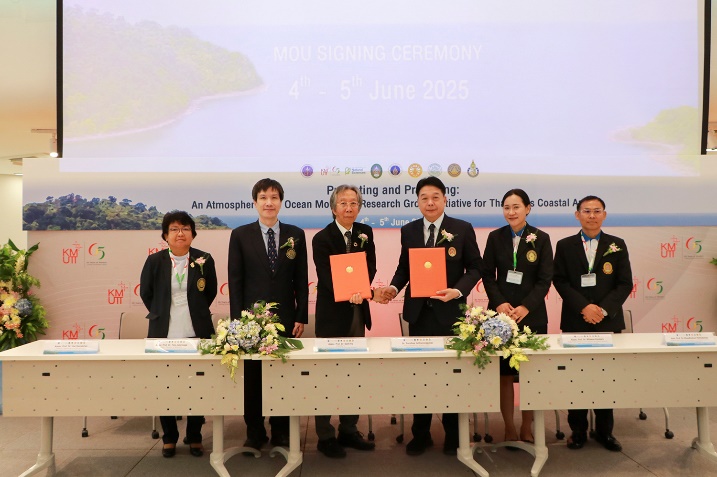
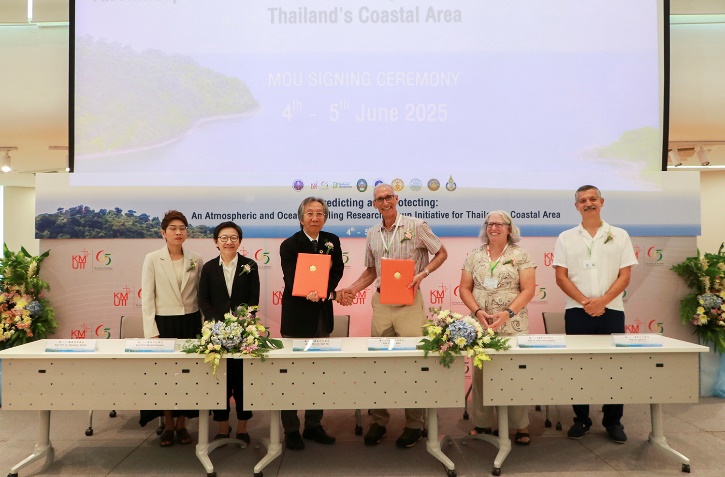
The event featured the signing of a Memorandum of Understanding (MOU) on academic collaboration between KMUTT and Sakon Nakhon Rajabhat University. It also included special lectures by international researchers and invited speakers, along with a knowledge exchange activity titled “Show & Share.” Key discussion topics included Climate and Environment, Environmental Science, Coastal Engineering, Integrated Coastal Management, and Coastal Ecology.

  • Climate and Environment
  • Environmental Science
  • Coastal Engineering
  • Integrated Coastal Management
  • Coastal Ecology

Original academic-collaboration ceremony photographs in the coastal workshop record. The reported MOU is between KMUTT and Sakon Nakhon Rajabhat University.

Irrawaddy dolphin conservation · historical research context

The supplied dolphin-research source is dated 2024. Its original claims are retained below as historical research context, without assigning a new activity date or a measured 2025–2026 fishing outcome.

Thailand's marine and coastal areas are biodiversity hotspots, particularly for marine mammals like dolphins and whales, which play a vital role in nutrient cycling and maintaining ecological balance. However, these animals face threats from climate change and human activities, such as entanglement in fishing nets, vessel collisions, habitat loss, and marine pollution. The Irrawaddy dolphin (Orcaella brevirostris), in particular, is at risk of extinction, which impacts the health and biodiversity of marine ecosystems.

KMUTT, in collaboration with government agencies and academic institutions, has launched a research project to study the Irrawaddy dolphin in Thailand and Indonesia.

This project aims to understand the effects of human activities and climate change on dolphin populations.

The Irrawaddy dolphin, as a top predator, plays a critical role in nutrient storage and cycling within the food chain. A decline in this dolphin population directly affects the abundance and biodiversity of marine ecosystems. Conserving the Irrawaddy dolphin is essential for maintaining biodiversity.

KMUTT and its partners employ molecular biology techniques to develop genetic markers and use environmental DNA (eDNA) to identify feeding areas of dolphins and whales.

This research helps designate key conservation areas and reduce fishing-related threats, particularly from overfishing, illegal and unreported fishing, and destructive fishing practices.

Raising awareness about conservation and reducing the impact of unsustainable fishing is crucial to preserving biodiversity and restoring key marine species. Achieving sustainable conservation and development of marine and coastal resources also requires collaboration with neighboring countries and the development of effective monitoring tools to track ecological changes, strengthening conservation efforts at national and regional levels.

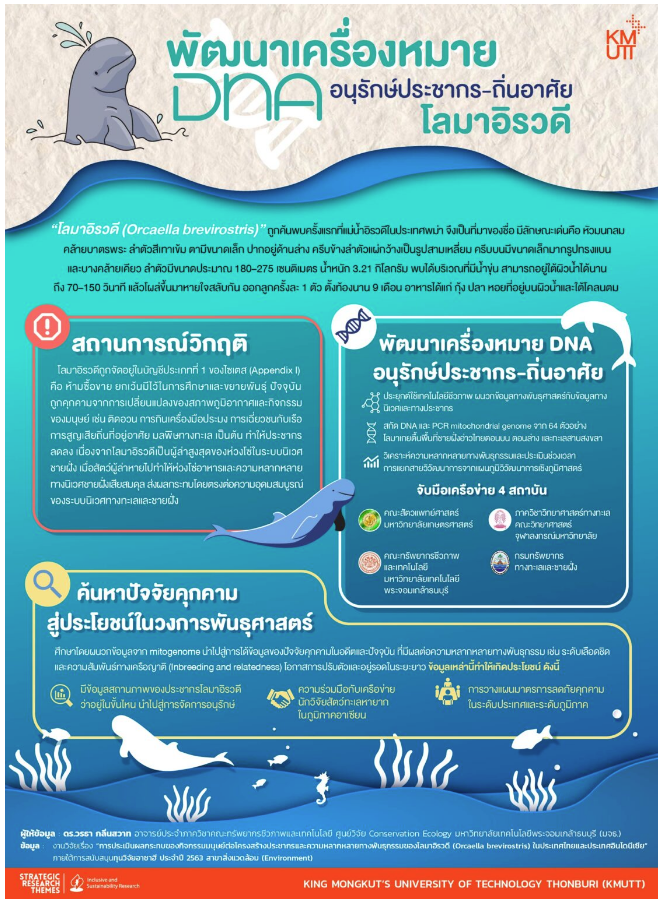
Original Irrawaddy dolphin genetic-marker conservation infographic. The blue graphic, labels, diagrams and original colours are preserved whole; small text and population figures are not reconstructed.
Sources and evidence links

Original institutional evidence for 14.2.3. The dolphin research source is dated 2024 and is retained as historical context. Its original claims are reproduced without assigning new activity dates.

14.3 SUPPORTING AQUATIC ECOSYSTEMS THROUGH ACTION

1. Related information on our university offering educational programmes on fresh-water ecosystems (water irrigation practices, water management/conservation) for local or national communities.

KMUTT organised a workshop on atmospheric and ocean models for coastal conservation on 4–5 June 2025 at V Space in the Learning Exchange Building. The Department of Mathematics hosted the event under the fiscal year 2025 Reinventing University project. Researchers and invited international speakers exchanged knowledge on coastal ecology, integrated coastal management and coastal engineering, alongside climate and environmental science. The programme also included an academic cooperation agreement with Sakon Nakhon Rajabhat University.

A shared forum for coastal conservation · 2025

4–5 June 2025
Workshop dates at KMUTT
Atmospheric and ocean models
Coastal conservation knowledge exchange
Academic cooperation
Agreement with Sakon Nakhon Rajabhat University

The event brought coastal modelling and ecological knowledge into a shared forum for conservation. This dated event supplements the original institutional accounts of the marine conservation camp and mangrove participation reproduced below. The workshop report does not provide a verified attendance total or quantify subsequent ecosystem restoration.

Original university photograph accompanying the atmospheric and ocean models workshop held on 4–5 June 2025. The image is not used to count attendance or infer restoration outcomes.

Marine and coastal cooperation · August 2026

26 August 2026
Agreement signing date
Lamphaen meeting room
Department of Marine and Coastal Resources
Cooperation framework
Research, development and academic collaboration

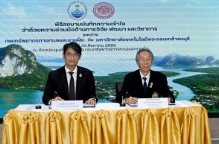
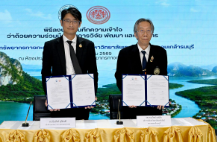
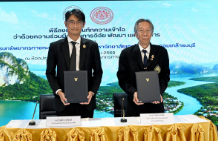
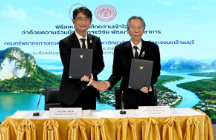
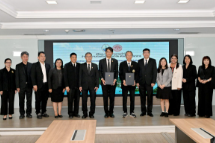
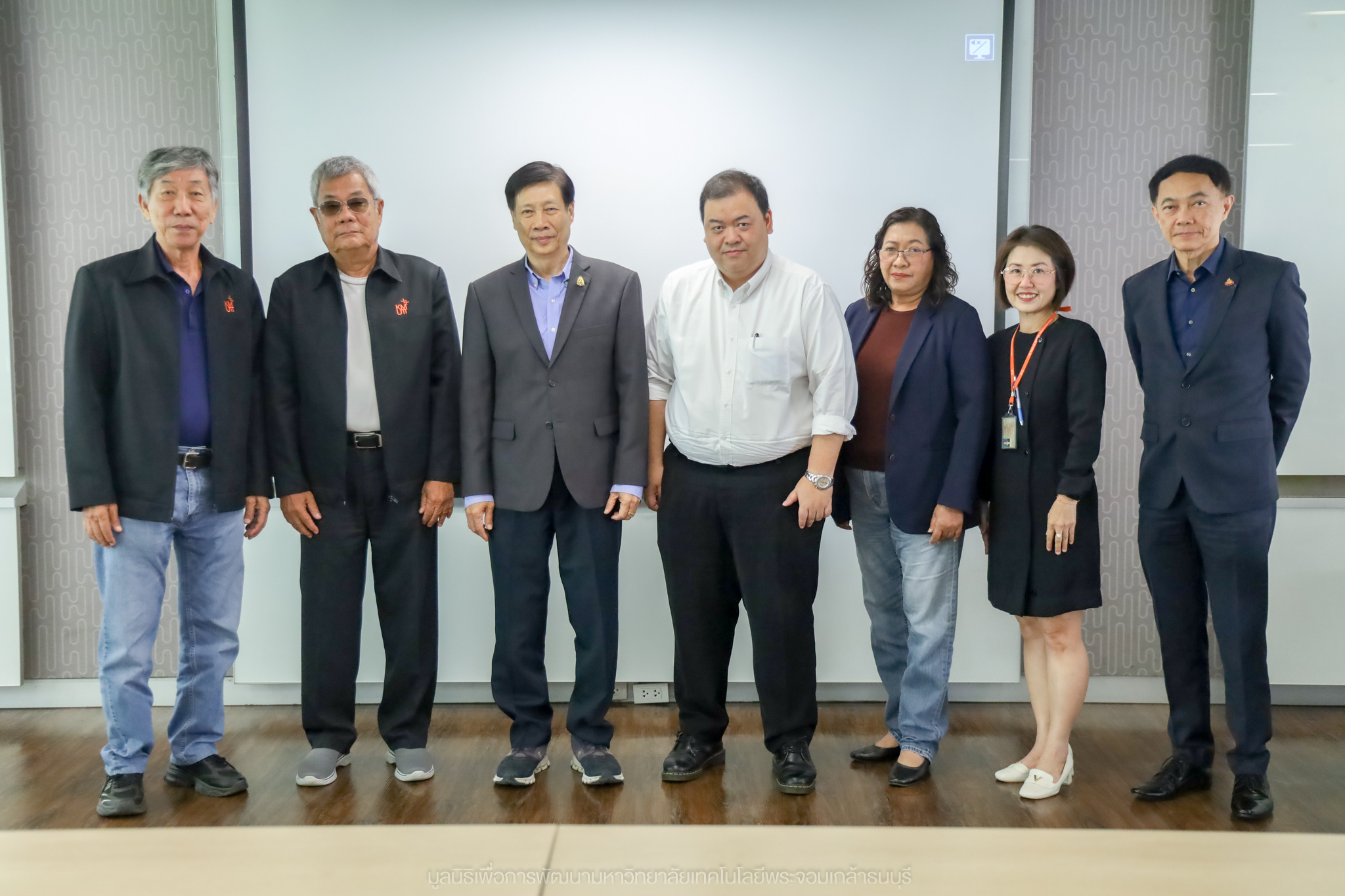
On 26 August 2026, KMUTT and the Department of Marine and Coastal Resources signed a research, development and academic cooperation agreement at the department’s Lamphaen meeting room. KMUTT President and the Director General signed, with the Mangrove Resources Research and Development Institute and KMUTT Pilot Plant Development and Training Institute represented as witnesses.

The agreement covers knowledge and personnel exchange, research and innovation, and development of joint academic projects and activities for conservation, restoration and sustainable management of marine and coastal resources. The signing establishes a cooperation framework; completed restoration results are not inferred from the agreement itself.

On 26 August 2026, KMUTT signed a collaboration agreement with the Department of Marine and Coastal Resources to support joint research, development, knowledge exchange, and academic projects and activities on the conservation, restoration, and sustainable management of marine and coastal resources.

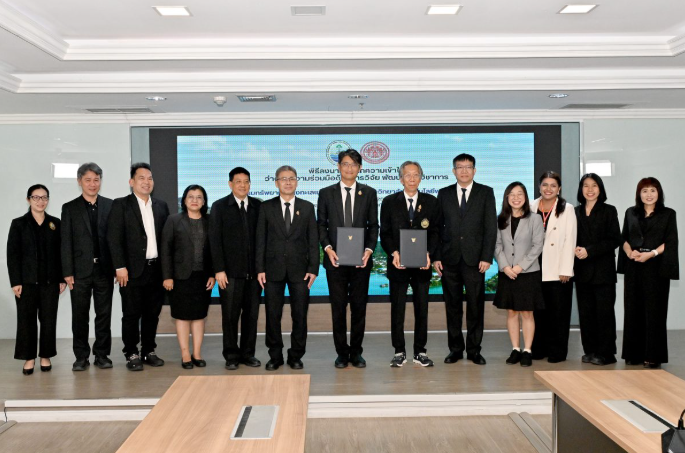
Original group photograph accompanying the marine and coastal cooperation account. The reported agreement was signed on 26 August 2026; it does not by itself establish completed restoration results.

Marine conservation learning at ENVI-SCI #2

ENVI-SCI #2
Second Nature and Environment Conservation Camp
Saensarn, Sattahip
Marine Science and Conservation Center, Chonburi
75 teachers and students
Reported as interested in participating; undergraduates in years 1–4

The supplied account does not state the camp date. The figure includes teachers and undergraduate students; it is not a count of students alone or a newly dated 2025–2026 attendance total.

KMUTT as a body organise various events aimed to promote conservation and sustainable utilisation of the oceans, seas, lakes, rivers and marine resources.

The Student Council of the Faculty of Science organized the 2nd Nature and Environment Conservation Camp (ENVI-SCI #2) at the Marine Science and Conservation Center, Saensarn Subdistrict, Sattahip District, Chonburi Province.

The objectives were to provide knowledge and instill a good attitude towards the conservation of natural resources and the environment, focusing on reducing problems in the marine environment, and enabling students to learn and adapt to live with nature appropriately.

Asst. Prof. Dr. Nakarin Phatthanabunmee, Deputy Dean for Student and Learning Development, presided over the opening ceremony, and Assoc. Prof. Dr. Phongsak Khunrae, the activity advisor, gave a speech and gave encouragement to the students who participated in the camp activities, which included Ice Breaking, theoretical diving equipment training for marine conservation, a lecture on “The Origin of Coral Reef Biology, Problems, Impacts, and Restoration,” recreational activities to build relationships and instill conservation awareness, coral planting to conserve coastal coral reefs, diving to study the coral ecosystem, and studying sea turtle conservation at the Turtle Conservation Center.

Ms. Buasai Phetsuriyawong, the activity advisor, gave a closing speech and presented awards for each activity group’s presentation.

This activity had 75 teachers and undergraduate students from years 1-4 interested in participating.

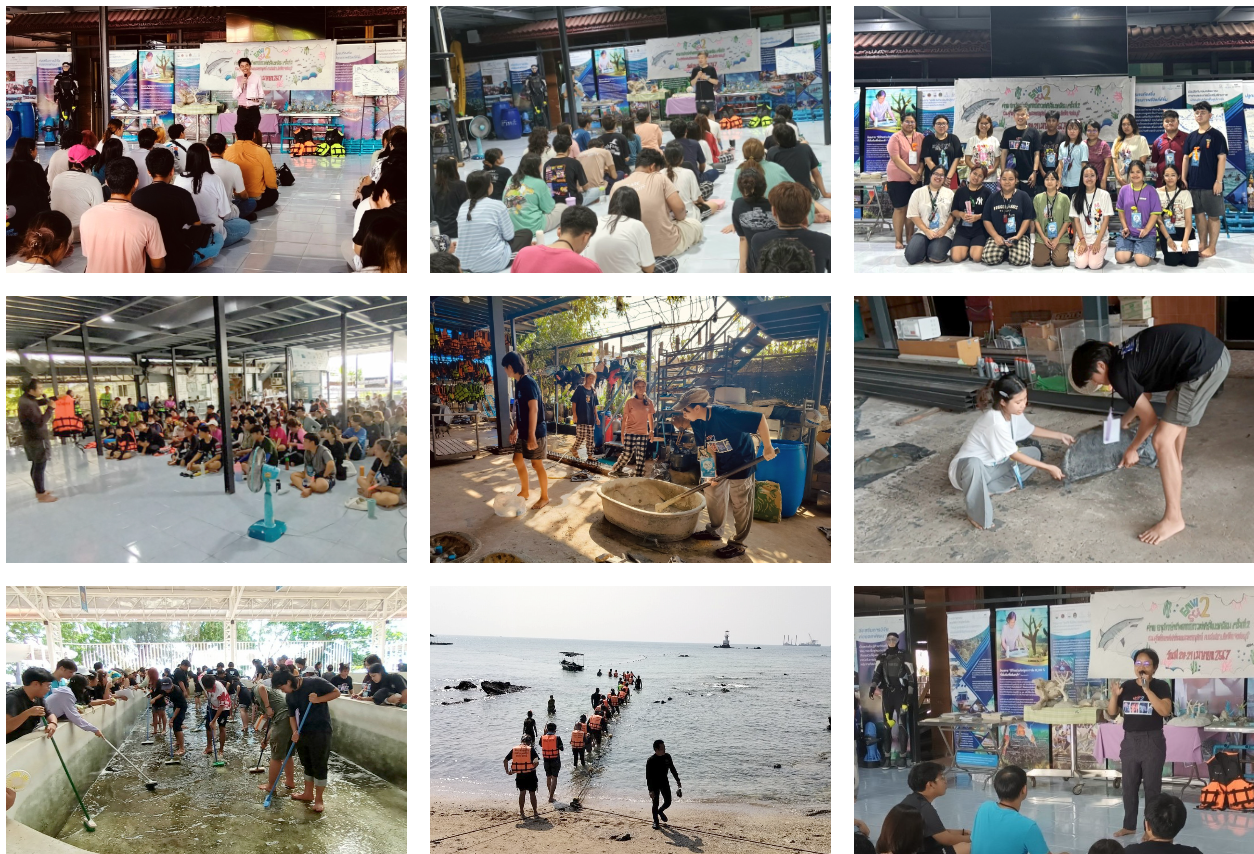
Original ENVI-SCI camp photographic collage, retained whole. The same source image appeared three times in the imported material and is shown once here, with its content unchanged.
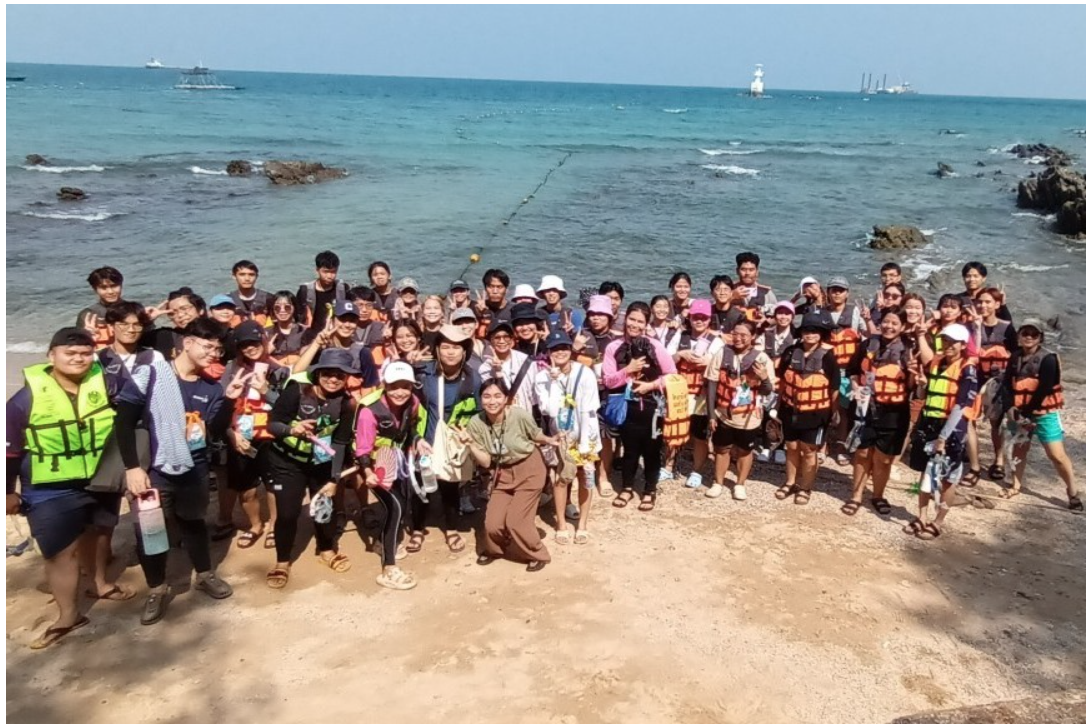
Original camp group photograph at the coast. Capture date is not specified; the photograph is not used to verify a participant total.

Mangrove participation and coastal understanding

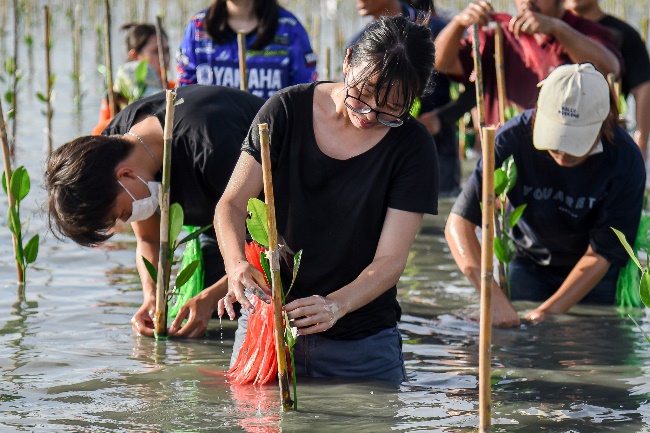
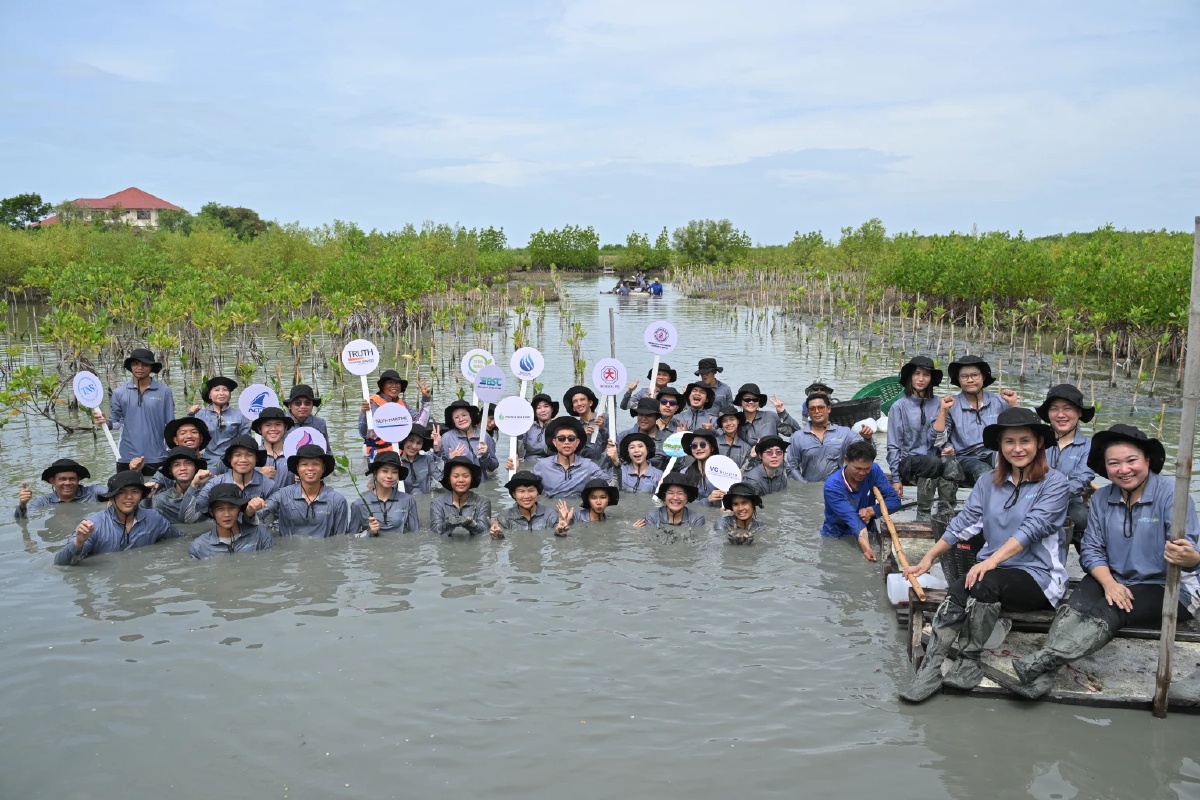
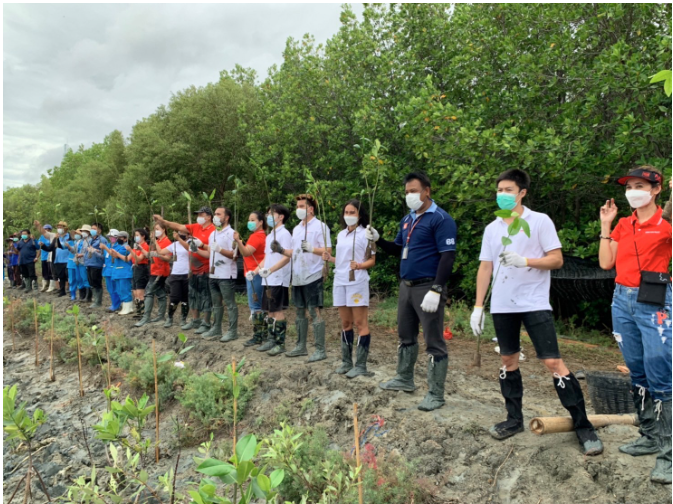
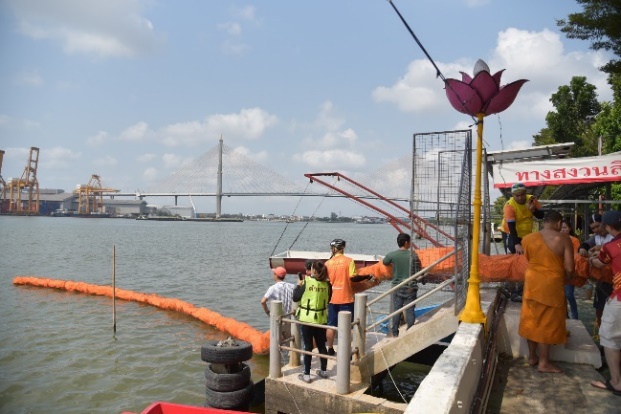
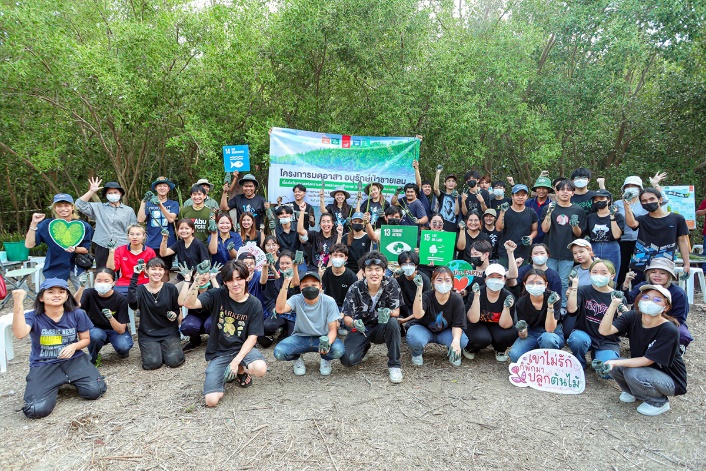
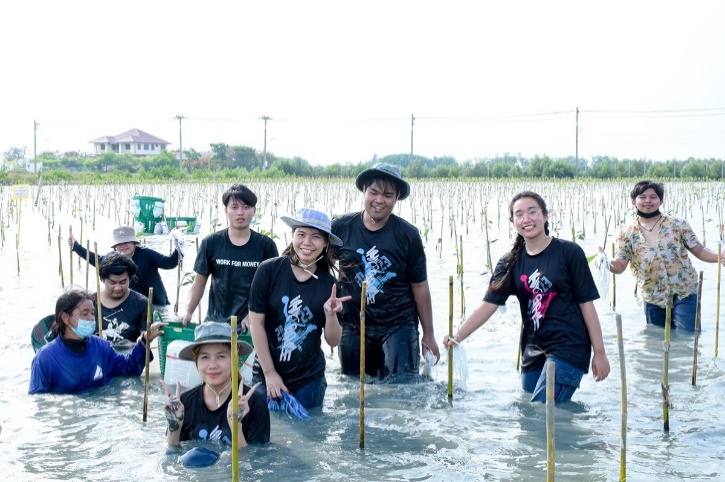
In addition, KMUTT organizes mangrove planting activities, inviting students, personnel, and local communities to participate in water resource conservation efforts.

Through these activities, participants directly experience the essential role of mangrove forests in coastal ecosystems. This initiative strengthens KMUTT connection with surrounding communities while actively promoting the conservation and sustainable use of oceans, seas, and marine resources.

Mangroves act as natural barriers, protecting coastlines from erosion and buffering against storm impacts and rising sea levels.

Restoring and expanding mangrove forests also contribute significantly to climate change mitigation by absorbing carbon.

Moreover, mangroves provide critical breeding grounds and habitats for diverse aquatic species, birds, and other wildlife, thereby enhancing biodiversity.

They also support local communities by offering potential future food sources and maintaining healthy ecosystems that benefit both people and nature. Through these activities, KMUTT aims to promote a deeper understanding and commitment to conservation efforts that sustain marine resources and foster resilient ecosystems for the benefit of people and nature alike.

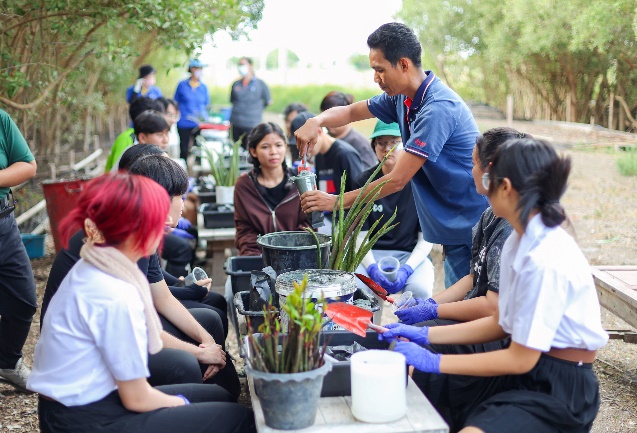
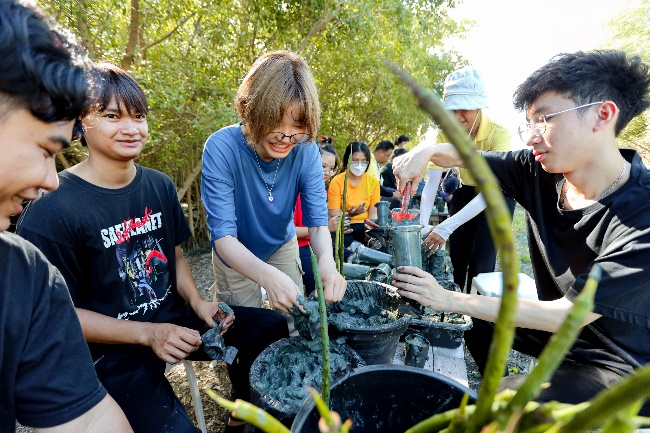
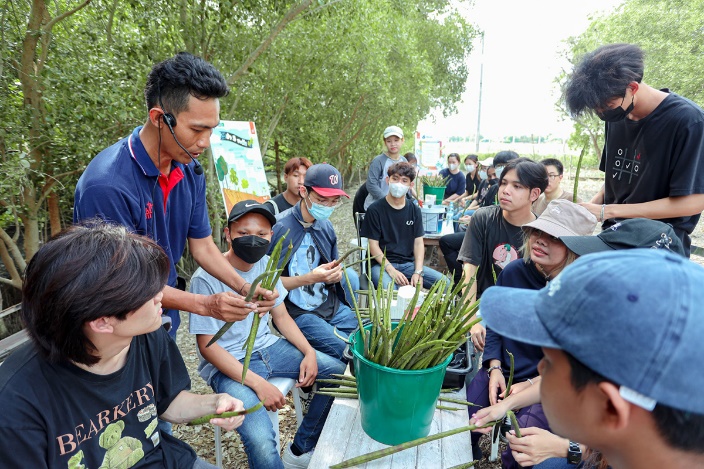
Original mangrove learning and seedling-preparation photographs. Activity dates are not specified.

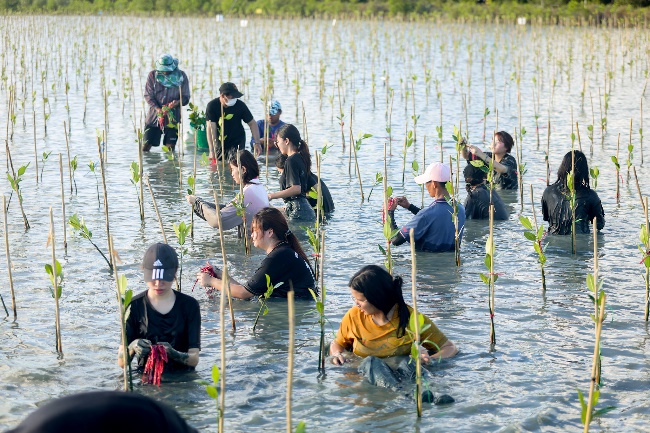
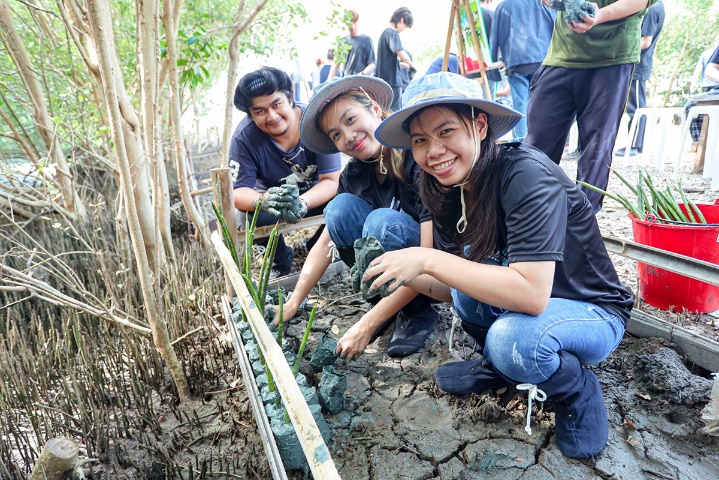
Original student and community mangrove-planting photographs. These illustrate participation; planted area, carbon storage and survival rates are not inferred from the images.

Additional original event photographs

Additional mangrove group photographs

Original mangrove group photographs from the same supplied institutional record, with no new activity date assigned.

Original cooperation meeting and signing photographs

These source images have limited resolution and are displayed in a compact, even grid. Names, labels and meeting material are retained whole; small text is not guessed.

Original cooperation-meeting photographs from the institutional record, retaining their complete framing.

Original meeting participants and signing photographs accompanying the cooperation account.

Original agreement presentation and group photographs from the same source record. Different images are not counted as additional agreements.

Sources and evidence links

Supplied institutional evidence for 14.3.1, reproduced in full below. Dates not stated for the original camp or mangrove photographs remain unspecified.

2. Related information on our university offering educational programme / outreach for local or national communities on sustainable management of fisheries, aquaculture and tourism.

KMUTT supplied evidence identifies the Food Safety Center as a source of research, risk assessment and technical support for campus food provision. Its complete original description follows. Food hygiene and sustainable harvesting concern different parts of the food supply chain: hygiene standards address food safety, while sustainable harvesting requires evidence about the origin and environmental management of aquatic products. The documented measures below support food-service governance without assigning an unverified sustainable-harvest certification to campus seafood.

Food-service governance and responsibilities

Order No. 0008/2561
Food and Drinking Water Safety Working Committee
2018
Historical governance basis, retained with its original year

The university’s public food-safety material sets out food and drinking-water responsibilities, inspection and cooperation with food providers. Order No. 0008/2561 establishing the Food and Drinking Water Safety Working Committee dates to 2018. This historical governance basis is retained with its actual year.

Working with campus food vendors · 2026

21 February 2026
Food-vendor screening and training
N17, Bangmod
Jamrat Chayapong Meeting Room
EESH and Health Care Unit
University organisers, with Department of Health specialists

On 21 February 2026, EESH and the Health Care Unit organised food-vendor health screening and training at the Jamrat Chayapong Meeting Room, N17, Bangmod. Department of Health specialists covered food-establishment sanitation, personal hygiene and healthy menus. Vendors undertook assessments and knowledge tests for food-handler certification. Practical afternoon activities addressed energy efficiency, food-waste management, hygiene and sustainability.

This dated activity shows university engagement with the people who prepare and sell campus food, providing an operational setting for applying food-service requirements. The training record does not identify seafood supplier audits, species-level purchasing records or a university-wide sustainable-harvest rule.

Original university photograph accompanying the food-vendor health screening and sustainable food-safety training account, 21 February 2026. No participant total or certification pass rate is inferred from the photograph.

Original institutional account

The complete supplied Food Safety Center statement is retained here. As explained above, its wording is not treated as independently verified certification of sustainable aquatic-food harvesting.

The Food Safety Center at KMUTT is committed to promoting safe and sustainable food practices and policies to ensure that all food on campus from aquatic ecosystems is sustainably harvested, with a focus on food safety and risk management.

The Center aims to minimize environmental impacts through rigorous standards and risk assessment frameworks for food production. This policy is in line with the Center's mission of maintaining high food safety standards while supporting environmental health.

The Center provides training in sustainable practices such as hygiene, risk assessment, and compliance with protocols such as Good Manufacturing Practice (GMP) and Hazard Analysis and Critical Control Point (HACCP) as well as ISO standards such as ISO 22000 to ensure that food service providers on campus are prepared to meet sustainability criteria.

The Center also collaborates with government agencies, the private sector, and research organizations to promote research and development on food safety innovations, supporting efficient and environmentally friendly food systems to protect both local and broader ecosystems.

Through these efforts, the Food Safety Center contributes to the creation of a safe and sustainable food supply on campus and promotes responsible food sourcing practices that benefit aquatic ecosystems.

Food Safety Center: vision and scope

Vision : Create and develop research, support the transfer of food safety technology

Scope of work : The Food Safety Center is ready to conduct research, develop and transfer food safety technology, assess food safety risks, and intervene to reduce risks in order to make food safe and beneficial to public health. The main operations are as follows:

  1. Research and knowledge

    Create research and knowledge on food safety from the production and processing processes, food safety management systems, food risks, and appropriate interventions

  2. Rapid test kits

    Develop rapid test kits that can quickly identify problems and provide solutions to safety and quality problems in the food industry and related industries

  3. Training and laboratory

    Be a training center, transfer technology on food safety management systems (Sanitation Standard Operating Procedure (SSOP), Good Manufacturing Practices (GMP), Hazard Analysis and Critical Control Point (HACCP) and ISO standard systems related to food production, such as ISO 22000 (Food Safety Management Systems, FSMS) and food risks, as well as have a research analysis laboratory in components related to safety and risks

  4. Cooperation and transfer

    Promote cooperation and coordination between universities, private sectors, and government sectors to create links in research and development cooperation as well as the transfer and application of knowledge appropriately

  5. People and networks

    Promote the development of personnel in private and government agencies through joint research and development with relevant networks, exchange of students/researchers with agencies in the cooperation network, both domestically and internationally

Office and contact details

Office location : 4th floor, Department of Microbiology Building, Faculty of Science, King Mongkut's University of Technology Thonburi Tel. 02-470-8881 Fax 02-470-8885

Location and contact details are reproduced from the supplied institutional account.

Sources and evidence links

Supplied institutional evidence for 14.3.2, including the complete Food Safety Center description below. Its original wording is retained; it is not substituted for an independently verified aquatic-food harvesting policy.

3. Related information on our university working directly (research and/or engagement with industries) to maintain and extend existing ecosystems and their biodiversity, of both plants and animals, especially ecosystems under threat.

KMUTT Library published an account on 4 December 2025 of the university’s mangrove Living Lab in Phanthai Norasing, Samut Sakhon. The project covers four donated plots totalling 136 rai and began in 2022. Its 2025 account describes practical adaptation after initial planting losses: propagules are rooted in a nursery, supported with bamboo after planting and managed through a temporary water-control stage before water is readmitted. Local residents supply propagules, linking the restoration process with community income.

Mangrove Living Lab: learning through restoration · 2025

Four donated plots
Land included in the Living Lab project
136 rai
Total project area; not a measured survival area
Began in 2022
Project start, as reported in the December 2025 account

The account also records planting by 55 Malaysian students on 1 November 2025 and reports that planting had extended across almost all four plots. Expansion of the learning facilities remained a future development in that account. These records document restoration work and participation; they do not provide a species census or a verified survival rate.

The reported approach follows adaptation after initial planting losses. It describes this project’s practice, rather than a universal planting prescription.

  1. Root propagules in a nursery.
  2. Support newly planted propagules with bamboo.
  3. Use a temporary water-control stage.
  4. Readmit water after the temporary control stage.

Joint restoration and habitat care · 2026

2,000 mangroves
Planting recorded in the Prima Marine activity account
31 August 2026
Report publication date; not assigned as the planting date

A Prima Marine activity report published on 31 August 2026 describes the company’s volunteer programme at KMUTT Samut Sakhon mangrove learning area. The programme records planting 2,000 mangroves, propagule preparation, ecological learning and removal and separation of waste around the planting area. KMUTT site manager introduced nursery methods and guided nature learning, while the university welcomed the participants. These practical tasks combine vegetation restoration with care for the surrounding coastal habitat.

Original photograph accompanying the Prima Marine volunteer restoration report published on 31 August 2026, at KMUTT mangrove learning area in Samut Sakhon.

Fish propagation in Nan · original programme record

The programme began in 2016. The original release and budget figures below are separate from the dated 2025–2026 mangrove accounts.

Since 2016
Research and experimental fish propagation
30,000 fish
Reported release into the Mang River
THB 11,000
Project budget reported in the original account
20 days
Rearing period before release, as described in the account

KMUTT in collaboration with the Promotion Center and the Royal Project Foundation have conducted research and experimented on breeding stone licking fish since 2016.

They caught parent fish from natural sources and bred them and nurtured them at the Demonstration Garden of King Mongkut's University of Technology Thonburi, Nan Province.

After that, 30,000 stone licking fish were released back into natural water sources (Mang River).

They provided a budget of 11,000 baht to carry out the project to breed stone licking fish back into natural water sources.

KMUTT in Nan Province, in collaboration with Bo Kluea Tai Subdistrict Municipality, Rajamangala University of Technology Lanna, Nan Province, Ban Bo Luang Community, Ban Pha Khab Community, and Ban Nakok Community, caught parent fish from natural sources to bred and nurture them for 20 days before releasing them back into natural water sources (Mang River).

This type of fish will be a natural source of protein for the community in the future.

Original fish-propagation and release photographs in the Nan institutional record. Capture dates and post-release survival are not specified.

Original community and partner participation photographs accompanying the same fish-propagation account.

Recirculating aquaculture for highland learning

10 m³
Experimental set at the KMUTT coordination centre in Bo Kluea
500 litres
Community learning set
4 m diameter
Circular plastic culture tank containing 10 m³ of water

KMUTT together with Rajamangala University of Technology Lanna Nan brought the RAS system model that was studied and experimented to improve for testing farming in highland areas and experimenting for learning in the community.

using the area of the KMUTT coordination center located in Bo Kluea District Organized as an experimental set of 10 cubic meters and at the community as a learning set, size 500 liters, and has designed and provided equipment for installing the RAS system.

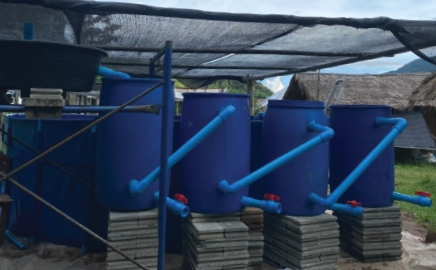
for tilapia farming which consists of culture pond (Made from a circular plastic tank with a diameter of 4 meters, containing 10 cubic meters of water.) and wastewater treatment system from farming which consists of solid filter system biological filtration system (Bio-filter) and hydroponic soilless plants to help absorb nutrients in wastewater.

has also prepared a biological filter system by immobilizing nitrifying bacteria (Nitrifying Bacteria) on biological filter material (Bio-ball) to make the filter system effective in treating wastewater.

The 10 m³ tank description refers to the experimental system above; it is not an additional 10 m³ installation or an annual water-saving figure.

Original practical learning and RAS tank photographs. The supplied account does not assign a new 2025 or 2026 installation date.

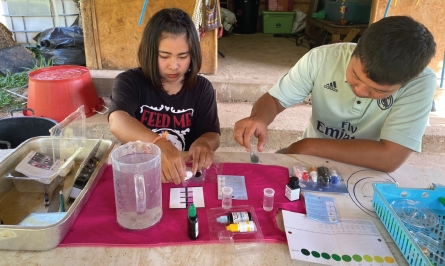
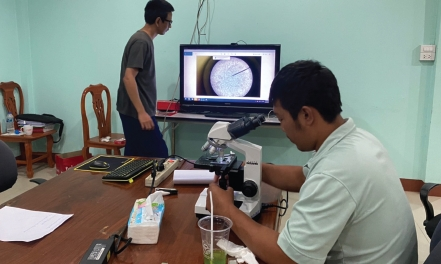
Original aquaculture learning, water assessment and microscopy photographs retained with the RAS account.

Mangrove planting with VNU and Innolab · original record

4,999 mangrove saplings
Planting reported for the VNU and Innolab collaboration
200,000-tree programme
Broader planting project named in the source; not this activity’s reported total

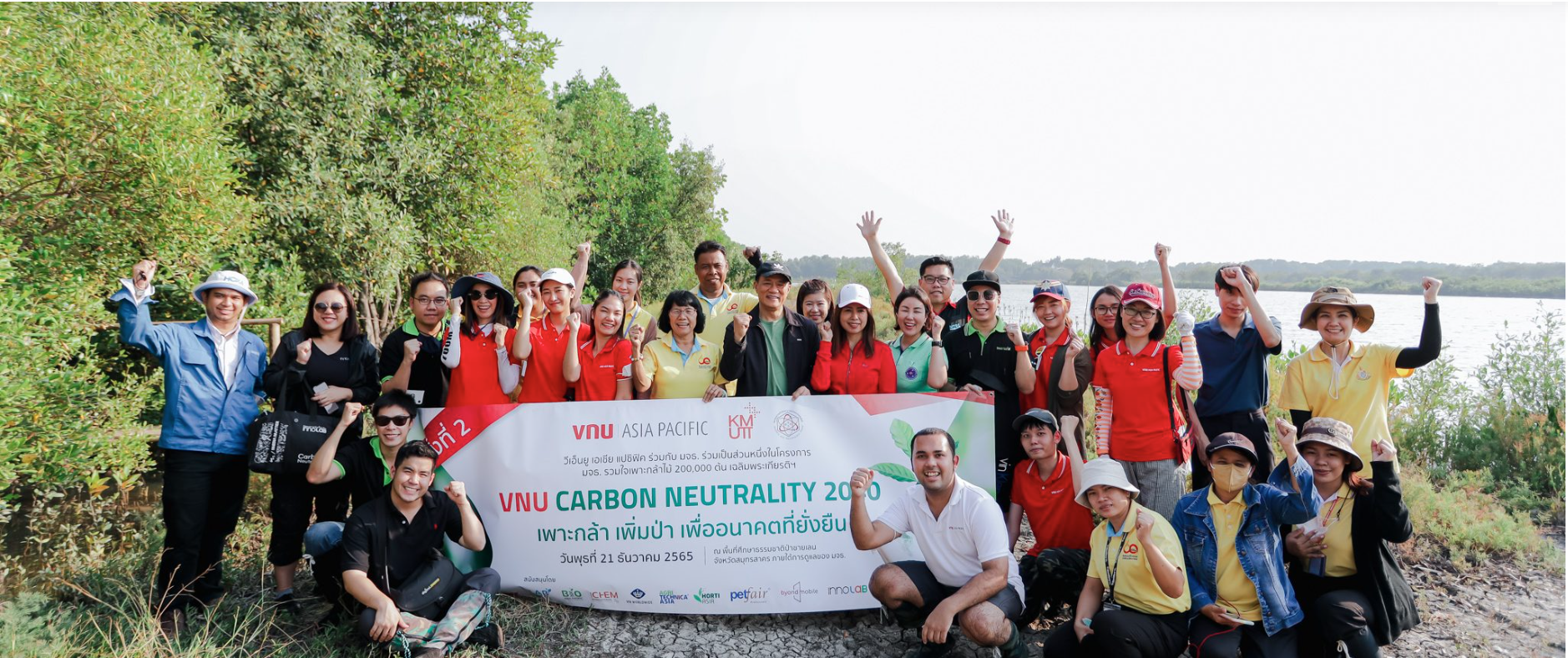
In addition, KMUTT has collaborated with VNU Exhibitions Asia Pacific Co., Ltd., a world-class exhibition organizer, and Innolab Co., Ltd. to plant 4,999 mangrove saplings and mangrove forests in the area of ​​KMUTT, Samut Sakhon Province.

This activity is part of the 200,000 mangrove tree planting project to dedicate merit to His Majesty the King and is one of the Nature Positive University Alliance projects that KMUTT has joined to jointly restore the university area to its natural mangrove forest, which will enable the restoration of trees, plant species, learning resources, aquatic animals, birds, and the natural history of mangrove forests in the future.

The original account does not specify this activity’s date. The 4,999 saplings are not added to the separate 2,000-tree Prima Marine record; a verified combined total or survival rate is not supplied.

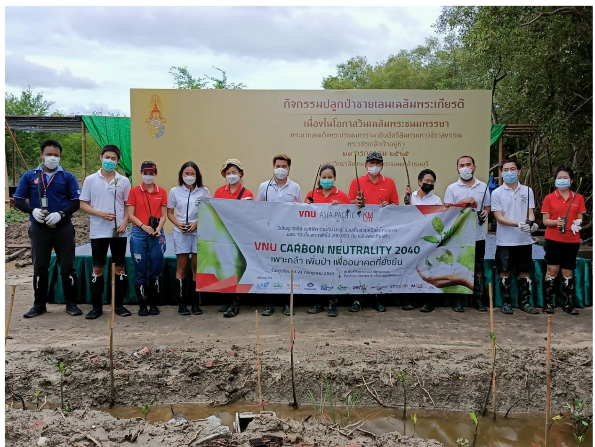
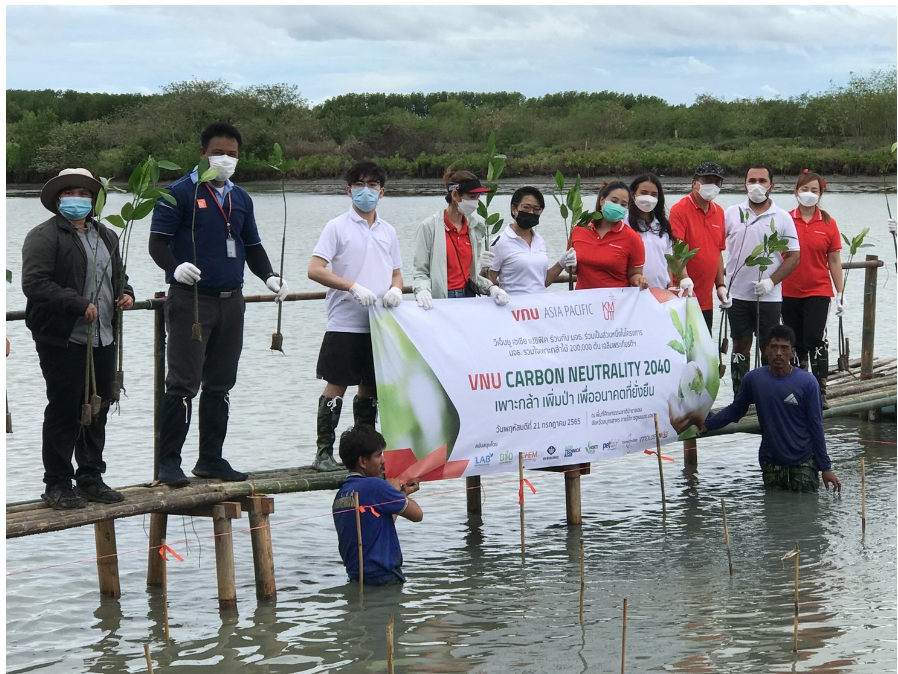
Original VNU and Innolab programme group photographs in Samut Sakhon, retaining their banners and complete framing.

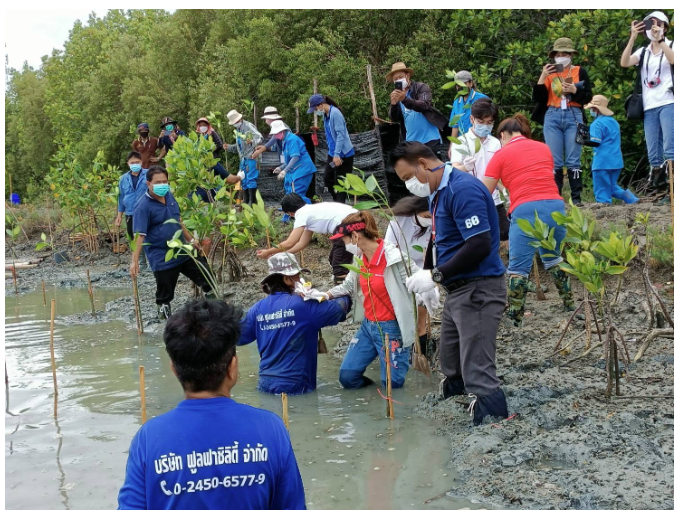
Original partner mangrove-planting photographs. The source describes future restoration benefits without supplying a measured species census or survival rate.

Original wide partner-group photograph from the same institutional planting record. Banner wording is preserved; it is not used to infer a new activity date.
Sources and evidence links

Original institutional evidence for 14.3.3. The fish propagation programme began in 2016; its original release figures, RAS dimensions and mangrove planting figures are preserved below. They are separate from the dated additions above.

4. Related information on our university working directly (research and/or engagement with industries) on technologies or practices that enable marine industry to minimise or prevent damage to aquatic ecosystems.

Reducing nutrient loads from aquaculture wastewater

RESEARCH PUBLISHED · 15 FEBRUARY 2025

Nitrate removal
>80%
Under the reported optimal experimental conditions
Phosphate removal
>99%
Under the reported optimal experimental conditions
Biomass productivity
0.18–0.22
Grams dry weight per litre per day

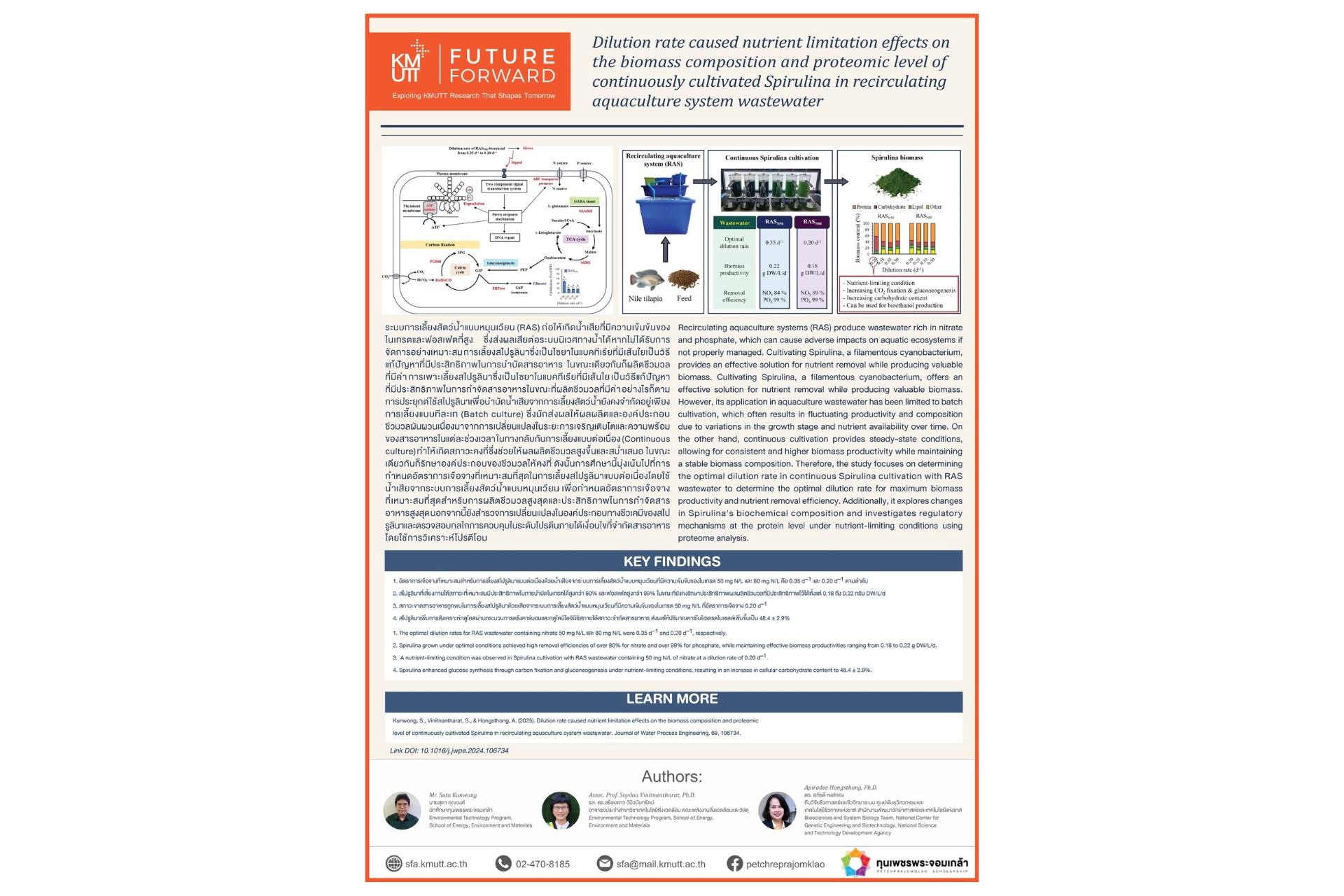
A KMUTT research achievement published on 15 February 2025 describes continuous cultivation of Spirulina using wastewater from recirculating aquaculture systems. The research addresses nitrate and phosphate that can damage aquatic ecosystems if discharged without effective management. Under the reported optimal experimental conditions, nitrate removal exceeded 80% and phosphate removal exceeded 99%, with biomass productivity of 0.18–0.22 grams dry weight per litre per day.

The study examined operating dilution rates and nutrient limitation to improve treatment and biomass production. It provides research evidence of a process for reducing nutrient loads from aquaculture wastewater. These are controlled cultivation results, not campus discharge measurements or verified reductions in pollution across a marine farming region.

Smarter fishing trips with SIRINAPHA Baan Pla Link

PILOT REPORTED · 6 OCTOBER 2026

Reported fuel saving
Approximately 18–30% lower fuel use
Pilot participants
30 fishers
Pilot vessels
12 boats
Pilot locations
Six areas in Samut Sakhon

KMUTT report of 6 October 2026 describes SIRINAPHA Baan Pla Link, which combines satellite data, AI and local fishing knowledge for planning trips. The report records a pilot with 30 fishers and 12 boats in six Samut Sakhon areas and reports approximately 18–30% lower fuel use when navigating towards suggested fishing areas. The technology is intended to reduce unnecessary travel and improve decisions; the reported fuel saving is a pilot result and does not quantify recovery of fish stocks or changes in ecosystem health.

Solar-powered monitoring for Khlong Bangmod

HISTORICAL TECHNOLOGY CONTEXT · Supporting public report dated 9 May 2024; not reassigned to 2025 or 2026.

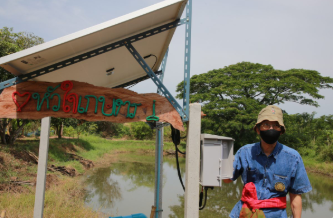
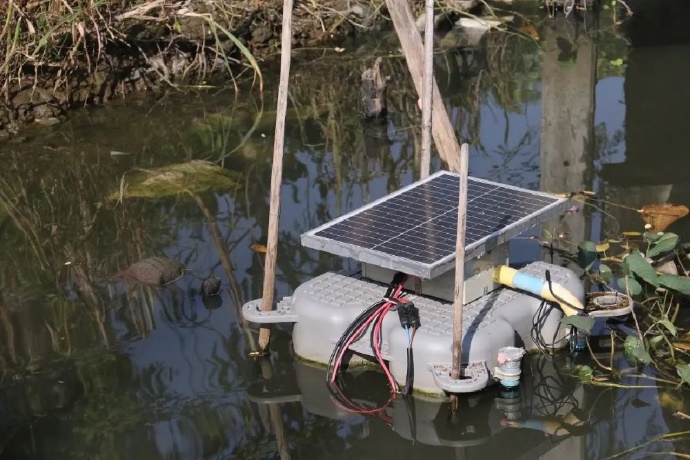
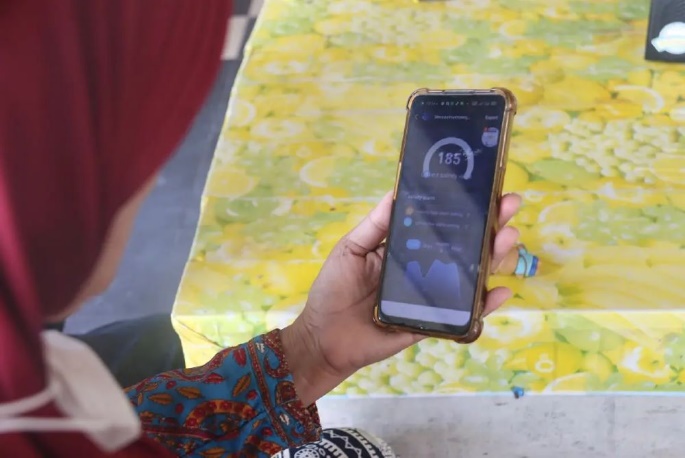
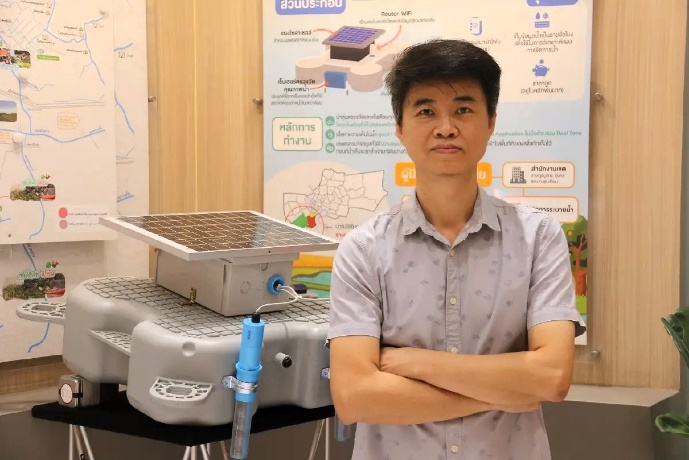
KMUTT has developed a “Solar-powered Water Quality Monitoring and Warning Buoy” in the Khlong Bangmod area, which is an example of a strategic initiative that combines advanced technology with sustainable agricultural practices. The buoy enables real-time monitoring of water quality, especially saltwater intrusion, which is a major problem for agricultural irrigation in coastal areas.

By providing farmers with accurate and timely information on saltwater levels, the buoy supports more efficient water use planning, enabling actions such as storing freshwater to prevent saltwater intrusion during the dry season. This technology plays a key role in water conservation, especially for irrigation, by helping farmers reduce their reliance on tap water and maximize the use of available freshwater resources, reducing the need for water reserves.

The system thus contributes to sustainable water management, ensuring that agricultural water needs are met without depleting local water resources.

Furthermore, the data collected from the buoy can be used for long-term water resource planning at both the community and government agencies levels, enabling better coordination of water allocation.Through these technological advancements, KMUTT solar-powered, IoT-enhanced water management system supports not only sustainable agriculture but also plays a vital role in aquatic ecosystem conservation.

Original monitoring buoy, mobile water-quality interface and buoy demonstration photographs from the supplied institutional account. Capture dates are not specified.

Remote irrigation and aeration with IoT

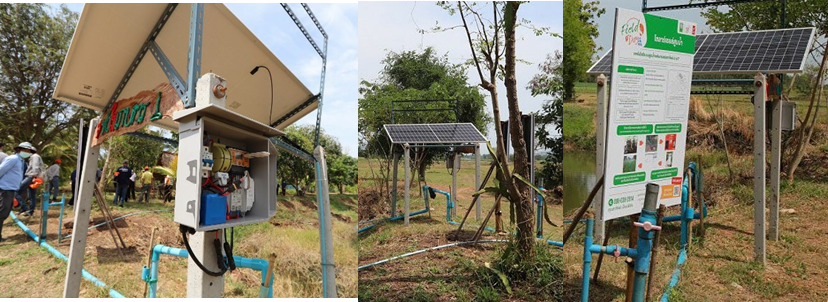
KMUTT has implemented Internet of Things (IoT) technology in its solar-powered water pumping and aeration system, marking a significant advancement in irrigation, water conservation, and water management, especially in regions with limited water resources. This IoT-enabled system can be monitored and controlled remotely through a mobile app, allowing users to set automated on/off cycles for precise irrigation scheduling.

This feature not only enhances water efficiency but also improves the delivery of water, ensuring it is used when most needed. It helps prevent over-watering, which can lead to runoff that carries excess nutrients and chemicals to nearby water bodies, contributing to eutrophication and damaging aquatic ecosystems.

IoT technology also enables real-time monitoring of water levels, flow rates, and system performance, empowering farmers to make informed decisions that conserve water.

Water conservation is especially critical in areas with irregular or scarce water supplies. With IoT-driven automation, the system ensures timely and efficient irrigation, reducing water waste and labor demands. By offering solar-powered, automated irrigation solutions, KMUTT is promoting sustainable agricultural practices, protecting aquatic ecosystems, and contributing to overall environmental sustainability.

Original solar-powered water pumping and IoT system illustration, retained with all three panels and its original colours. The supplied account does not specify an installation date.
Supporting research illustration
Research illustration published by KMUTT with the Spirulina wastewater treatment achievement on 15 February 2025.
Sources and evidence links

Supplied institutional evidence for 14.3.4. The original Bangmod monitoring buoy and solar pumping account follows in full. The public report supporting the buoy is dated 9 May 2024; its history is retained without changing the activity year.

14.4 WATER SENSITIVE WASTE DISPOSAL

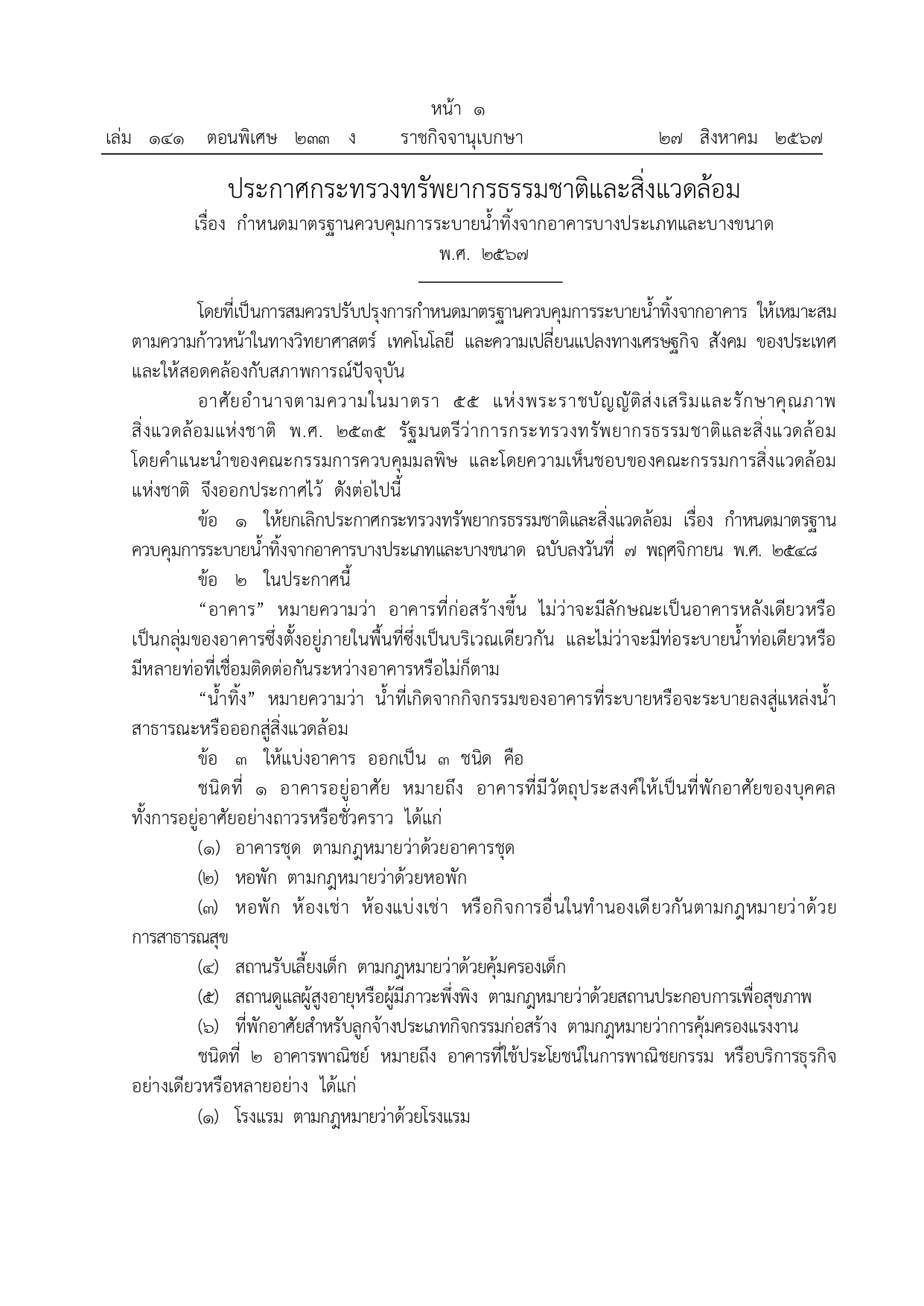
1. Related information on our university having water quality standards and guidelines for water discharges (to uphold water quality in order to protect ecosystems, wildlife, and human health and welfare, etc.).

Monitoring treated wastewater before discharge

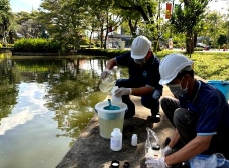
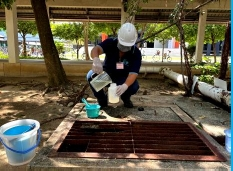
KMUTT checks treated wastewater before release into public water sources. Its monitoring programme identifies Central Laboratory Services in the Department of Environmental Engineering as the testing unit. Sampling and laboratory analysis are followed by checks of accuracy and quality control before certification. The programme publishes comparison limits and results for 2025.

  1. Sampling and laboratory analysis
  2. Accuracy and quality-control checks
  3. Certification after checking

Monthly monitoring results · 2025

pH

Published comparison range: 5–9

January
7.42
February
7.1
March
7.32
April
7.48
May
7.68
June
7.62
July
7.55
August
7.62
September
7.24
October
7.1
November
7.1
December
7.2

Suspended solids (SS)

mg/L · Published comparison limit: 30 mg/L

January
27
February
19
March
23
April
29
May
24
June
22
July
17
August
18
September
24
October
5
November
9
December
12

Biochemical oxygen demand (BOD)

mg/L · Published comparison limit: 20 mg/L

January
19
February
20
March
16
April
14
May
12
June
14
July
13
August
15
September
13
October
6
November
12
December
17

Complete monthly results

MonthpHSS (mg/L)BOD (mg/L)TKN (mg/L)Fat, oil and grease (mg/L)
January7.42271916ND
February7.11920181.5
March7.3223169ND
April7.4829149ND
May7.68241210ND
June7.62221412ND
July7.55171311ND
August7.62181511ND
September7.2424139ND
October7.1565.82.3
November7.19121.41.1
December7.2121712.81.2

pH is unitless. SS, BOD, TKN, and fat, oil and grease are reported in mg/L. ND is reproduced exactly from the supplied results graphic; no detection limit was supplied and no numeric value is inferred.

The supplied 2025 results graphic gives comparison values of pH 5–9, suspended solids 30 mg/L, BOD 20 mg/L, TKN 35 mg/L, and fat, oil and grease 20 mg/L. The reported numeric results are within those comparison values; February BOD is 20 mg/L, equal to its comparison limit. ND is retained as reported and is not treated as zero. These results are not extended to every treatment plant or to metals without reported measurements.

Standards by discharge category

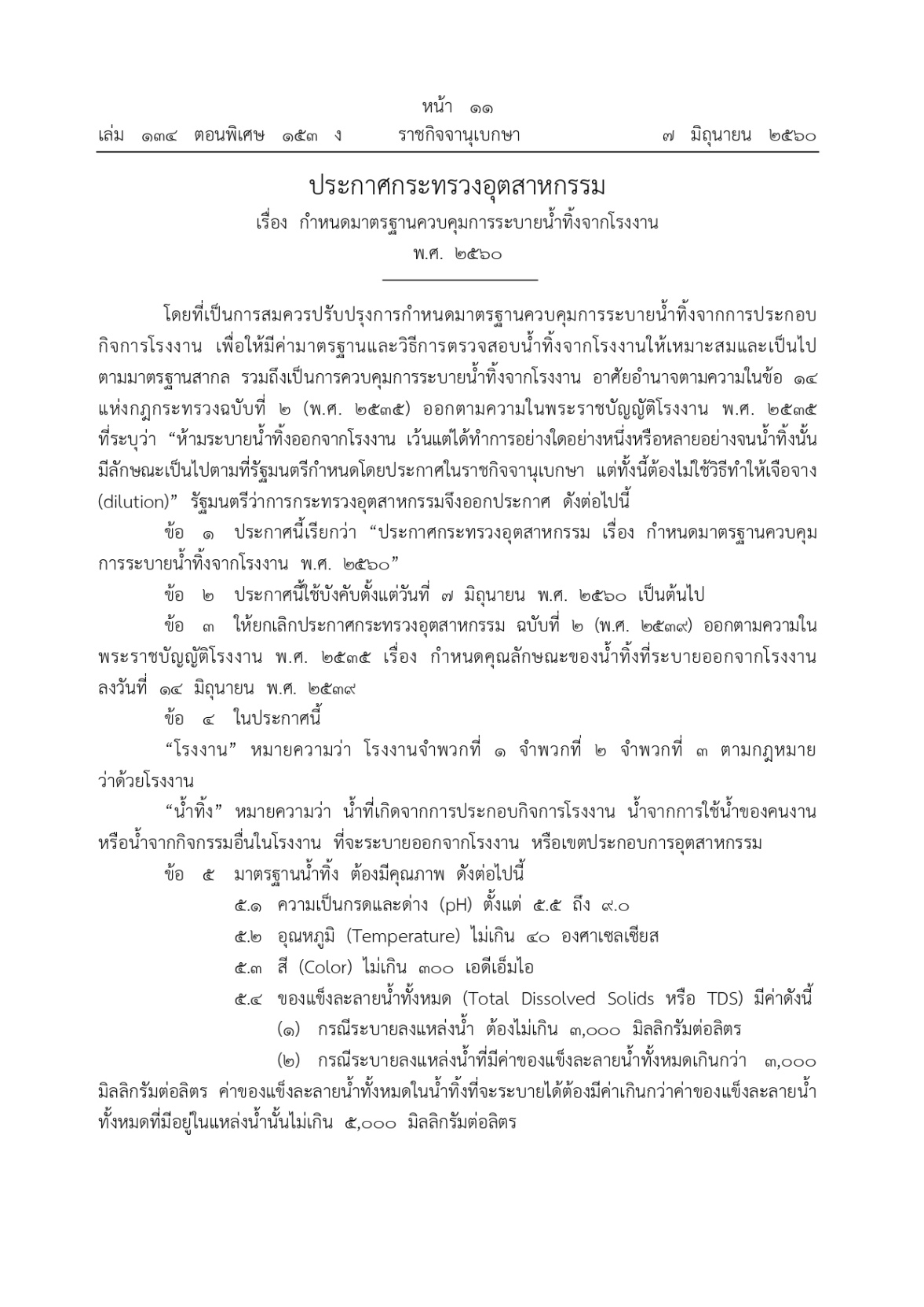
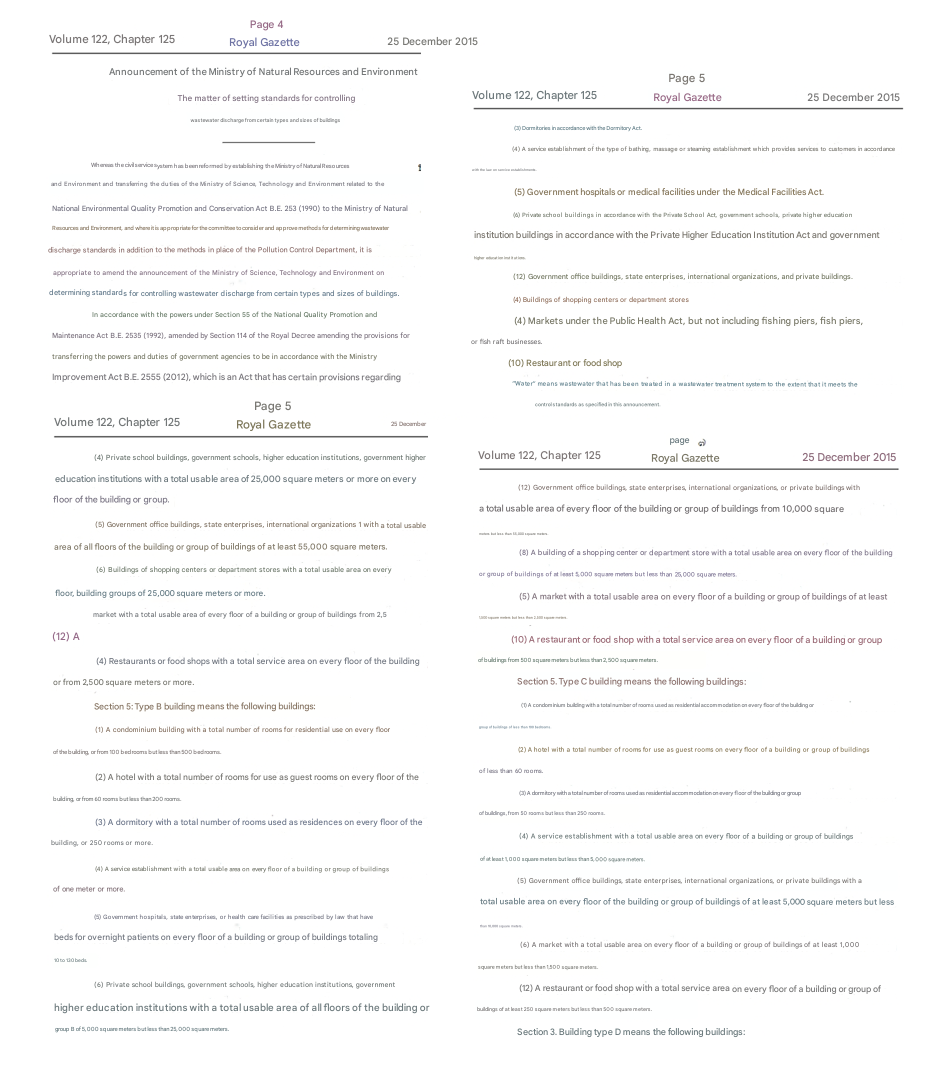
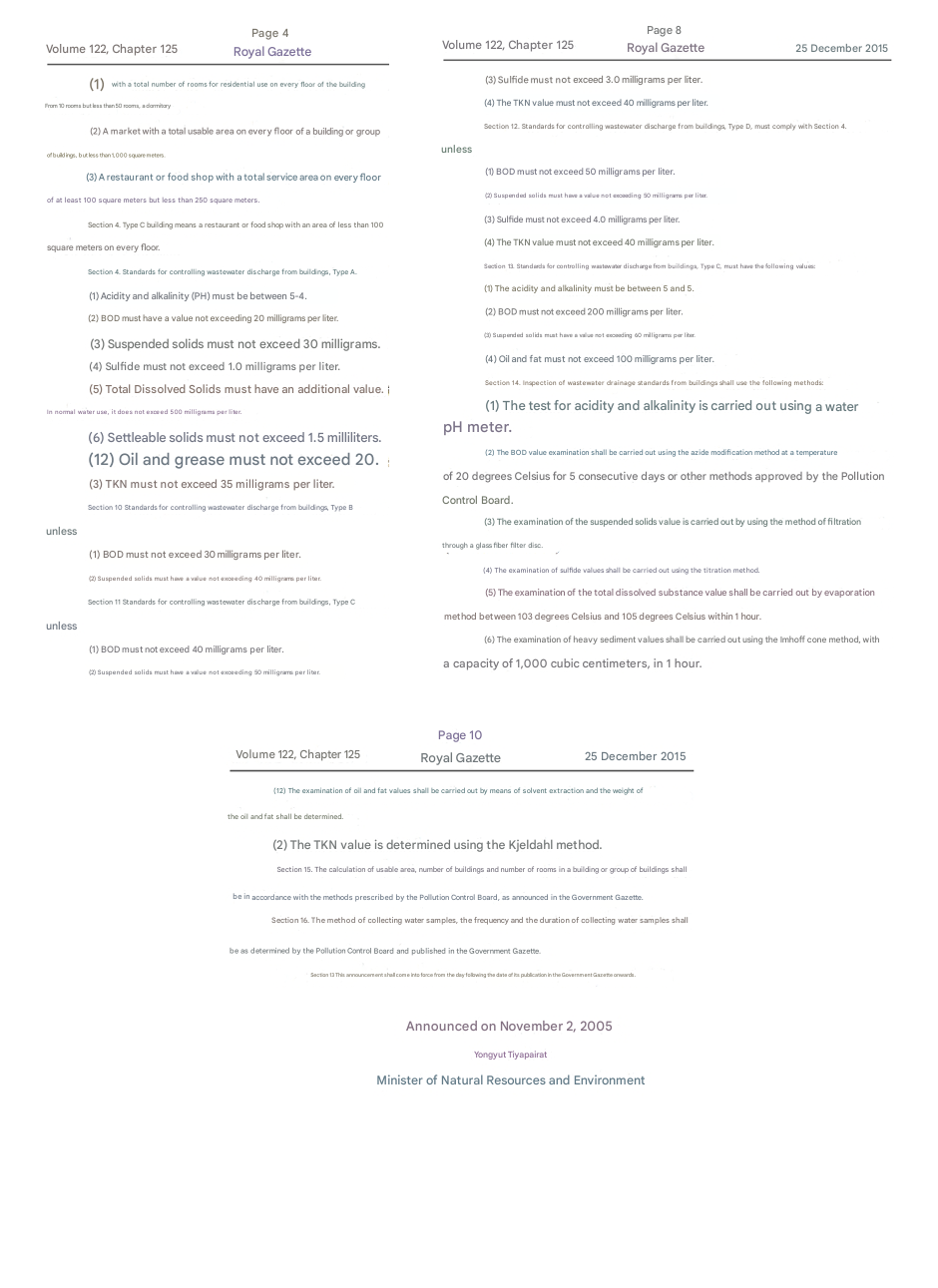
The original evidence below includes the 2024 Ministry of Natural Resources and Environment notification on wastewater from specified building types and sizes, and the 2017 Ministry of Industry notification on factory effluent. These are different regulatory categories. Their original texts and table values are preserved without treating a single set of limits as applicable to every discharge category. The Pollution Control Department’s regional office published the 2024 building notification on 24 July 2025.

Building effluent
Ministry of Natural Resources and Environment · B.E. 2567 (2024)
Factory effluent
Ministry of Industry · B.E. 2560 (2017)

Parameters in the original institutional account

KMUTT conducts regular monitoring of treated water quality before it is discharged into public water sources. Key parameters measured include pH, suspended solids (SS), biochemical oxygen demand (BOD), total Kjeldahl nitrogen (TKN), chemical oxygen demand (COD), and levels of fat, oil, and grease. These parameters are measured in compliance with standards set by the Ministry of Natural Resources and Environment for wastewater discharge from specific types and sizes of buildings.

In addition, heavy metals such as arsenic, mercury, cadmium, and chromium are also being tested, which are highly hazardous metals that cause severe environmental impacts if released into water sources without standard treatment.

This is because these heavy metals cannot naturally decompose and have the potential to accumulate in the environment, including living things, in the long term. The release of heavy metals exceeding the specified standards may cause harm to human and animal health.

Therefore, it is necessary to monitor and control the number of heavy metals contaminated in the university’s wastewater under the standards set by the Ministry of Industry to prevent contamination and long-term impacts on the ecosystem.

The following values are retained from the supplied institutional standard-value table. They are reference values, not measured concentrations; they are not presented as one universal set of legal limits for all discharge categories.

ParametersStandard value
pH5 – 9
Suspended solids (SS)30 mg/L
Biochemical oxygen demand (BOD)20 mg/L
Total Kjeldahl nitrogen (TKN)35mg/L
Chemical oxygen demand (COD)120 mg/L
Fat, Oil, and Grease20 mg/L
Arsenic0.25 mg/L
Mercury0.005 mg/L
Cadmium0.03 mg/L
Chromium0.25 mg/L

Wastewater standards knowledge exchange · 2026

The Foundation for the Development of KMUTT held a wastewater-treatment discussion on 8 August 2026 at Science Connect and through Zoom. Government, university and professional speakers discussed wastewater treatment and sustainable standards, supporting knowledge exchange alongside the operational monitoring programme.

Official photograph of the wastewater-treatment discussion held on 8 August 2026.
Original regulatory notices and legal text

Original regulatory attachments, shown whole: building effluent notification, B.E. 2567 (2024), Figure 1; factory effluent notification, B.E. 2560 (2017).

Sources and evidence links

2. Related information on our university having an action plan in place to reduce plastic waste on campus.

Reducing plastic at source, then recovering what remains

KMUTT plastic-reduction programme combines reusable alternatives, engagement with campus shops, student participation and collection for recycling. The complete original programme account below retains its 2015 and 2018 development history, the 2020 target, the 2021 comparison result and all original photographs. These historical values remain distinct from the separately published 2025 result.

61%Reported plastic reduction in 2025
against the 2017 baseline

Programme-reported indicator. This does not state that all single-use plastic has been eliminated.

Reduce single use items
Encourage personal cups, bottles, cloth bags and food containers; involve food outlets and convenience stores.
Provide alternatives
Refill drinking water and reusable bags support practical changes in daily campus use.
Engage new students
First Date 2025 communicated reusable cups and containers, avoidance of foam and single use packaging, and waste separation.
Recover remaining plastics
The original programme records designated collection and participation in the GC YOU Turn recovery system.
Monitor progress
The public plastic programme reports a 61% reduction in 2025 against its 2017 baseline. This is the programme’s reported indicator.

Reusable habits from the first day · July 2025

KMUTT report of First Date, held on 20 July 2025, describes Student Government working with university units to encourage new students to bring personal cups, avoid foam boxes and single use plastic containers, and choose reusable alternatives. Volunteers at disposal points guided the separation of waste that remained. This documents implementation during a university event alongside the original World Environment Day 2025 account.

Official KMUTT photograph of First Date on 20 July 2025. The event report describes reusable alternatives and waste-separation guidance.

Programme development and the original target

2015
Plastic-reduction programme and personal-mug campaign initiated
2018
Student engagement and personal-food-container initiatives
2020
Original “No BIG 4” target year; not a statement of complete achievement

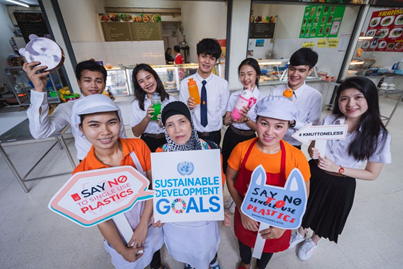
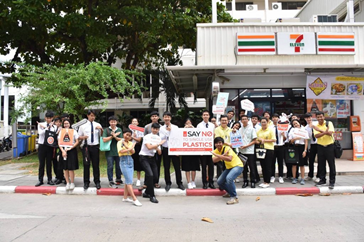
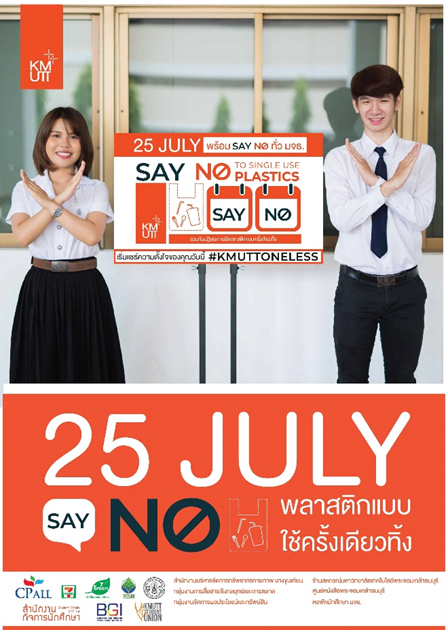
KMUTT set up a plastic reduction program in 2015 and made our goal “No BIG 4” single-use plastics usage (Plastic Bags / Plastic bottles / Plastic Straws / Plastic spoons and forks) within KMUTT by 2020. For the plastic reduction program, KMUTT initiated a campaign in 2015 that educates and promotes all students and staff to reduce plastic bottles by using a personal mug campaign. In 2018, KMUTT launched student engagement projects one of the most attractive projects is “Say No to Single Use Plastic", which fits the goal of the plastic Reduction Program in KMUTT.

  • Plastic bags
  • Plastic bottles
  • Plastic straws
  • Plastic spoons and forks

Original “Say No to Single Use Plastics” student and shop campaign photographs. The photographs are not assigned to a new 2025 or 2026 event.

Cloth bags, borrowing points and participating shops

KMUTT launches campaign to reduce the use of plastic bags by encouraging all new students to use cloth bags and reuse them. All new students will receive their own cloth bags from the university at the beginning of the academic year.

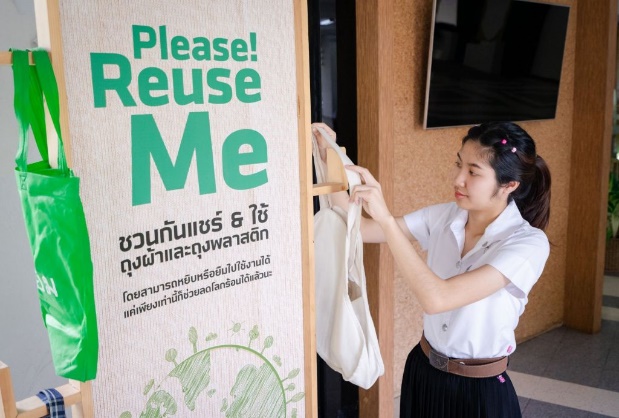
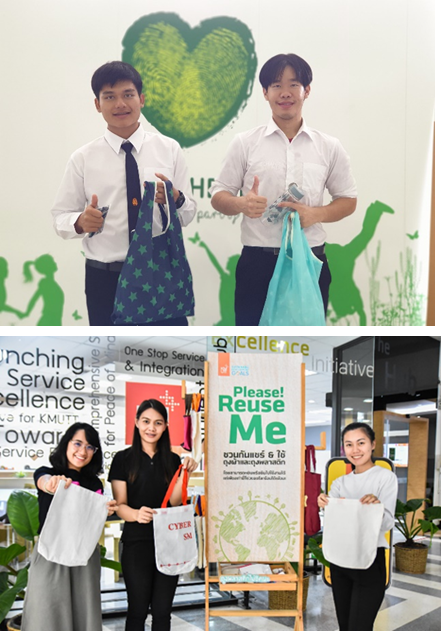
In addition, KMUTT has more than 20 “Please Reuse Me” points within the university that provide cloth bags for borrowing. In addition, KMUTT is also campaigning for all students and staff to join this campaign by using communication channels via Facebook, Line, Instagram and video clips to campaign for all students and staff to use KMUTT cloth bags at affordable prices at KMUTT bookstores.

All convenience stores such as 7-ELEVEN, Amazon and D’ORO coffee shops, bookstores, cafeterias and food centers within KMUTT have joined this campaign.

In addition, the KMUTT Student Council is campaigning for all students at KMUTT to achieve the goal of reducing plastic use by 2020.

From the above activities, the results in 2021 show that plastic use at KMUTT has decreased by 78% compared to 2017.

The reported 78% reduction is the original 2021 comparison with 2017. It remains separate from the programme’s separately published 61% figure for 2025; these records are not presented as a verified annual trend.

Original “Please Reuse Me” bag-borrowing and campaign participation photographs. The repeated source occurrence of the same campaign photograph is shown once.

World Environment Day 2025 · Beat Plastic Pollution

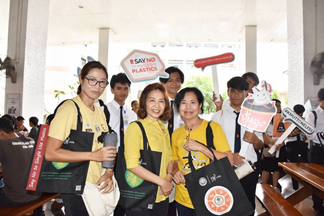
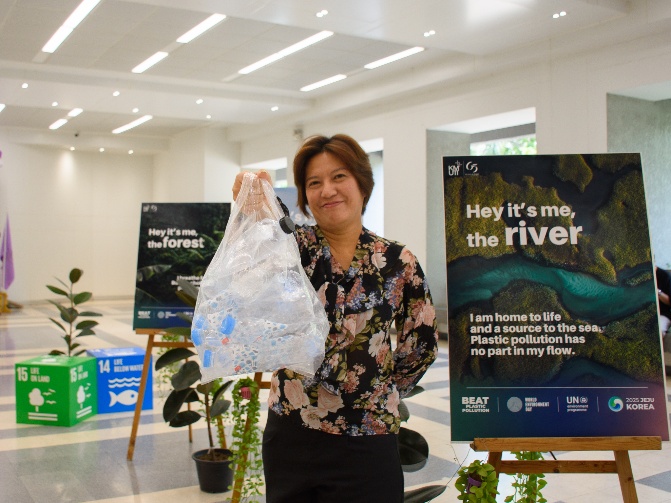
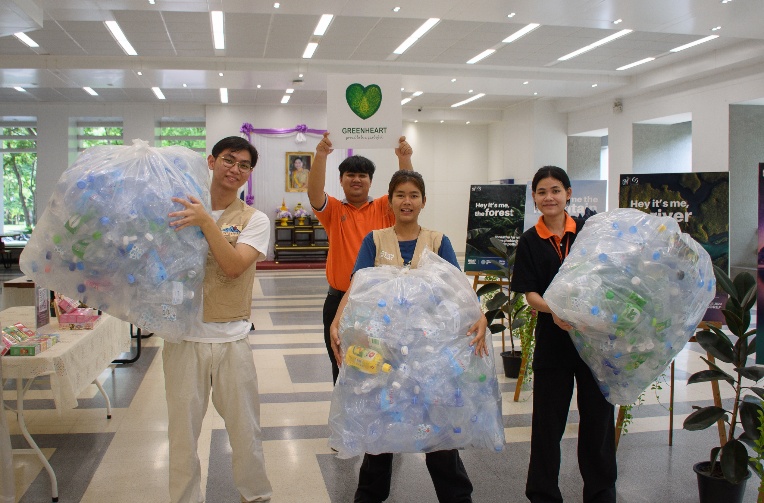
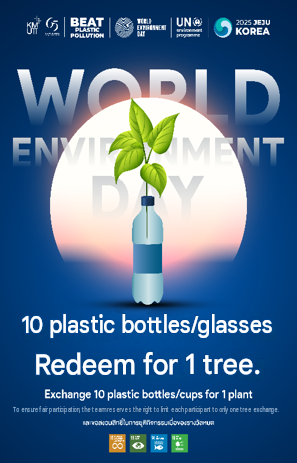
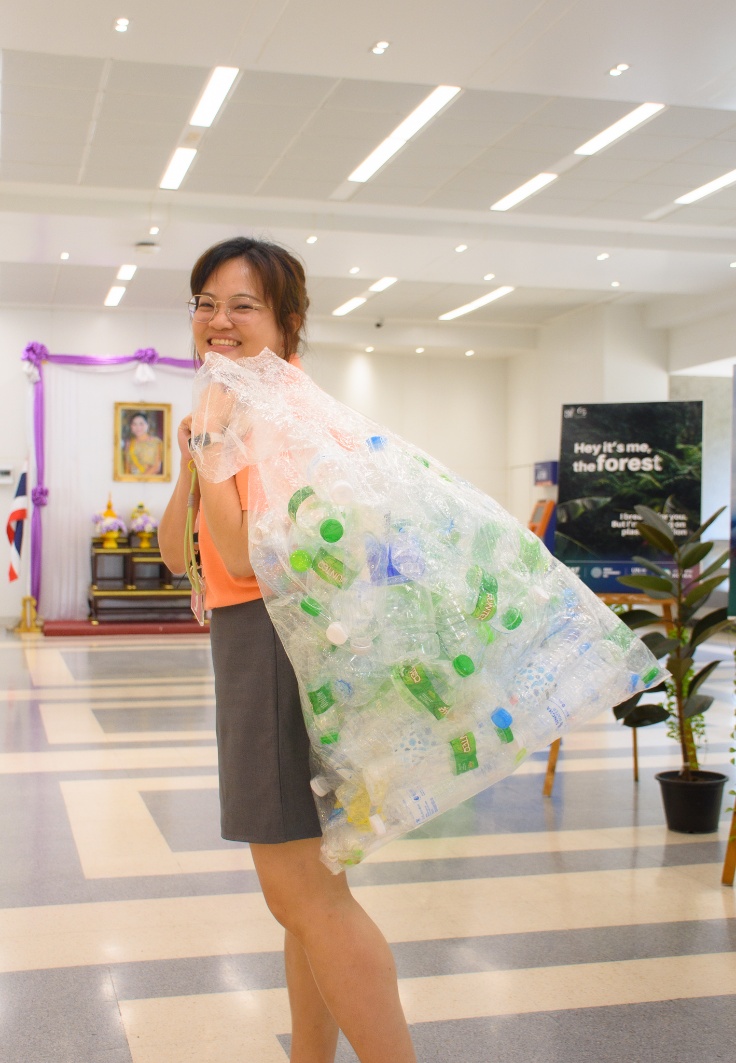
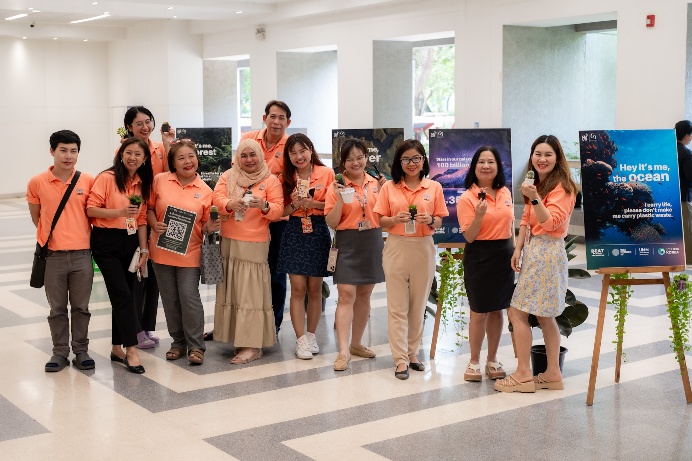
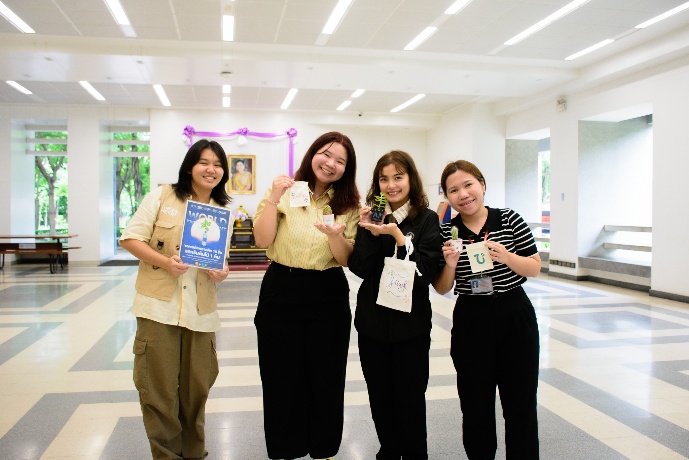
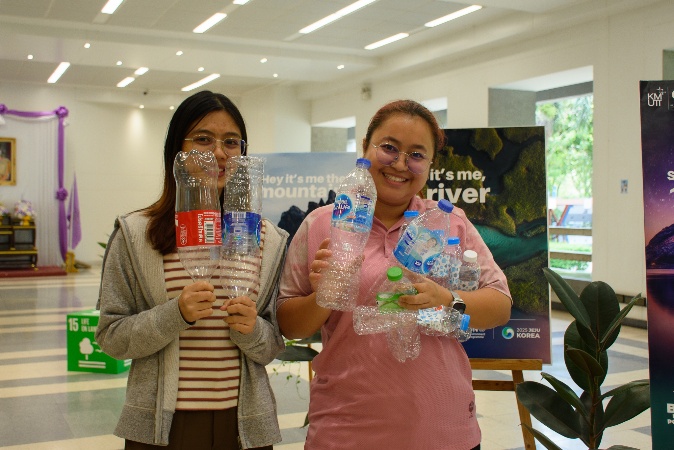
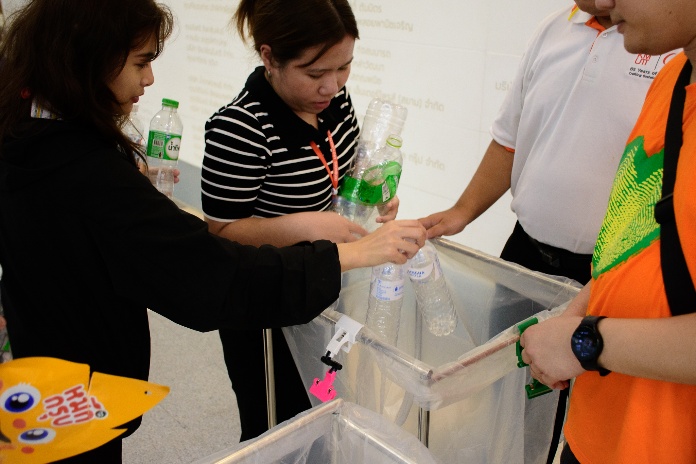
King Mongkut's University of Technology Thonburi (KMUTT), led by the Energy, Environment, Safety, and Occupational Health Management Center (EESH), organized activities for World Environment Day 2025 under the theme “Beat Plastic Pollution.” The activity supported the University’s efforts to reduce plastic waste on campus by promoting source waste separation and the reduction of single-use plastics. Members of the KMUTT community were encouraged to collect and separate single-use plastic waste, including plastic cups, plastic bottles, and plastic bags, and bring them to the activity to exchange for souvenir trees and reusable cloth bags. The activity promoted responsible waste management and encouraged the use of reusable alternatives to reduce plastic waste generated on campus.

Original World Environment Day 2025 photographs of participants bringing separated plastic bottles. The pictures illustrate collection, not an independently measured avoided-plastic total.

Personal containers, mugs and drinking-water refill

THB 5
Discount per personal food container or mug in the original participating-outlet campaign
Monthly testing
Drinking-water checks described using Central Laboratory and Food Safety Center services

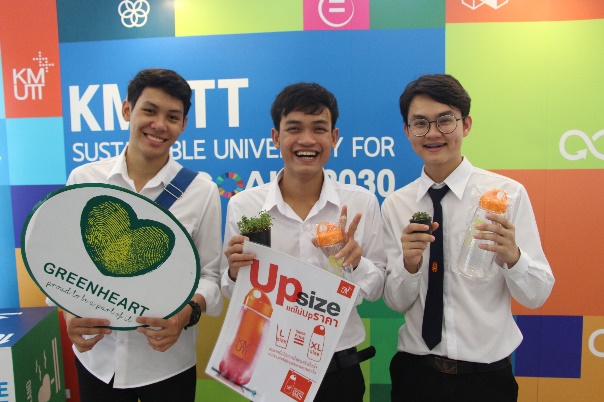
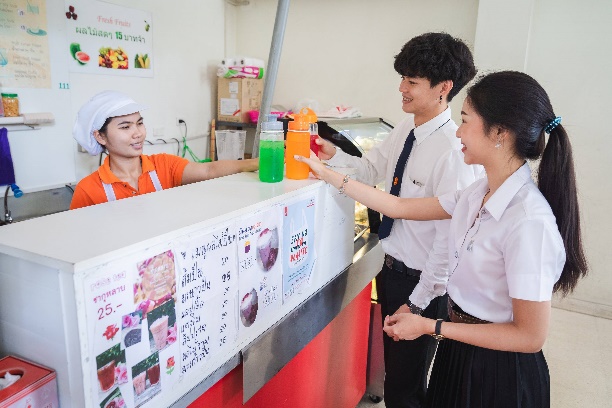
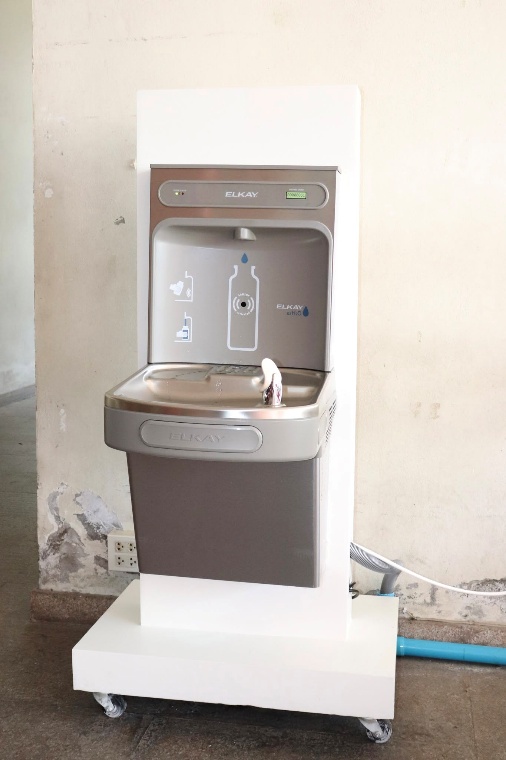
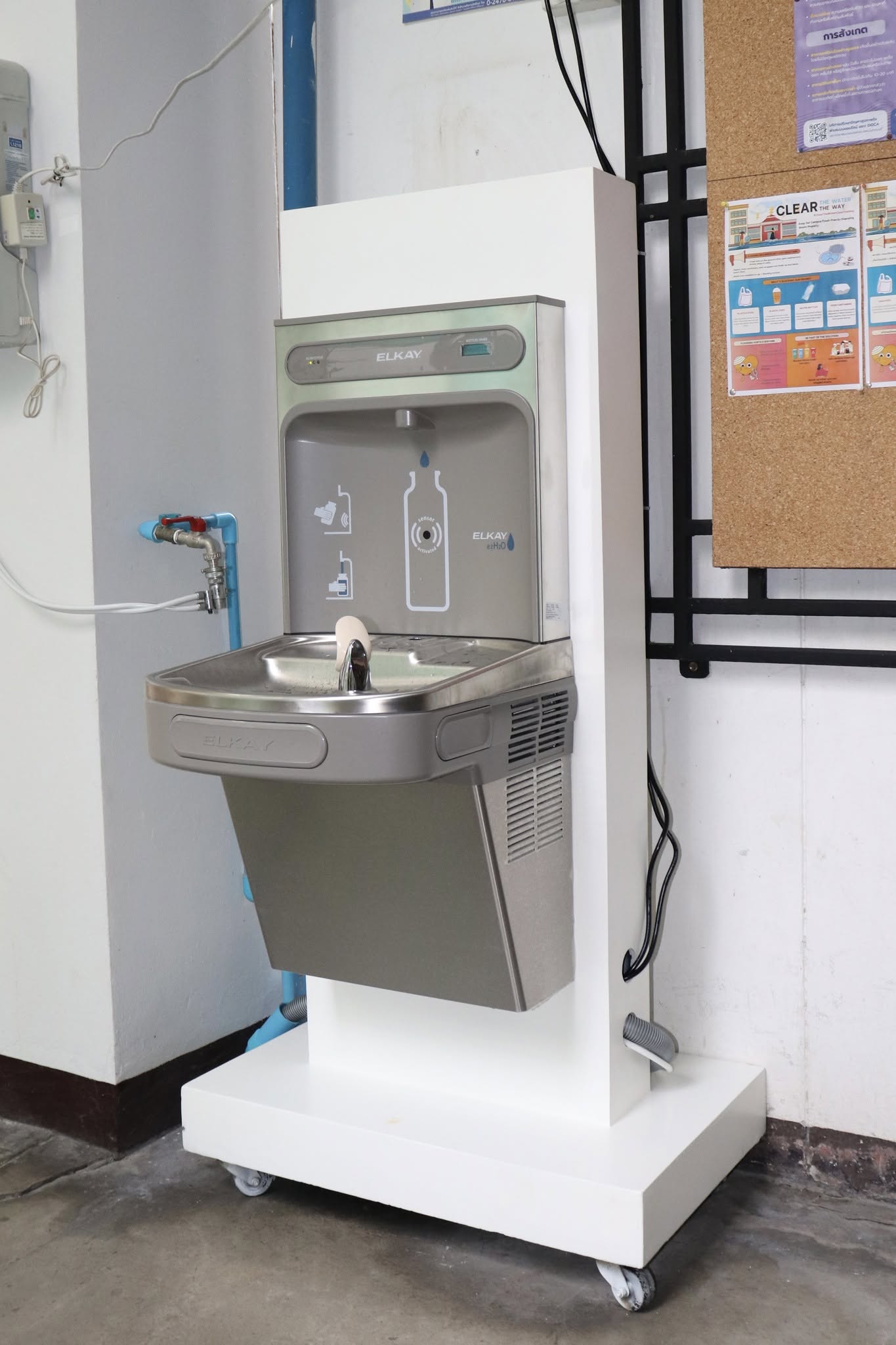
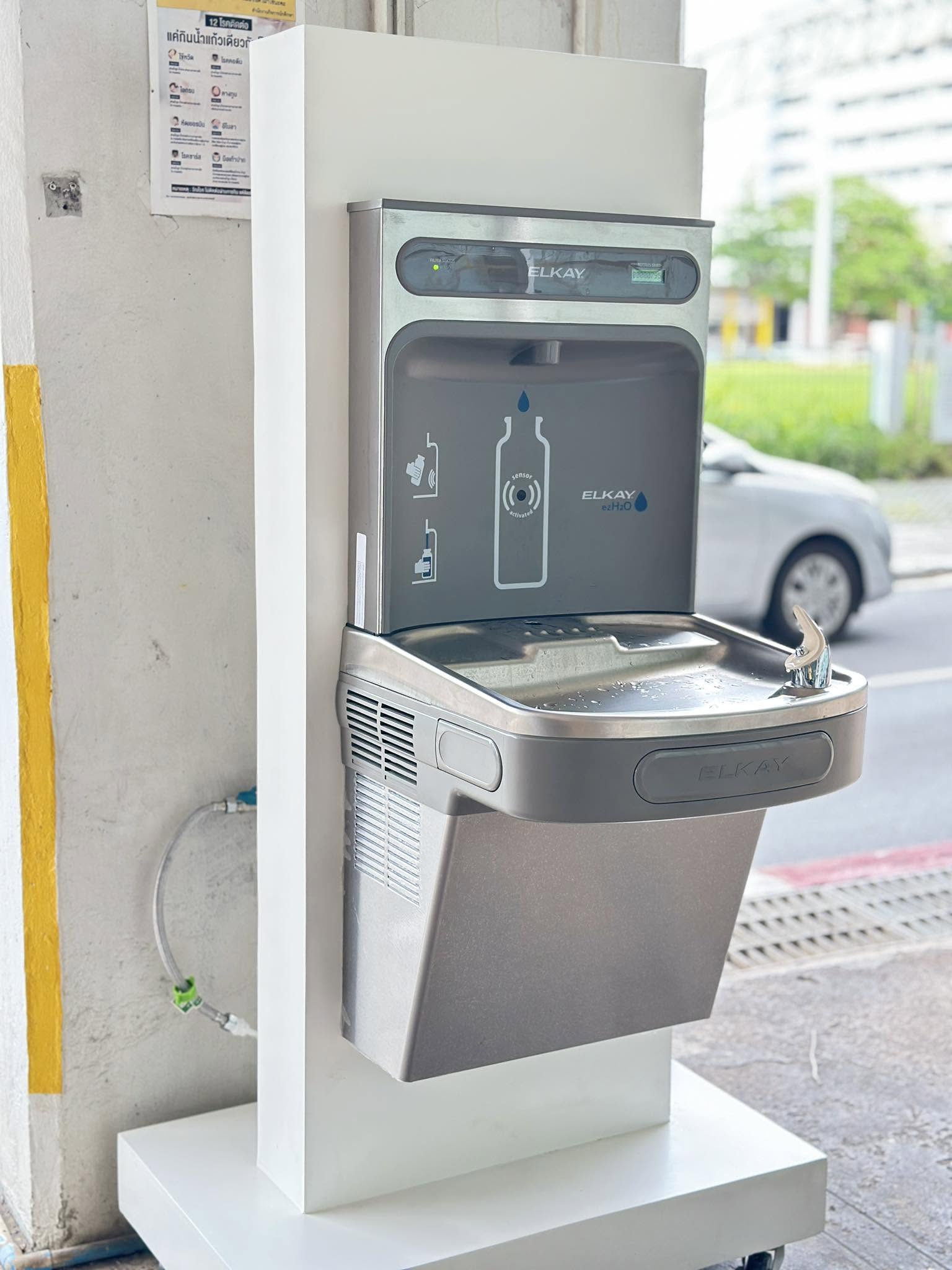
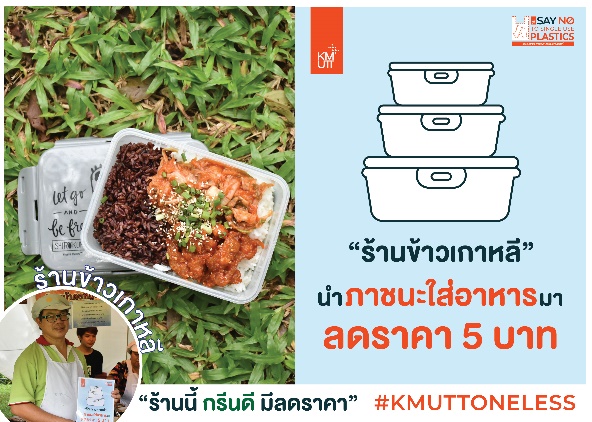
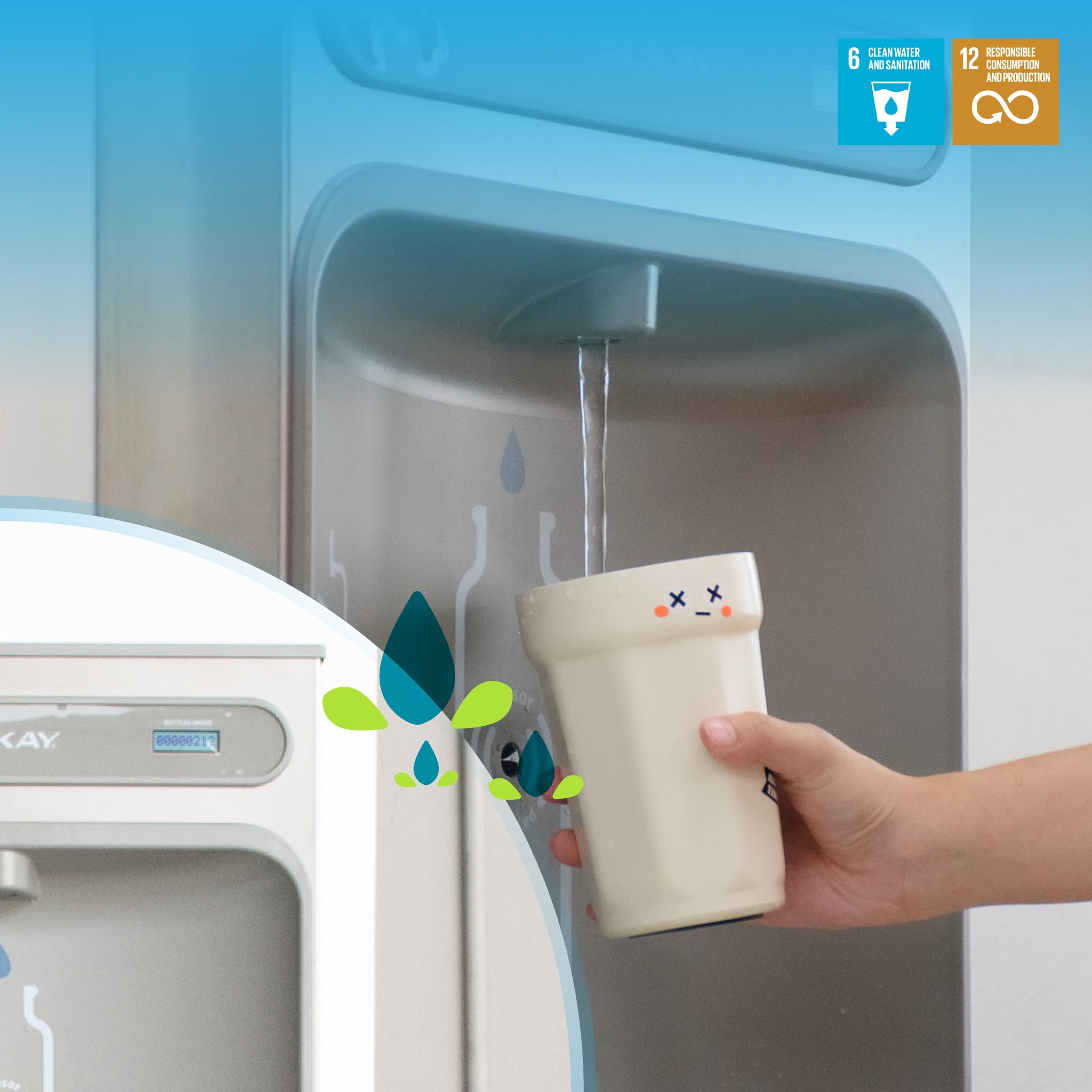
In 2018, KMUTT also promoted Personal Food Container usage for all in KMUTT, which aligns with Personal mug usage. For this campaign, all canteen, food courts, coffee shops, and convenience stores join these activities with a 5 baht discount per personal food container usage and personal mug usage. In addition, KMUTT has drinking water taps throughout the university so that students can bring their own water bottles to refill their drinking water. For the quality of drinking water, we check and test according to drinking water standards every month using the services of the Central Laboratory and the Food Safety Center, KMUTT, Faculty of Science. In addition, those who bring their own water bottles to refill their drinking water can increase the amount of drinking water from a small amount to a large amount for free!

The five-baht incentive is retained as a feature of the original campaign; this account does not independently confirm every outlet’s current offer.

Original personal-mug and reusable-cup campaign photographs from the institutional account.

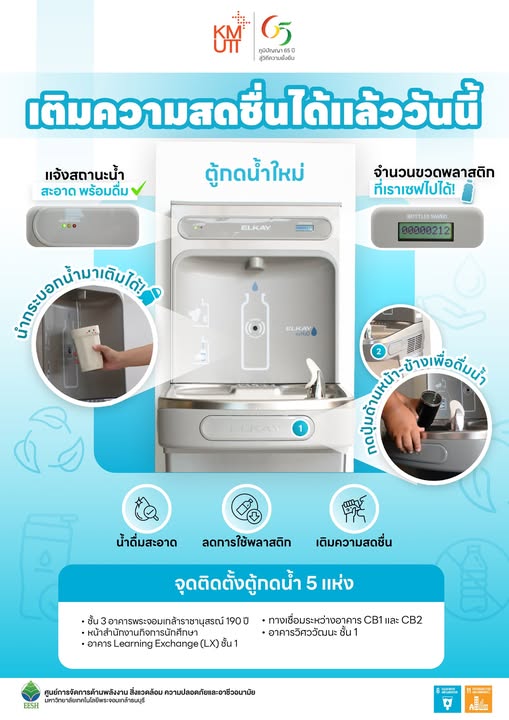
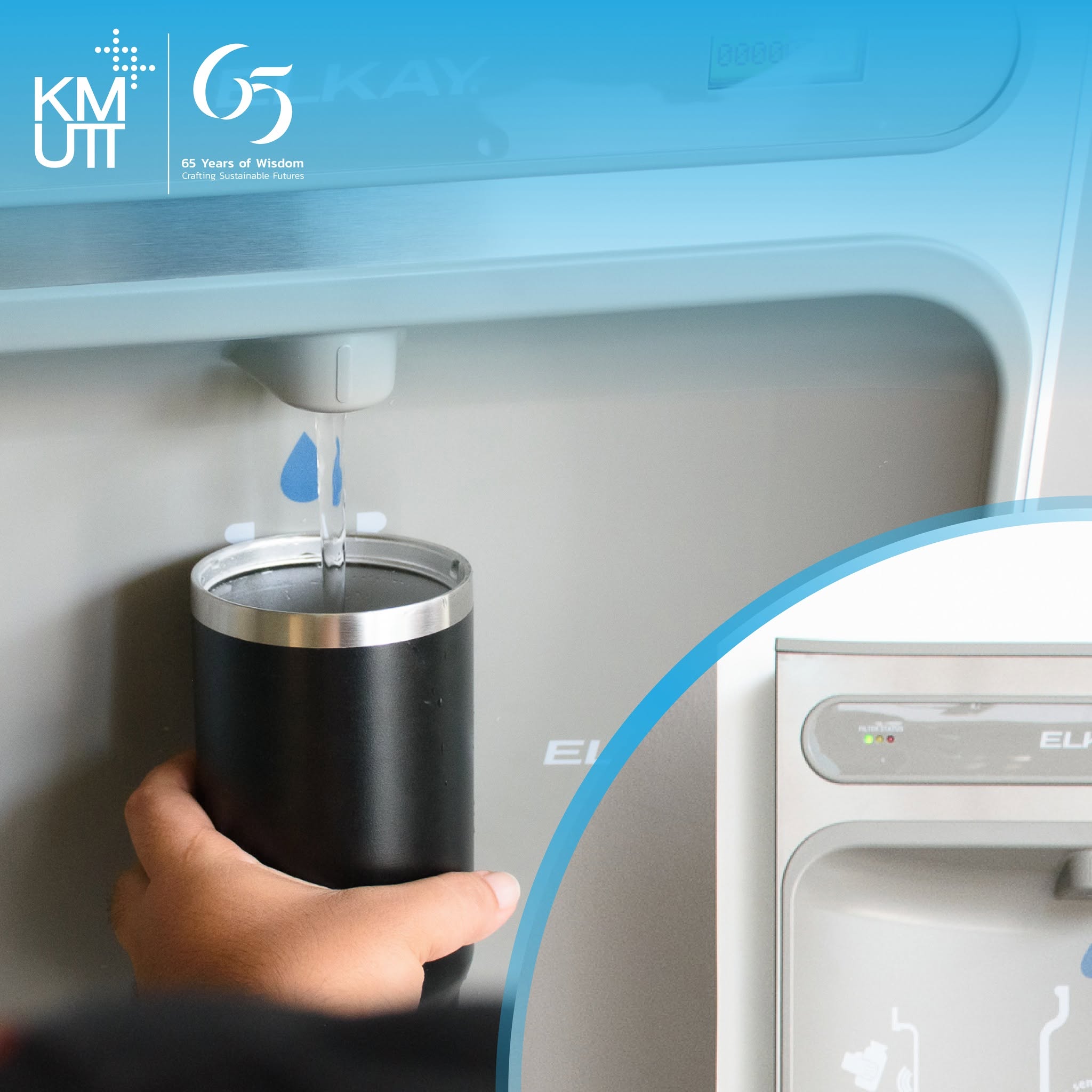
Original bottle-refill station photographs. Individual counter displays are not used as annual totals or independently verified avoided-bottle counts.

ECOLIFE · connecting shops and everyday choices

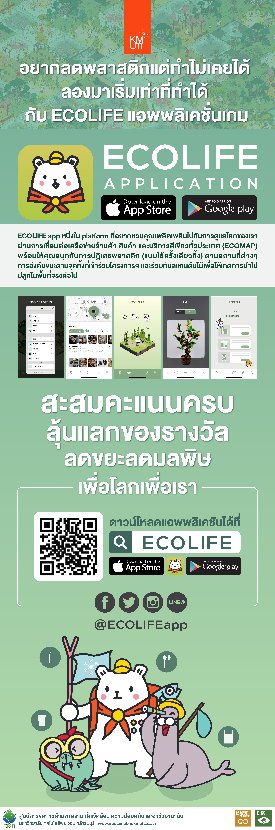
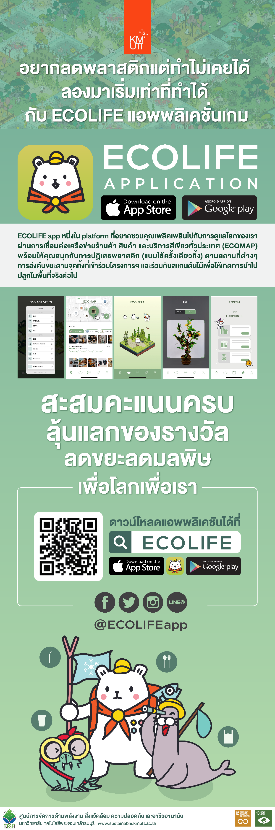
KMUTT promotes 37 shops within the university to join the ECOLIFE project.

ecolife shops and staff use the ecolife app, which is one of the platforms that wants you to have fun taking care of our world through linking the network of environmentally friendly shops, products and services nationwide (ECOMAP) to reduce the use of plastic.

Use it all up.

When you help take care of the world, we have ECOPOINTs available to redeem starting from October 1 and will expand to other universities.

The 37-shop figure is the count in the original account. “October 1” has no year in that account, and the planned expansion is retained as a plan.

Original participating food-outlet photographs accompanying the ECOLIFE programme account.

GC YOU Turn · collection to material recovery

KMUTT is one of the participants in the GC YOU Turn Platform project, which is a platform that brings used plastics back into the waste management process systematically and has digital storage data.

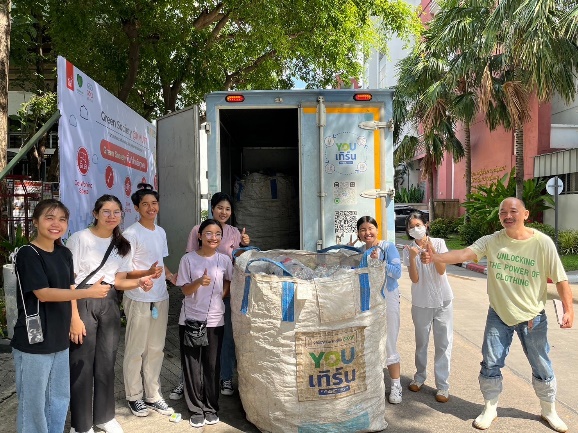
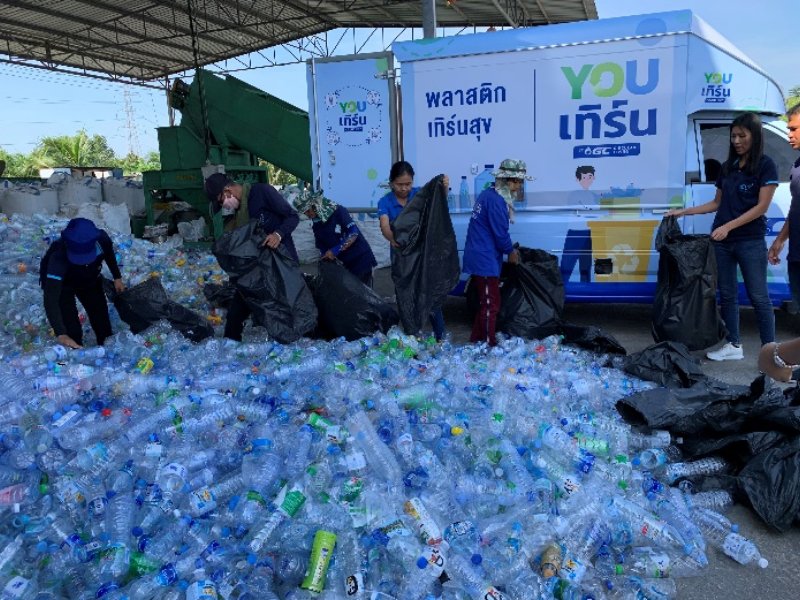
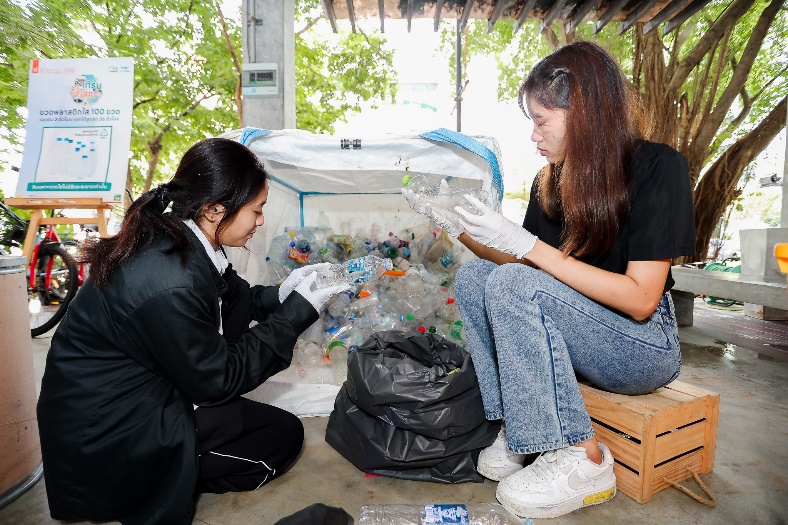
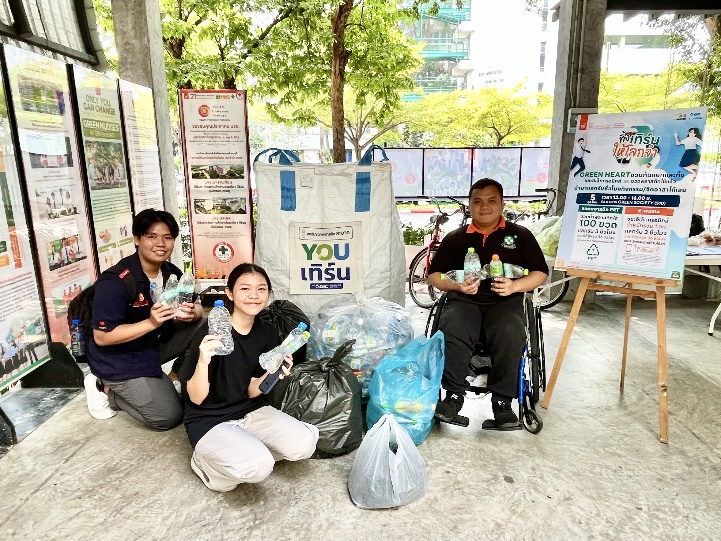
KMUTT has become a collection point for used plastic bottles. Students interested in joining this activity brought plastic bottles to be collected and sent. Waiting for GC YOU to pick up the plastic bottles and take them to the plastic waste separation center.

The PET and HDPE plastics will be sent to the ENVICCO factory. To process recycled plastic pellets that meet standards and are ready to forward them to add value to various products.

Plastic collected through GC YOU Turn will be considered for reducing greenhouse gas emissions.

  1. Collect used plastic bottles at KMUTT
  2. Send collected plastics through the GC YOU Turn separation system
  3. Send PET and HDPE to ENVICCO for processing into recycled plastic pellets

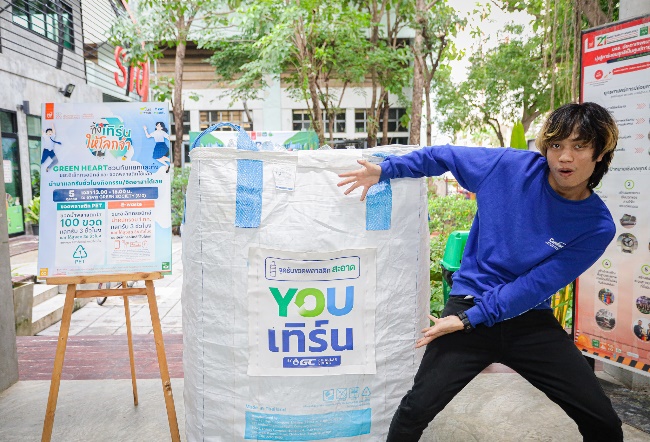
Original GC YOU Turn collection and transport photographs. Quantities are not inferred from the visible bags or bottles.

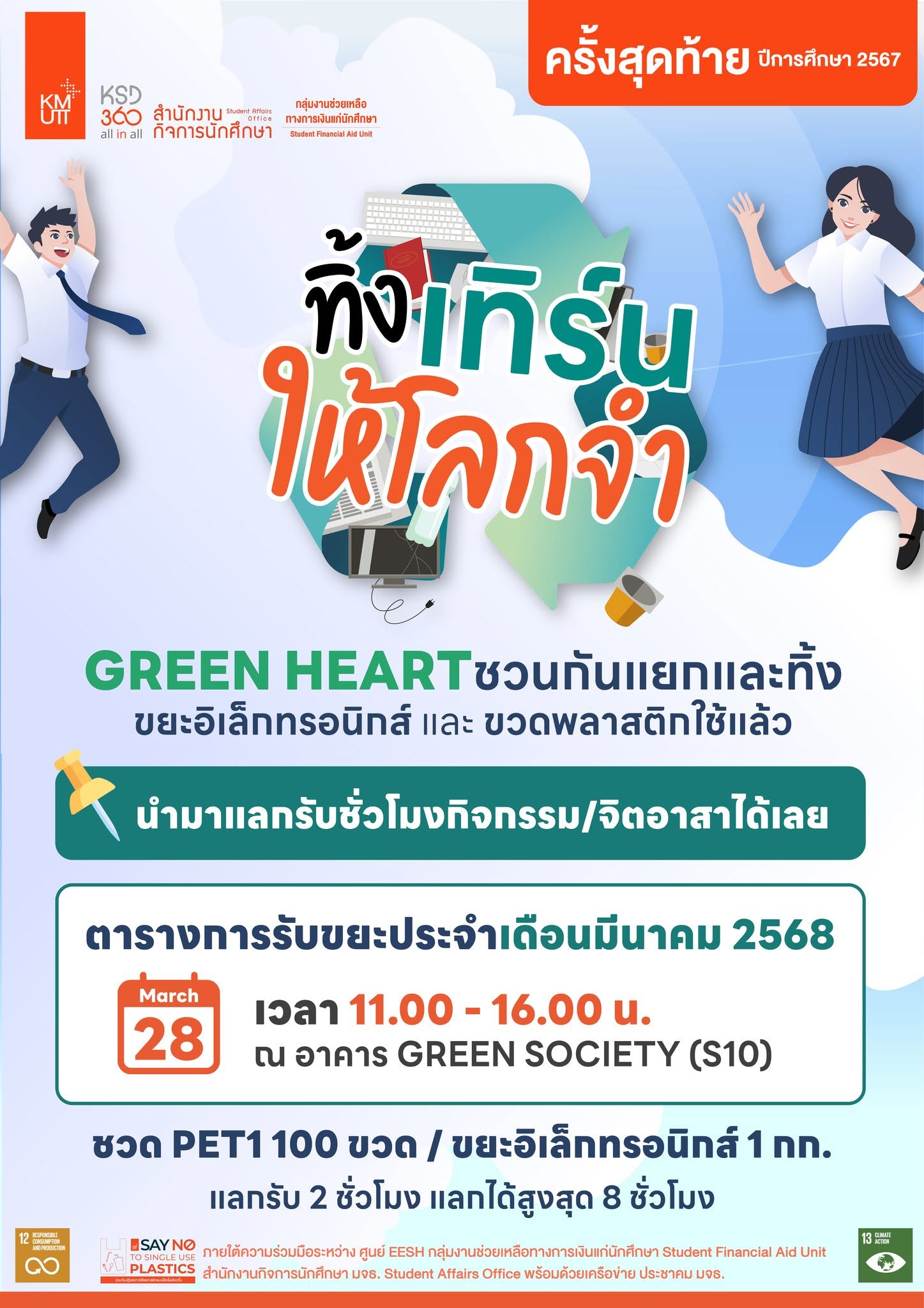
Collection invitation · 28 March 2025

28 March 2025
11:00–16:00 · Green Society Building (S10)
100 PET 1 bottles or 1 kg of e-waste
Advertised exchange for 2 activity/volunteer hours
8 hours maximum
Advertised activity-credit cap; not an attendance or collected-waste result

The original poster retains its academic-year 2567 label. Its March 2568 collection date is 28 March 2025; the invitation and credit conditions are not evidence of completed collection totals.

Additional campaign artwork and photographs

Original reduction and bag-reuse campaign artwork

Original single-use-plastic campaign artwork and cloth-bag reuse composite. Original slogans and colours are retained.

World Environment Day 2025 · notice and collection

Original World Environment Day 2025 exchange notice and collection photograph. The notice invites participants to exchange 10 plastic bottles or cups for one plant; this is an advertised exchange condition, not a reported tree or bottle total.

Additional original World Environment Day 2025 participation and exchange photographs.

Reusable-container and drinking-water campaign material

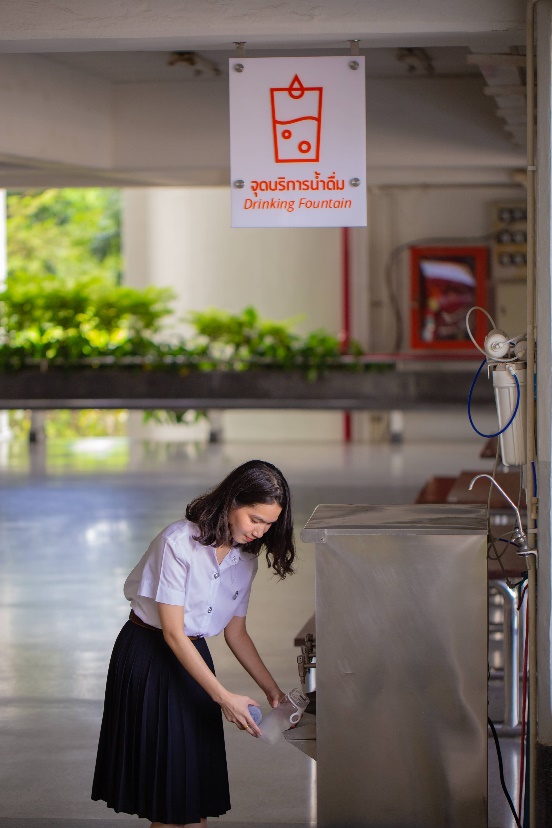
Original five-baht reusable-container promotion, personal-mug campaign artwork and drinking-water fountain photograph.

Original refill-station invitation and personal-container promotional artwork. “Refill your bottle” is the invitation; equipment counters are not treated as verified annual results.

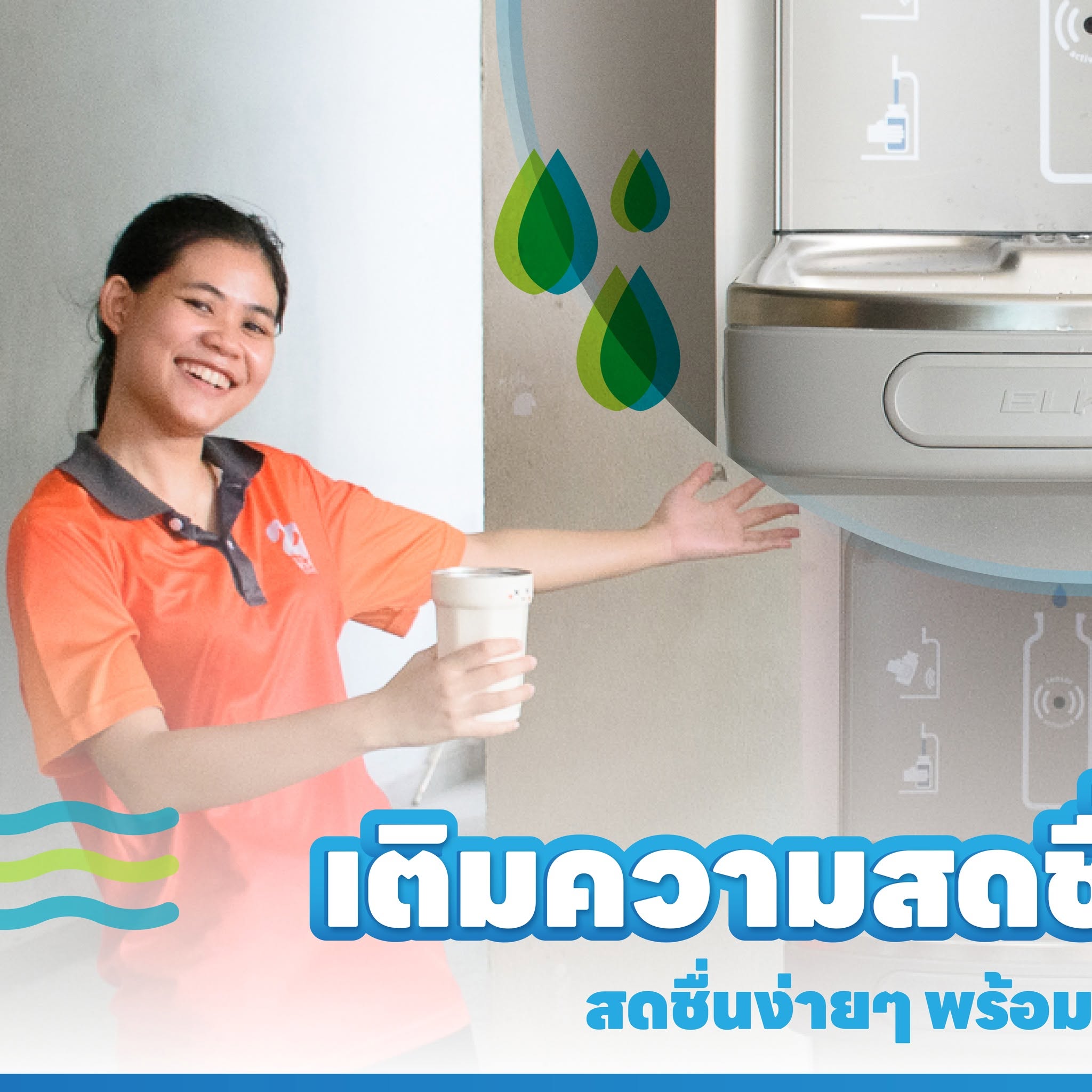
Original square bottle-refill campaign artwork, retained whole in its original colours.

ECOLIFE campaign banners and vendor engagement

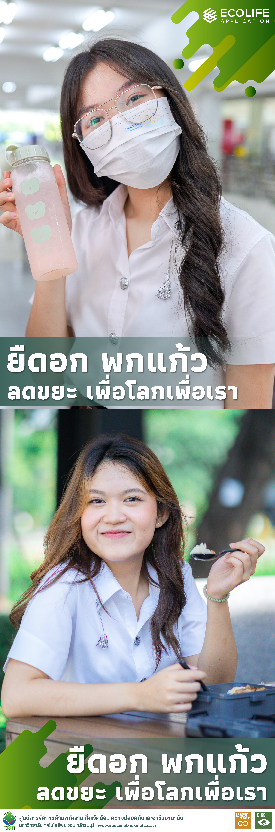
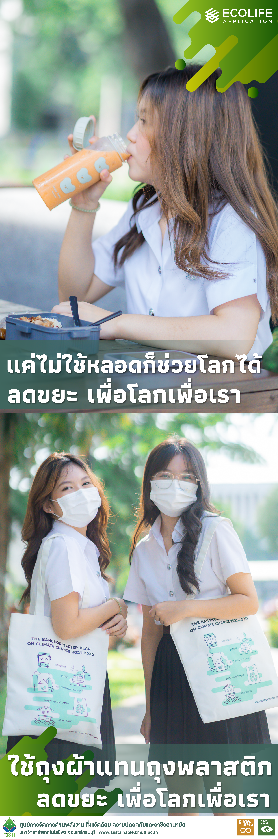
Original ECOLIFE banners encourage reusable cups, avoiding straws, cloth bags, app participation and reward points. Similar-looking source banners remain separate original files; their content is not counted as additional activities.

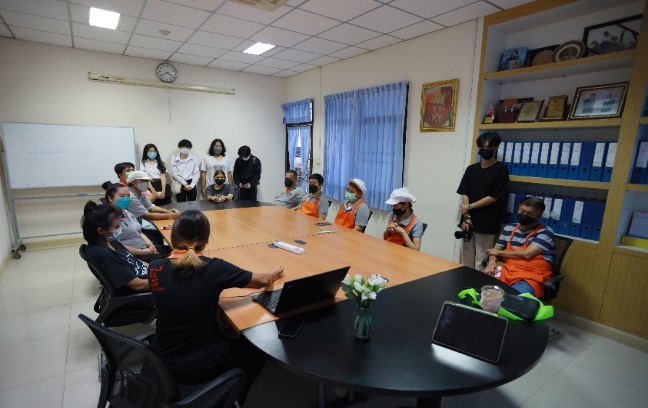
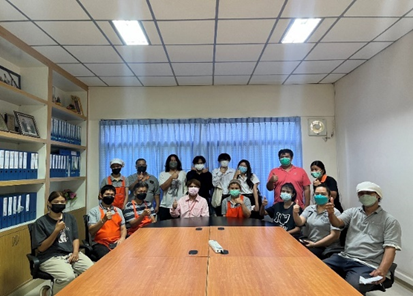
Original vendor-engagement meeting photographs accompanying the ECOLIFE account. The source does not supply meeting dates.

GC YOU Turn collection invitation and participation

Original collection invitation for 28 March 2025, 11:00–16:00, Green Society Building (S10). Its date and activity-credit conditions appear as readable English above.

Additional original GC YOU Turn sorting and collection photographs. No material weight, participant total or emissions saving is inferred.

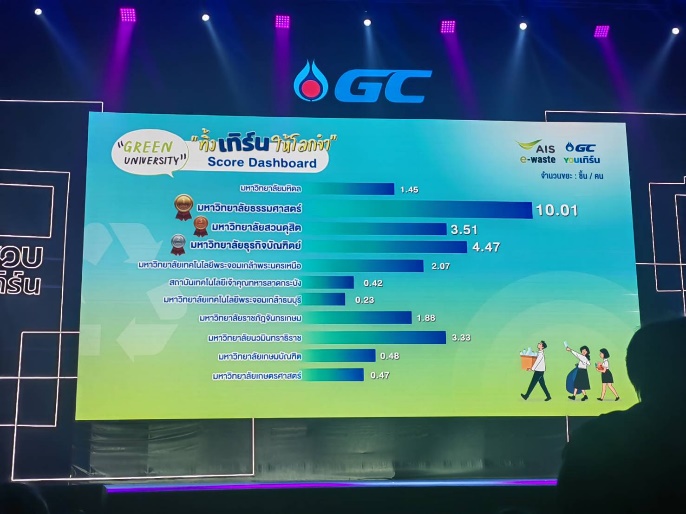
Original GC event photograph showing a university scoreboard. The photograph does not establish a reporting period or a sufficiently defined measurement basis for an annual KMUTT plastics result.
Sources and evidence links

3. Related information on our university having a policy on preventing and reducing marine pollution of all kinds, in particular from land-based activities.

Protecting receiving waters through university policy

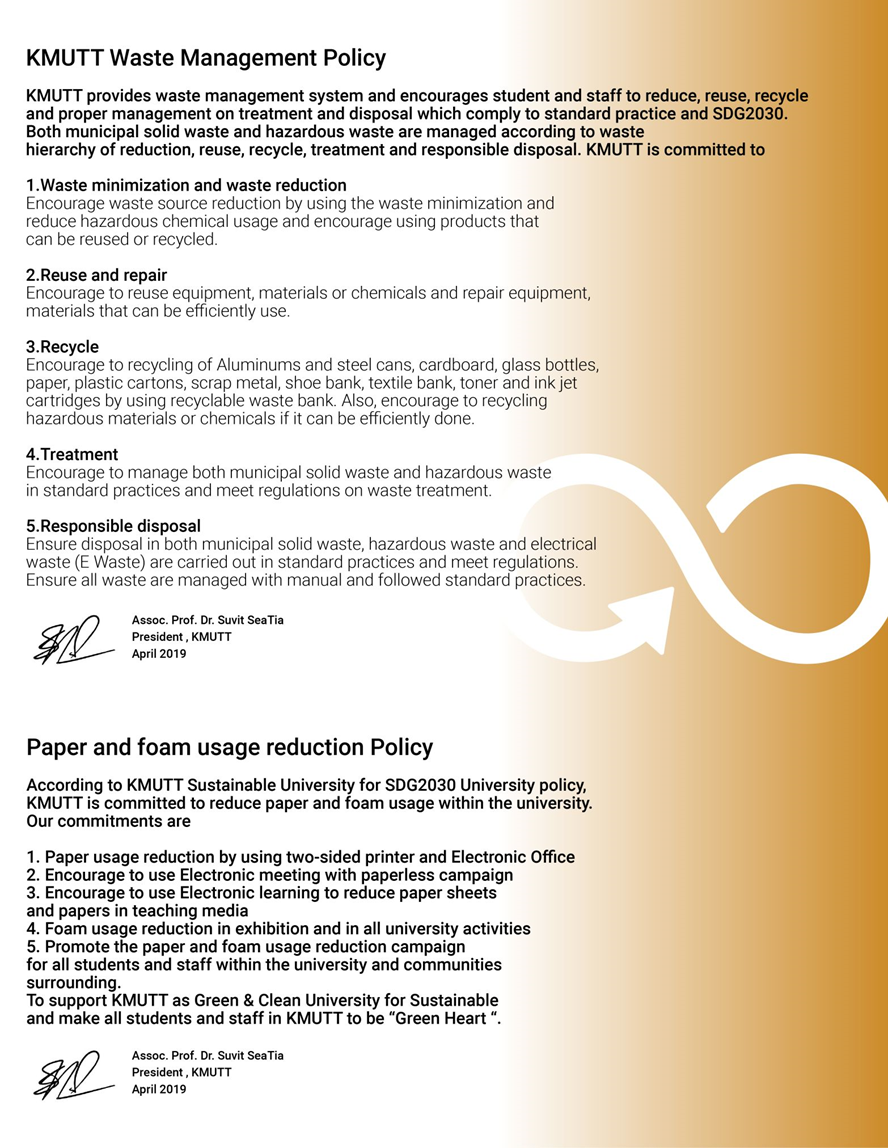
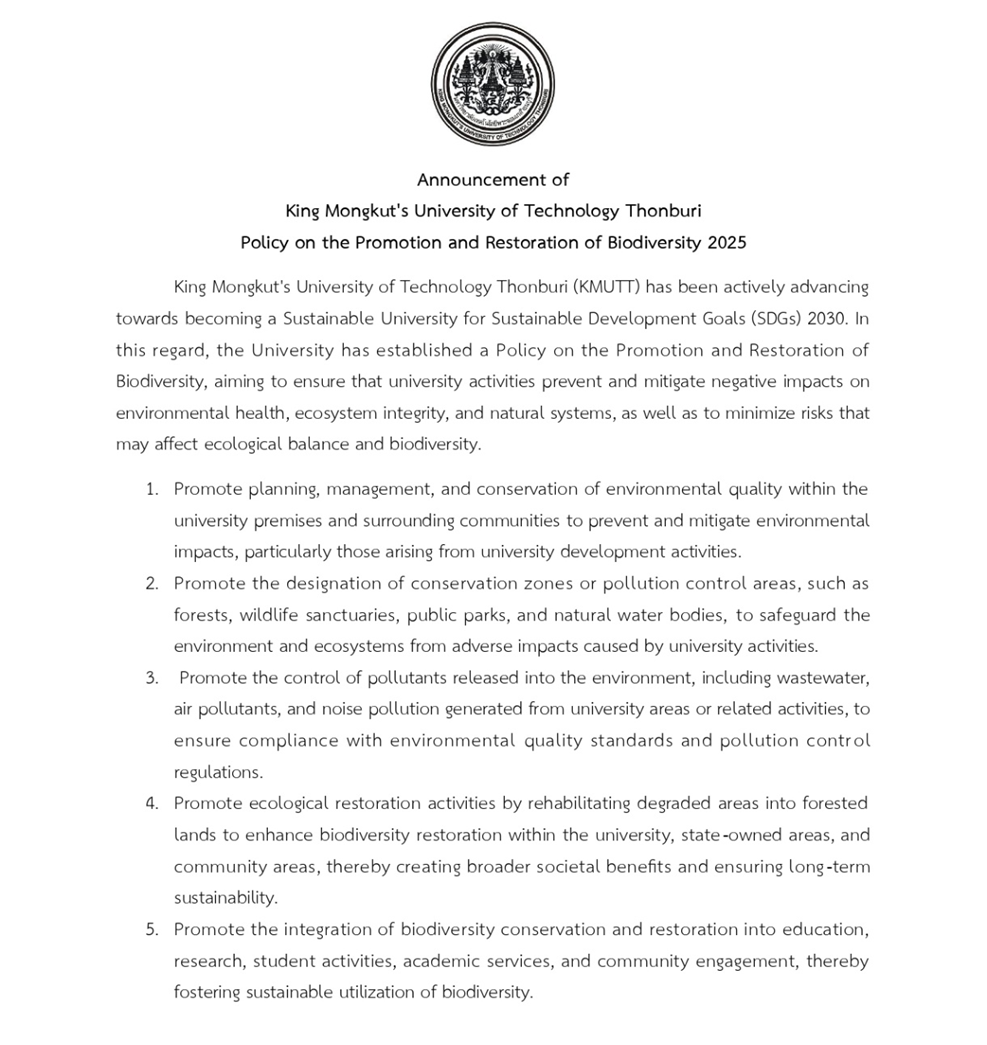
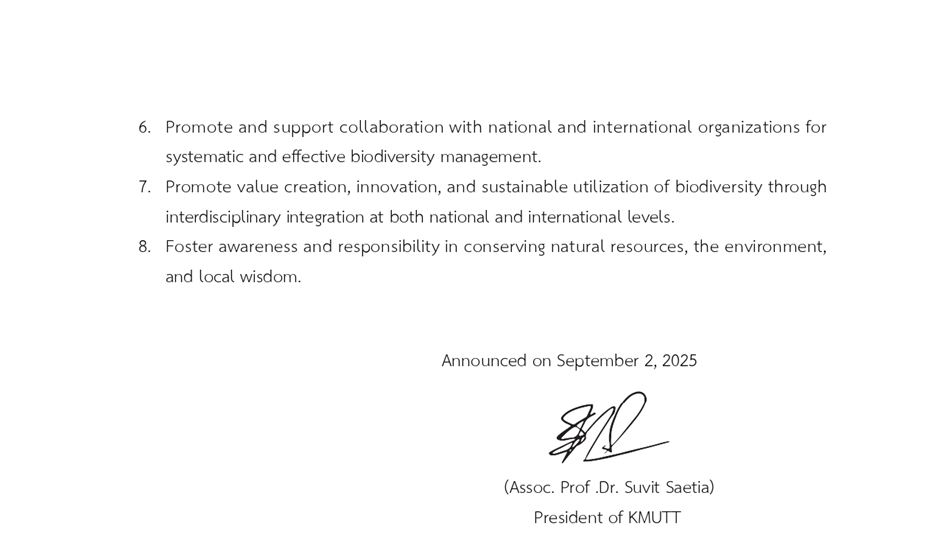
KMUTT Policy on the Promotion and Restoration of Biodiversity, announced by the President on 2 September 2025, requires attention to environmental quality within university premises and surrounding communities. Clause 2 supports protection of natural water bodies and other conservation areas against impacts from university activities. Clause 3 addresses pollutants released by university and related activities, expressly including wastewater, and calls for compliance with environmental standards and pollution controls.

These commitments connect university land-based operations with the protection of receiving waters. They complement the original plastic, solid-waste and hazardous-waste measures reproduced below. The historical policy dates in the original account remain unchanged.

Clause 2 · Natural water bodies
Protect natural water bodies and other conservation areas from impacts of university activities
Clause 3 · Pollution controls
Address pollutants, expressly including wastewater, from university and related activities through environmental standards and pollution controls

Source controls for three pollution pathways

Wastewater entering receiving waters
Monthly effluent monitoring and laboratory quality review, with published 2025 results. The selected January results are pH 7.42, suspended solids 27 mg/L and BOD 19 mg/L.
Accidental chemical release
Practical training on chemical storage, personal protective equipment, spill kits, spill recovery and emergency response, delivered on 12 June 2026.
Plastic and other solid waste
Original university measures address reduction, reuse, recycling, treatment and responsible disposal, together with communication about marine litter.

Chemical spill preparedness · June 2026

12 June 2026
Training date; report published on 15 June 2026
42 participants
Staff, researchers, laboratory-network members and safety personnel
UX 702 · Bangmod
Training venue

EESH’s hands-on chemical and hazardous-waste course at UX 702, Bangmod, involved 42 staff, researchers, laboratory-network members and safety personnel on 12 June 2026. The exercise developed the practical ability to contain and recover spilled chemicals before they spread through the environment. It documents preparedness; the training photograph does not depict an actual pollution incident or a measured reduction in marine pollutant loads.

Practice in recovering simulated spilled material during EESH training on 12 June 2026. Official KMUTT photograph; this is an exercise, not an actual pollution incident.

Single-use plastics · the 2018 measures

Announced 3 July 2018 · Plastic-bag measure starts 25 July 2018. The original announcement date and implementation date remain distinct.

  1. Request that all shop owners, convenience stores, and food shops in the university in all educational areas stop providing plastic bags, except for ready-to-eat cooked food, starting from July 25, 2018 onwards.
  2. Request that all shop owners, convenience stores, and food shops in the university in all educational areas not provide plastic spoons, forks, and straws if they have not received a request from customers or have not asked customers first.
  3. Request that all units in the university publicize, campaign, remind, and instill awareness, as well as create additional related announcements if necessary, so that everyone in the unit can reduce and stop using single-use plastics, and strictly comply with the law for sustainable health and the environment.

Waste management · five commitments

KMUTT provides waste management system and encourages student and staff to reduce, reuse, recycle and proper management on treatment and disposal which comply to standard practice and SDG2030. Both municipal solid waste and hazardous waste are managed according to waste hierarchy of reduction, reuse, recycle, treatment and responsible disposal. KMUTT is committed to

  1. Waste minimization and waste reduction:Encourage waste source reduction by using the waste minimization and reduce hazardous chemical usage and encourage using products that can be reused or recycled.
  2. Reuse and repair:Encourage to reuse equipment, materials or chemicals and repair equipment, materials that can be efficiently use.
  3. Recycle:Encourage to recycling of Aluminums and steel cans, cardboard, glass bottles, paper, plastic cartons, scrap metal, shoe bank, textile bank, toner and ink jet cartridges by using recyclable waste bank. Also, encourage to recycling hazardous materials or chemicals if it can be efficiently done.
  4. Treatment:Encourage to manage both municipal solid waste and hazardous waste in standard practices and meet regulations on waste treatment.
  5. Responsible disposal:Ensure disposal in both municipal solid waste, hazardous waste and electrical waste (E Waste) are carried out in standard practices and meet regulations. Ensure all waste are managed with manual and followed standard practices.

Reducing paper and foam use

According to KMUTT Sustainable University for SDG2030 University policy, KMUTT is committed to reduce paper and foam usage within the university. Our commitments are

  1. Paper usage reduction by using two-sided printer and Electronic Office
  2. Encourage to use Electronic meeting with paperless campaign
  3. Encourage to use Electronic learning to reduce paper sheets and papers in teaching media
  4. Foam usage reduction in exhibition and in all university activities
  5. Promote the paper and foam usage reduction campaign for all students and staff within the university and communities surrounding.

To support KMUTT as Green & Clean University for Sustainable and make all students and staff in KMUTT to be "Green Heart ".

The combined original waste-management and paper/foam policy illustration is dated April 2019. It is retained in the original policy documents panel.

Making marine litter visible to new students

In addition, KMUTT has actively addressed the impact of plastic pollution on aquatic health by producing educational media and posters to inform new students about the severe consequences plastics have on marine life and ecosystems.

Plastic waste, such as bottles and bags discarded into the ocean, poses a growing threat to marine animals like fish, turtles, and seabirds, which often mistake plastics for food. Consuming these materials can block their digestive tracts, leading to malnutrition and sometimes death.

Plastics also damage aquatic habitats; when they accumulate on coral reefs, seagrasses, and along coastlines, they disrupt natural habitats and food sources for numerous marine species.

This crisis extends beyond marine life, as the degradation of ocean ecosystems ultimately impacts human health and well-being.

Reducing plastic use and promoting sustainable waste management practices are crucial steps toward preserving the environment and maintaining the health of marine ecosystems.

Original KMUTT educational artwork about plastic pollution and marine life. The original colours and slogans are retained; the supplied evidence does not specify publication dates.

Turtle poster
“Help us. We cannot breathe. We thought it was a jellyfish.”
Fish poster
“Help us. We do not want to be in this plastic bag.”
Original policy documents

Single-use plastics announcement · 3 July 2018

English reading of the original announcement’s rationale

KMUTT commits to developing energy, environmental, safety and occupational-health management to meet standards and serve as a model for communities and society. It promotes prevention of environmental pollution from single-use plastic packaging, serious environmental action and reduction of global warming, supporting a sustainable university under the SDGs 2030 and the health and well-being of the KMUTT community. Serious, continuous measures and cooperation from all sectors are required to build a system for reducing single-use plastic waste.

The announcement is signed by Assoc. Prof. Dr. Sakarindr Phumirat in his role as President at the time; the plastic-bag measure begins on 25 July 2018.

Whole original policy documents: single-use plastics announcement dated 3 July 2018; combined waste-management and paper/foam policy illustration dated April 2019. The latter appeared twice in the source and is displayed once for both policy sections.

Sources and evidence links

Supplied institutional evidence for 14.4.3. Complete original policy wording, illustrations and marine pollution education material are retained here.

14.5 MAINTAINING A LOCAL ECOSYSTEM

1. Related information on our university having a plan to minimise physical, chemical and/or biological alterations of related aquatic ecosystems.

Planning to limit alteration of local aquatic ecosystems

KMUTT biodiversity policy, announced on 2 September 2025, links development planning with protection of ecosystems on university premises and in surrounding communities. Clauses 1 and 2 address development impacts and protection of natural water bodies; clause 3 covers control of wastewater and other pollutants; clause 4 supports ecological restoration. The Nature Positive roadmap connects these commitments with baseline mapping, ecological surveys, avoidance of harm in new construction and restoration.

Physical habitat and development

Environmental planning and conservation of natural water bodies under the 2025 policy, with habitat restoration and avoidance of development impacts in the roadmap.

Chemical water quality

Monthly wastewater testing, laboratory quality review and publication of 2025 effluent results. January values include pH 7.42, suspended solids 27 mg/L and BOD 19 mg/L.

Waste handling and accidental releases

The original hazardous-waste segregation, storage and collection system is supplemented by practical EESH spill-response training on 12 June 2026 for 42 participants.

Local habitat restoration

The university’s 4 December 2025 mangrove Living Lab account documents nursery preparation and water-management adaptation in the 136-rai Samut Sakhon restoration area.

These records show planning, pollution controls and restoration practices used to limit university-related pressures. Compliance with selected discharge parameters does not establish that every physical, chemical and biological effect is absent. Original historical quantities and water-quality diagrams are preserved separately below.

Original biodiversity policy · two pages · September 2025

Original KMUTT biodiversity policy, pages 1 and 2. Announced on 2 September 2025; page 2 retains the date and signature.

From the plan to campus operations

KMUTT has implemented an action plan to minimize the impact of its activities on aquatic ecosystems by closely monitoring and managing water discharge and hazardous waste. Water discharged from the university is rigorously tested on a monthly and quarterly basis, with samples collected from various buildings and pumping stations across campus to ensure compliance with environmental standards. In addition to water quality monitoring, KMUTT has established a hazardous waste management system, which involves the collection and safe disposal of hazardous waste twice a year, further supporting the university's commitment to reducing physical, chemical, and biological impacts on surrounding ecosystems.

Monthly and quarterly water checks, monthly internal hazardous-waste transfers, and twice-yearly collection/disposal are distinct frequencies in the supplied institutional account. Its older quantities are retained as background; they are not relabelled as annual 2025 totals.

Water pollution control and monitoring

KMUTT conducts regular monitoring of treated water quality before it is discharged into public water sources. Key parameters measured include pH, suspended solids (SS), biochemical oxygen demand (BOD), total Kjeldahl nitrogen (TKN), chemical oxygen demand (COD), and levels of fat, oil, and grease. These parameters are measured in compliance with standards set by the Ministry of Natural Resources and Environment for wastewater discharge from specific types and sizes of buildings.

In addition, heavy metals such as arsenic, mercury, cadmium, and chromium are also being tested, which are highly hazardous metals that cause severe environmental impacts if released into water sources without standard treatment.

This is because these heavy metals cannot naturally decompose and have the potential to accumulate in the environment, including living things, in the long term.

The release of heavy metals exceeding the specified standards may cause harm to human and animal health, especially accumulation in aquatic animals, which are an important food source for humans.

Therefore, it is necessary to monitor and control the number of heavy metals contaminated in the university’s wastewater under the standards set by the Ministry of Industry to prevent contamination and long-term impacts on the ecosystem.

Original campus drainage and pumping-point photographs. Capture dates are not specified.

Original campus water-sampling photographs at buildings, treatment points and surface water. Capture dates are not specified.

Water quality testing and results · 2025

  1. Take samples

    At more than 13 locations in KMUTT Bangmod Campus.

  2. Deliver and track

    Water samples to Central Laboratory Services, Department of Environmental Engineering, Faculty of Engineering.

  3. Perform analysis

    Test pH, SS, BOD, TKN, total phosphorus, arsenic, mercury, cadmium and chromium.

  4. Review results

    Lab supervisor reviews the accuracy of analytical and quality-control results before certification.

  5. Publish results

    For students and the public through the KMUTT sustainability website and yearly reports.

  6. Continue monitoring

    Ongoing monthly monitoring.

MonthpHSS (mg/L)BOD (mg/L)TKN (mg/L)Fat, oil and grease (mg/L)
January7.42271916ND
February7.11920181.5
March7.3223169ND
April7.4829149ND
May7.68241210ND
June7.62221412ND
July7.55171311ND
August7.62181511ND
September7.2424139ND
October7.1565.82.3
November7.19121.41.1
December7.2121712.81.2

pH is unitless; SS, BOD, TKN, and fat, oil and grease are in mg/L. ND is retained exactly as printed, not replaced by zero. A detection limit is not supplied. These measurements do not establish that every physical, chemical or biological effect is absent.

Published comparison values and parameter definitions

ParameterDefinition in the supplied graphicComparison value
pHA measure of how acidic/basic water is. The range goes from 0 to 14.5–9
SS (Suspended Solids)Small solid particles which remain in suspension in water as a colloid.30 mg/L
TKN (Total Kjeldahl Nitrogen)Used to measure organic nitrogen and ammonia from urease and manure.35 mg/L
BOD (Biochemical Oxygen Demand)The amount of dissolved oxygen needed by aerobic biological organisms to break down organic material in a given water sample at a certain temperature over a specific time period.20 mg/L
Fat, oil and greaseThe amount of oil and fat in various forms contaminated in wastewater.20 mg/L
Original discharge guideline and historical regulatory pages

King Mongkut's University of Technology Thonburi water quality is monitored regularly. It is valued by water quality before being released into public water bodies. It does not exceed the standards for controlling sewerage from buildings of certain types and sizes, so it does not affect the aquatic ecosystem and the environment, and there are guidelines to promote the conservation of water resources, such as economical use of water such as water resources development, water recycling, etc.

The preceding paragraph is the original institutional guideline statement. Selected effluent results alone do not demonstrate absence of all aquatic-ecosystem effects. The historical translated regulatory attachments are retained as supplied; their printed dates and numerical text are not used to establish one current legal limit for every discharge category.

Original historical translated building-discharge standard pages, shown whole. Printed dates and numerical text remain unchanged.

Laboratory hazardous waste · segregation to treatment

Chemical substances
More than 2,000
Handled in the original education and research laboratory account.
Hazardous waste
Nearly 12 tons/year
Historical annual quantity; the supplied narrative does not specify its reporting year.
System established
2007
Energy Environment Safety and Health organisation (EESH).

More than 2,000 chemical substances are handled in educations and researches laboratories and nearly 12 tons of Hazardous waste was generated in each year.

Therefore, Hazardous waste management system for laboratory is set up by Energy Environment Safety and Health organization (EESH) in 2007.

The main concept of system is chemical substance collection (Ignitability, Corrosivity, Reactivity and Toxicity), storage and disposal of waste.

In recent year, system is continue improving and developing under the standard of Enhancement of Safety Practice of Research Laboratory in Thailand or ESPReL.

This system is consists of three steps, including of waste segregation, waste storage and collection and waste treatment.

The following detail below present the waste segregation methods which are applied within campus.

To ensure that hazardous waste is handled in a good manner that protects human health and the environment, hazardous waste container have been provided to all laboratories according to laboratory request form which is one category in Hazardous waste segregation manual.

Original chemical hazardous-waste management flowchart. The source diagram distinguishes on-site treatment, segregation/storage and annual training; its own historical frequencies are retained.

Liquid hazardous waste · 18 categories

At laboratory, liquid hazardous waste is separated into 18 types including L01 Acid waste, L02 Base waste, L03 Salt waste, L04 Phosphorus/Fluoride waste, L05 Cyanide waste, L07 Chromium waste, L08 Mercury waste, L10 Arsenic waste, L11 Heavy metal ion waste, L12 Oxidizing agent, L13 Reducing agent, L14 Combustible waste, L15 Oil waste, L16 Halogen waste, L17 Water complex solution, L18 Flammable waste, L19 Fixative solution waste and L20 Explosive waste.

After the experiment, those liquid hazardous waste were segregated and kept in provided container before treated.

The briefly process for Liquid Hazardous waste segregation are including

  1. Fill types and concentration of each chemicals in form EESH-HZW 01
  2. Compare concentrations of used chemicals with wastewater drainage standard of DIW. If do not comply with the standard. Consider the next step. But If comply with the standard. That chemical is not taken into account.
  3. Compare concentrations of chemicals in final wastewater with wastewater drainage standard of DIW. If do not comply with the standard. Consider the next step. But If comply with the standard. Dumped into the sewer.
  4. Segregate types of liquid hazardous waste by use KMUTT Hazardous Waste Segregation Flowchart.
  5. Record the type of segregated waste in form EESH-HZW 01

Supplied institutional evidence for 14.5.1, retained here. Original handling instructions are read within the institutional waste-classification procedures and applicable discharge requirements; they do not authorise general disposal of laboratory chemicals through drains.

Original labelled liquid-waste containers and laboratory handling photographs. Capture dates are not specified.

Solid and specially managed hazardous waste

Solid hazardous wastes have been separated into 5 categories according to physical properties. At laboratory, Hazardous waste segregation flow chart and criteria would be provided to inform for researcher. Physical properties of solid hazardous waste is consists of S01 Used bottles, S02 Broken glasses ware, S03 Toxic waste, S04 Organic waste and S05 Chemical Contaminated waste.

Besides, Ethidium Bromine Waste, Radioactive waste L21, Organic waste L22 and Pilot Plant Activities waste L23 is given special attention for waste segregation and treatment.

Storage conditions and designated locations

The standard from Environmental Laboratory Advisory Board (EPA) is used as a guideline for hazardous waste storage. Waste storage area should be well air circulated, cool and dry place, no ignition source with poster and signage. The location of Hazardous waste storage within campus are compose of hazardous waste storage area in laboratory, hazardous waste storage area within laboratory building and hazardous waste building center.

Original hazardous-waste storage building, indoor storage rooms and campus storage area. Capture dates are not specified.

Containment, labelling and monthly internal collection

To ensure that hazardous waste is handled in a good manner for protecting human health and environment, hazardous waste container have been provided to all laboratories.

All liquid hazardous waste container are made from Polyethylene.

Each liquid hazardous waste container is labeled to indicate the type of hazardous waste.

These liquid hazardous wastes will be kept in waste storage area in laboratory.

Once a month all containers would be move to Hazardous waste building at KMUTT Bangkhuntein campus.

The example of solid hazardous waste is broken glassware, empty chemical bottles, expired chemical or used spill whereas special hazardous waste are including radioactive waste, pilot plant activities waste, EtBr waste and biological waste.

According to KMUTT hazardous system, solid hazardous waste should be kept in a proper container with specific label to indicate types

Original collection and transport photographs: labelled containers, protective equipment and hazardous-waste handling. Capture dates are not specified.

Coastal conservation research · full workshop account · June 2025

The Department of Mathematics, Faculty of Science, King Mongkut’s University of Technology Thonburi (KMUTT), with funding support from the Office of the Permanent Secretary, Ministry of Higher Education, Science, Research and Innovation (MHESI), under the “Reinventing University” project for institutional excellence and advanced workforce development for the fiscal year 2025, organized a hands-on workshop titled “Show & Share Atmospheric and Ocean Models to Drive Conservation of Thailand’s Coastal.” The event was held on June 4–5, 2025, at the V Space Meeting Room, 14th Floor, Learning Exchange Building, KMUTT.

Assoc.Prof.Dr. Suvit Saetia, President of King Mongkut’s University of Technology Thonburi (KMUTT), graciously presided over the opening ceremony. In his remarks, he emphasized the university’s pivotal role as a hub for generating knowledge and innovation that addresses national environmental challenges, particularly the conservation of coastal areas, which are considered vital natural resources.

On this occasion, Assoc.Prof.Dr. Usa Humphries, Head of the Research Development Project on Atmospheric and Ocean Modeling to Drive Coastal Conservation in Thailand, presented the progress of the project. She also advocated for enhanced collaboration among researchers and academics from various disciplines to foster integrated knowledge development.

The event featured the signing of a Memorandum of Understanding (MOU) on academic collaboration between KMUTT and Sakon Nakhon Rajabhat University. It also included special lectures by international researchers and invited speakers, along with a knowledge exchange activity titled “Show & Share.” Key discussion topics included Climate and Environment, Environmental Science, Coastal Engineering, Integrated Coastal Management, and Coastal Ecology.

This 4–5 June 2025 research and knowledge-exchange workshop complements coastal conservation. The account is not itself a measured reduction in ecosystem alteration at every university site.

Original Show & Share Atmospheric and Ocean Models workshop and MoU photographs, 4–5 June 2025.

Sources and evidence links

2. Related information on our university on monitoring the health of aquatic ecosystems.

Published water quality monitoring · 2025

KMUTT wastewater monitoring programme publishes monthly 2025 measurements alongside sampling, laboratory testing and quality-review procedures. Central Laboratory Services in the Department of Environmental Engineering tests samples and the supervisor reviews accuracy and quality control before certification. The data below reproduce the published monthly table. Concentrations other than pH are in mg/L; ND retains the source notation.

  1. Take samples

    At more than 13 locations in KMUTT Bangmod Campus.

  2. Deliver and track

    Water samples to Central Laboratory Services, Department of Environmental Engineering, Faculty of Engineering.

  3. Perform analysis

    Test pH, SS, BOD, TKN, total phosphorus, arsenic, mercury, cadmium and chromium.

  4. Review results

    Lab supervisor reviews the accuracy of analytical and quality-control results before certification.

  5. Publish results

    For students and the public through the KMUTT sustainability website and yearly reports.

  6. Continue monitoring

    Ongoing monthly monitoring.

Monthly monitoring results

MonthpHSS (mg/L)BOD (mg/L)TKN (mg/L)Fat, oil and grease (mg/L)
Jan7.42271916ND
Feb7.11920181.5
Mar7.3223169ND
Apr7.4829149ND
May7.68241210ND
Jun7.62221412ND
Jul7.55171311ND
Aug7.62181511ND
Sep7.2424139ND
Oct7.1565.82.3
Nov7.19121.41.1
Dec7.2121712.81.2

SS means suspended solids; BOD is biochemical oxygen demand; TKN is total Kjeldahl nitrogen. These measurements characterise water quality and pressures on receiving waters. They are not species-abundance measurements, nor are the rows identified as separate results for every campus treatment plant.

ND is reproduced exactly as reported; it is not zero. A detection limit is not supplied. The table is one published monthly dataset, not a set of separate results for every campus treatment plant.

Parameter definitions and published comparison values
ParameterDefinition in the supplied graphicComparison value
pHA measure of how acidic/basic water is. The range goes from 0 to 14.5–9
SS (Suspended Solids)Small solid particles which remain in suspension in water as a colloid.30 mg/L
TKN (Total Kjeldahl Nitrogen)Used to measure organic nitrogen and ammonia from urease and manure.35 mg/L
BOD (Biochemical Oxygen Demand)The amount of dissolved oxygen needed by aerobic biological organisms to break down organic material in a given water sample at a certain temperature over a specific time period.20 mg/L
Fat, oil and greaseThe amount of oil and fat in various forms contaminated in wastewater.20 mg/L

The comparison values in the original results graphic are retained as published reference values. They are separate from measured concentrations and are not one universal legal limit for every discharge category.

Sampling locations and monitoring intervals

KMUTT regularly monitors the quality of wastewater every month. some campuses every 3 months and analyzed to find ways to prevent as well as being able to solve problems of water pollution in a timely manner to reduce the impact on the environment.

Original water-sampling map supplied under the titles “Water sampling point map at KMUTT Bangmod Campus” and “Water sampling point map of KMUTT Bangmod Building”. Both source occurrences use this same map, shown once.

Original campus drainage and sampling-point photographs. Capture dates are not specified.

Original water-sampling photographs at buildings, treatment points and surface water. Capture dates are not specified.

Emerging contaminants · analytical and toxicity research

A KMUTT case study dated 7 November 2025 describes research by Surapong Rattanakul’s team on pharmaceutical and personal-care residues that can pass through conventional treatment. The team developed HPLC analytical methods and compared overall toxicity before and after combined UV and chlorine treatment. This adds chemical and biological assessment to treatment research; it is not a measured contaminant trend for all campus water bodies.

University photograph of water-sample analysis accompanying the emerging-contaminants research account. The photograph has no separately stated capture date.

Connecting water quality with habitat and species observations

The university’s Nature Positive framework links ecological surveys, species mapping and monitoring of mangrove growth with its 2025 biodiversity policy. The framework provides a basis for combining water-quality information with habitat and species observations. Original sampling maps, photographs and the institutional monitoring description are retained below.

Institutional account · water quality and biological indicators

The following original account retains its botanical wording, including the repeated name “Acacia”. It does not provide distinct, verified species names or a dated bird-population dataset; no species identity or abundance is inferred from that wording.

Monitoring the health of KMUTT aquatic ecosystem involves collecting and analyzing water samples from wells and discharge points to public water sources. This analysis includes assessment of key water quality parameters such as pH, total suspended solids (SS), biological oxygen demand (BOD), total Kjeldahl nitrogen (TKN), total soluble solids (TDS), sulfides, fats, oils, and grease (FOG), and the presence of heavy metals such as arsenic, mercury, cadmium, and chromium.

These parameters are important to ensure that the discharged water does not have a negative impact on the community and the surrounding environment, which is home to both freshwater and saltwater plants such as Acacia, Acacia, and Acacia.

These plants form a micro ecosystem that is home to a wide variety of wildlife, including many birds and insects, which can be used as biological indicators.

Monitoring bird populations over different seasons provides insights into the health of the ecosystem, as changes in species diversity and abundance can signal changes in environmental quality.

Such comprehensive monitoring helps maintain the balance of the ecosystem, which benefits both biodiversity and community well-being.

Sources and evidence links

3. Related information on our university on developing and supporting programs and incentives that encourage and maintain good aquatic stewardship practices.

Continuing coastal habitat stewardship · 2025–2026

2025 · students and community participation

KMUTT mangrove Living Lab in Samut Sakhon provides a continuing setting for ecological restoration and practical learning. A university Library account published on 4 December 2025 describes nursery preparation, planting adapted to tidal conditions, purchases of propagules from local residents and student participation. It records planting by 55 Malaysian students on 1 November 2025 within the wider 136-rai restoration project.

2026 · mangrove planting and habitat care

A further volunteer programme reported in August 2026 brought Prima Marine participants to the university’s mangrove learning area. Activities included propagule preparation, ecological learning, planting 2,000 mangroves and collecting and separating waste around the planting site. KMUTT site manager explained propagation and guided nature learning. These repeated activities at the shared learning site show stewardship through practical habitat care and education.

The 136 rai describe the wider restoration-project area; 55 is a student-participation count in November 2025, and 2,000 is a planting count in the programme reported in August 2026. They are distinct measures, not a combined annual total.

Volunteer participation at KMUTT Samut Sakhon mangrove learning area in the programme reported on 31 August 2026.

Recurring activities and practical community learning

The Nature Positive roadmap publishes a monthly mangrove activity calendar for 2026 at Bang Khun Thian. This documents a recurring programme offer; scheduled dates are not counted as verified completed sessions or attendance.

The original evidence’s Phetchaburi programme is corroborated by KMUTT public report: on 2 September 2025, the university, municipality and Phra Nakhon Khiri community signed their coastal-area waste-management cooperation agreement and handed over a community learning centre and equipment. The centre supports waste-management learning and reuse of materials as part of caring for the Upper Gulf coastal environment.

Phetchaburi · community waste-management learning centre

On September 2, 2025, a memorandum of understanding was signed for the project titled “Sustainable Community Development in Waste Management and Utilization for Energy and Other Purposes in the Upper Gulf of Thailand Coastal Area.” The agreement was made between Phetchaburi Municipality and King Mongkut’s University of Technology Thonburi (KMUTT), represented by Associate Professor Dr. Suvit Saetia, President of KMUTT, and Mr. Kittipong Theppanit, Mayor of Phetchaburi Municipality. Ms. Supap Sakran, President of the Phra Nakhon Khiri Community, also participated in the signing.

The ceremony was witnessed by Assistant Professor Dr. Jirawan Tiertsuwan, Project Leader; Mr. Wirot Nuchtaworn, Deputy Mayor of Phetchaburi Municipality; Police Major General Kitti Sapaothong, Advisor to the Mayor; and Mr. Jarungsak Rueangkaew, Municipal Clerk of Phetchaburi. Executives and staff from both organizations attended the event, held at the Phra Nakhon Khiri Community Office in Khlong Krachaeng Subdistrict, Mueang Phetchaburi District, Phetchaburi Province.

Following the signing ceremony, KMUTT officially handed over the building and equipment for the “Phra Nakhon Khiri Community Waste Management Learning Center” to Phetchaburi Municipality and the community. Ms. Supap Sakran led attendees on a tour of the learning center and showcased products made from recycled materials developed through the project.

The project is a collaboration between KMUTT School of Energy, Environment, and Materials, Phetchaburi Municipality, and the Phra Nakhon Khiri Community. It aims to educate local residents on waste management and value creation from discarded materials. The initiative includes the establishment of learning spaces for community members and interested individuals, and promotes income generation through the production and sale of recycled goods. Ultimately, the project seeks to preserve the richness of the coastal ecosystem and ensure its sustainable coexistence with the community.

Original community learning-centre, cooperation and signing photographs retained with the institutional Phetchaburi account. Individual capture dates are not separately supplied.

Bangmod Canal · community participation and water stewardship

KMUTT, in collaboration with the Thung Khru District Office, Bangkok and local civil society networks, organized the “Open House, Open Khlong, Open Bangmod” event under the concept of “Connecting Rivers, Unity, Power”. The event will consist of various activities organized by the community, such as a food festival from local vendors, shops from mosques and Blue Flag shops, as well as traditional competitions such as a garbage collection boat race, a yo-yo competition, a garbage collection boat race and a long-tail boat race.

Other highlight activities include a boat trip in Khlong Bangmod, a tour of the garbage market and a demonstration of how to make an eco-friendly compost bin.

There will also be a Kingdom performance contest, seminars and health check-ups throughout the 3 days at the Nurul Huda Mosque Cultural Square, Soi Phutthabucha 36, ​​Intersection 8, Thung Khru District, every day from 12:00 to 21:00.

These projects aim to promote responsible water management, waste reduction and conservation efforts within the community by integrating local participation with systematic environmental management approaches.

The project aims to promote a shared commitment to water conservation and promote sustainable practices in the community, which will help create health and unity in the Bangmod area.

The original account does not supply an event date. Its three-day programme and daily hours of 12:00–21:00 are retained as programme descriptions, without assigning the activity to a new reporting year.

Original Bangmod canal, community market and waste-separation activity photographs. The supplied account does not specify the activity date.

SAFETist FARM · canal-side learning and cooperation

The SAFETist FARM group is a group of new generations with the idea of ​​creating a community learning and innovation center in organic agriculture along with tourism on an area of ​​about 3-4 rai along the Bangmod Canal, Thung Khru District, located in Soi. Pracha Uthit 76, intersection 9, made into a vegetable plot Raising good-natured chickens, fish ponds, houses for breeding striped fly larvae or black soldier worms, nature learning activities for children-youths and families for a sustainable ecosystem and environment

As well as biodiversity, faculty members and university staff have visited the area for study visits.

Including discussing ways and possibilities to develop sustainable cooperation and learn together.

The 3–4 rai refer to the community farm, not the 136-rai mangrove restoration project. The original visit and cooperation discussion are undated; no formal partnership outcome or new annual attendance is inferred.

Original SAFETist FARM study-visit and cooperation-discussion photographs. Capture dates are not specified.

Original campus water conservation · maps, notices and reuse

The water management system of King Mongkut's University of Technology Thonburi (KMUTT) focuses on water conservation, reducing tap water usage, promoting water recycling, water reuse, and developing innovations for environmental sustainability.

Original campus water-management location image. Labels are retained in the whole image; no coordinates or additional locations are inferred.

Original campus water bodies and restoration-area photographs. Capture dates are not specified.

Rainwater, water-saving and reuse guidance

The original evidence includes rainwater harvesting for gardens and plants and the following EESH water-saving notice. The undated notice is reproduced in full, with its eight measures translated into English for accessibility.

Original EESH water-saving and water-use reduction notice, unchanged. The eight measures below translate its Thai text. The notice is undated.
  1. Turn off water when it is not being used, use it wisely and avoid wasting it.
  2. Ensure that all taps and water-use fixtures are properly closed after use.
  3. Inspect water-use equipment and pipes regularly and report damage immediately for repair.
  4. Use water from natural storage ponds to water plants.
  5. Collect water in a container instead of using running water directly from a tap.
  6. Promote wise and efficient water use to help address the national water crisis.
  7. Require all units to choose highly water-efficient equipment and procure water-saving products or products with environmental and water-conservation policies.
  8. Prepare for the water crisis and drought that may occur in the near future by using only as much water as necessary.

Illustrated uses of recycled water

Original water-reuse illustration, unchanged. It depicts gardening, construction activities, bicycle cleaning, floor/road cleaning and toilet flushing; it does not provide measured water volumes.
  • Gardening
  • Construction activities
  • Bicycle cleaning
  • Floor and road cleaning
  • Toilet flushing

Original campus gardening, cleaning and water-reuse photographs. The source does not specify capture dates or water-volume savings.

Sources and evidence links

4. Related information on our university on collaborating with the local community, e.g. through partnerships, in efforts to maintain shared aquatic ecosystems.

Bangmod Canal · community-led electric-boat collaboration

KMUTT report of 15 May 2026 describes collaboration between its MOVE research centre and the Bangmod Canal community to convert existing combustion-engine boats to electric propulsion. The community developed an operational long-tail prototype of approximately 8–10 seats with university technical guidance. The project seeks quieter canal travel with less local exhaust and supports community conservation tourism. Bangkok’s governor joined the prototype launch on 21 April 2026.

The collaboration also established an electric-boat learning centre at Baan Kian Wad and Phap Phim in Tha Kham, Bang Khun Thian. It transfers conversion, motor-care and maintenance knowledge to residents, mechanics and interested members of the public. This provides a concrete university–community mechanism for reducing pressures associated with use of the shared canal. The report does not establish a measured change in aquatic biodiversity or water quality following the conversion.

KMUTT · MOVE
University technical guidance for conversion to electric propulsion.
Bangmod Canal community
Co-development of an operational long-tail prototype of approximately 8–10 seats.
Community learning centre
Conversion, motor-care and maintenance knowledge for residents, mechanics and the public.
Electric-boat prototype photograph accompanying KMUTT Bangmod Canal community collaboration report published on 15 May 2026.

Local participation in the mangrove Living Lab · 2025

The university Library’s account of 4 December 2025 describes the Samut Sakhon mangrove Living Lab, where KMUTT purchases propagules from local residents and works with community, government and private partners. Nursery preparation and adapted water management support planting on four plots totalling 136 rai. The account records a student planting visit on 1 November 2025, demonstrating continuing use of this shared coastal learning and restoration setting.

Phetchaburi · shared coastal learning and material recovery

On 2 September 2025, KMUTT, Phetchaburi Municipality and the Phra Nakhon Khiri community signed a coastal-area waste-management agreement and handed over a community learning centre and equipment. The centre supports local learning and material recovery as a contribution to the coastal environment. This dated university report corroborates the corresponding original account below.

On September 2, 2025, a memorandum of understanding was signed for the project titled “Sustainable Community Development in Waste Management and Utilization for Energy and Other Purposes in the Upper Gulf of Thailand Coastal Area.” The agreement was made between Phetchaburi Municipality and King Mongkut’s University of Technology Thonburi (KMUTT), represented by Associate Professor Dr. Suvit Saetia, President of KMUTT, and Mr. Kittipong Theppanit, Mayor of Phetchaburi Municipality. Ms. Supap Sakran, President of the Phra Nakhon Khiri Community, also participated in the signing.

The project is a collaboration between KMUTT School of Energy, Environment, and Materials, Phetchaburi Municipality, and the Phra Nakhon Khiri Community. It aims to educate local residents on waste management and value creation from discarded materials. The initiative includes the establishment of learning spaces for community members and interested individuals, and promotes income generation through the production and sale of recycled goods. Ultimately, the project seeks to preserve the richness of the coastal ecosystem and ensure its sustainable coexistence with the community.

Original Phetchaburi learning-centre, cooperation and signing photographs retained with the institutional account. Individual capture dates are not separately specified.

Bang Mot Canal · community clean-up and pollution awareness

In each year, various campaigns and activities are organized by KMUTT students and staff. Those activities are aimed to create awareness on hazardous waste and water pollution.

Not throw garbage into Bang Mot Canal campaign is the example where KMUTT as a body collaborate with the local community like bike club together with Thung Khru District Office.

This activity not only help to maintain the cleanliness of the Bang Mot Canal and sewage prevention, but also bring surrounding communities work together along Bang Mot Canal.

The original campaign account describes collaboration with local communities, the bike club and Thung Khru District Office. Its event dates are not supplied and are not reassigned to 2025 or 2026.
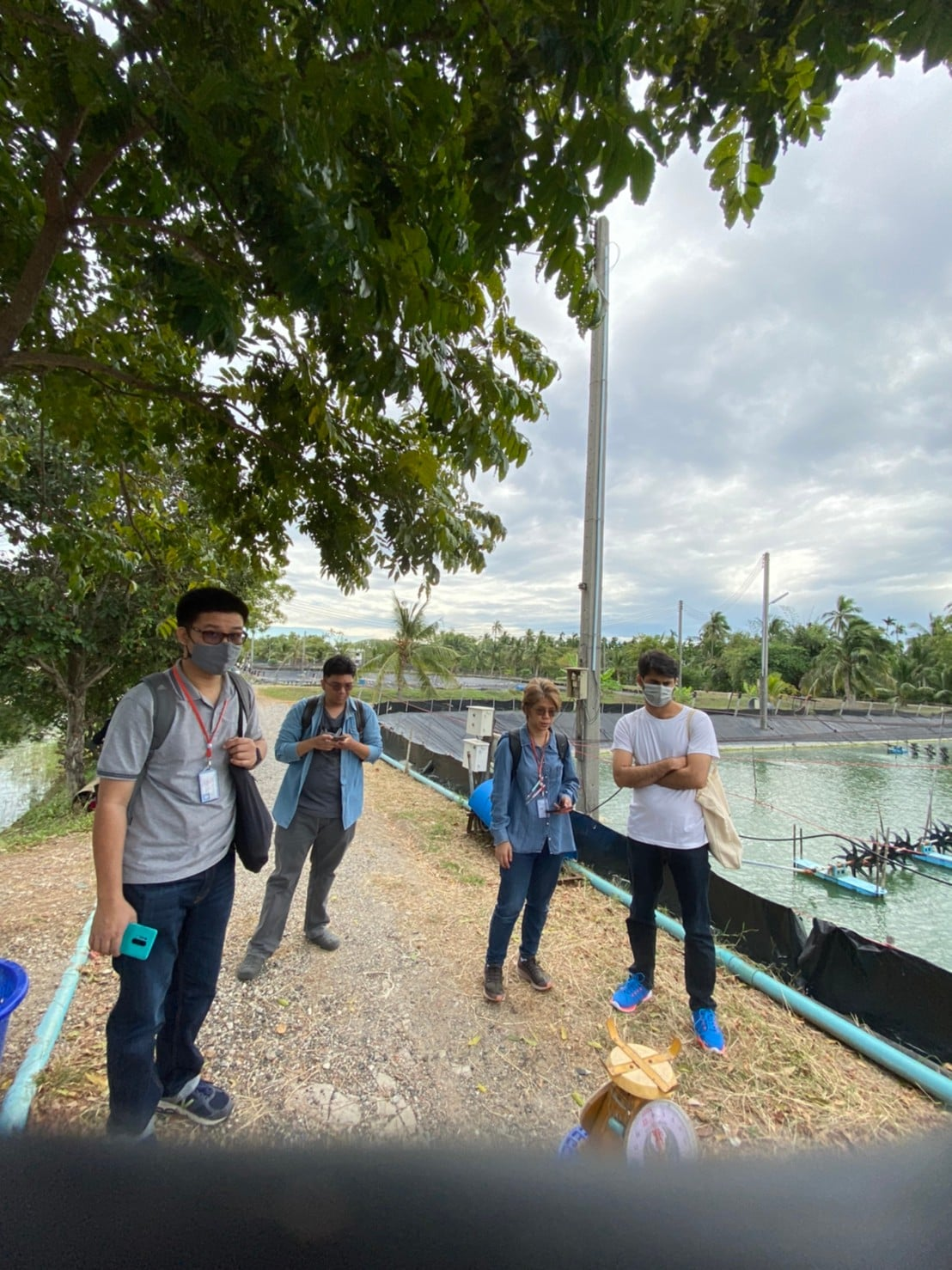
Original Bang Mot Canal community and bike-club clean-up photographs. Activity and capture dates are not specified.

Wat Chak Daeng · keeping litter out of shared waterways

KMUTT bike club has been involved with Wat Chak Daeng, communities and other organizations. Participate in a volunteer activity to create a floating buoy to trap waste from plastic bottles at Wat Chak Daeng by using a floating buoy to trap waste at the waterfront of Wat Chak Daeng.

In order to prevent waste flowing into the sea Reduce the problem of marine litter That will affect the environment such as aquatic animals, aquatic plants, etc. and to help protect the environment.

And cause less pollution to the world

The original volunteer account describes a floating waste-trapping buoy made using plastic bottles. The supplied extract does not state a collection-weight total or a dated reduction in marine litter.

Original Wat Chak Daeng volunteer buoy construction, learning and waterfront installation photographs. Activity and capture dates are not specified.

Thonburi waterways · surveying a connected community landscape

The context of the Thonburi area consists of waterfront areas and green areas together forming the Cool Spot of Bangkok, partly because the lifestyle of some people in the community still uses the canal route. for commuting and live in agriculture that relies on natural water sources from the canal Even when there is more prosperity and more road cuts The canal has therefore been reduced. The water course has changed.

A team of professors and researchers from the Faculty of Architecture and Design and networks both within and outside the country Has conducted a project to survey the canal route in the Thonburi side as a pilot in 4 districts, namely Thung Khru District, linking to Chom Thong District, Thonburi District and Khlong San District, to study the water quality of the canal. (Faculty of Science measure the salinity of the water total dissolved solids amount of dissolved oxygen)

Environmental quality (measurement of air, temperature (Temperature Control), wind load (Wind Load) and dust value PM 2.5) including the potential of the riverside community.

Hope to connect the canal travel route for tourism and a route connecting the canal route in the area If in the future there is a BTS SkyTrain route and the Metropolitan Rapid Transit (MRT) in all areas will be able to connect together to increase the potential or the possibility of expanding the transportation routes to be more comprehensive and flexible.

Create maximum benefits for people in the community and tourists.

  • Thung Khru
  • Chom Thong
  • Thonburi
  • Khlong San
Water quality
Salinity, total dissolved solids and dissolved oxygen.
Environmental quality
Air, temperature, wind and PM 2.5, as described in the original survey account.

The four district names describe the pilot survey area, not four completed ecosystem-restoration outcomes. The original account states survey subjects and future transport connections; it does not supply a new water-quality dataset or confirm those future connections are completed.

Original community route-survey photograph and canal-route map, shown whole. Small map labels remain in the source image; no additional coordinates, routes or measurement values are inferred.
Historical mangrove conservation activity · 22 May 2023

Historical activity · 22 May 2023. The following original account and its quantities are retained separately from the 2025–2026 collaborations. The 2,869 kg CO₂ figure is the source’s estimate, not a new annual measurement or a quantified outcome of the electric-boat project.

On May 22, 2023, the Energy, Environment, Safety, and Health Center (EESH), in collaboration with the Physical Resource Management Office at KMUTT Bang Khun Thian, organized the “Volunteer Ants for Mangrove Conservation” activity in celebration of International Biodiversity Day. Students, staff, and members of the KMUTT community participated in propagating mangrove seedlings and planting 700 mangrove trees at KMUTT new site in Phanthai Norasing Subdistrict, Mueang District, Samut Sakhon Province.

The activity aimed to conserve and restore national natural resources to their original richness and promote ecological balance. It also contributed to reducing greenhouse gas emissions, with an estimated reduction of 2,869 kg of CO₂. Moreover, the initiative aligns with sustainable development goals and supports the tangible implementation of the net-zero carbon emission policy, serving as a meaningful contribution to society and the planet.

This activity promotes several Sustainable Development Goals (SDGs):

  • Goal 11: Sustainable cities and communities
  • Goal 13: Climate action and awareness of limited natural resources
  • Goal 14: Conservation of marine and aquatic resources
  • Goal 15: Protection, restoration, and sustainable use of terrestrial and aquatic ecosystems

Original Volunteer Ants for Mangrove Conservation photographs accompanying the historical International Biodiversity Day account, 22 May 2023.

Sources and evidence links

5. Related information on our university having implemented a watershed management strategy based on location specific diversity of aquatic species.

Water management linked with ecosystem protection

KMUTT 2025 biodiversity policy connects environmental planning, protection of natural water bodies, control of wastewater and ecological restoration. The Nature Positive framework adds site mapping, surveys and habitat restoration. These establish institutional commitments relevant to managing local water systems while considering their biodiversity.

Management adapted to local mangrove conditions · 2025

The university Library’s account published on 4 December 2025 describes a practical approach at the 136-rai mangrove Living Lab in Phanthai Norasing, Samut Sakhon. Earlier planting difficulties were linked to tidal conditions. The team adapted its method by rooting mangrove propagules in a nursery, providing bamboo support and temporarily controlling water before readmitting it after establishment. Local residents supply propagules and EESH coordinates participation. Planting by 55 Malaysian students on 1 November 2025 is specifically recorded.

  1. Nursery preparation

    Root mangrove propagules in a nursery.

  2. Establishment support

    Provide bamboo support during establishment.

  3. Water management

    Control water temporarily, then readmit it after establishment.

This account links water management to the requirements of mangrove vegetation in a university-associated coastal habitat. It supports an implemented site-management example; the source does not identify it as a formally adopted watershed-wide strategy or provide a species-by-species catchment assessment.

Regional water management support · 2025–2026

Nakhon Pathom was selected in 2025 as a pilot province under an ONWR and PMU-A programme. Thai PBS interviews published on 16 March 2026 describe KMUTT researcher Pariwet Wannakowit working with 117 local administrative organisations and 20 community researchers on geo-social mapping, flood and drought scenarios and a decision-support system.

On 12 March 2026, the KMUTT Faculty of Science team presented its 2025 flood scenarios and DSS development to provincial stakeholders. It also presented a draft wastewater master plan for 2028–2038. This documents technical support for regional water planning; the draft’s future period is not treated as completed infrastructure or a biodiversity strategy adopted in 2025.

Local administrative organisations
117
Participating in the regional mapping and decision-support work.
Community researchers
20
Working with geo-social mapping and flood/drought scenarios.

The two participation figures describe different groups and are not added into a combined beneficiary total. The 2028–2038 wastewater master plan is a draft with a future planning period; it is not completed infrastructure or a biodiversity strategy adopted in 2025.

KMUTT Faculty of Science photograph of the Nakhon Pathom water-management knowledge handover on 12 March 2026.

Historical fish propagation and conservation context

The original Mang River account begins in 2016 and is retained in full below, including its release figure and RAS dimensions. Its English wording uses “stingray” without a scientific name. That species identification is not established by the supplied record; the activity is therefore referred to here as freshwater fish propagation. The original dolphin research is also retained as historical conservation context, without being reassigned to 2025 or 2026.
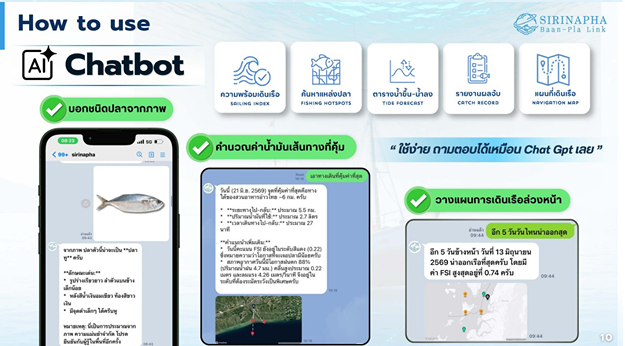
Historical freshwater fish propagation and RAS · full account

Mang River · freshwater fish propagation since 2016

The following is the complete historical wording supplied with this evidence. “Stingray” remains an unverified English species identification; no scientific name or replacement species is inferred. The 30,000-fish figure is retained as the historical account’s release/broodstock wording, not a new annual total.

The breeding and release of the stingray by KMUTT in collaboration with the Promotion Center, the Royal Project Foundation, and local communities is an important component of a local watershed management strategy that emphasizes sustainable biodiversity and ecosystem integrity.

Since 2016, these efforts have focused on breeding the stingray in a controlled environment at the Demonstration Garden of King Mongkut’s University of Technology Thonburi, Nan Province, using a large number of wild-caught, nurtured, and released broodstock (30,000 fish) back into the Mang River.

The project aims to restore the local aquatic ecosystem and provide a sustainable protein source for the community.

This local species restoration and controlled breeding strategy integrates with broader watershed management goals by promoting biodiversity specific to the aquatic ecosystem of Nan Province.

The release of the stingray enhances natural aquatic diversity while providing the community with a sustainable and naturally replenished source of protein.

As the fish adapt and thrive in their native habitats, they contribute to the ecological balance of the river, supporting an environmentally sustainable watershed management strategy that benefits the local community economically.

Original freshwater fish propagation, community participation and river-release photographs. The account begins in 2016; individual capture dates are not specified.

Recirculating aquaculture · experimental and community learning sets

KMUTT together with Rajamangala University of Technology Lanna Nan brought the RAS system model that was studied and experimented to improve for testing farming in highland areas and experimenting for learning in the community.

using the area of the KMUTT coordination center located in Bo Kluea District Organized as an experimental set of 10 cubic meters and at the community as a learning set, size 500 liters, and has designed and provided equipment for installing the RAS system.

for tilapia farming which consists of culture pond (Made from a circular plastic tank with a diameter of 4 meters, containing 10 cubic meters of water.) and wastewater treatment system from farming which consists of solid filter system biological filtration system (Bio-filter) and hydroponic soilless plants to help absorb nutrients in wastewater.

has also prepared a biological filter system by immobilizing nitrifying bacteria (Nitrifying Bacteria) on biological filter material (Bio-ball) to make the filter system effective in treating wastewater.

Experimental set · KMUTT coordination centre
10 cubic metres
Community learning set
500 litres

The original circular culture tank is described as 4 metres in diameter and containing 10 cubic metres of water. These are source dimensions, not measurements of treatment efficiency or water savings. No new reporting year is assigned to this account.

Original historical fish-culture, laboratory learning and RAS equipment photographs. The source does not provide separate capture dates.

Historical Irrawaddy dolphin conservation research · full account

Thailand's marine and coastal areas are biodiversity hotspots, particularly for marine mammals like dolphins and whales, which play a vital role in nutrient cycling and maintaining ecological balance. However, these animals face threats from climate change and human activities, such as entanglement in fishing nets, vessel collisions, habitat loss, and marine pollution. The Irrawaddy dolphin (Orcaella brevirostris), in particular, is at risk of extinction, which impacts the health and biodiversity of marine ecosystems.

KMUTT, in collaboration with government agencies and academic institutions, has launched a research project to study the Irrawaddy dolphin in Thailand and Indonesia. This project aims to understand the effects of human activities and climate change on dolphin populations. The Irrawaddy dolphin, as a top predator, plays a critical role in nutrient storage and cycling within the food chain. A decline in this dolphin population directly affects the abundance and biodiversity of marine ecosystems. Conserving the Irrawaddy dolphin is essential for maintaining biodiversity. KMUTT and its partners employ molecular biology techniques to develop genetic markers and use environmental DNA (eDNA) to identify feeding areas of dolphins and whales. This research helps designate key conservation areas and reduce fishing-related threats, particularly from overfishing, illegal and unreported fishing, and destructive fishing practices.

Raising awareness about conservation and reducing the impact of unsustainable fishing is crucial to preserving biodiversity and restoring key marine species. Achieving sustainable conservation and development of marine and coastal resources also requires collaboration with neighboring countries and the development of effective monitoring tools to track ecological changes, strengthening conservation efforts at national and regional levels.

Historical conservation research context. The linked Green Network account was published on 28 February 2023. Its genetic-marker and eDNA discussion is not relabelled as a 2025–2026 population recovery result or as a formally adopted watershed strategy.

Original Thai Irrawaddy dolphin DNA-marker and conservation infographic, unchanged and shown whole. Scientific name in the supplied account: Orcaella brevirostris.
Sources and evidence links

Protect aquatic ecosystems and water quality at KMUTT

Connect coastal restoration, pollution prevention, aquatic research and practical knowledge with the communities that use shared water resources.

Habitat, prevention and community participation

Each figure retains its own scope

Mangrove Living Lab project area
136rai across four donated plots
Reported plastic reduction
61%2025 programme result · baseline 2017
Fishers in a community pilot
3012 boats · six areas · reported October 2026

Project area, the plastic programme indicator and a fisheries pilot measure different things. They do not establish a mangrove survival rate or a measured reduction in overfishing.

Monthly water-quality monitoring

Corrected 2025 record · BOD in mg/L

Biochemical oxygen demand · 12 monthly measurements · common 0–25 mg/L scale

Dashed line: 20 mg/L · published comparison limit

19
20
16
14
12
14
13
15
13
6
12
17
JanFebMarAprMayJunJulAugSepOctNovDec
Baseline: 0 mg/LScale maximum: 25 mg/L

These are published measurements for one parameter. They do not certify every campus treatment plant, heavy metal result or aquatic biological condition.

Combine restoration, research and learning

Restore for local tidal conditions

Nursery, planting and habitat care

At the Samut Sakhon Living Lab, propagules are rooted in a nursery, supported with bamboo and managed through a temporary water-control stage before water is readmitted. Local residents supply propagules. The 136 rai project area is not a verified survival area.

Research nutrient treatment

Experimental nitrate and phosphate removal

Spirulina cultivation using recirculating-aquaculture wastewater achieved over 80% nitrate and over 99% phosphate removal under reported optimal experimental conditions. These results are not campus discharge measurements or verified region-wide pollution reductions.

Share practical aquatic knowledge

Free learning and coastal research exchange

An online smart-aquaculture course was advertised free for 9 October 2025 with 50 places, a capacity rather than attendance count. A 4–5 June 2025 workshop shared atmospheric and ocean modelling knowledge for coastal conservation.

Manage pressures and work with communities

Control upstream pressures

2025 policy · 2026 practical learning

Protect receiving waters and prevent releases

The biodiversity policy issued on 2 September 2025 addresses protection of water bodies, wastewater controls and restoration. Monthly checks complement chemical-storage and spill-response learning on 12 June 2026. Food-vendor hygiene training is documented separately; it does not certify sustainable harvesting of campus seafood.
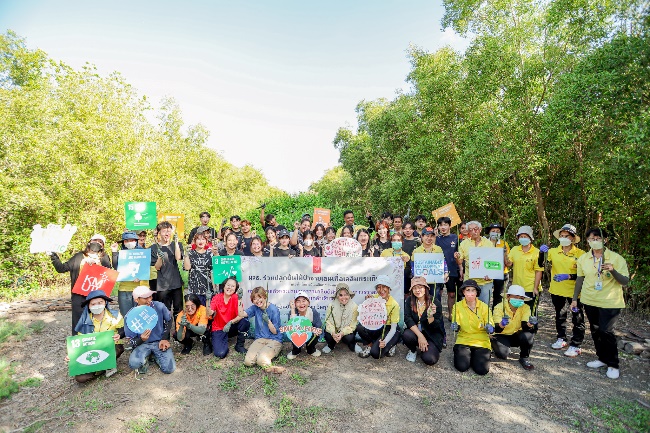
Work with water users

Canal and provincial partnerships

Knowledge for shared water decisions

The Bangmod Canal electric-boat prototype launched on 21 April 2026 with a community conversion and maintenance learning centre. Separately, Nakhon Pathom partners received water-management scenarios and decision-support information on 12 March 2026. Its 2028–2038 wastewater masterplan was presented as a draft.
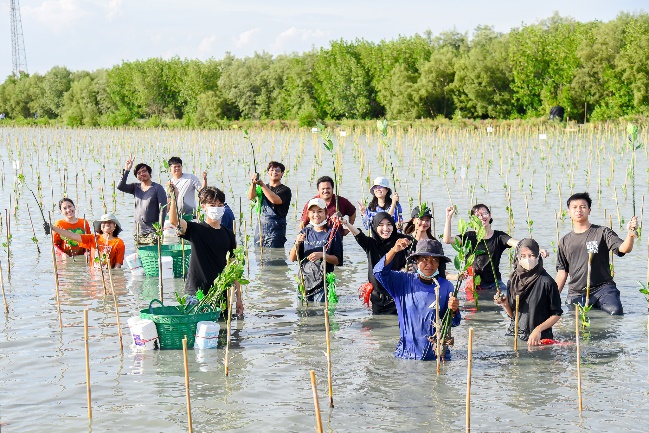
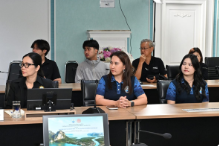
Sources and reporting notes
  • Corrected 2025 water-quality record

    The Overview BOD series uses the user-supplied correction preserved as criterion 14.4.1 support-data revision 2. January–December values: 19,20,16,14,12,14,13,15,13,6,12,17 mg/L. The 20 mg/L value is the supplied published comparison limit, not a universal legal finding for all plants or substances.
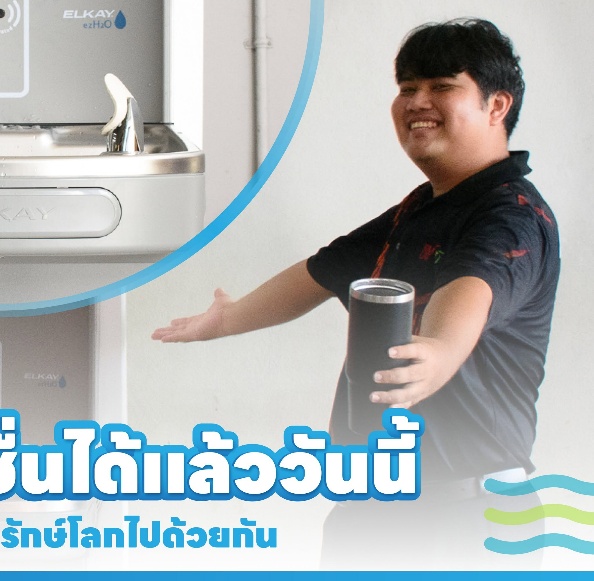
    Open source
  • Monitoring procedure and complete monthly table

    Sampling, laboratory analysis and accuracy/quality-control review precede certification. The full record contains pH, SS, BOD, TKN and fats/oil/grease. ND is retained as notation, not converted to zero. This is not a species-abundance or every-treatment-plant dataset.

    Open source
  • Mangrove Living Lab: December 2025 account

    Four donated plots totalling 136 rai; project began 2022. Area is the project boundary, not verified surviving mangrove cover. Nursery rooting, bamboo support and temporary water control respond to local tidal conditions; residents supply propagules.

    Open source
  • Plastic-reduction programme

    Reported 61%reduction in 2025 against 2017. This is the institutional programme indicator, not a measured 61%reduction in ocean litter. Historical 2018 vendor conditions and exceptions are retained in the full article.

    Open source
  • SIRINAPHA Baan Pla Link: fisheries pilot

    Reported 6 October 2026: 30 fishers/12 boats/sixSamutSakhonareas. Satellite/AIinformation, maps and LINE interface support decisions and community dialogue; no measured reduction in overfishing is inferred.

    Open source
  • Spirulina nutrient-removal research 2025

    Published 15 February 2025:under optimal controlled conditions nitrate removal exceeded 80% and phosphate removal exceeded 99%. These are experimental process results, not university outfall or regional pollution reductions.

    Open source
  • Free aquaculture learning invitation

    Online course advertised for 9 October 2025;50 places were offered free. Places are capacity, not verified attendance or achieved livelihood outcomes.

    Open source
  • Coastal modelling knowledge exchange

    Workshop 4–5 June 2025 atLX on atmospheric/ocean models and coastal conservation. Academic exchange is not a quantified ecosystem-restoration outcome.

    Open source
  • Biodiversity policy and Nature Positive framework

    Policy announced 2 September 2025:protect water bodies, control pollutants and support restoration. Selected water tests do not prove all physical, chemical and biological impacts absent.

    Open source
  • Chemical and hazardous-waste response training

    12 June 2026:practical storage, PPE, spill-kit and response learning. Preparedness is distinct from an actual incident or a zero-pollution outcome.

    Open source
  • Food-vendor hygiene and sustainability learning

    21 February 2026:health screening, food sanitation and operational sustainability. Food safety and sustainable aquatic harvesting are different claims; seafood origin/harvest certification is not established by hygiene training.

    Open source
  • Bangmod Canal electric-boat collaboration

    Prototype launched 21 April 2026 with technical support and a community conversion/maintenance learning centre. The record does not establish a measured subsequent water-quality or biodiversity change.

    Open source
  • Nakhon Pathom research-information handover

    12 March 2026:water-management scenarios and decision support;2028–2038 wastewater masterplan presented as a draft. Planning and information transfer are not completed treatment infrastructure.

    Open source

Reduce Paper & Plastic

A targeted initiative to prevent environmental pollution by eliminating single-use plastics.

11
12
14
15

Water Conservation

Focuses on reducing water consumption, increasing recycling, and ensuring clean wastewater campus-wide.

6
14

Waste Management

A comprehensive system to prevent pollution through responsible management of all campus waste.

11
12
14

Biodiversity Restoration

Promotes the control of pollutants and ecological restoration to safeguard natural water bodies.

6
14
15
×