
Goal 16: Peace, justice and strong institutions

Promote peaceful and inclusive societies for sustainable development, provide access to justice for all and build effective, accountable and inclusive institutions at all levels.

16.2 UNIVERSITY GOVERNANCE MEASURES

1. Related information on our university having elected representation on the university’s highest governing body from.

Elected employee representation on the University Council

The KMUTT Act B.E. 2541 (1998) establishes the University Council and its composition. Section 16(4) provides two elected Council members: one from full-time academic staff and one from employees who are not academic staff. This directly identifies electoral representation for both employee groups on the university’s governing body. Section 18 assigns the Council oversight of university affairs, policy and development plans. The Act retains its actual 1998 date.

Academic staff
1 elected member
One elected University Council member under section 16(4).
Non academic employees
1 elected member
One elected University Council member under section 16(4).

Keep the governing-body roles distinct

Faculty and Staff Senate
Section 29 provides an elected senate. Its chair is an ex officio Council member under section 16(2), giving a further institutional channel for staff advice.
Students
The original evidence records student elections and organisations for academic year 2025. These concern student governance; they do not establish a student seat on the University Council.

The Council’s public directory identifies the Faculty and Staff Senate chair as an ex officio Council member. It distinguishes this role from the President, external experts and other representative categories. The directory is an institutional reference; a current online list is not used here to assign an unverified 2025 election date or term to an individual.

Student representation · results shown in the supplied notices

These records concern student governance. They do not establish student membership of the University Council.

Constituency / noticeRecorded voters / printed turnoutEndorseDo not endorseAbstain
Engineering · notice 1632 / 11.7%374 (59.2%)82 (13.0%)176 (27.8%)
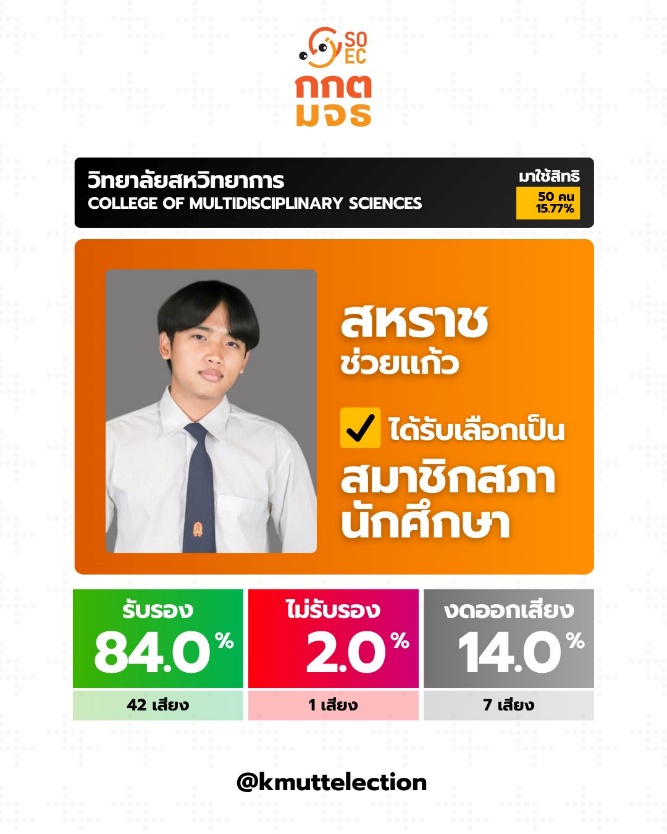
Multidisciplinary Sciences50 / 15.77%42 (84.0%)1 (2.0%)7 (14.0%)
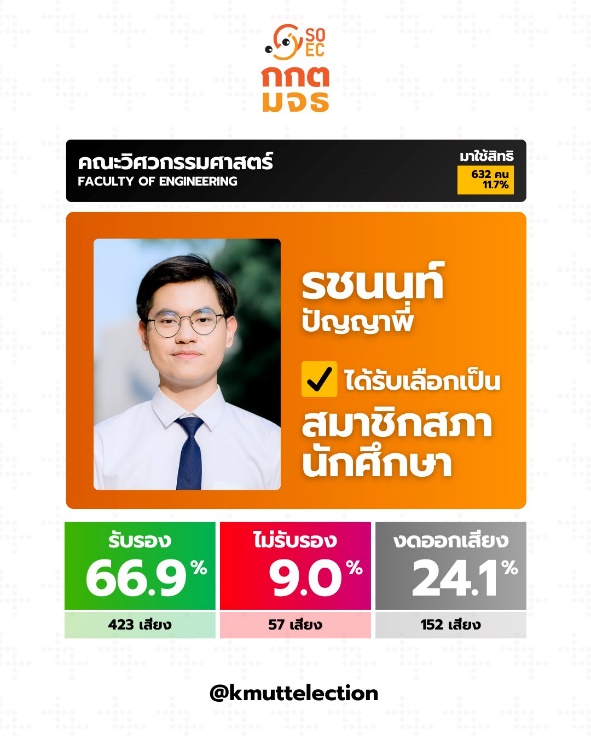
Engineering · notice 2632 / 11.7%423 (66.9%)57 (9.0%)152 (24.1%)
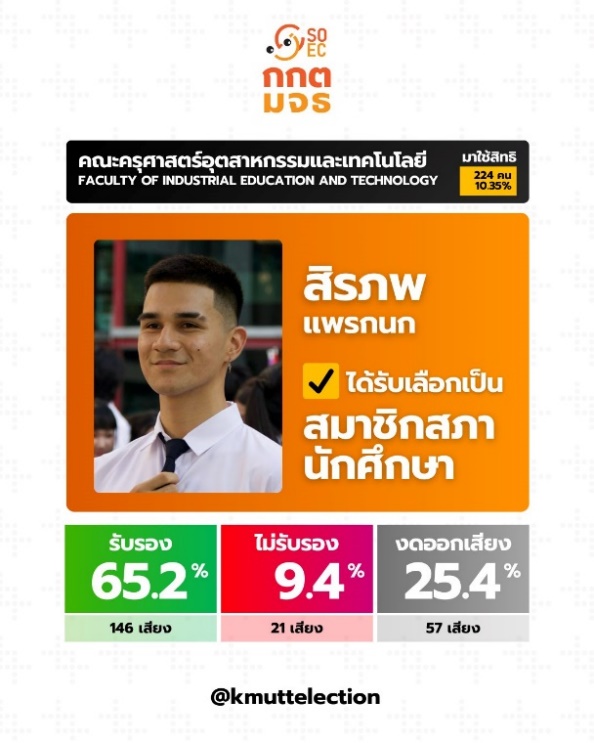
Industrial Education and Technology224 / 10.35%146 (65.2%)21 (9.4%)57 (25.4%)
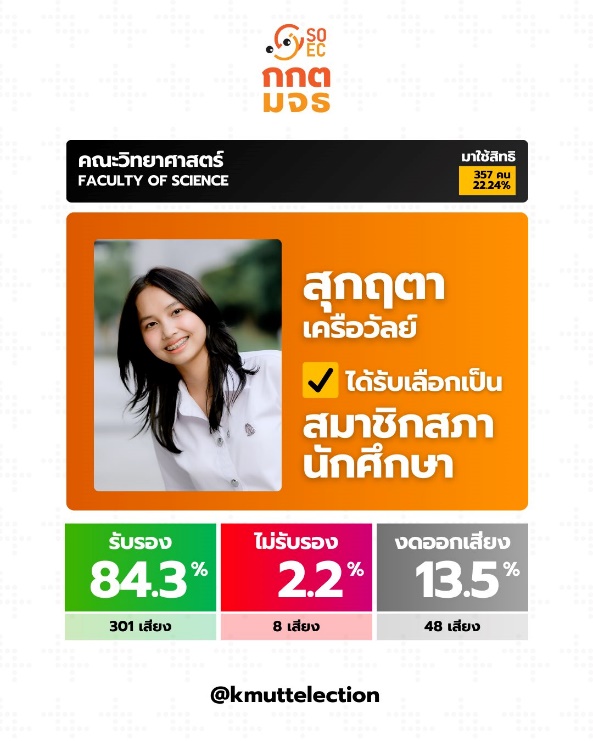
Science357 / 22.24%301 (84.3%)8 (2.2%)48 (13.5%)
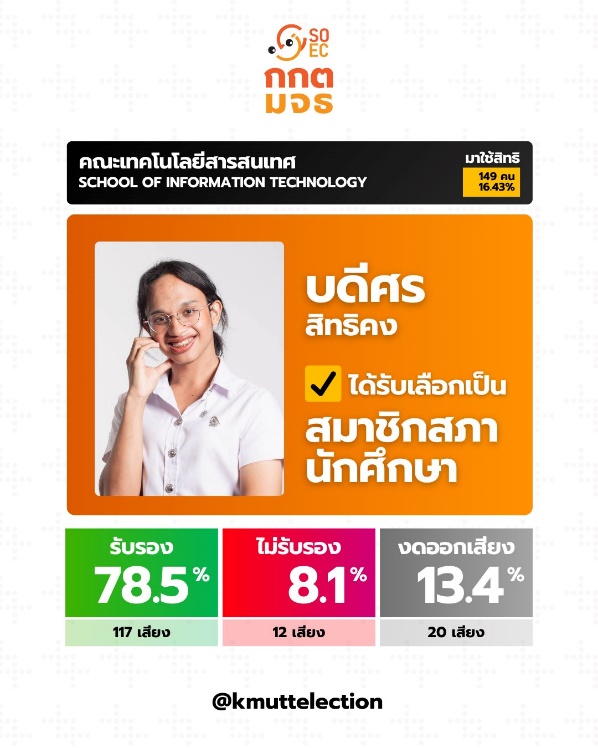
Information Technology149 / 16.43%117 (78.5%)12 (8.1%)20 (13.4%)
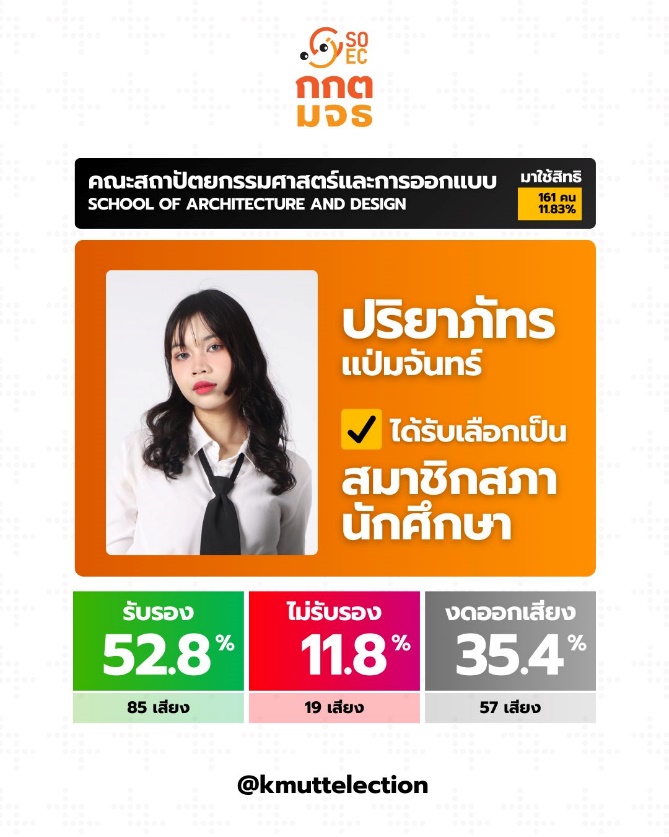
Architecture and Design · notice 1161 / 11.83%85 (52.8%)19 (11.8%)57 (35.4%)
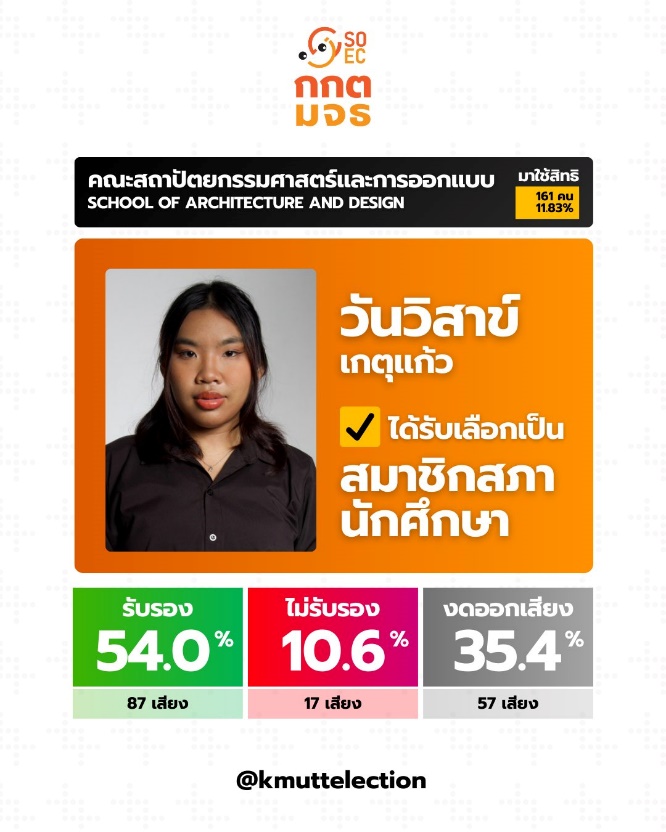
Architecture and Design · notice 2161 / 11.83%87 (54.0%)17 (10.6%)57 (35.4%)

Counts and percentages are transcribed from the eight original endorsement notices. Repeated constituencies are separate candidate notices, so their voter counts must not be added as unique participants. The individual result posters do not print an election date. Original candidate names and photographs remain in the original-notices panel.

Student Council and Student Organization applications · 2025

Now accepting applications for Student Council members and the Student Organization Administrative Committee for the 2025 academic year until March 28th!
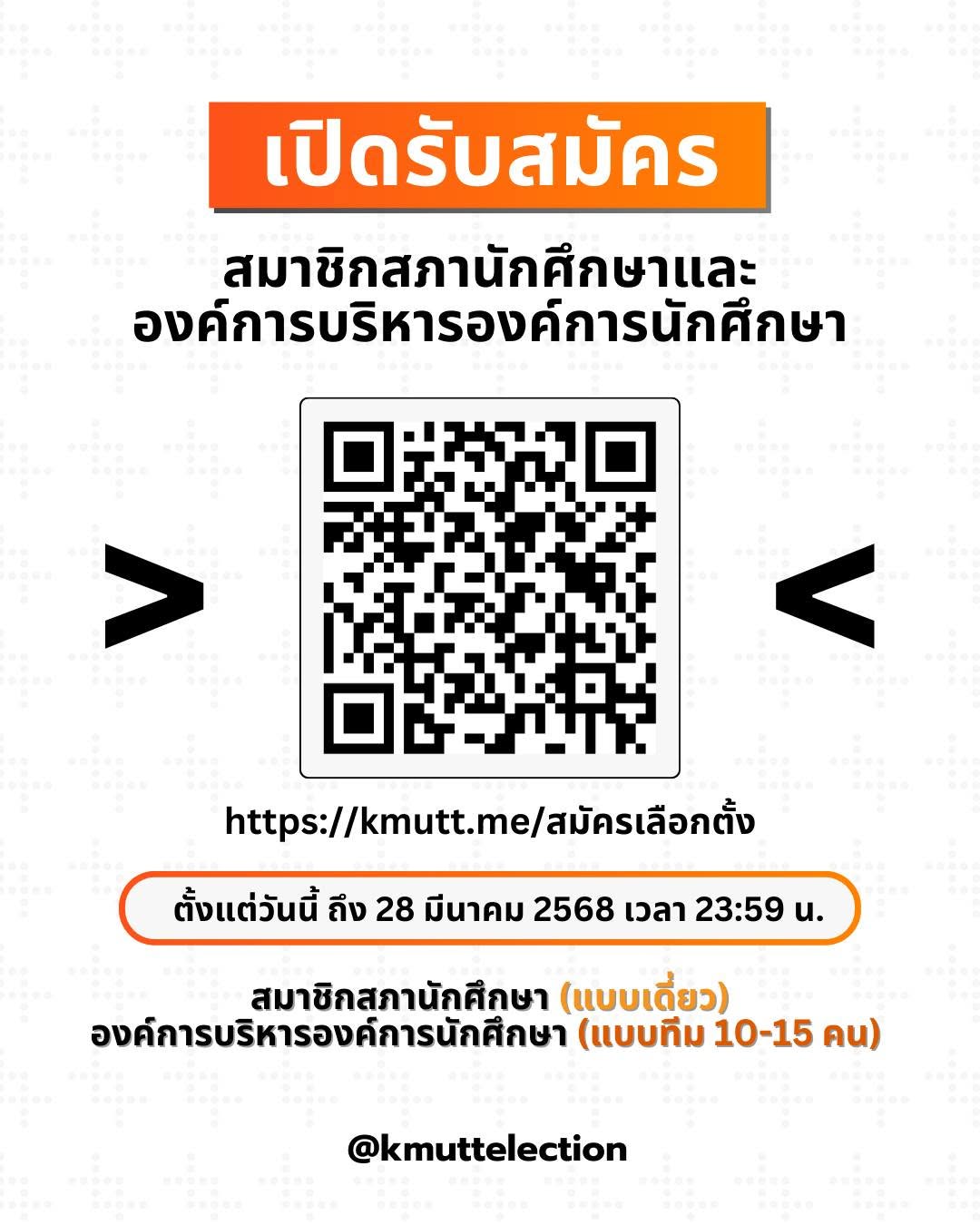
Original application notice: Student Council and Student Organization, academic year 2025. Deadline 28 March 2025, 23:59; individual Student Council applications and Student Organization teams of 10–15 people.

Faculty of Science Student Club · 2025 election material
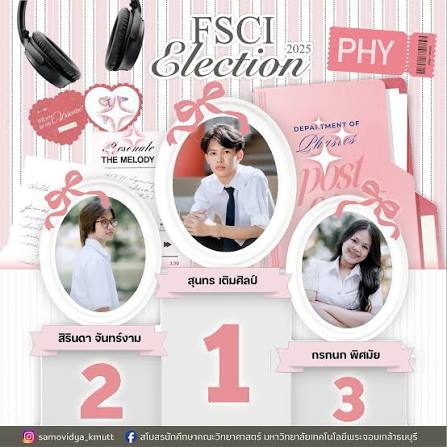
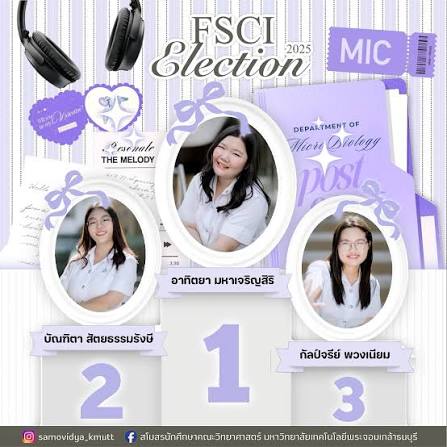
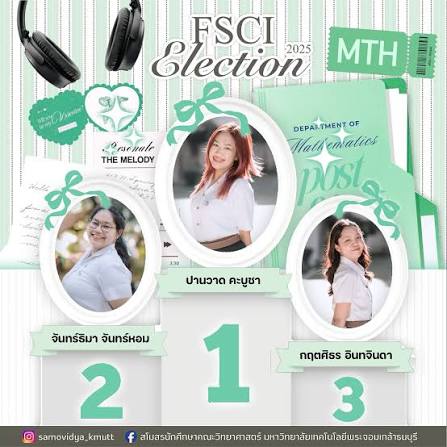
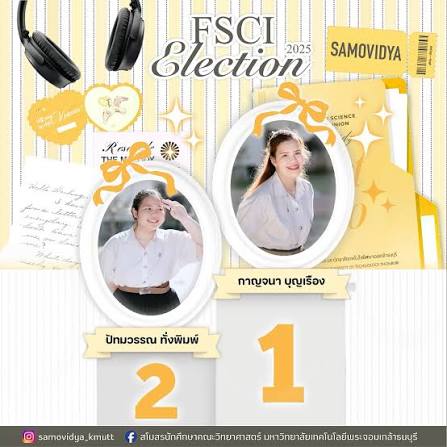
Original Faculty of Science election 2025 illustrations: Physics, Microbiology, Mathematics and SAMOVIDYA. Names and rankings are retained in the original artwork.
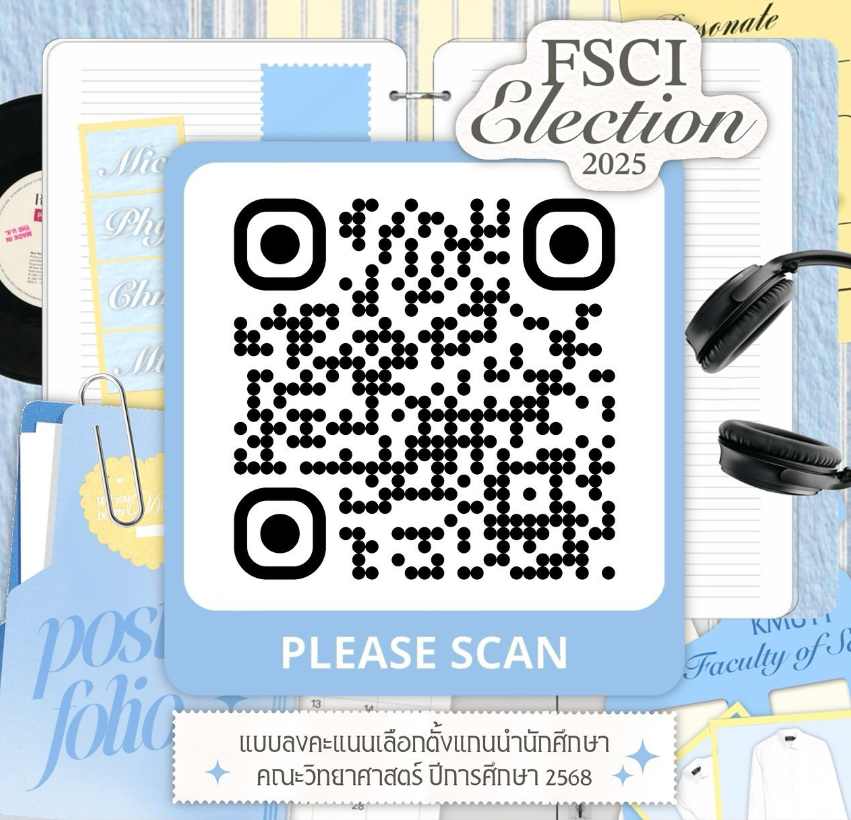
Original Faculty of Science voting-form notice for academic year B.E. 2568 (2025). The original QR code is retained as supplied.

Industrial Education and Technology · student-club election
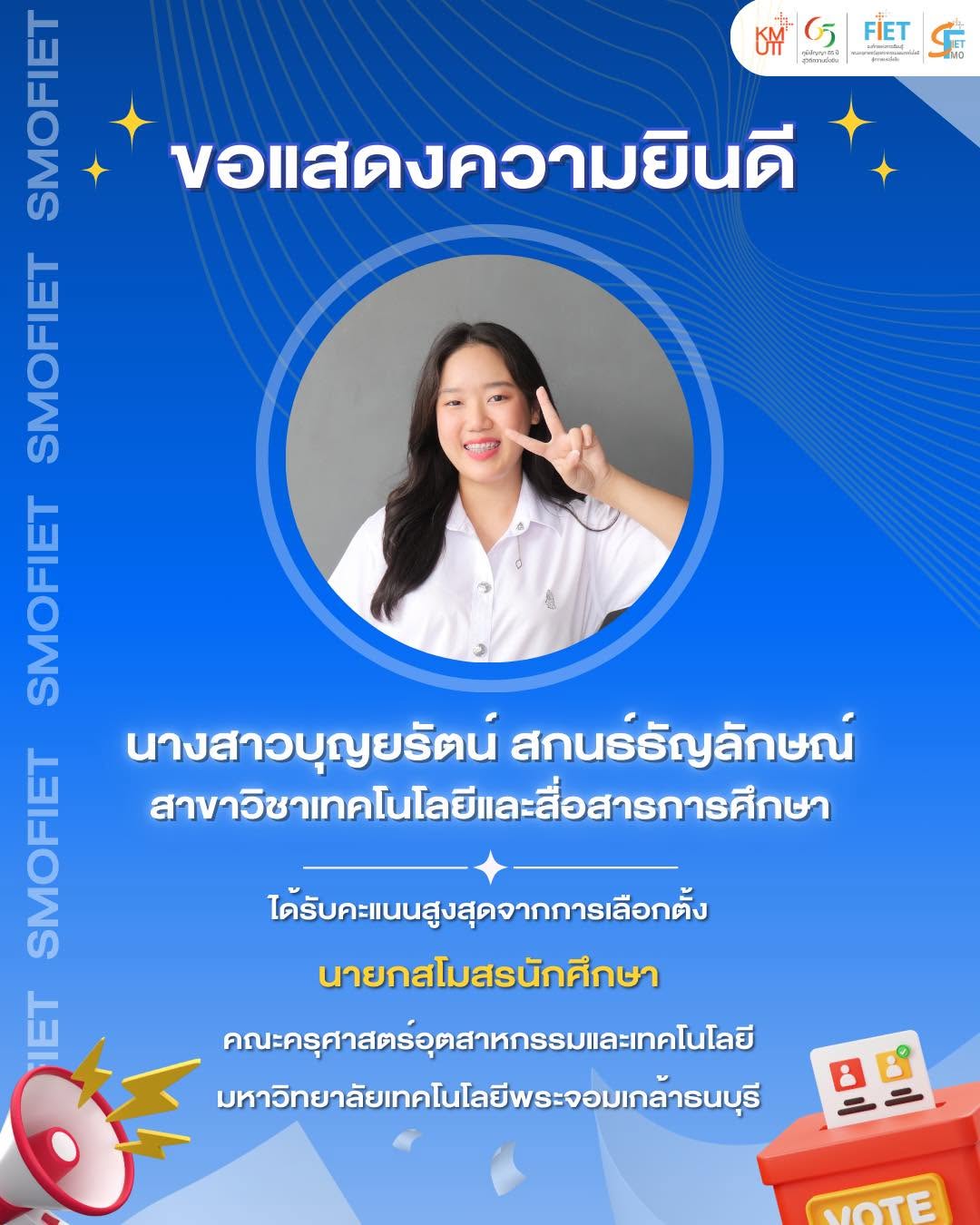
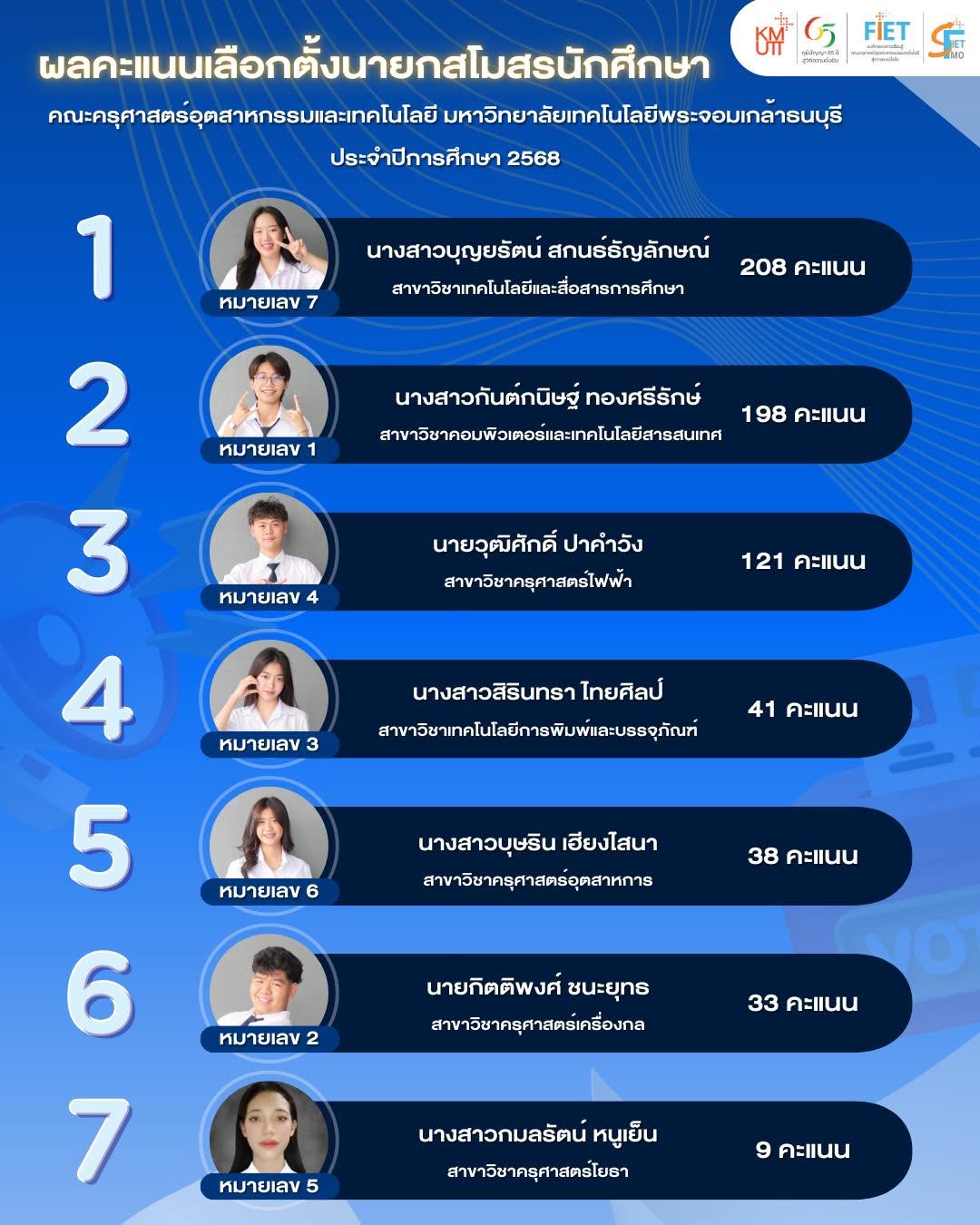
Original FIET student-club election notices for academic year B.E. 2568 (2025): elected president announcement and seven-candidate results. Both original posters are retained whole.

Rank in original noticeBallot numberVotes
17208
21198
34121
4341
5638
6233
759

This is a faculty student-club election. Its candidate-vote results are a separate record from the University Council seats and the student endorsement notices above.

Engineering Student Committee recruitment · 2025

Original recruitment invitation for academic year 2025

Join the Engineering Student Committee, Faculty of Engineering, Academic Year 2025!

If you are passionate about student activities, eager to develop valuable soft skills beyond the classroom, or looking to connect with new friends from different departments, faculties, or even universities, the Engineering Student Committee could be the perfect place for you. Come and experience it for yourself, and discover that being part of the Engineering Student Committee offers far more than you might expect.

Application Deadline: 17 April 2025
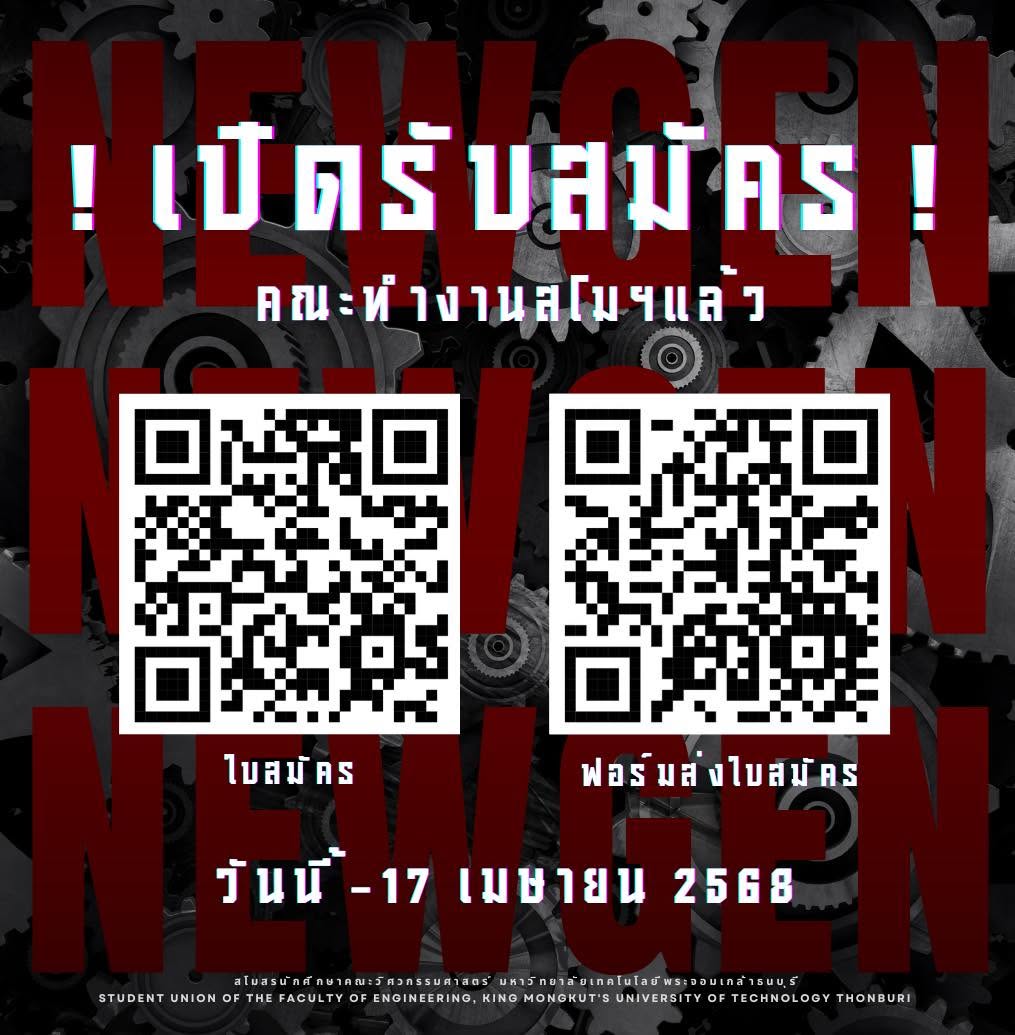
Original Engineering Student Committee recruitment notice. Applications close on 17 April B.E. 2568 (2025); this is a recruitment invitation, not a completed participation total.

Information Technology · online student election

SIT Student Association Holds Online Election for the New Executive Committee for Academic Year 2025
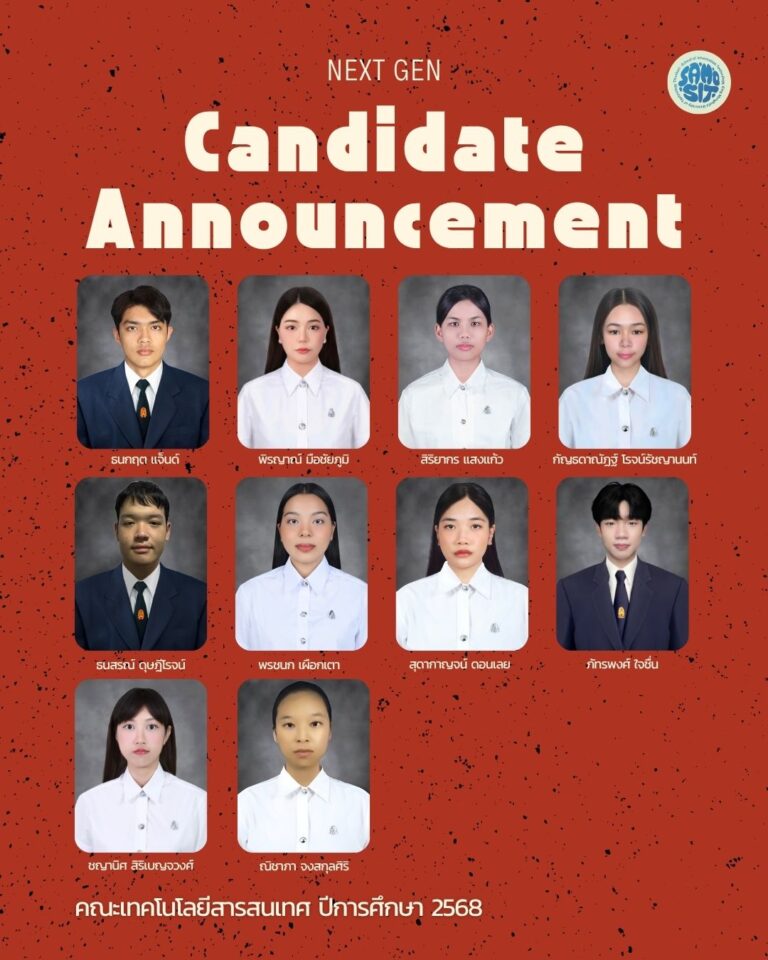
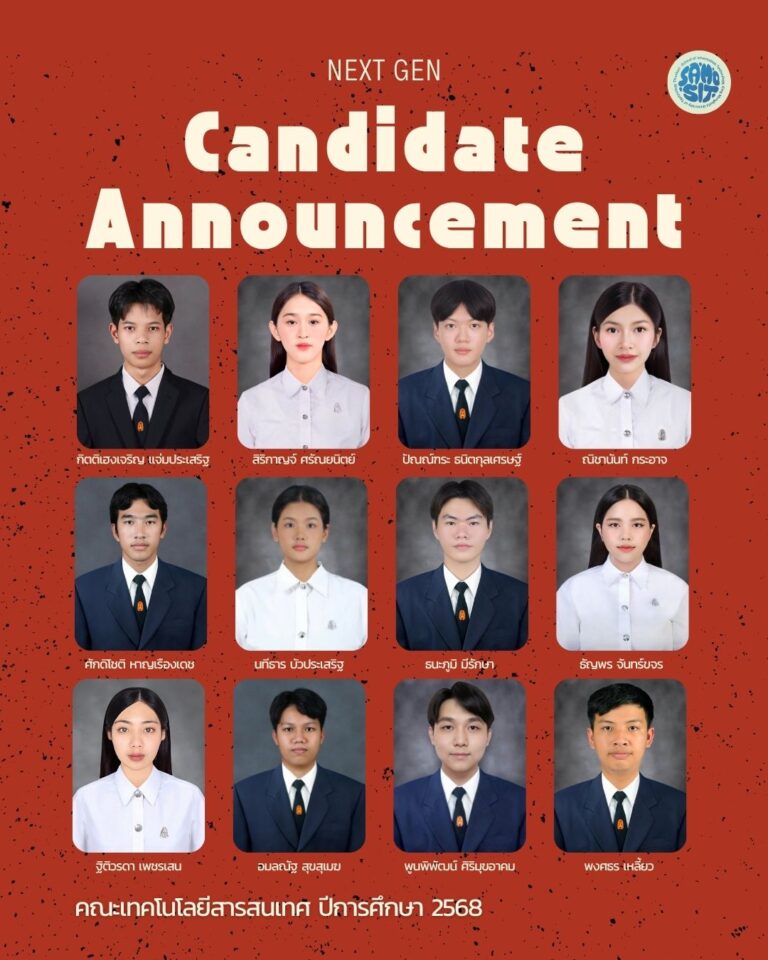
Original School of Information Technology NEXT GEN candidate announcements for academic year B.E. 2568 (2025). These are candidate announcements, not verified election-result totals.

Original student endorsement notices
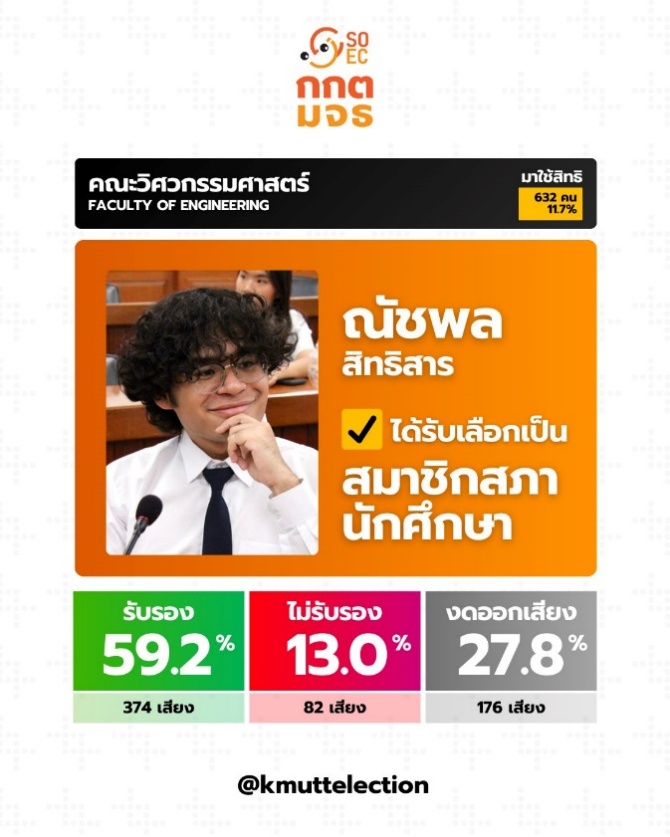
Original student endorsement notices supplied with the evidence. Each notice shows its candidate, constituency, recorded voters, turnout and endorsement responses. Individual publication dates are not printed.
Original statute and Board of Directors document

Statutory composition · original Act of 1998
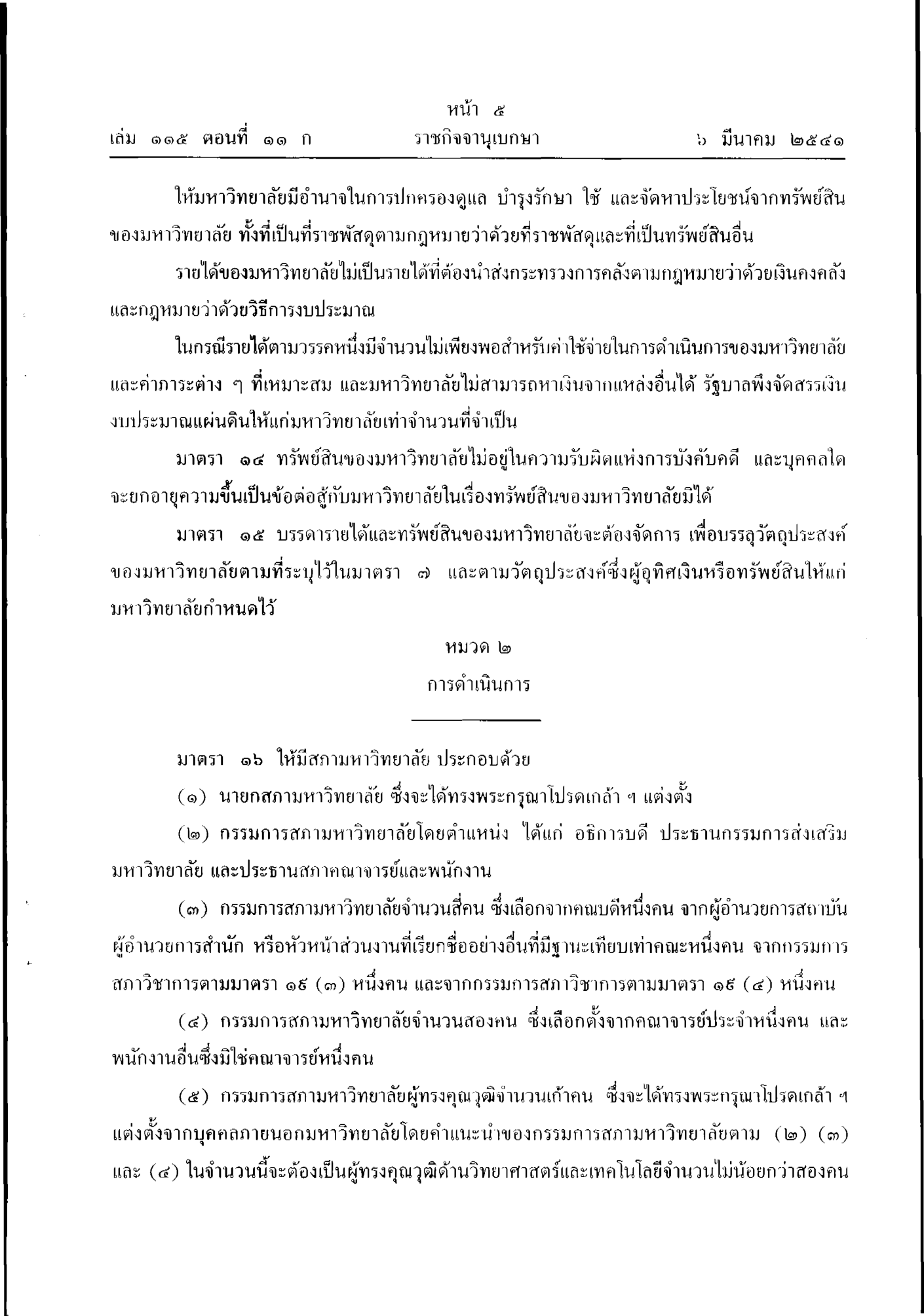
KMUTT Act 1998, printed page 5. Section 16(4) specifies elected academic and non academic employee representation. Source: Council legal-document register.

Original Board of Directors directory

Supplied record labels: “Council Members of King Mongkut's University” and “University Council President”. The file selected here is titled “KMUTT Board of Directors” and shows university advisers and executive management. It is not used to establish an elected University Council seat or a 2025 election term.

Historical document: the PDF identifies a source screenshot dated 13 November 2024. The original date is retained; this is not presented as a newly verified 2026 membership list.

Sources and evidence links

Supplied institutional evidence for 16.2.1. All original directories, student election material, figures and photographs follow in full. Historical or unspecified directory dates are retained.
Board of Directors


KMUTT President Office


Deans and Directors


2. Students’ union

Student voice, welfare and accountability

KMUTT recognises the Student Council, the Student Administration Organisation and faculty student clubs as channels for student representation and activities. The university’s published description assigns the Council responsibility for student rights, welfare and complaints, scrutiny of student organisation administration and budgets, and proposals to amend student activity regulations. These are standing institutional functions; the directory describing them is not presented as a new 2025 activity.

Standing functions of the Student Council · institutional background, not a newly dated 2025 activity

Rights, welfare and complaints
Listening to student opinions and complaints about their rights, welfare and interests.
Administration and budgets
Scrutiny of student organisation administration and activity expenditure.
Student activity regulations
Proposals to amend the regulations governing student activities.

The faculty election provides a concrete example of students choosing their own activity committee. The university-wide student bodies provide complementary channels for welfare representation, scrutiny of student activity expenditure and the organisation of collective activities. The examples retain their actual dates and organisational levels.

Students choosing their representatives · June 2025

Student selection of representatives · School of Information Technology

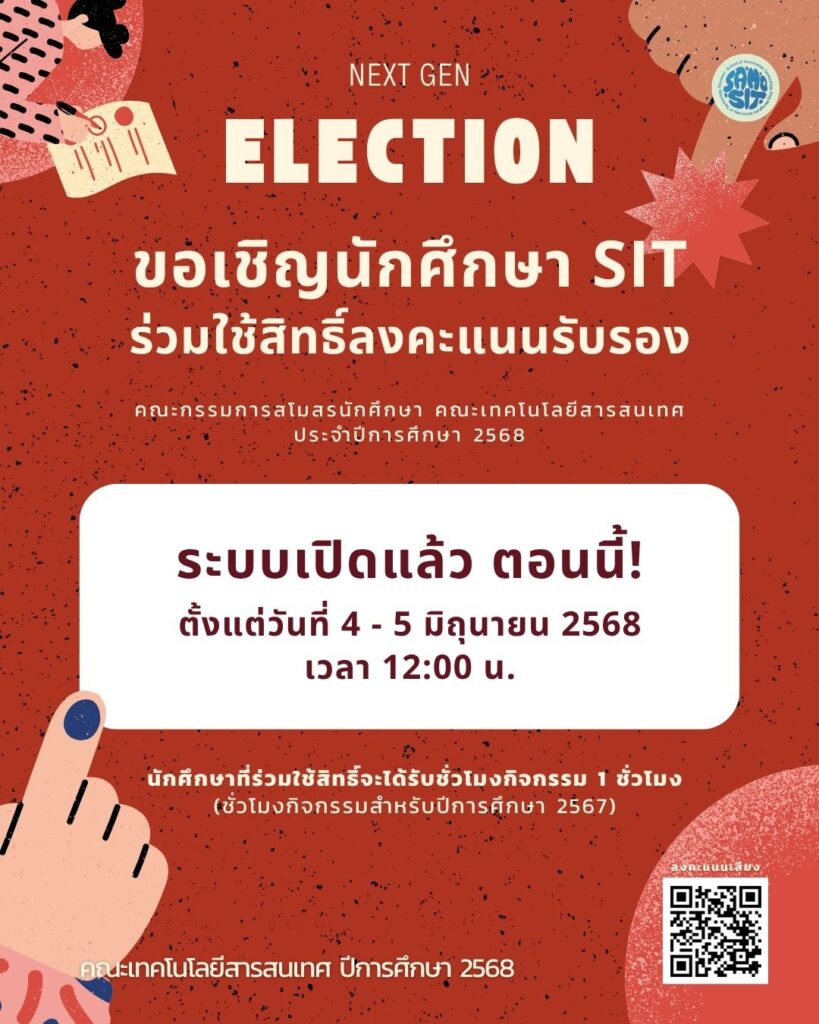
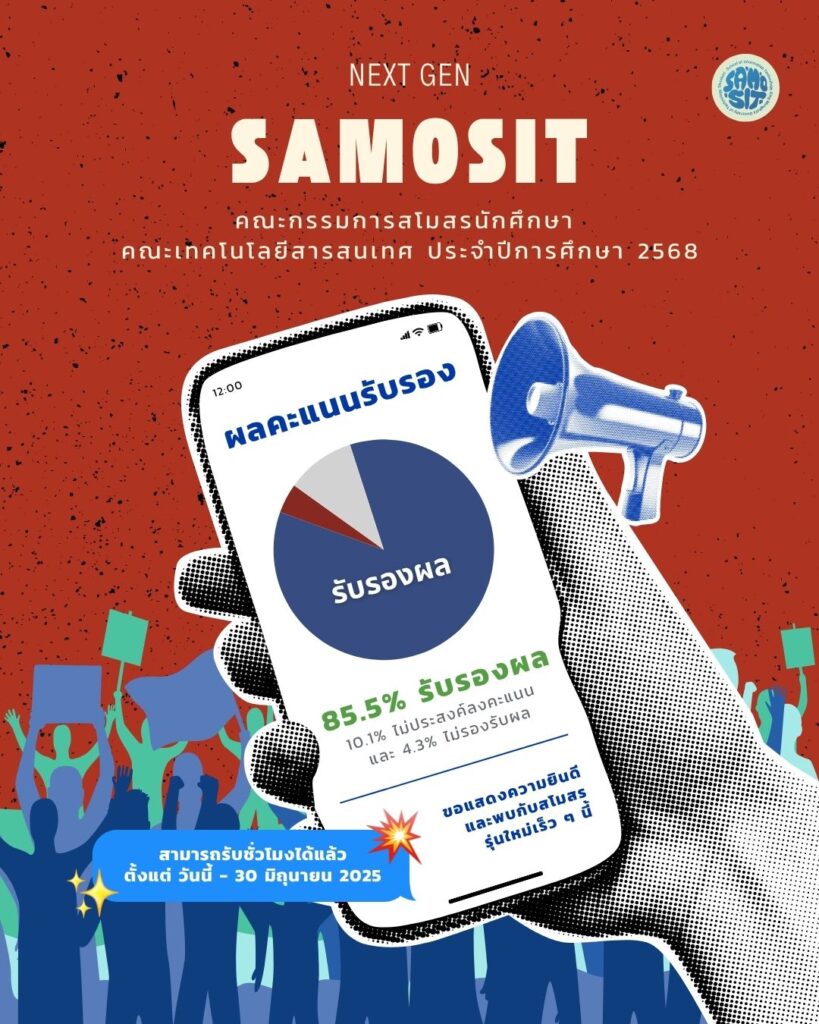
SAMOSIT held online ratification of its academic year 2025 committee from noon on 4 June to noon on 5 June 2025. The published result was 85.5% endorsement among students who voted. This percentage is an endorsement result, not a turnout figure for all students.

Endorsement
85.5%
Abstention
10.1%
Not endorsed
4.3%

Shares of participating voters shown in the result poster. The printed values total 99.9%; they are retained as printed, without normalisation. These percentages are not turnout among all students.

From 12:00 PM on 4 June 2025 to 12:00 PM on 5 June 2025, the Student Association of the School of Information Technology (SAMOSIT), King Mongkut's University of Technology Thonburi (KMUTT), organized an online election to ratify the new Student Association Committee for the 2025 academic year. The election aimed to select and officially endorse a new team that will play a key role in driving the school's activities and projects throughout the academic year.

In addition, the election served to promote students’ awareness of their rights and the value of democracy within student organizations. It provided students from all academic years with the opportunity to participate in decision-making and help shape the future direction of student activities. According to the ratification criteria, candidates were required to receive endorsement votes from at least 70% of undergraduate students in the School of Information Technology in order to be officially approved and proceed to the formal appointment process.

The election results showed strong support for the new Student Association Committee for the 2025 academic year, which received an endorsement rate of 85.5% from participating students within the school, exceeding the required threshold.

This election was not only a process for appointing a new committee but also a platform for reflecting the voices of students across the School of Information Technology. The outcome will contribute to the continued development of the Student Association, enabling it to organize activities and initiatives that better address students’ needs while promoting broad and meaningful student participation in campus life.

SIT reports the ratification decision. The original account states a 70% approval criterion and reports 85.5% among participating voters, but does not publish a turnout figure or an eligible-student count to reconcile those denominators independently.

Original SAMOSIT voting invitation and ratification result, academic year 2025. Voting ran from noon on 4 June to noon on 5 June 2025. Both notices are retained whole.

The invitation offers one activity hour with a reference to academic year B.E. 2567 (2024); the result notice allows activity-hour claims until 30 June 2025. These original date labels remain distinct from the 2025 committee year.

Welcoming students through collective activities

Support and social participation · 20 July 2025

First Date 2025, held on 20 July 2025, brought the Student Administration Organisation together with university units to welcome new students and build peer connections. The event also promoted reusable cups and waste separation.

Organisers
Student Administration Organisation and university units
Peer connections
Welcoming new students and building relationships
Sustainability in practice
Reusable cups and waste separation

A student-led space for public discussion

Student led public discussion · 19 January 2026 · LX building

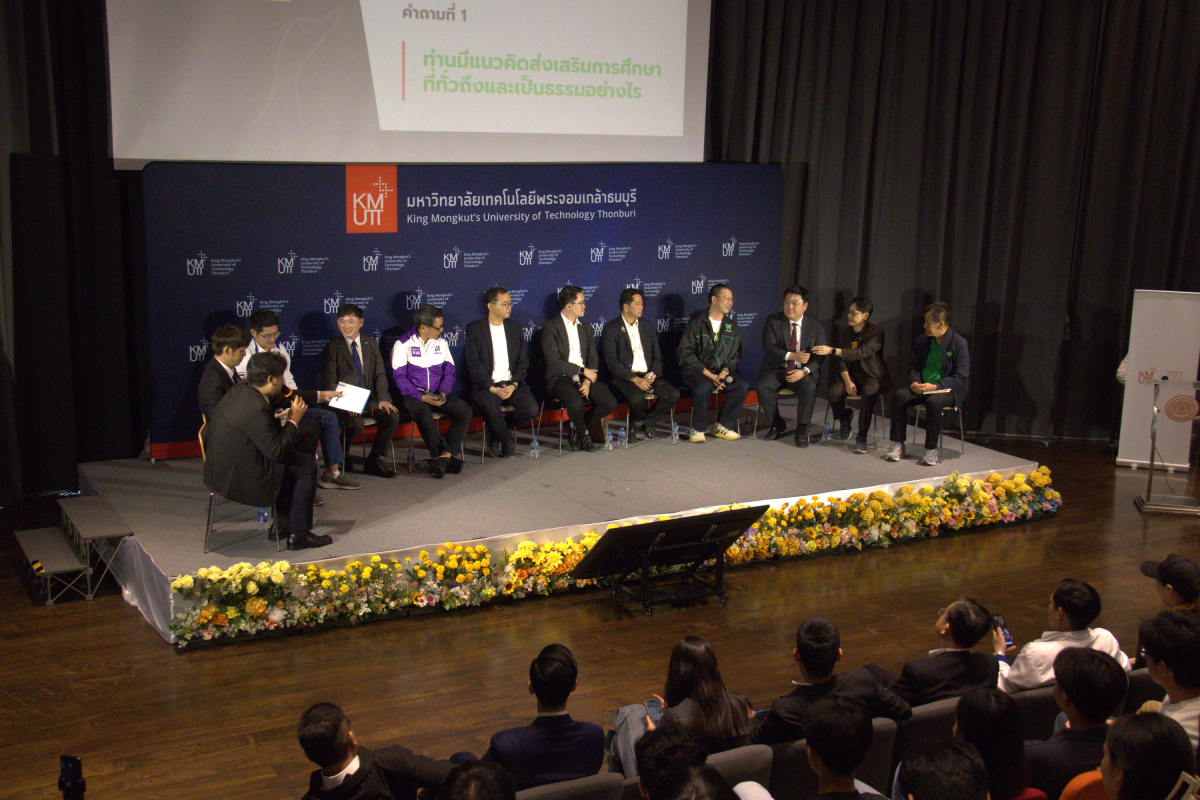
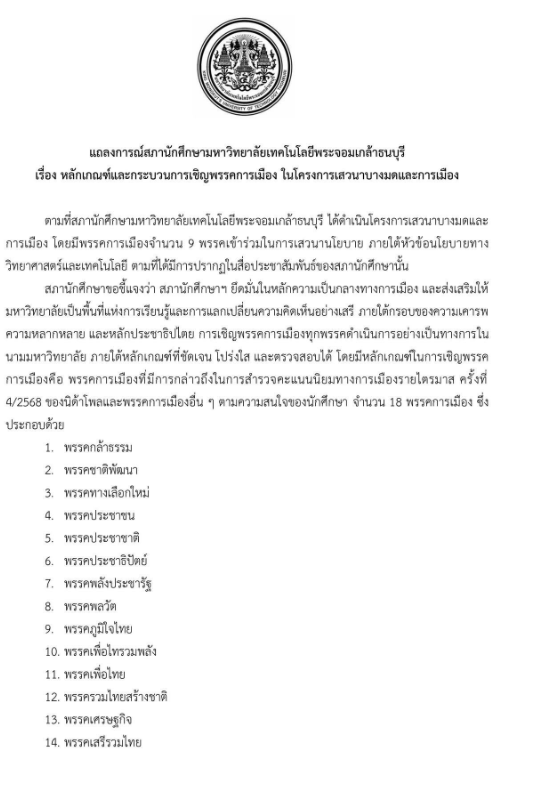
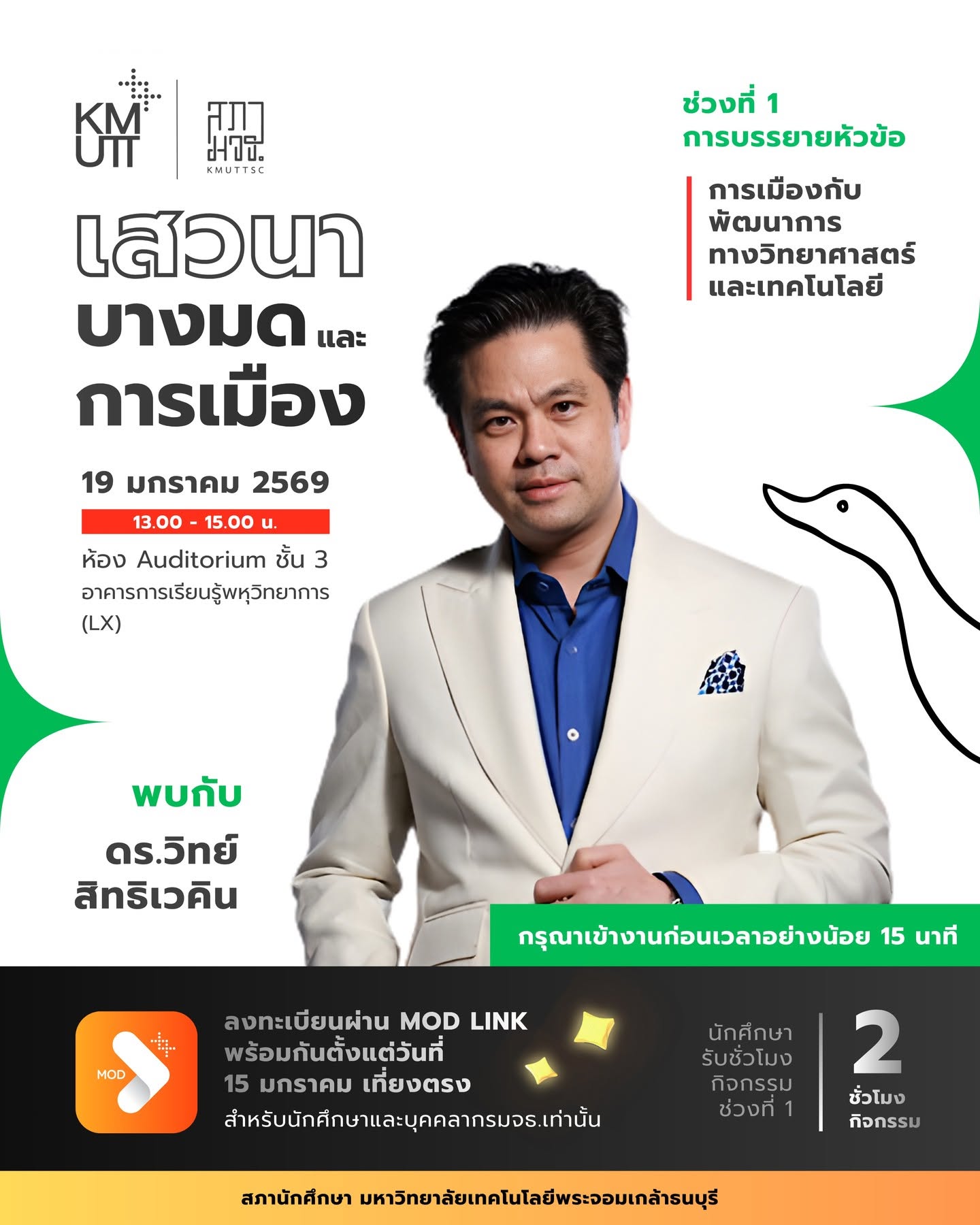
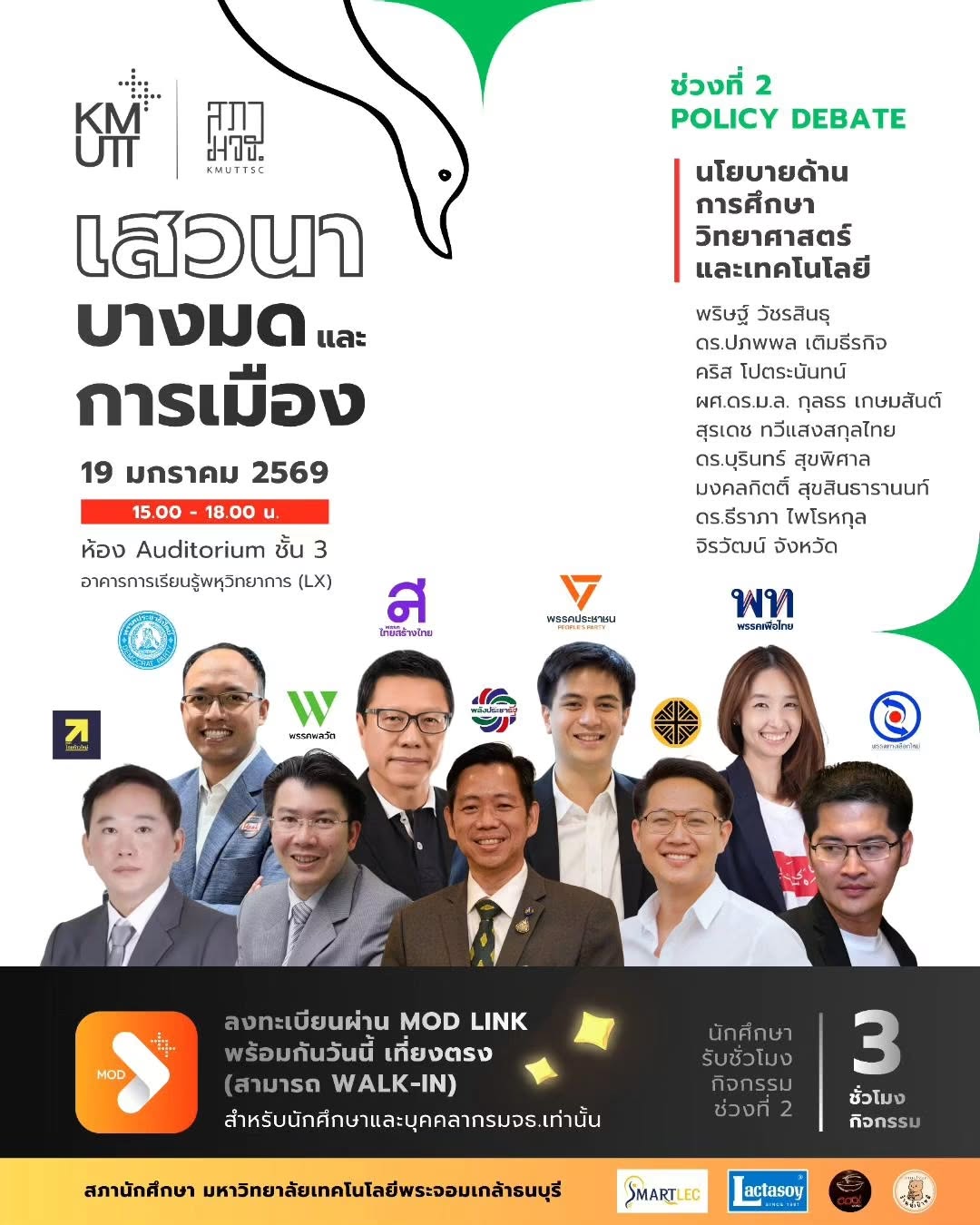
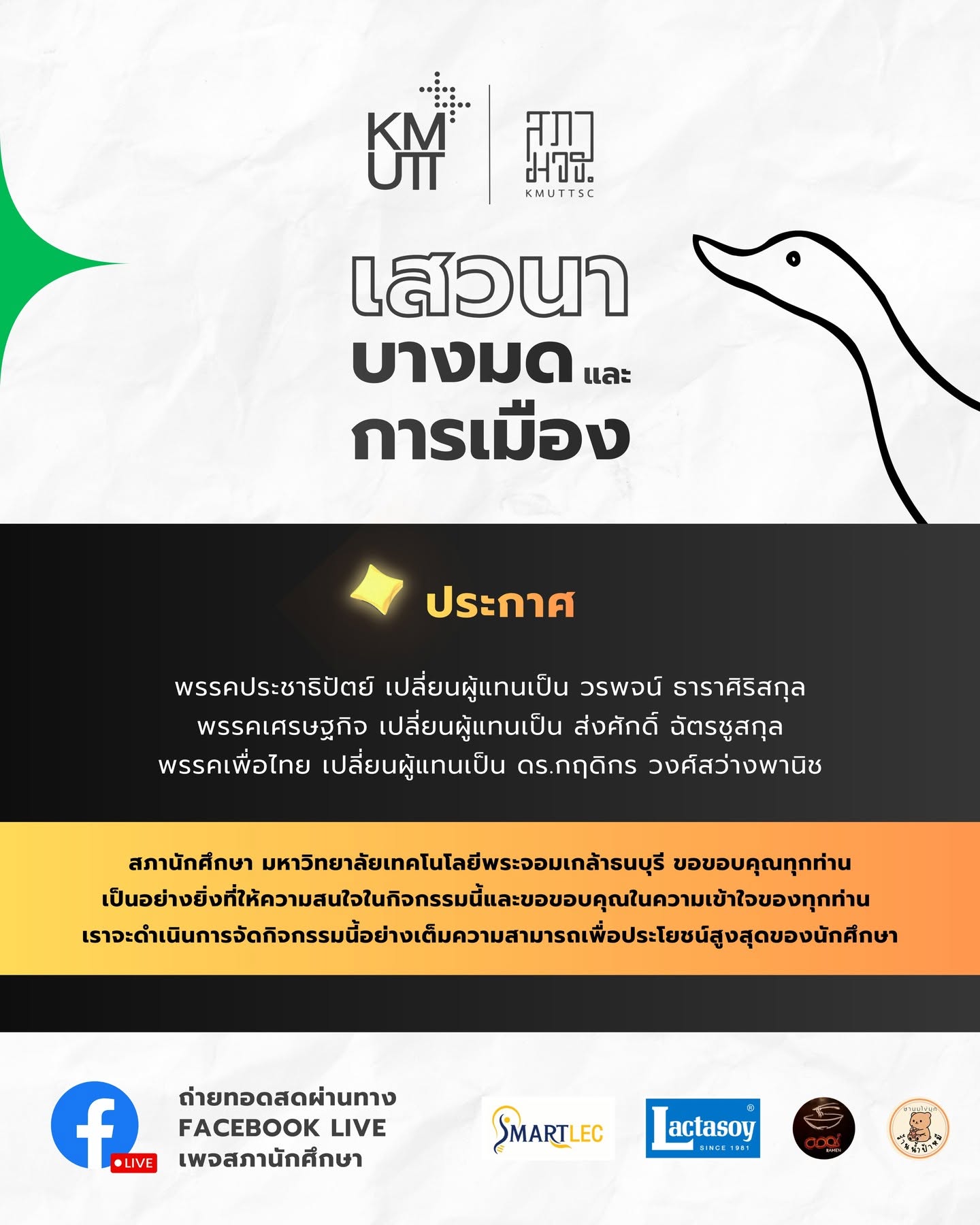
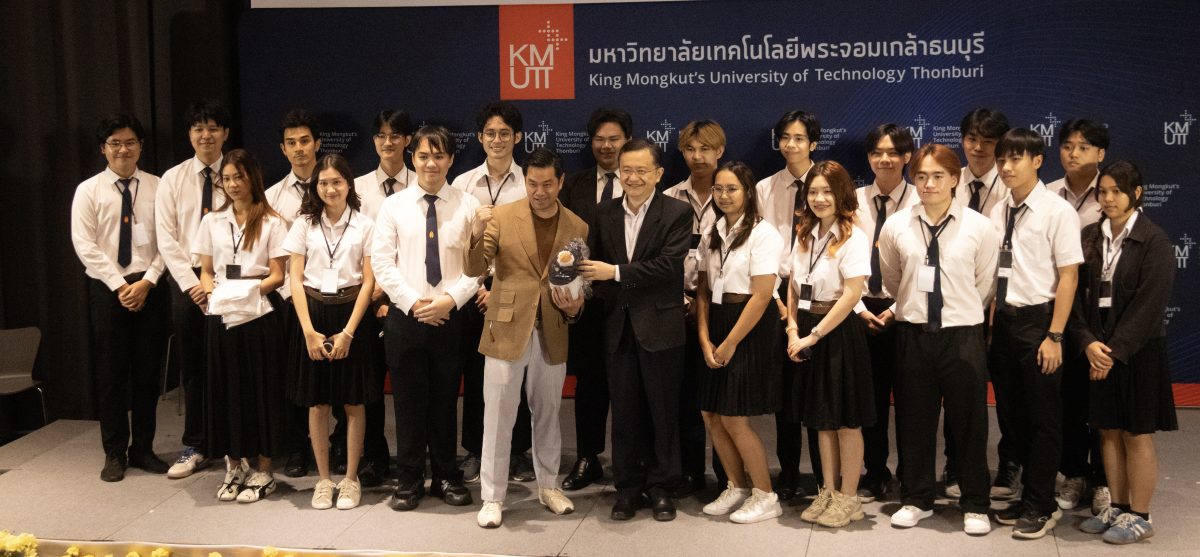
On 19 January 2026, the Student Council organised the Bangmod and Politics forum at the LX building. Students questioned representatives of ten political parties on education, science, technology, welfare and the loss of scientific and engineering talent.

Student Council political discussion, LX building, 19 January 2026. Authentic photograph published by KMUTT.
Original student and faculty election material

Student Council and Student Organisation notices

The original source labels this group “KMUTT Student Organization Administration Organization”. These notices concern student bodies, not seats on the University Council.

Constituency / noticeRecorded voters / printed turnoutEndorseDo not endorseAbstain
Engineering · notice 1632 / 11.7%374 (59.2%)82 (13.0%)176 (27.8%)
Multidisciplinary Sciences50 / 15.77%42 (84.0%)1 (2.0%)7 (14.0%)
Engineering · notice 2632 / 11.7%423 (66.9%)57 (9.0%)152 (24.1%)
Industrial Education and Technology224 / 10.35%146 (65.2%)21 (9.4%)57 (25.4%)
Science357 / 22.24%301 (84.3%)8 (2.2%)48 (13.5%)
Information Technology149 / 16.43%117 (78.5%)12 (8.1%)20 (13.4%)
Architecture and Design · notice 1161 / 11.83%85 (52.8%)19 (11.8%)57 (35.4%)
Architecture and Design · notice 2161 / 11.83%87 (54.0%)17 (10.6%)57 (35.4%)

Native figures transcribed from the supplied endorsement notices. Repeated constituency totals are separate candidate notices and must not be summed as unique voters. Individual dates are not printed on these eight result posters.

Original student endorsement notices, with their candidates, constituencies, turnout and responses preserved. Individual publication dates are not printed.

Original application notice · academic year 2025

Now accepting applications for Student Council members and the Student Organization Administrative Committee for the 2025 academic year until March 28th!

Original Student Council and Student Organisation application notice: deadline 28 March 2025, 23:59; individual Student Council applicants and Student Organisation teams of 10–15 people.

Faculty of Science Student Club

Original Faculty of Science election 2025 illustrations: Physics, Microbiology, Mathematics and SAMOVIDYA. Names and rankings are preserved in the artwork.

Original Faculty of Science voting-form notice, academic year B.E. 2568 (2025). The original QR code is retained.

Industrial Education and Technology Student Club

Original FIET student-club president announcement and seven-candidate results for academic year B.E. 2568 (2025). Both posters are retained whole.

Rank in original noticeBallot numberVotes
17208
21198
34121
4341
5638
6233
759

Engineering Student Committee · 2025 recruitment

Join the Engineering Student Committee, Faculty of Engineering, Academic Year 2025!

If you are passionate about student activities, eager to develop valuable soft skills beyond the classroom, or looking to connect with new friends from different departments, faculties, or even universities, the Engineering Student Committee could be the perfect place for you. Come and experience it for yourself, and discover that being part of the Engineering Student Committee offers far more than you might expect.

Application Deadline: 17 April 2025

Original Engineering Student Committee recruitment notice. Application deadline: 17 April B.E. 2568 (2025). This is a historical invitation, not a completed participation count.

SIT Student Association Holds Online Election for the New Executive Committee for Academic Year 2025

Original School of Information Technology NEXT GEN candidate announcements, academic year B.E. 2568 (2025). These posters announce candidates, not verified winners.

Alumni association · separate institutional background

The complete supplied evidence follows, including faculty election material and the alumni association reference section. Alumni association information is retained as institutional background and is distinct from student union representation.

Office of the President of the Alumni Association

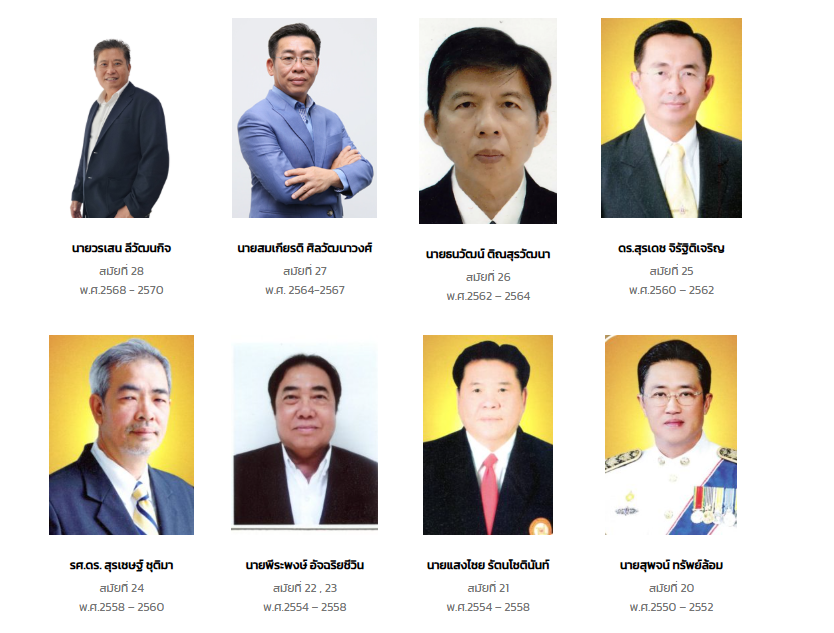
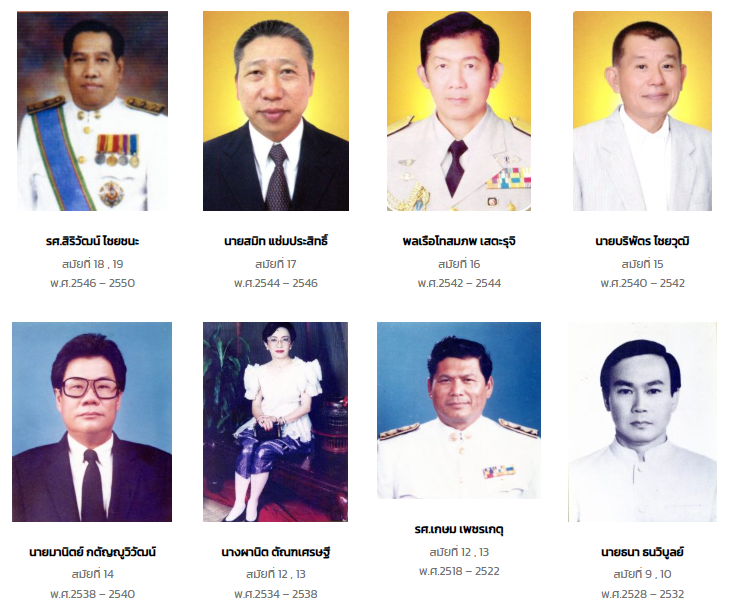
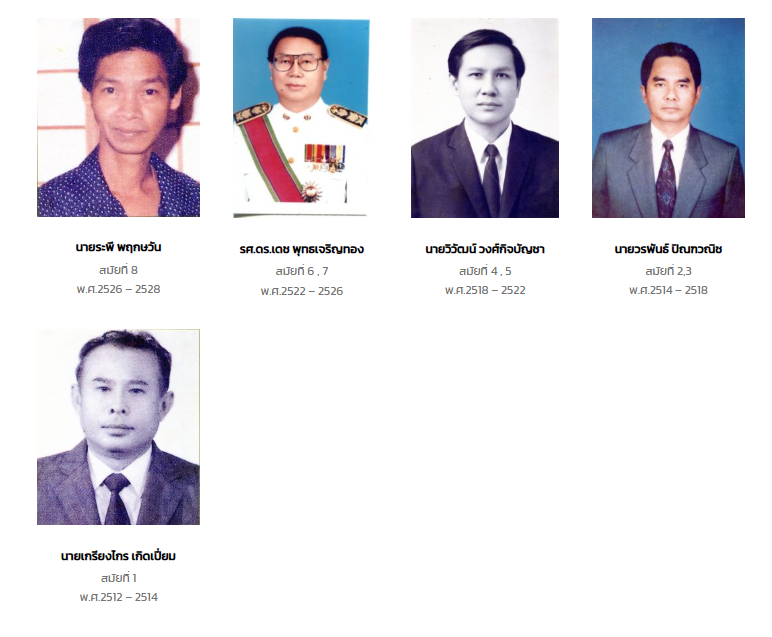
Original alumni-association presidential directory and history. The original terms and years are retained; this record is distinct from current student representation.

Alumni Association Board

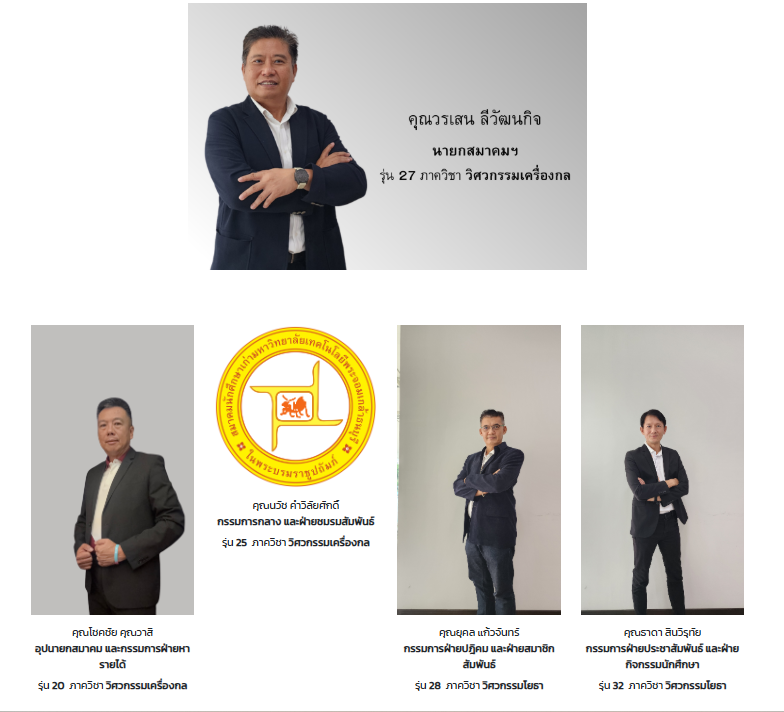
Original alumni-association board illustrations. Identical repeated source images are shown once; no new appointment or election date is assigned.

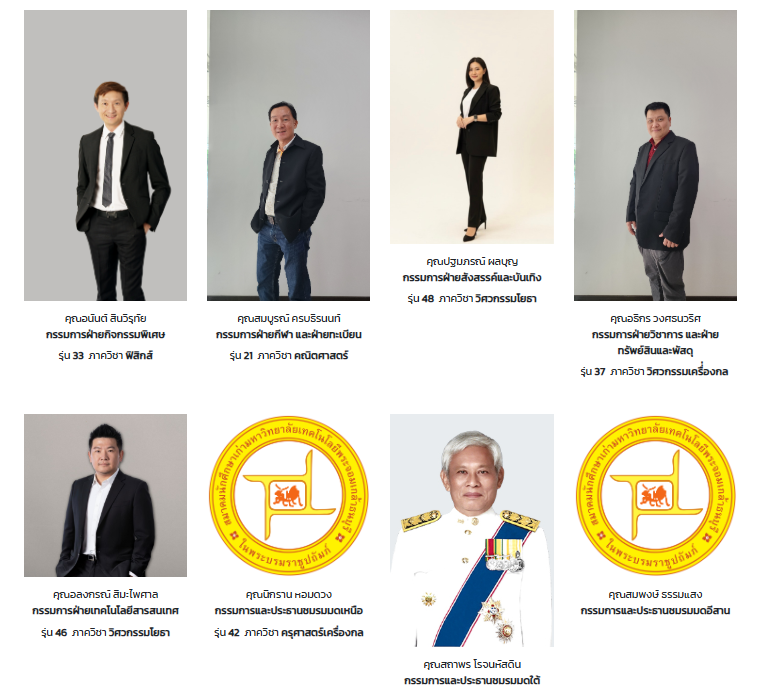
Original alumni-association board directory excerpt, retained as institutional background.
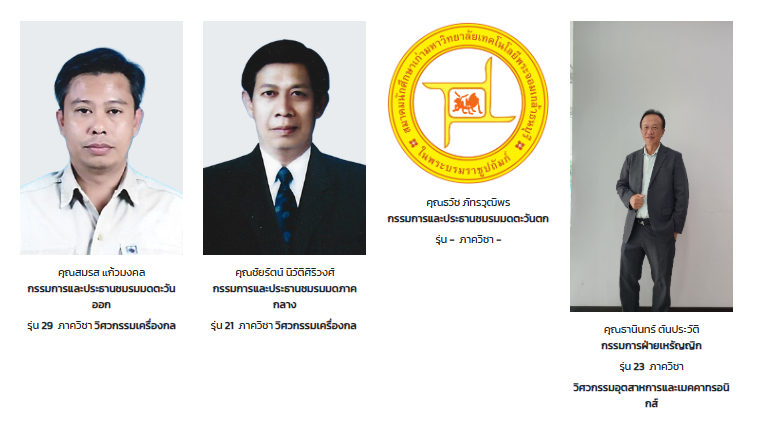
Original individual alumni-association board illustration, retained with its supplied context.
Sources and evidence links

3. Identify and engage with local stakeholders

A written route for stakeholder participation

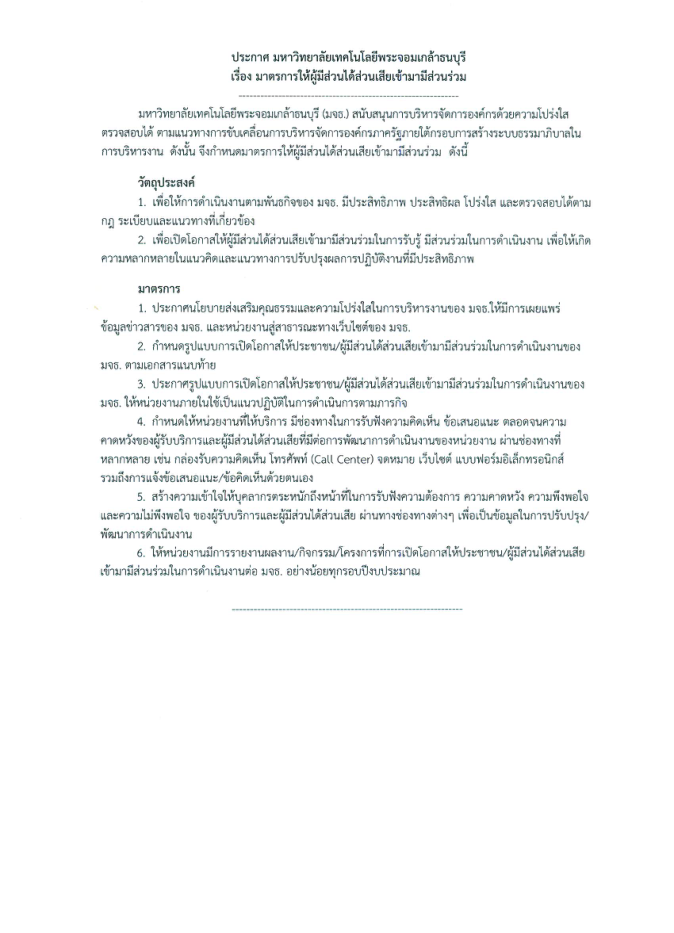
KMUTT publishes its Measures for Stakeholder Participation with the university’s integrity and transparency announcement dated 31 May 2019. The procedure requires service units to collect views, suggestions, needs and expectations through comment boxes, telephone, correspondence, websites, electronic forms and direct contact, and to report participation activities at least annually.

Published policy context
31 May 2019
The signed integrity and transparency announcement retains its actual issue date.
Reporting responsibility
At least annually
Units report participation results, activities and projects to the university every fiscal year.

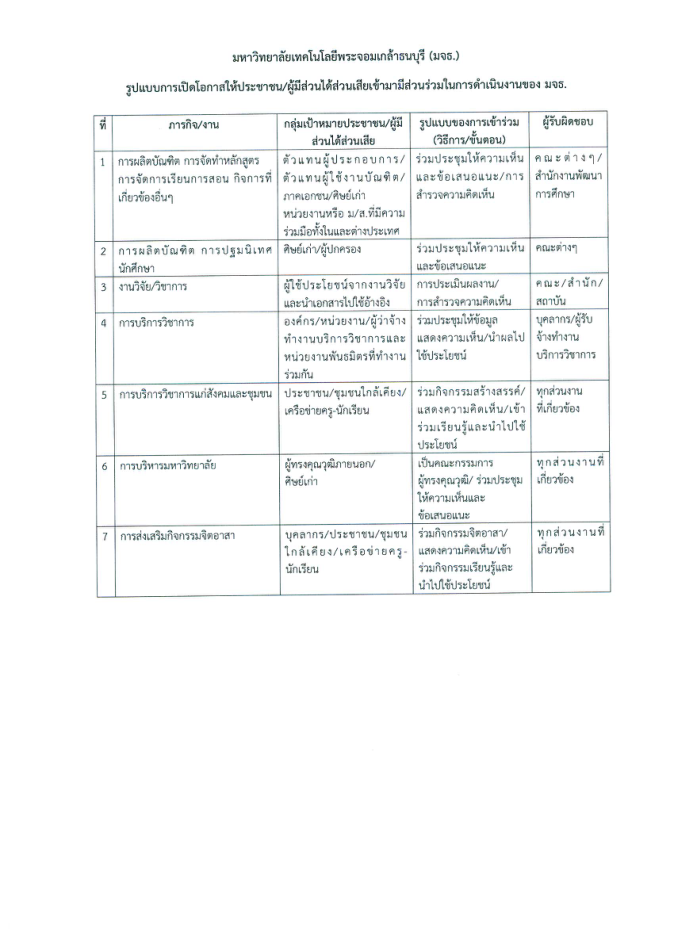
Who is invited to participate?

Nearby communities and teacher–school networks
Community academic services and volunteering: joint activities, opinions, learning and practical use of results.
Employers, industry and alumni
Curriculum meetings, recommendations and surveys on graduate education.
Research users and service partners
Research evaluation, feedback and meetings to provide information on academic services.
External experts and alumni
Committee membership and meetings contributing opinions on university administration.

This framework identifies local external communities explicitly rather than treating the university’s internal personnel as the only stakeholders. The responsible units are assigned listening and reporting duties. The 2019 policy date is retained; no later policy review date is inferred.

Listening channels, unit responsibilities and annual reporting

  1. Publish university and other agency information on the KMUTT website in accordance with the announced policy for integrity and transparency in university administration.
  2. Encourage the public and stakeholders to participate in the work of university units.
  3. Announce opportunities for the public and stakeholders to participate in the work of internal units, providing guidelines for carrying out university missions.
  4. Assign service units channels for listening to opinions, suggestions, needs and expectations about improving operations: comment boxes, telephone and call centres, correspondence, websites, electronic forms and direct submission of opinions.
  5. Build staff understanding of their duty to listen to service users’ and stakeholders’ needs, expectations, satisfaction and dissatisfaction through different channels, and use the information to improve operations.
  6. Require units to report results, activities and projects that allow the public and stakeholders to participate, to the university at least every fiscal year.

English reading of the six published participation measures. The complete supplied policy wording and the original policy pages are retained in the original-policy panel.

External service-user feedback · 10 March 2025

Date and venue
10 March 2025
CB2 · external stakeholder assessment with NACC officials
Respondents
More than 65
A mixed group that included external service users and current students
Purpose
Operational improvement
Feedback and suggestions about the university’s services and operations

On 10 March 2025, KMUTT hosted National Anti-Corruption Commission officials and more than 65 respondents for external stakeholder assessment at CB2. Participants included alumni, companies, shops, entrepreneurs, university contractors and continuing education representatives, alongside current students. The university described the feedback as input for improving its operations. This provides a dated example of identifying external service-user groups and inviting their views.

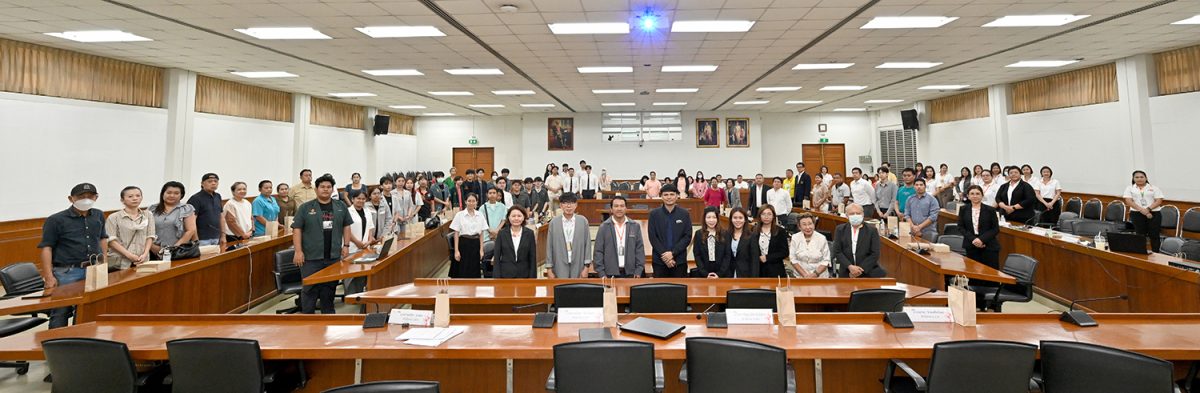
External stakeholder assessment at KMUTT, 10 March 2025. University photograph.

Public consultation on the draft climate plan · 7 July 2025

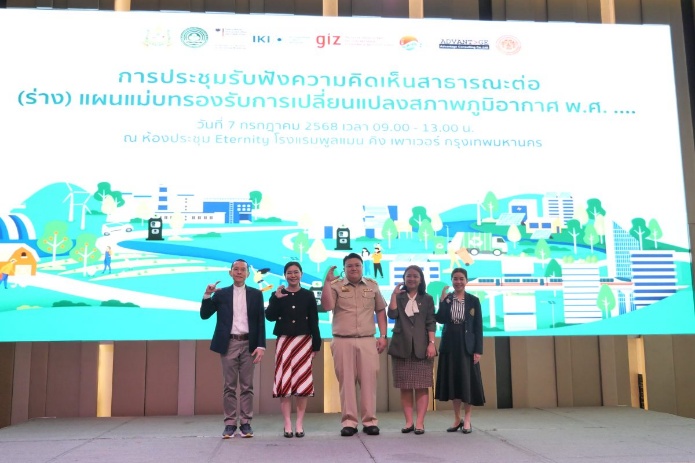
09:00–13:00 · Pullman Bangkok King Power Hotel · national policy consultation

In response to its commitments under the Paris Agreement, which aims to limit the increase in global average temperature to 1.5°C, Thailand has undertaken the development of the revised Draft Climate Change Master Plan (B.E. …) to establish a strategic framework for greenhouse gas mitigation and to strengthen the country’s long-term climate resilience and adaptation capacity.

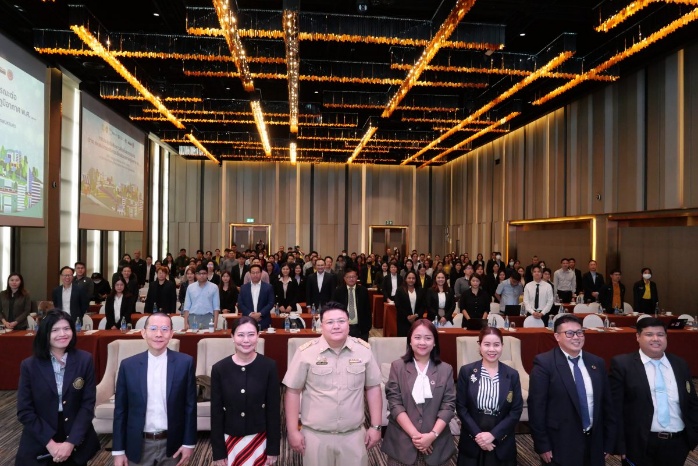
On 7 July 2025, from 9:00 AM to 1:00 PM, the Department of Climate Change and Environment organized a Public Consultation Meeting on the Draft Climate Change Master Plan at the Pullman Bangkok King Power Hotel. The project was supported by Assistant Professor Dr. Pasanan Asavarak and Dr. Itthisak Jirapornvaree of King Mongkut’s University of Technology Thonburi (KMUTT), who served as project consultants, in collaboration with the Deutsche Gesellschaft für Internationale Zusammenarbeit (GIZ) GmbH.

The consultation provided a platform for representatives from the public sector, private sector, academia, and civil society organizations to contribute comments and recommendations on the draft plan. Discussions focused on ensuring that the plan comprehensively addresses key areas, including energy, agriculture, water resources, public health, tourism, and human security, while aligning with the Sustainable Development Goals (SDGs) and responding effectively to the rapidly evolving global climate landscape.

The revised Master Plan is expected to serve as a key national policy instrument for guiding Thailand toward its carbon neutrality and net-zero greenhouse gas emissions targets through an inclusive, evidence-based, and participatory approach that engages stakeholders across all sectors. The consultation process reflects Thailand’s commitment to transparent governance, stakeholder engagement, and collaborative climate action in support of sustainable development.

Original photographs of the public consultation on 7 July 2025. KMUTT researchers served as project consultants; this is consultation on a draft national plan, not evidence of an approved plan or a measured emissions reduction.

Ethics in Action · 27 April 2026

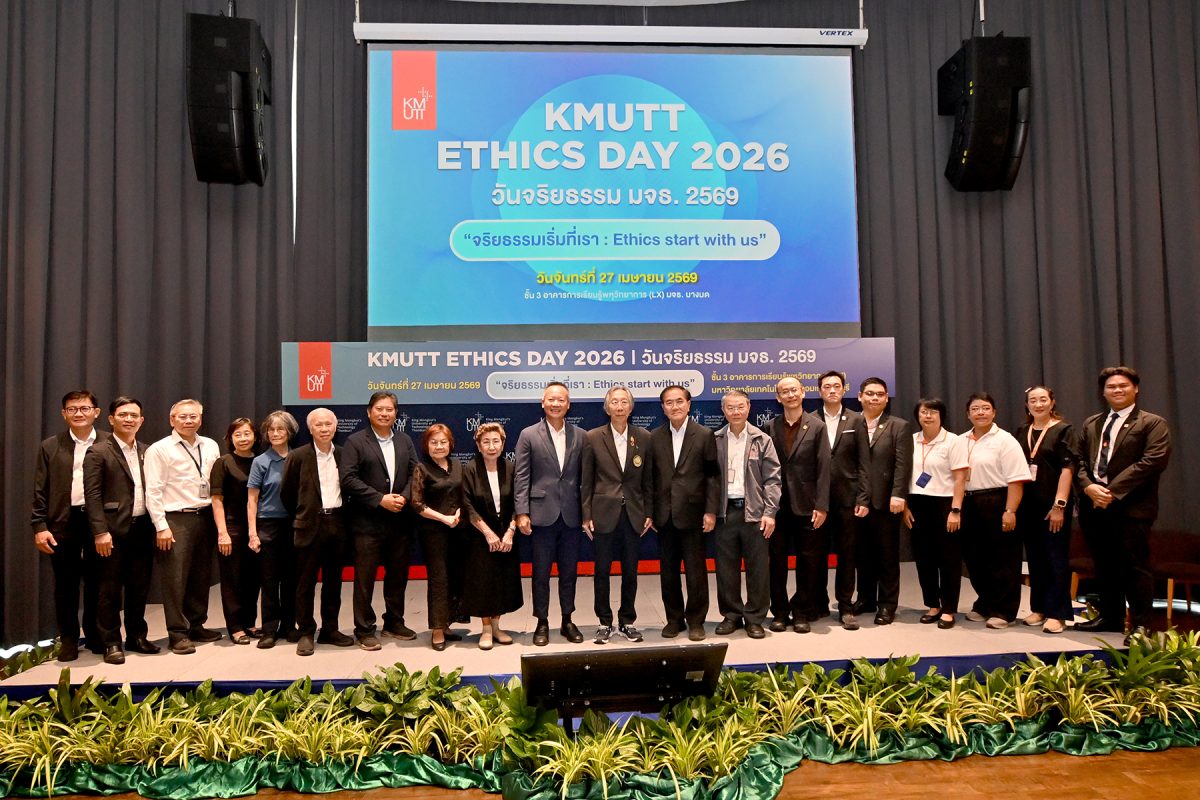
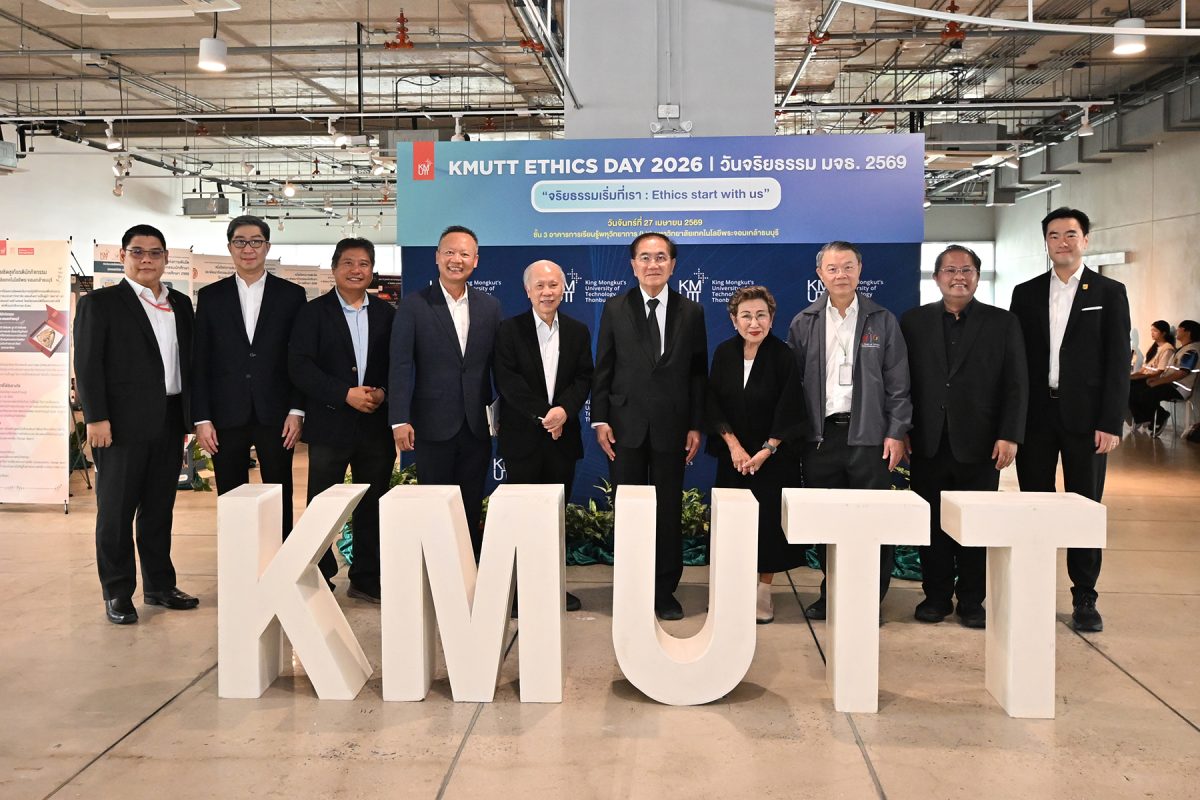
On 27 April 2026, King Mongkut’s University of Technology Thonburi (KMUTT) organized KMUTT Ethics Day 2026 under the theme “Ethics Start with Us.” The event aimed to promote the values of integrity, ethical conduct, and good governance across the institution, while encouraging the active participation of administrators, faculty members, staff, and students in fostering a transparent and accountable organizational culture.

During the event, the President of KMUTT, together with members of the university community, jointly declared their commitment to the pledge, “KMUTT is committed to building a sustainable and effective good governance organization.” This declaration reflected the university’s dedication to advancing transparency, preventing corruption, and strengthening governance practices in all aspects of institutional management.

The program also featured a special lecture on governance in higher education institutions, recognition awards for university units demonstrating outstanding performance in integrity and transparency assessments (ITA), and the “Ethics in Action” discussion forum. The forum brought together representatives from diverse stakeholder groups, including university administrators, researchers, staff members, alumni, entrepreneurs, and student leaders, to exchange perspectives on ethical conduct and professional standards in their respective roles.

In addition, members of the KMUTT community were invited to sign the university’s declaration of commitment through an online platform, reaffirming their collective dedication to ethics, transparency, and accountability. This initiative demonstrates KMUTT ongoing efforts to embed the principles of good governance into its institutional culture and to promote an effective, transparent, and sustainable institution that serves society with integrity and responsibility.

KMUTT Ethics Day 2026, 27 April 2026. The programme brought internal participants and external voices, including alumni and entrepreneurs, into a discussion of ethical roles. Original university photograph.
Earlier governance activities and the complete Daily Management record

The supplied policy, tables, activities and photographs are retained below with their original dates. Earlier activities remain historical context; dated additions above concern 2025.

Historical and internal governance context. The original English headings “Executive Participation, 1964 (o35)” and “B.E. 2022–2526” are retained below as supplied; they are not used to assign a new event date or a corrected planning period.

Original executive-participation record · earlier years

Executive Participation, 1964 (o35)

In co-improvement, development and promotion of moral and transparency agencies.

King Mongkut's University of Technology Thonburi (KMUTT supports corporate management with transparency can be verified according to the guidelines for driving government organization management under the framework of creating a good governance system in Administration The current rector announces the university administration policy with honesty, transparency, and morality, ethics and professionalism on February 4, 2019 by adhering to the "Code of Conduct Organization (Code of Conduct)" which has been promulgated since 2011 and is used as a standard of ethical conduct of KMUTT community until the present year.

joint improvement Develop and promote the unit on morality and transparency of the President for the year 2022.

1) The President announces the policy of honesty in work through meetings to exchange ideas, get acknowledgment problems, community or policy announcements through various public relations media to personnel of KMUTT.

In 2022, the university organized a seminar project on KMUTT Strategic Plan No. 13 (B.E. 2022 – 2526) 1st time (Kick off) on January 21, 2022 in online format via Microsoft Teams and together at AD907 Meeting Room, 9th Floor, Office of the President to remove the KMUTT development plan 2017 – 2036 or KMUTT Roadmap 2036 is a framework for the development of KMUTT in the medium term of 5 years, including brainstorming opinions from All departments and related parties amounted to more than 200 people, chaired by Assoc. open meeting as well as giving the university administration policy (Policy document Asst. Prof. Prasert Kanthamanon Senior Vice President for Administration Contribute to the development guidelines that are important for the preparation of the KMUTT strategic plan, which is considered Direction and operational guidelines according to the vision (Vision), including linking the development of departments in the university to be consistent with the potential of KMUTT and the direction of national development That's right in the era of change. Fast for a new normal society (New Normal and future normal era (Next Normal).

The issue of management with transparency and integrity continues to be implemented continuously.

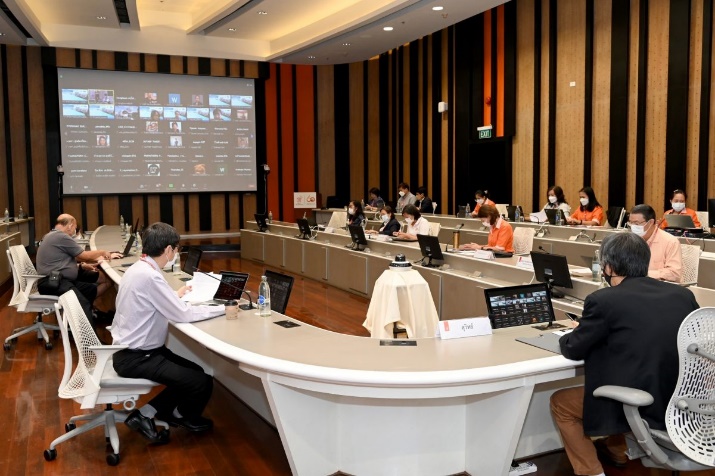
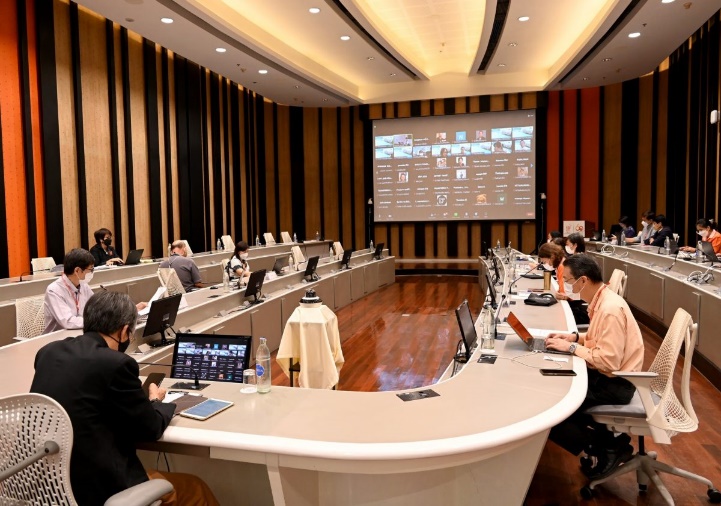
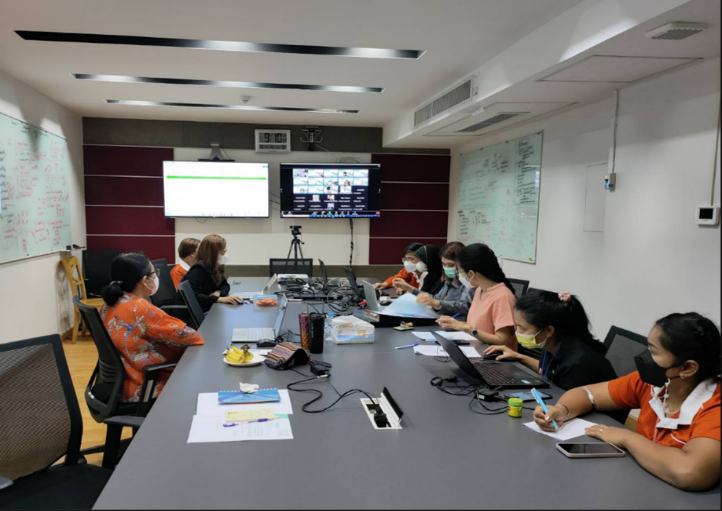
Original photographs accompanying the earlier executive-participation narrative. The supplied record discusses a planning meeting on 21 January 2022; no new capture dates are assigned.

Original strategic-planning presentation screenshots. Their original graphics, wording and periods are retained whole.

Code of Conduct communication and orientation

2) Principles for working with professional ethics (Code of Conduct) brought to awaken the personnel in the new teacher orientation and meeting with the president's community.

Original ethics-orientation and university communication photographs and screenshots, retained in their historical context.

Using university assets · 10 November 2022

KMUTT organized an activity “Creating understanding Compliance with measures and guidelines for using KMUTT assets.”

King Mongkut’s University of Technology Thonburi The ITA ad hoc committee organized activities “Create understanding Compliance with the measures and guidelines for using KMUTT assets” on Thursday, November 10, 2022, from 9:00 a.m. – 12:00 p.m. at the Prapa Meeting Room. Prajak Suphaniti, 9th Floor (AD 907), President’s Office Building and through electronic media (Zoom Meeting) with Asst. Prof. Sumet Angkasirikul, Vice President for Human Resources Reported on the objectives of the activity, Assoc. Prof. Dr. Suwit Saetia gave the opening speech and Asst. Prof. Dr. Prasert Khanthamanon, Senior Vice President for Administration Explain knowledge of compliance with the measures and guidelines for using KMUTT assets. The program was conducted by Ms. Chanthana Phuttharaporn, Director of the Administrative Office. (Director and Secretary ITA Ad Hoc Committee) Lecture topics include

Management communication and Daily Management

3) Policy of the President and the Management Team To drive the administration of the university with integrity honestly verifiable through tools to improve and develop routine tasks to be effective (Daily Management).

from the declaration of good faith in the administration of the university with honesty Honesty of the President and management team At the start of his term in 2021, the President has Continue to announce policies to create participation. and help solve communication problems for personnel Insiders know about the administration of the university and gain an understanding of the administration with morality. and transparency. continually called SIT&SIP at each meeting which circulates to meet each department.The Rector will mention Guidelines, policies for university administration that are transparent, verifiable, want to develop and create workers who create value to society to operate with a process procedure that responds to customer service at all levels. participation through various activities of the university. In 2021, the rector has emphasized on the Drive university management with quality, transparency, and integrity through the words “Speed ​​and Communication” by giving the policy to the Senior Vice President for Administration drive improvement and development Streamline routine tasks through a tool called Daily Management.

Original university management and communication illustrations. These concern institutional and internal management; they are not counted as external community respondents.

Daily Management work plan · 2021–2023

The action plan to improve and develop the routine work of both KMUTT has been planned for 3 years (B.E. 2021-2023).

The source has year headers 2021, 2022 and 2023; the 2021 month labels are JAN, FEB, MAR, APR, MAY, JUN, JUL, AUG, SEP, OCT, NOV, DEV. The final label “DEV” is retained as printed. Calendar entries below are literal source entries, not interpreted dates. Blank periods are unassigned, not treated as completion records.

Original no.Complete original activityPrinted calendar entries / highlightsResponsible person or unit
1Study the policy from the management to find a preliminary approach.
Listen to the Vice Rector for Senior Administrative Affairs Provide policies and guidelines for routine administration (DM). to the Suggestion Meeting / PI Meeting / T2 Meeting2021 / FEB — printed entry: 2.2Senior Vice President for Administration
1.1Prepare an action plan to improve the daily work (Daily Management) of the Office of the President.
1.2Group the functions of the Office of the Ministry of Education and extend the results to the NIDA team.Director of Property Finance Department/Director.
1.3Prepare sample template for analysis of work flow
1.4Presented 1.3 at the Pl meeting2021 / FEB — printed entry: 1.7
2Organized a lecture on Daily Management with the NIDA team by the Advisor to the President for Quality Assurance. (Assoc. Prof. Kitisak Ploy Panich Charoen)2021 / FEB — printed entry: 2.2Director of the Office of Administrative Affairs and at Meeting
3Preparing DMs of the offices/organizations in the NIDA, consisting of
3.1Clarification of the Daily Management action plan2021 / MAR — highlighted source cell (blank)Assistant Manager, Property Finance Department
3.2level 0 – Analysis of the JDM (Job Description for management) of the office To answer what work (What)Director/Head of the work group in Sor.
3.3Collect and present each office's JDM plan and DM plan.Meeting of the Director General
3.4Level 1 Standardization for each Job operationDirector / Head of the work group in the field / group that Consult QA/ JMAC Consulting Group /Consultant HR coach/ HRD Group Organize training (if any)
3.5Level 2 Establishment of Control Points for each Job OperationDirector / Head of the work group in the field / group that Consult QA/ JMAC Consulting Group /Consultant HR coach/ HRD Group Organize training (if any)
3.6Level 3 Executes the job operation according to the specified criteria.Director / Head of the work group in the field / group that Consult QA/ JMAC Consulting Group /Consultant HR coach/ HRD Group Organize training (if any)
3.7Level 4 Check the control point (Control Point) to consider the control condition.Director / Head of the work group in the field / group that Consult QA/ JMAC Consulting Group /Consultant HR coach/ HRD Group Organize training (if any)
3.8Level 5 analyzes the cause of the malfunction and prevents recurrence.Director / Head of the work group in the field / group that Consult QA/ JMAC Consulting Group /Consultant HR coach/ HRD Group Organize training (if any)
3.9Report the progress of the work every month to the meetingMeeting of the Director General
3.10Level 6 Execution, Revision and Review of Standards for Job OperationDirector/Head of the work group in the Office of Education
4Meeting P! Get to know the Daily Management policy and summarize the guidelines together.Pl meeting
4.1Clarification of the Daily Management action planAssistant Manager, Property Finance Department
4.2Director/Head of the work group presented the DM guidelines to the Pl meeting.Director / Head of the work group
4.3Summary of workflow improvements, work flow adjustments for each officeDirector / Head of the work group
4.4Work Flow and SLA follow-up meetingPl meeting
4.5Meeting P! Consider a summary of recommendations and opinions from the meeting.Pl meeting
4.6Meeting P! Prepare a summary report and recommend to KMUTT.Pl meeting
4.7Water improvement project P! Enter the assessment process at the individual employee levelCoach Consulting Team (By Case)
5The meeting acknowledged the Daily Management policy from the Senior Vice President for Administration.2021 / FEB — highlighted source cell (blank)Meeting 6+1 Flagship Track 2
5.1Clarification of the Daily Management action plan2021 / MAR — highlighted source cell (blank)Assistant Manager, Property Finance Department
5.2Summary of Procedural Proposal Proposals Linked to JDM AnalysisSubcommittee
5.3Develop a project to optimize the connected workflow.Meeting 6+1 Flagship Track 2
5.4Presenting the progress of the DM project through a meeting.Assistant Vice President, Property Finance Department and team
5.5Meeting 12 prepared a summary report and made recommendations to KMUTT.Meeting 6+1 Flagship Track 2
5.6Lead network improvement projects Enter the assessment process at the individual employee levelCoach Consulting Team (By Case)

Original schedule key: “done”. Three highlighted but blank source cells are retained as annotations. Shared responsible-person cells spanning activities 3.4–3.8 are carried into each affected row.

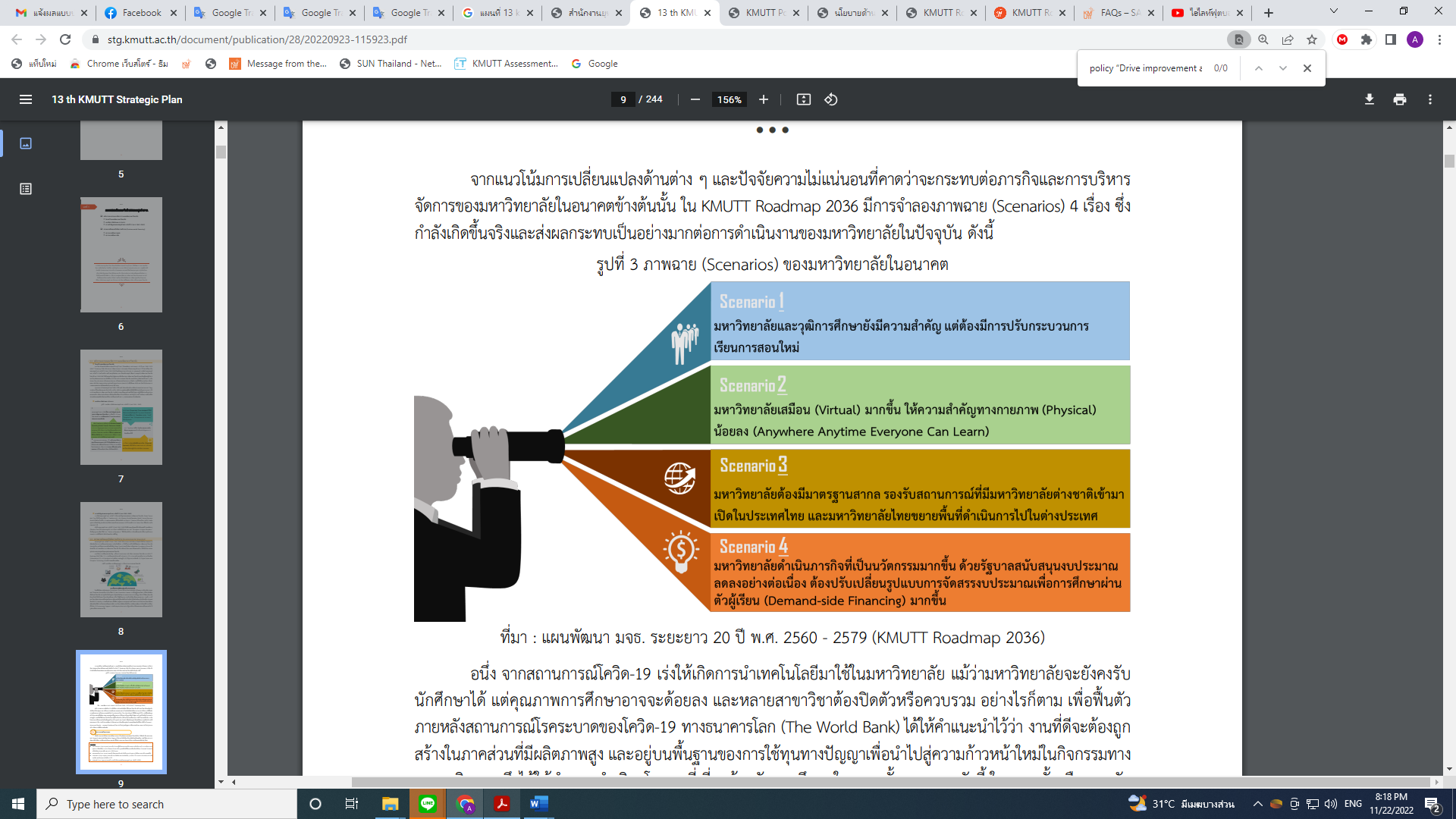
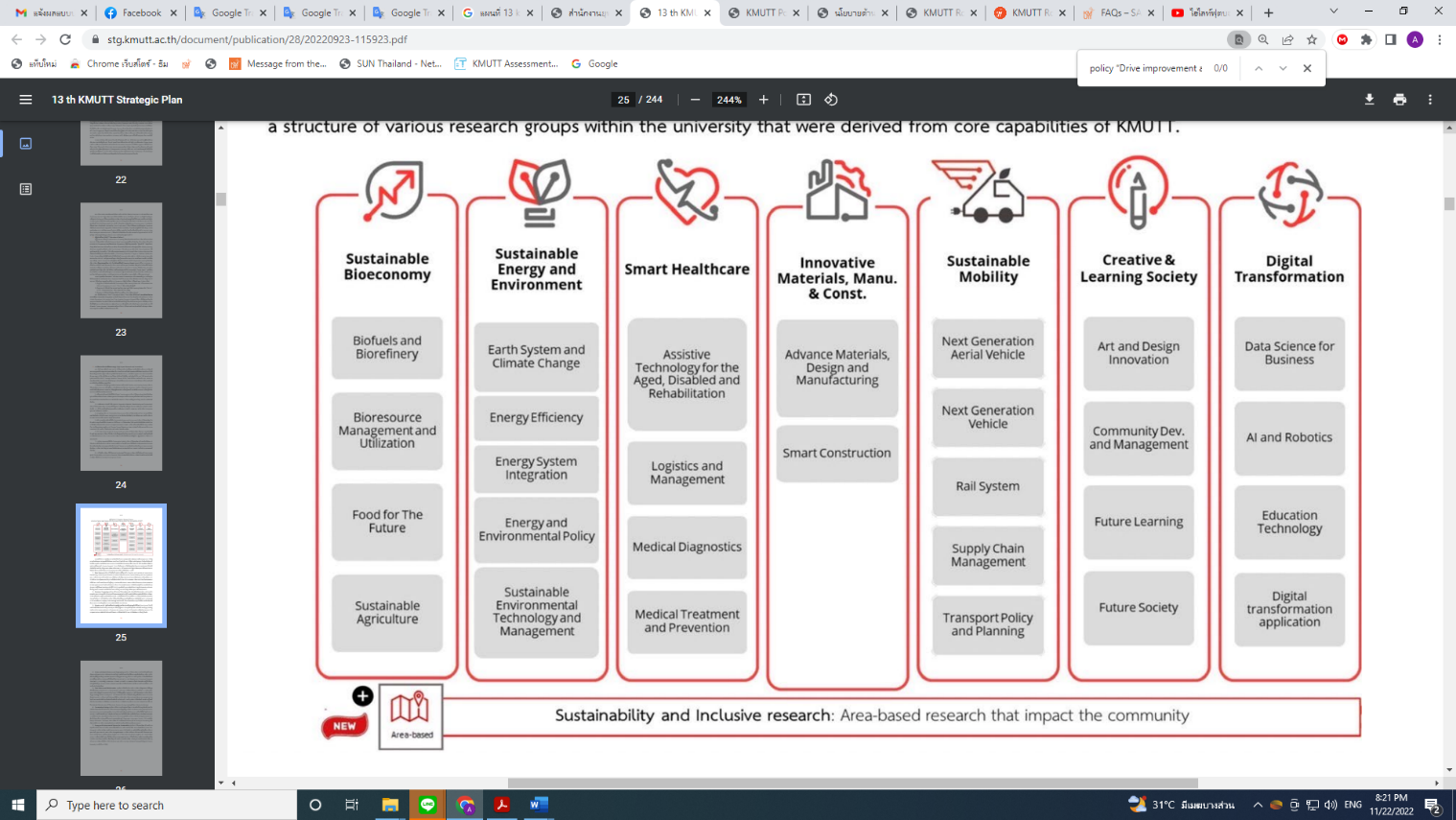
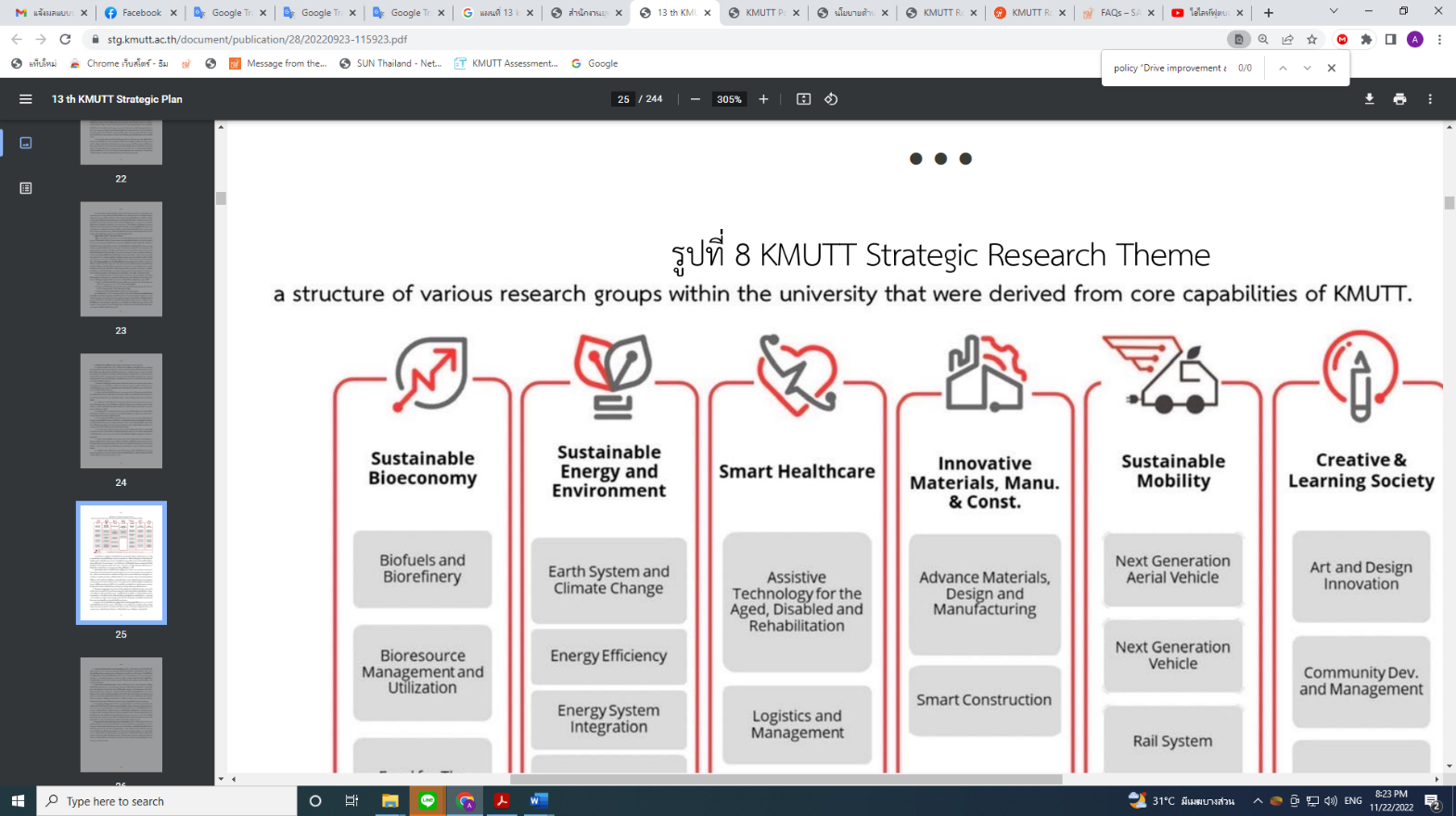
Original published policy, strategic-research and website screenshots. Formal graphics and original wording are retained whole; small or ambiguous text is not reconstructed.

Communicating corruption-complaint channels

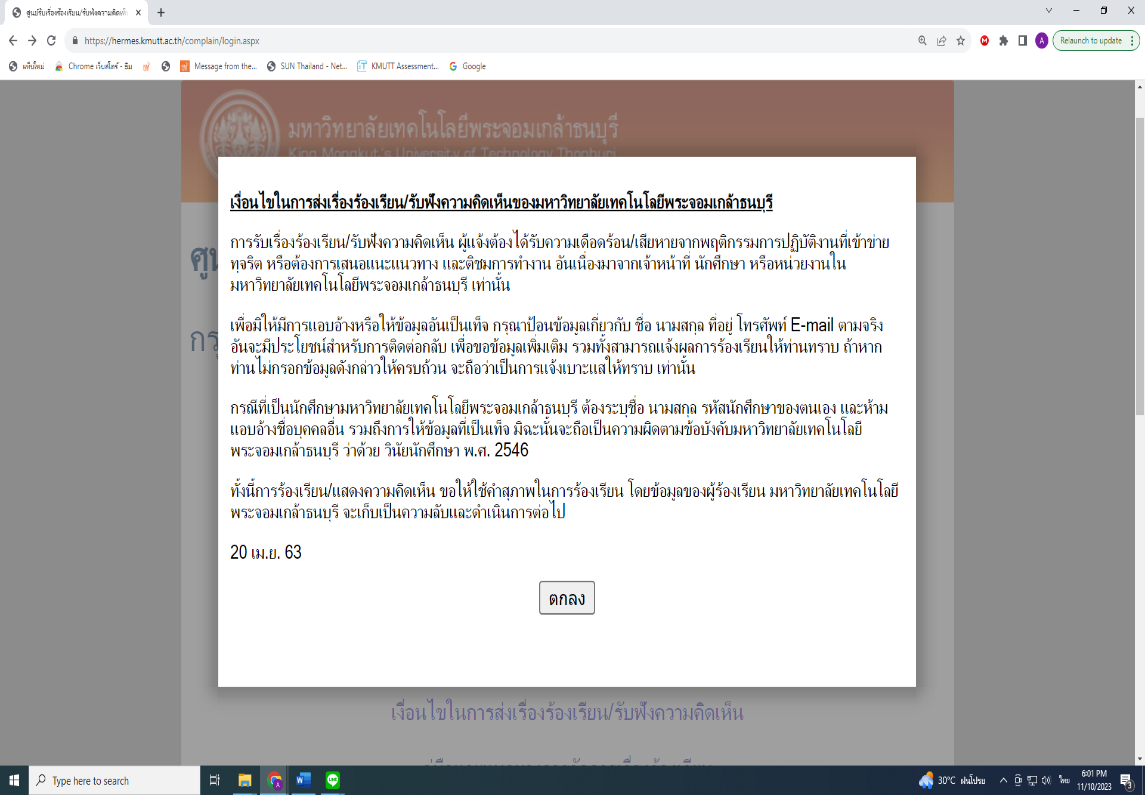
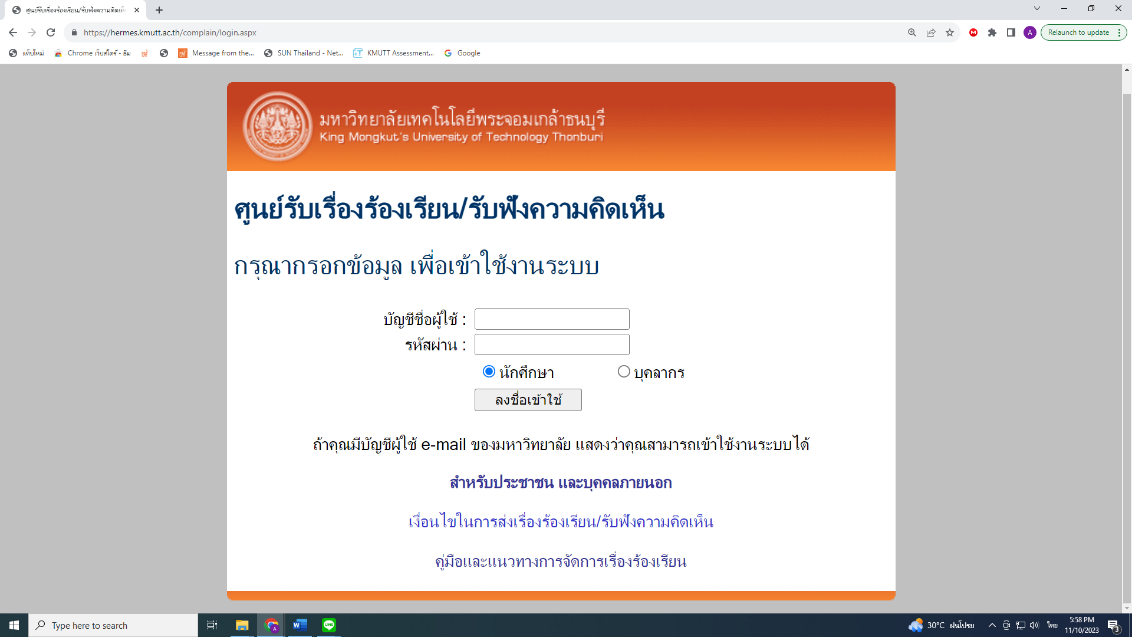
The President and administrators of KMUTT communicate to the community about handling corruption complaints to the community.

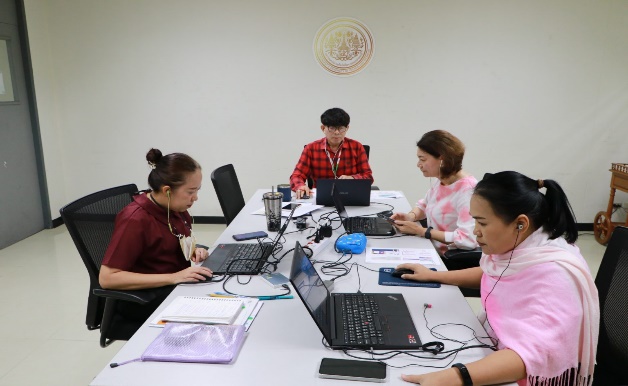
Original complaint-channel and ITA learning illustrations. These are institutional service and internal-awareness records, not a new external stakeholder count.

Supplied staff ITA seminar narrative · 27 May 2025

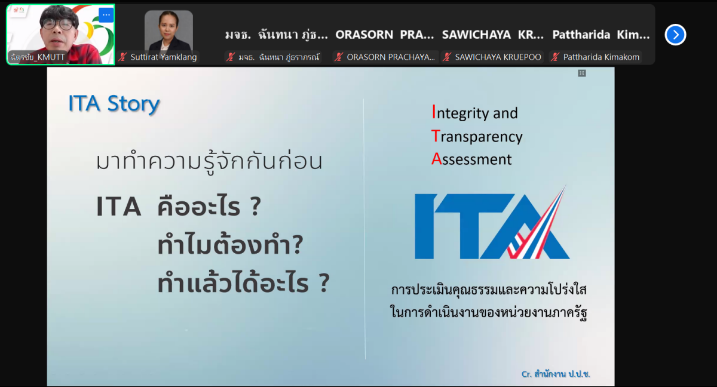
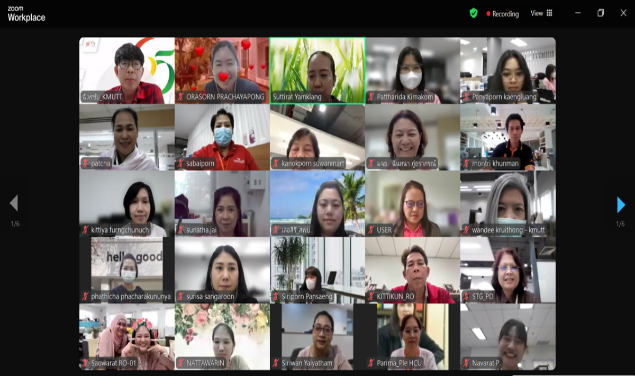
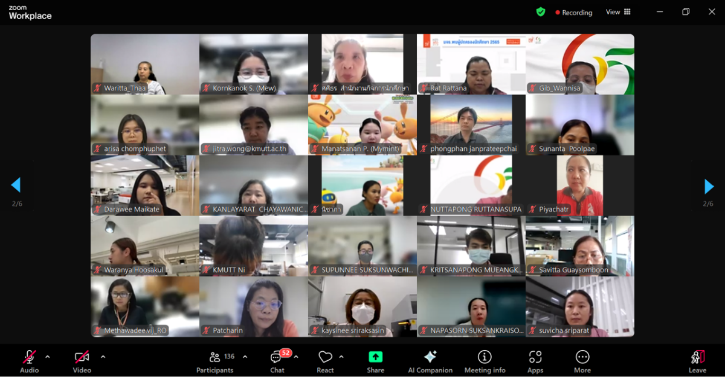
On May 27, 2025, the KMUTT ITA Ad-Hoc Coordination Team organized a knowledge seminar on the Integrity and Transparency Assessment (ITA) for public sector agencies. The seminar, titled “What is ITA? How does it concern us? Why do we need to cooperate?” was held online via Zoom Meeting for over 140 personnel from the Presidential Office. Participants also completed the ITA assessment form from the National Anti-Corruption Commission (NACC) during the session. The activity shared their knowledge on the importance of ITA and how it relates to both personnel and the university. Towards the end of the session, Staff of Office of the President were invited to participate in the Internal Integrity and Transparency Assessment (IIT). This event marks a crucial starting point in raising awareness, emphasizing the importance of, and encouraging greater participation from KMUTT personnel in the ITA assessment. Furthermore, the feedback received by the university from its personnel will serve as valuable input for continuous improvement and development of the university’s operational systems.

The preceding supplied headings mention students; this paragraph instead describes more than 140 Presidential Office personnel and an Internal Integrity and Transparency Assessment (IIT). The participant group is retained as staff, without combining it with the separate student newsletter below.

Original online ITA awareness-session screenshot supplied with the staff seminar narrative. No independent participant headcount is inferred from the visible video tiles.

External stakeholder survey invitation and the 2025 ITA result

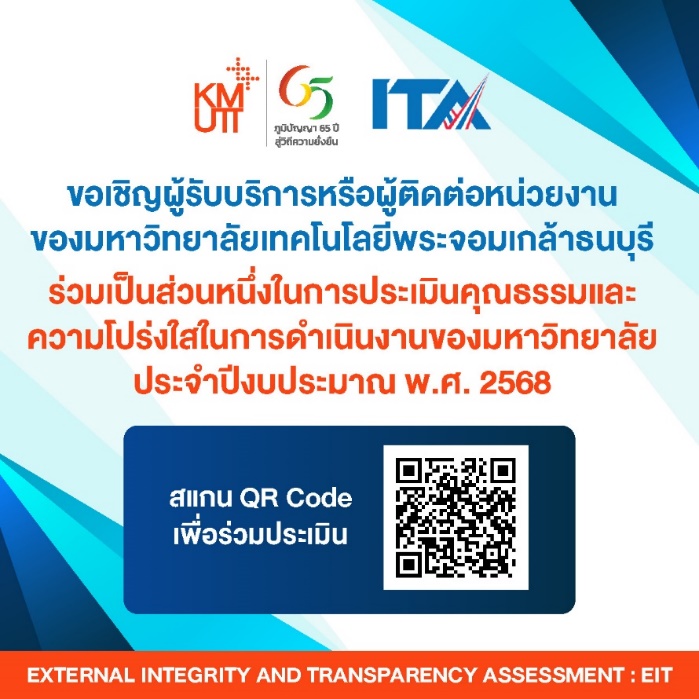
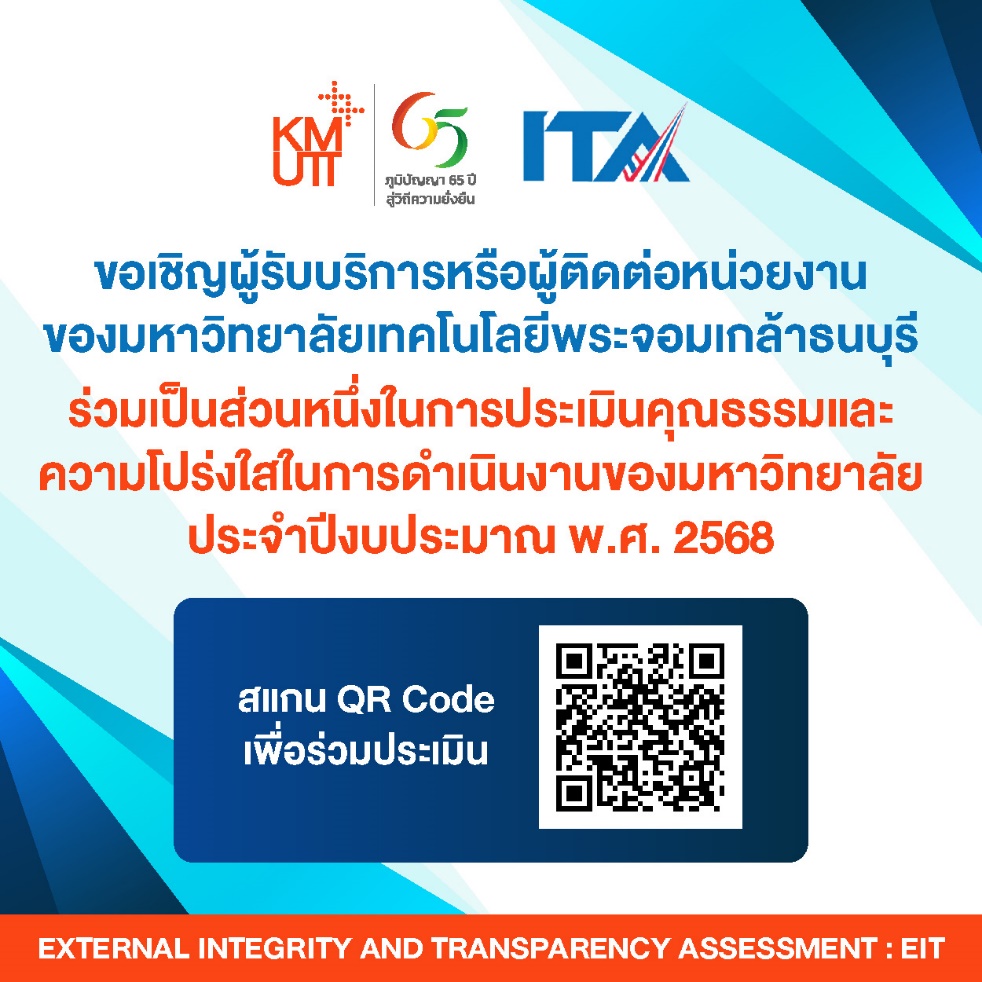
External Stakeholder Perception Survey (EIT) for the year 2025 King Mongkut's University of Technology Thonburi would like to announce the channels for responding to the External Integrity and Transparency Assessment (EIT) for the year 2025 and would like to invite external stakeholders/service recipients, including alumni, current students, juristic persons, private companies or government agencies, external individuals, those who contact or receive services from the university, to participate in the survey of opinions and suggestions for improving the quality of the university's operations.

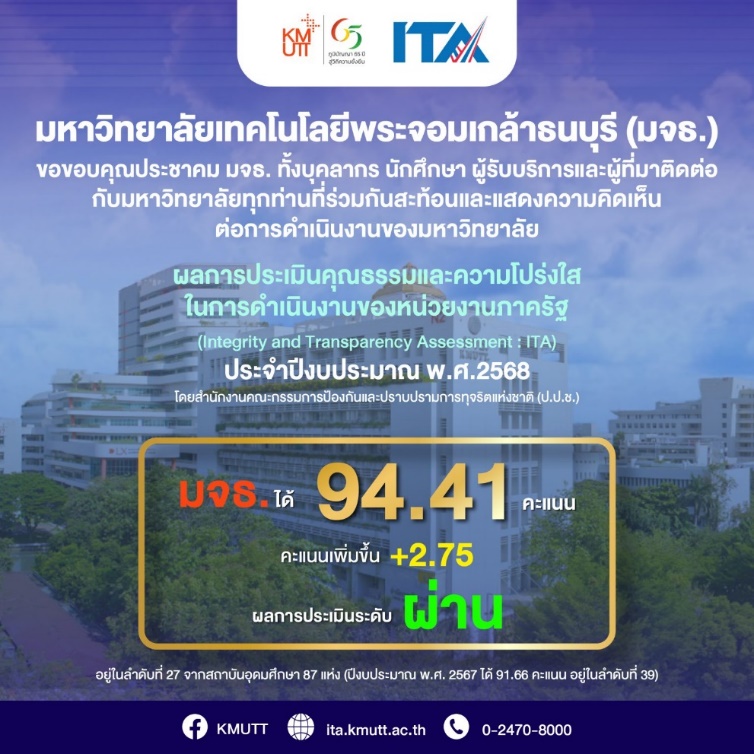
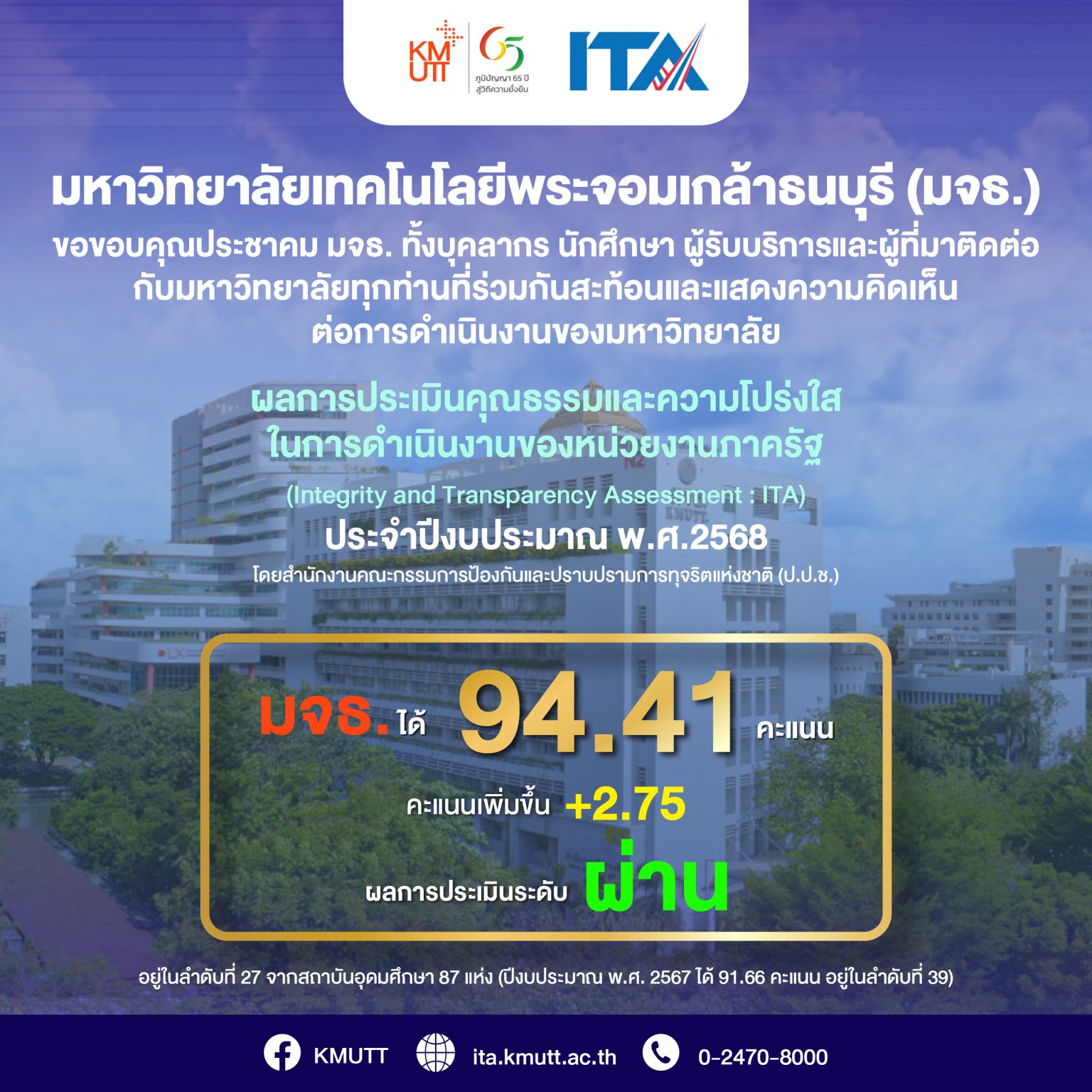
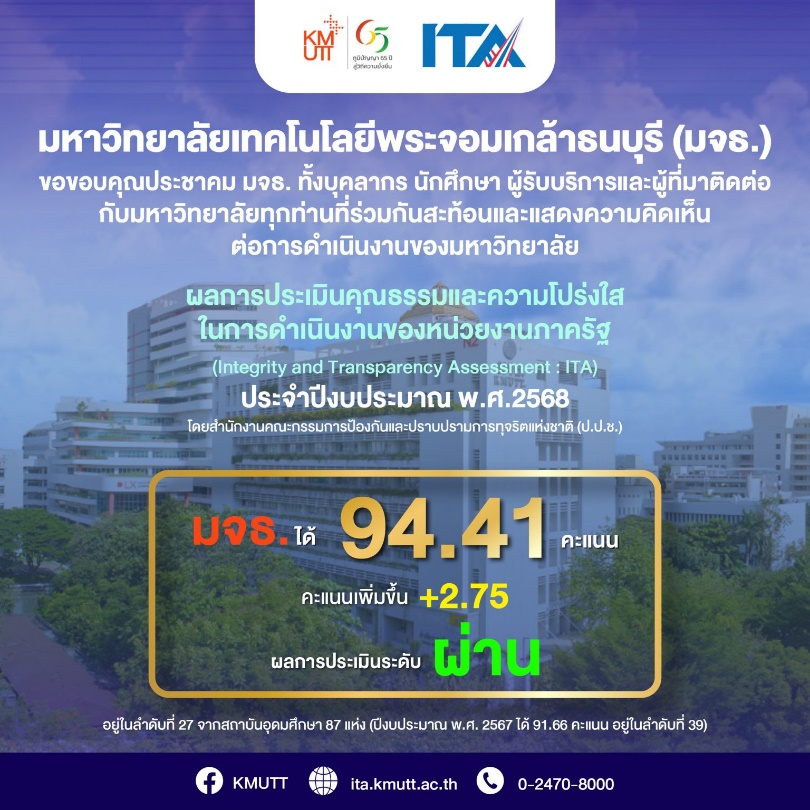
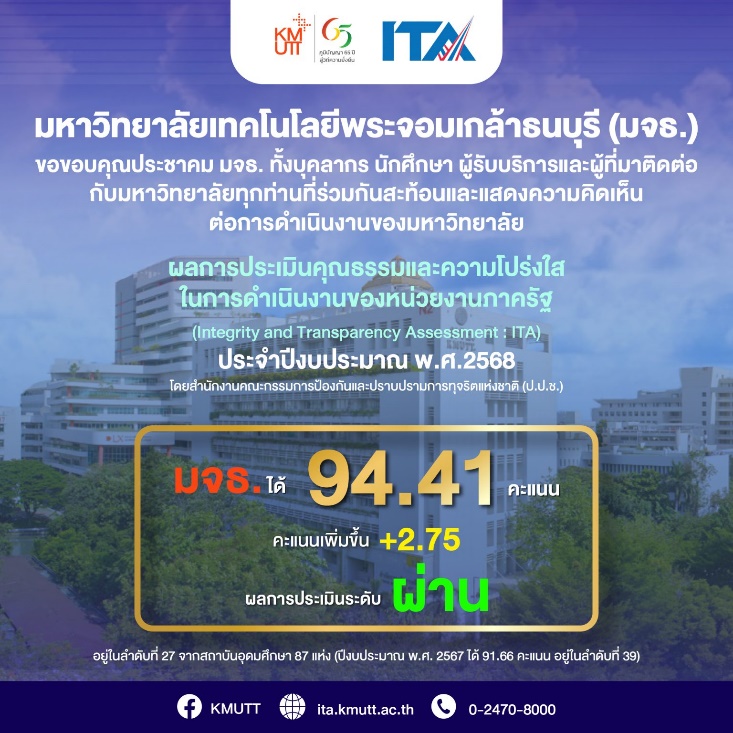
KMUTT received an assessment of ethics and transparency in the operations of government agencies for fiscal year 2025 with a score of 94.41.

Original fiscal-year 2025 ITA result poster. The source narrative reports a score of 94.41; this is an institutional assessment score, not a respondent count or an external-satisfaction percentage.

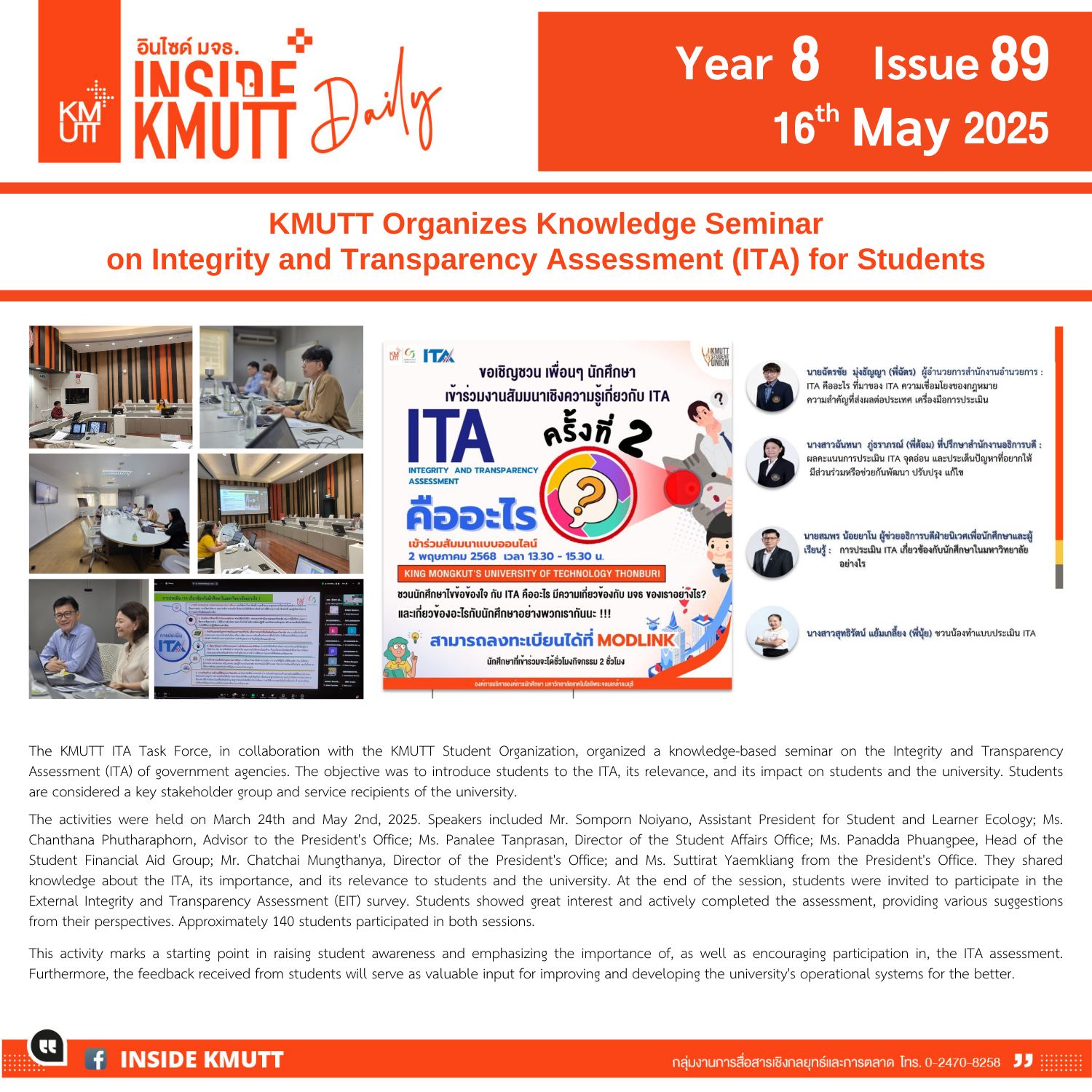
Separate student ITA newsletter · published 16 May 2025

INSIDE KMUTT Daily, Year 8, Issue 89, records student seminars on 24 March and 2 May 2025, with approximately 140 students across both sessions. This is distinct from the supplied 27 May staff narrative and from Ethics Day on 27 April 2026.

Original INSIDE KMUTT Daily newsletter, 16 May 2025. Its student ITA activities are dated 24 March and 2 May 2025; the original newsletter is retained whole.
Original policy wording and full stakeholder identification matrix

Original published participation pages

Original published participation measures and stakeholder-identification matrix, in their 2019 policy context. The whole formal pages are retained alongside native English text.

University management with integrity and transparency

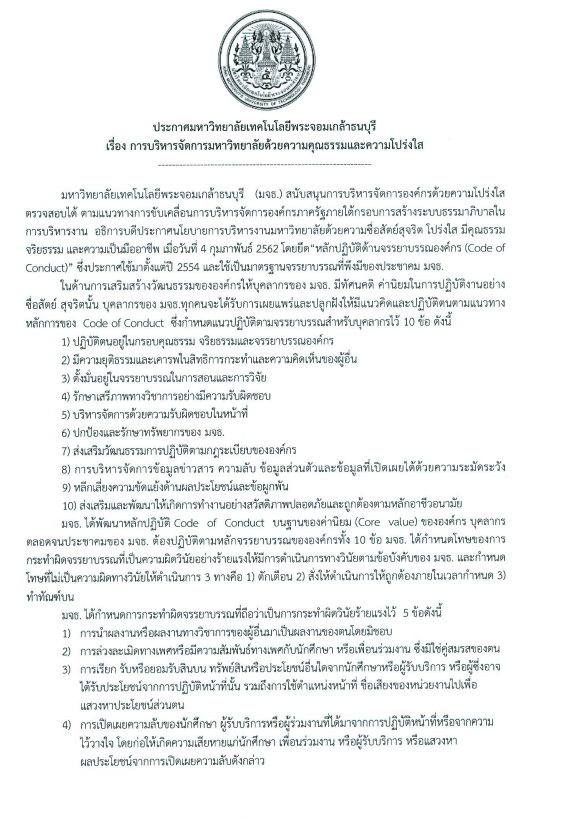
The university supports organizational management with transparency and auditability in accordance with the guidelines for driving government organization management under the framework of creating a good governance system in the administration of the President. Administer the university with honesty, transparency, morality, ethics and professionalism on February 4, 2019 by adhering to the Code of Conduct "which has been promulgated since 2011 and used as a standard of ethical conduct of The KMUTT Community.

In terms of enhancing the organization's culture, KMUTT personnel have the attitude, values, and honest work. All KMUTT personnel will be disseminated and cultivated. Concepts and practices according to the principles of the Code of Conduct, which stipulates 10 codes of conduct for personnel as follows:

  1. Conduct oneself within the framework of morality, ethics and organizational code of conduct
  2. Be fair and respect the rights of actions and opinions of others
  3. Adhere to the teaching and research ethics
  4. Maintain academic freedom with responsibility
  5. Manage with responsibility in duty
  6. Protect and preserve university resources
  7. Promote a corporate culture of compliance
  8. Manage information, confidentiality, personal data and disclosable information with caution
  9. Avoid conflicts of interest and obligations
  10. Promote and develop working in a safe, safe and correct manner according to occupational health principles

As well as the community of KMUTT must comply with the Code of Conduct for all 10 organizations. The university has imposed penalties for committing unethical acts that are serious disciplinary violations to have disciplinary actions in accordance with KMUTT regulations. And imposes penalties that are not disciplinary offenses to proceed in 3 ways: 1) Admonishing 2) Ordering them to proceed properly within the specified time 3) Parole

The university has defined unethical acts that are considered offenses. There are five serious disciplines as follows:

  1. Wrongful use of other people's works or academic works as one's own
  2. Sexual harassment or sexual relations with non-couple students or colleagues
  3. Demanding or accepting bribes, property or any other benefits from students or service recipients or those who may benefit from the performance of their duties, including the use of their position and reputation of the agency for exploitation
  4. Disclosure of the confidentiality of a student, client, or colleague who has received from their duties or from their trust by causing damage to students colleague or service recipients or seeking benefits from disclosing confidential information
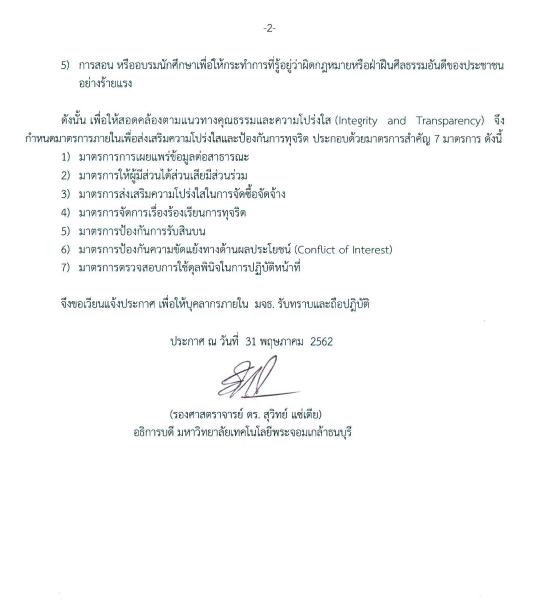
  5. Teaching or training students to act that they know is illegal or seriously violates the good morals of the people Establish internal measures to promote transparency and prevent corruption. Therefore, in order to comply with the Integrity and Transparency guidelines, there are 7 key measures as follows:
  1. Measures for disseminating information to the public
  2. Measures for stakeholder participation
  3. Measures to promote transparency in procurement
  4. Measures for handling corruption complaints
  5. Measures to prevent bribery
  6. Measures to prevent conflicts of interest
  7. Measures to monitor the use of discretion in the

Measures for stakeholder participation · original supplied wording

The University supports organizational management with transparency, auditability, in accordance with the guidelines for driving government organization management under the framework of creating a good governance system in administration, therefore, measures are set. Involve the stakeholders as follows:

1. To enable the operation according to the mission of the university with efficiency, effectiveness, transparency and accountability in accordance with relevant rules and guidelines, participation in the operation to achieve

2. To provide opportunities for stakeholders Participate in recognizing diversity in effective performance improvement ideas and approaches.

  1. Announcement of the policy to promote morality and transparency in the administration of the university to disseminate information of the university and other agencies to the public on the KMUTT website
  2. Encourage people and stakeholders to take part in the operations of the attachments of the university
  3. Announcement of an opportunity for people and stakeholders to participate in the operation of internal agencies to use as a guideline for the implementation of the university missions
  4. Assign service agencies to have channels for listening to opinions, suggestions as well as expectations of service recipients and stakeholders on the development of the agency's operations through various channels such as Feedback box, telephone (Call Center), website mail, electronic forms including self-promotion and opinion
  5. Create an understanding for personnel to be aware of their duty to listen to the needs, expectations, satisfactions and dissatisfactions of the service recipients and stakeholders through various channels in order to provide information for improving operations.
  6. The agency shall report on the results / activities / projects that allow people and stakeholders to participate in the operation to the university at least every fiscal year.

Complete stakeholder identification matrix

1 · Graduate Production Course Preparation Teaching Management

Target/Stakeholders
Entrepreneur Representative / Graduate User Represen- tative/ Private Sector/ Alumni Organizations that have cooperation both domestically and internationally
Form of Participation (Way/Step)
Attend a meeting to give opinions and suggestions/ Opinion poll
Undertaker
Faculties/ Education Development Office

2 · Graduate Production Student Orientation

Target/Stakeholders
Alumni/ Parent
Form of Participation (Way/Step)
Attend a meeting to give opinions and suggestions
Undertaker
Faculties

3 · Research/ A cademic

Target/Stakeholders
Users take advantage of the research and use the documents as references.
Form of Participation (Way/Step)
Performance Appraisal/ Opinion poll
Undertaker
Faculty/ Institute/

4 · Academic Service

Target/Stakeholders
Organization/ Agency/ Employer Work on academic services and partner agencies that work together
Form of Participation (Way/Step)
Attend a meeting to give information and opinions/ Put the results to good use
Undertaker
Personnel/ Academic service contractors

5 · Academic service to society and community

Target/Stakeholders
Population/ Nearby Communities/ Teacher-Student Network
Form of Participation (Way/Step)
Participate in creative activities/ Give opinions/ Join, learn and take advantage
Undertaker
All relevant departments

6 · University Service

Target/Stakeholders
External Experts/ Alumni
Form of Participation (Way/Step)
Being a qualified committee/ Attend a meeting to give opinions and suggestions
Undertaker
All relevant departments

7 · Promotion of volunteer activities

Target/Stakeholders
Personnel/ Population/ Nearby Communities/ Teacher-Student Network
Form of Participation (Way/Step)
Participate in volunteer activities/ Give opinions/ Join, learn and take advantage
Undertaker
All relevant departments

Anti-Corruption Action Plan · 2019–2022

Anti-Corruption Action Plan (2019-2022) prepared with a purpose to create a strong culture Create a culture of honesty within the university for sustainability with the concept and The principle complies with Code of Conduct which is a standard of ethics relied on in higher education institutions and the university announced for the internal community of the university, including staff, students All university stakeholders. Use it as a guideline and carry on the corporate culture according to the principles of good governance. The university will implement an action plan. to promote and support the movement National Strategy on Anti-Corruption, Phase 3 for the organization to be successful in defense and suppress corruption and cultivate a reputation for honesty as well as not accepting Corruption in all forms for the benefit of the people of the country

The university has set guidelines for Operate 3 strategies, consisting of Strategy 1 Build and promote “honest person” by enhancing awareness among students and personnel have a public mind including behaving in accordance with moral and ethical standards through The process of social convergence in systematic prevention and suppression of corruption to create a culture anti corruption for people in KMUTT Have consciousness in performing duties with honesty and with integrity verifiable as well as create incentives to change behavior by focusing on the common good

Strategy 2 Build a reputation for honesty , There are good service practices. and in accordance with good governance Emphasis is placed on developing mechanisms for effective prevention and suppression of corruption. There must be a system of control and inspection of the performance of duties with good governance. There is a channel for receiving complaints Corruption cases that are more accessible To make work more efficient and reduce the chances of corruption.

Strategy 3 Build a reputation for honesty Have morals and ethics in living and working together aims to promote participation from all sectors in the prevention and suppression of corruption and Participate in preventing corruption behavior and misconduct of personnel.

for the driving mechanism of the Anti-Corruption Action Plan (2019-2022) is driven by the quality cycle. with an emphasis on participation Understanding, Tracking process and evaluation by allowing all relevant departments to share responsibility.

Sources and evidence links

4. Related information on our university as a body having an existence of participatory bodies to recognize and engage local stakeholders, including local residents, local government, local private, local civil society representatives.

External voices in institutional decisions

The published KMUTT stakeholder participation framework provides for external experts and alumni to serve on committees and contribute to university administration. It also identifies nearby communities and school networks in community service and volunteering, and requires units to collect feedback and report participation annually. This is the standing 2019 framework, retained with its actual policy date.

Who participates?
External experts and alumni; nearby communities and school networks.
Where can they contribute?
Committees and university administration; community service and volunteering.
How is participation followed up?
Units collect feedback and report participation at least annually under the standing 2019 framework.

Operational consultation · 10 March 2025

More than 65 respondents joined the NACC assessment session. External groups included alumni, shops, companies, entrepreneurs, contractors and continuing education representatives. KMUTT states that feedback informs improvements to its operations. This is an operational consultation mechanism.

The more-than-65 total covers a mixed respondent group, including current students alongside external service users; it is not an external-only headcount.

Decision link: feedback and suggestions inform improvements to university operations.

A wider invitation to service users

External Stakeholder Perception Survey (EIT) for the year 2025 King Mongkut's University of Technology Thonburi would like to announce the channels for responding to the External Integrity and Transparency Assessment (EIT) for the year 2025 and would like to invite external stakeholders/service recipients, including alumni, current students, juristic persons, private companies or government agencies, external individuals, those who contact or receive services from the university, to participate in the survey of opinions and suggestions for improving the quality of the university's operations.

External advice for the 2026 curriculum revision

The programme committee consulted five experts from academia and business, including ALS Laboratory Group, Local Alike and Central Group. The published account states that suggestions will be synthesised into improvements to course structure. This connects external advice to an institutional education decision.

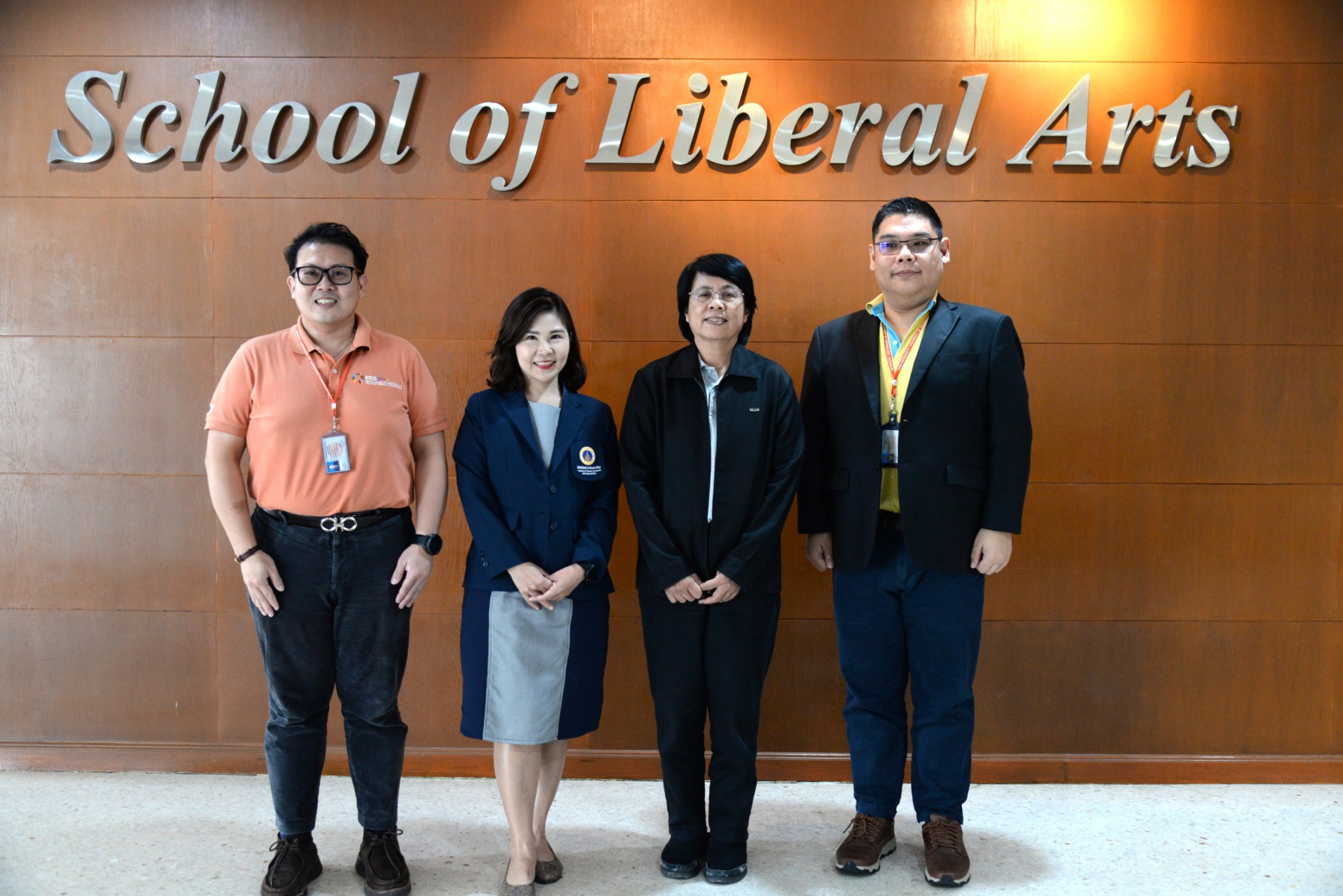
External expert consultation for the Environmental Social Science curriculum’s 2026 revision. Authentic SoLA photograph; the article’s publication and event-year labels differ, so no precise meeting date is assigned here.

The SoLA page displays 16 October 2025 as its publication date, while its meeting narrative says 14 October 2026. The 2026 curriculum revision is retained without assigning a precise meeting date.

These arrangements document consultative participation and an identified route into university improvement and curriculum design. They do not assign external respondents voting authority on the University Council. The asset management division and its commercial coordination arrangements remain documented in the original institutional evidence below.

Coordinating assets and external services

King Mongkut’s University of Technology Thonburi (KMUTT) has continuously sought to maximize the value and utilization of its assets to generate supplementary income alongside the university’s primary revenue sources. To achieve this objective, KMUTT established the Benefits and Asset Management Division under the Office of the President. Operating as a self-sustaining unit, the division is responsible for managing the university’s assets, generating revenue, safeguarding institutional interests, and coordinating with external parties to implement income-generating activities. In addition, the division oversees service quality control for commercial operators on campus to ensure that students, faculty members, and staff receive high-quality services.

Objective
To protect and manage the university’s interests in the utilization of campus facilities and spaces, including cafeterias, parking buildings, and the allocation and use of university premises at KMUTT.
Vision
“Transparent Benefits Management, Confidence in Resource Allocation.”
Original Benefits and Property Utilization Unit website screenshot, retained as institutional context. The supplied record does not specify a capture date.
Original division records and stakeholder participation policy

Original institutional description

King Mongkut's University of Technology Thonburi Efforts are made to manage the university's existing assets for maximum benefit. To provide additional income to the main income of the university. Establish an agency “Benefit and Property Utilization Unit” It is an organization that supports itself. Carry out property management work for the university. Both in terms of earning income and maintaining the benefits of the university. Coordinate with outsiders to carry out activities that promote income for the university.

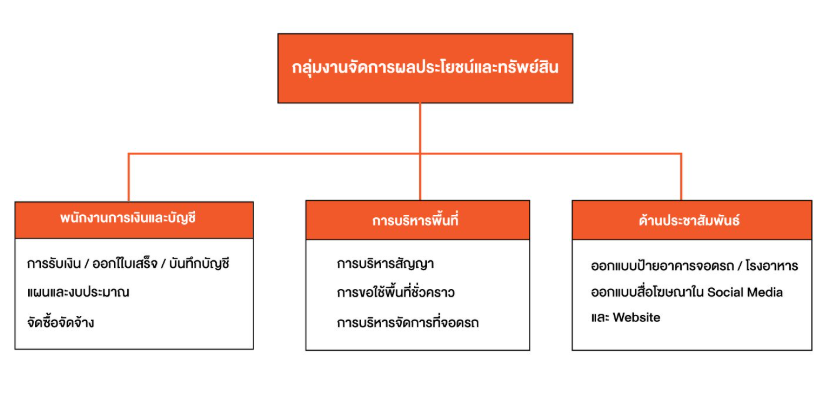
Division structure and responsibilities

English reading of the original organisation chart. The chart documents an internal operational division; its branches do not establish external voting membership.

Finance and accounting
Financial transactions, receipts and bookkeeping; planning and budgeting; procurement.
Space management
Contract management; temporary use of space; parking management.
Public relations
Signage for parking buildings and cafeterias; publicity materials for social media and the website.
Original organisational chart for the benefits and property management unit, showing finance and accounting, space management and public relations. The original artwork is preserved whole.

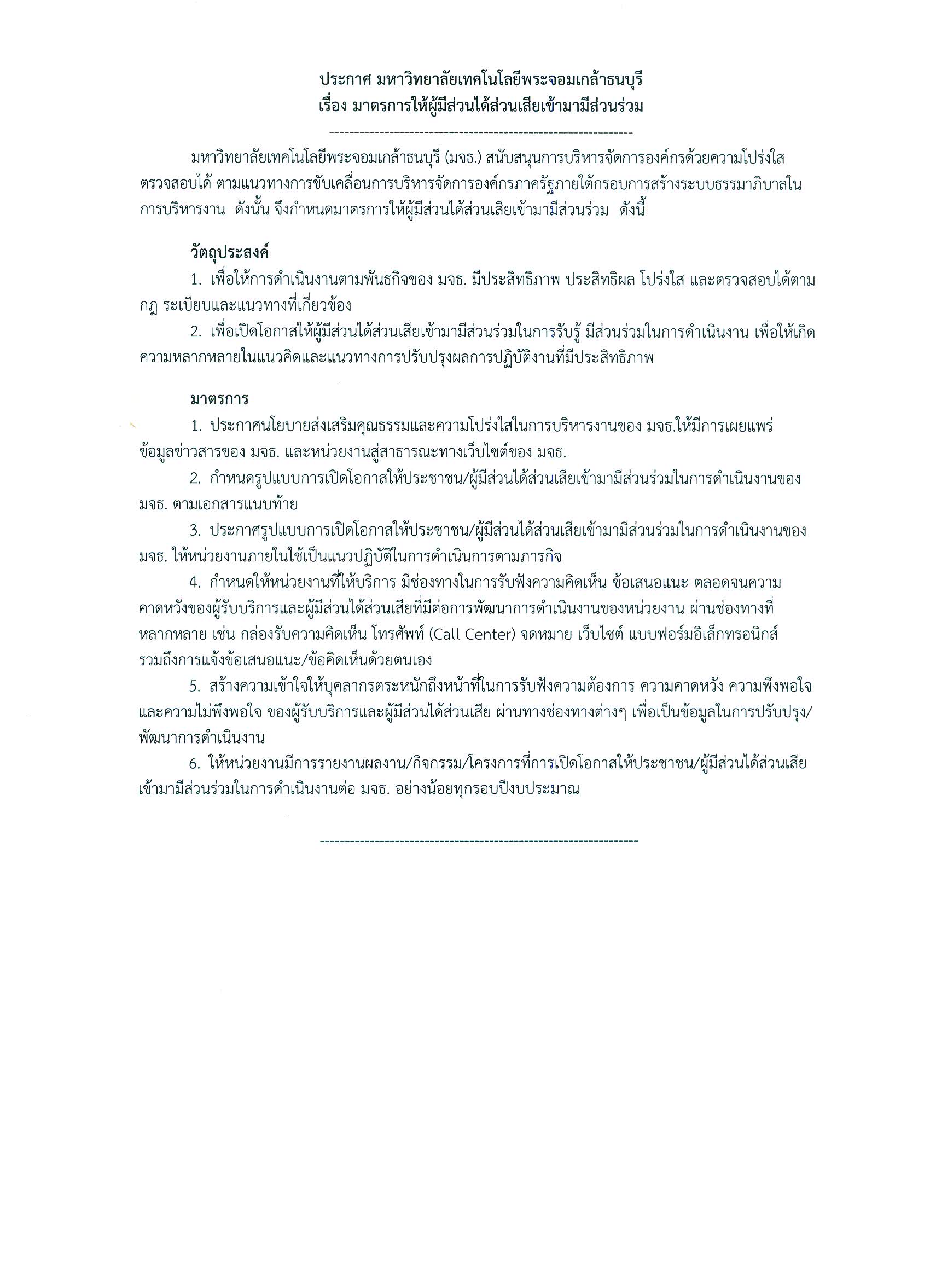
Published stakeholder participation measures

English reading of the supplied Thai policy page. The standing framework retains its actual 2019 policy context; no new policy review date is assigned.

Objectives
  1. Ensure that KMUTT missions are carried out efficiently, effectively, transparently and accountably in accordance with relevant laws, regulations and guidance.
  2. Give stakeholders opportunities to be informed and participate in operations, bringing diverse ideas and approaches into effective performance improvement.
Measures
  1. Publish the policy promoting integrity and transparency in KMUTT administration, and disclose university and unit information to the public through the KMUTT website.
  2. Define opportunities for the public and stakeholders to participate in KMUTT operations, as set out in the attached document.
  3. Announce the forms of public and stakeholder participation so that internal units can use them as practical guidelines when carrying out their missions.
  4. Require service units to provide varied channels for listening to opinions, suggestions and service-user and stakeholder expectations for operational improvement, including comment boxes, telephone and call centres, letters, websites, electronic forms and suggestions or opinions submitted in person.
  5. Build staff awareness of their duty to listen to service-user and stakeholder needs, expectations, satisfaction and dissatisfaction through different channels, and use that information to improve and develop operations.
  6. Require units to report results, activities and projects that enable the public and stakeholders to participate in operations to KMUTT at least once every fiscal year.
Original policy page: measures for stakeholder participation, including two objectives, six operational measures and at least annual reporting. The complete page is retained without the Word crop.
Original EIT notices and institutional ITA result

Original EIT invitation and ITA result

Original 2025 notices: the invitation to service users and the university’s published ITA result. The posters remain whole and retain their original colours.

FY 2025 institutional ITA result
94.41 points · assessment level: pass · rank 27 among 87 higher education institutions.
Comparison printed on the notice
FY 2024: 91.66 points and rank 39. The FY 2025 score increased by 2.75 points.

These are institutional ITA assessment scores and rankings, not participation percentages, respondent counts or proof of a specific curriculum decision.

Sources and evidence links

5. Related information on our university as a body Publish the university’s principles and commitments on organized crime, corruption & bribery

Written commitments against bribery

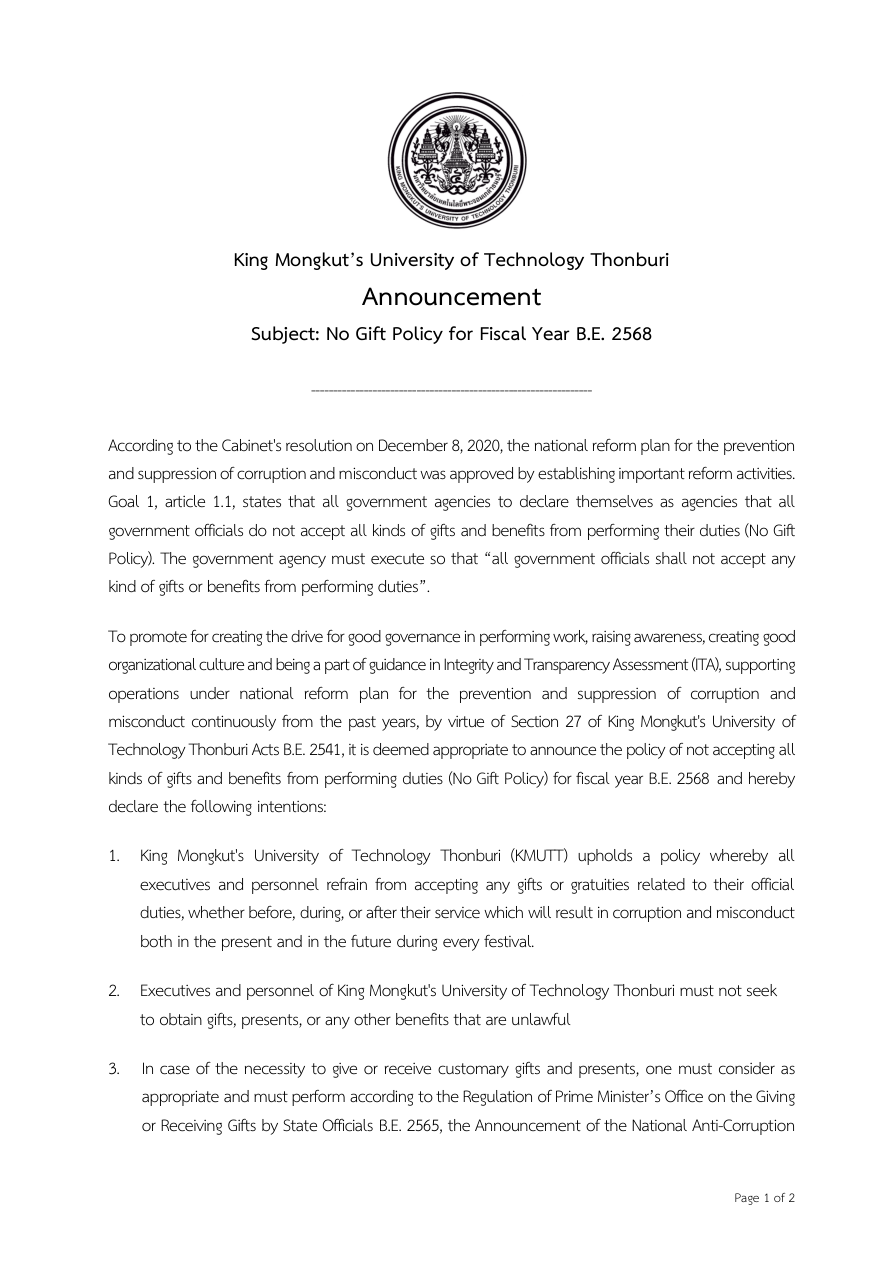
KMUTT fiscal year 2025 No Gift Policy, announced on 7 November 2024, applies to all executives and personnel. It prohibits duty-related gifts or benefits that could lead to corruption, before, during or after performance of duties, and prohibits seeking unlawful benefits. Supervisors must communicate the policy to personnel and external contacts. Customary gifts remain subject to the cited legal rules.

The university’s integrity and transparency announcement of 31 May 2019 identifies demanding or accepting bribes, property or benefits from students and service recipients, and exploiting an official position for private gain, as serious disciplinary misconduct. Its prevention framework includes procurement transparency, corruption complaints, bribery prevention, conflicts of interest and scrutiny of discretion. These provisions retain their actual policy dates.

No Gift Policy · fiscal year 2025
Announced 7 November 2024. Applies to all executives and personnel.
Integrity and transparency announcement
Issued 31 May 2019. Bribery and private gain through an official position are serious disciplinary misconduct.

Ethical culture in action · 27 April 2026

On 27 April 2026, KMUTT held Ethics Day at the LX building under the theme Ethics Start with Us. The President led administrators, academics, staff and students in a governance commitment. The programme included a higher education governance lecture, recognition of units’ integrity work, and a discussion involving administrators, researchers, staff, alumni, entrepreneurs and student leaders. An online commitment channel extended participation to the university community.

KMUTT Ethics Day, 27 April 2026. Official university photograph.

Integrity and Transparency Assessment · FY 2025

Institutional ITA score
94.41 points
Fiscal year 2025 · rating: Pass
Higher education ranking
27th of 87
Higher education institutions nationwide
National assessment scope
8,317
Public sector organisations across Thailand

On 15 August 2025, the National Anti-Corruption Commission (NACC) of Thailand announced the results of the Integrity and Transparency Assessment (ITA) for Public Sector Organizations 2025. King Mongkut’s University of Technology Thonburi (KMUTT) achieved a score of 94.41 points, earning a rating of “Pass” and ranking 27th among 87 higher education institutions nationwide. The assessment involved a total of 8,317 public sector organizations across Thailand.

KMUTT would like to express its sincere appreciation to all stakeholders who participated in this assessment, including university personnel, current students, alumni, partner companies, vendors, contractors, and service users. Their valuable feedback and engagement contributed significantly to the university’s evaluation process and its commitment to institutional transparency and accountability.

The university will utilize the recommendations and insights gained from the assessment to further improve its operations, enhance organizational effectiveness, and strengthen its governance practices. KMUTT remains committed to embedding integrity, transparency, and accountability into its institutional culture and operational processes, ensuring that these principles continue to serve as sustainable standards for the university’s development and public service mission.

These figures describe the institutional ITA assessment, not a participation rate or a count of corruption cases. The source narrative and original notice state “Pass”; the supplied summary line also uses “level A”, retained with the original notice below.

Published No Gift Policy and complete policy link

Published No Gift Policy

English reading of the four intentions in the official two-page policy for fiscal year B.E. 2568 (2025). The announcement is dated 7 November 2024.

  1. All executives and personnel must refrain from accepting gifts or gratuities related to official duties, before, during or after their service, where these would result in corruption or misconduct now or in the future, including during festivals.
  2. Executives and personnel must not seek gifts, presents or other unlawful benefits.
  3. Necessary customary giving or receiving must be considered appropriately and comply with the Prime Minister’s Office gift regulation B.E. 2565, the NACC ethical receipt criteria B.E. 2563 and other relevant laws.
  4. Management and supervisors at every level must oversee personnel and subordinates, inform all external contacts of the policy, and foster customary congratulations, good wishes, gratitude, welcomes and condolences. They must model appropriate behaviour, give guidance or establish incentives to develop economical attitudes, awareness and conduct.
Fiscal year 2025 No Gift Policy, first page of the official English translation. The announcement is dated 7 November 2024.

The supplied image shows page 1 of 2. The customary-gift provision continues on page 2, which also contains the supervision and external-communication intention and the announcement date. The complete two-page document is available from the policy link.

Read the complete No Gift Policy (2-page PDF)

Original ITA assessment notice and supplied summary

Original assessment notice and supplied label

Assessment score 94.41 points Assessment result level A

The supplied line above uses “level A”. The university’s result narrative and the original notice use “Pass”. These labels are preserved separately; no equivalence is assumed.

Original fiscal year 2025 institutional ITA notice. It reports 94.41 points, a Pass rating and rank 27 among 87 higher education institutions; the printed comparison is +2.75 points from 91.66 in FY 2024, when the rank was 39.
Sources and evidence links

6. Related information on our university having a policy on supporting academic freedom (freedom to choose areas of research and to speak and teach publicly about the area of their research).

Academic freedom in teaching and research

KMUTT integrity announcement of 31 May 2019 applies its ethical principles to university personnel, including responsible academic freedom and ethics in both teaching and research. It supplies the institutional commitment underlying the original evidence.

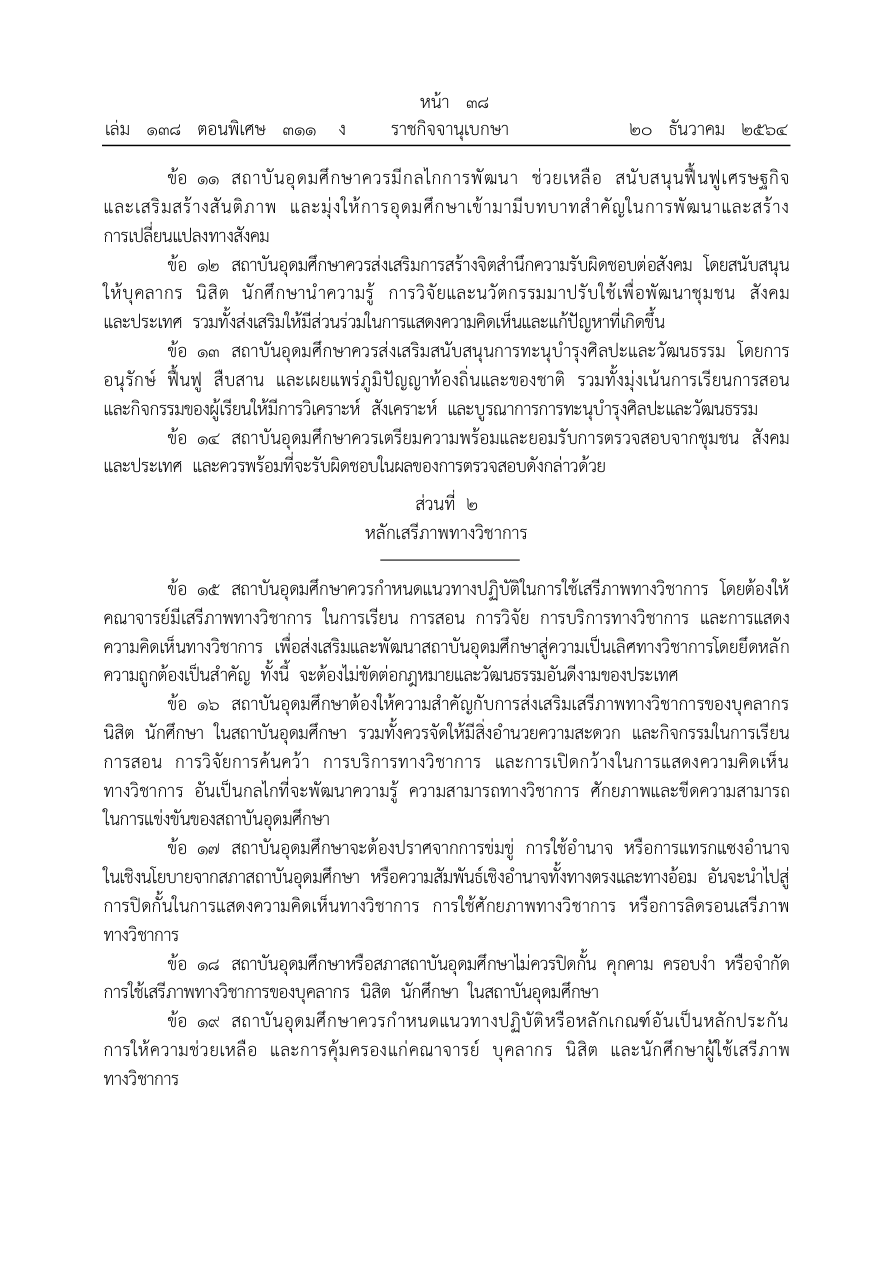
The University Council also publishes the national Guidelines on Social Responsibility, Academic Freedom, Independence and Equality, gazetted on 20 December 2021. Clauses 15–16 address freedom in teaching, research, academic services and academic expression. Clauses 17–19 address intimidation, interference, restrictions and protection of those exercising academic freedom. These remain 2021 provisions; the website upload date is not a new policy issue date.

What the published framework covers

Research
Research and enquiry are expressly within academic freedom under clauses 15–16.
Teaching
Teaching and learning are expressly included under clauses 15–16.
Academic seniority
The guidelines refer broadly to academic staff and personnel without reserving freedom to senior ranks. Their protection is therefore framed for staff generally, including junior academics.
Responsible exercise
Academic freedom operates within law and respect for others’ rights; institutional authorities should not intimidate or suppress academic expression.

The academic-seniority reading follows the guidelines’ broad wording for academic staff and personnel; it is not a separate rank-specific clause.

Academic freedom and protection from interference

English reading of clauses 15–19, Section 2 of the national guidelines published in the Royal Gazette on 20 December 2021. These are the published provisions, not a claim that interference has never occurred.

Clause 15
Higher education institutions should set guidelines for exercising academic freedom and must give faculty freedom in learning, teaching, research, academic services and academic expression. This supports academic excellence with accuracy as a central principle, and must not conflict with the law or the country’s good cultural traditions.
Clause 16
Institutions must prioritise promoting academic freedom for personnel and students. They should provide facilities and activities for teaching and learning, research and enquiry, academic services and open academic expression, developing knowledge, academic ability, potential and institutional competitiveness.
Clause 17
Institutions must be free from intimidation, the use of power or policy interference by the institutional council, and from direct or indirect power relationships that suppress academic expression, the use of academic potential or academic freedom.
Clause 18
Higher education institutions and their councils should not block, threaten, dominate or restrict the exercise of academic freedom by personnel and students.
Clause 19
Institutions should establish practical guidelines or criteria that guarantee assistance and protection for faculty, personnel and students exercising academic freedom.
Gazette page 38: clauses 15–19 on academic freedom in teaching, research and expression, with safeguards against interference. 20 December 2021.

Education administration and academic freedom

The complete supplied Graduate Studies Regulations 2025 and Outcome-Based Education Module material follow. They provide the dated academic administration context and remain distinct from the provisions expressly establishing academic freedom.

The documents serve different purposes: the OBEM announcement is dated 7 December 2023, while the Graduate Studies Regulations are dated 7 August 2025. Their academic administration provisions remain separate from the express academic-freedom safeguards.

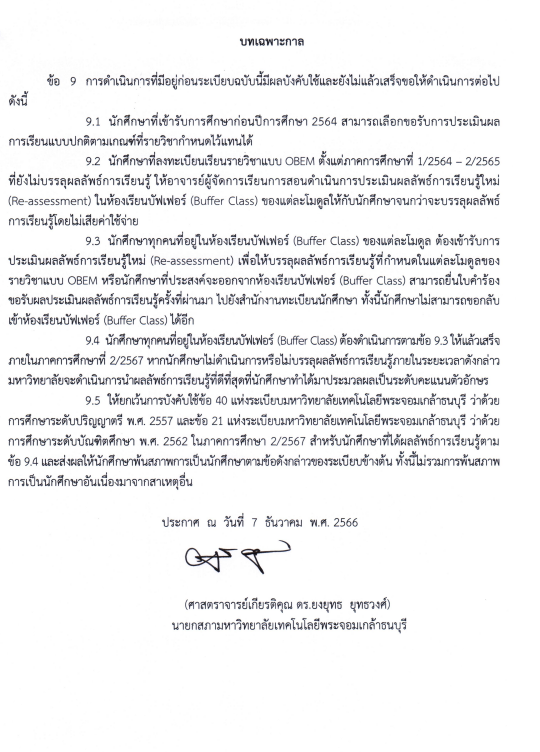
Outcome-Based Education Module (OBEM)
The supplied three-page announcement is dated 7 December 2023. Its original transitional provisions retain their own academic years.
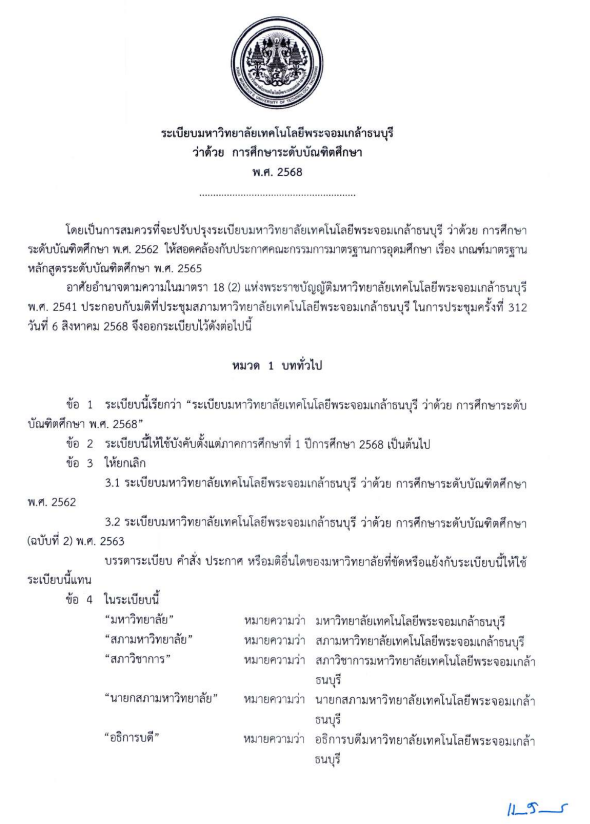
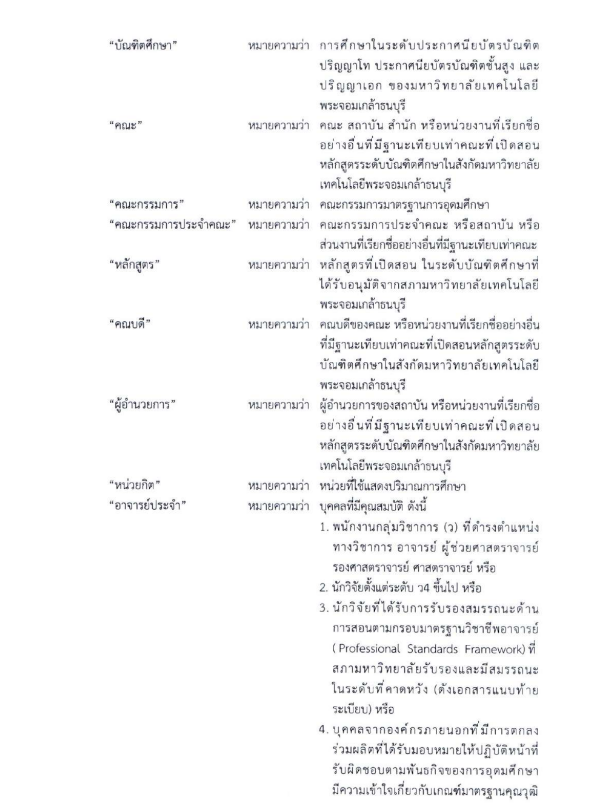
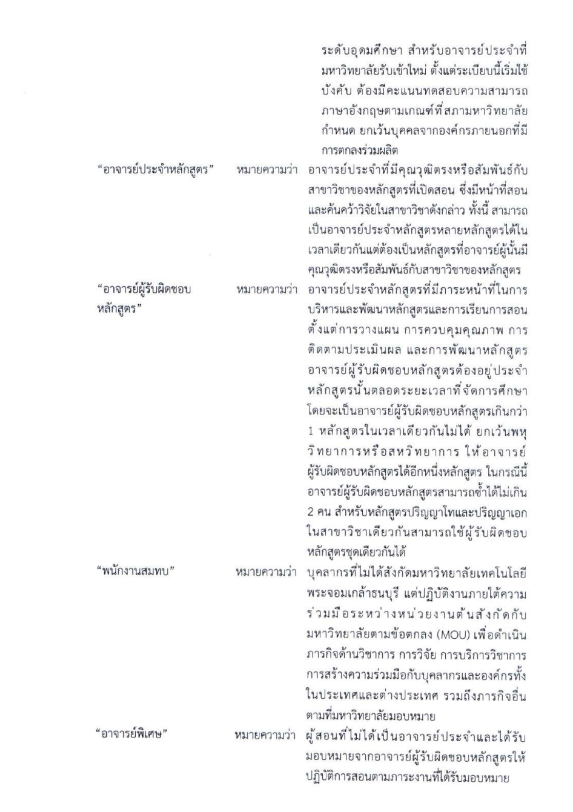
Graduate Studies Regulations 2025
The supplied document has 30 pages, including the professional-standard appendix. Its announcement is dated 7 August 2025.
Original integrity announcement and all ten ethical principles

Institutional ethical principles

King Mongkut’s University of Technology Thonburi (KMUTT) is committed to promoting transparent, accountable, and auditable institutional management in accordance with public sector governance principles and frameworks for good governance. The President of KMUTT has established a policy emphasizing integrity, transparency, ethical conduct, and professionalism in university administration, guided by the university’s Code of Conduct, which has been in effect since 2011.

The Code of Conduct serves as the ethical standard for all members of the KMUTT community and forms the foundation for fostering an organizational culture based on honesty, responsibility, and ethical behavior. All university personnel are regularly informed, encouraged, and expected to uphold these principles in their professional activities and daily conduct.

The KMUTT Code of Conduct establishes ten key ethical principles for university personnel:

  1. Conduct oneself in accordance with moral, ethical, and organizational code of conduct principles.
  2. Act fairly and respect the rights, actions, and opinions of others.
  3. Uphold professional ethics in teaching and research.
  4. Exercise academic freedom responsibly.
  5. Perform duties with accountability and responsibility.
  6. Protect and responsibly manage KMUTT resources and assets.
  7. Promote a culture of compliance with institutional rules and regulations.
  8. Manage information, confidential data, personal data, and publicly disclosed information with care and responsibility.
  9. Avoid conflicts of interest and conflicting obligations.
  10. Promote and maintain safe working environments in accordance with occupational health and safety principles.

Original two-page announcement on integrity and transparency in university governance and management, signed 31 May 2019. The ten ethical principles and the supplied narrative retain their original policy context.

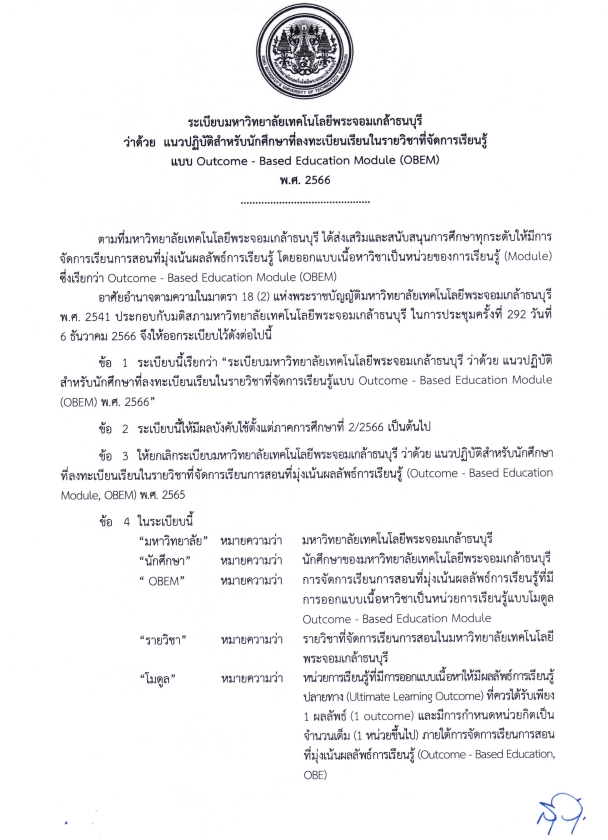
OBEM announcement · 7 December 2023 · 3 pages

Guidelines for students enrolled in OBEM

King Mongkut's University of Technology Thonburi has issued a policy on module-based education to facilitate the promotion of various forms of education and to encourage students to have the opportunity to work towards learning outcomes and experiences through the teaching and research that takes place.

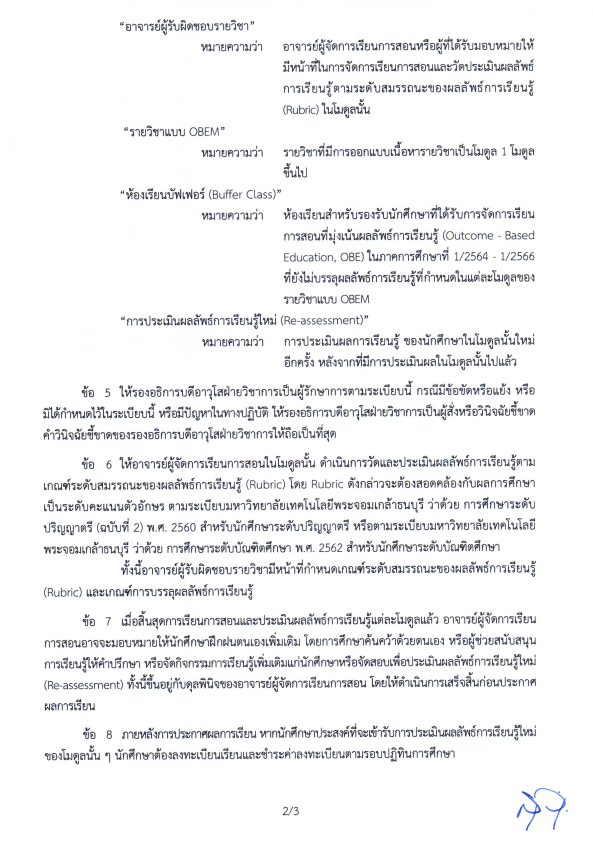
Outcome-Based Education Module (OBEM): the original announcement is dated 7 December 2023. The three original pages below preserve its definitions, assessment provisions and transitional conditions.

Original OBEM announcement, pages 1–3, dated 7 December 2023. The original Thai document is retained whole, including its transitional provisions and signature.

Graduate Studies Regulations 2025 · complete 30-page record

Graduate Studies Regulations 2025

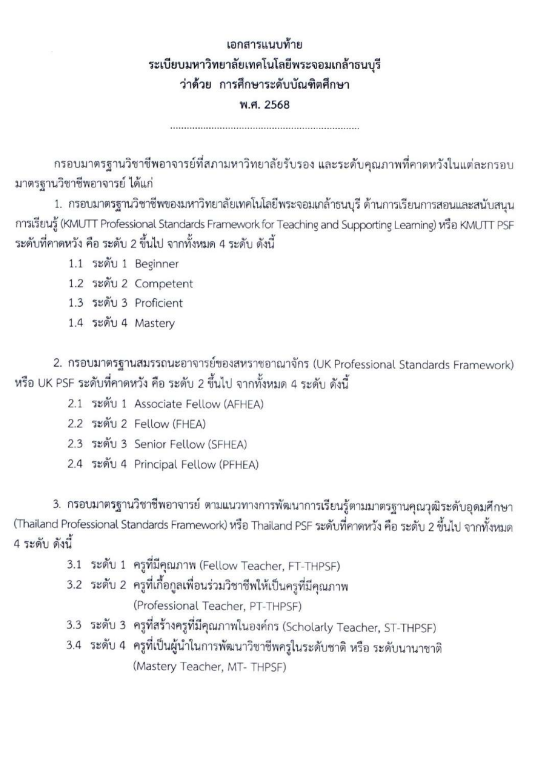
English document guide. The complete original 30-page record follows in its supplied order, including definitions, academic standards, student conditions, assessment, thesis rules, appeals, transitional provisions and the final professional-standard appendix. These education regulations are context, not a substitute for the explicit academic-freedom provisions.

Part of the documentSubjectOriginal clauses
Chapter 1General provisionsClauses 1–5
Chapter 2Education systemClauses 6–9
Chapter 3Faculty and academic supervisionClauses 10–11
Chapter 4StudentsClauses 12–15
Chapter 5Student registration and maintaining student statusClauses 16–22
Chapter 6Assessment, grading and credit transferClauses 23–29
Chapter 7Thesis and independent studyClauses 30–32
Chapter 8Completion of studiesClauses 33–34
Chapter 9Degree approvalClauses 35–36
Chapter 10AppealsClauses 37–39
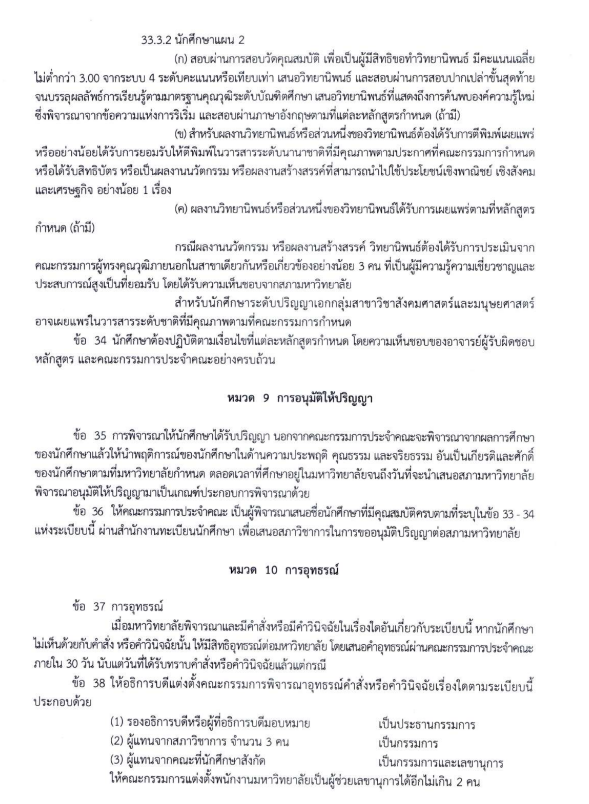
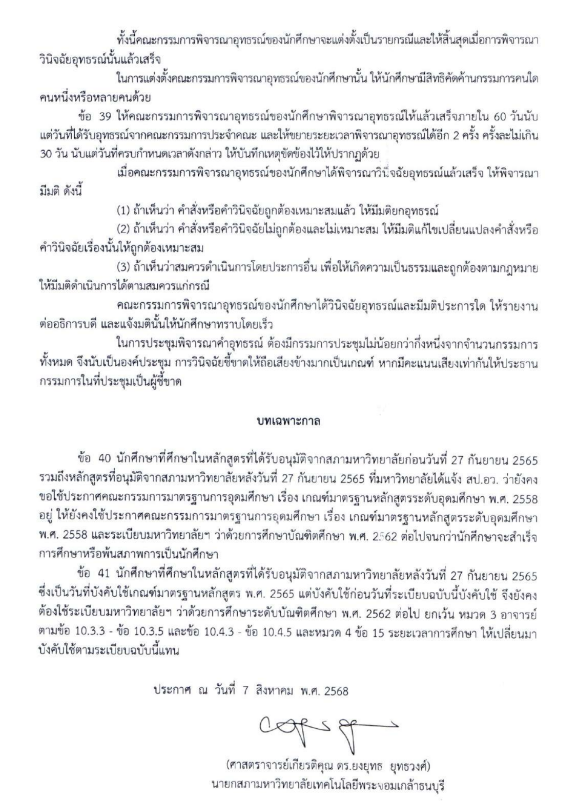
Transitional provisionsEarlier approved programmes and transitional applicationClauses 40–41
AppendixTeaching and learning-support professional-standard frameworksFinal document page
Sources and evidence links

7. Publish financial data

Public financial statements · fiscal year 2025

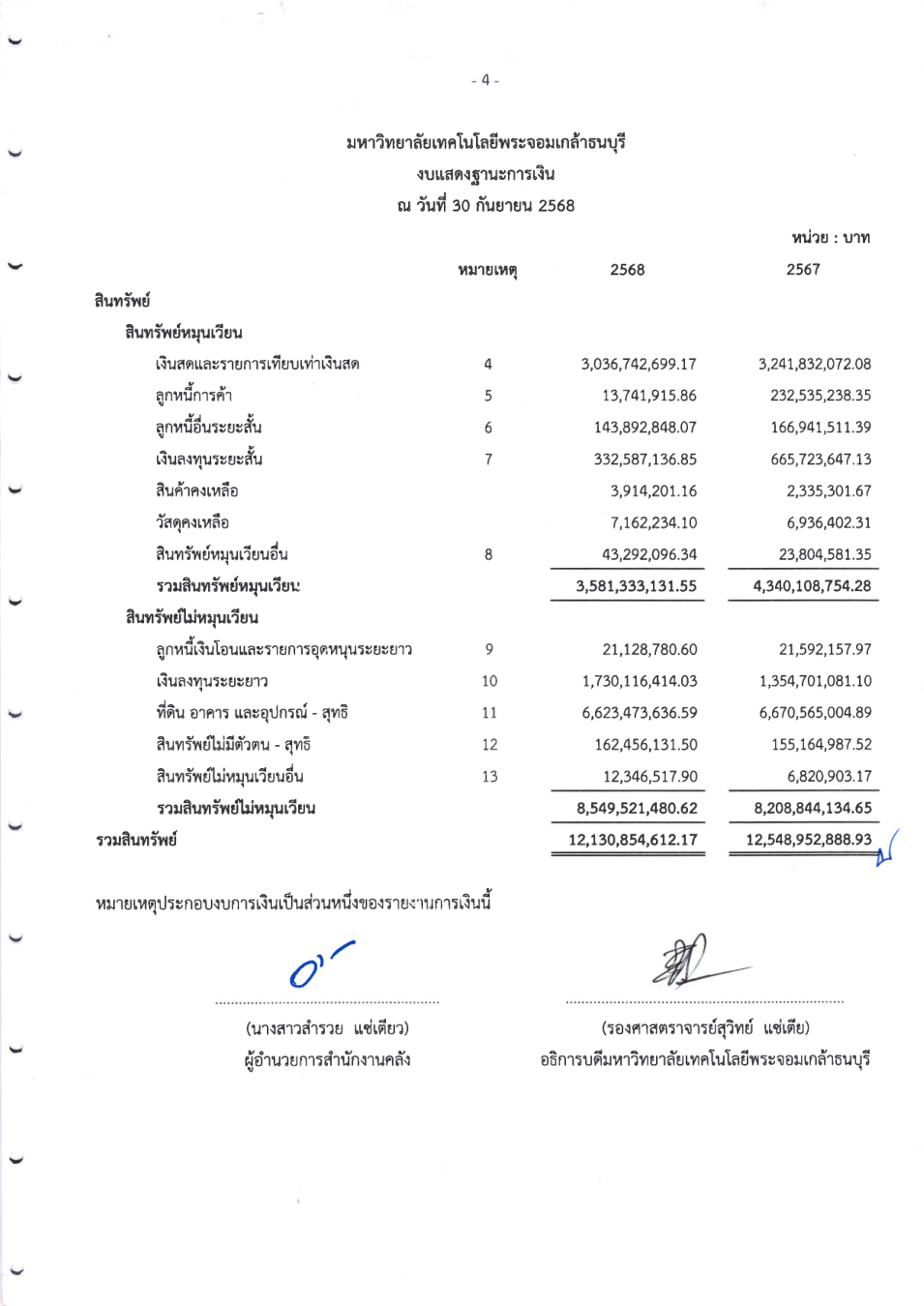
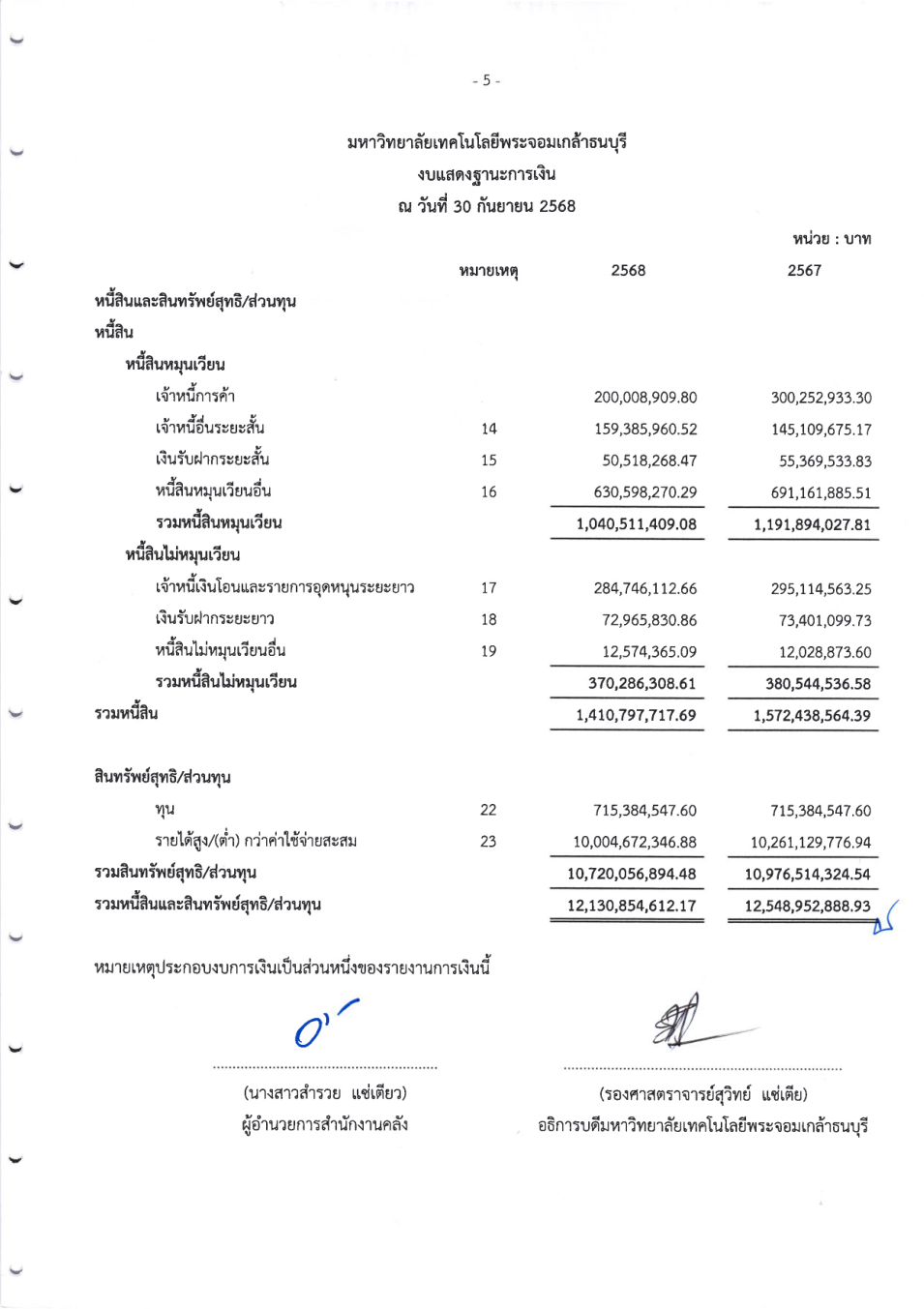
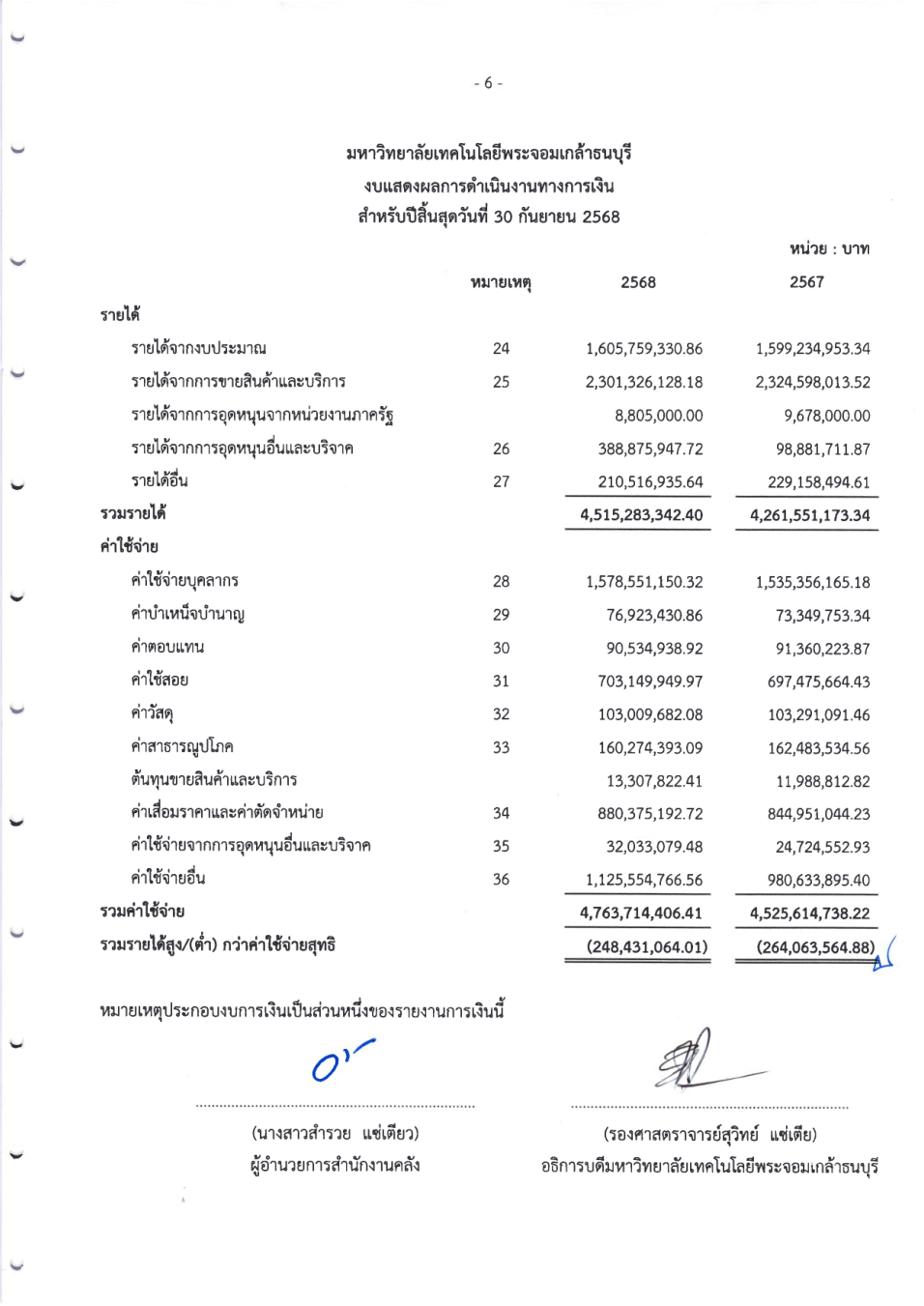
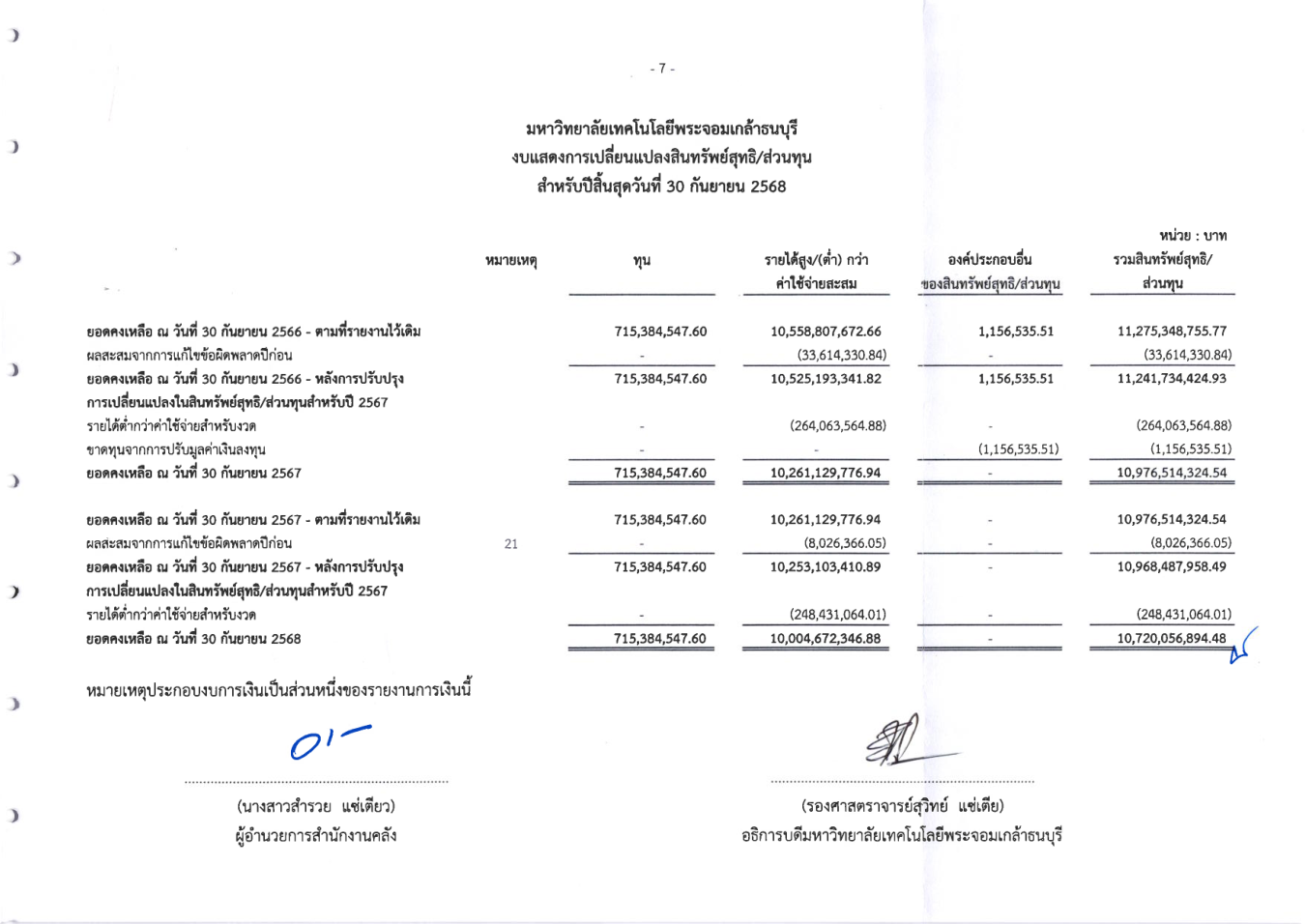
KMUTT Treasury Office publicly lists its Annual Financial Report 2025 and provides a downloadable four-page statement extract. The reporting date is 30 September 2025. The extract presents the university’s financial position, financial performance and changes in net assets, with comparative columns and signatures of the Treasury Director and President.

Financial position at 30 September 2025

Published amounts in Thai baht (THB).

Total assets
12,130,854,612.17
Total liabilities
1,410,797,717.69
Net assets / equity
10,720,056,894.48

Revenue and expenses for the year ended 30 September 2025

Common zero-based scale · exact published amounts in THB.

Total revenue
4,515,283,342.40
Total expenses
4,763,714,406.41
Revenue less expenses
(248,431,064.01) — deficit

The figures above reproduce the published statements without converting budgets into actual expenditure. The financial position is measured at 30 September 2025; revenue and expenses cover the year then ended. The public extract itself is the evidence of disclosure. It does not include an audit opinion or the full explanatory notes, so no audit conclusion is attributed to this extract.

Comparative financial statements, equity movements and signed originals

Statement of financial position: assets

Published itemOriginal noteFY 2025 · THBFY 2024 · THB
Current assets
Cash and cash equivalents43,036,742,699.173,241,832,072.08
Trade receivables513,741,915.86232,535,238.35
Other short-term receivables6143,892,848.07166,941,511.39
Short-term investments7332,587,136.85665,723,647.13
Inventories3,914,201.162,335,301.67
Supplies on hand7,162,234.106,936,402.31
Other current assets843,292,096.3423,804,581.35
Total current assets3,581,333,131.554,340,108,754.28
Non-current assets
Long-term loans and subsidy receivables921,128,780.6021,592,157.97
Long-term investments101,730,116,414.031,354,701,081.10
Property, plant and equipment — net116,623,473,636.596,670,565,004.89
Intangible assets — net12162,456,131.50155,164,987.52
Other non-current assets1312,346,517.906,820,903.17
Total non-current assets8,549,521,480.628,208,844,134.65
Total assets12,130,854,612.1712,548,952,888.93

Statement of financial position: liabilities and net assets

Published itemOriginal noteFY 2025 · THBFY 2024 · THB
Current liabilities
Trade payables200,008,909.80300,252,933.30
Other short-term payables14159,385,960.52145,109,675.17
Short-term deposits received1550,518,268.4755,369,533.83
Other current liabilities16630,598,270.29691,161,885.51
Total current liabilities1,040,511,409.081,191,894,027.81
Non-current liabilities
Long-term loan and subsidy payables17284,746,112.66295,114,563.25
Long-term deposits received1872,965,830.8673,401,099.73
Other non-current liabilities1912,574,365.0912,028,873.60
Total non-current liabilities370,286,308.61380,544,536.58
Total liabilities1,410,797,717.691,572,438,564.39
Net assets / equity
Capital22715,384,547.60715,384,547.60
Accumulated excess of revenue over expenses2310,004,672,346.8810,261,129,776.94
Total net assets / equity10,720,056,894.4810,976,514,324.54
Total liabilities and net assets / equity12,130,854,612.1712,548,952,888.93

Statement of financial performance

Published itemOriginal noteFY 2025 · THBFY 2024 · THB
Revenue
Revenue from budget allocations241,605,759,330.861,599,234,953.34
Revenue from sales of goods and services252,301,326,128.182,324,598,013.52
Grant revenue from government agencies8,805,000.009,678,000.00
Other grant and donation revenue26388,875,947.7298,881,711.87
Other revenue27210,516,935.64229,158,494.61
Total revenue4,515,283,342.404,261,551,173.34
Expenses
Personnel expenses281,578,551,150.321,535,356,165.18
Pension and retirement benefit expenses2976,923,430.8673,349,753.34
Remuneration3090,534,938.9291,360,223.87
Service and operating expenses31703,149,949.97697,475,664.43
Materials32103,009,682.08103,291,091.46
Utilities33160,274,393.09162,483,534.56
Cost of goods and services sold13,307,822.4111,988,812.82
Depreciation and amortisation34880,375,192.72844,951,044.23
Other grant and donation expenses3532,033,079.4824,724,552.93
Other expenses361,125,554,766.56980,633,895.40
Total expenses4,763,714,406.414,525,614,738.22
Net excess / (deficit) of revenue over expenses(248,431,064.01)(264,063,564.88)

Changes in net assets / equity

THB. A dash reproduces a dash in the original statement. The source repeats “changes in net assets / equity for 2567 (2024)” above its later movements; that printed heading is retained below, while the final closing balance remains dated 30 September 2568 (2025).

Published movementOriginal noteCapitalAccumulated excess / (deficit)Other components of net assets / equityTotal net assets / equity
Changes in net assets / equity for 2567 (2024)
30 September 2023 balance — as previously reported715,384,547.6010,558,807,672.661,156,535.5111,275,348,755.77
Effect of prior-period error corrections—(33,614,330.84)—(33,614,330.84)
30 September 2023 balance — after adjustment715,384,547.6010,525,193,341.821,156,535.5111,241,734,424.93
2024: revenue less expenses for the period—(264,063,564.88)—(264,063,564.88)
2024: investment revaluation loss——(1,156,535.51)(1,156,535.51)
30 September 2024 closing balance715,384,547.6010,261,129,776.94—10,976,514,324.54
Changes in net assets / equity for 2567 (2024) — repeated year as printed above the later movements
30 September 2024 balance — as previously reported715,384,547.6010,261,129,776.94—10,976,514,324.54
Effect of prior-period error corrections21—(8,026,366.05)—(8,026,366.05)
30 September 2024 balance — after adjustment715,384,547.6010,253,103,410.89—10,968,487,958.49
Revenue less expenses for the period ending 30 September 2025—(248,431,064.01)—(248,431,064.01)
30 September 2025 closing balance715,384,547.6010,004,672,346.88—10,720,056,894.48

Original signed public extract

The signed statement pages remain as documentary records. Their financial rows and comparative values are also available as native English HTML above. Original note numbers are retained; the full explanatory notes and an audit opinion are not included in this extract.

Official signed extract, pages 1–3: assets, liabilities and net assets, and financial performance. Position at or year ended 30 September 2025; THB; comparative columns as published.

Official signed extract, page 4: changes in net assets / equity, including comparative balances and prior-period corrections. THB. Original printed years and values retained.
Historical budget narrative and 2020–2026 results / plans

All supplied financial background, tables and assessment material follow. Earlier periods remain historical context and are distinct from the fiscal year 2025 figures above.

The following budget-setting narrative and projections belong to Strategic Plan No. 13 and its earlier COVID-19 context. References to “currently”, future actions and organisational abbreviations are retained from that account; they are not fiscal year 2025 actual financial results or new policy announcements.

Income situation and budget setting

from the financial and budget pressures of the country Changes in national budget allocation policy As a result, the income of the university's national budget has a tendency to decline continuously, for example, the personnel budget is expected to adjust the salary for the promotion of university employees by 2 percent, the monthly remuneration for academic positions 1 times, the operating budget that is the cost of materials education of students of all educational levels The land rental that the university has to contribute is 40 percent of the income, including the investment budget, especially the new contingent construction. There is a policy of not allocating the budget. Or if allocated, must find income to contribute at least 40 percent of the construction cost. The decrease in the budget has resulted in the university having to use the income to contribute to the reduction as well. Most of which are operating budgets from routine tasks (Function based)2

In addition, the merger of the Office of the Higher Education Commission (OHEC) with the Ministry of Science and Technology to become the Ministry of Higher Education, Science, Research and Innovation (TSU) from the reform of higher education, science, research and innovation. create a science promotion fund Research and Innovation (IRD). Program Management Units (PMU) was born as a capital granting and management agency. Currently, there are 7 units, consisting of Area Development Capital Management and Management Unit (TAMC), Administrative Unit. and managing capital for enhancing the country's competitiveness and funding for the development of higher education institutions Research and Innovation Creation (OCC), National Innovation Agency (NIA), Office of Agricultural Research Development, Public Organization (OIE), Health Systems Research Institute (NIA), National Research Office (NRCT) have The budget allocation from the Fund ATF is the Fundamental Fund (FF) and the Strategic Fund (SF).

As for higher education, the Higher Education Act B.E. 2562 states Article 45 preparation of requests and budget allocation for higher education Section 45 (1) personnel budget 45 (2) operating budget and other expenditure budget which is a regular budget, including investment budget (Function based). Section 45 (1) (2) shall be submitted directly to the Bureau of Budget, and Section 45 (3) investment budget and subsidy budget for use in the development of institutional excellence. higher education and specialized advanced manpower production according to the needs of the country. Part of it is reforming the financial system for higher education. by budgeting, focusing on demand-side financing and establishing a fund for higher education development

Government revenue

Due to the current situation, the revenue from the government budget has decreased continuously. In particular, the budget for operations from regular missions (Function based) or budgets that come from Section 45 (2), as well as from the outbreak of the coronavirus disease 2019 (COVID-19), forced the government to reduce the budget to help. economy, society and people, but the university also has the opportunity to increase income from Article 45 (3), which is the allocation of budgets for various projects, the development of excellence in higher education institutions and the production of specialized advanced manpower according to the needs of the country. For example, the Reinventing University project, a new breed of graduates project. or projects that are the needs of other ministries, including projects from government loan programs to help the economy and society from the COVID-19 situation, such as the Ministry of Higher Education, Science, Research and Innovation (TSU) projects to employ people Affected by COVID-19, the University to Sub-District Project Build Roots for the Country (U2T), which is a budget that supports universities to work in different areas, provinces by hiring new graduates, students and the general public. However, these projects are competitive bidding, where universities must determine their potential and develop their strengths and offer projects that are more in line with national needs.

Tuition income

Currently, the main income from tuition fees comes from students in the age group of courses offered at both the bachelor's level. and graduate studies (master's and doctoral degrees are professional and research) due to population restructuring, resulting in a decrease in the student population. The number of KMUTT students also decreased, especially at the graduate level.

However, the university also has the opportunity to provide educational services to people of all ages according to the Thai higher education philosophy and the new higher education system. Build learners to be moral, ethical, and competent that are necessary and to support society and technology that suddenly changes (Disruption) both in the present and in the future. production and development of manpower with various sectors such as the government, the private sector, and the civil society and the community closely Combined with the impact of the Covid situation and the government's budget has been reduced continuously. As a result, the university has to use the knowledge and expertise that it has to increase income from the original degree to Non Degree, which the university has a Platform KMUTT4Life or educational management. Micro-Credentials (MC), such as organizing short courses for those who want Reskill/Upskill/New Skill for working age people or people who want to change jobs/professions and the existing curriculum must be revised up to date and must be more in line with the needs of graduate users. Or it is a course in cooperation with a company or an enterprise to develop knowledge and skills of the employees of that company.

Research and academic service income

Most of the previous sources of income from research and academic services came from other government agencies that KMUTT is often referred to as external funding sources because they are projects that are not supported by the Bureau of Budget. For research projects from the state that have been allocated from the Bureau of Budget, KMUTT, are called research projects Wor.1. When the budget mechanism of the Ministry of Education is adjusted, the research budget will be moved to the Science Promotion Fund. Research and Innovation (IRD). Therefore, universities must propose research projects for support, such as large projects, targeted projects. It will be a scholarship in the Strategic Fund (SF) or research project. Specifically innovative, project proposals are submitted to the Program Management Units (PMUs). It is important that universities need competent research teams. Highly experienced researchers and good research management system and academic services to show that the university can deliver research results in a timely manner For the development of strength in research and innovation It will be a scholarship called Fundamental Fund (FF), which the university must assess the potential. From the adjustment of the budget allocation model for the ARC, it is an opportunity to increase revenue. In addition, due to the outbreak of COVID-19, universities have the opportunity to earn income from research and academic services that respond to the COVID-19 situation, but income from research and academic services from the industrial sector will be reduced. However, in the future, research work and academic services with the industrial sector are another channel that can be increased if the economic conditions improve. But the university must adjust its research management system and academic services with new strategies in networking and alliances.

For the fiscal year 2022 – 2026, the goal of earning money from research and academic services is quite challenging. By the end of KMUTT Strategic Plan No. 13, academic personnel must be able to earn income from research and academic services. Intellectual Property Management and investment in innovation business with an average of the past 3 years (Rolling average) worth not less than 2.00 million baht per head

Revenue from asset management

At present, the income from the management and management of university assets, which are both tangible and intangible assets (Tangible & Intangible Asset), is not very large. KX area NBF area Student dormitory or even equipment research tools (There must be a plan to use various tools and equipment for maximum benefit), including the use of intellectual property. (Intellectual Property) to be used for commercial benefits, such as technology transfer, startup, spin-off, licensing, and transfer of rights, which the university must have a management plan for the further use of intellectual property. Another important part of bringing the accumulated money to invest. Currently, the university uses the money to buy bonds. including depositing in commercial banks will receive a certain amount of return

Income from fundraising

In the future, the university should have an opportunity to increase its funding income. (Fundraising) Currently, this portion of the income is derived from donations. And mostly come from alumni (Alumni), such as scholarships, for other parts, there are few, such as Bangkok Bank Limited, King Mongkut's University of Technology Thonburi branch or from organizing the anniversary of the founding of the university Currently, the university has a unit responsible for funding. which should be planned for further fundraising

Estimated expenses: personnel

The university has a policy to manage human resources for productivity. During this period, there will be no new hires, especially support staff. This is partly due to the improvement of the system and the use of technology to work more. There is an upgrade and adjustment of personnel profiles and reform of personnel management. If a new person needs to be added, only the personnel who support the new job will be added.

Estimated expenses: operations

When the situation returned to normal Or is it a new normal way (New Normal), it is expected that some expenses may increase close to the original. Or some items may be less, such as the cost of office materials (paper), the cost of meals in various meetings and is expected in the future to be organized into an online or hybrid system more. Various, whether it is a contract for cleaning services Security service fee And other contract wages. When the university has reviewed and adjusted various contracts for contract work, this part of the cost will be reduced from the original. for utilities and utilities Since the university has a policy of energy saving and conservation that has been in operation for many years. and is in the process of installing a solar power generation system which if completed Universities will be able to save and reduce electricity costs from fiscal year 2023 onwards.

Estimated expenses: investment

As the overall budget of the country has decreased. But the government has a policy to allocate a budget that is about 20 percent of the total annual budget for investment expenditures. As a result, during the year 2023 onwards, the university has received a budget for equipment and construction improvements for approximately 623 million baht per year. The university therefore proposes guidelines for various departments within the university. Consider investment expenditure requests that primarily meet the strategic plan's policies and goals. or as necessary equipment for the replacement of the original to obtain an allocation from the state budget first causing the request for the investment budget bud get with income will be reduced Requests for operating income will only consider items that are important and urgently needed, such as those related to the safety of life and property. Digital related items

Revenue results and plans · 2020–2026

Estimated Revenue During the KMUTT Strategic Plan No. 13 (2022 – 2026), the university expects to receive income from various funding sources, including budget from the government, tuition fees, research and academic services from external funding sources, and income. Others, such as income from intellectual property management Rental income of various areas and income from fundraising, etc. (details as shown in Figure 1) accounted for the proportion of budget from the state. towards income from education to income from research, academic services and other income at the end of KMUTT No. 13 strategic plan, equal to 1: 1.08 : 1.55, respectively. (Increase only the part of the money used to promote the salary)

Tuition income will be increased from the new educational management model for people of all ages (Non age group) with the goal of increasing the proportion of income from education. Provide education (from Non Degree group) towards total educational management income. (excluding state income) 20 percent and will increase income from research and academic services

The goal is to have income from research and academic services. Intellectual Property Management and investment in innovation business, average of the past 3 years (Rolling average) is worth not less than 2.0 million baht per head. (Academic personnel) as well as other income such as income from rental space increased by an average of 30 percent per year and income from fundraising increased by about 7% per year.

THB million. 2020–2021 are labelled results in the source; 2022–2026 are plans. The original Buddhist-year columns 2563–2569 correspond to 2020–2026. In particular, the 2025 plan column is not the 2025 actual statement.

Income category2020 · result2021 · result2022 · plan2023 · plan2024 · plan2025 · plan2026 · plan
Other income243.38236.18240.00295.00318.00360.00383.00
Agenda-based projects135.40139.69214.00320.00360.00365.00365.00
Academic services529.28354.52534.00530.00622.00732.00812.00
Research236.26282.25375.00430.00500.00600.00670.00
Tuition fees879.35856.48886.001,000.001,090.001,150.001,190.00
Government capital budget370.34352.85332.00350.00370.00390.00400.00
Government operating budget, including central allocations1,310.311,302.811,314.001,325.001,310.001,313.001,300.00
Revenue excluding government capital budget3,333.973,171.923,563.003,900.004,200.004,520.004,720.00
Revenue including government capital budget3,704.303,524.773,895.004,250.004,570.004,910.005,120.00

The visible original note lists interest, fundraising income and “income from management and …” within other income; the remaining wording continues beyond the supplied screenshot. Published 2020–2021 subtotals differ from the displayed category sums by 0.01–0.02 million THB. All printed values are preserved without correction.

Expense results and plans · 2020–2026

For the projection of expenses classified by necessary expenses and expenditures for various activities during the fiscal year 2022 – 2026, the university expects total expenses to be 3,880.00, 4,220.00, 4,460.00, 4,650.00 and 4,820.00 million baht, respectively. Classified by expenditure category as follows (details shown in Figure 2)

Personnel expenses are equal to 1,480.00, 1,530.00, 1,560.00, 1,580.00 and 1,620.00 million baht, respectively.

Operating expenses are equal to 1,793.00, 2,020.00, 2,210.00, 2,400.00 and 2,520.00 million baht, respectively.

Utility expenses equal to 105.00, 120.00, 120.00, 130.00 and 130.00 million baht, respectively.

Investment expenses (Equipment and construction costs) were 502.00, 550.00, 570.00, 540.00 and 550.00 million baht, respectively.

THB million. Source results for 2020–2021 and plans for 2022–2026 remain separate from the actual FY 2025 accounts.

Expense / revenue category2020 · result2021 · result2022 · plan2023 · plan2024 · plan2025 · plan2026 · plan
Investment631.05662.32502.00550.00570.00540.00550.00
Utilities108.4784.44105.00120.00120.00130.00130.00
Operating expenses1,484.351,410.961,793.002,020.002,210.002,400.002,520.00
Personnel expenses1,409.041,404.281,480.001,530.001,560.001,580.001,620.00
Total expenses3,632.913,562.003,880.004,220.004,460.004,650.004,820.00
Total revenue3,704.303,524.773,895.004,250.004,570.004,910.005,120.00
Original integrity action plan, assessment and historical context

Anti-Corruption Action Plan · 2019–2022

Anti-Corruption Action Plan (2019-2022) prepared with a purpose to create a strong culture Create a culture of honesty within the university for sustainability with the concept and The principle complies with Code of Conduct which is a standard of ethics relied on in higher. education institutions and the university announced for the internal community of the university, including staff, students All university stakeholders.

Use it as a guideline and carry on the corporate culture according to the principles of good governance. The university will implement an action plan. to promote and support the movement National Strategy on Anti-Corruption, Phase 3 for the organization to be successful in defense and suppress corruption and cultivate a reputation for honesty as well as not accepting Corruption in all forms for the benefit of the people of the country. The university has set guidelines for Operate 3 strategies, consisting of

Strategy 1 Build and promote “honest person” by enhancing awareness among students and personnel have a public mind including behaving in accordance with moral and ethical standards through The process of social convergence in systematic prevention and suppression of corruption to create a culture anti corruption for people. in KMUTT Have consciousness in performing duties with honesty and with integrity verifiable as well as create incentives to change behavior by focusing on the common good

Strategy 2 Build a reputation for honesty, There are good service practices. and in accordance with good governance Emphasis is placed on developing mechanisms for effective prevention and suppression of corruption. There must be a system of control and inspection of the performance of duties with good governance. There is a channel for receiving complaints Corruption cases that are more accessible To make work more efficient and reduce the chances of corruption.

Strategy 3 Build a reputation for honesty Have morals and ethics in living and working together aims to promote participation from all sectors in the prevention and suppression of corruption and Participate in preventing corruption behavior and misconduct of personnel.

for the driving mechanism of the Anti-Corruption Action Plan (2019-2022) is driven by the quality cycle. with an emphasis on participation Understanding, Tracking process and evaluation by allowing all relevant departments to share responsibility.

Integrity and Transparency Assessment · FY 2025

Assessment score 94.41 points Assessment result level A

The supplied summary line uses “level A”. The original notice and the university’s published result use “Pass”. These labels are preserved separately; no equivalence is assumed. The 94.41-point assessment is not a financial statement or an audit opinion.

Original FY 2025 ITA notice: 94.41 points, Pass, rank 27 among 87 higher education institutions. The printed comparison is +2.75 points from FY 2024 score 91.66 and rank 39.

Historical national ITA assessment context

The dates, agency totals and averages below belong to the original historical account, including 2013–2017 and 2022. They are not current KMUTT financial results or a new assessment of the university.

Problems that arise in society concerning government agencies that operate without transparency There is no moral and ethical administration. including many corruptions and misconduct causing enormous impacts and damage to the country The Office of the National Anti-Corruption Commission (NACC) is aware of the problem and its impact. Therefore, the idea was to develop a tool to indicate the level of integrity and transparency in the operation of government agencies, and later developed a system for assessing the integrity and transparency in the operation of government agencies. The year 2013 Integrity & Transparency Assessment (ITA) is a tool that explores integrity and transparency. The performance of duties of government officials in accordance with the code of conduct, ethical administration. as well as paying or demanding bribes from government officials by surveying both in perception-based dimension, which is surveying the opinions of service recipients or stakeholders with government agencies (External Stakeholders) and officials within government agencies (Internal Stakeholders) and in the evidence dimension

Evidence-Based is a survey based on evidence of the operation of government agencies. The evaluation of the integrity and transparency in the operation of government agencies has the following objectives:

  1. To assess the level of integrity and transparency in the operation of government agencies.
  2. In order for government agencies to be aware of guidelines for improvement or development in matters of morality and transparency in their operations.

Assessing the integrity and transparency in the operation of government agencies has been defined as a positive complementary measure for the prevention and suppression of corruption. In the National Strategy on Prevention and Suppression of Corruption, Phase 2 (2013 – 2017), the NACC in the meeting no. 500 – 65/2013 on 29 August 2013 therefore has the resolution agreed in principle to adopt a system of integrity assessment and transparency in the operation of government agencies. Implemented in the years 2014 and 2015 – 2017 as a tool for evaluating the anti-corruption assessment and upgrading the integrity and Transparency in the operation of government agencies to be higher in 2014, the NACC conducted a pilot assessment of the integrity and transparency in the operation of government agencies. in the form of requesting cooperation from agencies to participate in the project, consisting of independent organizations, constitutional organizations, court organizations (offices only), Secretariat of the House of Representatives. Secretariat of the Senate Central government agencies at the ministry level and affiliated with the ministry Provincial government agencies, state enterprises, public organizations, provincial administrative organizations, municipalities, and special forms of local administrative organizations, totaling 259 agencies, which all government agencies cooperated well, and the assessment results showed that government agencies had an average score of 72.84. scores, which are considered to have a high level of integrity and transparency

Subsequently, on February 24, 2015, the Cabinet approved the government agencies to convert the guidelines and measures according to the National Strategy on Anti-Corruption Phase 2 (2013 – 2017) into practice. by specifying in the 4-year government action plan and annual government service plan There are the Office of the Public Sector Anti-Corruption Commission (Office of P.O.A.), the Office of the Public Sector Development Commission (OPC), the Office of the Civil Service Commission (OCC), and the Office of the Faculty. The National Economic and Social Development Board (NESDB) is the main agency in supporting the movement for government agencies to implement the National Strategy. In 2015, the NACC conducted a formal assessment of integrity and transparency in the operation of government agencies for the first time. And has expanded the scope of government agencies participating in the project throughout the country, including independent organizations, constitutional organizations, court organizations (only the office), the Secretariat of the House of Representatives. Secretariat of the Senate Central government agencies at the ministry level and affiliated with the ministry Provincial government agencies State enterprises public organizations Provincial Administrative Organizations City municipalities Subdistrict, Subdistrict Administrative Organization and special forms of local government organizations, totaling 8,197 agencies, with agencies involved in the assessment, namely the Office of the Public Sector Anti-Corruption Commission (PACC) and the Department of Local Administrative Promotion. The results of the assessment of morality and transparency in the operation of government agencies have also been used as part of the evaluation of government performance of the Office of the Public Sector Development Commission (OPC). The project is in the process of final processing points.

Present, the government has recognized the importance of the integrity and transparency assessment system in the operation of government agencies. On January 5, 2016, the Cabinet has approved that all government agencies are involved in the assessment. Integrity and transparency in the operation of government agencies in the fiscal year 2016 – 2017 as proposed by the NCCC

Integrity and Transparency Assessment in the operations of government agencies (Integrity and Transparency Assessment) or ITA assessment for fiscal year 2022 is the 10th year of operation and the 5th year. that has been adjusted to an online assessment It is also the last year of Phase 1 (2018 – 2022) of the master plan under the national strategy. Anti-corruption and misconduct issues In driving the ITA assessment for fiscal year 2022, this is also a collaboration of 5 joint monitoring agencies, namely the NACC Office, NACC Office, Department of Local Administration. Office of the State Enterprise Policy Committee and the Office of the Permanent Secretary, Ministry of Higher Education, Science, Research and Innovation There are 8,303 government agencies nationwide. Participate in the assessment It is said to be Thailand's largest public sector governance and management assessment to date.

By raising the level of good governance to enable government agencies to operate with transparency. There are guidelines to prevent risks that may cause fraud. as well as being able to deter corruption that may occur.

The ITA assessment is a positive assessment that covers all dimensions of an agency's performance. From the management of the executives and the operations of the officers within the agency. as well as evaluating the “work system”, especially the transparent disclosure process of the procurement process. Including procedures and procedures for operating and providing services that are of a standard and fair and non-discriminatory. have good characteristics in accordance with the principles of good governance Including the assessment of "culture" in agencies that focus on fostering culture and honesty values. and prevention of operations that may cause conflicts of interest as well as assess the overall performance reflected by the perceptions of internal and external stakeholders.

To promote the operation of integrity and transparency in accordance with the policy of the National Strategy. make personnel aware of the importance Together to create "work systems" and "services" with standards, transparency and fairness. as well as preparing to support the assessment of morality and transparency in the operation of King Mongkut's University of Technology Thonburi

Original institutional integrity campaign artwork. The supplied record does not specify capture dates; these illustrations are not fiscal year 2025 financial disclosures.

Sources and evidence links

16.3 WORKING WITH GOVERNMENT

1. Related information on our university as a body on providing specific expert advice to local, regional or national government.

Dated advice and identifiable government recipients

KMUTT researchers provide government bodies with technical analysis and policy advice. The examples below identify the recipient, subject and actual delivery date, complementing the supplied personnel and partnership information.

Water-management advice for local and provincial government

12 March 2026 · Nakhon Pathom

Local government

On 12 March 2026, KMUTT Nakhon Pathom water research team delivered technical information and policy recommendations to the President of the Provincial Administrative Organisation, alongside the provincial governor. The subject was flood scenarios, decision support and wastewater planning. The PAO is a local administrative body.

Regional / provincial administration

At the same event, the Nakhon Pathom provincial governor received research-based advice. Pariwet Wannakowit and Prachoen Khonthet presented 2025 flood scenarios and DSS development; the team also presented a draft 2028–2038 provincial wastewater master plan. These were delivered planning inputs, not claims of completed infrastructure.

The local and provincial recipients received advice at the same event. These are two government levels within one water-management case.

KMUTT researchers presenting Nakhon Pathom water-management advice, 12 March 2026. Faculty of Science photograph.

National climate policy consultation

7 July 2025 · National government

KMUTT researchers Pasanan Asavarak and Ittisak Jirapornvaree served as project consultants for the Department of Climate Change and Environment’s revised climate master plan. The 7 July 2025 consultation gathered views across government, business, academia and civil society to refine the draft.

Supplied personnel register and appointment context

The supplied list of 38 personnel, partnership descriptions and illustrations is retained in full. Individual appointments in that list retain their supplied wording; the dated cases above establish specific advice without treating every listed position as a verified appointment during 2025.

In 2025, there were 38 KMUTT personnel supporting the government's work in driving Thailand's policy and sustainability as details below has relations with regional NGOs and governments for SDG policy forwards development about SDGs strategic and create innovation for sustainable.

This were 38 KMUTT personnel supporting the government's work in driving Thailand's policy and sustainability as details below :

This is the supplied personnel register, not a newly verified count of current appointments. Blank cells, continuation rows and original numbering are preserved; no identity or appointment date is inferred.

No.Name – SurnameMinistry / OrganizationTitle
1KANYAWIM KIRTIKARAMinistry of Science and TechnologyVice Minister Ministry of Science and Technology
Office of National Higher Education Science Research and Innovation Policy CouncilA ssistant Office of National Higher Education Science Research and Innovation Policy
2KOSIN CHAMNONGTHAIUniversity of the Thai Chamber of CommerceDean, Faculty of Engineering, University of the Thai Chamber of Commerce
SCHITT LAOWATTANATOT PUBLIC COMPANY LIMITEDDirector, TOT PUBLIC COMPANY LIMITED
3National Science and Technology Development AgencyConsultant for the development of hard disk drive program management, National Science and Technology Development Agency
4CHAOWALIT LIMMANEEVICHITRMinistry of Digital Economy and SocietySecretary of the Digital Minister for Economy and Society
Ministry of Science and TechnologySecretary of Ministry Science and Technology
5CHOTIKA VIRIYARATTANASAKNippon Suisan Kaisha Co., Ltd.Researcher
6NARONGRIT SOMBATSOMPOPMinistry of Science and TechnologyAdvisor to the Minister of Science and Technology
7TIRANEE ACHALAKULMinistry of Digital Economy and SocietyAssistant to Ministry of Digital Economy and Society
Director of the Institute for the Promotion of Big Data Analysis and Management, Government Sector Ministry of Digital Economy, and Society
8NONGYAO SRIPROMSUKKnowledge Network Institute of ThailandResearcher
9BUNDIT THIPAKORNMinistry of EducationAssistant to Ministry of Education
Office of the Higher Education CommissionDeputy Secretary General of the Higher Education Commission Office of the Higher Education Commission
Secretary General of the Higher Education Commission Office of the Higher Education Commission
1 0BOONCHAROEN SIRINAOVAKULSecretary ‘s Office of Office of the Higher Education CommissionAssistant to Secretary’s Office of Office of the Higher Education Commission
1 1PRASERT KANTHAMANONMinistry of EducationAssistant to Ministry of Education
1 2PONGPAN KAEWTATIPThailand Science Research and InnovationDeputy Director of Industry Thailand Science Research and Innovation
1 3PASIT LORTERAPONGMinistry of Higher Education, Science, Research and InnovationScience and technology consultant (Policy and Plan Analyst)
1 4The Eastern Economic Corridor (EEC)Project Management of the Infrastructure Office to assist and support, The Eastern Economic Corridor (EEC)
15PICHET DURONGKAVEROJKnowledge Network Institute of Thailand (KNIT)Director of Knowledge Network Institute of Thailand (KNIT)
K nowledge Network Institute of Thailand (KNIT)Acting Director of Knowledge Network 16Institute of Thailand (KNIT)
National Science Technology and Innovation Policy OfficeSecretary General, National Science Technology and Innovation Policy Office
Secretary’s Office of Office of the Higher Education CommissionBoard and project management Framework for Long Term Higher Education Development Plan, 2008-2022
16Jonathan Hoyin ChanEATLAB Co., Ltd.Specialist
18PEERADON SAMASIRIGovernment Big Data institute Digital Economy Promotion AgencyExperts in special high-level data. Government Big Data institute Digital Economy Promotion Agency
19MONTRI SUPATTATHAMQueen CollageDevelopment consultants, Internet, and computer technology education
20MORAKOT TANTICHAROENNational Science and Technology Development AgencyAdvisor to the Director of the National Center for Genetic Engineering and Biotechnology National Science and Technology Development Agency
Assistant Director, National Center for Genetic Engineering and Biotechnology National Science and Technology Development Agency (NSTDA)
Director, National Center for Genetic Engineering and Biotechnology National Science and Technology Development Agency (NSTDA)
21YOSSAPONG LAOONUALRajamangala University of Technology LannaProfessor Rajamangala University of Technology Lanna
Thailand Automotive InstituteSpecialist and Representative of Electric Vehicle Association of Thailand Director
22WANNA TEMSIRIPOJSecretary’s Office of Office of the Higher Education CommissionAssistant, Secretary’s Office of Office of the Higher Education Commission
23WORAWARONG RAKREUNGDETAcademic of the Committee on Science, Information and Communication Technology National Legislative AssemblyAcademic of the Committee on Science, Information and Communication Technology National Legislative Assembly
Kamnoetvidya Science AcademyAdvisor of the School of Science Project Establishment
24VITOON UTHAISANGSUKNational Science and Technology Development AgencyTAIST-Tokyo Tech Assistant Director TAIST-Tokyo Tech Project
25WIWAT RUENGLERTPANYAKULMahidol Wittayanusorn SchoolDirector Mahidol Wittayanusorn School
26VISA SAETIASecretary’s Office of Office of the Higher Education CommissionSecretary-General to Office of the Higher Education Commission
27SAKARINDR BHUMIRATANANational Science and Technology Development AgencyAdvisor to Director National Science and Technology Development Agency
Director, Science and Technology Development Agency
28SANSANALAK RACHDAWONGPTT Chemical Public Company LimitedScience and Innovation Manager of Science and Innovation
Mitr Phol Sugar Corporation., Ltd.Biochemical Value a creation Senior Manager, Research and Development Division Biochemical Value a creation
Mitr Phol Sugar Corporation., Ltd .(Bio-based) Head of research and development of biotechnology
29SOMCHART SOPONRONNARITShinawatra UniversityPresident Shinawatra University
30SURAPONT TOOMNARKMahidol Wittayanusorn SchoolConsultants Computer Science Mahidol Wittayanusorn School
31SURAPAP RAYANAKORNBank of ThailandAssistant Director of the Data Athletic
32SUVIT SAETIANational Center for Genetic Engineering and BiotechnologyAdvisor of National Center for Genetic Engineering and Biotechnology
Advisor Energy and resource efficiency programs and programs supporting research and development EGAT – NSTDA.
Deputy Director National Center for Genetic Engineering and Biotechnology
33APINYA KAMYAGovernment Big data InstituteSpecialist
34ALUCK THIPAYARATFaculty o f Engineering Burapha UniversityGovernment assistant
35AUAPONG YAICHAROENDepartment of Electrical Engineering Silpakorn UniversityAdvisor to the head of the Department of Electrical Engineering, Faculty of Engineering, Silpakorn University
36Dr. Bank NgamurulchotiDirector, Science Technology and Innovation Policy Institute (STIPI)Human Resource and Technology Development Subcommittee National Higher Education, Science, Research and Innovation Policy Council (NXPO)
37Prof. Dr. Nardol LertsirisoponDirector, JGSEEGovernment and International Organizations
38Asst.Prof. Dr.Supachai VongbunyongDirector, FIBORobotics and Automation Advisory Committees
2025 energy and meteorology partnerships

The following MoUs establish collaboration frameworks. Their stated aims and expected benefits remain intentions; they are separate from the delivered government advice described above.

Energy-efficiency academic services · Chulalongkorn University and KMUTT SEEM

On 25 September 2025, a Memorandum of Understanding (MoU) Signing Ceremony on Academic Service Collaboration for Energy Efficiency Enhancement in the Public and Private Sectors was held at the Preeda Wibulswasdi Conference Room, School of Energy, Environment and Materials, King Mongkut’s University of Technology Thonburi (KMUTT).

The MoU was signed between King Mongkut’s University of Technology Thonburi, represented by Assistant Professor Dr. Gusskana Kubaha, Dean of the School of Energy, Environment and Materials, and Chulalongkorn University, represented by Professor Dr. Viboon Sricharoenchaikul, Director of the Energy Research Institute. Also present as witnesses were Dr. Chatree Wattanasil, Researcher, Dr. Preecha Akaras, Head of the Sustainability Development Division, and executives from both institutions.

The collaboration aims to jointly deliver academic services and energy auditing services to public and private sector organizations. It seeks to support businesses and government agencies in achieving measurable energy savings, while promoting energy conservation and reducing greenhouse gas emissions across both sectors.

This partnership marks an important milestone in advancing academic services in the field of energy management and efficiency. It also provides an opportunity to leverage the expertise, knowledge, and research capabilities of both universities to support sustainable development, enhance energy performance, and contribute to national efforts toward environmental sustainability and climate change mitigation.

Academic service and energy-efficiency MoU between Chulalongkorn University and KMUTT SEEM, 25 September 2025. Signing and group photographs.

Thai Meteorological Department · academic cooperation and innovation in meteorology and climate science

On 18 November 2025, King Mongkut’s University of Technology Thonburi (KMUTT) and the Thai Meteorological Department (TMD) held a Memorandum of Understanding (MoU) signing ceremony at the Sci-Connect Conference Room, Faculty of Science, KMUTT, to establish a systematic framework for collaboration in data sharing, knowledge exchange, research, innovation, and human resource development between the two organizations.

During the ceremony, Assistant Professor Dr. Theerapol Saleewong, Head of the Department of Mathematics at KMUTT, highlighted the background and significance of the partnership. Dr. Sukanyanee Yawinchan, Director-General of the Thai Meteorological Department, reaffirmed the Department’s commitment to the collaboration and emphasized the growing importance of data and technology in addressing future weather and climate challenges. Associate Professor Dr. Suvit Saetia, President of KMUTT, expressed the university’s strong support for the initiative and formally signed the agreement alongside the Director-General of the Thai Meteorological Department.

The signing ceremony was witnessed by Mr. Nattawut Dandee, Deputy Director-General for Academic Affairs, Mr. Sarawut Somsap, Deputy Director-General for Administration of the Thai Meteorological Department, Associate Professor Dr. Tula Jutarosaga, Dean of the Faculty of Science, and Assistant Professor Dr. Theerapol Saleewong, Head of the Department of Mathematics, KMUTT.

KMUTT and Thai Meteorological Department MoU, 18 November 2025, Sci-Connect Conference Room, Faculty of Science. Signing and group photographs.

Key areas of collaboration

1. Advancing research and innovation

KMUTT is committed to conducting research that addresses industrial and societal needs. Through this partnership, both institutions will strengthen research and innovation capabilities by leveraging meteorological data, scientific knowledge, and advanced technologies to produce practical solutions and impactful outcomes, particularly in weather, climate, and environmental applications.

2. Enhancing learning and capacity building

The collaboration will provide students with opportunities for experiential learning through exposure to real-world meteorological operations and data-driven projects. It will also support the development of knowledge and skills in data science, scientific research, and emerging technologies. At the same time, personnel from the Thai Meteorological Department will benefit from professional development opportunities that enhance their capacity to adapt to rapidly evolving technologies.

Strengthening national preparedness for weather and climate challenges

Both organizations share the vision that integrating high-quality data, research, and innovation will improve Thailand’s ability to respond effectively to increasingly complex weather and climate-related challenges. This partnership is expected to contribute to evidence-based decision-making, scientific advancement, and sustainable national resilience in the face of changing environmental conditions.

Institutional networks and original expert appointment notices

Global partnerships

KMUTT has established the bonds of partnership with the universities and global networks aiming to forester collaboration which contribute to high quality international academic and research collaborations.

KMUTT has signed the academic agreement with almost 300 universities/institutes abroad. The activities under the agreement are such as collaborative research, lectures, symposiums, the exchange of information and materials, researchers as well as undergraduate and graduate students, etc.

International engagement

International engagement has strongly enlarged during many last decades owing to rapid developments in scientific communication, economic, politic and education terms also influence international collaboration links among countries.

International association memberships

As honored to be a member of International Associations, KMUTT has been significantly supported and promoted the university’s benchmark performance. Human resources and students are also bestowed an opportunity to enhance their sustainable potential. It brings about great reputation in an international level to KMUTT.

  • AIMS: ASEAN International Mobility for Students
  • APHERP: Asia Pacific Higher Education Research Partnership
  • ASAIHL: The Association of South East Asian Institutions of Higher Learning
  • ASEA-UNINET: Asian – European University Network
  • AUAP: Association of Universities of Asia and the Pacific
  • IAUP: International Association of University President

Partner institutions

In education term, KMUTT as an institution of and , has signed the academic agreement with almost 130 universities/ institutes abroad with the objective of promoting cooperation in the fields of education and academic research. The activities under the agreement are such as collaborative research, lectures, symposiums, the exchange of information and materials, researchers as well as undergraduate and graduate students, etc.

The supplied institutional background uses both “almost 300” and “almost 130” for overseas agreements. Their periods and scopes are not aligned in this record; both descriptions are retained without combining them or presenting either as a verified 2025–2026 total.

Diplomatic engagement

The Courtesy Visit of H.E. Mr. Ovikuroma Orogun Djebah, Ambassador of the Federal Republic of Nigeria to Thailand.

The supplied courtesy-visit description does not specify a date. The energy and meteorology photographs belong to their separate MoU cases.

National expert appointments supporting policy, research governance and sustainable development

These original notices provide appointment context. Their committees are identified as printed; the notices are not assigned a new activity date or treated as proof of completed advisory outputs.

Sources and evidence links

2. Related information on our university as a body on providing outreach, general education, upskilling and capacity-building to policy and lawmakers on relevant topics including economics, law, technology, migration and displacement, and climate change

STIP07: policy design training in 2025

KMUTT Science, Technology and Innovation Policy Institute (STIPI) and the Office of National Higher Education Science Research and Innovation Policy Council (NXPO) jointly developed STIP07, a three-month non-degree programme. The university’s April 2025 report records selection of 60 participants from 35 organisations. Training combined problem identification, analysis of national challenges, policy design tools and practical group projects.

Policy practitioners, learning and completion

The programme develops policymakers and executives. Cohort organisations included agencies within MHESI and other sectors, connecting government, business and civil society.

Selected participants
60
April 2025 opening report
Programme graduates
58
Closing ceremony · 27 June 2025
Organisations
35
Represented at selection and completion

At the 27 June 2025 closing ceremony, NXPO and KMUTT recognised 58 graduates from 35 organisations. This is the completion figure, distinct from the 60 initially selected.

STIP07 programme opening, 2025. Photograph from KMUTT institutional news report.

From policy tools to practical application

Four modules covered national challenges, policy analysis and design, group application and practitioner networking. Cost analysis tools, coaching and expert feedback supported policy proposal development.

  1. National challenges and opportunities
  2. Policy analysis and design tools
  3. Application through group projects
  4. Practitioner networking

Five group policy proposals

Five group proposals addressed:

  • Older people’s livelihoods
  • Dementia prevention
  • Bangkok disaster planning
  • Urban food waste
  • The Talad Phlu street-food economy

These were training outputs; the sources do not claim all proposals were adopted.

Original institutional regulations and notices

The supplied regulation references, illustrations and July 2025 climate master plan consultation are retained below with their original dates. STIP07 above supplies direct evidence of education for policy practitioners.

The institutional regulation records below retain their original periods. They provide background on university rules and are separate from the 2025 STIP07 education programme.

Institutional regulation reference

Original KMUTT regulation portal screenshot. The supplied screenshot does not specify a capture date.

Online examination guidance · B.E. 2565 (2022)

Original three-page KMUTT announcement on online examination practice, B.E. 2565 (2022), signed 3 November 2022. All pages remain intact.

Teaching and examination arrangements · semester 2, academic year 2565

Original two-page KMUTT guidance for teaching and examinations in semester 2, academic year 2565, signed 6 October 2022. Whole original pages retained.

Original student insurance notices and appendix

Original English notices: Student Accident Insurance Fee (No. 2), B.E. 2564 (2021); the supplied appendix; and International Student Health Insurance and Accident Insurance (No. 2), B.E. 2564 (2021).

The original notice announcement lines print “July 8, B.E. 2563 (2021)”. This mixed Buddhist/Gregorian year wording is reproduced in the originals without correction; these records are not relabelled as 2025 notices.

July 2025 climate master plan consultation

This is a separate policy consultation account, retained with its actual date. The draft master plan and its expected benefits are not presented as STIP07 training outcomes.

Public consultation on the draft Climate Change Master Plan B.E. …

In response to its commitments under the Paris Agreement, which aims to limit the increase in global average temperature to 1.5°C, Thailand has undertaken the development of the revised Draft Climate Change Master Plan (B.E. …) to establish a strategic framework for greenhouse gas mitigation and to strengthen the country’s long-term climate resilience and adaptation capacity.

On 7 July 2025, from 9:00 AM to 1:00 PM, the Department of Climate Change and Environment organized a Public Consultation Meeting on the Draft Climate Change Master Plan at the Pullman Bangkok King Power Hotel. The project was supported by Assistant Professor Dr. Pasanan Asavarak and Dr. Itthisak Jirapornvaree of King Mongkut’s University of Technology Thonburi (KMUTT), who served as project consultants, in collaboration with the Deutsche Gesellschaft für Internationale Zusammenarbeit (GIZ) GmbH.

The consultation provided a platform for representatives from the public sector, private sector, academia, and civil society organizations to contribute comments and recommendations on the draft plan. Discussions focused on ensuring that the plan comprehensively addresses key areas, including energy, agriculture, water resources, public health, tourism, and human security, while aligning with the Sustainable Development Goals (SDGs) and responding effectively to the rapidly evolving global climate landscape.

The revised Master Plan is expected to serve as a key national policy instrument for guiding Thailand toward its carbon neutrality and net-zero greenhouse gas emissions targets through an inclusive, evidence-based, and participatory approach that engages stakeholders across all sectors. The consultation process reflects Thailand’s commitment to transparent governance, stakeholder engagement, and collaborative climate action in support of sustainable development.

Public consultation on the draft Climate Change Master Plan, 7 July 2025, Pullman Bangkok King Power Hotel. Original group and event photographs.

Sources and evidence links

3. Related information on our university as a body on undertaking policy-focused research in collaboration with government departments

Research linked to government planning

KMUTT integrated water-management research for Nakhon Pathom is supported by PMU-A in cooperation with the Office of National Water Resources (ONWR). On 12 March 2026, the university team presented 2025 flood scenarios and decision-support system development, and delivered technical information and policy recommendations to the provincial governor and Provincial Administrative Organisation.

Pariwet Wannakowit also presented a draft provincial wastewater master plan for 2028–2038 to the research working group and relevant agencies. The policy output was a draft plan presented in 2026, alongside decision-support tools; it is not represented as an already implemented wastewater programme. This links university research, an identified national water department and provincial decision makers.

Research support

PMU-A in cooperation with ONWR

Technical evidence

2025 flood scenarios and decision-support development

Planning output

Draft provincial wastewater master plan · 2028–2038

Research presentation on Nakhon Pathom flood scenarios and DSS development, 12 March 2026. KMUTT Faculty of Science photograph.

Additional policy research in the 2025–2026 register

Artificial intelligence policy study — fiscal year 2026

STIPI lists a study to develop policy proposals addressing challenges and opportunities arising from AI, with NXPO as funding body. The register establishes the commissioned research subject and year, without claiming completed policy adoption.

Technology roadmap for targeted Thai herbal products — fiscal year 2025

STIPI lists market research and technology-roadmap development supported by PMU-C. This provides a dated government-supported research planning activity, distinct from a general partnership announcement.

Research and institutional collaboration

The supplied accounts of underground cavity standards, occupational safety, the EEC carbon platform and cybersecurity collaboration are retained in full. Their figures, dates and images remain as supplied.

King Mongkut’s University of Technology Thonburi has participated in studies and research with public and private agencies on new technologies and inventions to support the country’s further development.

Underground cavity survey standards and urban infrastructure

King Mongkut’s University of Technology Thonburi (KMUTT), in collaboration with Ehime University, Japan, has developed Thailand’s first national standard for underground cavity surveys to enhance the safety of urban infrastructure and support public utility management through the application of scientific data and advanced technologies.

The initiative aims to transform infrastructure management practices from reactive maintenance, which focuses on repairs after damage occurs, to predictive maintenance, which emphasizes early detection and prevention. The project utilizes GMS3 (GPR Mobile Mapping System 3D) technology, an advanced ground-penetrating radar system capable of accurately detecting and locating underground cavities without disrupting traffic operations. This enables government agencies to assess infrastructure risks and plan maintenance activities more effectively and efficiently.

The collaboration has led to the development of a national standard for underground cavity surveys and risk assessment criteria for sinkhole formation that are specifically tailored to Thailand’s road structures and geological conditions. The project brings together expertise from universities, government agencies, and international specialists, promoting evidence-based decision-making and strengthening the scientific foundation for infrastructure management policies.

Survey results from more than 338 kilometers of roads across Bangkok and its surrounding metropolitan areas have generated a valuable database for prioritizing maintenance and rehabilitation efforts. The data will also serve as the foundation for the development of a National Underground Cavity Risk Map, which is expected to improve public safety, reduce losses associated with infrastructure failures, and support more efficient, transparent, and sustainable urban management.

This Thailand-Japan collaboration demonstrates the important role of higher education institutions in advancing international partnerships, supporting public policy development, and strengthening government capacity in infrastructure governance. By improving the reliability, safety, and resilience of critical infrastructure systems, the initiative contributes to the development of effective, accountable, and sustainable institutions

The supplied account describes standard development and surveys covering more than 338 kilometres. It does not supply a standard approval instrument or survey completion date here. The National Underground Cavity Risk Map is described as a future development.

Original underground-cavity project photographs: a street-survey display and collaborating specialists. The supplied record does not specify capture dates.

Occupational safety collaboration · 12 November 2025

On 12 November 2025, Associate Professor Dr. Suvit Saetia, President of King Mongkut’s University of Technology Thonburi (KMUTT), participated in the signing of an academic collaboration memorandum of understanding (MoU) for the “New Generation Professional Safety Officers Program: Towards a Sustainable Safety Culture.” The agreement was signed in partnership with educational institutions across Thailand.

The ceremony was presided over by Ms. Treenuch Thienthong, Minister of Labour, and attended by Police Lieutenant Colonel Wannapong Khotraksa, Permanent Secretary of the Ministry of Labour, together with senior executives of the Ministry of Labour, at the DSD Building of the Department of Skill Development, Ministry of Labour.

The program is driven by the Thailand Institute of Occupational Safety and Health (Public Organization) (TOSH) as part of its national policy to establish a collaborative network with higher education institutions. The initiative seeks to cultivate safety awareness and responsibility among university students from the beginning of their academic journey, preparing them to become a new generation of highly qualified professionals equipped with the knowledge, skills, and attitudes required for safe and responsible workplaces. The program follows the guiding framework of “Know in Time, Act in Time, Communicate in Time.”

This initiative aligns closely with KMUTT institutional policy on safety in educational settings and its commitment to fostering a strong and sustainable culture of occupational safety. The collaboration emphasizes partnerships among higher education institutions, government agencies, and the private sector to integrate knowledge, exchange best practices, and strengthen capacity building for personnel within educational institutions. With universities serving as key hubs for learning and engagement, this partnership represents an important mechanism for advancing a nationwide culture of safety and promoting safer communities, workplaces, and institutions.

The collaboration demonstrates KMUTT commitment to strengthening institutional capacity, promoting responsible governance, and fostering multi-stakeholder partnerships that contribute to sustainable development and social well-being. These efforts support the development of safe, inclusive, and resilient institutions,

This account documents a 12 November 2025 academic collaboration MoU and its safety-culture aims. It is retained as collaboration context, without treating the agreement alone as a completed policy research output.

New Generation Professional Safety Officers Program MoU, 12 November 2025, Ministry of Labour. Original signing and group photographs.

EEC Carbon Management Platform and reported participation

King Mongkut’s University of Technology Thonburi (KMUTT) has developed the Carbon Management Platform under the Eastern Economic Corridor (EEC) Integration Program to support industrial sectors in achieving Carbon Neutrality and Net-Zero Greenhouse Gas Emissions, in line with Thailand’s climate commitments and increasingly stringent international environmental trade requirements.

The platform serves as a comprehensive digital solution that enables businesses to calculate, monitor, and manage greenhouse gas emissions systematically and in accordance with international standards. In addition to data management capabilities, the platform provides expert consultation services on carbon reduction strategies, greenhouse gas mitigation planning, and workforce capacity building through online training programs on carbon management and sustainability.

The initiative has been implemented through collaboration between KMUTT and key partner organizations, including the National Science and Technology Development Agency (NSTDA), the Thailand Institute of Scientific and Technological Research (TISTR), and the Federation of Thai Industries (FTI). Together, the partners have delivered workshops and in-depth technical advisory services to businesses operating within the EEC, focusing on greenhouse gas emissions assessment and preparation for the transition toward net-zero emissions.

To date, the project has engaged more than 282 participants, while over 250 enterprises have registered to utilize the platform. These achievements reflect the growing readiness of Thailand’s industrial sector to transition toward a low-carbon economy and strengthen its competitiveness in response to evolving international environmental regulations and market expectations.

The project demonstrates KMUTT role as a hub for knowledge, innovation, and multi-stakeholder collaboration among academia, government agencies, and the private sector. By providing reliable data, technological solutions, and capacity-building support, the initiative contributes to evidence-based policymaking, sustainable economic development, and effective climate action. Through this effort, KMUTT is supporting Thailand’s transition toward a more resilient, low-carbon future while advancing the objectives of sustainable development and environmental responsibility.

The supplied narrative states more than 282 participants and over 250 registered enterprises. These are different units and are not added or converted into a participation rate. The university’s 12 September 2025 report says at least 250 registered enterprises; that wording is retained separately from the supplied “over 250” description.

Original EEC carbon-management programme photograph. The institutional report was published on 12 September 2025; the supplied photograph does not identify its capture date.
Cybersecurity and workforce consultation · 22 August 2025

King Mongkut’s University of Technology Thonburi (KMUTT) participated in a strategic consultation meeting with the Program Management Unit for Human Resources & Institutional Development, Research and Innovation (PMU-B) and representatives from the Cyber Crime Investigation Bureau (CCIB) on 22 August 2025 to discuss workforce development strategies aligned with Thailand’s priorities in science, research, innovation, and digital transformation.

The meeting focused on promoting upskilling, reskilling, and future skill development to address emerging workforce demands, particularly in Cybersecurity, Artificial Intelligence (AI), Data Science, and Digital Forensics. Discussions also supported the development of the Cybersecurity Hub Project, a collaborative initiative aimed at strengthening national capabilities in cybersecurity and digital security.

As a result, KMUTT reaffirmed its commitment to working with government agencies and strategic partners to develop highly skilled digital professionals capable of supporting Thailand’s technological advancement, cybersecurity readiness, and future economic growth. The initiative highlights the role of cross-sector collaboration in building institutional capacity, digital resilience, and a future-ready workforce.

The 22 August 2025 consultation concerns workforce strategy and the development of a Cybersecurity Hub. Its stated commitments and proposed direction are not reported as completed training totals or adopted policy outcomes.

PMU-B and CCIB strategic consultation with KMUTT, 22 August 2025. Original group photograph.

Original meeting photographs from the 22 August 2025 workforce and cybersecurity consultation. All supplied images are retained.

Sources and evidence links

4. Neutral platform to discuss issues

Different political stakeholders on a university platform

On 19 January 2026, the KMUTT Student Council organised Bangmod and Politics at the LX Auditorium, 13:00–18:15. A policy debate brought representatives of different political parties together to discuss education, science and technology. Students could question party representatives directly on education and welfare, innovation and scientific talent retention. A historical and technology lecture by Wit Sittivaekin complemented the debate.

Representatives of different political parties discussing policy at KMUTT, 19 January 2026. Authentic photograph from the university report.

Published neutrality and invitation principles

18 January 2026
Student Council statement · invitation principles
19 January 2026
Bangmod and Politics · multi-party policy debate

The Student Council statement dated 18 January 2026, reproduced in the supplied evidence, affirms political neutrality, respectful exchange and diversity of views. It describes formal invitations based on the NIDA Poll political survey for quarter 4/2025 and student interests, covering 18 parties. It states that parties meeting those criteria were not refused participation. The statement predates the event and its attendance description is retained separately from the university’s subsequent news report.

Together, the pre-event invitation principles and the dated record of a multi-party debate provide evidence of a university venue for exchanging competing policy views. The original April 2025 Town Hall is retained as a separate student–university governance dialogue.

The 18-party figure concerns invitation criteria. The pre-event statement’s nine-party wording and the university’s later event report are separate records; neither is converted into an 18-party attendance total.

All supplied political discussion, Town Hall, invitation statement, youth engagement and study-visit material follows with its original dates and figures. A registration announcement is retained as an announcement, without implying verified attendance.

Full Student Council statement, party list and original notices

With reference to the “Bangmod Forum and Politics” discussion program organized by the Student Council of King Mongkut’s University of Technology Thonburi (KMUTT), in which representatives from nine political parties participated in a policy dialogue focused on science and technology policies, as publicized through the Student Council’s communication channels, the Student Council wishes to clarify the criteria and procedures used in inviting political parties to the event.

The Student Council remains committed to the principles of political neutrality and supports the university’s role as a space for learning, open dialogue, and the free exchange of ideas within a framework of mutual respect, diversity, and democratic values.

The invitation process for political parties was conducted formally on behalf of the university and adhered to clear, transparent, and accountable criteria. Political parties were selected based on their inclusion in the NIDA Poll Quarterly Political Popularity Survey (Quarter 4/2025), as well as other political parties identified as being of interest to students. In total, 18 political parties were considered under these criteria.

Through this approach, the Student Council sought to promote informed civic engagement, encourage constructive policy discussions, and provide students with opportunities to engage with diverse political perspectives in an open, inclusive, and academically appropriate environment. This initiative reflects KMUTT commitment to democratic participation, freedom of expression, and the development of informed and responsible citizens.

Party names in the invitation statement

The 18 names below reproduce the statement’s invitation scope. English readings are provided for accessibility; the original Thai party names identify the printed entries. This is not an attendance list.

  1. Kla Thamพรรคกล้าธรรม
  2. Chart Pattanaพรรคชาติพัฒนา
  3. New Alternativeพรรคทางเลือกใหม่
  4. People’s Partyพรรคประชาชน
  5. Prachachartพรรคประชาชาติ
  6. Democratพรรคประชาธิปัตย์
  7. Palang Pracharathพรรคพลังประชารัฐ
  8. Dynamicพรรคพลวัต
  9. Bhumjaithaiพรรคภูมิใจไทย
  10. Pheu Thai Ruam Phalangพรรคเพื่อไทรวมพลัง
  11. Pheu Thaiพรรคเพื่อไทย
  12. United Thai Nationพรรครวมไทยสร้างชาติ
  13. Economicพรรคเศรษฐกิจ
  14. Thai Liberalพรรคเสรีรวมไทย
  15. New Opportunityพรรคโอกาสใหม่
  16. Thai Kao Maiพรรคไทยก้าวใหม่
  17. Thai Pakdeeพรรคไทยภักดี
  18. Thai Sang Thaiพรรคไทยสร้างไทย

Original Student Council statement · 18 January 2026

Original two-page Student Council statement on political party invitations, dated 18 January 2026. Both complete pages are retained without the Word crop.

Original forum programme and representative update notices

Original notices for the 19 January 2026 forum: lecture programme, policy debate programme and representative updates. Programme publicity is retained separately from the later event report.

Student–university governance and earlier political discussion

Political discussion within the university

King Mongkut's University of Technology Thonburi grants students the right to organize a forum or space for political discussion within the university during the political crisis because KMUTT has an opinion that Political speech or dialogue is a fundamental right that everyone can enjoy. Therefore, the university allows students to freely organize a forum to discuss politics.

Original student political-discussion photographs from the supplied institutional record. Capture dates are not specified; these are not assigned to the January 2026 debate.

65th anniversary Better Tomorrow · KMUTT TOWN HALL

On 28 April 2025, the Student Council and Saed-Lueang-Rueang-Roong Scholarship Students of King Mongkut’s University of Technology Thonburi (KMUTT) organized the “65th KMUTT Anniversary Better Tomorrow: KMUTT TOWN HALL” at LIB108, KMUTT Library Building. The event provided an open forum for students to voice their concerns, suggestions, and perspectives regarding various aspects of university development and future directions.

The event was attended by Associate Professor Dr. Chaowalit Limneewijit, Vice President for Student and Learner Development, Mr. Pichai Kositphanthawong, Director of the Computer Center and Acting Director of Buildings and Grounds Management, along with representatives and administrators from various university offices. University leaders actively listened to students’ feedback and engaged in constructive discussions on issues important to the student community.

The KMUTT TOWN HALL reflects the university’s commitment to fostering participatory governance, transparency, and inclusive decision-making by creating meaningful opportunities for students to engage directly with university leadership. The initiative demonstrates KMUTT dedication to ensuring that student voices are considered in shaping institutional policies, services, and future development strategies.

This event represents an important step in empowering students as active stakeholders in the university community while strengthening collaboration between students and administrators. It reinforces KMUTT belief in the value of student participation and its continuous commitment to building a better and more sustainable future through open dialogue, mutual understanding, and shared responsibility.

This 28 April 2025 Town Hall is a student–university governance dialogue. It is separate from the multi-party political debate of 19 January 2026.

KMUTT TOWN HALL, 28 April 2025, LIB108, KMUTT Library Building. Original student, university leadership and event photographs.

Youth engagement at the United Nations

On June 22, 2026, King Mongkut's University of Technology Thonburi (KMUTT), led by Asst. Prof. Suchada Chaisawadi, Advisor to the Energy, Environmental, Safety, and Health Management Center (EESH), alongside Ms. Naiyarat Wongwet, Public Relations Officer of EESH, and student representatives, Ms. Patcharaporn Chaikaew and Ms. Umarin Maneekobkulwong, attended the event titled “80 Years of Thailand and the UN: Country Level Engagement on Pact for the Future Implementation” at the United Nations in Thailand.

The event was organized to celebrate the 80th anniversary of Thailand as a UN member and to support Thailand and its partner countries in implementing the key pillars of the Pact for the Future to revitalize the multilateral system.

The event featured national briefings on the Pact for the Future for member states and a youth roundtable discussion to reflect the perspectives and proposals of young people, highlighting the integration of youth voices into current policymaking and development.

KMUTT participation underscores the university’s strong commitment to nurturing students as Change Agents with Green Hearts, aligning with the UN's vision to amplify youth voices in tackling global challenges like climate change and social inequality. This engagement directly contributes to the United Nations Sustainable Development Goals, including SDG 4: Quality Education, Target 4.7 by equipping youth with the essential skills and knowledge to promote sustainable development; SDG 16: Peace, Justice and Strong Institutions, Target 16.7 by ensuring responsive, inclusive, and participatory decision-making that values youth perspectives in policy-making at all levels; and SDG 17: Partnerships for the Goals, Target 17.16 by enhancing multi-stakeholder global partnerships through multilateral mechanisms to collaboratively shape a resilient and sustainable future.

The supplied account dates this external UN engagement to 22 June 2026. It is retained as youth participation context, separate from the university-hosted political forum.

Original KMUTT youth-delegation artwork for the Thailand–UN 80th anniversary engagement. Supplied activity date: 22 June 2026.

Original photographs accompanying the supplied Thailand–UN 80th anniversary youth-engagement account. The stated activity date is 22 June 2026.

Parliament study-visit registration announcement

Original registration announcement. The dates below describe the advertised opportunity; the supplied material does not verify completed attendance. The registration window is not presented as currently open.

A special opportunity for KMUTT students to broaden their perspectives, learn about the roles and functions of the Thai Parliament, and gain first-hand experience at the Sappaya-Sapasathan Parliament Building.

Advertised visit
Friday, 11 September 2026
Registration deadline
7 September 2026, 12:00 PM
  • Learn about the roles and functions of the Parliament.
  • Exchange ideas and discuss important legal issues with Members of the House of Representatives.
  • Take your learning beyond the classroom and experience the workings of Parliament firsthand.

Limited seats were advertised. The original announcement described registration as “Now – 7 September 2026, 12:00 PM”.

Original study-visit details

Original Parliament study-visit invitation: Friday, 11 September; 7:30 AM–4:30 PM; registration deadline 7 September, 12:00 PM. The supplied narrative identifies the year as 2026. Announcement retained without claiming attendance.
Sources and evidence links

Accountable institutions and informed public decisions at KMUTT

Connect elected representation, stakeholder participation, published safeguards and financial disclosure with policy learning and research-based advice.

Governance, transparency and policy capability

Each record retains its own period

Integrity and Transparency Assessment
94.41points · 2025 ITA · Pass
Elected employee seats on Council
2one academic + one non-academic · 1998 Act
STIP07 programme graduates
58from 35 organisations · 27 June 2025

The ITA figure is an assessment score. Statutory seats are not an election result for a particular year. STIP07 graduates are distinct from the 60 participants initially selected.

Make participation and safeguards part of university practice

Representation and student voice

Distinct governing and student roles

The 1998 Act provides two elected employee seats on the University Council. Student bodies separately represent rights and welfare and scrutinise student activity budgets. The Student Council also hosted direct questions to political representatives on 19 January 2026.

Listen to external stakeholders

Feedback linked to institutional improvement

The 31 May 2019 framework provides for external experts and alumni, several feedback channels and annual reporting. More than 65 mixed participants joined the 10 March 2025 stakeholder assessment; external service users and current students were both included.

Integrity and academic freedom

Written commitments with their actual dates

The fiscal 2025 No Gift Policy was announced on 7 November 2024. The 2019 integrity framework addresses bribery and conflicts of interest. Academic freedom guidelines gazetted on 20 December 2021 cover teaching, research and expression, with protection from interference and responsible exercise within law.

Make financial information publicly accessible

Fiscal year ended 30 September 2025

Published actual revenue and expenses · Thai baht · common zero-to-5-billion scale
Revenue
4,515,283,342.40
Expenses
4,763,714,406.41
0THB 5,000,000,000

Reported deficit: THB 248,431,064.01Expenses exceeded revenue in the published fiscal 2025 statements.

These are actual statement figures, not budget forecasts. The public four-page extract does not include an audit opinion or full explanatory notes; no audit conclusion is attributed to it.

Bring university knowledge into public policy

Policy-design capability

STIP07 · 2025

Training outputs grounded in public challenges

STIPI and NXPO selected 60 participants; 58 graduated from 35 organisations. Four modules, coaching and expert feedback supported five proposals on ageing, dementia, Bangkok disasters, urban food waste and the Talad Phlu economy. These are training outputs, not claims that every proposal became policy.

Research for public decisions

2025–2026 advice and commissions

Named recipients and identifiable planning inputs

Nakhon Pathom provincial and local authorities received flood scenarios, decision-support information and a draft 2028–2038 wastewater plan on 12 March 2026. KMUTT researchers also advised the July 2025 national climate-plan consultation. Registered AI and herbal-product roadmap studies retain their commissioning years, without implying policy adoption.

Sources and reporting notes
  • Statutory employee representation

    KMUTT Act B.E. 2541 (1998), section 16(4): one elected academic staff member and one elected non-academic employee. The Senate chair has a separate ex officio role. Student organisations are not evidence of a student seat on the University Council.

    Open source
  • Student Council and student organisation roles

    Standing functions include student rights, welfare, complaints and scrutiny of student organisation administration and budgets. These are different from membership of the University Council.

    Open source
  • Student-led political discussion

    Bangmod and Politics, 19 January 2026: policy debate and direct student questions. The 18 parties in the earlier invitation statement are not presented as an attendance count.

    Open source
  • Stakeholder participation and integrity framework

    Signed 31 May 2019: multiple feedback channels, external stakeholder identification, committee participation and at least annual reporting. Historical policy dates are retained.
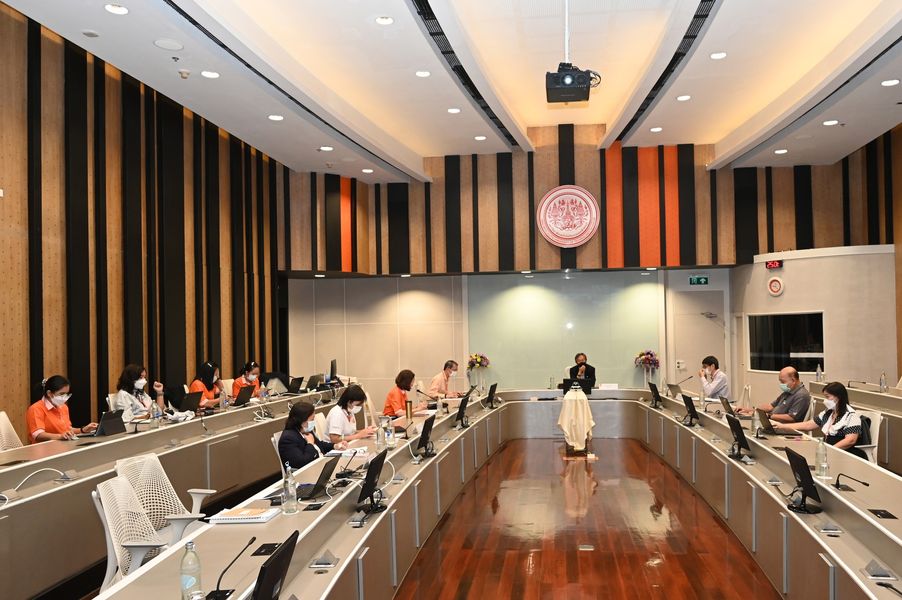
    Open source
  • Stakeholder assessment on 10 March 2025

    More than 65 respondents included alumni, companies, shops, entrepreneurs, contractors, continuing education representatives and current students. This is a mixed consultation group, not an external-only denominator.
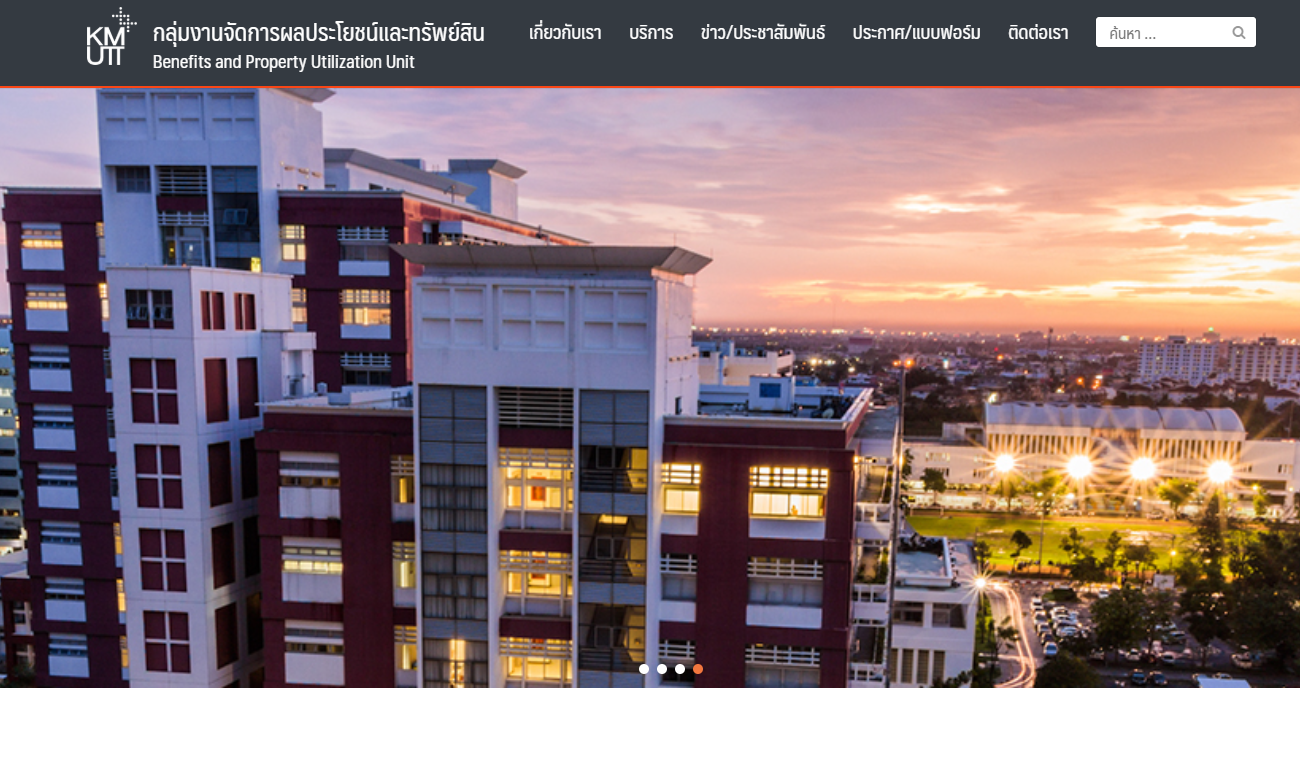
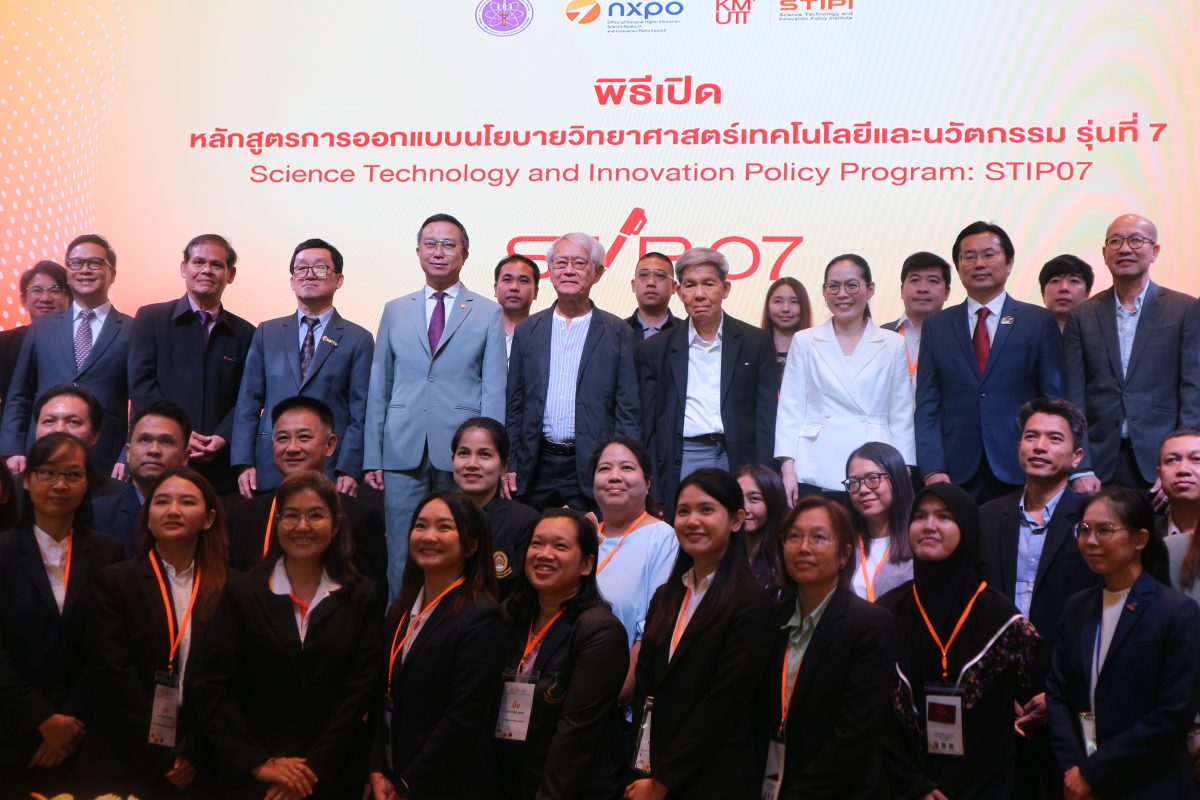
    Open source
  • No Gift Policy for fiscal year 2025

    Announced 7 November 2024 for executives and personnel. Duty-related gifts and unlawful benefits are addressed; customary gifts remain subject to the stated legal rules.

    Open source
  • Academic freedom framework

    National guidelines gazetted 20 December 2021, supplied through the University Council: teaching, research, academic services and expression, including protection against intimidation and interference. The upload date is not a new policy date.

    Open source
  • Integrity and Transparency Assessment 2025

    Previously reviewed primary announcement: 94.41 points, Pass, ranked 27 among 87 higher education institutions. This is an assessment score, not a satisfaction percentage, corruption count or financial audit opinion.

    Open source
  • Financial statements for fiscal year 2025

    Four-page public extract, reporting date 30 September 2025. Total revenue THB 4,515,283,342.40; expenses THB 4,763,714,406.41; deficit THB 248,431,064.01. Actual year-end statements are distinct from budget forecasts. The extract does not include an audit opinion or full explanatory notes.

    Open source
  • STIP 07 opening and programme design

    Three-month non-degree programme by STIPI and NXPO. The April 2025 report records 60 selected participants from 35 organisations.

    Open source
  • STIP 07 completion and policy proposals

    Closing ceremony 27 June 2025: 58 graduates from 35 organisations. Four modules and five group proposals support policy-design learning. Proposals are not represented as adopted government policy.

    Open source
  • Nakhon Pathom research and policy handover

    12 March 2026: provincial governor and Provincial Administrative Organisation received flood scenarios and decision-support information. The 2028–2038 wastewater masterplan was presented as a draft, not completed infrastructure.

    Open source
  • National climate masterplan consultation

    7 July 2025: KMUTT researchers contributed as DCCE project consultants to a multi-sector consultation refining a draft masterplan. This is policy advice, not final approval or a measured climate outcome.

    Open source
  • Government-supported research register

    STIPI records AI policy research supported by NXPO in fiscal 2026 and a Thai herbal-product market/technology roadmap supported by PMU-C in fiscal 2025. Commissioned research does not itself prove policy adoption.

    Open source

Governance

Establishes principles of good management, including accountability, transparency, and the rule of law.

16

Systematic Governance (HR)

Focuses on transparency, fairness, and justice within the university's human resources systems.

8
16

Core Values: Integrity

Emphasizes the core value of upholding what is right and being socially responsible in all actions.

4
8
16

Safety Policy

Ensures a safe and secure environment for all, contributing to peaceful and inclusive communities.

3
8
11
16
×