

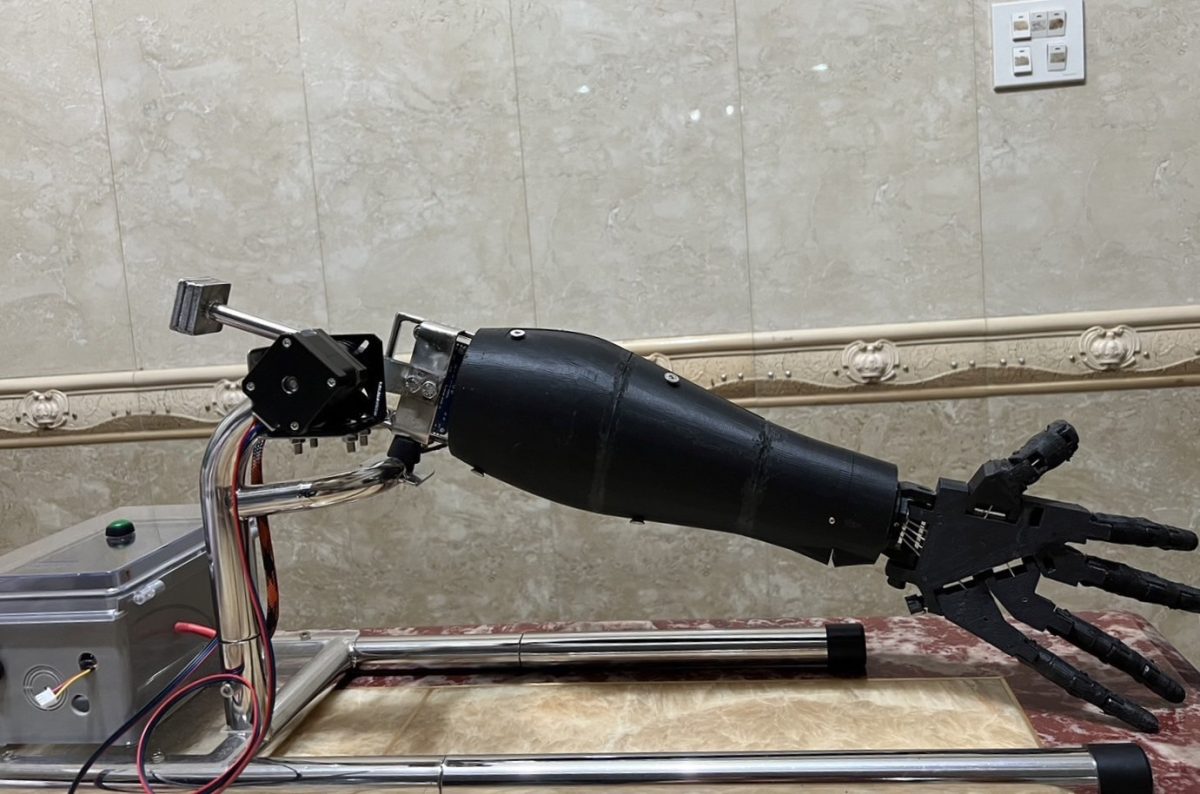
Hand disability is a significant physical challenge that impacts daily life, career opportunities, and the mental well-being of both the individuals and their families. Consequently, there has been a continuous effort to develop Robotic Prosthetic Hands that can perform tasks such as grasping, releasing, and squeezing closely mimicking the functions of a human hand.
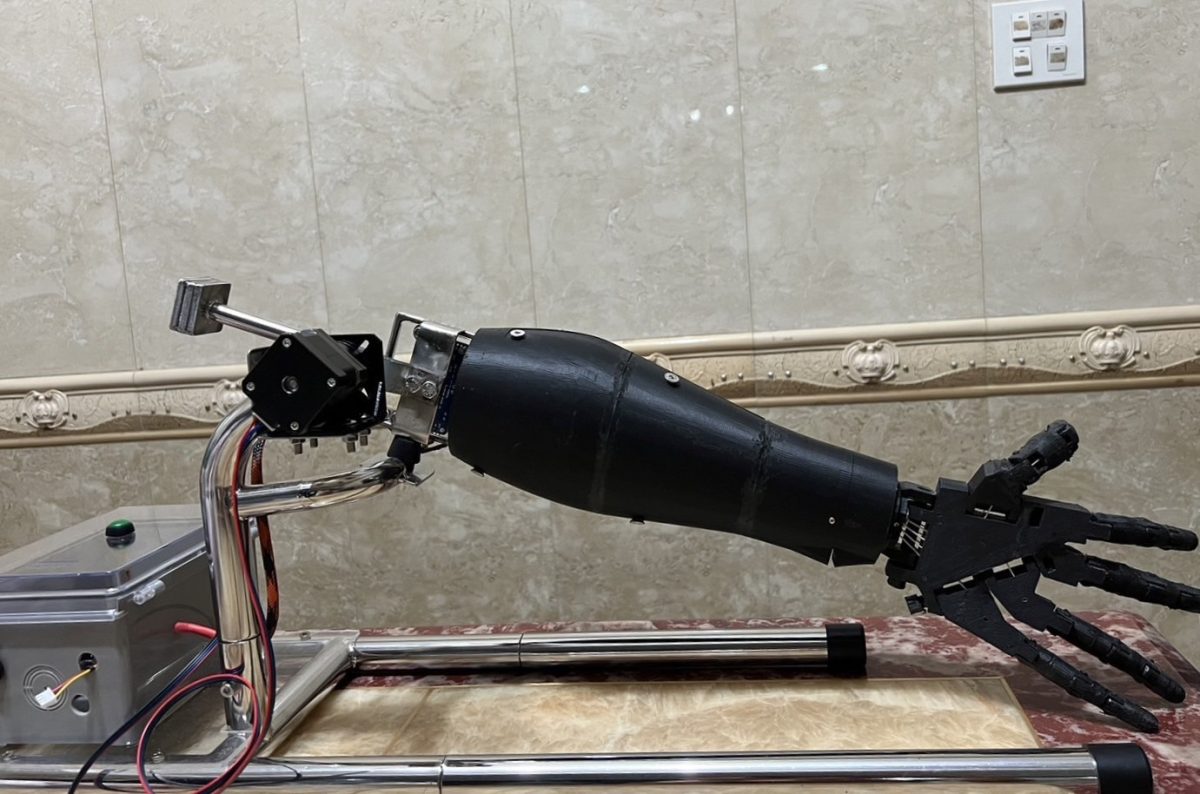

A major breakthrough in this field is the “Prototype Robotic Prosthetic Hand for Transradial Amputees using Electromyography (EMG) and Artificial Intelligence (AI) Techniques.” This Thai invention recently garnered international acclaim, winning the JDIE Grand Award (the highest honor of the event) at the Japan Design, Idea and Invention Expo 2024, as well as a Gold Medal from the National Research Council of Thailand (NRCT) at the Tokyo Ariake Garden Convention Center in July 2024.
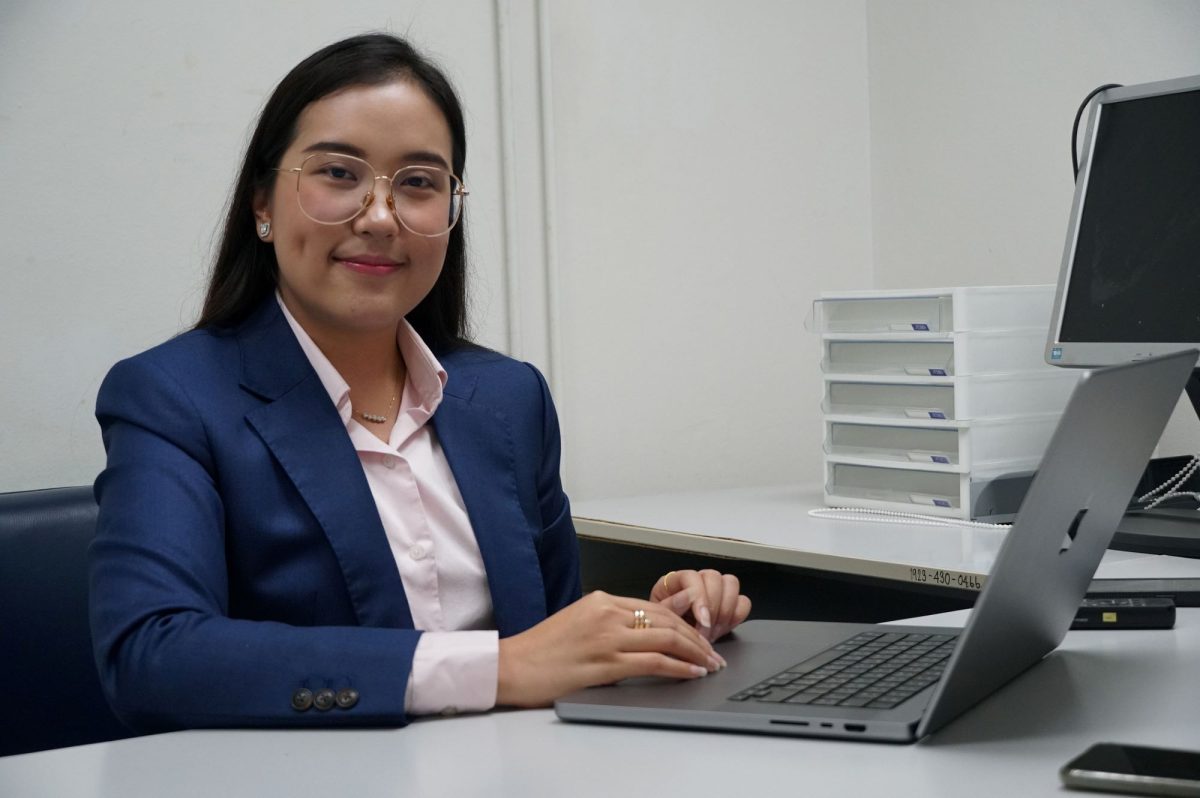
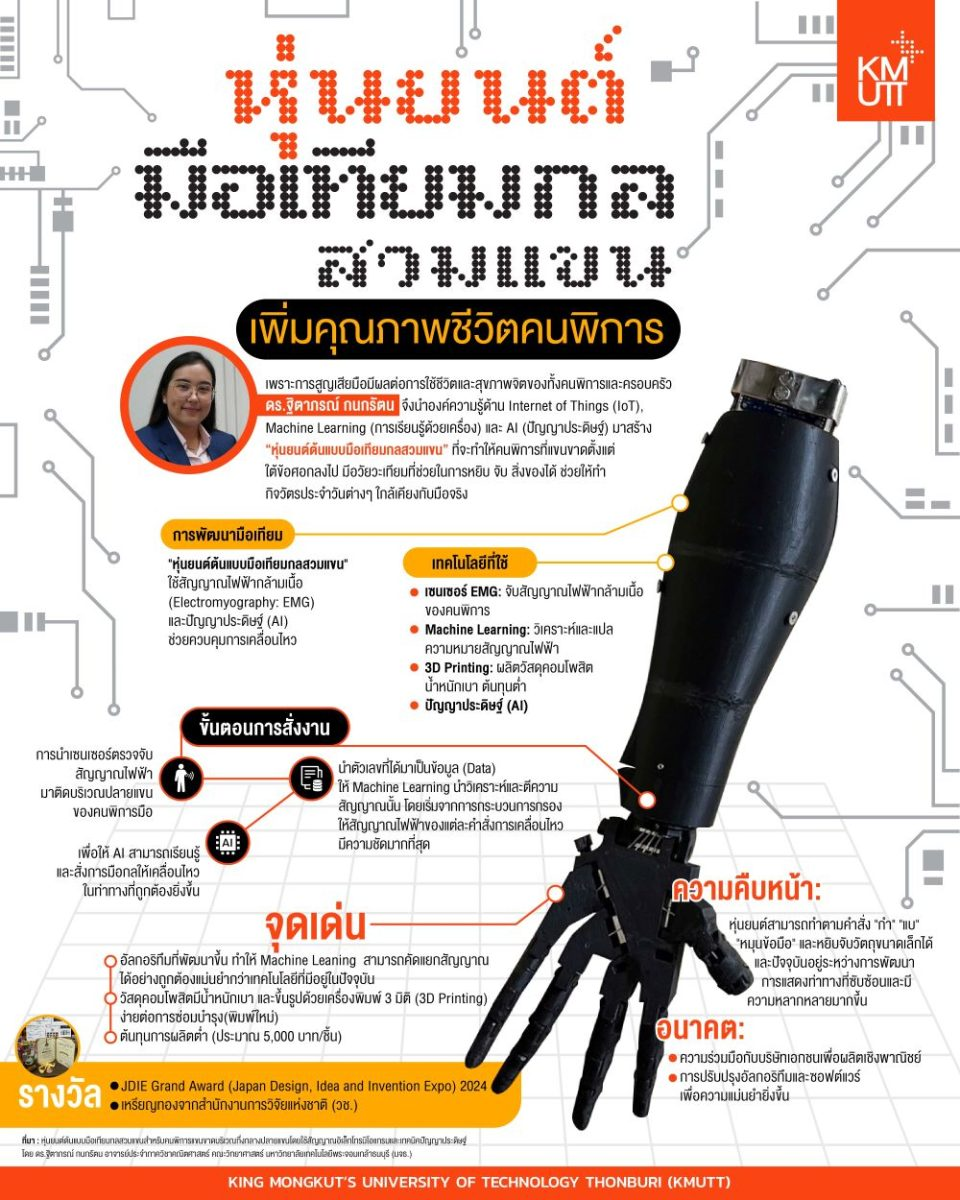
Dr. Thittaporn Ganokratanaa, a faculty member of the Department of Mathematics, Faculty of Science at King Mongkut’s University of Technology Thonburi (KMUTT) and the project leader, stated that development began in 2023. The primary goal is to integrate Internet of Things (IoT), Machine Learning, and AI to create a functional prosthetic for individuals with below-elbow amputations, allowing them to perform daily activities using Electromyography signals.
The Mechanism: Muscle Electrical Signals
Dr. Thittaporn explained that Electromyography (EMG) refers to the electrical potential generated by muscle fibers during contraction. These signals are commanded by neurons and transmitted to muscle fibers. EMG signals vary in pattern and intensity based on the intended movement and strength directed by the user’s brain. If these signals are accurately measured and analyzed in real-time, the prosthetic hand can move according to the user’s neurological commands.
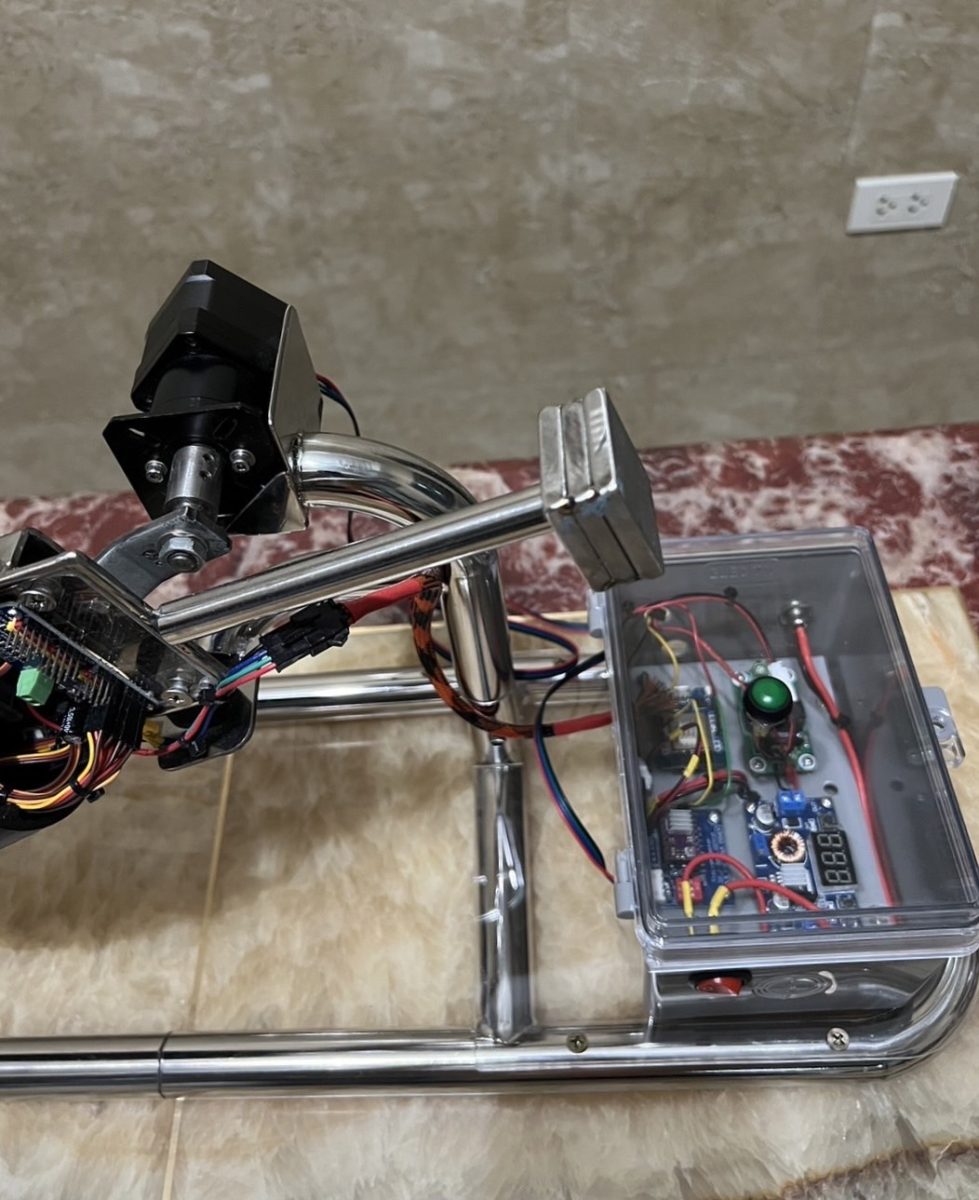
“Our process involves placing electrical signal sensors on the user’s forearm to collect data. We then use Machine Learning to analyze and interpret those signals. We prioritize a signal-filtering process to ensure maximum accuracy for each movement command. This is our project’s highlight: the proprietary $Algorithm$ we developed allows the Machine Learning model to classify signals more accurately than existing technologies on the market. This enables the AI to learn and command the robotic hand with higher precision,” said Dr. Thittaporn.

Innovative Features and Affordability
- Lightweight Materials: The prosthetic is made from a lightweight composite material.
- 3D Printing Technology: Utilizing 3D printing allows for rapid prototyping and easy repairs. If a part breaks, a new one can be printed and replaced immediately.
- Cost-Effective: The production cost is approximately 5,000 THB per unit, significantly lower than imported high-tech prosthetics.
- Current Capabilities: The prototype can already perform commands such as “Grip,” “Release,” and “Wrist Rotation,” as well as lifting objects like coffee cups or small bottles.
Future Roadmap: Commercialization and Complex Gestures
The ongoing challenge is to enable more complex finger gestures and a wider variety of movements. This requires training the AI with a larger volume of EMG data to refine signal processing and noise cancellation.
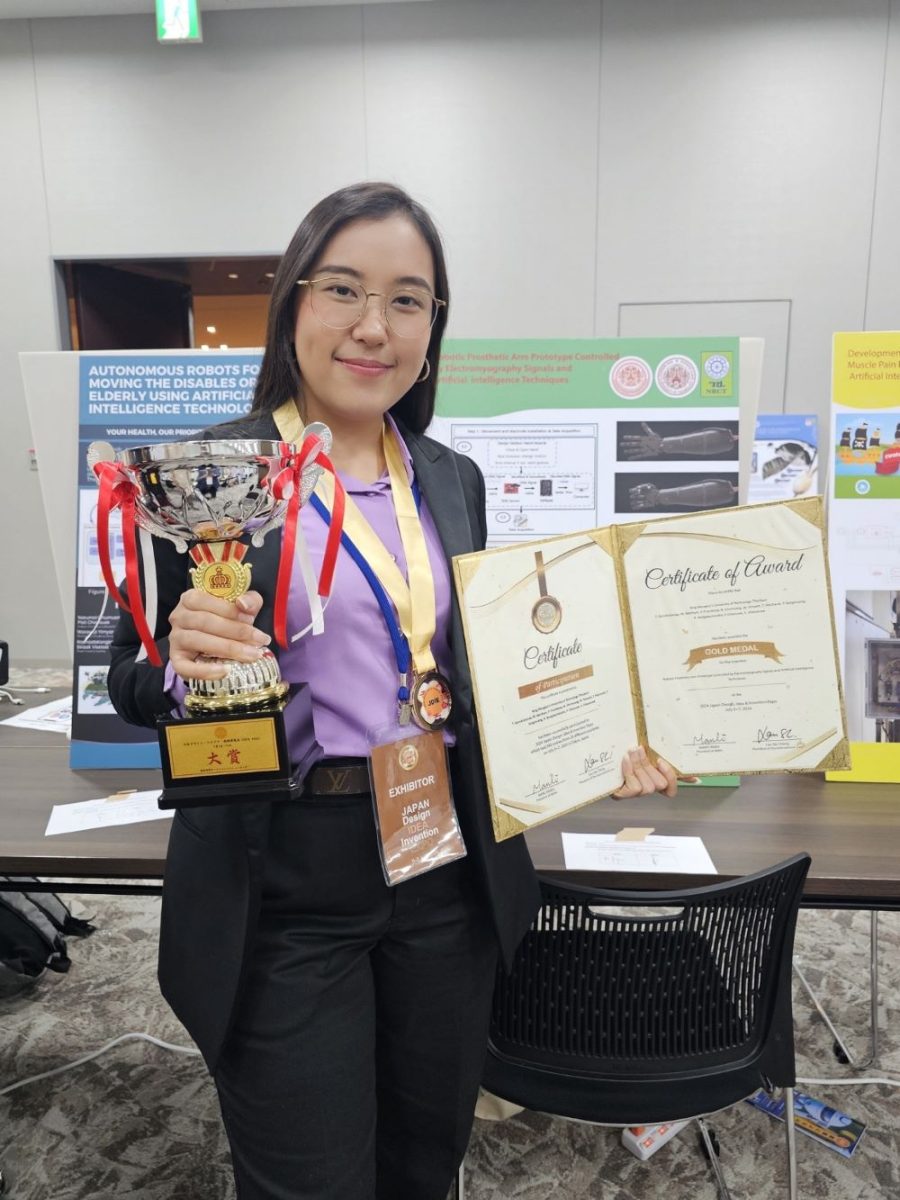
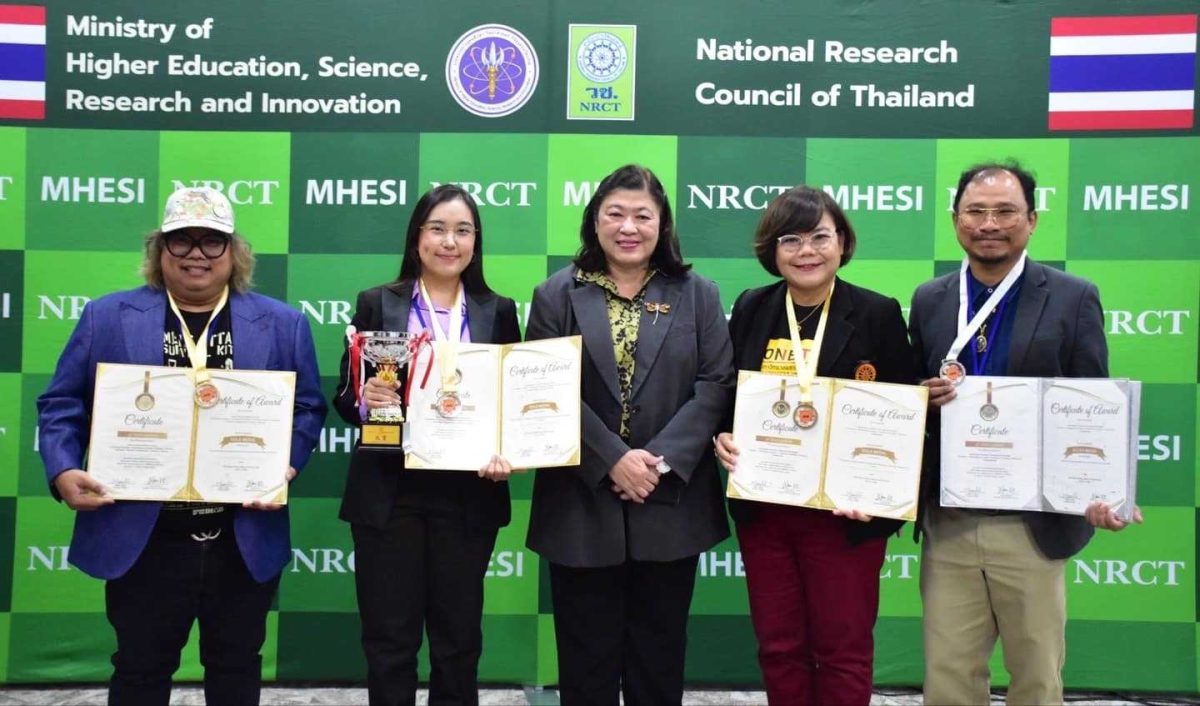
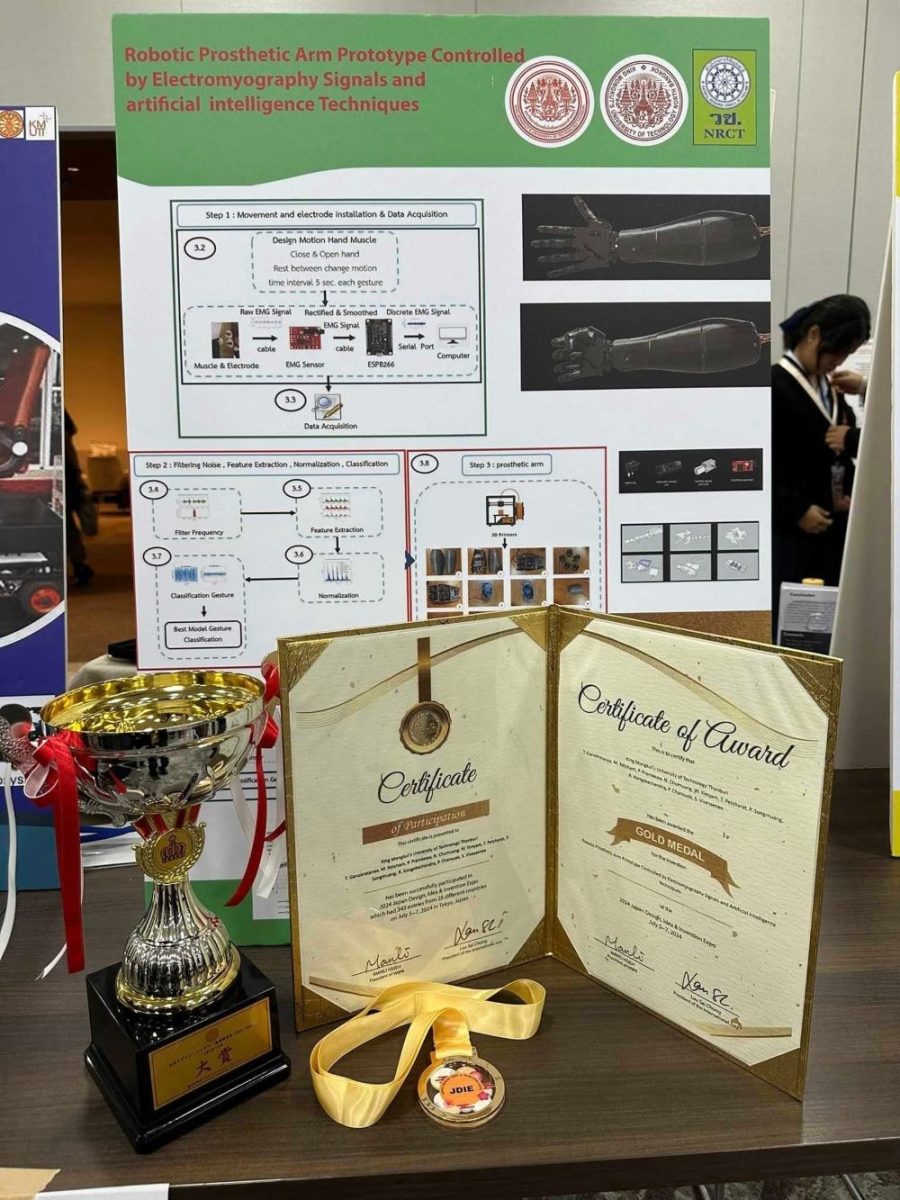
Currently, the team has partnered with the private sector to produce a commercial prototype capable of basic movements. This testing phase aims to eliminate operational constraints, with a goal to provide functional prototypes to disabled individuals within a year. In the next research phase, the team will focus on enhancing the Algorithm and software to allow the AI to translate neurological signals into more diverse and specific finger movements.
Related News

‘Plant-Based Caviar’: KMUTT Students’ Food Innovation Clinches National Gold, Ready for Global Market Expansion

KMUTT Mechanical Engineering Students and Faculty Clinch Gold Medal from NRCT with Microchannel Heat Sink Innovation for Future Data Centers



