


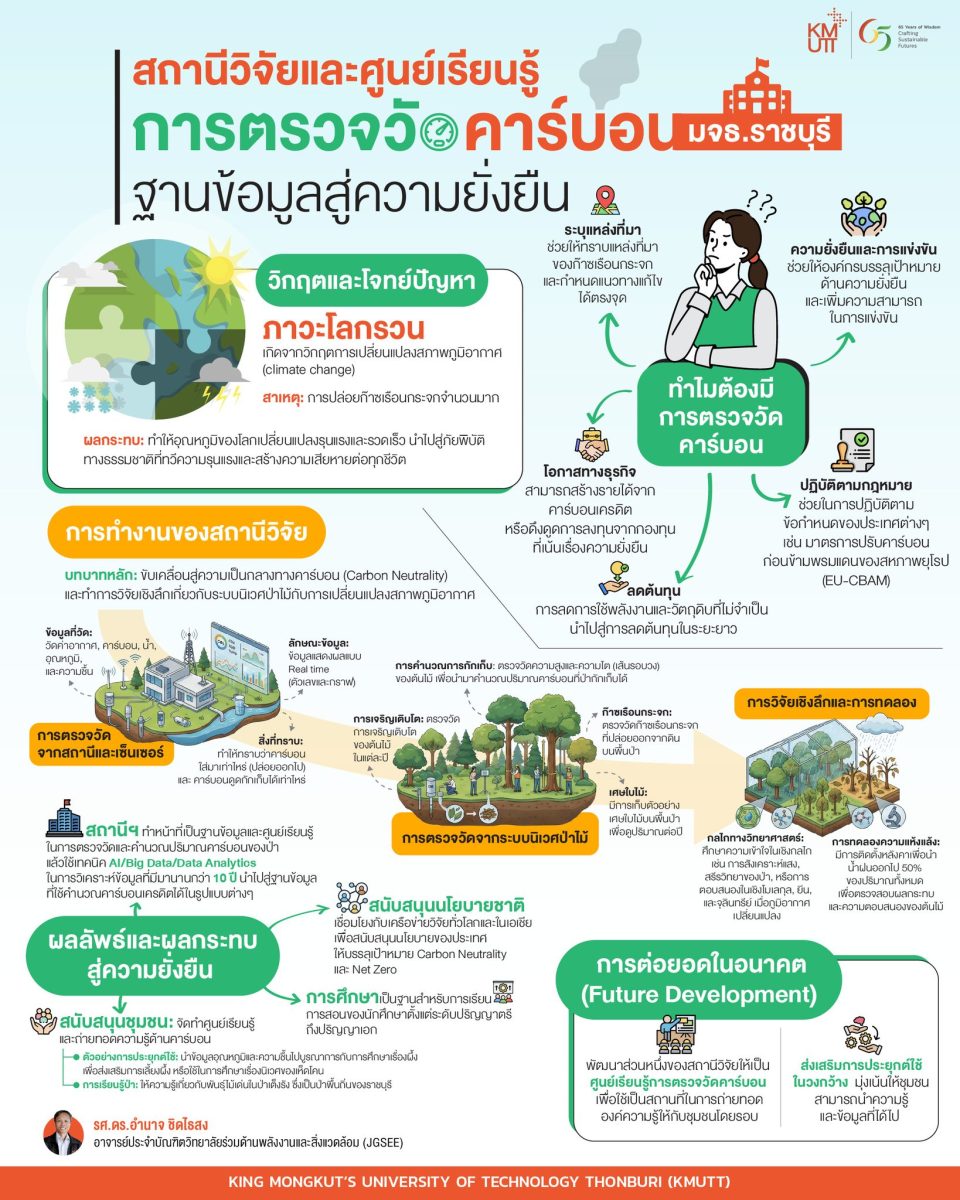
King Mongkut’s University of Technology Thonburi (KMUTT) Ratchaburi is advancing its Carbon Research Station and Learning Center. By transforming over 10 years of longitudinal research into practical applications, the station serves as a vital resource for students, government agencies, and the local community in Ratchaburi to support Thailand’s Carbon Neutrality and Net Zero targets.
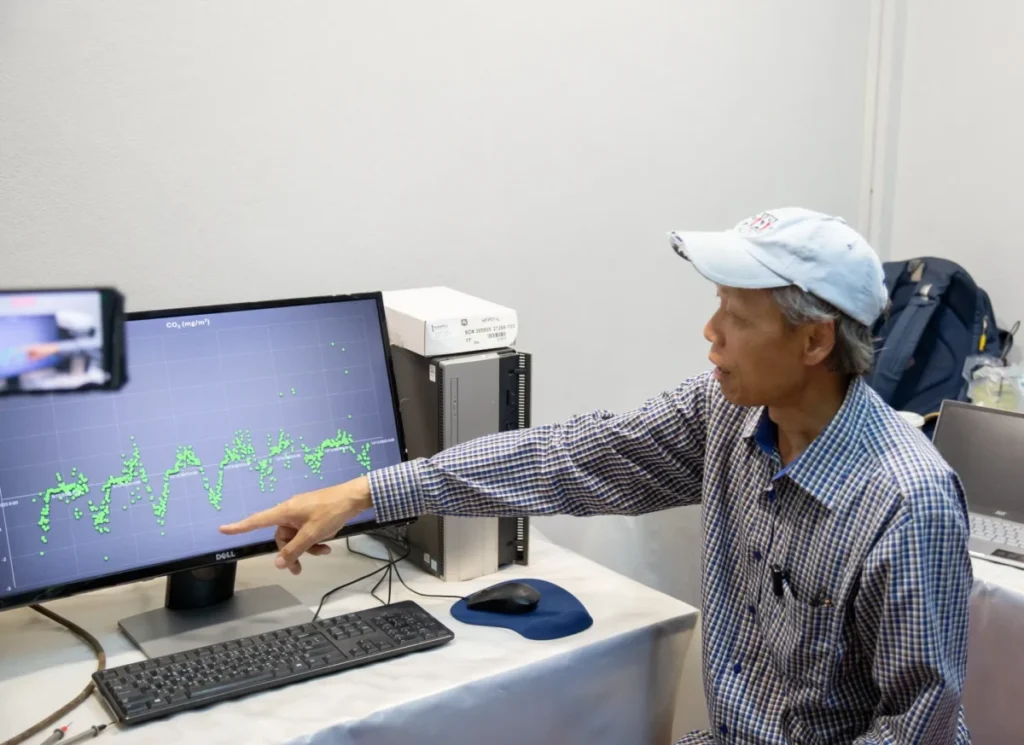
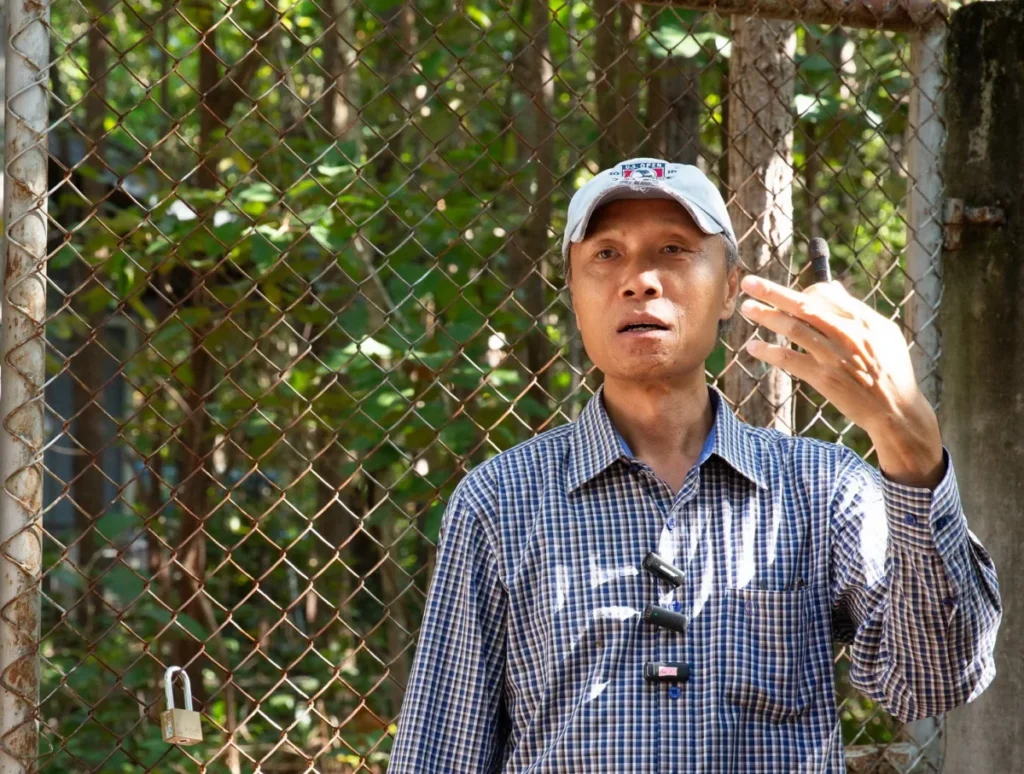
Assoc. Prof. Dr. Amnat Chidthaisong from the Joint Graduate School of Energy and Environment (JGSEE) revealed that the station evolved from a 20-meter “Carbon Tower.” It utilizes advanced Eddy Covariance technology to record critical data on carbon, water, temperature, and humidity, monitoring the carbon sequestration and emissions of the dry dipterocarp forest.
“Measuring the Forest’s Pulse”
Dr. Amnat describes the forest ecosystem as a living entity that constantly changes. The tower acts as the “eyes and ears” for scientists, allowing them to listen to the “breath of the dry dipterocarp forest.” By monitoring how the forest responds to climate change, the technology effectively “measures the forest’s pulse” to determine its overall “health.”
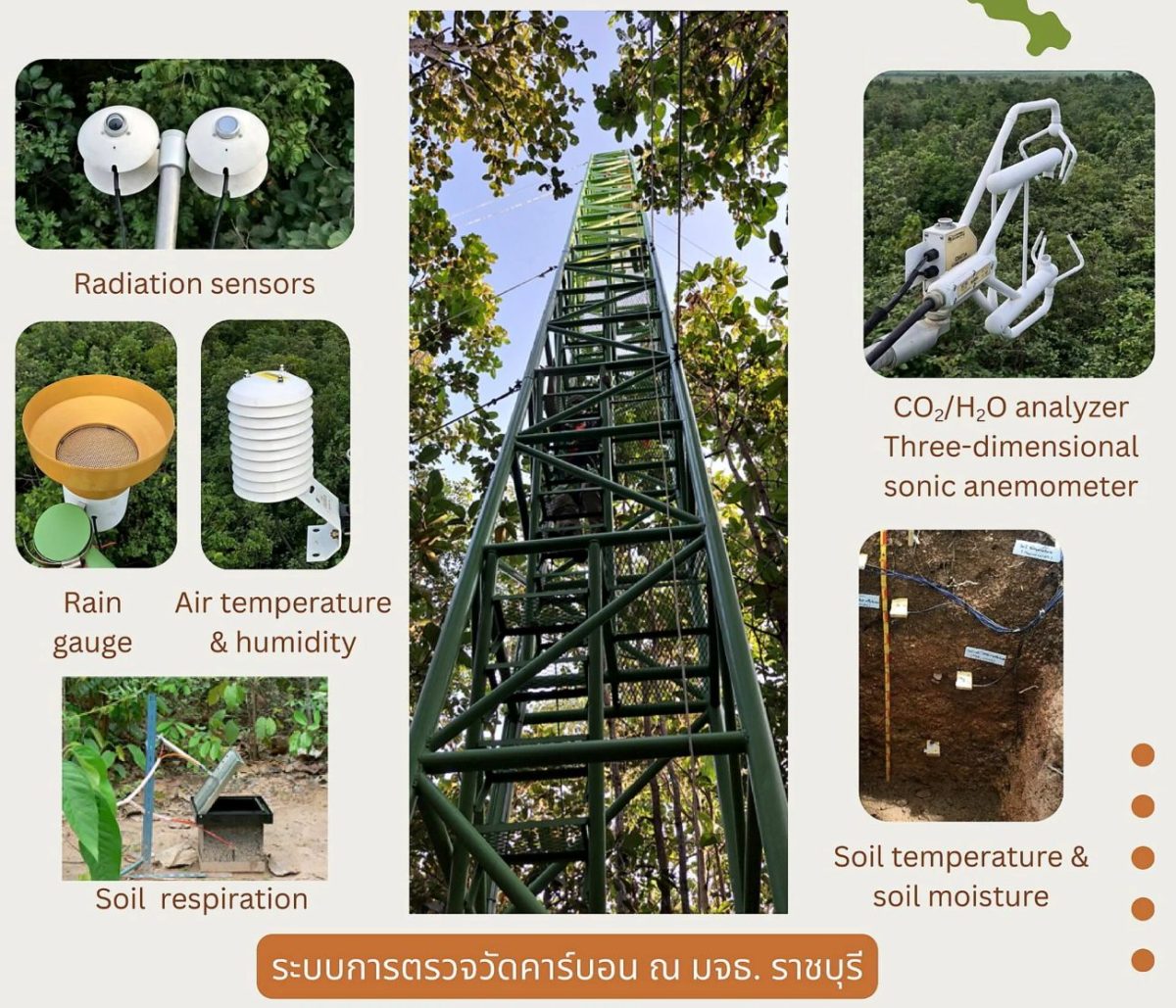
The station also serves as an experimental site for drought impact studies, simulating a 50% reduction in rainfall to observe ecological shifts. In parallel, researchers collect field data on tree growth, litterfall, and soil greenhouse gas emissions to precisely evaluate the forest’s carbon storage potential.
A “Forest Classroom” for the Future
Beyond deep research, the station functions as a high-tech classroom for undergraduate to doctoral students. It integrates field data with:
- Satellite Imagery: For broad-scale environmental monitoring.
- AI and Big Data: To decode complex ecosystem behaviors under climate stress.
From Research to Carbon Credits
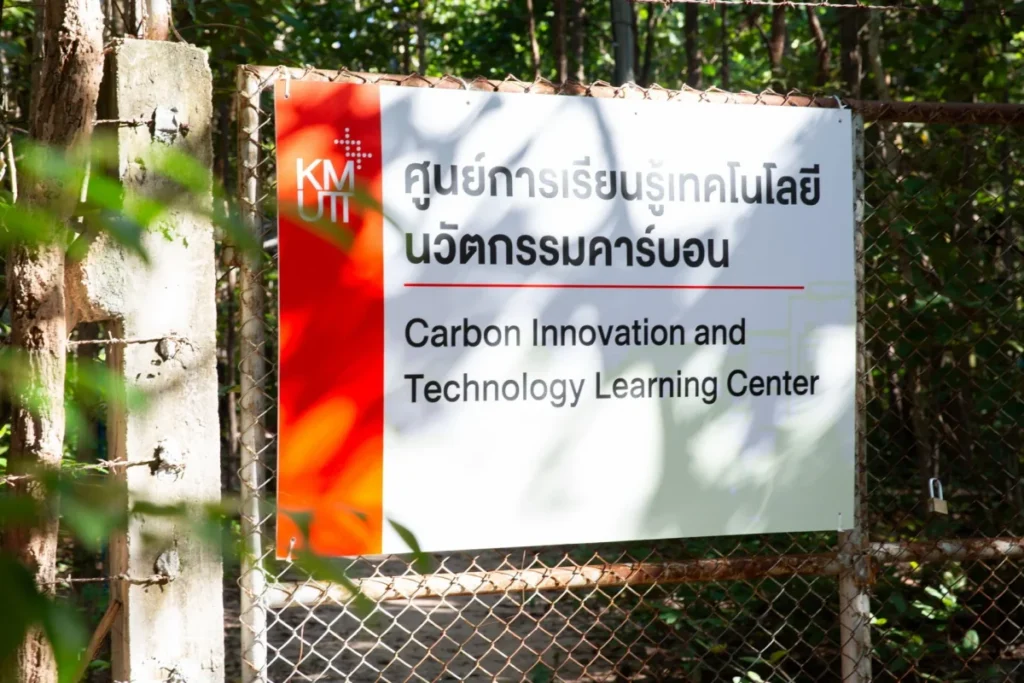
Recognizing its academic and social value, Ratchaburi Province has supported the establishment of the “Carbon and Dry Dipterocarp Forest Learning Center.” This center translates complex data into exhibitions and scientific activities for the community. Crucially, the station’s high-precision data provides a foundation for developing transparent and reliable Carbon Credit standards, supporting Thailand’s sustainable development.
Located in Rang Bua Sub-district, Chom Bueng District, Ratchaburi, this station has evolved from a pure research facility into a natural classroom and a key data hub that empowers the community to apply climate knowledge for a broader impact.
Related News

‘Plant-Based Caviar’: KMUTT Students’ Food Innovation Clinches National Gold, Ready for Global Market Expansion

KMUTT Mechanical Engineering Students and Faculty Clinch Gold Medal from NRCT with Microchannel Heat Sink Innovation for Future Data Centers



