

In 2022, plastic waste reached a staggering 2.83 million tons. Current management through recycling and reuse only handles about 25% (approximately 0.71 million tons). The remaining 2.04 million tons are sent to landfills alongside other waste, with an additional 0.08 million tons leaking into the environment, according to data from the Pollution Control Department.
While the “Reduce” strategy aims to minimize waste-generating materials, there is a push to replace petroleum-based pellets with Bioplastics (bio-based plastics), particularly in the Packaging market one of the largest sectors for biodegradable materials. However, domestic adoption remains low due to three primary issues: 1. Biodegradable plastics are often weak, with low impact and compression resistance; 2. Industrial molding is difficult because the polymers absorb moisture quickly, making shape retention challenging; and 3. The costs remain relatively high.
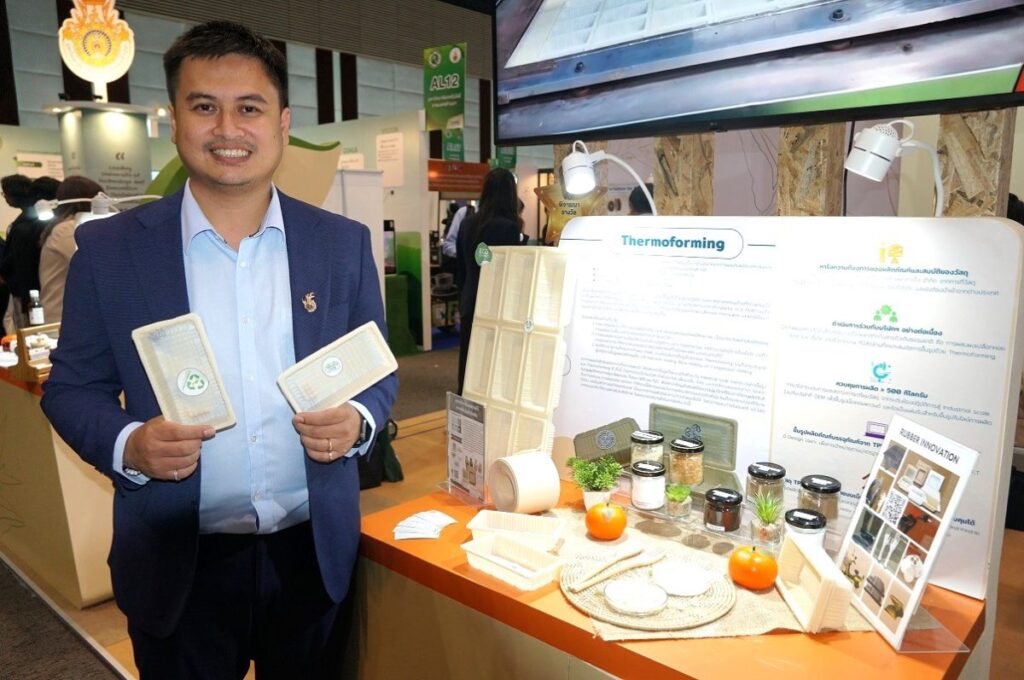
To address these challenges, a research and development project titled “Biodegradable packaging from thermoplastic starch formed by thermoforming techniques using cassava starch” was launched. This is the work of Asst. Prof. Dr. Yeampon Nakaramontree, a lecturer in the Department of Chemistry, Faculty of Science, King Mongkut’s University of Technology Thonburi (KMUTT), and his team, in collaboration with Thai Progress Packaging Co., Ltd.
Overcoming Cost and Industrial Molding Barriers
Asst. Prof. Dr. Yeampon stated that while biodegradable packaging exists both locally and internationally, the competition lies in price, properties, and specific applications, which vary based on raw materials and ratios used in production. “We can create biodegradable bags or containers in many forms, but their weight-bearing capacity or impact resistance will differ. Factors like moisture absorption and meeting specific standards are critical considerations depending on the intended use.”
“The reason these materials aren’t more widely supported is that industrial molding is difficult due to high moisture sensitivity, which results in weak materials and high costs. To be competitive, price must be a primary factor. If we can reduce the cost of bioplastic pellets from the current imported rate of 150 THB per kilogram by using domestic raw materials, it would create market opportunities and stimulate usage. We chose ‘Cassava Starch’ because it is Thailand’s most abundant crop and a natural raw material that can be converted into recyclable, biodegradable plastic. However, raw cassava starch’s disadvantages are its hardness, brittleness, and rapid solubility in water.”
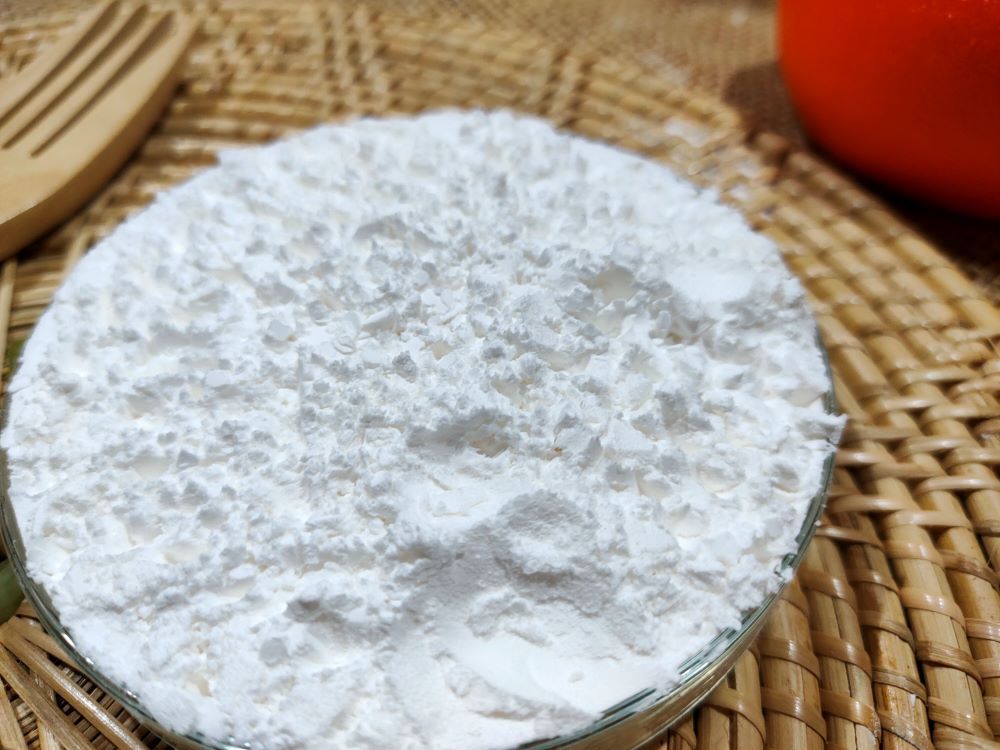
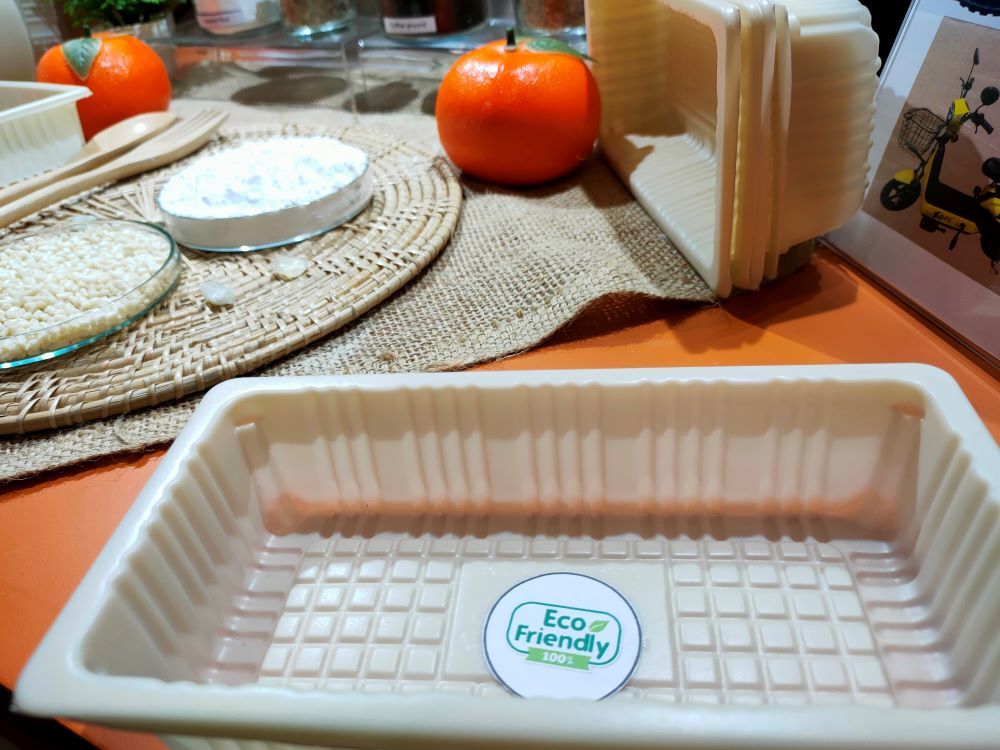
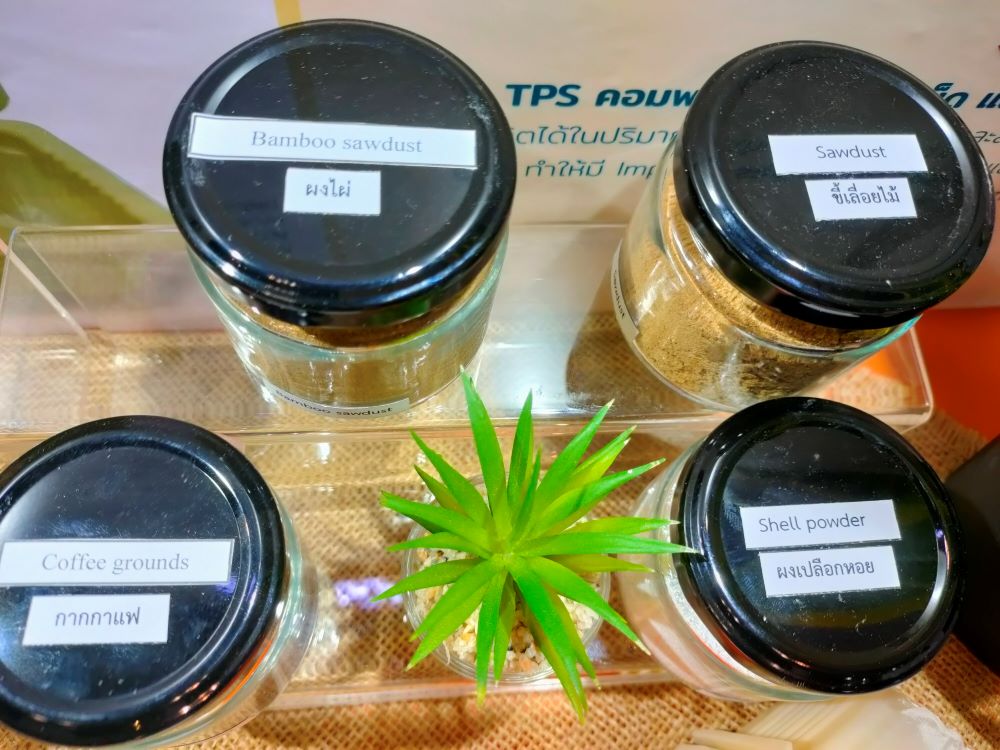
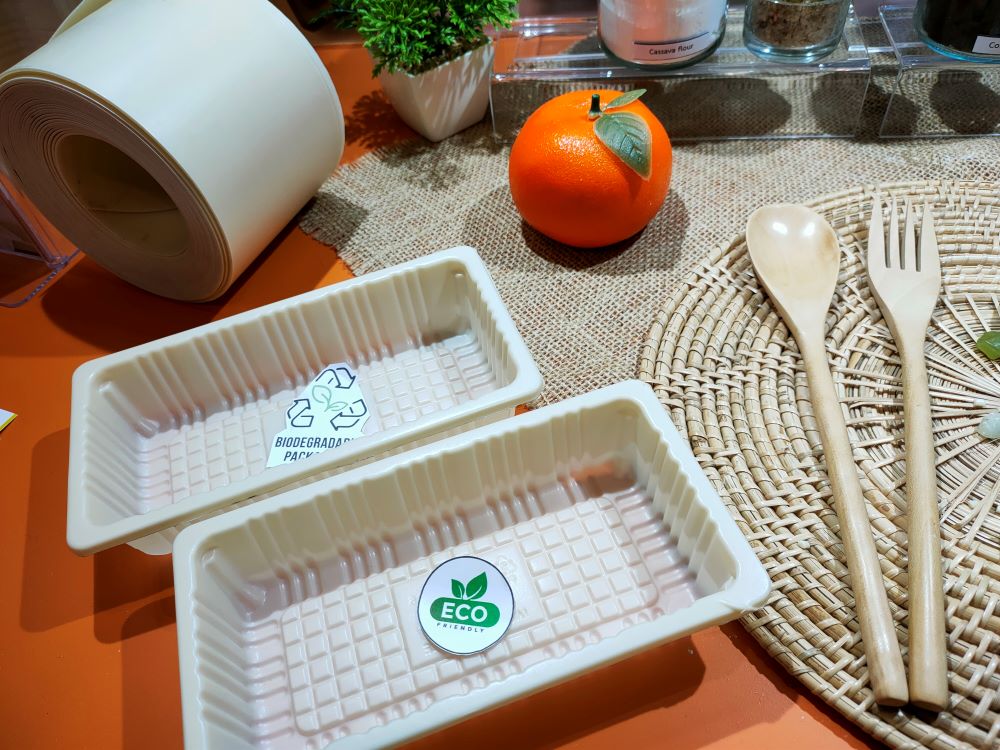
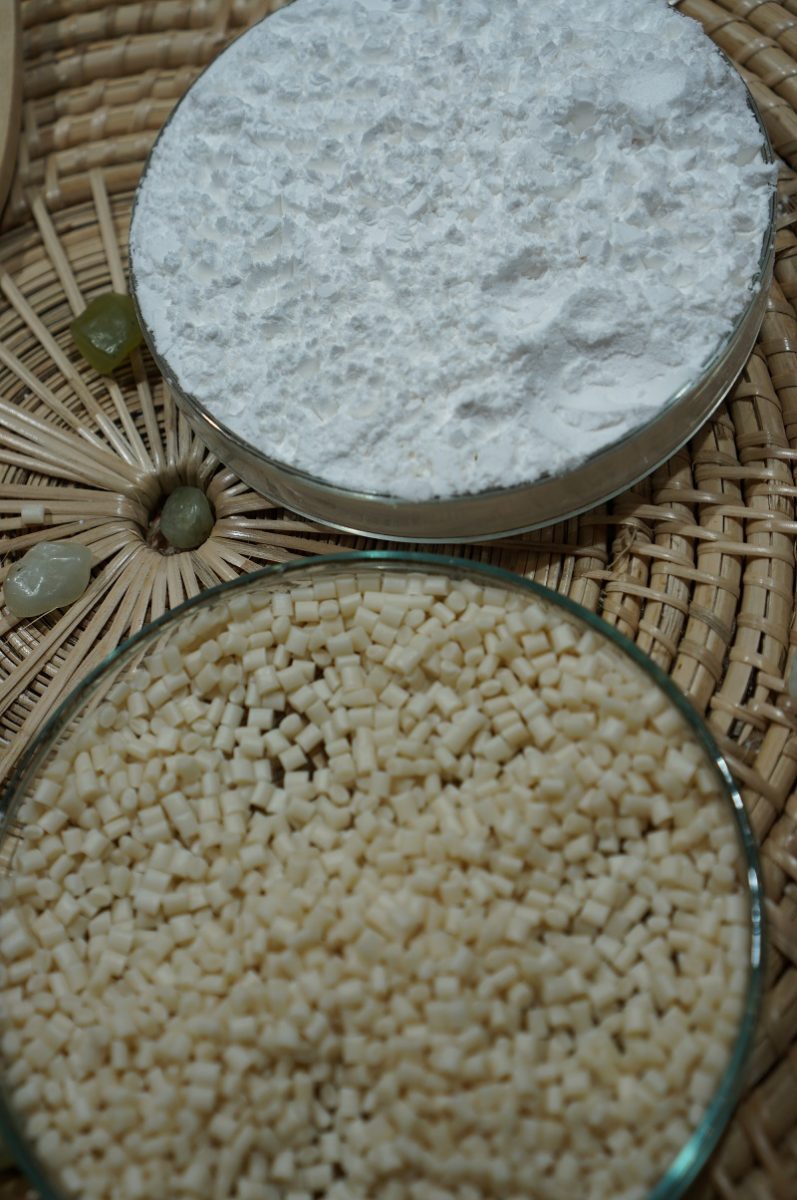
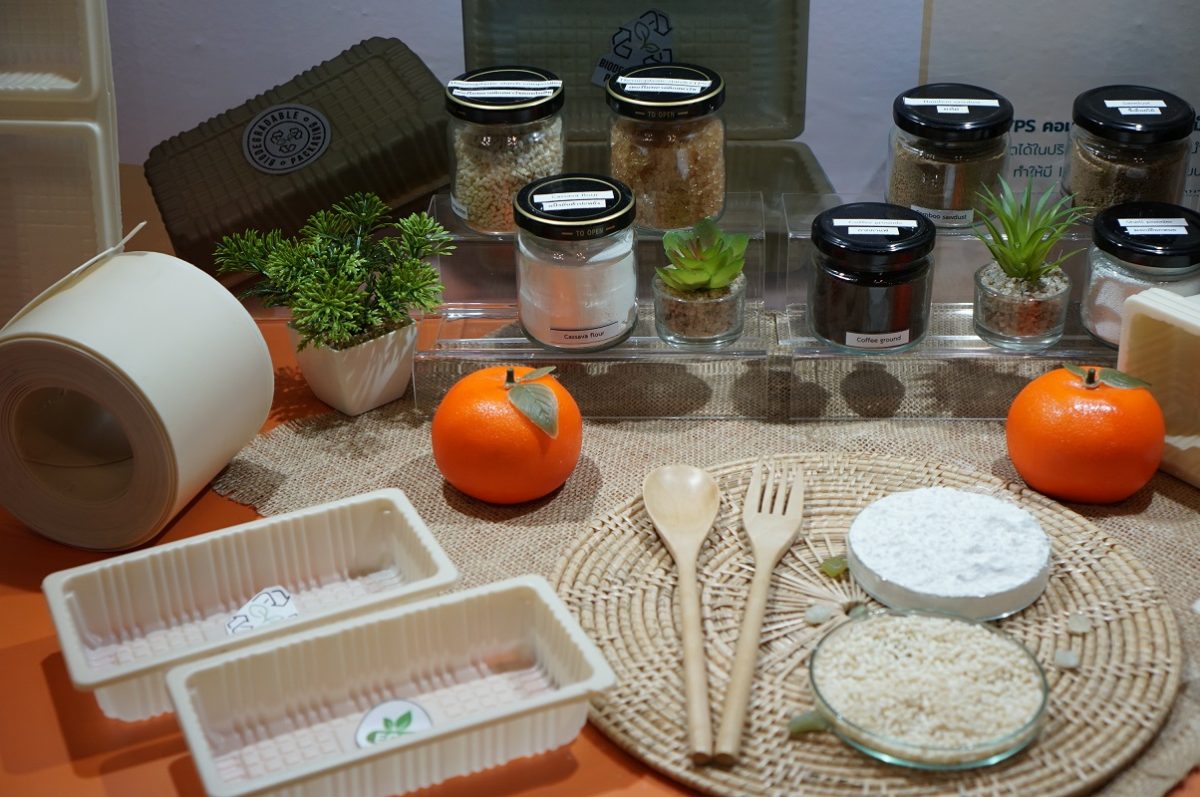
Consequently, the research focuses on a new manufacturing process for biodegradable pellets using cassava starch as the starting material. The team introduced other 100% natural Food Grade ingredients to reinforce the starch and eliminate the “pain points” that previously hindered bioplastic adoption. After three years of research, the project has reached TRL9 (Technology Readiness Level 9), meaning it is ready for commercial production, and is currently in the process of filing a petty patent.
The Transformation: Thermoplastic Starch (TPS) Composites
The research process begins by transforming cassava starch powder into Thermoplastic Starch (TPS), which possesses recyclable properties. It is then enhanced through a specialized thermal process to ensure suitable mechanical properties for various applications. This is achieved by blending TPS with biodegradable polymers such as seashells, coffee grounds, natural fibers, and sawdust to increase load-bearing strength.
“Because TPS is primarily plant-based, thermal molding can cause it to burn or degrade before it melts. Adding the appropriate ratio of blended polymers affects the material’s mechanical properties, moisture absorption, and biodegradation. Controlling the amount of TPS and the preparation conditions both in the lab and on an industrial scale requires specific techniques to ensure quality. The result is a bio-pellet that can be produced into sheets for industrial-scale Thermoforming or other molding processes, just like conventional plastic pellets,” said Asst. Prof. Dr. Yeampon.
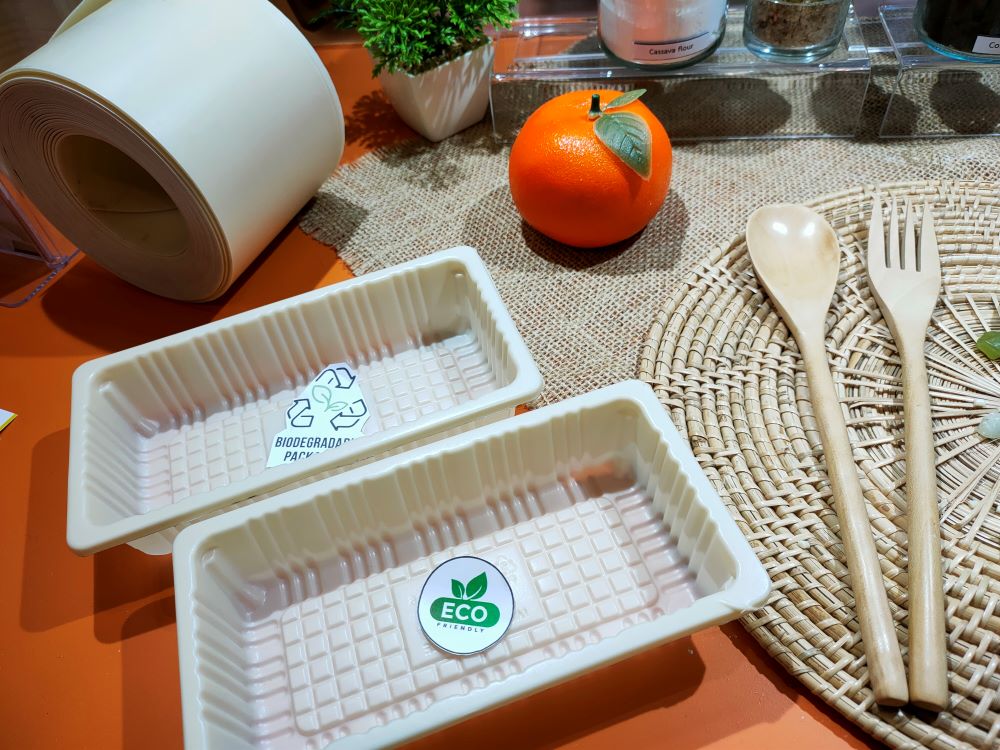
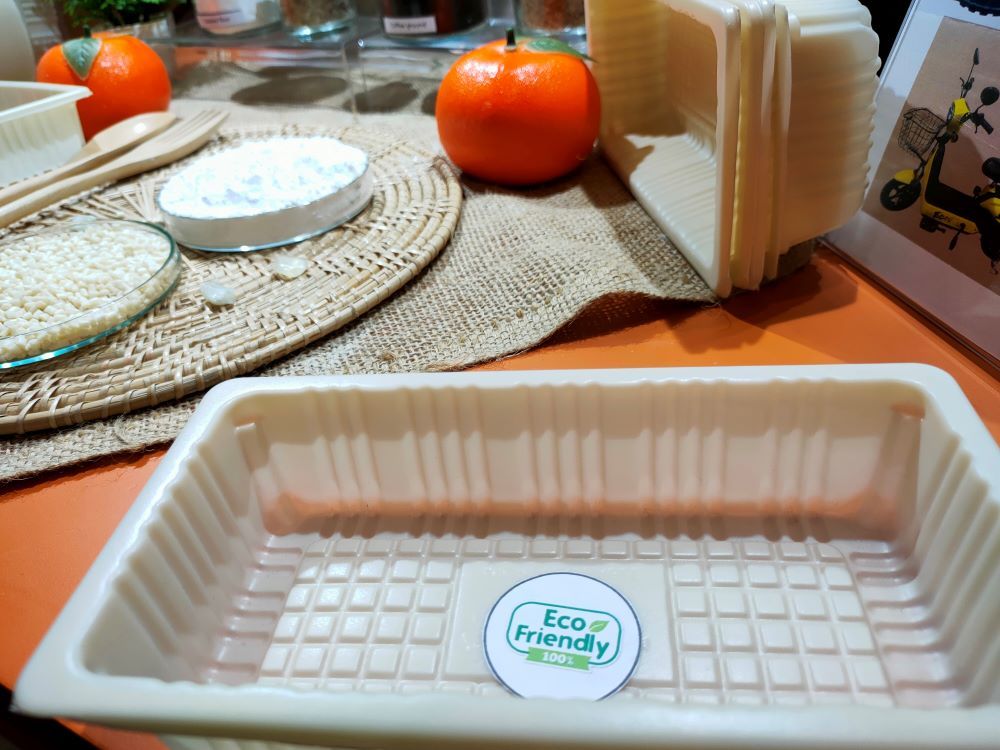
This material, known as Thermoplastic Starch Composites, is an eco-friendly bioplastic pellet used for various packaging products that can be molded on an industrial scale and stored for long periods. Examples include trays, boxes, spoons, forks, bags, and other plastic products.
Asst. Prof. Dr. Yeampon concluded that this developed process allows for the production of biodegradable pellets where ratios can be controlled, enabling price management from start to finish. This reduces the cost from the imported rate of 150 THB/kg to only 100-130 THB/kg. Most importantly, this research solves the flaws in molding, durability, shelf-life, and cost-effectiveness. It represents an innovation that can be practically applied, adding significant economic value to the country by effectively utilizing natural materials and waste from local communities.
Related News

‘Plant-Based Caviar’: KMUTT Students’ Food Innovation Clinches National Gold, Ready for Global Market Expansion

KMUTT Mechanical Engineering Students and Faculty Clinch Gold Medal from NRCT with Microchannel Heat Sink Innovation for Future Data Centers



