

A New Alternative Plant-Based Protein for Health Enthusiasts
The human body requires protein to build muscle and repair tissues. However, for vegans or those with dairy allergies, obtaining sufficient protein can be challenging. Currently, Plant-based Protein extracted from legumes and grains such as soybeans, rice, Job’s tears, sesame, ginkgo seeds, and sunflower seeds—has emerged as a new alternative for health-conscious individuals. Beyond muscle growth, plant proteins offer high dietary fiber, aid digestion, are easily absorbed, and contain no cholesterol. Crucially, this innovation adds value to industrial agricultural by-products, reduces waste, and decreases reliance on imported crops for plant-based protein production.
Assoc. Prof. Dr. Natta Laohakunjit, Chairperson of the Biochemistry Technology Program at the School of Bioresources and Technology and Head of the Functional Food and Agropool Processing Operation Center at King Mongkut’s University of Technology Thonburi (KMUTT), is an expert in plant extraction and flavor science. She noted that global consumption of plant-based protein is rising, with various high-protein sources like legumes, grains, and specific rice varieties being developed into concentrated alternatives for those who avoid meat or dairy.
Pioneering Research in Protein Hydrolysates
KMUTT is among the first universities in Thailand to continuously research plant protein since 2006. The team has developed Protein Hydrolysates from sources like soybeans, mung beans, rice, sunflower seeds, red algae, mushrooms, and sesame. By subjecting Protein Concentrates and Protein Isolates to Enzymatic Hydrolysis—a modern Green Technology they break down protein bonds into smaller peptides and amino acids. This makes the nutrients more bioavailable and bioactively effective. The university has already filed for patents for these innovations.
Assoc. Prof. Dr. Natta further explained that bioactive compounds in protein hydrolysates are widely used in functional foods. Research shows they play a vital role in:
- Cardiovascular Health: Controlling blood pressure and cholesterol levels.
- Metabolic Regulation: Reducing blood sugar and suppressing appetite.
- Protection: Inhibiting pathogenic microbes and preventing certain cancers.
- Wellness: Providing antioxidant and anti-inflammatory properties, preventing osteoporosis, and reducing allergenic proteins.
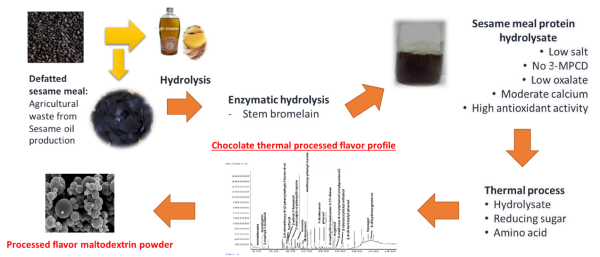
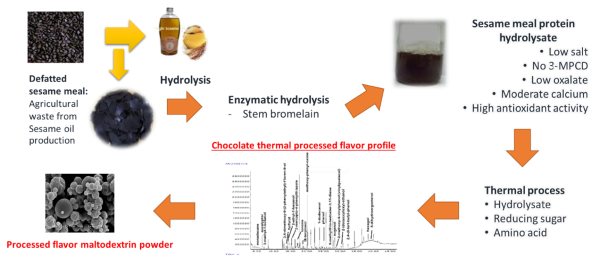
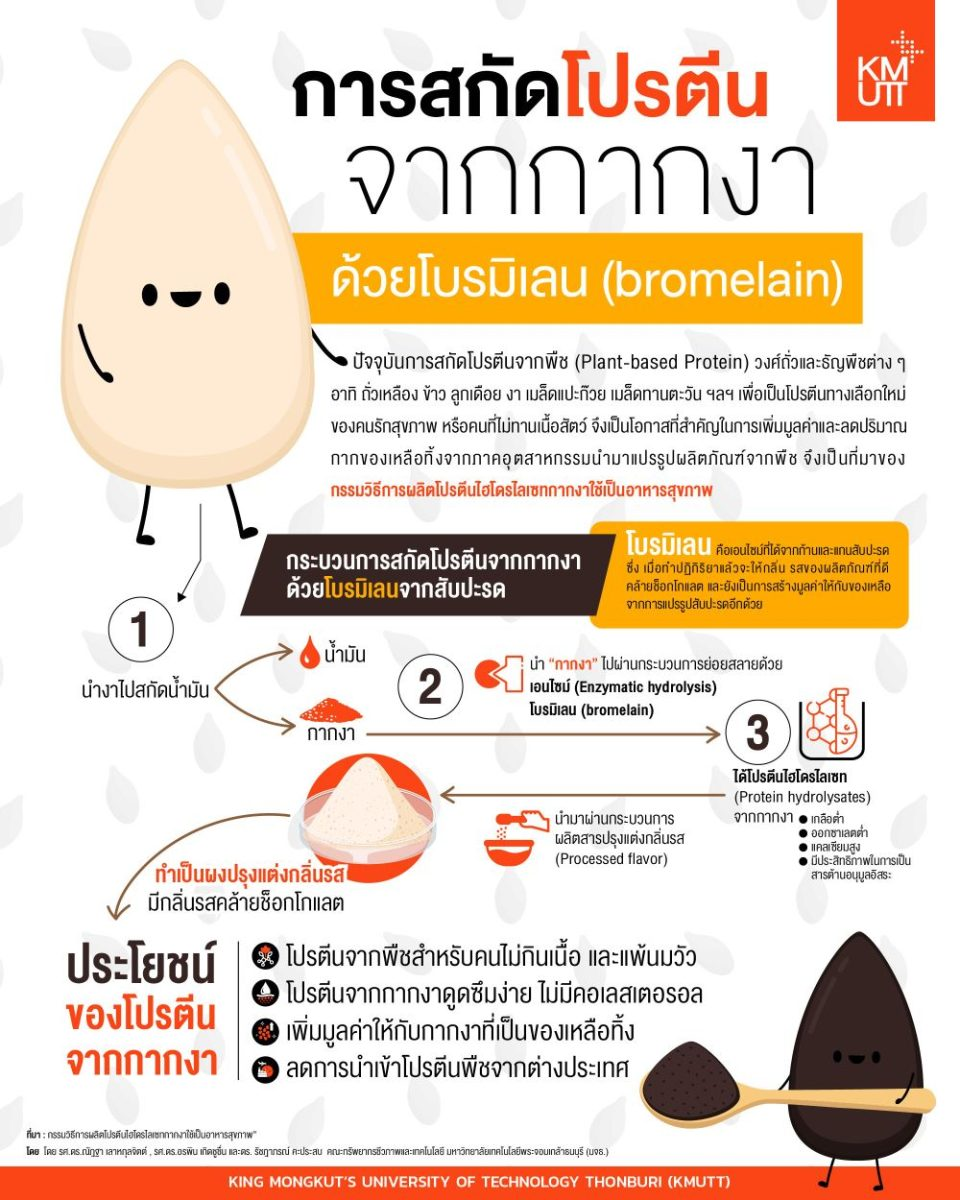
The team utilizes various enzymes for hydrolysis, specifically Bromelain, a Cysteine Protease enzyme found in pineapples. Thailand grows pineapples in large quantities at low costs, and Bromelain is highly efficient for mass production while yielding a pleasant flavor profile.
The Breakthrough: Sesame Meal with a ‘Chocolate’ Aroma
Sesame is a nutrient-dense grain rich in protein, vitamins, and antioxidants. It is drought-resistant, cost-effective to produce, and bee-friendly. While highly desired in the market for its high Calcium and Vitamin D content, sesame protein is difficult to extract. This led to the innovation: “Method for Producing Sesame Meal Protein Hydrolysate for Health Foods.”
The research team chose to hydrolyze sesame using Bromelain from pineapples. They discovered that this specific combination not only produces high-quality amino acids and easily absorbed peptides but also results in a unique flavor profile identical to chocolate—a characteristic not found in other grains.
“We take the sesame meal left over after complete oil extraction and digest it using bromelain from pineapple. The resulting protein hydrolysate is developed into a ‘powder’ for use as a product ingredient. It enhances solubility and foaming capabilities. Furthermore, it serves as a processed flavor agent due to its distinct, pleasant aroma and acts as an effective antioxidant that inhibits fat oxidation ($Oxidation$),” said Assoc. Prof. Dr. Natta.
From Waste to High-Value Functional Food
While raw sesame is high in calcium, it also contains significant levels of Oxalic Acid ($C_{2}H_{2}O_{4}$), which hinders calcium absorption. Consuming raw sesame is therefore less effective. However, the hydrolysis process reduces oxalic acid, increases available calcium, and improves the aroma. The resulting powder can be consumed as an instant drink or added to products like chocolate or baked goods, encouraging higher consumption.
The team plans to expand this into producing Sesame Meal Milk that tastes like chocolate but remains 100% plant-based, offering a new alternative for the vegan and dairy-allergic markets.
Industrial Scaling and Patents
To meet high market demand, the team recently developed a Continuous/Semi-Automatic Protein Hydrolysate Extraction Machine.
- Capacity: 250 Liters.
- Efficiency: Rapid digestion within 2–3 hours.
- Funding: Supported by the Program Management Unit for Competitiveness (PMU-C) and the Office of National Higher Education Science Research and Innovation Policy Council (NXPO).
- Status: Currently under patent application.
This work not only adds value to Thai crops and reduces industrial waste but is also ready for practical commercial use.
Related News

‘Plant-Based Caviar’: KMUTT Students’ Food Innovation Clinches National Gold, Ready for Global Market Expansion

KMUTT Mechanical Engineering Students and Faculty Clinch Gold Medal from NRCT with Microchannel Heat Sink Innovation for Future Data Centers



