

The global robot market has seen continuous growth following the labor shortage impacts of COVID-19. In 2022, the market was valued at $34.06 billion and is projected to reach $45.10 billion by 2028. Similarly, Thailand’s robotics market is expanding rapidly due to the rise of automation in manufacturing. Meanwhile, service robots, particularly in healthcare and hospitality, remain in high demand due to labor shortages and the country’s transition into an aging society (data from NECTEC).
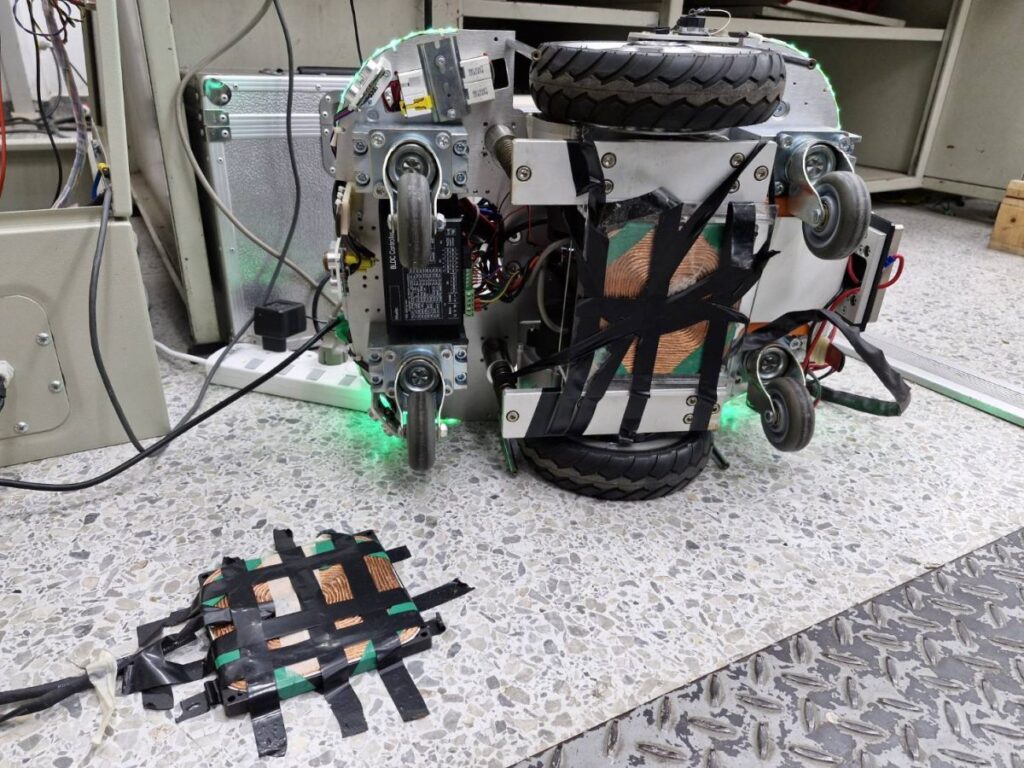
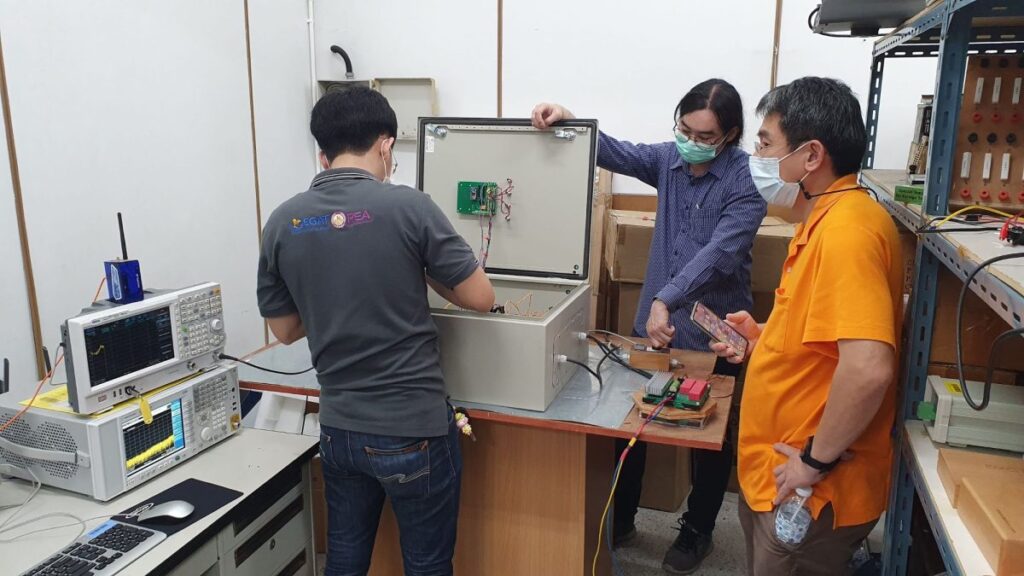
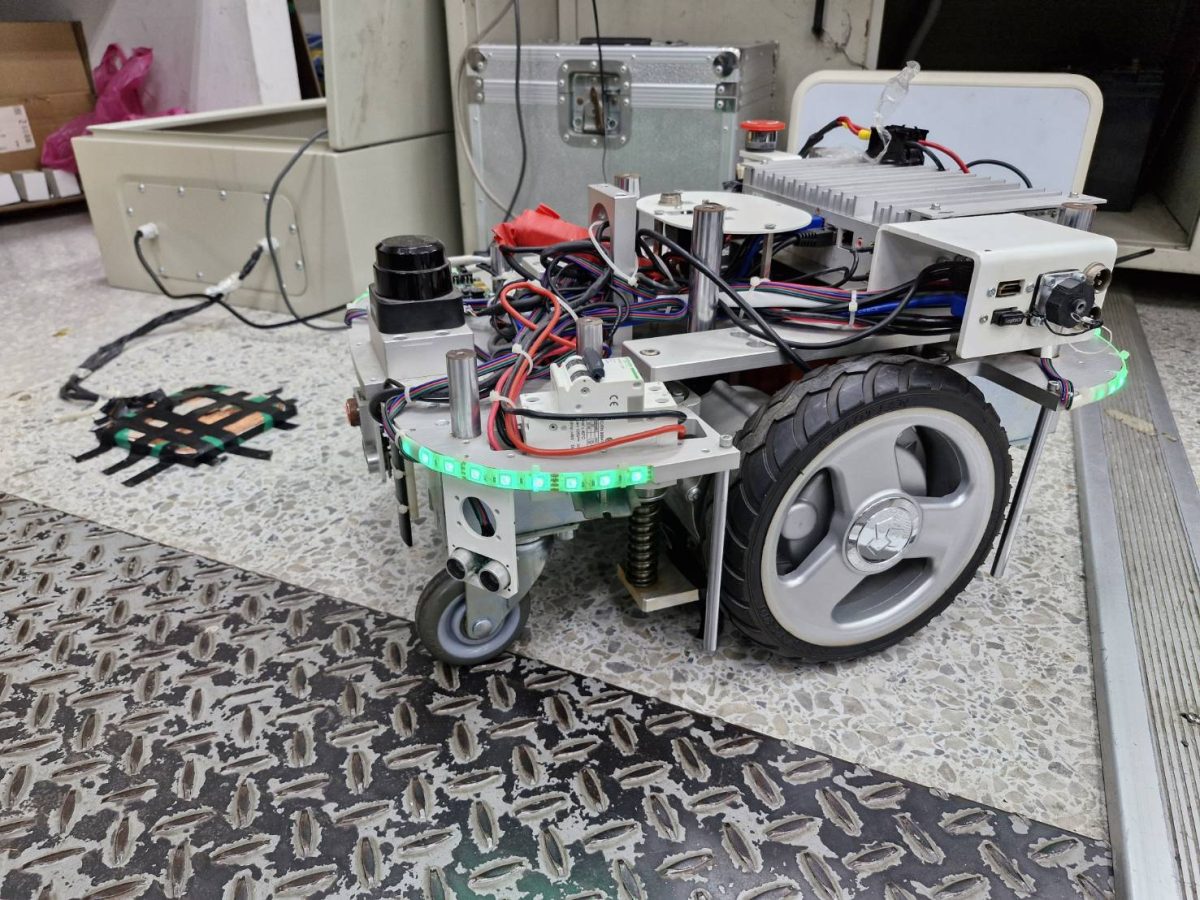
Recognizing these trends, Assoc. Prof. Dr. Mongkol Konghirun, Dr. Nattapong Hatchavanich, Asst. Prof. Dr. Supapong Nutwong, and Assoc. Prof. Dr. Anawach Sangswang lecturers from the Department of Electrical Engineering, Faculty of Engineering at King Mongkut’s University of Technology Thonburi (KMUTT) saw an opportunity to enhance robotic operations. They developed a Wireless Charging System for Autonomous Mobile Robots (AMRs) to increase industrial productivity. This project was supported by the 2021 fiscal year budget from the Science, Research and Innovation Promotion Fund (TSRI) and the Office of National Higher Education Science Research and Innovation Policy Council (NXPO), through the Program Management Unit for Competitiveness (PMU-C), in collaboration with Expert Automation Co., Ltd.
Assoc. Prof. Dr. Mongkol Konghirun stated that the post-pandemic era has driven massive growth in the robotics market, fueled by several factors such as the development of Industrial Internet of Things (IIoT), the use of Autonomous Mobile Robots (AMRs), and Collaborative Robots (Cobots). Furthermore, the integration of AI allows robots to learn and adapt more independently. However, a major issue in industries using robots is battery charging; the time lost during charging directly slows down production, impacting output and revenue.
“This research focuses on developing a wireless charging system so that AMRs can charge immediately while performing their tasks, without needing to return to a charging station as previously required. This meets the needs of modern industry by reducing charging downtime and increasing continuous operational efficiency,” said Assoc. Prof. Dr. Mongkol.
Dr. Nattapong Hatchavanich explained that the research relies on the principle of Electromagnetic Induction, a technology that transfers electrical energy from a source to a target device without wires. The system consists of two main parts: the Transmitting Coil and the Receiving Coil.
“Think of it like wireless phone charging. The principle is similar: the wireless charger requires energy from a source, such as a wall outlet, so that current flows into the charger. When current passes through the Transmitting Coil, it creates a magnetic field that varies with the current. This magnetic field radiates as electromagnetic waves around the area. The target device, such as a mobile phone or a robot, contains a Receiving Coil designed to work with the transmitter. When the device is within range, the magnetic field induces an electric current in the receiving coil, which converts the induced magnetic energy back into electrical energy to charge the battery. The system also includes power management to control charging power and prevent overcharging, and it is designed to activate only when the device is at the correct distance to prevent energy loss.”
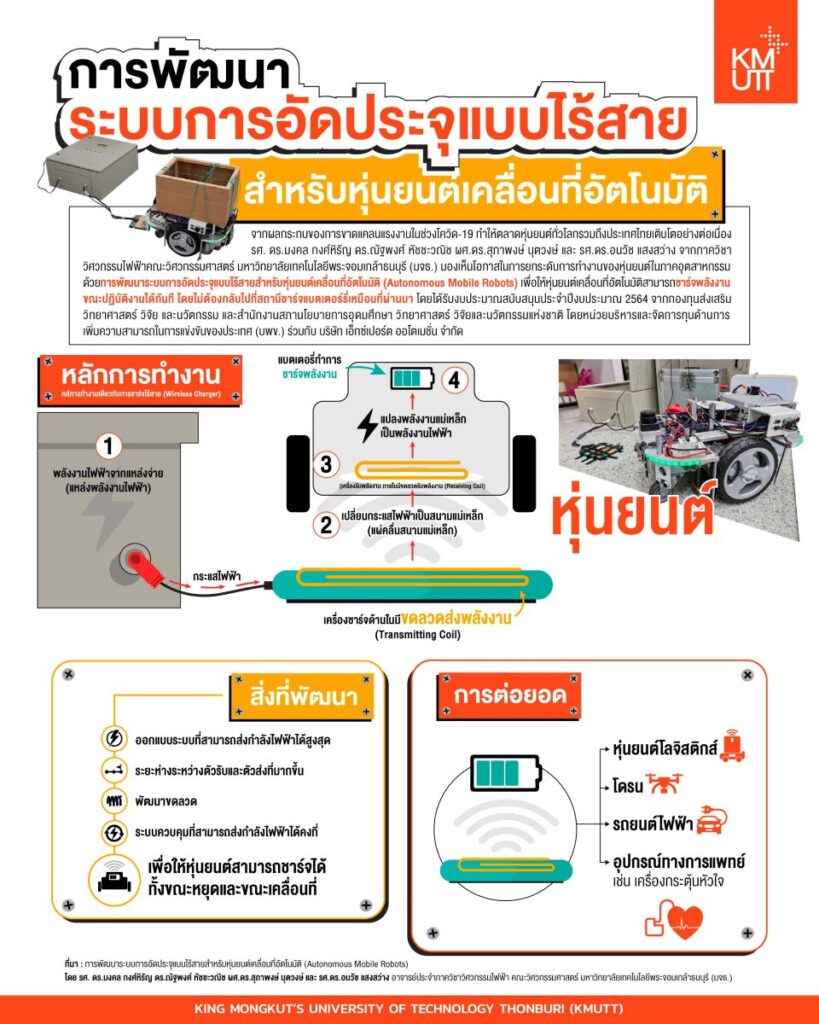
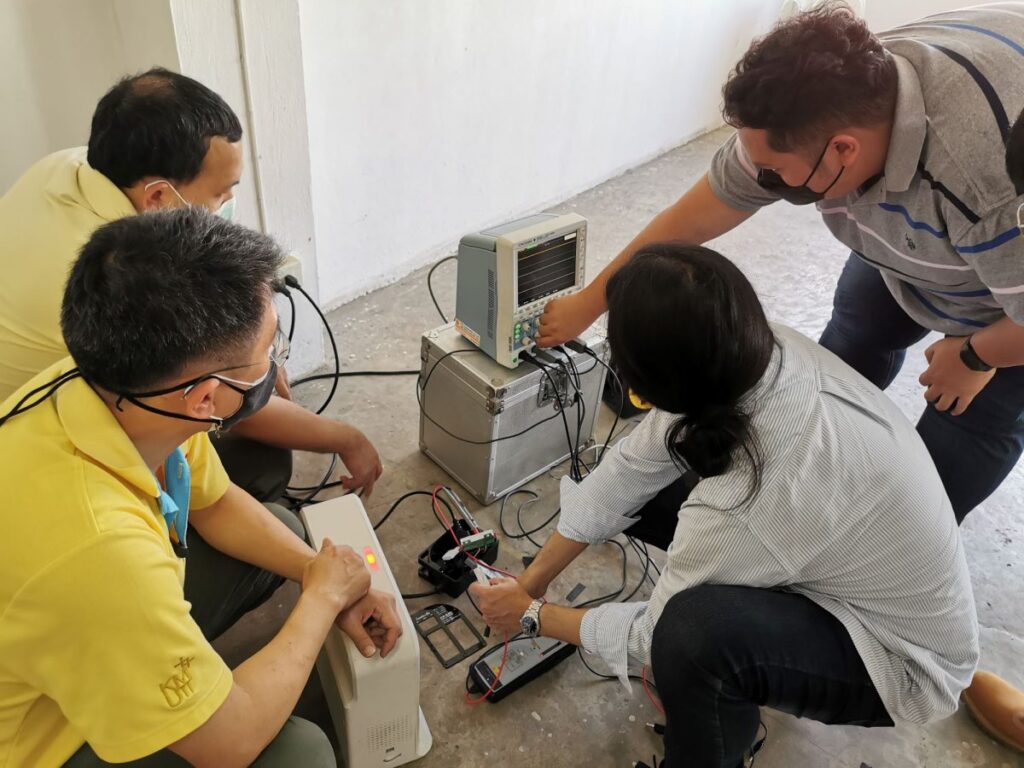
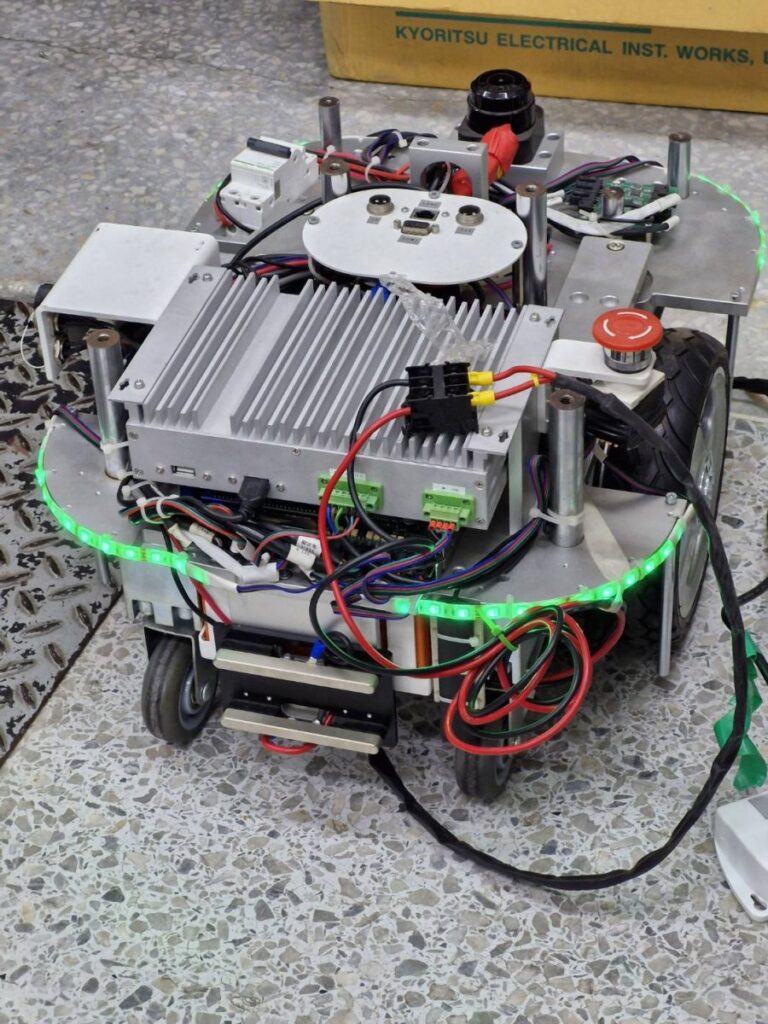
During this project, the research team from the Electromagnetic Applications Lab at KMUTT faced several challenges. These included designing a system that delivers maximum power even at greater distances between the transmitter and receiver, as well as developing coils and control systems that maintain stable power delivery even if the robot is misaligned. This ensures the robot can charge while stopped or even while in motion.
“The team believes this wireless charging system has the potential for use in various industries, such as logistics robots, drones, and electric vehicles (EVs). Furthermore, it can be developed for medical devices like heart pacemakers, allowing batteries to be charged without the need for surgery to replace them as in the past,” Assoc. Prof. Dr. Mongkol concluded.
This research marks a significant step in the development of the robotics industry and wireless charging systems in Thailand, enhancing industrial capability to compete on an international level.
Related News

‘Plant-Based Caviar’: KMUTT Students’ Food Innovation Clinches National Gold, Ready for Global Market Expansion

KMUTT Mechanical Engineering Students and Faculty Clinch Gold Medal from NRCT with Microchannel Heat Sink Innovation for Future Data Centers



