

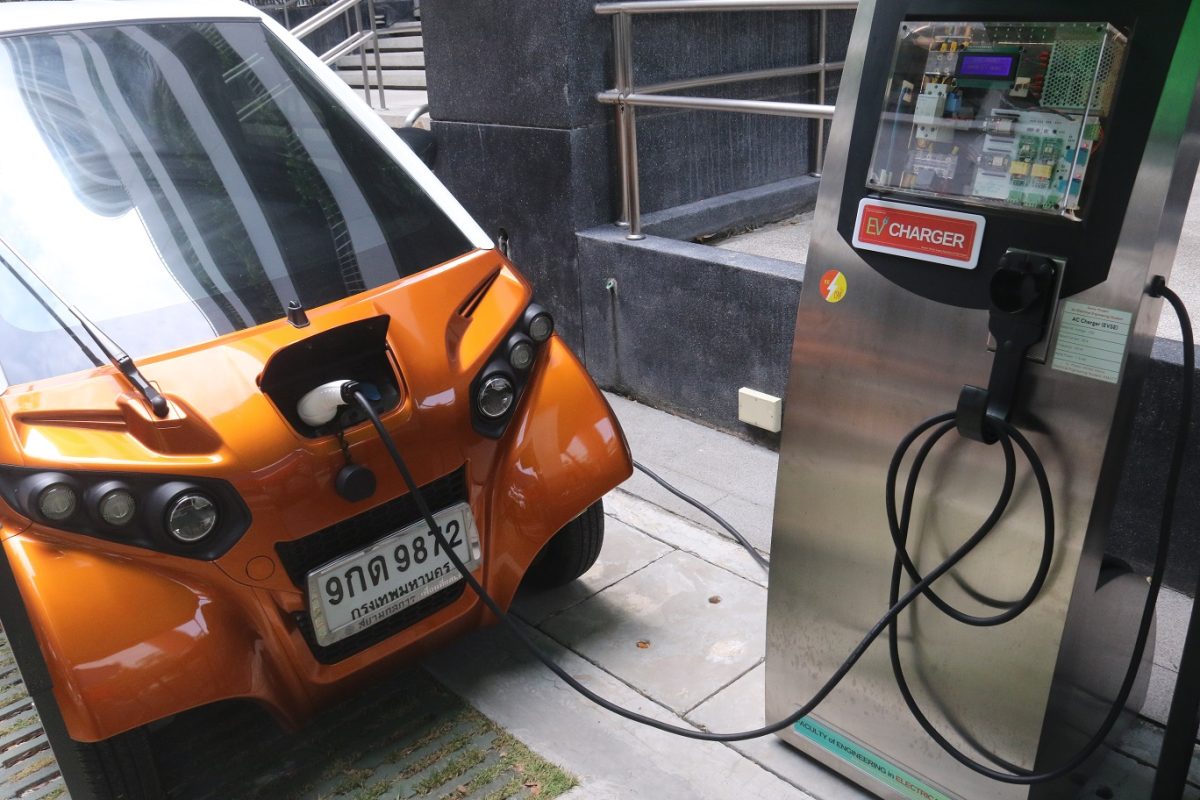
One of the essential items for Electric Vehicle (EV) owners is the EV Charger, which is responsible for charging the vehicle’s battery. As the number of EVs increases in the future, the demand for installing EV chargers in homes and buildings will grow either for new vehicles or to replace damaged units. However, many EV chargers installed by car manufacturers or sold in stores and online are imported. For most buyers, it is difficult to determine whether these chargers meet safety and quality standards, as Thailand has yet to issue specific national standards for residential EV chargers.
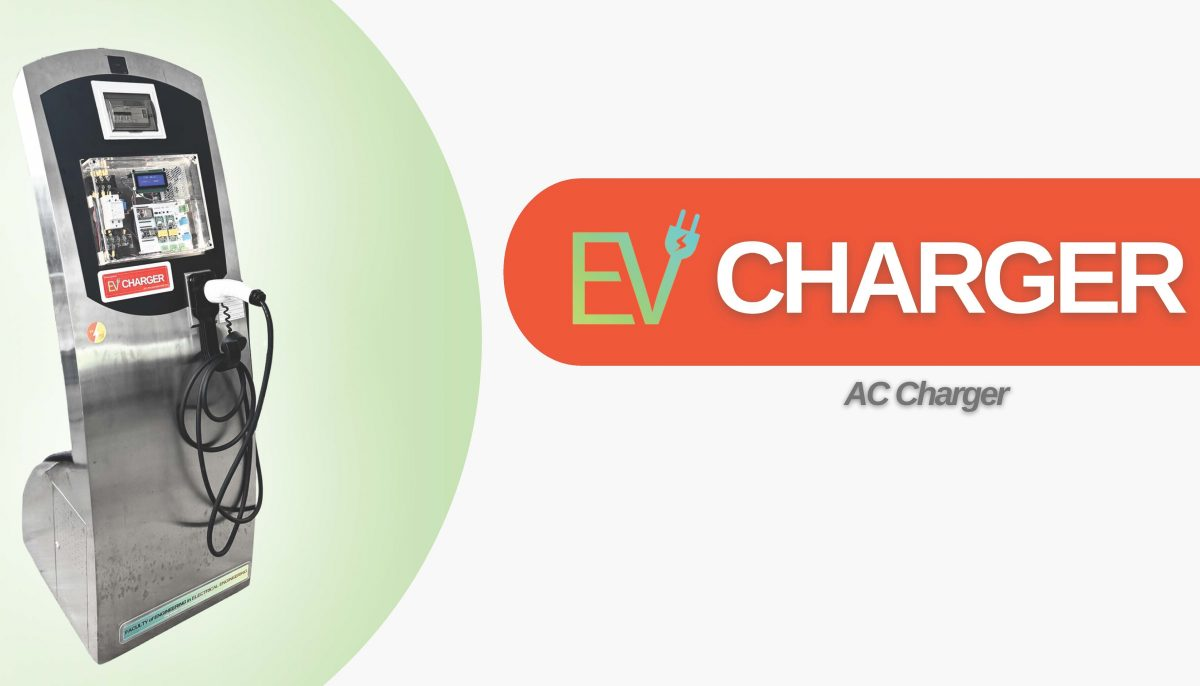
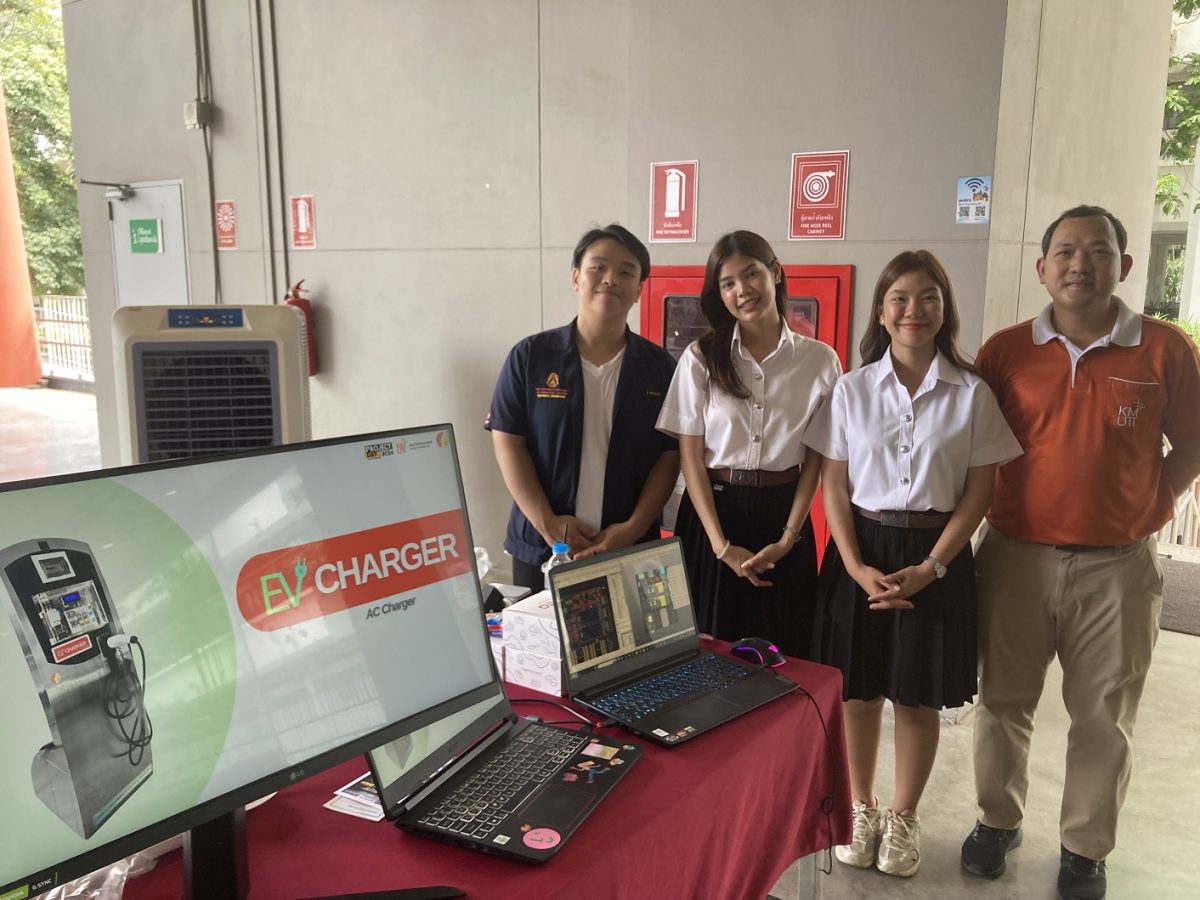
A significant step toward addressing this is the EV Charger Station, developed by three undergraduate students from the Faculty of Engineering at King Mongkut’s University of Technology Thonburi (KMUTT): Ms. Ployphan Sukprasert (Noey), Mr. Sittidet Sunanthachothiran (Tee), and Ms. Isaraya Kaenkaew (L). The project, titled “Design and Construction of a Battery Charger for Electric Vehicles,” served as their senior project.
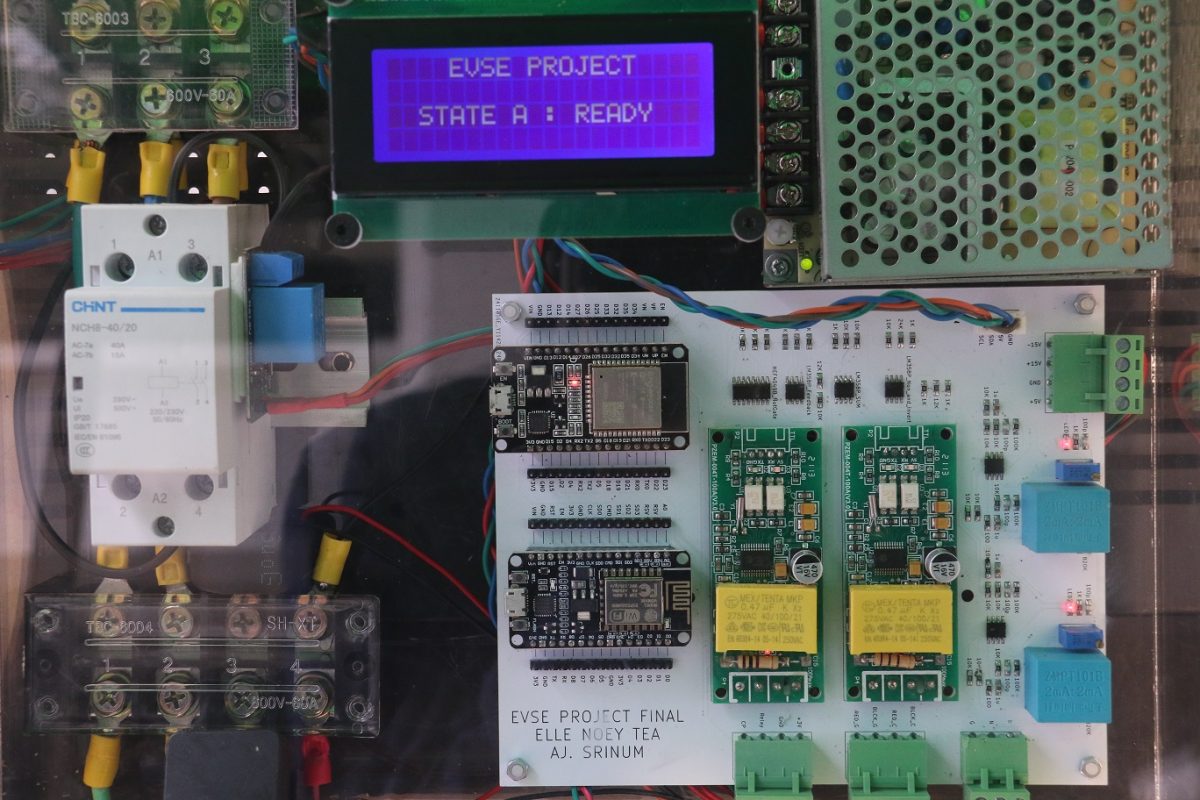
Mr. Sittidet (Tee) shared the origin of the project, noting that his advisor shared a video of a Thai technician building an EV charger during his junior year. This inspired him and his friends to see if the electrical engineering knowledge they had gained over three years could be used to create a circuit board to control EV power delivery. Their goal was to build a control circuit for AC charging that met the same international standards as commercial EV chargers on the market.
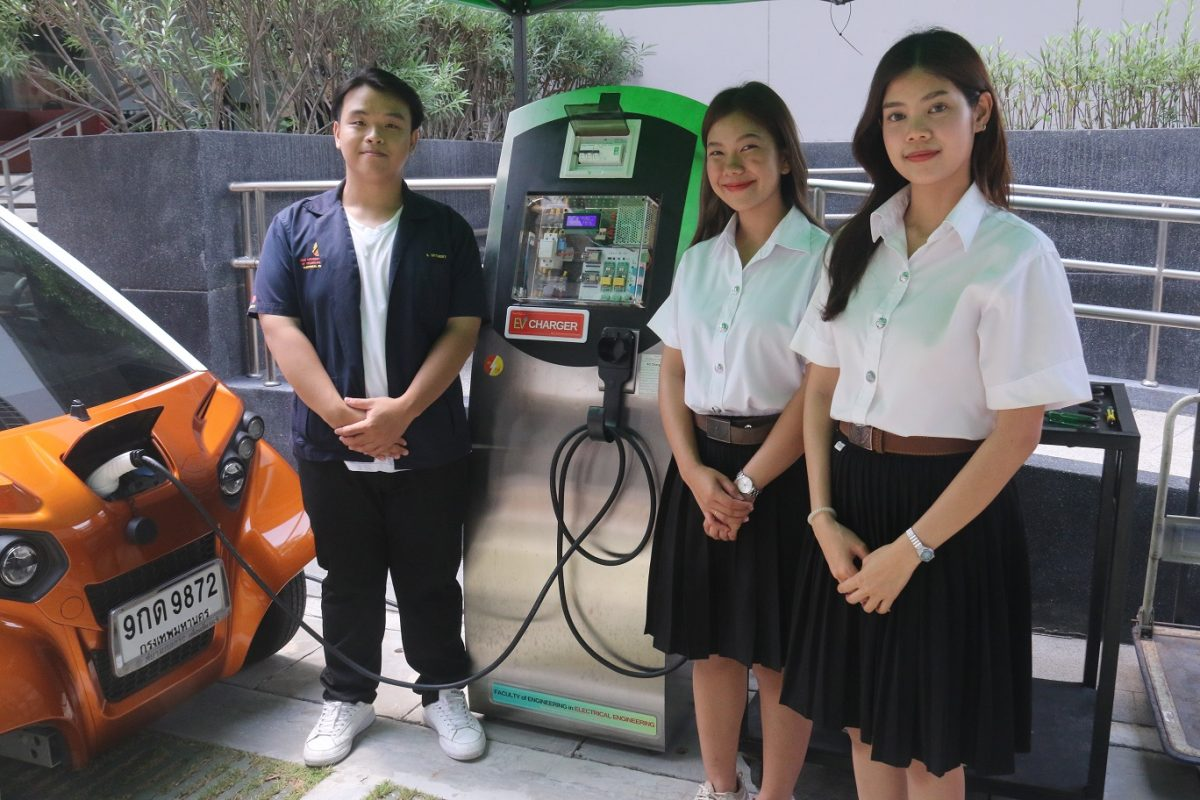
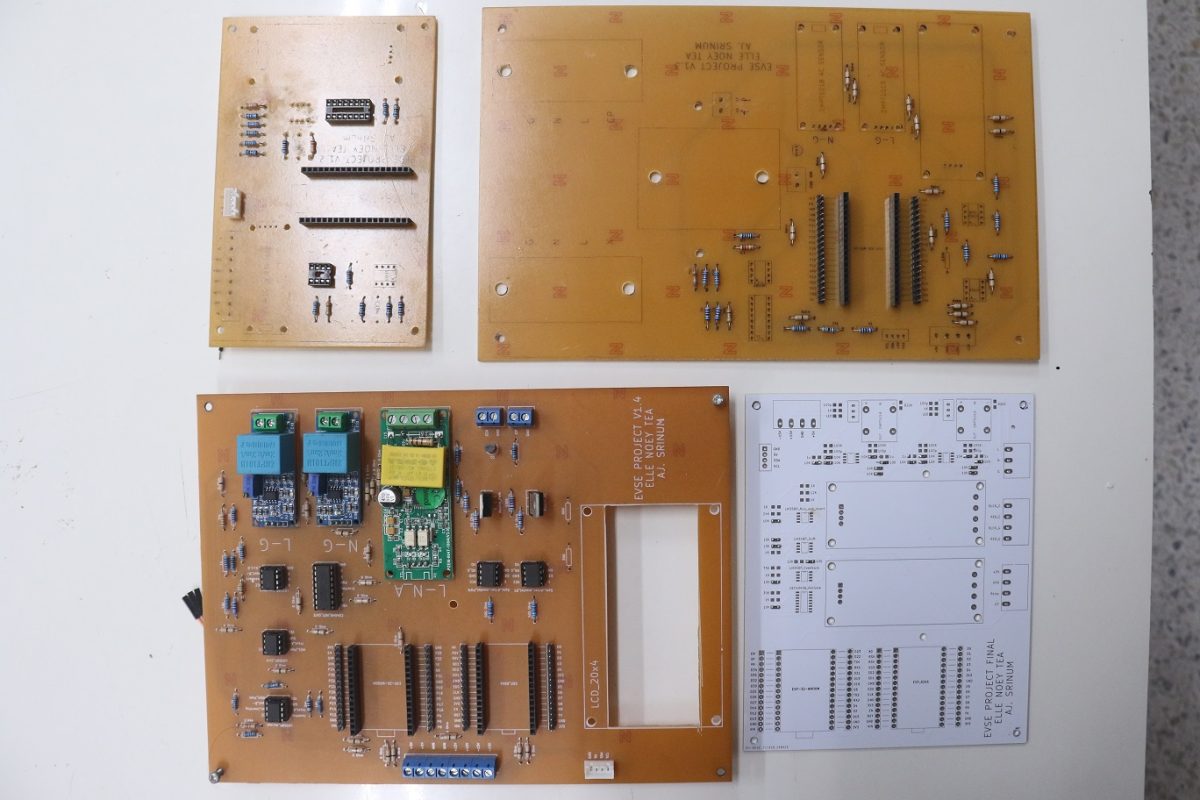
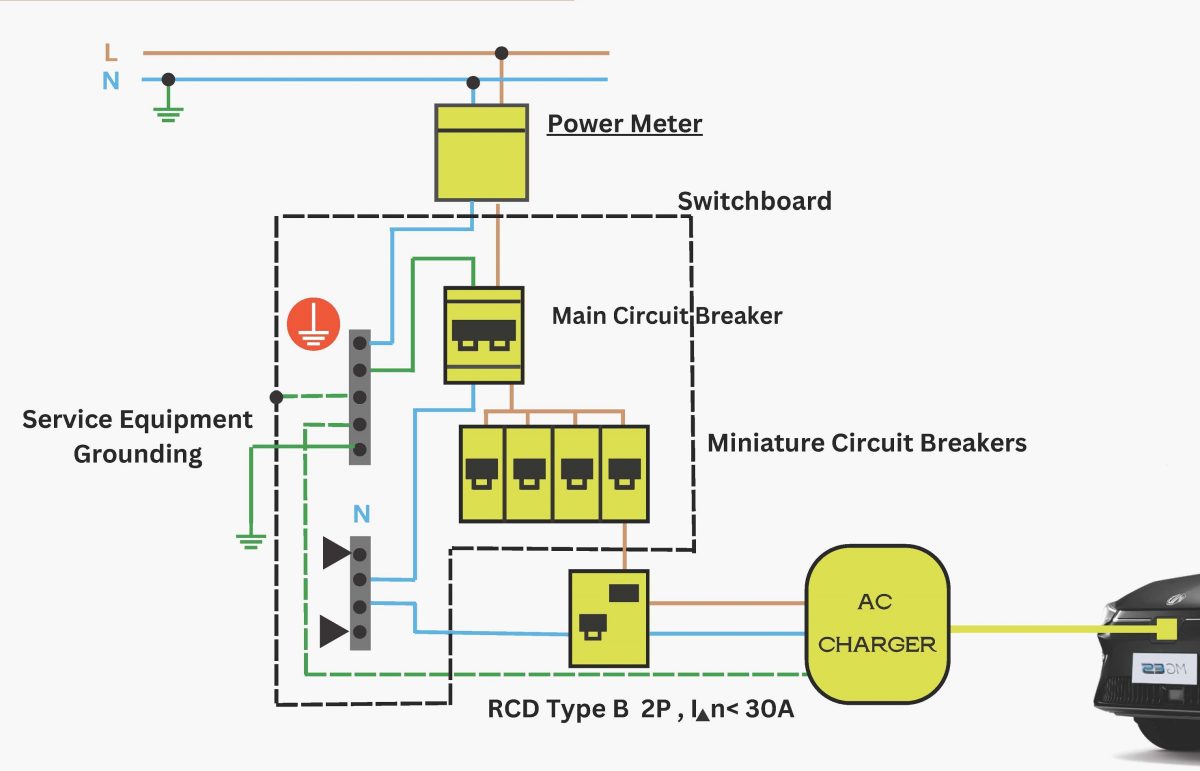
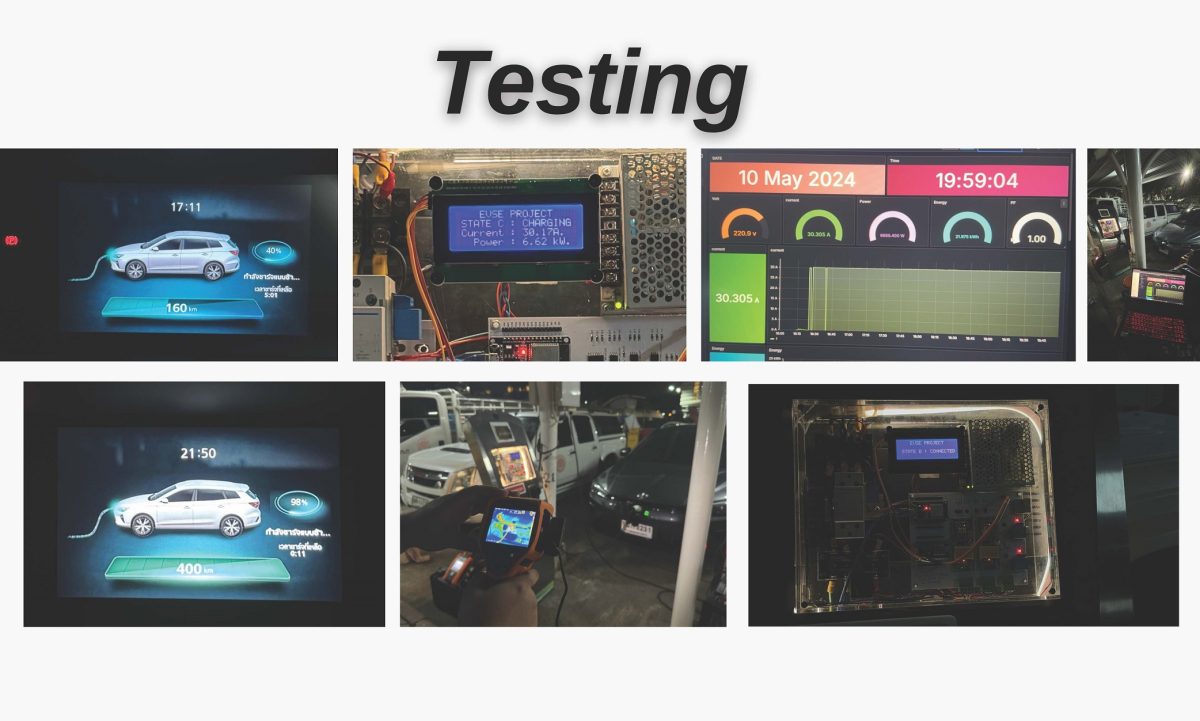
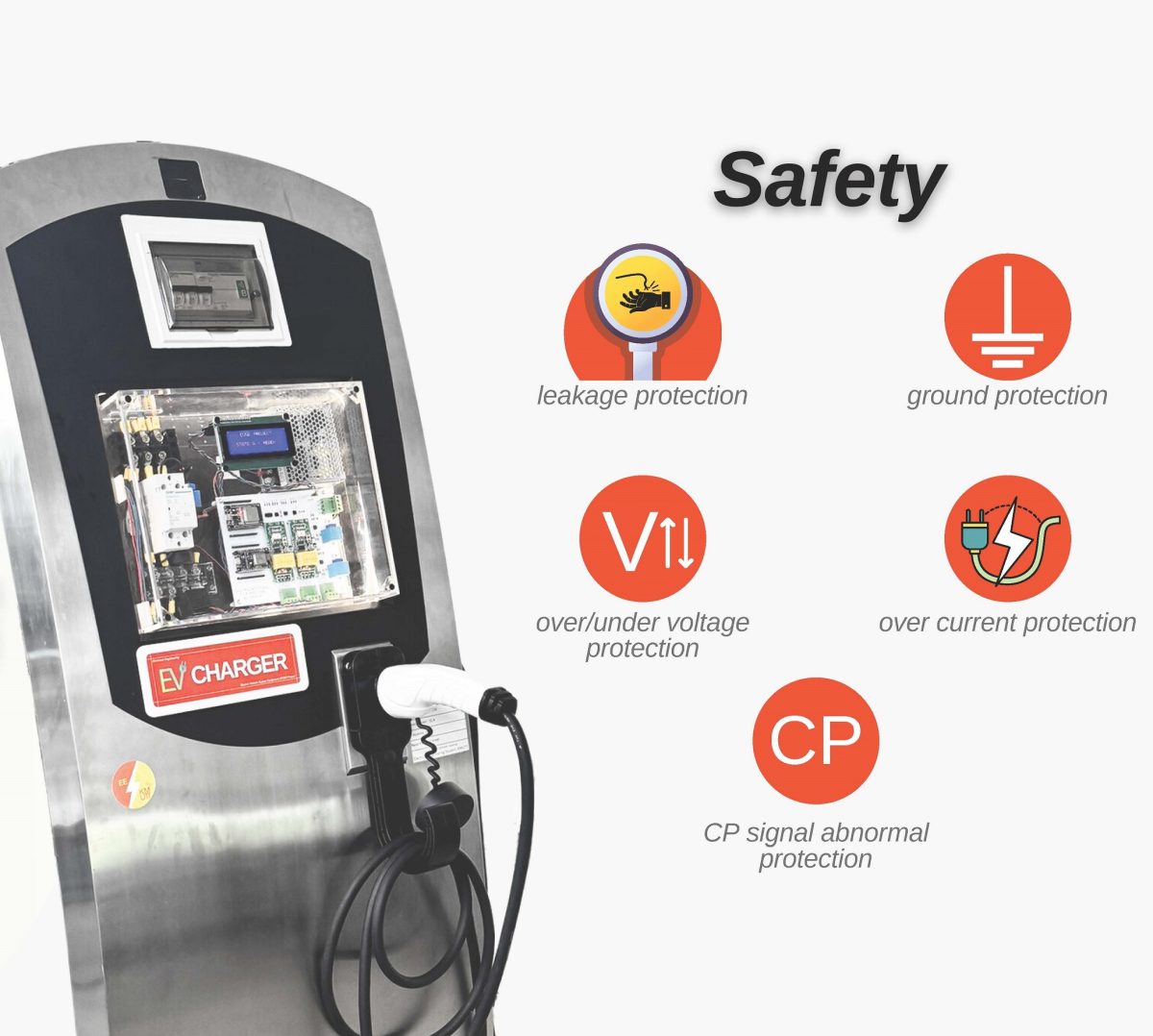
“Commercial EV chargers must include leakage protection circuits, grounding systems, voltage control systems, communication signals to monitor charging status, and automatic shut-off systems in case of malfunctions. Each of these systems has clear international standards. Our objective was to design and build a circuit board that ensures all signals during the charging process comply with the J1772 international standard. In the first semester of our senior year, we focused on simulation using software before building the actual circuit board and conducting real tests in the second semester. I was primarily responsible for the hardware, such as the Printed Circuit Board (PCB) fabrication,” said Mr. Sittidet.
Ms. Isaraya (L), who was responsible for the coding and software, explained the charger’s functionality: Once the plug is connected to the car, the system immediately communicates with the vehicle. After the verification is complete, it begins charging automatically and stops once the battery reaches the set value or at a specified time (user-selectable). Every step is reported to the owner via the station’s screen and through WiFi to a mobile application. This prototype can be used with both 1-phase AC power (up to 16 Amps) or 3-phase AC power (up to 32 Amps), with every process strictly adhering to international standards.
Ms. Ployphan (Noey), who handled the research on various system standards and procurement, added:
“My role also involved procuring electronic components and ordering the PCB printing that Sittidet designed. I also coordinated with a breaker manufacturer to request a donation of Residual Current Breakers (RCBO) and Overcurrent Breakers for this project at no cost. Furthermore, I coordinated to reuse an old cabinet from the university to house the charger. This allowed us to reduce the actual equipment cost from tens of thousands of THB to less than ten thousand. We have gained the knowledge to produce a second or third unit with the same standard as commercial chargers (priced in the tens of thousands) for a material cost of no more than 5,000 THB.”
Asst. Prof. Dr. Supapong Nutwong, a lecturer in the Department of Electrical Engineering and the project advisor, added that this development could be expanded by future students in several ways. This includes developing DC charging capabilities, enabling a single control unit to charge multiple vehicles simultaneously, and improving direct mobile control and data systems. All of this will benefit Thai entrepreneurs interested in producing EV chargers for sale, both in terms of selecting standardized materials at a reasonable price and setting up signals according to international standards—and potentially the Thai EV charger standards that may be announced in the future.
Related News

‘Plant-Based Caviar’: KMUTT Students’ Food Innovation Clinches National Gold, Ready for Global Market Expansion

KMUTT Mechanical Engineering Students and Faculty Clinch Gold Medal from NRCT with Microchannel Heat Sink Innovation for Future Data Centers



