

“Caffeine” is well-known for stimulating the central nervous system in humans. However, it is less known that caffeine can inhibit the growth of aquatic life, such as small water creatures. Wastewater generated from coffee production both in factories and cafes contains traces of caffeine. If discharged into public water sources without treatment to reduce these levels, the larvae of various aquatic species (including fish, shrimp, and crabs) as well as microorganisms may suffer long-term negative effects.
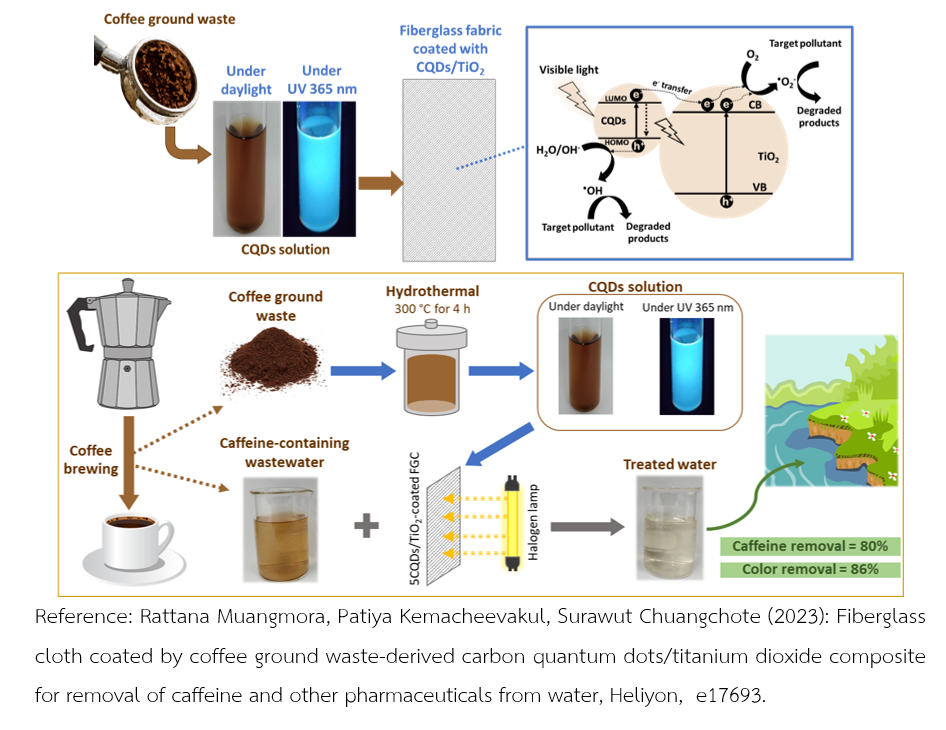
This concern led to the application of “Photocatalysis” to reduce caffeine in wastewater from coffee processing plants and cafes. The research, titled “Upcycling Coffee Grounds into Fluorescent Carbon Quantum Dots for Coffee Wastewater Treatment via Photocatalysis,” is a collaborative effort by Assoc. Prof. Dr. Patiya Kemacheevakul (Department of Environmental Engineering), Assoc. Prof. Dr. Surawut Chuangchote (Department of Tool and Materials Engineering), and Dr. Rattana Muangmora from King Mongkut’s University of Technology Thonburi (KMUTT).
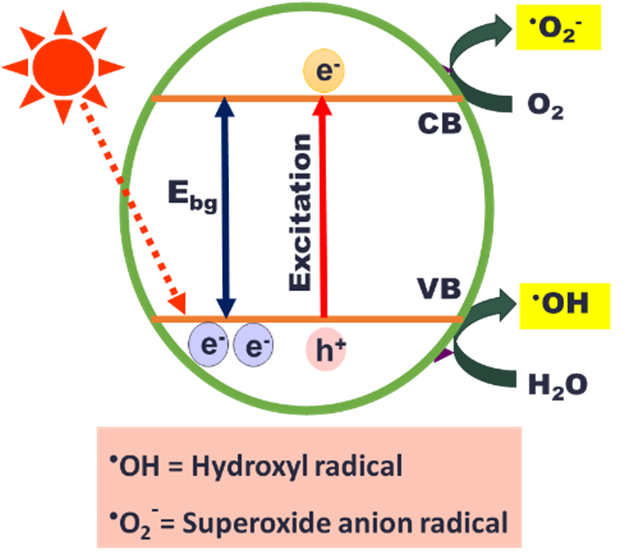
The research team explained that photocatalysis uses light to stimulate a photocatalyst, triggering a chemical reaction that produces hydroxyl radicals (OH) and superoxide anions (O2–) to eliminate water pollutants. One of the most popular photocatalysts for wastewater treatment is Titanium Dioxide (TiO2).

“When Titanium Dioxide is stimulated by specific wavelengths of light, a chemical reaction occurs: electrons (-) combine with oxygen to yield superoxide anions, while holes (h+) react with water to produce hydroxyl radicals. This chemical process breaks down organic pollutants in the water. However, TiO2 typically only works under UV light, which makes the system less attractive for current industrial wastewater treatment.”

The Innovation: Visible Light Activation via Carbon Quantum Dots
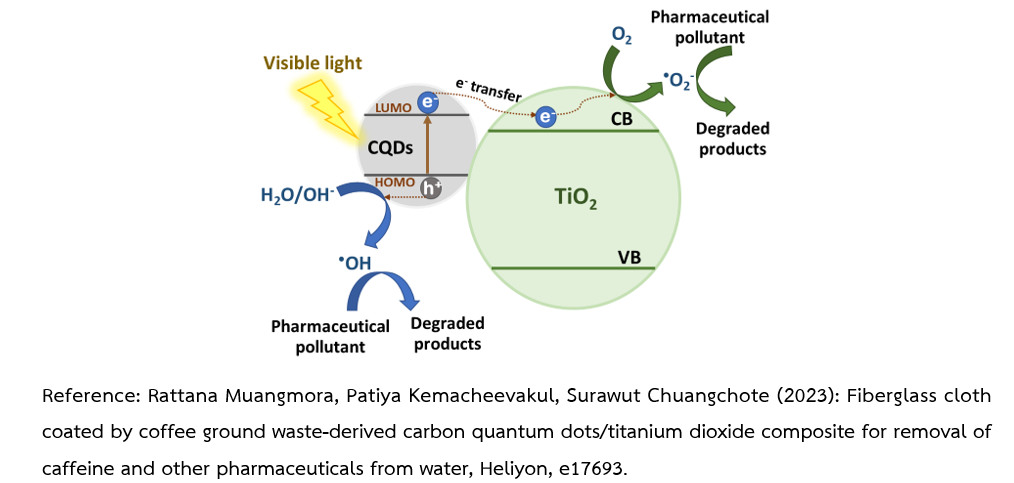
The objective of this research is to enable TiO2 to react under Visible Light (the light spectrum humans can see) instead of strictly relying on UV. The chosen method is “incorporating Carbon Quantum Dots into Titanium Dioxide.”
“Quantum Dots” are nano-scale materials (no larger than 10 nanometers in diameter) with semiconductor properties. Their optical properties change according to their size, allowing them to absorb energy and emit light at different wavelengths. By adding Carbon Quantum Dots (CQDs) to TiO2, the system can adjust the received light to a spectrum where TiO2 can function. Furthermore, CQDs themselves possess photocatalytic properties that work under visible light. Therefore, the new photocatalyst with CQDs attached to the surface of TiO2 can treat wastewater effectively without requiring UV light.
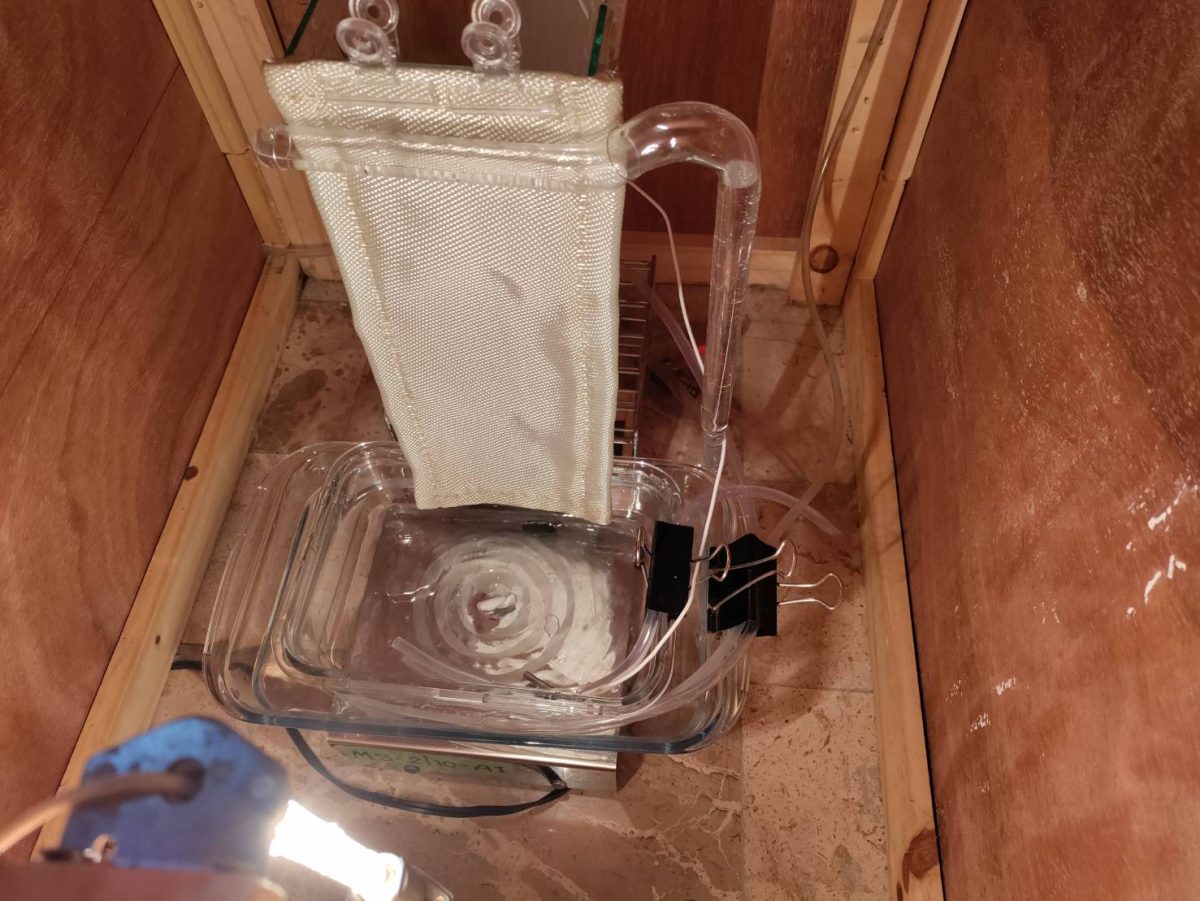
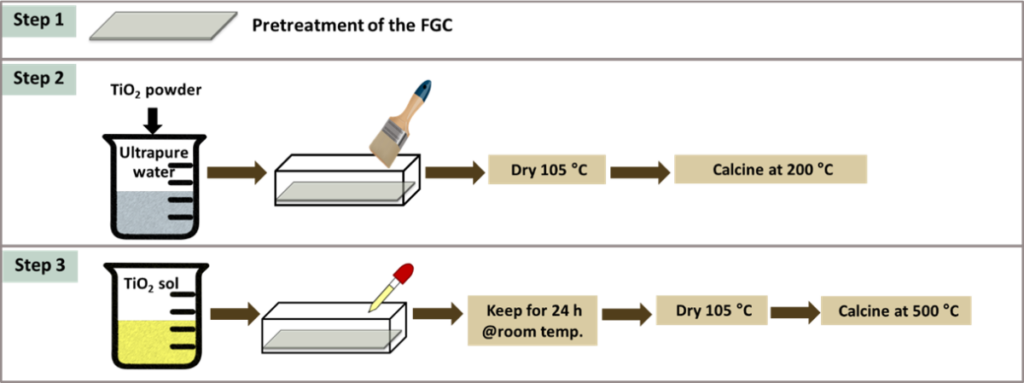
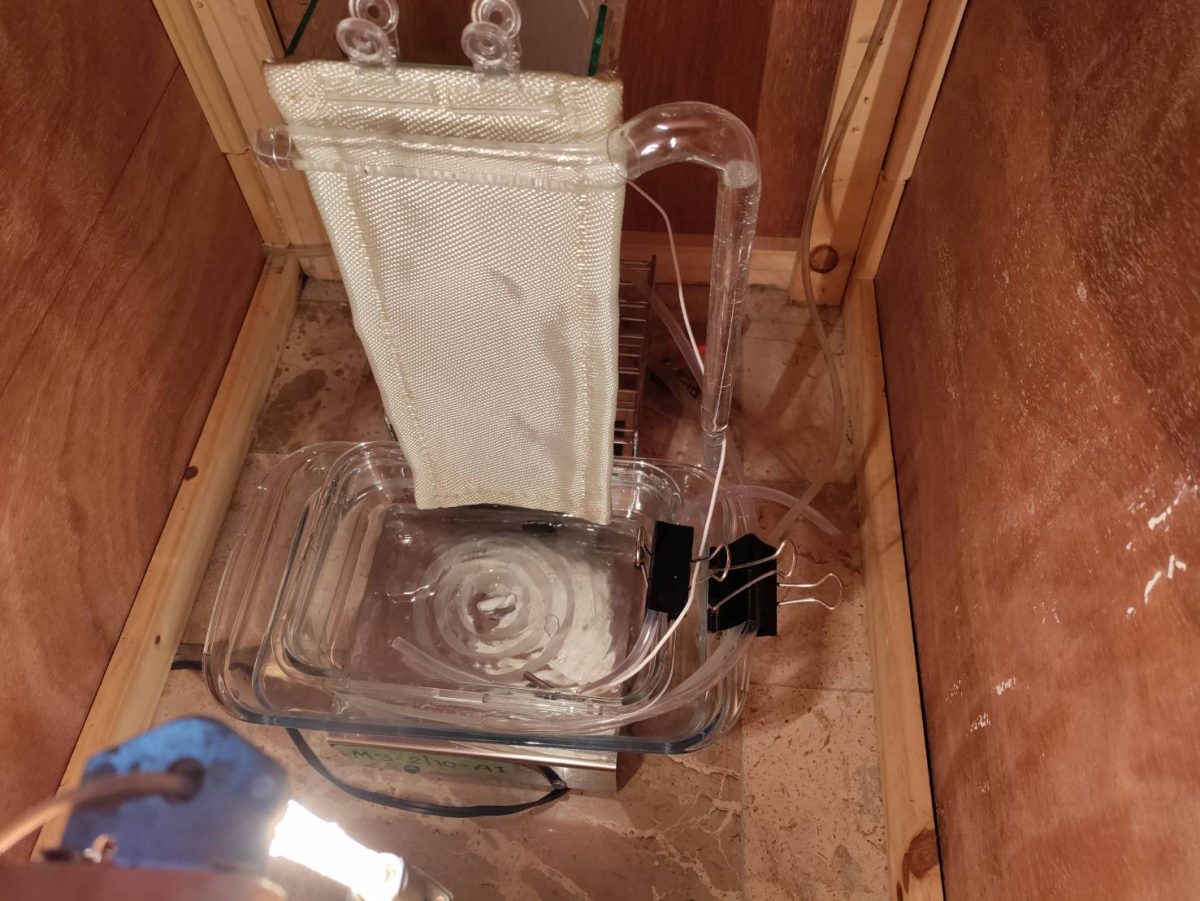
Assoc. Prof. Dr. Patiya stated that because the goal was to treat caffeine in coffee production wastewater, the team chose to produce the Carbon Quantum Dots from “coffee grounds,” a common waste product from coffee processing and brewing. Beyond successfully attaching these CQDs to TiO2, the team developed a practical application technique: coating the catalyst onto glass fiber fabric. This fabric is then stretched across the path of flowing wastewater, replacing the traditional method of adding the catalyst directly into the water.
80% Caffeine Reduction and Reusability
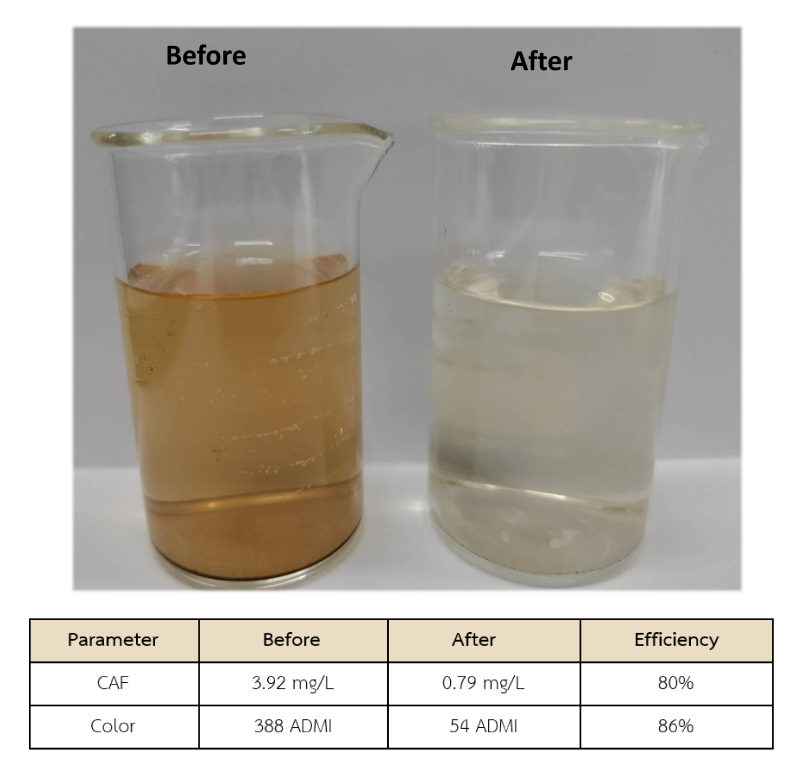
“Laboratory experiments involving coffee wastewater flowing continuously through the coated glass fiber for 12 hours showed that the water became significantly clearer, and caffeine levels were reduced by 80%. More importantly, coating the TiO2 on glass fiber reduces the amount of catalyst and CQDs needed. The used glass fiber can be washed and reused up to five times while maintaining the same level of caffeine removal efficiency as the first use.”
Regarding the practical application of this “Photocatalyst-Coated Glass Fiber,” the researchers noted that while Thai law does not yet have a specific standard for caffeine concentrations in discharged water, the innovation’s highlights low material and production costs, a simple system, and the ability to function immediately under sunlight serve as a strong selling point for eco-conscious coffee producers and cafes.
Related News

‘Plant-Based Caviar’: KMUTT Students’ Food Innovation Clinches National Gold, Ready for Global Market Expansion

KMUTT Mechanical Engineering Students and Faculty Clinch Gold Medal from NRCT with Microchannel Heat Sink Innovation for Future Data Centers



