

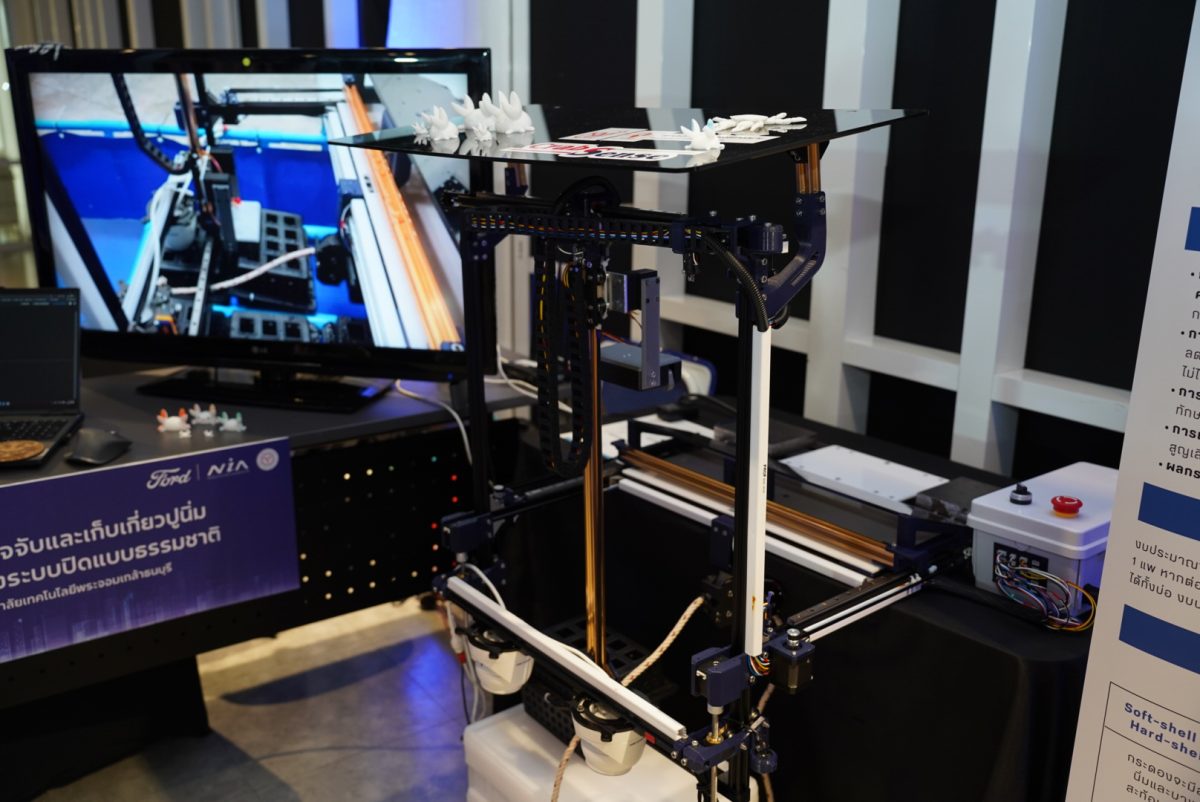
“Two to three hours that is the ‘Golden Window’ when a mud crab must be harvested after molting to become a ‘soft-shell crab.’ If harvested later, the crab will absorb minerals from the seawater to harden its shell, becoming a burden for the farmer who must then wait at least another month for the next molting cycle. Furthermore, relying on human labor to manually inspect every basket is not only labor-intensive but also carries a 5% error rate. For a large farm with 500,000 crabs, those missed molts could result in a loss of up to 864,000 THB per month,” shared Beam from the “Poo Nim Jim Seafood” team. She was describing the inspiration behind the “System for Detecting and Harvesting Soft-shell Crabs in Closed Natural Farming Systems,” which won the Ford Popular Vote at the Ford Innovator Scholarship 2024 late last year.
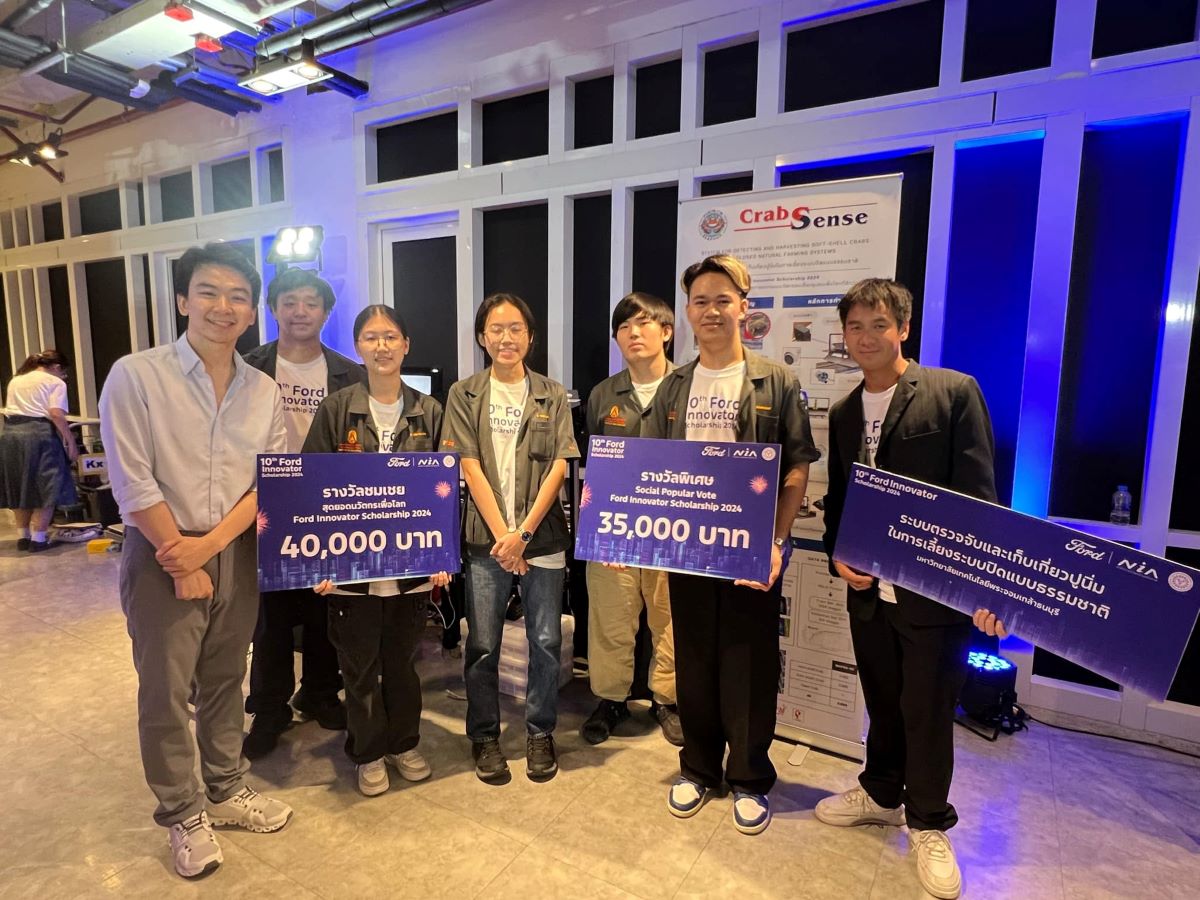





The “Poo Nim Jim Seafood” team consists of five members: Ms. Boonyaporn Preechahut (Beam), Ms. Worakan Lasudee (Pi Mai), Mr. Wichan Wichayanuphap (Bright), Mr. Nopasanya Jeerawattananda (Otto), and Mr. Phunuwat Boonkerd (Tae-Tae). All are second-year undergraduate students at the Institute of Field Robotics (FIBO), King Mongkut’s University of Technology Thonburi (KMUTT), advised by Asst. Prof. Dr. Ekakachai Pengwang and Dr. Rattanachai Ramaithitima.
Solving the Industry’s Bottleneck
“When we conducted a SWOT analysis on our topics of interest, we found that Thailand exports over 6 billion THB worth of mud crabs annually, with more than 5,000 farms across the country. Addressing the bottleneck in soft-shell crab production would provide tangible benefits to farmers,” said Otto, who has a particular interest in mud crabs.
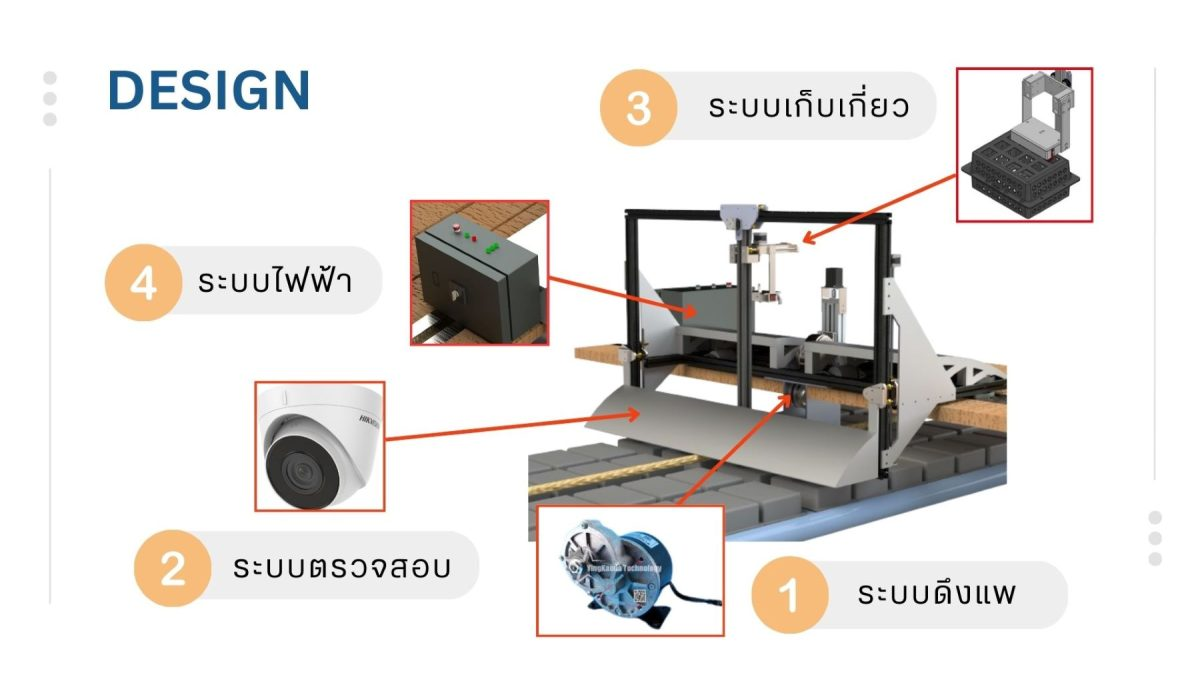
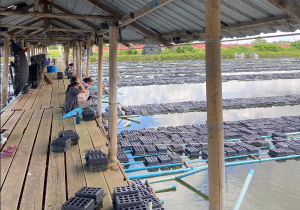
The prototype developed over three months is a device that runs along the crab rafts. Its primary function is to identify baskets containing crabs in the molting stage and deliver them to the workers. The heart of this system is the “Camera-based Inspection System.”
Pi Mai explained the AI analysis concept: “We wanted our system to be compatible with existing ponds, rafts, and baskets. Instead of workers manually pulling the rafts to inspect them, we use a pulley system and Infrared (IR) cameras. Soft-shell crabs and hard-shell crabs have different IR reflectance properties. Additionally, if the AI detects more than one object in a basket, it indicates that the crab has molted and left its old shell behind.”
99% Accuracy and Health Monitoring
Bright added details about the system’s precision: “After training the AI with 2,300 infrared images of mud crabs in various stages, it achieved a 99% accuracy rate in distinguishing between normal and molting crabs during the learning phase. Furthermore, by overlaying the latest image with the previous one, the system can detect if a crab hasn’t moved at all. This allows for the rapid removal of dead crabs, reducing the risk of disease outbreaks within the pond.”
Tae-Tae explained the mechanical side: “We applied engineering knowledge from our first two years at FIBO to build the propulsion and harvesting systems. This includes a ‘Gripper’ that lifts baskets identified by the AI as containing soft-shell or dead crabs and a raft-pulling system to transport those baskets to the shore for processing.”
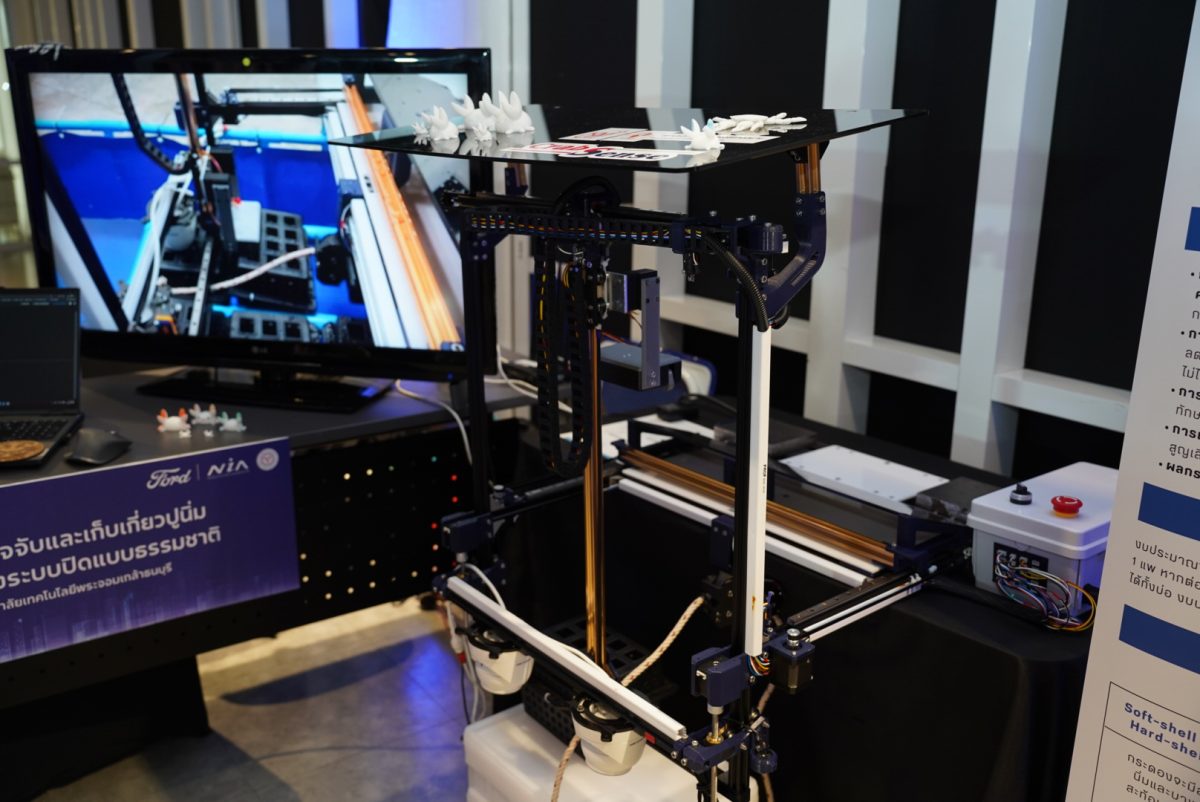
The prototype was tested at the FIBO building using a simulated 1×2 meter pond. Traditionally, inspecting 2,000 crab boxes takes about 4–5 hours per round. The new system reduces this to only 2–3 hours, allowing for more frequent inspections and increasing the chances of catching crabs in the molting phase. In actual prototype testing, the AI maintained a high accuracy rate of 95%.

Reducing Costs and Labor Shortages
Bright noted that while the AI is open-source and the camera is imported, most other components are locally sourced. The prototype cost approximately 40,000 THB. A commercial version made of salt-resistant stainless steel is estimated to cost under 100,000 THB.
“This system can significantly reduce overhead for farmers. Instead of needing 5–6 skilled workers per pond to monitor molting, the farm would only need 1–2 people. This addresses labor shortages in agricultural communities. Because it builds upon existing farming methods, we believe farmers will easily adopt this innovation,” Bright concluded.
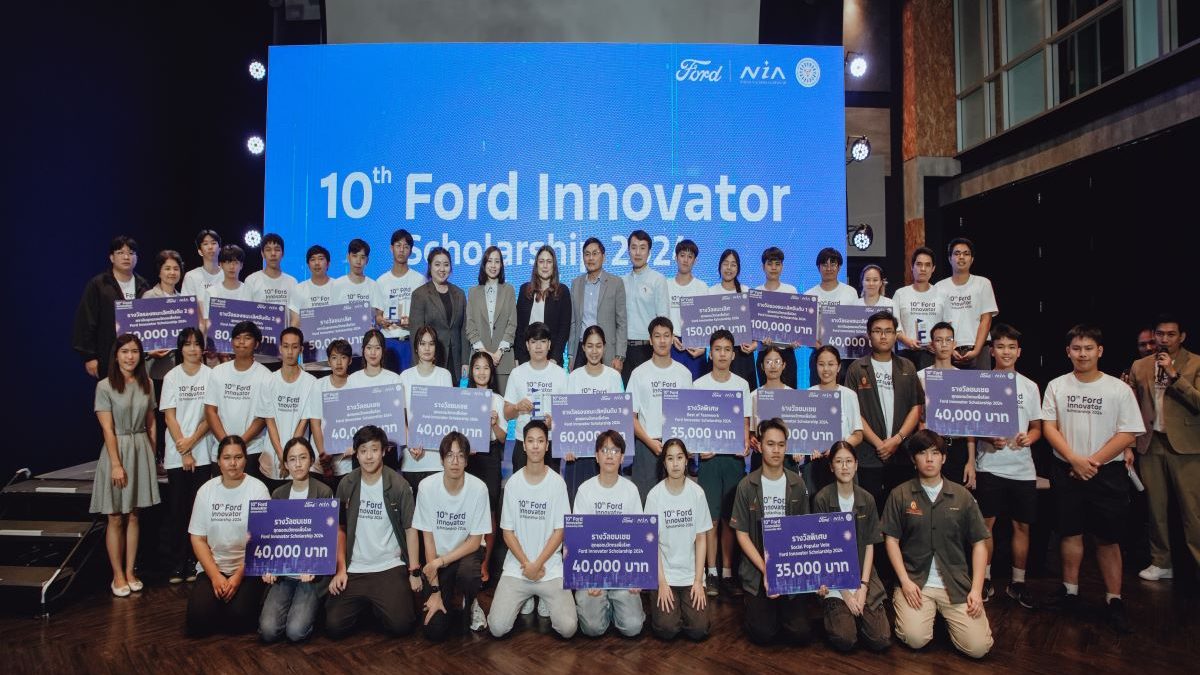
By addressing a specific community bottleneck with accessible technology and locally sourced parts, the “Poo Nim Jim Seafood” team from FIBO successfully secured both the Popular Vote and an Honorable Mention at the Ford Innovator Scholarship 2024.


Related News

‘Plant-Based Caviar’: KMUTT Students’ Food Innovation Clinches National Gold, Ready for Global Market Expansion

KMUTT Mechanical Engineering Students and Faculty Clinch Gold Medal from NRCT with Microchannel Heat Sink Innovation for Future Data Centers



