Mangrove Restoration
Milestone 05 Target 03

Restore

"Reversing the loss. We are turning the tide at Bang Khun Thian, transforming eroded coastlines into a Blue Carbon fortress against climate change."

2040

Carbon Neutrality
Goal

14m/yr

Historical Erosion
Rate (Combatting)

~140

tC/ha Biomass
Potential

Erosion Context

The Threat

Severe Coastal Erosion & Land Subsidence

The Frontline of Climate Change

The Bang Khun Thian district represents the "frontline" of Thailand’s battle against the sea. Historically a dense mangrove belt, the area has lost 50-65% of its forests to aquaculture conversion.

Without intervention, erosion rates exceed 10 meters per year. KMUTT’s campus here is not just a university site; it is a strategic bulwark protecting the hinterland.

SDG 13 Climate Action SDG 14 Life Below Water
Action Planning I

Hard Engineering
meets Nature

Implemented by KMUTT & Phanthai Norasing Community

Before planting can begin, the land must be stabilized. We employ "Soft Structure" engineering to combat wave energy at the Bang Khun Thian Campus and Phanthai Norasing subdistrict.

Bamboo Breakwaters

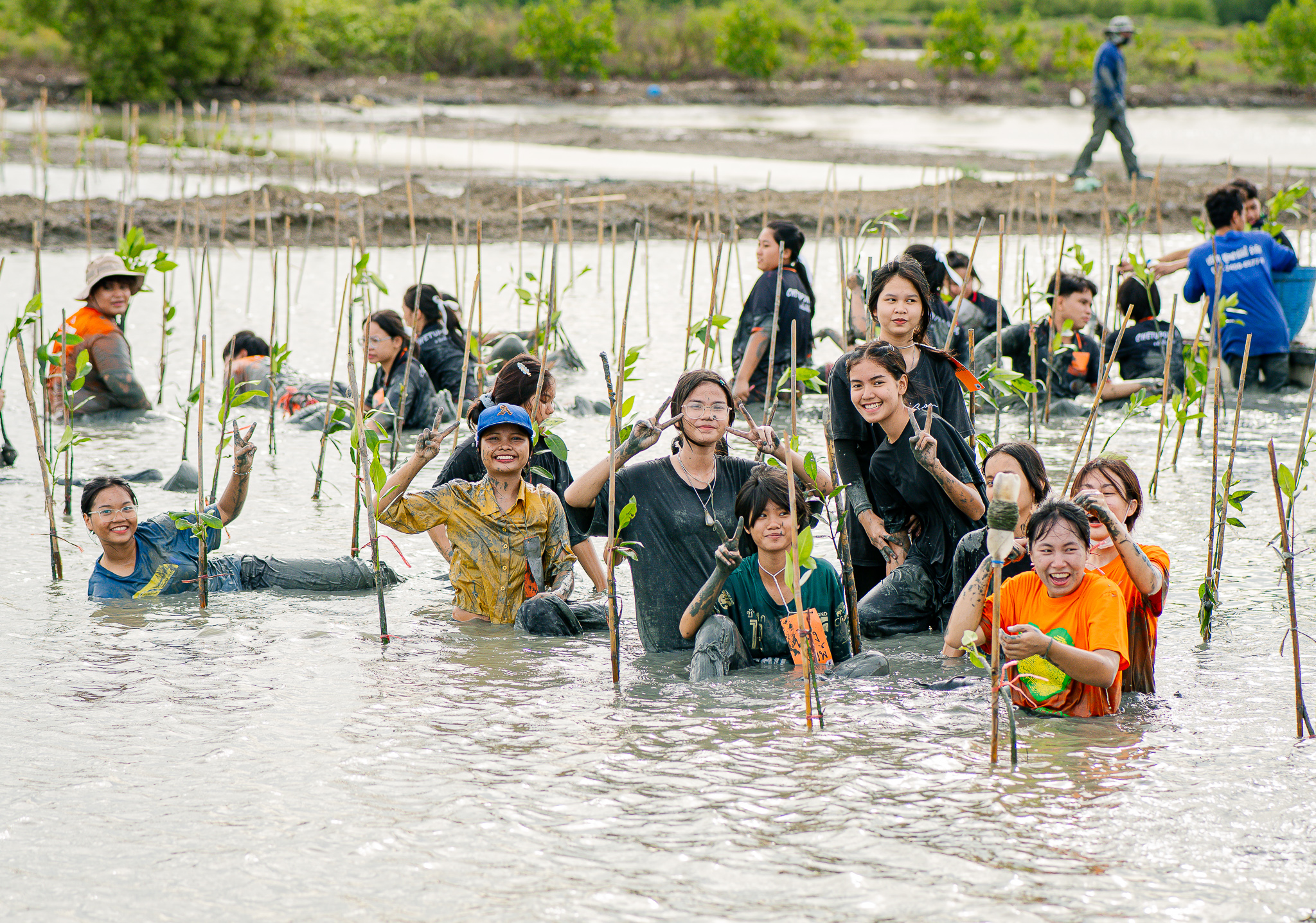
Rows of bamboo stakes are driven into the mudflat. Unlike concrete walls, these permeable structures break wave energy without causing scouring.

Sediment Trapping

The calm water behind the bamboo allows suspended sediment to settle, gradually raising the mudflat elevation to a level where mangroves can survive.

Constant Maintenance

Bamboo has a lifespan of 2-3 years. Our monthly "Action Days" involve inspecting and repairing these fences to prevent failure.
Action Planning II

Bang Khun Thian Arsenal

Read Full Species List

Rhizophora apiculata

Kongkang Bai Lek

The primary species for BKT restoration. Selected for robust prop roots that stabilize sediment in the intertidal zone.

Rhizophora mucronata

Kongkang Bai Yai

Planted alongside R. apiculata to diversify the mangrove stand and enhance coastal resilience.

Ceriops tagal

Pong

A complementary mangrove species that supports structural diversity in the rehabilitated area.

BKT Impact 2022-2025

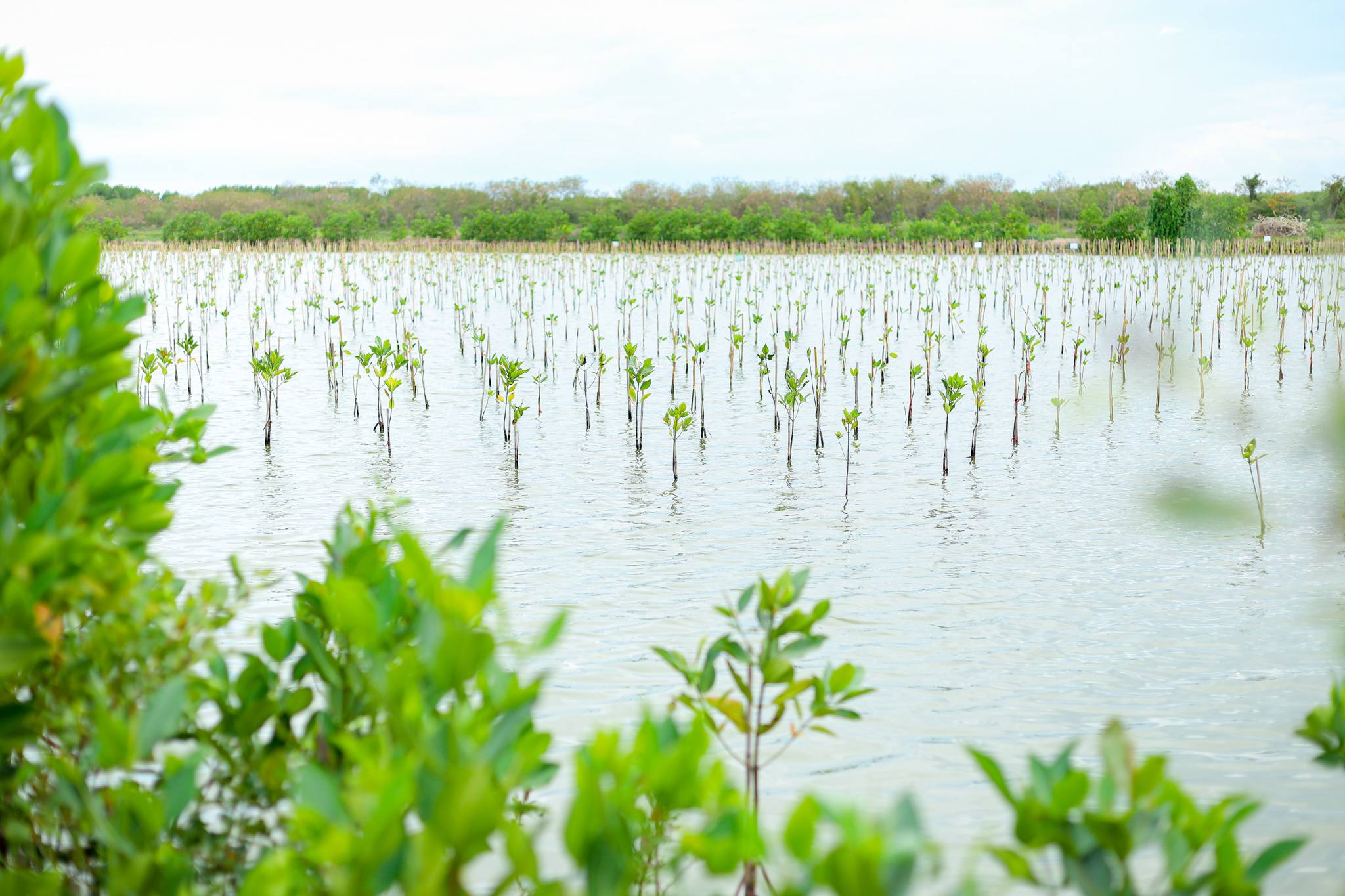
Total Mangroves Planted 115,030

Data since 2022

136 Rai Restored
2,000 Avg Trees/Month

Community Engagement

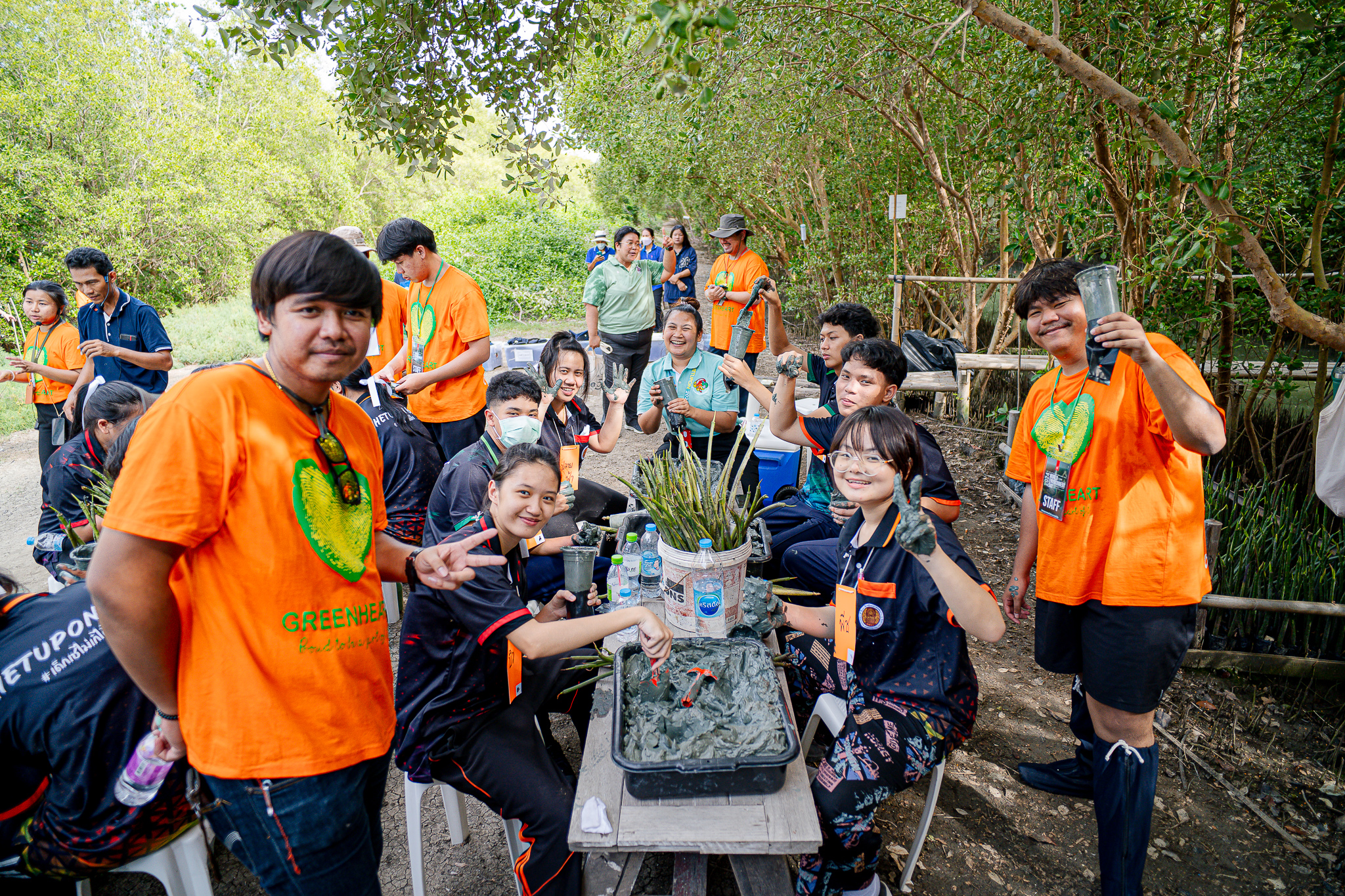
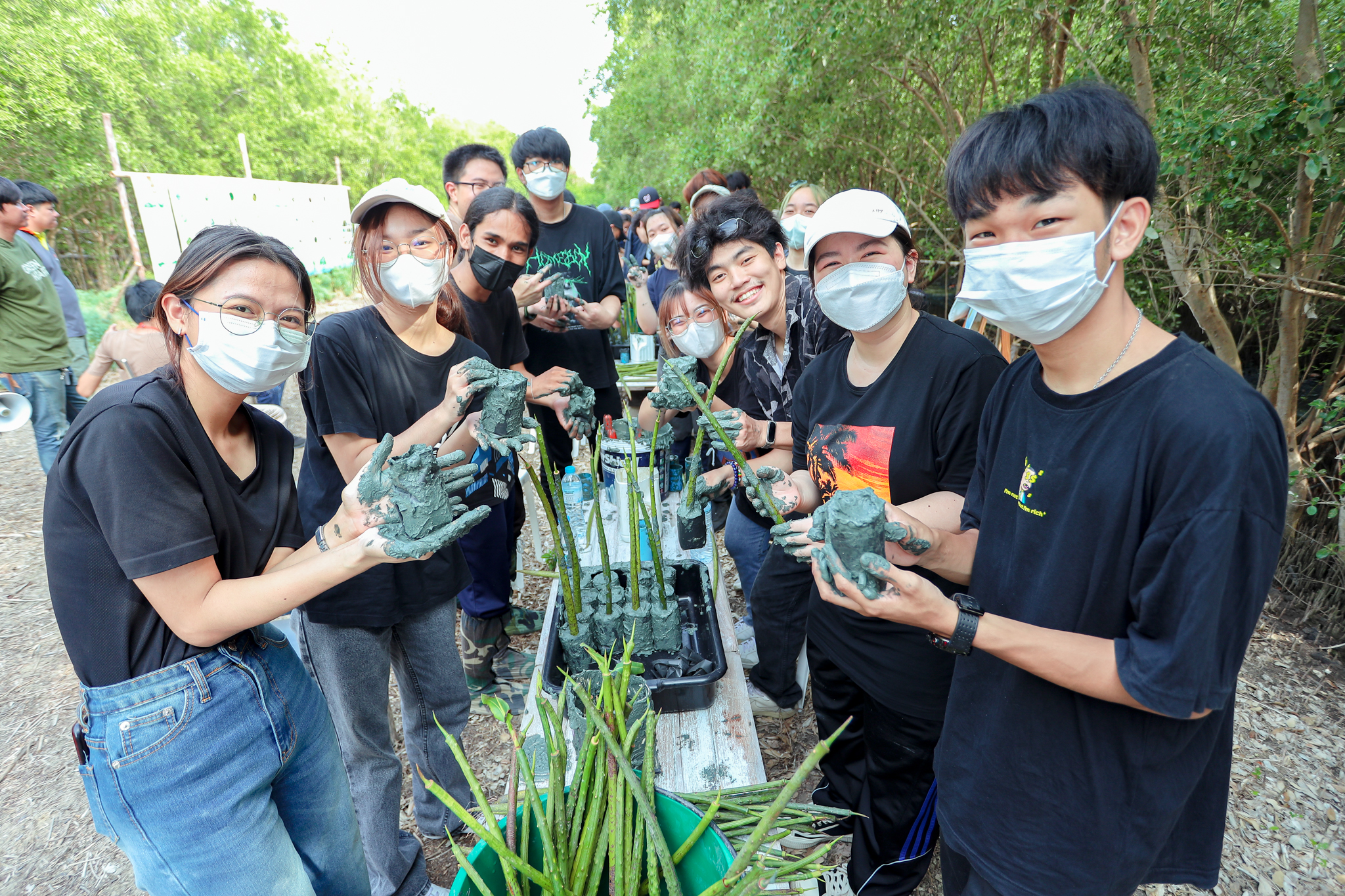
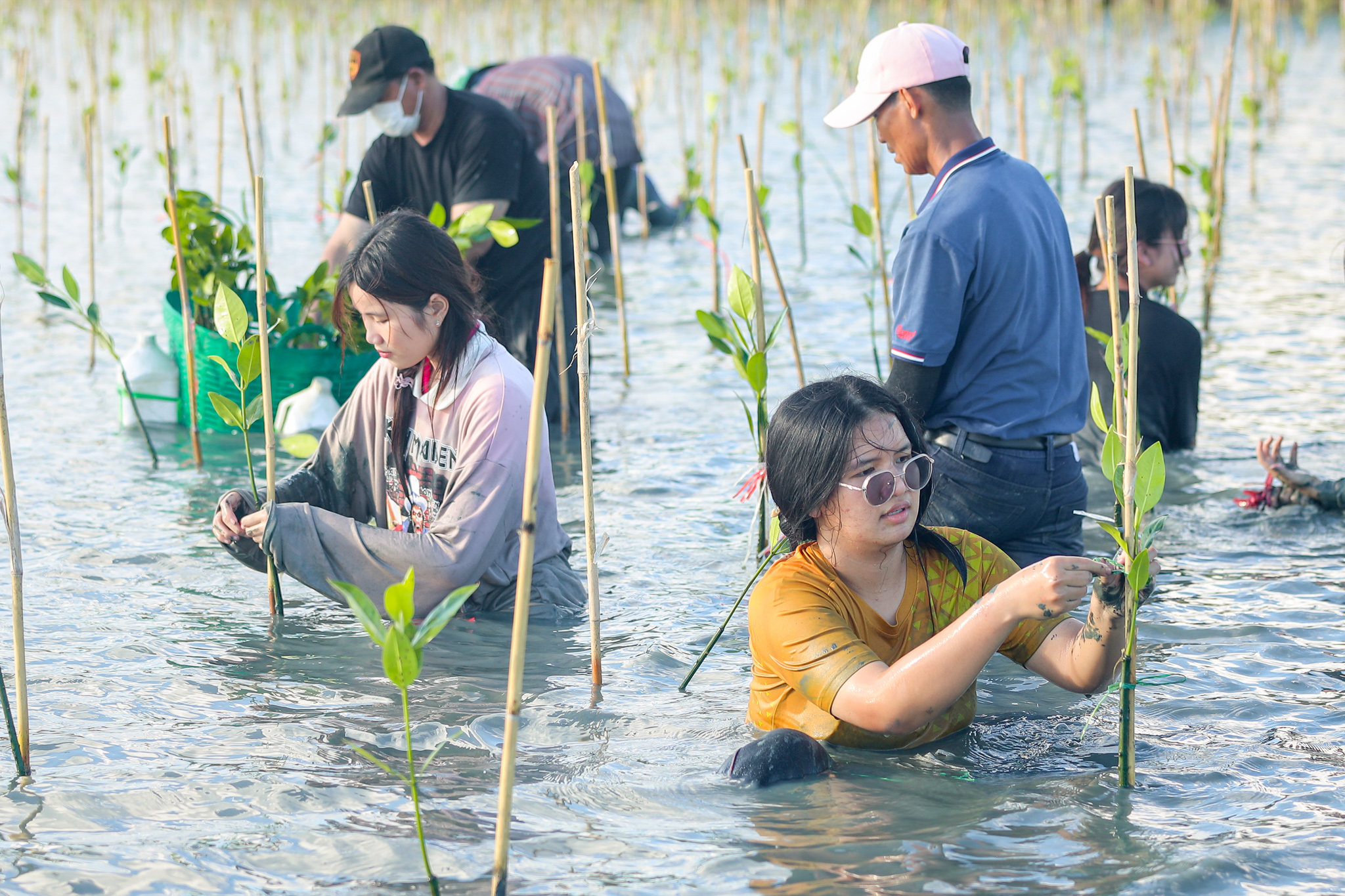
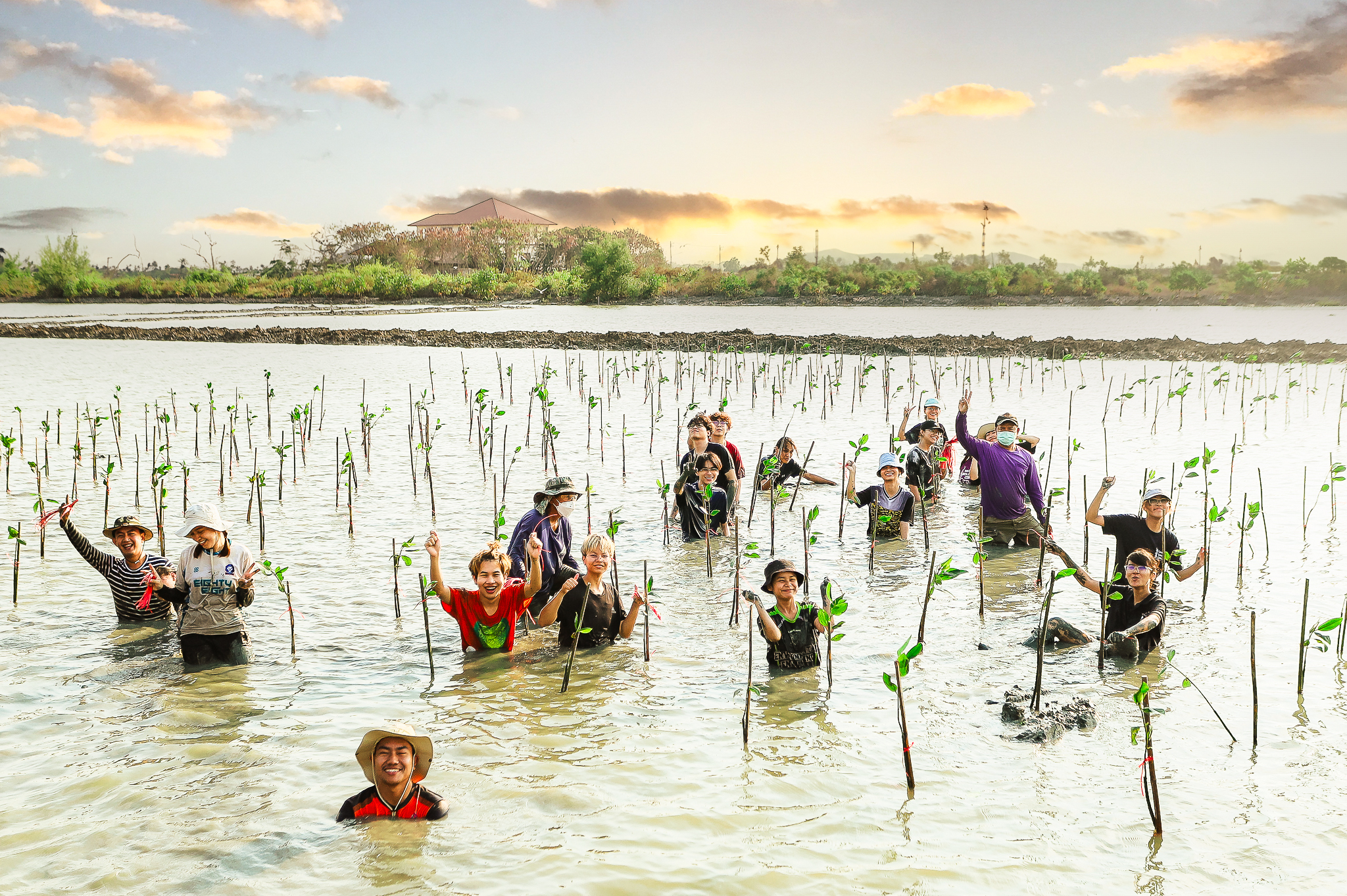
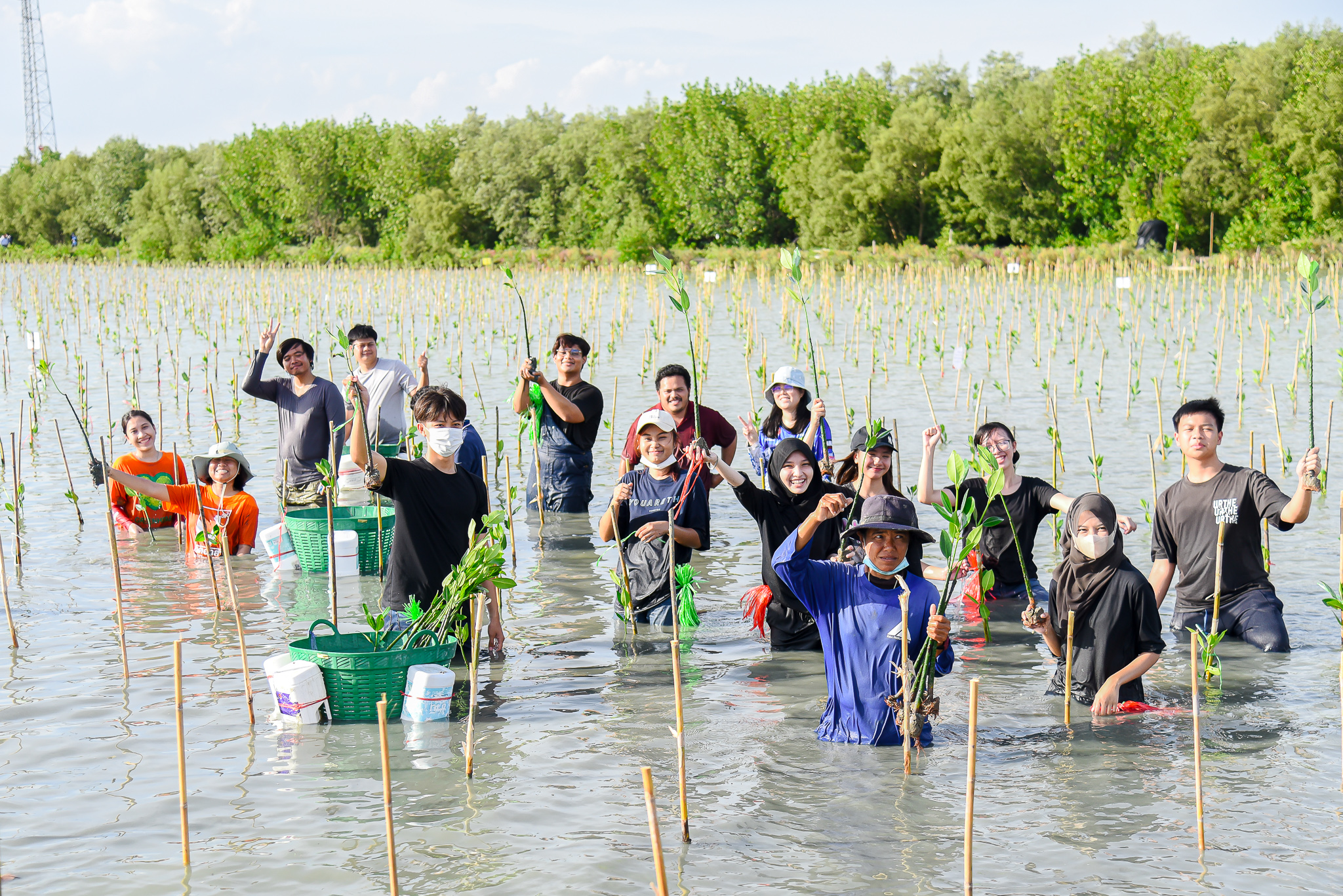
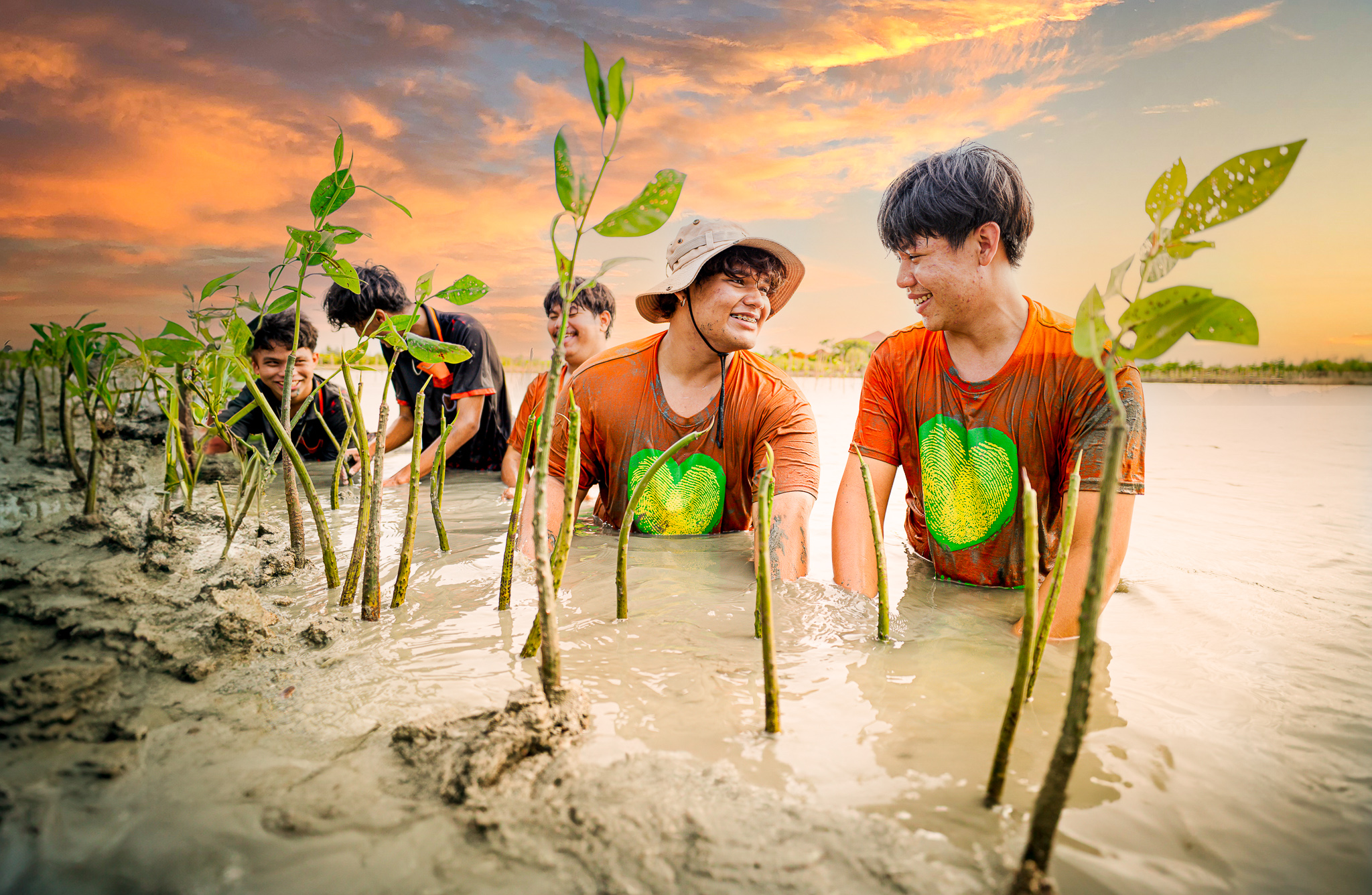
Driven by KMUTT students, staff (nurseries & planting), and public volunteers. Open learning sessions for schools and external visitors.

On The Ground

Restoration in Action

Visualizing our efforts in restoring the mangrove ecosystem. Click to expand.

Student Volunteers
Planting Day
Mangrove Landscape
Planting Day
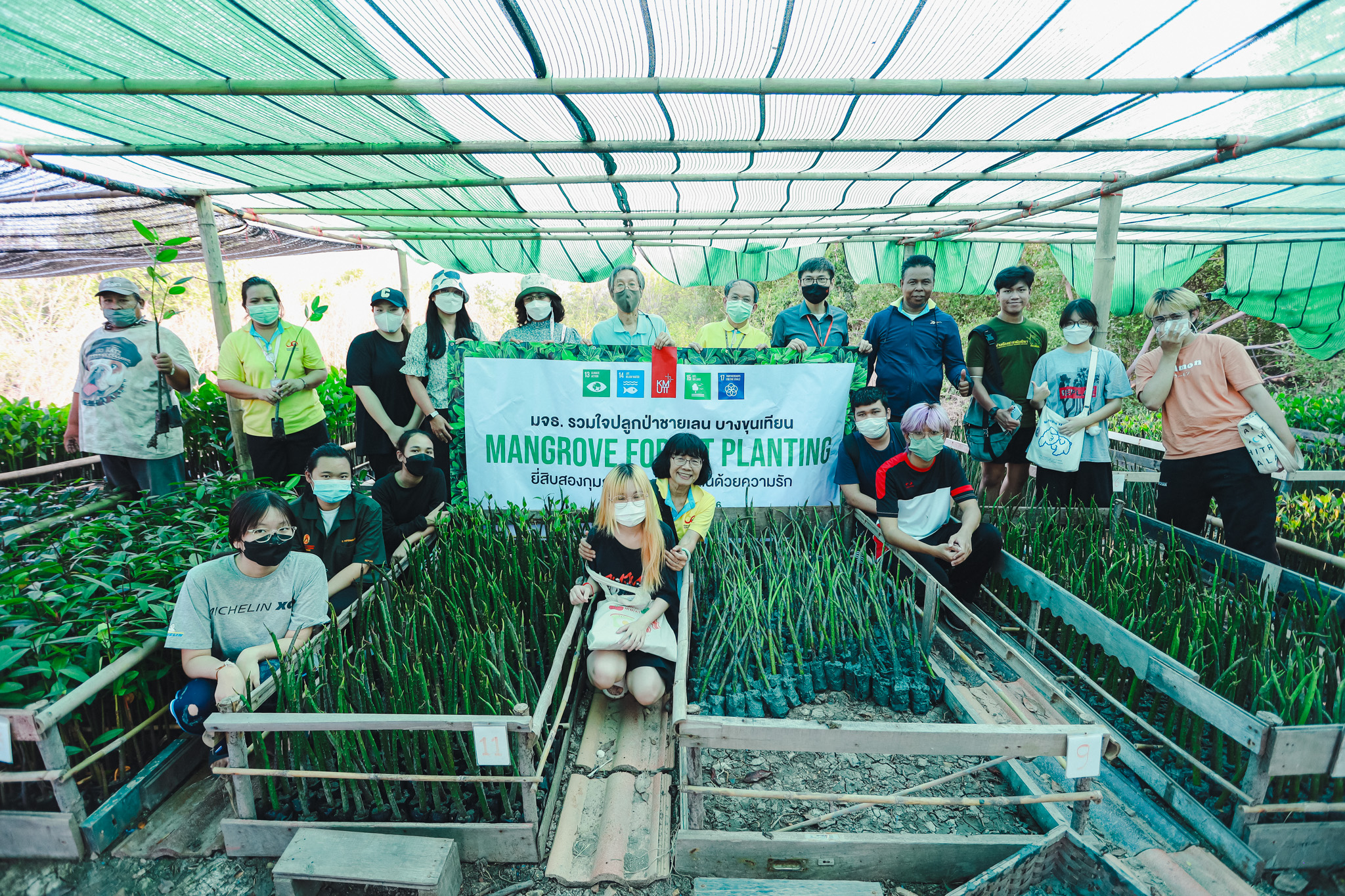
Seedling Nursery
Planting Day
Planting Activity
Planting Day
Monitoring
Planting Day
Community
Planting Day
Green Heart Volunteers
Action Planning III

The "Green Heart"
Workforce

Sustainable restoration cannot be achieved by contractors alone. We cultivate "Change Agents"—students who possess both technical competence and environmental ethics.

  • The "Last Wednesday" Ritual

    Restoration is continuous. We mobilize volunteers on the last Wednesday of every month for planting and maintenance.

  • Work-Integrated Learning (WIL)

    Engineering students analyze bamboo structures; Science students monitor water quality. Real-world problem solving.

Scientific Verification

We don't just plant; we measure. Precision carbon accounting via the ThaiFlux Network.

Eddy Covariance

Micrometeorological towers measure the exchange of CO2 and water vapor 10 times per second to calculate Net Ecosystem Exchange (NEE).

Precision Tech

Blue Carbon Potential

Mangrove reforestation sequesters ~60% more carbon per hectare than terrestrial forests. Soil carbon pool recovery is critical.

High Impact

Biodiversity Return

Monitoring confirms the return of indicator species: Mudskippers, Fiddler Crabs, and Coastal Birds, signaling a functional food web.

Eco-Health

References & Data Sources

This roadmap is part of our commitment to the Nature Positive Universities Alliance.

Return to Main Roadmap