Milestone 05 Target 01

Refrain

"The most critical step in the conservation hierarchy is the first: Avoidance. We commit to eliminating negative impacts on nature before they occur, ensuring Zero Net Loss of our 89% green area."

Zero Greenfield Conversion
100% Tree Preservation

The Mitigation Hierarchy

Most Impact
REFRAIN
MINIMIZE
RESTORE
OFFSET

KMUTT Nature Positive Strategy 2025

01

Zero Greenfield Conversion

Strict "Brownfield-First" policy. No new buildings on undeveloped land to protect our 89.02% green area baseline.

Target: 0%

02

100% Tree Preservation

Mandatory preservation of all mature trees (DBH > 10cm) in construction zones via in-situ protection or relocation.

Target: 100%

03

Material Toxicity Avoidance

Eliminate toxic compounds (VOCs) in paints and adhesives. Mandatory specification of "Green Label" products.

Target: 100%

Contextual Strategy

Ecosystem-Specific Avoidance

Different biomes require distinct 'Refrain' strategies to maintain ecological integrity.

Bangmod
The Urban Garden

Challenge: Heat Island Effect & Scarcity of Green Space.
Refrain Action: Avoid converting pocket parks into concrete. Focus on vertical densification to preserve the "Green Heart".

Bang Khun Thian
Coastal Ecosystem

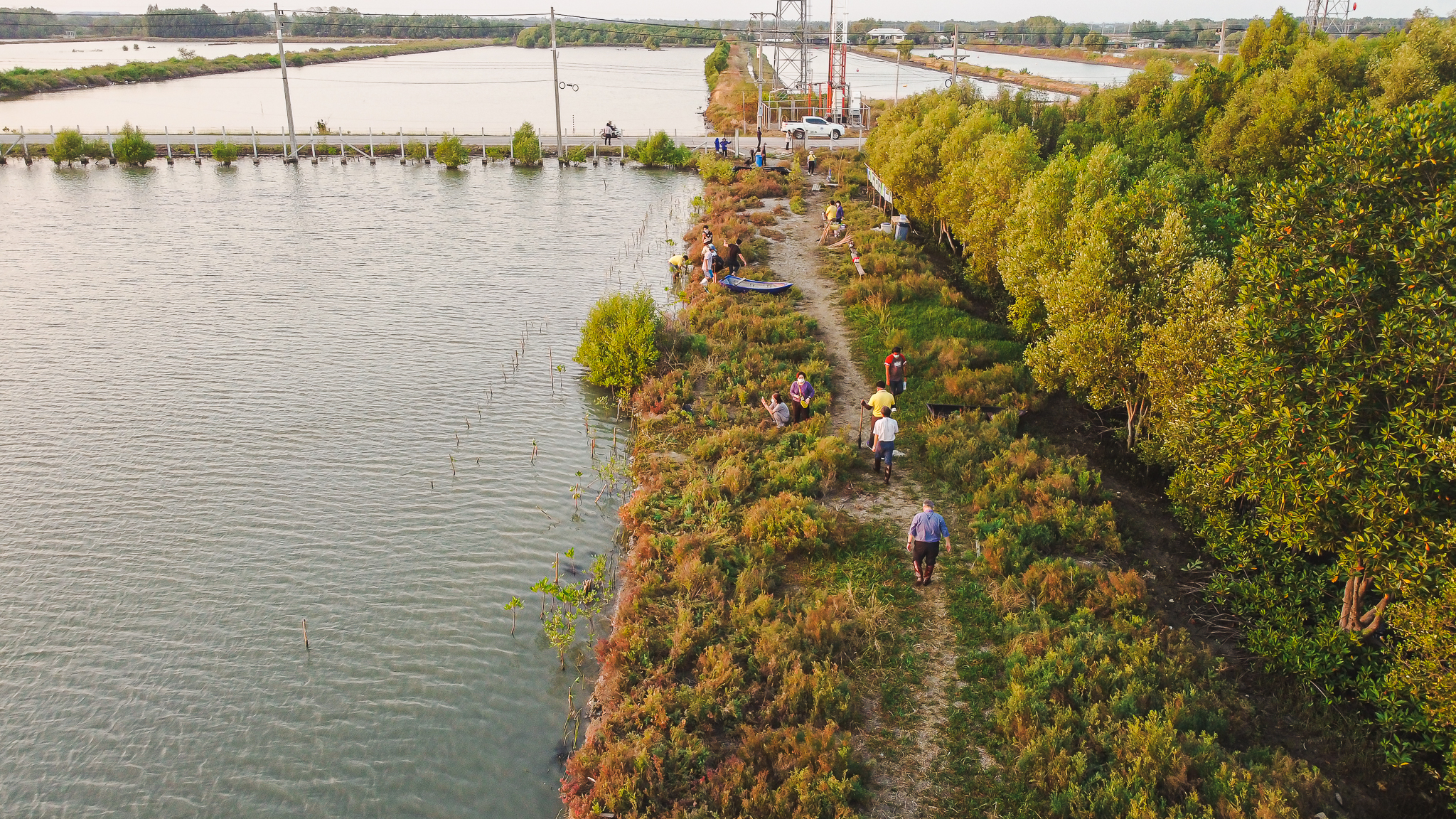
Challenge: Mangrove sensitivity & Hydrology.
Refrain Action: Strict prohibition of hydrological disruption. No construction runoff into natural canals or wetlands.

Ratchaburi
Forest Habitat

Challenge: Habitat Fragmentation.
Refrain Action: Prevent breaking forest corridors. Construction is banned in "Conservation Zones" (Dry Dipterocarp Forest).

Action Planning I

Site Selection Strategy

A

The Brownfield-First Policy

KMUTT prioritizes redevelopment of existing paved areas (Brownfields) over natural land. We have committed to renovating existing conventional buildings by 2030 instead of expanding sprawl.

  • Site Audit before approval
  • Strict renovation priority
B

Vertical Densification

To avoid sprawl, we build UP, not OUT.

Impact Result:

Canceled 15+ surface parking lots

Replaced with vertical structures accommodating 470 cars, reclaiming land for "Learning Gardens".
KMUTT Zoning Map

Protection Zones

Strict "No-Build" zones in Bang Khun Thian Mangroves & Ratchaburi Forest.
Action Planning II

The 10 Green Building Code

The "Constitution" for all construction at KMUTT. A mandatory checklist ensuring 'Refrain' principles are baked into engineering specifications.

1. Green Roofs

Refrain from heat emission & biomass loss.

2. Low VOC

Refrain from toxic chemical release.

3. LED Lighting

Refrain from light pollution & heat.

4. Local Material

Refrain from transport carbon.

5. Tree Preservation

Refrain from removal of existing trees.

6. Water Efficiency

Refrain from aquifer depletion.

7. Energy Efficiency

Refrain from fossil fuel reliance.

8. Natural Vent

Refrain from mechanical dependence.

9. Safety Systems

Refrain from chemical hazards.

10. Alt. Transport

Refrain from vehicle infrastructure.

Flagship Implementation

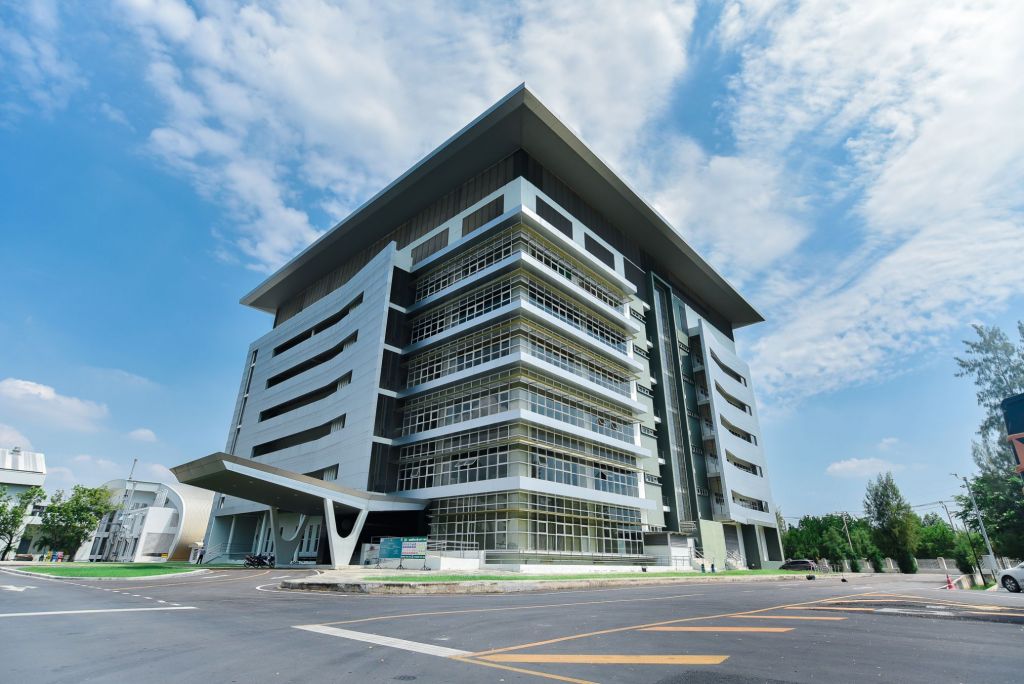
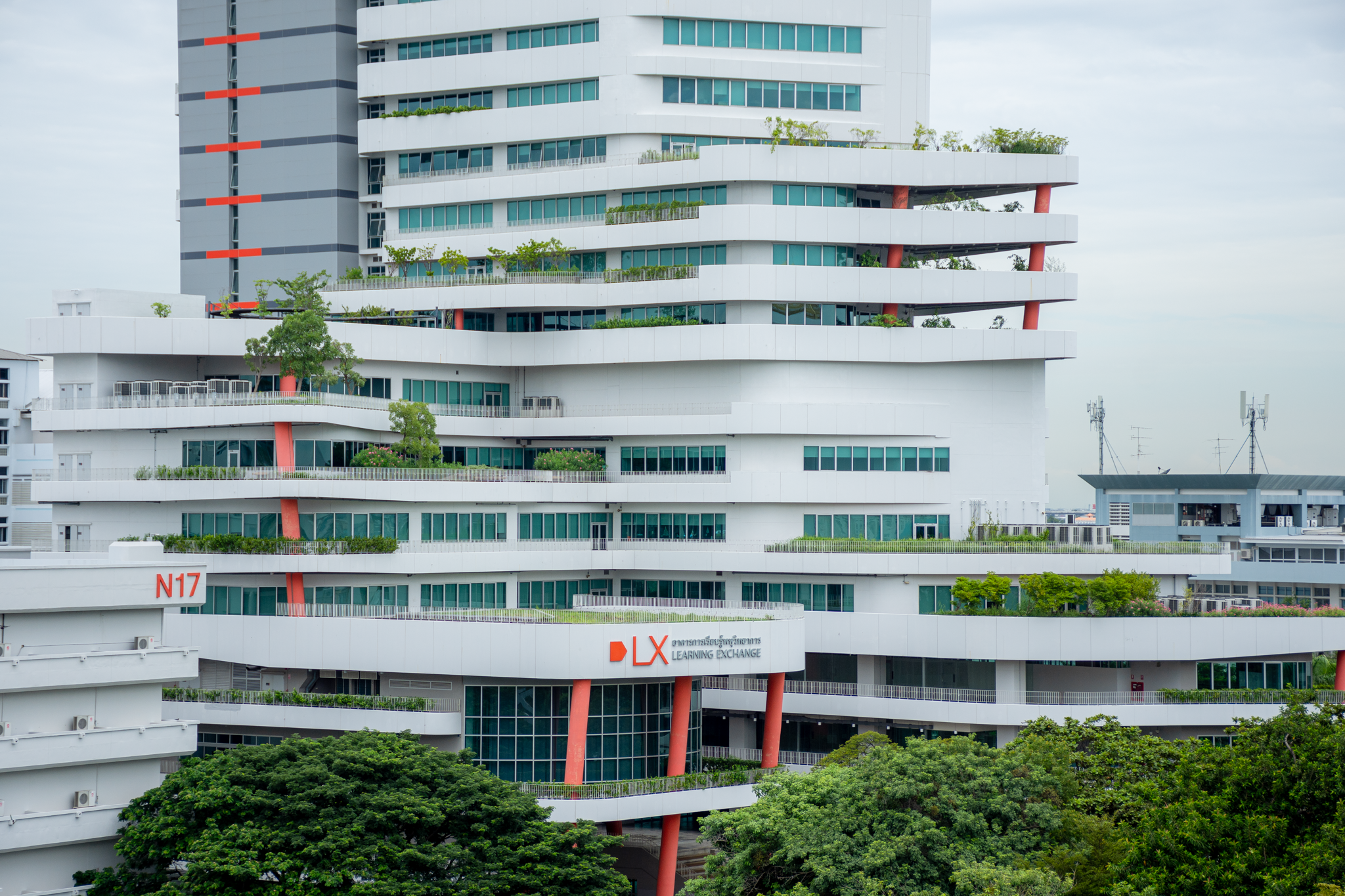
LX Building
Urban Context

LX Building

TREES Platinum & LEED Principles

  • Insulated glass refrains from heat gain
  • "Volacell" renewable energy system
  • 30% Energy reduction
BRI Building
Wetland Context

BRI Building

Bioprocess Research & Innovation

  • Hydrological Refrainment (Water Cycle)
  • Zero chemical discharge to wetlands
  • Advanced wastewater treatment
Action Planning III

Construction Phase Management

Managing the acute stress of the building process.

PM2.5 Control

Strict mitigation including water spraying and dust barriers. Refrain from dust-generating activities during high-pollution episodes.

Zero Waste to Landfill

Strict segregation of inert/hazardous waste. "No Single-Use Plastic" policy enforced on all construction sites to prevent soil contamination.

Runoff Control

Construction sites must install sediment traps to refrain from discharging turbid water into natural canals and artificial wetlands.

Post-Construction

Operational Refrainment

Chemical Avoidance

KMUTT refrains from using harsh chemical fertilizers and pesticides. We utilize organic waste from campus canteens converted into biogas or fertilizer.

Invasive Species

We actively refrain from planting alien invasive species. Restoration projects focus strictly on native species for mangrove and dry dipterocarp forests.

References & Further Reading

This roadmap is part of our commitment to the Nature Positive Universities Alliance.

Return to Main Roadmap